
Our readers keep the lights on and my morning glass full of iced black tea. As an Amazon Associate, I earn from qualifying purchases.
Specs are compiled from manufacturer listings and verified buyer reviews and can change over time — please confirm the key details on the product page before buying.
You want better bass without rattling your door panels or buying a subwoofer you didn’t plan for. A 6.5-inch component set separates the woofer (the speaker that handles low frequencies) from the tweeter (the one for highs), giving you a cleaner, more detailed soundstage. This guide ranks the top performers by bass output, power handling, and how easily they fit your existing setup.
I’m Min — the founder and writer behind Gadgets Feed. This guide is built by comparing the manufacturers’ published specifications and the patterns across verified customer reviews, so you get each pick’s real strengths and trade-offs instead of marketing spin.
If you want a genuine upgrade that thumps, the picks below represent the best Bass 6.5 Component Speakers for everything from daily commutes to head-to-head sound builds.
Our Picks at a Glance


How To Choose The Best Bass 6.5 Component Speakers
The first thing to understand is that “component” means the woofer and tweeter are separate pieces, connected by a crossover that splits the audio signal. This setup lets you aim the tweeter at your ears for crisp highs while the woofer handles midrange and bass, which is why components almost always sound better than all-in-one coaxial speakers.
Power Handling: RMS is the Only Number That Matters
Manufacturers love to print huge “peak” wattage numbers, but your ears care about continuous RMS power. A speaker rated for 80 watts RMS will comfortably handle a typical aftermarket amp, while a 40-watt RMS set is happier on factory head-unit power. If you push too much clean power into a speaker rated lower, you risk distortion and damage.
Cone and Tweeter Materials Shape the Sound
The woofer cone dictates bass punch — polypropylene cones offer a good balance of weight and rigidity, while pressed paper is lighter and more responsive to transients. For highs, a soft textile or PEI dome sounds smoother and less harsh, while a metal dome can get bright and fatiguing at high volumes. Match the tweeter type to your listening preferences before you buy.
Quick Comparison
| Model | Best For | RMS Power | Peak Power | Sensitivity | Amazon |
|---|---|---|---|---|---|
| Hertz UNO K-165★ Best Overall | Balanced Bass & Clarity | — | — | — | Amazon |
| Rockford Fosgate Prime R165-SBest Value | Budget-Friendly OEM Swap | 40W | 80W | — | Amazon |
| Infinity PR6510CS PrimusCrisp Pick | Crisp Highs on a Budget | — | — | — | Amazon |
| Pioneer TS-A1601C | Factory Upgrade with Bass | 80W | 350W | 90 dB | Amazon |
| Infinity REF6520CX | Vocal Clarity & Mids | — | 540W | — | Amazon |
| Alpine S2-S65C | Detailed High-Res Sound | 80W | 240W | — | Amazon |
| Rockford Fosgate Punch P165-SI | Signature Rockford Punch | 60W | 120W | — | Amazon |
| Memphis PRX60C | Loud & Punchy Output | — | — | — | Amazon |
| Focal 165 AS Access | High Sensitivity Fidelity | 60W | 120W | 91.3 dB | Amazon |
In-Depth Reviews
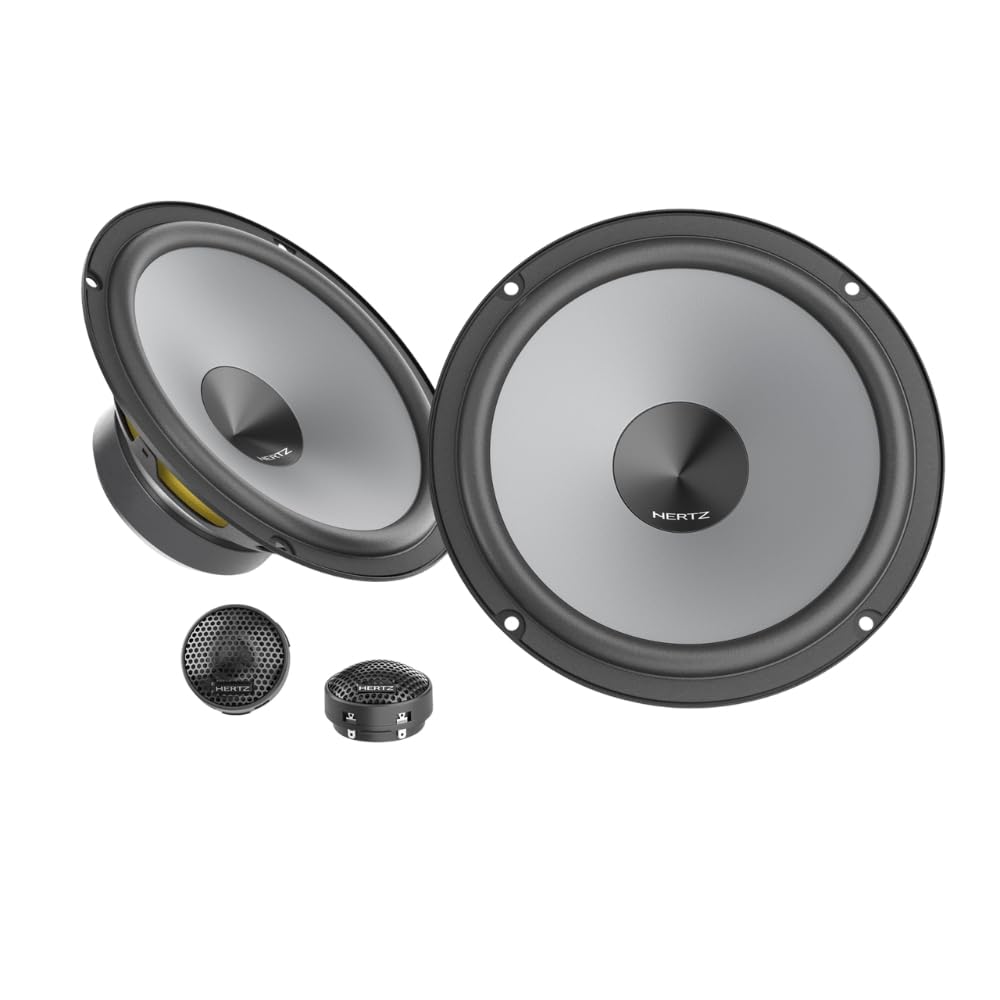
1. Hertz UNO K-165 6.5″ Component System
Our pick — over 4.5★ from 700+ verified ratings; the strongest balance of quality and price.
The balanced all-rounder that turns stock speakers into a proper soundstage while staying affordable.
This Hertz set is the crowd favorite because it nails the two things everyone wants from an upgrade: it plays louder at the same wattage and it adds real bass depth. The secret is in the parts — a water-repellent pressed paper woofer cone for punchy transients and a peppy neodymium tweeter magnet that keeps highs alive without harshness. Buyers report the magic is immediate: replacing the stock drivers in a 2019 Honda Accord Hybrid produced an instant volume and quality jump, with noticeably better bass.
What wins people over is the sound quality, with far more owners praising that than anything else, followed closely by the solid build and the value. One savvy note for installers: if you’re running a stock amp that already filters the signal, you can remove the Hertz tweeter crossovers to avoid doubling up on filtering. The only real caveat is that these like a bit of power — one listener found they “do required power to sound good,” so they reward a decent amp or a strong aftermarket head unit.
It’s an entry-level Hertz product, but the heritage shows. In a 2007 Accord, the full bass blends cleanly with a-pillar tweeters, and one owner running them off a 1990s Alpine head unit’s speaker-level outputs called them the best money spent. For a first-time component upgrade, this is the one to beat.
The Highlights
- Clear, natural sound with a real bass punch
- Loud even on modest power
- Excellent build quality with a water-repellent cone
The Trade-offs
- Needs sufficient power to sound its best
- Tweeters run slightly bright on factory head units
The pick for most: first-timers and stock-replacement buyers who want balanced bass and clarity in one honest package.
Think twice if: you have a weak factory radio with no amp — these want real power to shine.
2. Rockford Fosgate Prime R165-S 6.5″ Component System
The old-school Rockford sound that does exactly what a factory replacement should, for less.
Rockford Fosgate’s Prime series is the trusted budget path to authentic brand sound, and this component set delivers on that promise with 40 watts RMS and 80 watts peak. The kit is complete right from the start: two 6.5″ woofers with grilles, two 1″ tweeters with integrated crossovers, and all the mounting hardware you need. The mica-injected polypropylene cone delivers clear mids and highs on the road.
Owners praise sound quality more than anything else, with over a hundred calling it out, and value for money comes second. You can refresh an entire car with several pairs—one owner replaced all eight factory speakers in a 2004 Monaro, including door woofers and dash tweeters, and added acoustic sheeting for a much better result. Installation is easy, too: one reviewer noted a perfect fit in a 2012 Jeep Wrangler.
The honest limit is low-end output — the review pages sum it up: “plenty of treble and midrange, not much bass.” If your priority is deep sub-bass, you’ll want to pair these with a dedicated subwoofer. But for crisp, clean, reliable sound at a friendly price, these are hard to fault.
Real-world verdict: a superb OEM-style swap that prioritizes clean mids and easy highs over earth-moving bass, backed by a 1-year warranty.
Reach for these if: you want dependable Rockford sound and an easy drop-in fit for a modest price.
Look elsewhere if: your whole goal is booming bass — this set leans bright, not thumpy.
3. Infinity PR6510CS Primus 6.5″ Component System
A crisp, clean-sounding budget system with a full hardware kit that fits older trucks perfectly.
Infinity’s Primus line delivers clean, punchy sound for a low price, and the box is packed with accessories. You get the pair of speakers, grilles, plastic multi-hole adapter rings, crossovers (the electronics that split the audio signal), tweeters with multiple mounting options, and plenty of screws and clips. One owner used that hardware for a tidy install in a ’99 Chevy Tahoe with door deadening, reporting a big sound improvement.
Sound quality is the top praise, with clean, crisp output and plenty of punch — owners mention “clean, crisp, with plenty of punch” alongside an Alpine amp, with good bass and highs, though it’s not sub-shaking output. The fit is a highlight for older domestic trucks: the speakers fit perfectly in a 97 K1500, and the included adapters make the job easier. The 3-ohm impedance even boosted volume in a 2014 Ford Focus Sony system.
The catch is the stock crossovers and the non-adjustable tweeters. Several owners found the tweeters harsh until they either replaced the crossovers or used a low-pass filter below 300 Hz through their amp. Also, the woofers can bottom out at maximum volume. For the price, the clean sound wins, but plan for a little tuning.
What Shines
- Crisp, clean sound with satisfying punch
- Complete hardware kit with multiple mounting options
- Perfect fit for older Chevy trucks
The Nitty-Gritty
- Stock crossovers make tweeters harsh for some ears
- Woofers bottom out at extreme volume
The fit for: truck owners and budget builders who want crisp detail and don’t mind tweaking the crossover.
Who should pass: listeners allergic to bright tweeters who won’t touch an EQ or replace crossovers.
4. Pioneer TS-A1601C 6.5″ Component System

This pick delivers bass so deep you might skip the subwoofer entirely.
Pioneer built this for bass lovers. It handles 350 watts max and 80 watts continuous, with a sensitivity of 90 dB (meaning it plays loud even on modest power). Its 33 Hz to 58 kHz frequency response delivers deep bass you can feel. One buyer mentioned, “the bass is there you don’t need no subwoofer”—rare praise for a component set, which often sound bright rather than thumpy.
Owners love the clarity and the look of the speakers, with one noting it fits right into a 2021 Honda Accord. In a 2009 Silverado powered by a 75W RMS Kenwood amp with the sub cut at 80 Hz, the system sounded so complete the sub was barely needed. The kit even includes 6-1/2″ multi-fit installation adapters that expand flexibility and improve acoustic performance, making the drop-in easy.
The durability story is the trade-off worth knowing. The consensus is that these sound amazing when they work, but one owner reported a door speaker rattling or blowing after about two weeks at a third of volume — well under the 80W RMS rating. That’s an occasional bad unit rather than a pattern, but it’s the kind of risk a bass-heavy, high-output cone carries. If you run them within their limits, the bass payoff is real.
The bass verdict: the closest thing on this list to a subwoofer-free upgrade, delivering deep lows and crisp highs in one affordable package.
Buy these if: bass is your priority and you want a single upgrade that transforms your front stage.
Be mindful that: the extreme output demands respect for the power limits — push hard and an occasional unit may not survive.
5. Infinity REF6520CX Reference 6.5″ Component System

A vocal-forward Reference set that makes mids and highs sparkle, engineered for clarity over boom.
Infinity’s Reference series is about detail, and the REF6520CX leans into that with a pair of edge-driven textile tweeters that deliver smooth, crisp vocals and mids. Rated at 540W peak, these wired components put vocals front and center. Buyers describe them as “clear and loud,” with an easy install that required very little fuss.
Sound quality praise is loud and consistent. One owner installed them in a 2001 VW Eurovan, replacing older Kenwood speakers that were “unbelievably bad,” and found the two Infinities sounded vastly better than the four older units. The kit includes plenty of hardware for a clean install, plus grilles that look great with new door panels.
Here’s the honest catch: this set is not about bass. The reviews are direct — “almost no low-end bass but sounds good,” even after adding an amp and a sound processor, with one owner noting their factory 6.5″ speakers had more low-end weight. If you run vocals, acoustic tracks, or rock, these shine. If your playlist is bass-heavy hip-hop, plan on a subwoofer and an amp to bring the low end.
The Strengths
- Exceptional vocal clarity and crisp highs
- Easy install with generous hardware
- Great value for the fidelity
The Limits
- Very little low-end bass output
- Build quality feedback is mixed — some feel the materials are light
Pick these for: vocal-forward listeners who want studio-like mids and don’t rely on speakers for bass.
Skip them if: you want a thumping install without adding a separate subwoofer.
6. Alpine S2-S65C 6.5″ Component Set

A Hi-Res certified set that rewards you with detail, and needs an amp to reveal its true character.
Alpine’s S-Series is Hi-Res certified, reproducing up to 40kHz for easy, clean audible sound. Its polypropylene, glass fiber, and mica cone stays light and distortion-free, while the HAMR surround enables powerful, accurate bass.
Sound quality is the dominant praise, with crisp highs that don’t become annoying — a rare balance. Owners describe clean, detailed sound with strong mids and vocals, and the tweeters come with threaded removable housing and all the mounting hardware you need. In a 2025 Civic, it was a big upgrade from factory, and in an XTerra, one owner installed the woofers in the rear door panels and the tweeters on the rear columns for improved detail from the back.
The honest trade-off is power: on a stock stereo, these are good but underwhelming. One owner rated them 8/10, noting the bass is “decent but weak alone”—they need an amp around the 80W RMS mark to shine, and buyers recommend pairing them with an amp and sub for the full experience. They’re compatible with the KTE-S65G speaker grille (sold separately) for protection and looks.
The Appeal
- Hi-Res certified with frequencies up to 40kHz
- Crisp highs that stay smooth, not fatiguing
- HAMR surround for accurate bass
The Reality
- Bass is weak without an amplifier
- Stock stereos won’t do them justice
Choose these if: you’re building a system with an amp and want detail, clarity, and honest bass.
Hold off if: you’re keeping the stock head unit and want immediate bass without adding amplification.
7. Rockford Fosgate Punch P165-SI 6.5″ Component System

The famous Rockford Punch signature — powerful, clean, and ready to handle serious volume without flinching.
The Punch series is Rockford’s step up from Prime, and the P165-SI shows where the extra money goes. Rated at 60 watts RMS and 120 watts max, these feature PEI dome tweeters for smooth highs, an injection-molded mineral-filled polypropylene cone with a santoprene rubber surround for accurate frequency reproduction, and concealed crossovers for a clean install. The FlexFit2 basket’s slot-mounted frame adjusts mounting position, a lifesaver for tricky door builds.
Sound quality is the top praise, with exceptional clear highs and deep bass that stays balanced across genres, and the build quality is a close second — “built to last” is a recurring theme. Owners who removed all their OEM speakers in favor of Rockford report great sound with no distortion at volume. The concealed crossover keeps the install looking clean, though one owner notes the internal crossover requires extra wiring and the larger tweeters need the included mounts.
The trade-off is low-end depth and install effort. One listener found it “great quality but lacks bass,” which is consistent with Rockford’s tuning for punch rather than sub-bass. And while the sound beats a JBL GT7 set with fuller mids and no harsh treble, the install is harder than the Prime series — it needs minor tuning and a break-in period. If you want Punch signature output and don’t mind a bit more work, this is it.
The Punch read: a high-quality, high-output set with amazing tweeters and a solid build, best served by a capable amp.
Grab these if: you want flagship Rockford tuning and don’t flinch at a more involved install.
Pass if: you expect earth-shaking sub-bass from a door speaker — this leans punchy, not boomy.
8. Memphis PRX60C Power Reference 6.5″ Component Speakers

A loud, punchy, over-achieving set that shines brightest when you feed it real amplifier power.
Memphis Audio’s Power Reference series is built to play loud. The PRX60C uses a polypropylene cone (a stiff, lightweight material for clear mids), a butyl rubber surround for durability, a separate poly dome tweeter, and a separate crossover—all designed for factory speaker slots. Owners call it “super loud and punchy,” and one ran them through a 4-channel amp, hearing everything clearly even with the top down at 70 mph.
Sound quality praise is massive—far more owners mention it than any other feature, calling the upgrade “leagues better than factory.” In a 2024 Camry, it was a great upgrade over stock with quality mid and high range, and installation is straightforward with no extra drilling or brackets. One Mustang owner even used the included crossovers to build a custom component setup, replacing just the tweeters for a brighter top end.
The honest caveats: bass output is on the weaker side (“quality mid/high range, weak bass”), and these really want an amplifier. Running them off a factory head unit’s 15W per channel leaves them underpowered, but with a cheap amp and a line-out converter, they handle 100W at 2 ohms without distortion. Fit is mostly good, but one 2005 Toyota Tundra owner had to trim a small tab and plastic to make them fit. The durability story is mixed, with a few broken units reported among otherwise glowing reviews.
The Highs
- Extremely loud and punchy output
- Butyl rubber surround for long-term durability
- Easy OEM-style install
The Lows
- Weak bass without a subwoofer
- Needs an amp to reach its potential
The match: amp-equipped builders who want a loud, punchy front stage and will handle bass with a sub.
Not the one: for stock-stereo keepers who refuse to add amplification.
9. Focal 165 AS Access 6-1/2″ Component Speakers
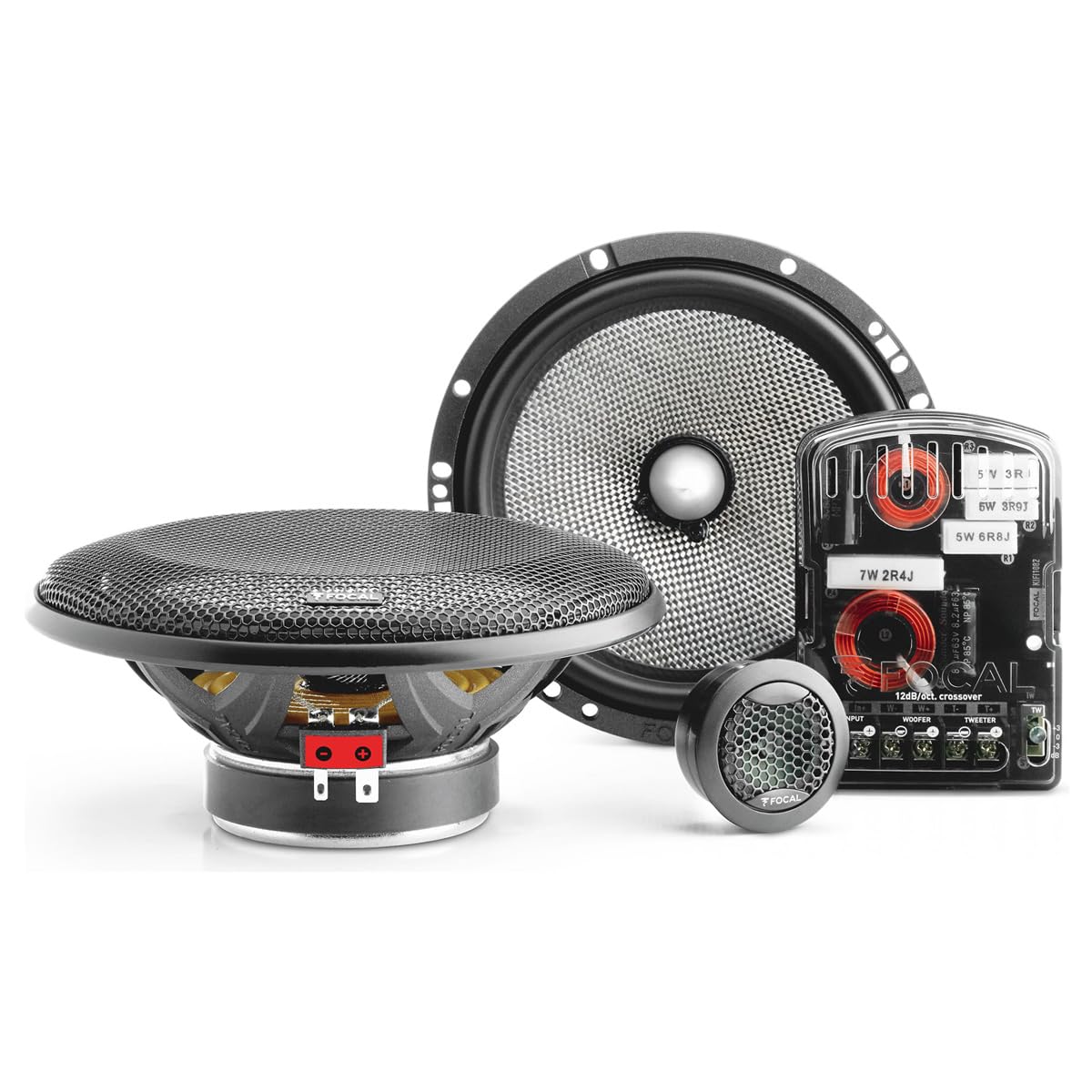
Focal’s entry into high-fidelity car audio — a sensitive, detailed set that rewards a clean signal.
Focal is a name synonymous with premium audio, and the Access 165 AS is the brand’s bridge into the car world. With 6-60W RMS (120W peak), 60-20,000 Hz response, and 91.3 dB sensitivity, these play loud and clear on modest power. The polypropylene cone and plastic build keep weight down while maintaining Focal’s signature detail.
The 91.3 dB sensitivity produces strong output from low-power inputs, ideal for factory head units. Owners describe the sound as “really good” and note the upgrade made a truck sound “crispy,” making the most of a quality source. For a Suzuki Vitara, they pair perfectly with the right spacer rings.
The honest disagreement is about the tuning. While many love the clarity, one listener running them on a JL Audio amp found the tweeters “harsh and bright” and the woofers “honky,” describing the sound as thin and fatiguing for extended listening. That’s a minority view, but it’s a fair warning: Focal’s house sound is bright and detailed, not warm. If you prefer a laid-back, mellow tone, you’ll want to tame the treble with an EQ.
The Edge
- High 91.3 dB sensitivity for loud output on low power
- Full 60-20,000 Hz frequency response
- Focal heritage and detail
The Catch
- Bright tuning can sound harsh to some ears
- Thin sound when underpowered
Reach for Focal if: you’re an audiophile-leaning listener who runs a clean amp and loves detail-forward sound.
Think twice if: you want a warm, laid-back tone or you’ll never touch an EQ to tame bright tweeters.
Understanding the Specs
RMS vs. Peak Power
RMS (continuous) power is what a speaker can handle all day long, and it’s the number you should match to your amp. Peak power is the brief burst a speaker can survive — it’s marketing fluff that sounds impressive but tells you little about real-world durability. When pairing a set with an amp, match the amp’s RMS output to the speaker’s RMS rating, not the peak number.
Sensitivity (dB)
Sensitivity tells you how loud a speaker plays from a given amount of power, measured in decibels. A rating of 91 dB or higher means the speaker is efficient and will play loudly even from a factory head unit. A lower rating closer to 87 dB usually means you’ll need a dedicated amp to get satisfying volume without distortion.
FAQ
What does a 2-way component system mean for my car?
Do I need an amplifier for 6.5 component speakers?
Will 6.5 component speakers fit in my car doors?
What is the difference between a woofer and a midrange driver?
How many watts RMS do I need for good bass?
What is a crossover and why does it matter?
Can I run component speakers off my factory head unit?
Is a 6.5 component system better than a 6×9 speaker?
Final Thoughts: The Verdict
For most people, the bass 6.5 component speakers winner is the Hertz UNO K-165 because it delivers the most balanced blend of bass punch, clarity, and value in a single package. If you want the highest-rated bass output and don’t mind a durability gamble, grab the Pioneer TS-A1601C. And for clean, honest Rockford reliability at a friendly price, the Rockford Fosgate Prime R165-S is the one to reach for.
How We Picked
We do not accept paid placement. Every pick is matched to a real buyer and a real use-case; we do not hands-on test units.
Sources & Methodology
Specifications: manufacturer listings and product documentation. Review insights: verified customer reviews, as of August 2026. Pricing: not shown on this page (it changes often); check the current price via the retailer link.
As an Amazon Associate, Gadgets Feed earns from qualifying purchases. This does not affect which products we feature.