
Our readers keep the lights on and my morning glass full of iced black tea. As an Amazon Associate, I earn from qualifying purchases.
Specs are compiled from manufacturer listings and verified buyer reviews and can change over time — please confirm the key details on the product page before buying.
If you want chest-thumping bass without turning your trunk into a wooden box, the real battle starts at the speaker you bolt into your doors and rear deck. A quality mid-bass woofer delivers punchy kick drums and round basslines without sacrificing trunk space. This guide focuses on the specs that separate tight bass from muddy, rattling distortion.
I’m Min — the founder and writer behind Gadgets Feed. This guide is built by comparing the manufacturers’ published specifications and the patterns across verified customer reviews, so you get each pick’s real strengths and trade-offs instead of marketing spin.
Look for a stiff cone, a strong motor, and a durable surround that moves air without tearing. Use this guide to match the best bass car speakers to your ride, your amp, and the music that makes you turn the volume up.
Our Picks at a Glance


How To Choose The Best Bass Car Speakers
Choosing a bass speaker involves more than just picking the highest wattage. Match the speaker’s size and power handling to your car’s openings and amp output to avoid distortion or fit issues.
Match the Power Handling (RMS vs. Peak)
RMS is the continuous power a speaker can handle, the spec that matters for daily listening. Peak power is a brief burst that doesn’t reflect real-world durability. Exceeding the speaker’s RMS rating with your amp risks blowing the voice coil.
Pick a Cone Material That Punches
The cone is what pushes air to create sound. Stiffer materials like polypropylene and glass fiber move air precisely, which translates to tight, controlled bass rather than a floppy, boomy mess. Look for a solid surround (usually butyl rubber) that lets the cone move far without tearing.
Check Mounting Depth Before You Buy
Mounting depth is how far the speaker sits behind the mounting surface. If it’s too deep, the magnet will hit your window mechanism and the speaker won’t fit. Keep this number handy when you measure your door cavity.
Quick Comparison
| Model | Best For | RMS Power | Peak Power | Cone Material | Amazon |
|---|---|---|---|---|---|
| KICKER CS-Series CSC65★ Best Overall | Universal fit & clean bass | — | — | Polypropylene | Amazon |
| Alpine S2-S65CBest Value | High-resolution detail | 80W | 240W | PP/Glass Fiber/Mica | Amazon |
| Pioneer TS-M801PROTop Performer | 8-inch bass with clean highs | 85W | 370W | Aramid | Amazon |
| MB Quart FSB216 | Budget component clarity | 40W | 150W | Polypropylene | Amazon |
| WDiYA Glass Fiber Woofer | Mid-bass with stock head units | — | 800W | Glass Fiber | Amazon |
| Rockville RV69.2C | High-power 6×9 bass | 220W | 1000W | Polypropylene | Amazon |
| ORION Cobalt CB693 | Strong 6×9 bass on a budget | 80W | 320W | Polypropylene | Amazon |
| Pyle 6.5″ Mid Bass | Four speakers for the price | — | 300W (each) | CD P.P. Cone | Amazon |
| PowerBass OE-690D | Upgrading premium factory systems | 100W | 300W | PP/Carbon Fiber | Amazon |
In‑Depth Reviews
1. KICKER 46CSC654
Our pick — over 4.5★ from 300+ verified ratings; the strongest balance of quality and price.
The shallow-mount workhorse that slides into almost any door and delivers bass that belies its size
You want bass that fits without a fight, and the KICKER CS-Series CSC65 delivers. Its shallow mounting depth lets these 6.5-inch speakers slide into nearly every make and model, so you won’t wrestle with a door panel that barely clears a stock unit. The EVC (Extended Voice Coil, a design that increases the coil’s travel for deeper bass) digs for lows that a speaker this slim shouldn’t reach, making it a drop-in upgrade that instantly sounds punchier than factory.
You get a stamped-steel frame holding a rigid polypropylene cone, which keeps the mid-bass tight and controlled, and zero-protrusion PEI tweeters that handle the high frequencies without poking through your factory grilles. The neodymium tweeter magnets help those highs stay audible even when the volume climbs and the bass is thumping. A UV-treated poly-foam surround means direct sunlight on your rear deck or dashboard won’t cook the rubber and leave you with a rattling cone in a year.
Buyers report these hold up over months of daily use, with many replacing worn-out factory units and praising the “perfect fit and easy install.” One owner in a VW Golf noted the bass is good and the sound stays clear even running straight off the head unit, showing the efficiency is there. The trade-off: if you want bass that shakes the mirrors, you’ll need an amp—one owner put it plainly, “loud in vocals just need an amp to give it bass.” As a low-maintenance replacement that sounds better immediately, this is the pick.
Why It Wins
- Shallow mounting depth fits nearly every vehicle door
- EVC design extends bass response for deeper lows
- Zero-protrusion tweeters fit behind factory grilles
- UV-treated surround resists sun and heat damage
Keep In Mind
- Reliability gets mixed feedback in the review pool
- Proper sub-bass still needs an outboard amplifier
Reach for these if: you want a low-maintenance upgrade that fits your existing holes and instantly sounds cleaner and punchier than stock.
Fair warning: if your end goal is mirror-rattling sub-bass, this is the foundation, not the whole system.
2. Alpine S2-S65C
A component set that brings studio-grade detail to your doors without demanding studio-grade money
If you care about hearing every note in the bassline rather than just feeling a thump, this Alpine set is where the smart money goes. It’s Hi-Res Audio Certified, which means it reproduces frequencies up to 40kHz — far beyond what your ears can hear but a sign of how clean the driver is. The cone is a blend of Poly Propylene, Glass Fiber, and Mica, which keeps the moving mass light for quick response and high output while holding distortion down.
Alpine’s HAMR surround (High Amplitude Multi-Roll, a rolled edge that lets the cone travel further) pushes real air for “powerful and accurate bass notes” that fill the cabin. This full component set includes separate 6.5-inch woofers and 1-inch tweeters with threaded removable housings, so you can mount the tweeters high on the pillars for proper staging instead of hiding them behind factory grilles.
Owners mention the sound is “clean, detailed” with “crisp highs and strong mids/vocals,” and the review pages sum it up: the bass is decent, but this is a speaker that wants power to fully shine. On a stock radio it’s a clear upgrade, but feed it a decent amp and it transforms — owners note it “requires amp to shine” and that underpowered head units limit how loud it can get. If you’re building a system in stages, start with the amp budget in mind before you pick this one.
Detail-first approach: The HAMR surround gives you maximum cone movement for punchy bass, while the 3-material cone keeps that bass tight and accurate instead of boomy.
Plan your power: Owners agree this set sounds its best with an amplifier feeding it; a stock stereo leaves performance on the table.
3. Pioneer P.R.O. Series TS-M801PRO
The 8-inch specialist that hits low enough to make a subwoofer feel optional
Most car speakers stop at 6.5 inches, but this Pioneer goes bigger — an 8-inch driver that moves serious air. Its frequency response runs from 33 Hz to 58 kHz, which means it reaches down into genuine sub-bass territory while still covering the top end with clarity. Customers note it “handles bass without losing mid and high frequencies,” which is exactly the balance most mid-bass woofers screw up.
The sensitivity rating of 91 dB is the spec that makes this a flexible pick: it can produce clear, loud sound even with modest power inputs, so it works well with a stock amp. But it’s also happy to take a beating, with 370W of maximum power and 85W continuous. The aramid cone material is chosen to hold up in the heat of a car door while keeping that tight, controlled bass response that reviewers keep describing as “tight, quick.”
Owners note it’s a “great budget upgrade” that pairs well with a stock amplifier, delivering “tight controlled bass, clear vocals, clean highs” with an easy install that requires no drilling. The honest caveat: on head-unit power alone you won’t get deep bass — it’s “mid-high focused” without an amp. But even reviewers who noted that still called it louder and clearer than stock. This is the pick for someone who wants more physical bass than a 6.5-inch can give but doesn’t want to build a subwoofer box.
Bass-extension king: With a response starting at 33 Hz, this 8-inch driver reaches lower than any other speaker on this list.
Power it right: Reviewers agree it’s excellent with an amp and still an upgrade on stock power, but its full range needs real wattage.
4. PowerBass OE-690D

The factory-replacement specialist that makes premium OEM systems like Mark Levinson sound dated
If your car came with a “premium” factory sound system that has since gone crackly or just never impressed you, this PowerBass is built for you. It’s an OE replacement 6×9-inch woofer with a grey injection-molded PP/Carbon Fiber cone, which is the stiff, light recipe for punchy mid-bass. It handles 100W RMS and 300W max, so it pairs with factory amps without blowing.
The EFF motor structure (Efficient Flux Field) is what gives it that controlled, forceful bass — it boost the magnetic field strength for the cone to push against. Owners who swapped out factory Mark Levinson 6x9s were stunned, with one noting it “throw[s] Mark Levinson speakers underwater” and another calling it a “stellar sound upgrade” with “punchy mid-bass, no distortion” when dropped into a 2012 Challenger. It’s a direct upgrade for Lexus GX470s with Mark Levinson systems, where it connects with factory wiring easily.
The catch is fit. The review pages note that while some cars take it as a perfect plug-and-play swap, others require “considerable fitting adjustments” — one owner in a Challenger had to cut the door mount bellows to make it work. If you’re handy with a knife and want a massive jump over aging factory woofers, this is your speaker. If you want zero modifications, measure your mounting depth first.
Factory-amp friendly: The 100W RMS rating sits perfectly with premium factory amps, making it a true drop-in upgrade for Mark Levinson and Boston Acoustics systems.
Check your fit: Some vehicles need minor cutting to the door mount, so measure carefully before you commit.
5. ORION Cobalt CB693

A 6×9 that floods the cabin with bass, proving the format still rules for rear-deck punch
The 6×9-inch oval is the classic rear-deck shape for a reason: it moves more air than a round 6.5-inch, and this ORION takes full advantage. It’s a 3-way coaxial with a dedicated mid-range, woofer, and tweeter all in one frame, delivering up to 320W peak and 80W RMS. The wide frequency response of 80Hz-20kHz covers the audible spectrum, and the 88 dB sensitivity means it plays loud without demanding a monster amp.
Reviewers point out the bass delivery is the standout — the review pages specifically praise “the bass delivery for a 6×9 model” and call it a “perfect drop-in upgrade” for cars like the Buick Lucerne rear deck. The butyl rubber surround and precision polypropylene cone are the spec-level reasons why: the butyl stays flexible in extreme temperatures, and the polypropylene keeps the cone stiff for controlled, distortion-free low end. Owners love that it pairs well with either an amp or a stock head unit.
The honest trade-off is a common one for budget-oriented 6x9s: one owner in a 2014 Ram 2500 found it “bass-heavy with less mids/highs than expected” and needed sound dampening to kill door vibration. Fit is mixed across vehicles, and durability is a concern with a few reports of blown speakers at high volume. Keep your gain settings sane and this is a strong value for rear-stage bass.
At Its Best
- Strong, punchy mid-bass that fills rear decks
- Universal fit works as a drop-in for many sedans
- Plays well with stock or amplified systems
The Cost
- Mids and highs take a back seat to the bass
- May need sound dampening to stop panel vibration
- Durability at extreme volume is a mixed bag
6. MB Quart FSB216
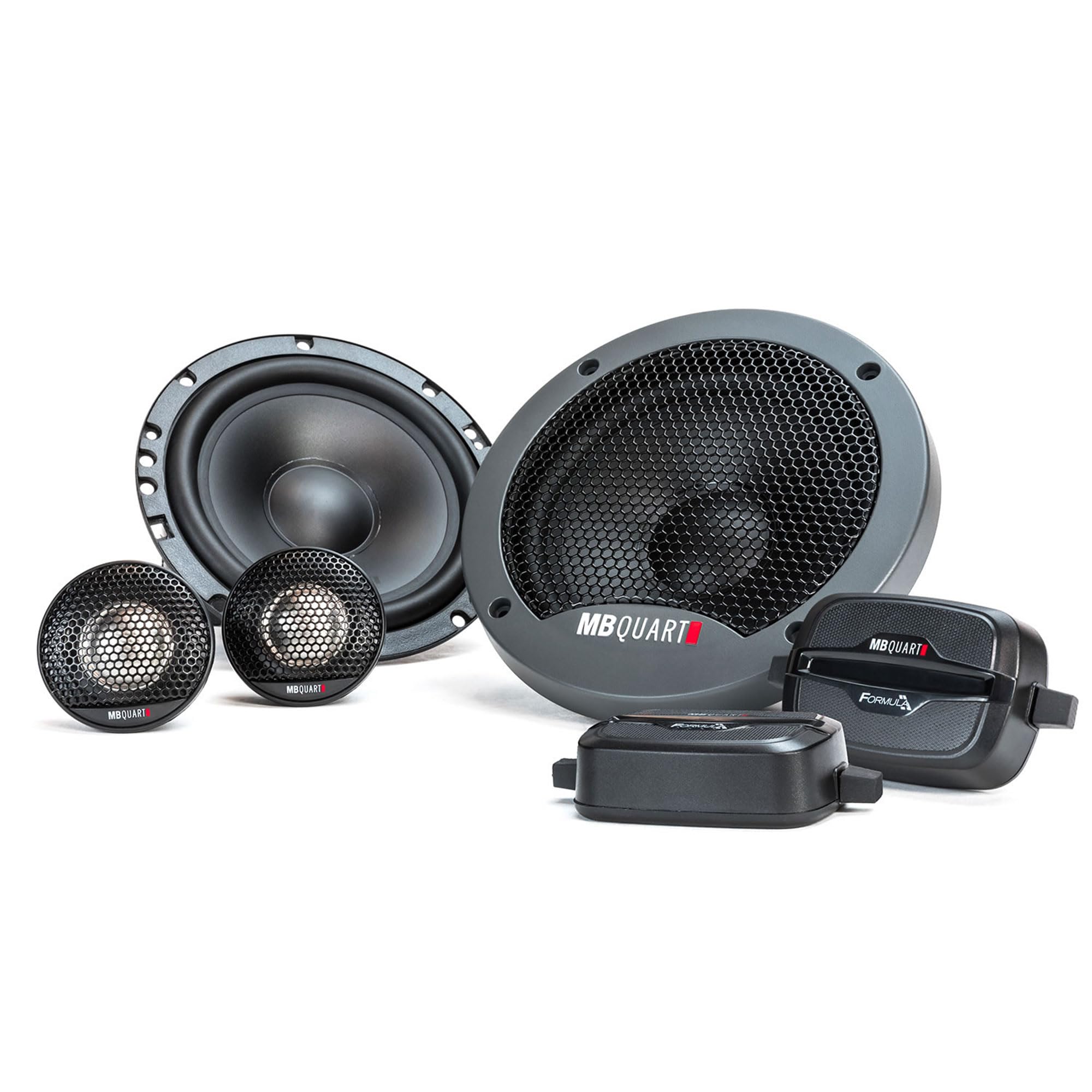
An entry-level component set that beats stock paper cones by a mile at a budget price
This is the cheapest way to get into a true component system — separate woofer and tweeter with an external crossover — which is the architecture that gives you clean imaging. The FSB216 packs a 6.5-inch polypropylene woofer with a 19mm titanium dome tweeter, rated at 150W peak and 40W RMS at 4 ohms. The titanium dome is the key spec here: it delivers detailed, crisp highs that factory paper tweeters can’t touch.
Buyers call it a “great cheap OEM paper cone replacement,” noting that on a 60W head unit it’s already clear and gets “louder with amp (~100W/ch).” One owner driving it with a CT Sounds amp praised the “crisp sound” and said the price was “almost too good to be true.” The external crossover and spade terminals make installation straightforward in factory or custom setups.
The recurring truth from owners is that it “has no lows” — the bass is tight but limited, so this is a mid/high clarity play, not a bass cannon. Reliability is genuinely mixed, with some owners reporting woofers that stopped working. And fit is a coin flip: perfect for some cars, “too small” or with painful installation in others. If you’re pairing it with a subwoofer and want detail, it’s a bargain; if you want door-shaking bass, look elsewhere.
Clarity on a budget: The titanium tweeter and polypropylene woofer deliver detail that embarrasses factory paper cones for very little money.
Know the limits: Bass is limited without a sub, and a small share of owners hit reliability or fit issues.
7. Rockville RV69.2C

A high-power 6×9 component set that feeds on amplifier wattage without eating your wallet
If you have a serious amplifier and a 6×9 opening, this Rockville is a volume monster in waiting. It’s rated at 1000W peak and 220W RMS per pair, with a CEA rating that means the numbers are honest rather than inflated marketing. The injection-molded polypropylene woofer and 1.2-inch PEI dome tweeter are built to handle that power, with a Flex Motion butyl rubber surround and aluminum voice coils for heat resistance.
Shoppers say the bass is the headline — one owner called them “pretty bad ass” and praised what they added to a full system with an Alpine amp. The comparison with the KICKER above is instructive: Rockville’s 220W RMS blows past the KICKER’s civil output, making it the pick for amplified builds. It’s a complete kit too, with flush and surface tweeter mounts, grilles, speaker wire, and hardware in the box.
The catch is the tweeters. More than one owner found the stock tweeters nearly inaudible — one replaced them with aftermarket units to get great sound. Durability is also flagged, with several reports of tweeters blowing out. And the fit note is real: it’s a 6-by-9-inch driver, so it’s a drop-in for 6×9 openings but “tricky” in some doors that need modification. As a budget-minded, amplifier-hungry 6×9, it’s a solid value; just budget for potential tweeter swaps.
Amp-feed the bass: With 220W RMS on tap, this is the budget pick for systems with real amplifiers.
Plan a tweeter tweak: The included tweeters are the weak link for some owners, and durability needs care at extreme volume.
8. Pyle 6.5 Inch Mid Bass

Four beefy mid-bass woofers for the price of two — a budget way to flood your car with low end
This is the quantity play: a 2-pair set that gives you four 6.5-inch mid-bass woofers, each rated at 300W peak power (1200W total). Each woofer packs a 1-inch high-temperature voice coil and a hefty 30-ounce magnet structure, which is the physical mass you need for enhanced low-end output. The yellow-coated steel basket adds strength and a distinct look if you’re into showing your gear.
Buyers report the bass is the draw — the review pages sum it up as “pulse pounding bass” and “little bright pounders” with “magnets… pretty hefty for the size.” For the money, it’s “excellent value,” and owners describe them as a clear upgrade over old factory units. The non-fatiguing butyl rubber surround and yellow CD P.P. cone are built to keep that bass distortion-free.
These are mid-bass subwoofers only, so you’ll need tweeters for your highs—one owner put it plainly: “you’d need to get your Treble from Tweets or whatever.” Fit is a real question mark; some owners mention perfect fits, but others in Chevy Express vans needed door panel modifications because the magnets are big. If you’re doing a custom build and need affordable mid-bass muscle, this is the value king.
The Payoff
- Four speakers for the price of two
- Hefty 30-ounce magnets for serious low-end push
- Excellent value per watt of bass output
The Fine Print
- Mid-bass only; you need separate tweeters for highs
- Big magnets can require door panel modifications
9. WDiYA 800W Glass Fiber Woofer
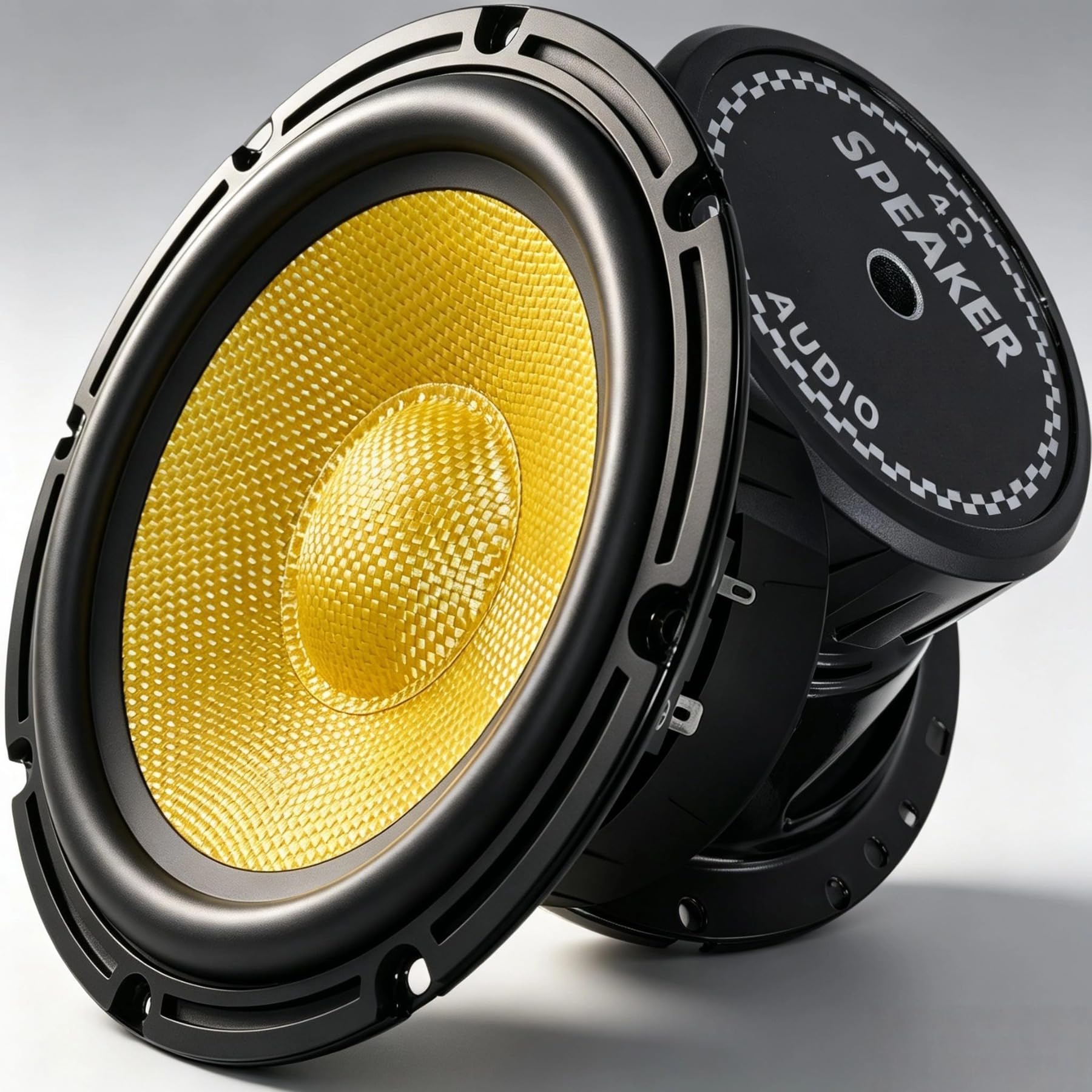
A glass-fiber mid-bass woofer that makes a 15-watt bass amp sound far bigger than it is
This is a specialist tool: a 6.5-inch glass-fiber cone woofer rated at 800W peak power and 4-ohm impedance, engineered for mid-bass response. The glass fiber cone is lightweight yet durable, delivering “crisp mid-bass response with minimal distortion.” Sold as a 2-pack, it’s ideal for upgrading both front channels or adding dedicated mid-bass to a custom build.
Customers note it’s a “perfect woofer replacement for 15W bass amp,” with one owner praising “clear low E and B strings with EQ tweaks.” That’s a guitar-and-bass-player’s endorsement, suggesting the mid-bass is articulate rather than muddy. Owners also found it “matched volume” well with their existing systems and called the fit, look, and construction great. One Prius owner installed them in the dash, crossed at 300Hz-20k, and said they “fill in perfectly and just sound amazing.”
This is honest about its limits: it’s a mid-bass driver, not a full-range speaker, so you won’t get deep sub-bass or sparkling highs without other drivers. The specs are also optimistic—one owner measured the actual sensitivity at ~86dB, not the stated 92dB, and called the lows “~60Hz.” If you’re building a dedicated mid-bass stage or upgrading a small amp, it’s a great value; if you want a full-range replacement, keep looking.
Mid-bass muscle: The glass-fiber cone delivers articulate, distortion-free mid-bass that punches above its wattage.
Pair it up: This is a dedicated mid-bass woofer that needs tweeters and a sub to complete a full-range system.
Understanding the Specs
RMS vs. Peak Power
Peak power (like 800W or 1000W) is the absolute maximum a speaker can handle in a split-second burst — it’s a marketing figure that rarely reflects daily use. RMS is the continuous power a speaker can handle safely, and it’s the number you should match to your amplifier. If your amp’s RMS output exceeds what your speakers can take, you risk damaging the voice coil. As a rule, the RMS figure tells you what you’ll actually live with.
Frequency Response & Sensitivity
Frequency response (like 33 Hz – 58 kHz) tells you the range of sound a speaker can produce, with the lower number representing bass depth. Sensitivity (measured in dB) tells you how efficiently a speaker converts power into volume — a rating of 91 dB means it plays loud even with modest power, while a lower rating needs a bigger amp. For bass you want a speaker that reaches low (under 50 Hz is good) without sacrificing the mid-range that carries vocals.
FAQ
Can 6.5-inch speakers really deliver good bass without a subwoofer?
What’s the difference between coaxial and component speakers for bass?
Does mounting depth matter more than speaker size for my bass upgrade?
Will I need a new amplifier for aftermarket bass speakers?
What does RMS power handling actually mean for my daily listening?
What’s the best cone material for car bass speakers?
Can I install bass car speakers myself?
How do I know if a 6×9-inch speaker will fit my car?
Final Thoughts: The Verdict
For most buyers, the best bass car speakers overall is the KICKER CS-Series CSC65 because it fits almost any vehicle and delivers clean, punchy bass that instantly improves on factory sound, backed by the strongest owner satisfaction in this group. If you want studio-grade detail and have an amp to feed it, the Alpine S2-S65C is the step-up pick. And if your goal is maximum physical bass without building a subwoofer box, the Pioneer P.R.O. TS-M801PRO 8-inch driver is the one to reach for.
How We Picked
We do not accept paid placement. Every pick is matched to a real buyer and a real use-case; we do not hands-on test units.
Sources & Methodology
Specifications: manufacturer listings and product documentation. Review insights: verified customer reviews, as of August 2026. Pricing: not shown on this page (it changes often); check the current price via the retailer link.
As an Amazon Associate, Gadgets Feed earns from qualifying purchases. This does not affect which products we feature.