
Our readers keep the lights on and my morning glass full of iced black tea. As an Amazon Associate, I earn from qualifying purchases.
Specs are compiled from manufacturer listings and verified buyer reviews and can change over time — please confirm the key details on the product page before buying.
The biggest decision in a bass fishing kayak is how you’ll power it: paddle, pedal, or motor. A heavy, sluggish hull will drain your energy before the bite turns on. The best picks here balance efficient paddling, stable fish-fighting platforms, and organized tackle storage.
I’m Min — the founder and writer behind Gadgets Feed. This guide is built by comparing the manufacturers’ published specifications and the patterns across verified customer reviews, so you get each pick’s real strengths and trade-offs instead of marketing spin.
The right bass fishing kayak balances how you transport it, how you power it, and how much gear it swallows—so you spend less time loading and more time casting.
Our Picks at a Glance


How To Choose The Best Bass Fishing Kayak
Bass fishing pulls you into a lot of different water—weedy flats, timber, open lake points. Choose a kayak that matches the water you actually fish, not the water you dream about. Here’s how to break down the decision.
Stability: The Body That Holds You
Stability comes from hull shape. A wide, flat bottom keeps you planted when you’re lugging a big bass aboard, and it steadies you if you like to stand up to cast. Narrower hulls paddle faster but feel tippier when you shift your weight. If you plan to stand, look for a W-hull design and a high weight capacity—checking the weight rating tells you how much you and your gear the hull is built to carry.
Propulsion: Paddle, Pedal, or Motor
Paddle kayaks are the lightest and most affordable, and they work the upper body hard all day. Pedal kayaks free your hands so you can keep casting while you move—a huge advantage when you’re working a shoreline. A few kayaks come pre-wired for a motor, so you can bolt on a trolling motor later without drilling through your hull.
Weight and Portability: The Hidden Tax
Every pound you save on the kayak is a pound you don’t wrestle onto a roof rack or drag to the water. An entry model around 44 lb is easy for one person to manage. A 78 lb fishing rig buys stability and features, but plan for a cart or a second person to move it. For apartment dwellers or small-SUV owners, a modular kayak that splits into manageable sections is a standout.
Quick Comparison
| Model | Best For | Weight | Length | Capacity | Amazon |
|---|---|---|---|---|---|
| Pelican Sentinel 100X★ Best Overall | Easy-entry value pick | 44 lb | 9’6″ | 275 lb | Amazon |
| Lifetime Tamarack Pro 103Comfort Pick | Comfort-focused paddler | 57.5 lb | 10’3″ | — | Amazon |
| Lifetime Yukon Angler 116Stand-Up Pick | Stand-up casting | 78 lb | 11’6″ | — | Amazon |
| Perception Outlaw 11.5 | Plus-size anglers | 77 lb | 11’6″ | 425 lb | Amazon |
| Albott Modular | Trunk-friendly pedal power | 109.7 lb | 114.96″ | 420 lb | Amazon |
| Perception Pescador Pro 12 | All-day seated comfort | 64 lb | 12′ | 375 lb | Amazon |
| Wilderness Systems Tarpon 120 | Straight-tracking premium | 63 lb | 12’3″ | 350 lb | Amazon |
| Pelican Catch PWR 100 | Motor-ready fishing | 75 lb | 10′ | — | Amazon |
| Reel Yaks Radar | Compact pedal storage | 67 lb | 10′ | 430 lb | Amazon |
| Reel Yaks Raider | Fast pedal workhorse | 66 lb | 9.5′ | 380 lb | Amazon |
| BKC Brooklyn 12.5 Pro | Maximum payload pedal rig | — | 12.5′ | 550 lb | Amazon |
In‑Depth Reviews
1. Pelican Sentinel 100X Angler
Our pick — over 4★ from 500+ verified ratings; the strongest balance of quality and price.
The 44-pound featherweight that proves a bass rig doesn’t need to break your back.
This is the kayak you pick when you want a dedicated fishing boat without the shoulder strain of loading a heavy hull. At 44 lb and 9’6″ long, it’s light enough for one person to hoist onto a garage hoist or SUV—buyers report exactly that with their setup. The multi-chine flat bottom hull is built to hold you steady while you cast and reel.
Storage is a real highlight here. It comes with a removable ExoPak compartment that drops into the rear tank well, plus a front storage platform with a mesh deck cover, two flush mount rod holders, and a center console with compartments. That’s a lot of organization for a kayak in this class.
There’s built-in flotation in the hull to meet or surpass ABYC standards, and the max capacity is 275 lb. Owners mention it floats even when flooded and is easy to re-enter with a paddle float. The recurring trade-off shows up on long paddles: the seat gets uncomfortable around the 7-mile mark, so bring a cushion for all-day trips. Durability gets mixed notes, with a few owners reporting dents and scratches from shipping.
Why Anglers Grab It
- Only 44 lb — the lightest full fishing setup here
- Stable multi-chine hull wins over first-time buyers
- Plenty of built-in storage and rod holders
The Honest Trade-offs
- Seat grows uncomfortable past 7 miles
- 275 lb capacity limits heavy gear loads
- Dents and scratches reported in transit
Grab it if: you want an affordable entry into bass fishing that you can load by yourself and organize without spending extra on accessories.
Look elsewhere if: you plan 10-mile paddles or need to haul a heavy tackle crate and a cooler.
2. Lifetime Tamarack Pro 103
The upgraded seat is next level, but this 57.5-pounder asks for a gel cushion past three hours.
You get a genuinely comfortable seat on the Tamarack Pro 103, which is why it makes this list. Instead of a molded plastic pan, it uses an adjustable framed seat—buyers call it “next level compared to sitting on plastic.” The 10’3″ hull (about 3.1 meters) has deep channels that help it track straight and stay stable on the water.
Fishing-wise it’s well equipped: one adjustable rod holder and two flush mounted ones, a tackle box storage area, a molded-in ruler to measure your catch, and a center storage hatch with a bucket included. A paddle keeper secures your paddle when you’re working a spot, and front and rear bungee cords hold loose items.
The honest caveat is weight and aftercare. At 57.5 lb (about 26 kg), it’s heavier than the Pelican Sentinel 100X—a fair trade-off for the stability—and you should add a gel seat cushion for sessions over three hours. A few customers note that quality control at delivery can be hit or miss, with some units arriving scratched.
Comfort first: the framed seat and adjustable footrests shine for seated paddlers who want proper posture, not a plastic bucket on the water.
Watch the weight: at 57.5 lb, plan your carry strategy—it’s a two-person lift for most, or grab a wheeled cart.
3. Lifetime Yukon Angler 116
A wide 32-inch hull built for standing up to cast, with the muscle to prove it.
The Yukon Angler 116 is the pick when standing to fish is non-negotiable. It’s 138″ long and 32″ wide—noticeably wider than the Pelican Sentinel’s 29.92″—and that footprint, paired with a high-initial-stability hull, lets you rise to your feet for casting. A stability strap on the deck assists the stand-up move.
It’s loaded for the job: two flush mount rod holders, two horizontal rod storage cradles, a molded-in 28-inch ruler, and two 12-inch sections of universal track for mounting accessories. The quick-dry foam-back mesh seat adjusts between a high fishing position and a reclined one. A skeg wheel aids tracking and makes transport easier.
The catch is size. At 78 lb this is a serious boat—buyers love it for lake launches and its ample deck storage, but it’s too heavy for river portaging. The skeg wheel is the weak link; reviewers point out the wheel assembly falling off and the part being flimsy. Treat it gently and check it before each trip. Stability is a mixed note in the data—many find it very stable, while the wheel issue sours others.
Stand and deliver: if you want to sight-fish standing and carry a big tackle arsenal, this hull gives you the platform.
Know your launch: at 78 lb, this is a ramp-and-lake boat; skip it if you portage across rivers.
4. Perception Outlaw 11.5

A 425-pound titan that swallows the big fellas and their whole tackle arsenal.
If you’re a plus-size angler who’s been told to just make do, the Outlaw 11.5 is your answer. It carries a 425 lb (about 193 kg) weight capacity on an 11’6″ hull, and buyers at 6’4″ and 370 lb report it holds them great—one even stood up once they got their sea legs. At 35″ wide, it’s among the most stable platforms here.
Comfort is the other headline. The fold-away lawn chair seat is adjustable and padded, and shoppers say paddling 5-6 hours without soreness. The integrated tackle trays keep your lures within arm’s reach, and the storage areas handle coolers, crates, or dry bags without breaking a sweat.
The trade-off is speed and weight. At 77 lb it’s a heavy lift onto a roof rack, and its width means it’s not a speed demon—buyers flag speed as its weak point. Durability also gets mixed reviews, with some reports of hulls and seats arriving damaged. And the front storage inaccessibility is a minor gripe for a few.
What Owners Rave About
- 425 lb capacity fits big anglers and gear comfortably
- Fold-away seat delivers hours of back-friendly comfort
- Integrated tackle trays keep lures organized
What Gives Pause
- 77 lb hull is tough for solo roof-top loading
- Slow on the water compared to sleeker hulls
- Some units arrive with shipping damage
Reach for this if: you’re a bigger angler who wants a stable, comfortable platform that holds you and your gear without worry.
Think twice if: you value paddling speed or have to lift it onto a truck bed solo every trip.
5. Albott Modular Fishing Kayak
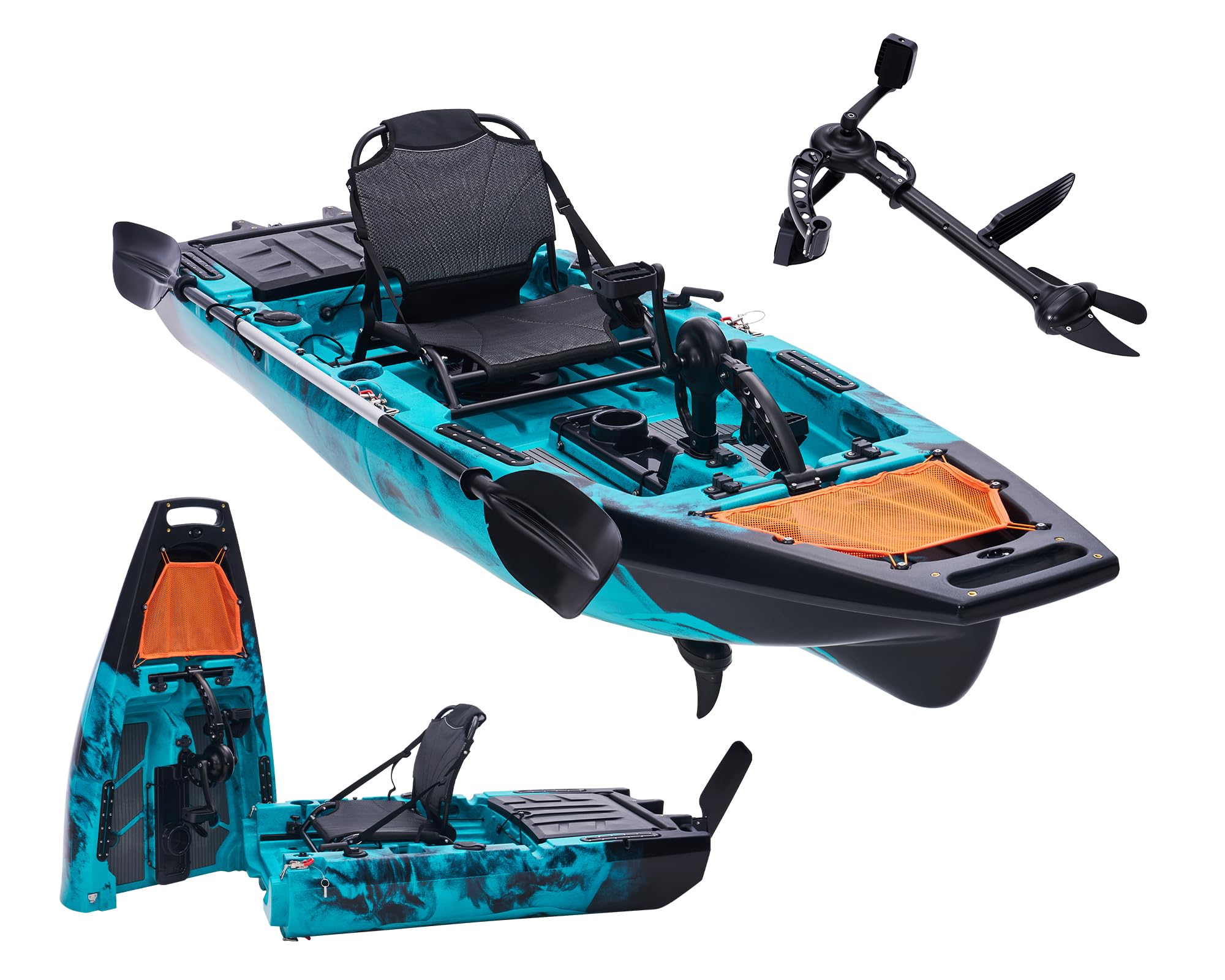
A hands-free propeller-drive kayak that breaks down to fit in a Toyota RAV4.
The Albott is the kayak for anglers without a truck or a roof rack. Its modular design splits into sections with internal handles for carrying, and assembly is a quick 3-step process. Buyers confirm it fits inside a Toyota RAV4 and can be set up on the shore in minutes—no trailer required.
On the water, a propeller drive system gives you hands-free power—quiet acceleration and easy reverse for working tight docks or mangrove spots. The rudder handle offers smooth steering, with a cable to raise and lower the stern rudder. The hull is made from durable HDPE with 304 stainless steel components and a 420 lb capacity, and it’s stable enough to stand on.
The most-discussed note in the data is preparation: buyers stress doing a full pre-trip checklist on bolts, cables, and the rudder before heading out. One owner lost steering when a stop jumped and cables crossed in the hull—still gave it five stars, but carried tools afterward. Another suggests a seat riser adapter for arthritic knees. At 109.7 lb assembled, it’s heavy, but manageable in pieces.
Freedom of setup: if you’ve skipped kayaking because you lack a rack or trailer, this modular system removes that barrier completely.
Prep before launch: the pedal drive is excellent, but check every bolt and cable on trip one—a few owners hit steering hiccups.
6. Perception Pescador Pro 12
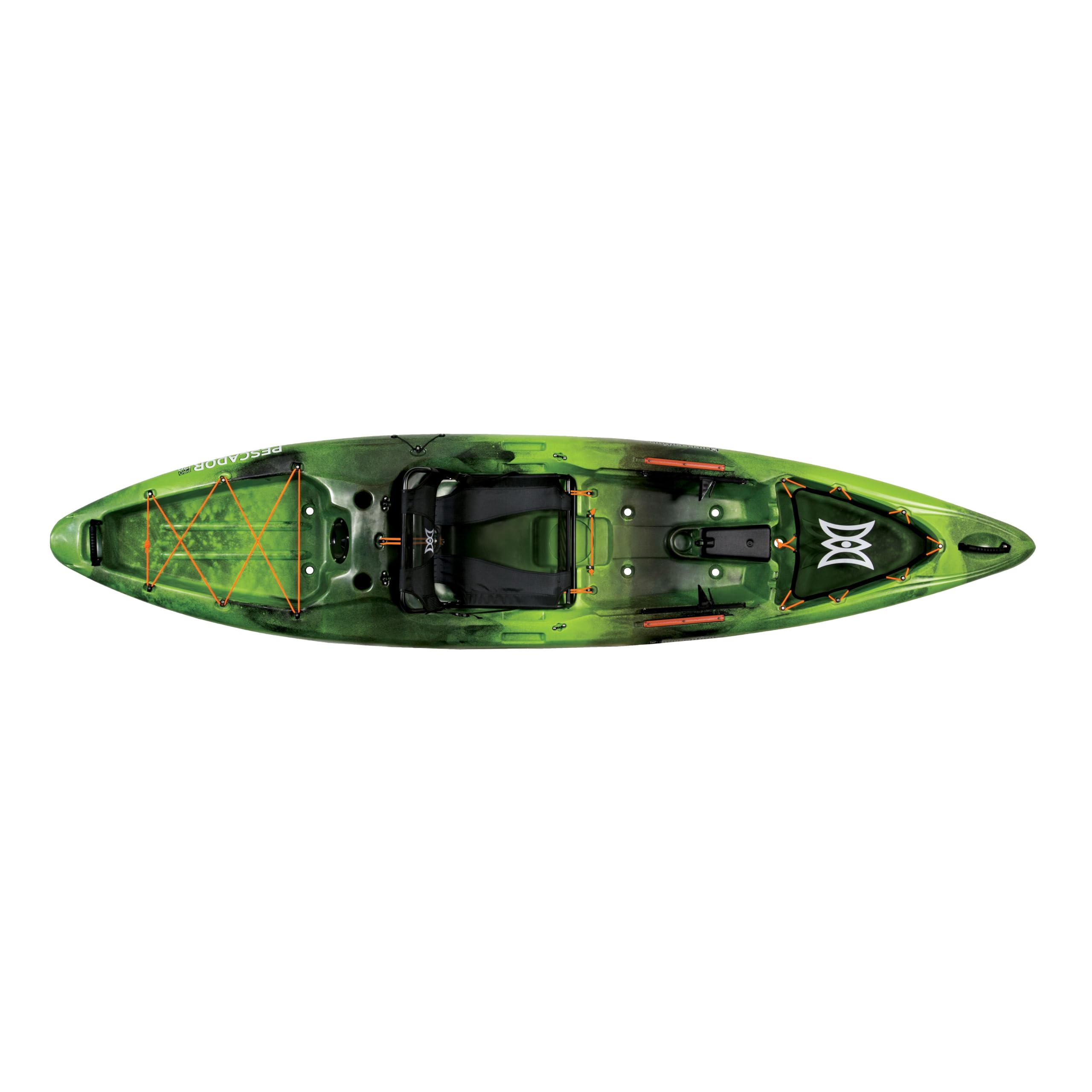
A 12-foot hull that glides all day, wrapped around an adjustable lawn chair seat.
The Pescador Pro 12 is the specialist for long, seated fishing sessions. Its adjustable lawn chair seat is the standout—buyers call it outstanding for all-day trips, and one owner reports sitting for several hours without issues. It sits low in the hull, which helps with stability and makes it easy to slip into.
At 12′ and 64 lb, it balances durability with portability. Owners describe it as easy to lift and load solo on a small SUV, and it glides efficiently through the water—a trait that stands out versus the wider, slower Outlaw above. The capacity is 375 lb, and the large front and rear storage areas swallow fishing gear without complaint.
The main post-purchase advice from owners is to add scupper plugs. It’s also not a standing kayak—buyers report it’s best enjoyed seated. The rod holders work fine for transport but aren’t great for active fishing. It’s a bit heavy to load on an SUV by yourself for some, though owners at 6’2″ and 300 lb find it fits their frame perfectly.
Seated comfort king: if your day is spent working a shoreline from the saddle, this seat and glide make it easy.
Stay seated: skip this one if standing to cast is your priority—it’s built for comfort, not vertical fishing.
7. Wilderness Systems Tarpon 120
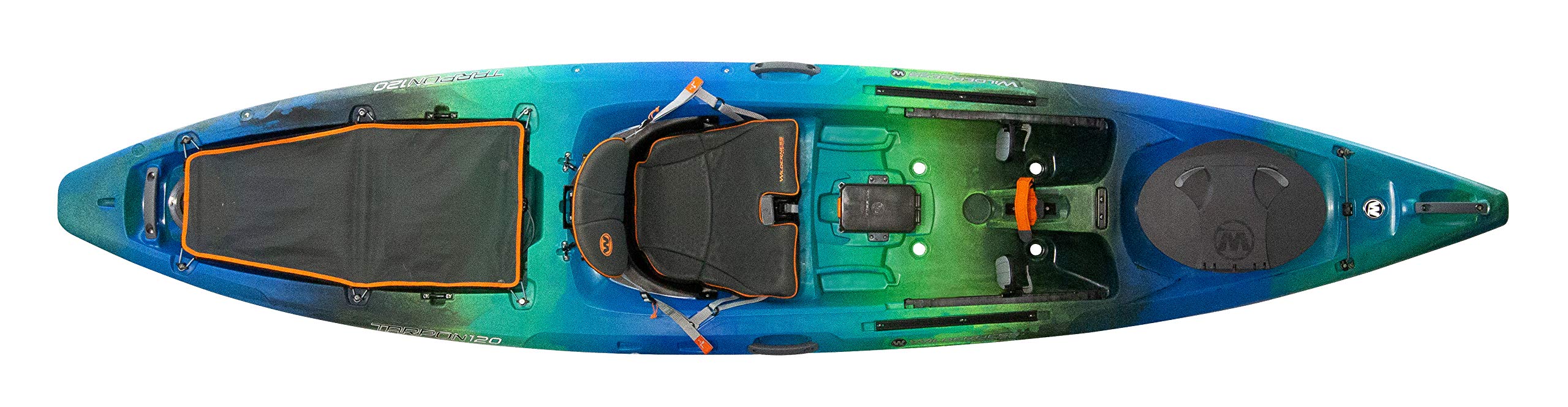
The legendary Tarpon name, now with a Phase 3 Air Pro seat that stays cool.
The Tarpon 120 carries among the most respected names in sit-on-top kayaks, and this version refines it. Its Phase 3 Air Pro seating system uses a cool-touch material, so your back stays comfortable in summer heat. At 63 lb (about 29 kg), owners note it’s sturdy without being too heavy to maneuver.
On the water, this hull is famous for fast, efficient, straight tracking—buyers confirm it cuts through the water and tracks well. It comes with a large rear storage well for crates, coolers, or camping gear, plus a front dry storage hatch. The Dry Tec removable dry box keeps your wallet and phone safe, and the Magnate magnetic water bottle strap is a thoughtful touch.
The honest notes: the seat sits low with no standing option, and one owner with a bad back wished for a lumbar pad. Seat fabric and trim fade quickly, with one buyer watching orange turn to yellow in two months in Seattle—cover it when stored. Shipping can be rough, with a few units arriving scratched and missing parts, though the manufacturer warranty resolves the issues.
Tracking first: if you want a hull that goes where you point it with minimal effort, the Tarpon’s glide is a joy.
Mind the fade: the seat comfort is top-tier, but the fabric fades fast in sun—cover it between trips.
8. Pelican Catch PWR 100

A pre-wired, swivel-seat rig ready for gas or electric power from the start.
The Catch PWR 100 is the shortcut to a motorized fishing setup. It arrives pre-wired, so you can stow a battery in the front compartment and connect your motor in the back without any drilling. The pre-installed transom accepts gas or electric motors up to 2.5 hp. Buyers confirm it pairs well with a Newport trolling motor and “moves great.”
The Ergo360 seating system is the clever part—the seat swivels 360 degrees on sliding tracks, so you can face any direction while fighting a fish or grabbing gear. It’s a feature you won’t find on padded seats elsewhere. The wide body adds stability and storage, and owners mention it cuts through the water with ease using a paddle or trolling motor.
At 75 lb it’s “slightly heavy” than some, but owners call it manageable. The rigging tracks (two 4″ up front, two 15″ in-handle) give you mounting points for accessories. Traction pads with a built-in ruler help you stand up safely while deadening sounds that might spook fish—a nice bass-specific detail.
Why It’s Worth It
- Pre-wired for a motor—no drilling your hull
- 360-degree swivel seat for all-direction fishing
- Stable, wide body with traction pads for standing
Considerations
- 75 lb is a heavier lift for solo loading
- Motor and battery sold separately
Choose this for: anglers who know a trolling motor is in their future and want a clean, factory-supported wiring setup.
pass on it if: you plan to stay strictly pedal-and-paddle and don’t need the swivel seat.
9. Reel Yaks Radar
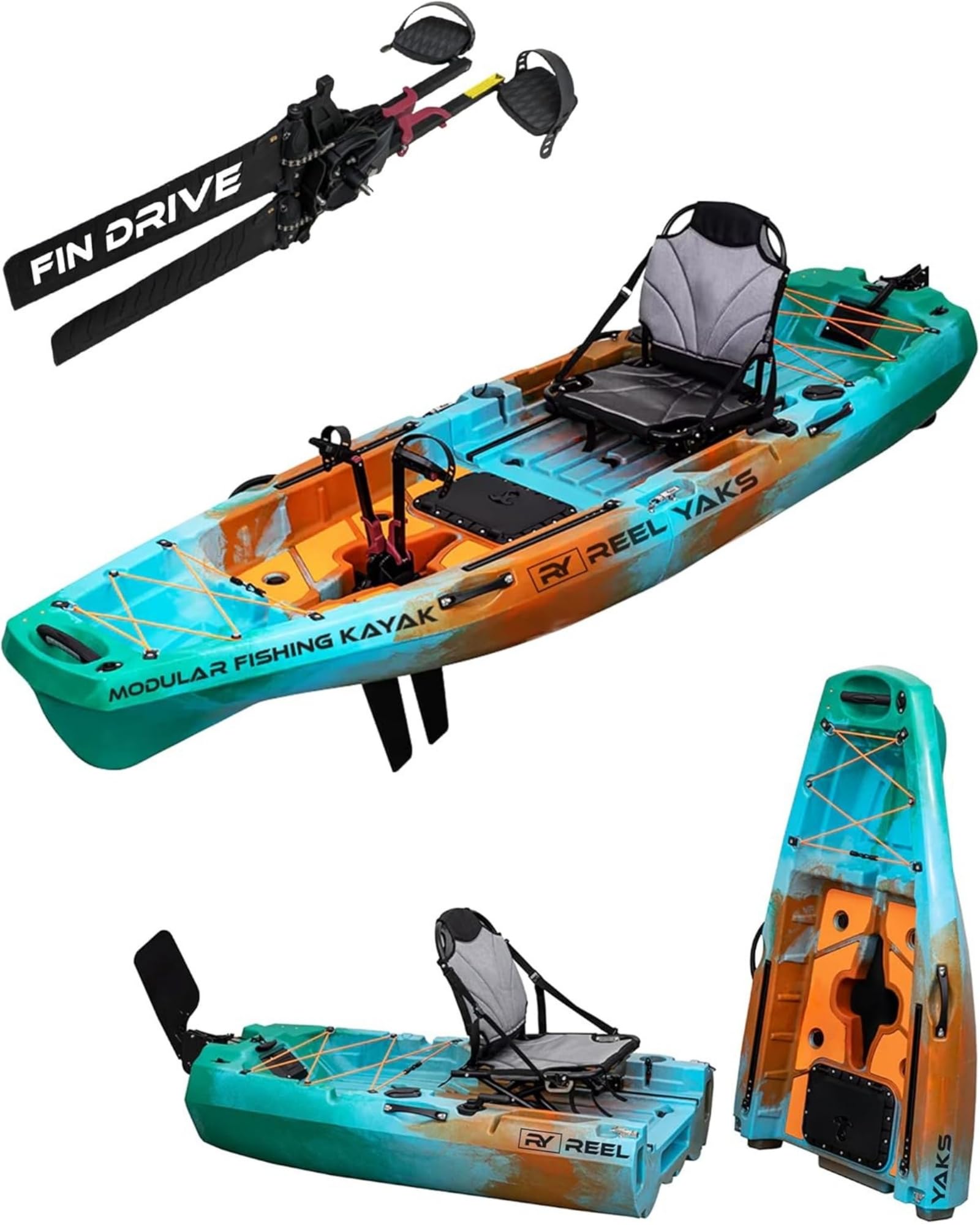
A pedal-powered modular kayak that tucks into an apartment closet and a Hyundai Kona.
The Radar is built for anglers with zero storage space. Its two-piece modular design separates quickly—buyers fit it inside a Hyundai Kona and a 2017 Ford Edge with seats down. No roof rack, no trailer, and no garage required. Assembly is straightforward, with owners recommending the website instructions over the printed ones.
The fin-drive pedal system is the star, delivering efficient, quiet movement that keeps your hands free for casting. Customers note it’s faster than a propeller drive and performs well on the water. The wide W-hull design and 430 lb capacity give you confidence while casting or navigating tricky waters, and it comes rigged with flush mount rod holders, track rails, and a 360 rod holder.
The rudder is the mixed bag here. One owner calls it responsive; another found it stuck in the upright position, and a few hit factory cable misalignment. Check it before you launch. Some buyers find the stability mixed too—one novice calls it very stable, while others recommend outriggers for ocean use. It’s a great upgrade from a paddle kayak if you’re ready for hands-free fishing.
Apartment-friendly: if storage is your bottleneck, no other pedal kayak packs away this small.
Rudder check first: the fin drive shines, but inspect the rudder cables before your first real trip.
10. Reel Yaks Raider
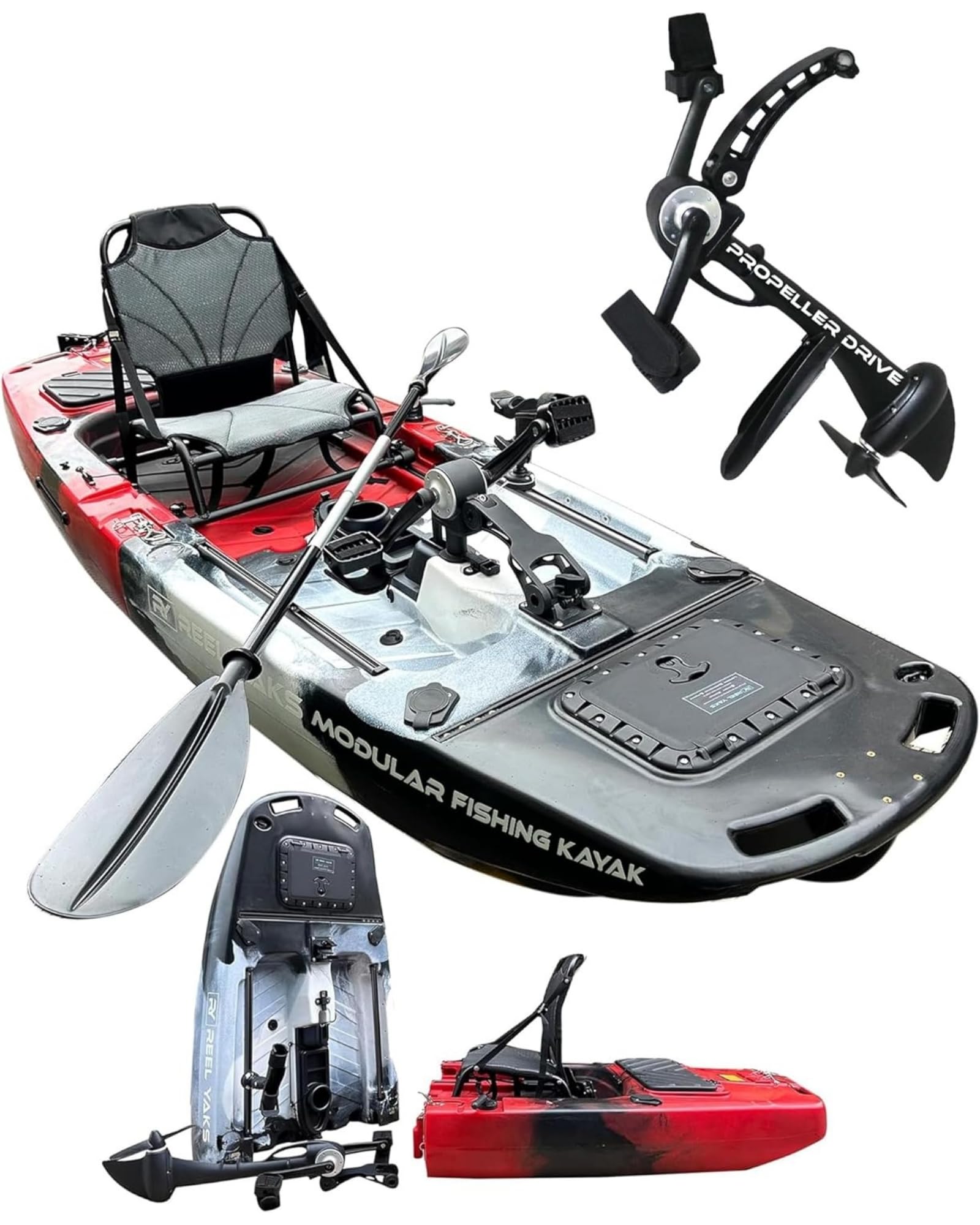
A 31-pound-per-section workhorse whose propeller drive works flawlessly forward and reverse.
The Raider is the pedal kayak for anglers who want speed on open water. Its propeller drive delivers pedal power that owners confirm works flawlessly in both forward and reverse, and it performs well in fast river current. Each of the modular sections weighs 31 lb with built-in handles, so two-piece transport is genuinely manageable.
Assembly takes four simple steps with latches, and the halves fit into a Chevy Equinox or a 2-door Jeep. The 9.5′ W-hull sit-on-top is built by a US Coast Guard-registered manufacturer for elite balance in rough water. It comes with a 360 rod holder, a stadium seat, and a removable rudder for tracking.
The recurring complaint is weight: buyers find it heavy, with one suggesting a cart for the carry and another wondering if they’ll need a trailer. The front storage compartment isn’t accessible while on the water—plan your tackle placement. A couple of buyers reported missing parts like the spare propeller and a rudder screw, though customer service responds quickly.
Pedal Performance
- Flawless propeller drive forward and reverse
- Fast, durable hull for rivers and open water
- Modular 31-lb sections for easy transport
Before You Buy
- Heavy—plan for a cart or a padded shoulder
- Front storage not reachable while seated
Pick this if: you want a fast, pedal-powered hull that handles rough water and breaks down for an SUV.
Pass if: you need easy access to every storage hatch while on the water.
11. BKC Brooklyn 12.5 Pro
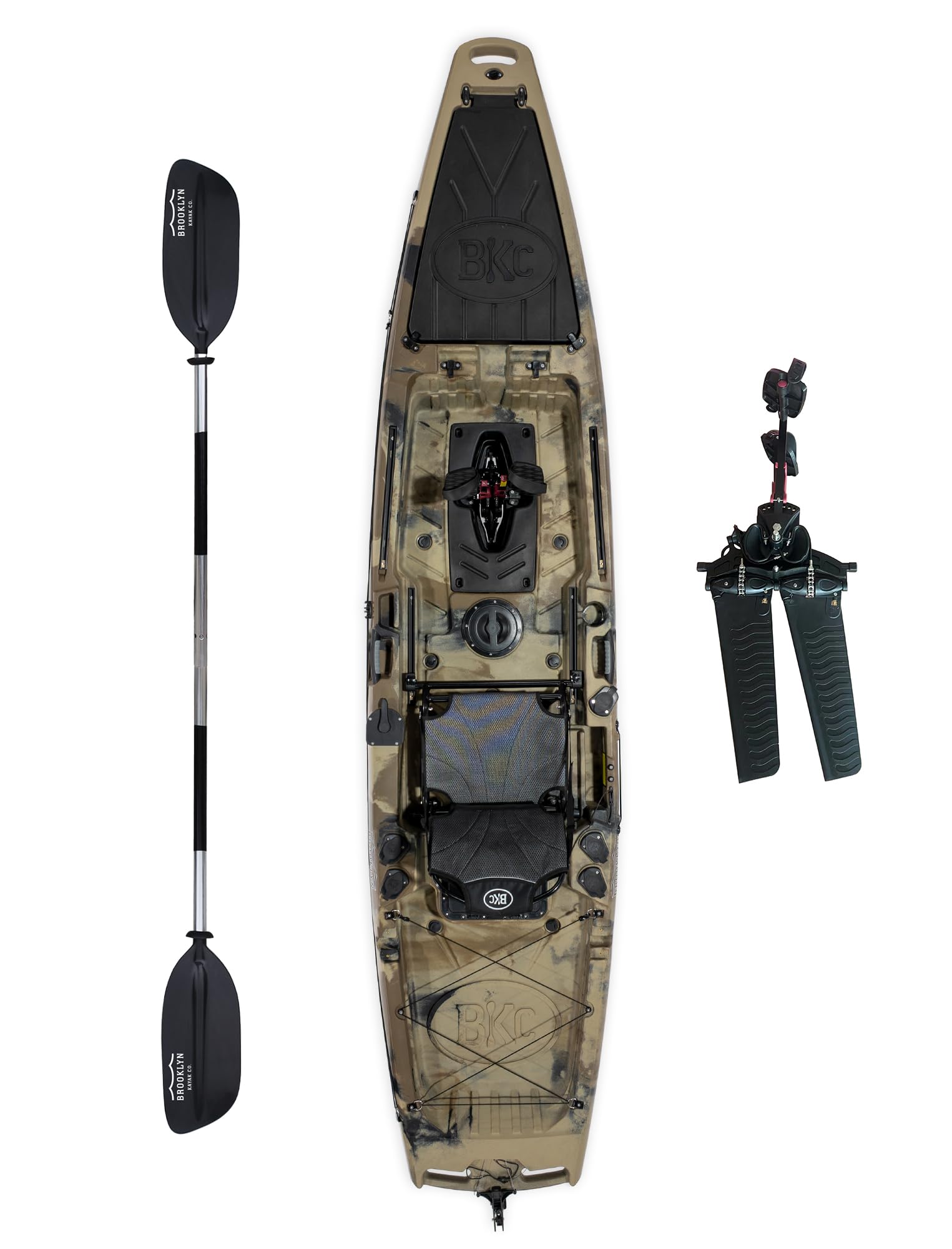
A 550-pound-capable, 12.5-foot pedal platform that takes a cooler, a crate, and a friend’s gear.
The Brooklyn 12.5 Pro is for the angler who brings everything. Buyers describe it as “like walking on water” for its stability in low waves.
The propeller drive with instant reverse is a crowd-pleaser, delivering pedal speeds of 3-4 mph, and up to 5 mph with paddle assist. Reviewers point out racking up 75.9 miles pedaled. The hand-operated rudder steering keeps you tracking straight in wind and current, and five integrated rod holders make it a ready-to-rig platform for trolling and casting.
Storage is cavernous: dual watertight hatches with dry bag inserts, bow and stern bungee storage, and a large rear cargo area. The honest caveat is the pedal drive’s delivery history—several buyers received the kayak without the pedal drive or with a broken unit, though customer service (specifically an agent named Isaac) resolved it with daily calls and replacements. Ask the seller to confirm the drive is included before you commit.
Load everything: with 550 lb capacity and dual dry hatches, this is the hauler of the group for long expedition-style trips.
Confirm the drive: the kayak itself is superb, but verify the pedal drive ships with the order—delivery has been inconsistent.
Understanding the Specs
Weight Capacity and Stability
The weight capacity tells you the maximum load the hull is designed to float—your body weight plus all your gear, a cooler, and a tackle crate. A kayak rated at 275 lb is fine for a lighter paddler with minimal gear. A 425-550 lb rated hull gives you the freedom to pack heavy or accommodate a larger angler, and that extra width is what makes standing up to cast feel safe.
Pedal Drive vs. Paddle
A paddle kayak is simpler, lighter, and cheaper—your arms do all the work. A pedal drive frees your hands so you can keep casting while you move, which is a genuine advantage for bass anglers who want to cover water without stowing the rod. Some pedal systems use a propeller; others use a fin drive. Propeller drives often handle reverse better, while fin drives tend to be faster and quieter.
FAQ
Is a pedal kayak worth it for bass fishing?
What weight capacity do I need in a bass fishing kayak?
Can you stand up and cast from a bass fishing kayak?
How much does a bass fishing kayak weigh to load?
Do bass fishing kayaks come with a paddle?
Which is better for bass fishing, a fin drive or a propeller drive?
Can I add a trolling motor to a fishing kayak?
How important is the seat in a fishing kayak?
What is scupper hole and why do I need scupper plugs?
Is a longer kayak better for bass fishing?
Final Thoughts: The Verdict
The overall winner for most anglers is the Pelican Sentinel 100X — it nails the balance of a 44 lb carry weight, built-in fishing storage, and a stable casting platform at an entry-friendly price, and the crowd backing it is strong. If you want hands-free fishing and have the budget, the BKC Brooklyn 12.5 Pro leads on payload with a 550 lb capacity and five rod holders. For plus-size anglers or those who want to stand up and cast, the Perception Outlaw 11.5 delivers a stable 425 lb platform with a genuinely comfortable seat.
How We Picked
We do not accept paid placement. Every pick is matched to a real buyer and a real use-case; we do not hands-on test units.
Sources & Methodology
Specifications: manufacturer listings and product documentation. Review insights: verified customer reviews, as of August 2026. Pricing: not shown on this page (it changes often); check the current price via the retailer link.
As an Amazon Associate, Gadgets Feed earns from qualifying purchases. This does not affect which products we feature.