
Our readers keep the lights on and my morning glass full of iced black tea. As an Amazon Associate, I earn from qualifying purchases.
Specs are compiled from manufacturer listings and verified buyer reviews and can change over time — please confirm the key details on the product page before buying.
If you are standing in the aisle trying to guess which bat length and drop weight will help your young player actually make contact, you already know the real struggle: a bat that is too heavy kills swing speed, and one that is too light robs power. This guide breaks down five solid USA-certified options — from a first-timer’s lightweight swing to a competitive alloy with real pop — so you can match the right spec to your kid’s height and league without overthinking it.
I’m Min — the founder and writer behind Gadgets Feed. This guide is built by comparing the manufacturers’ published specifications and the patterns across verified customer reviews, so you get each pick’s real strengths and trade-offs instead of marketing spin.
Whether you are buying for a 7-year-old in coach-pitch or a 12-year-old facing live arms, the bat for youth baseball on this list matches a specific size, weight, and swing feel to a player’s age and skill level.
Our Picks at a Glance


How To Choose The Best Bat For Youth Baseball
Picking the right bat is mostly about matching three things: league rules, the player’s size, and the feel that lets them swing freely. Here is what to look at first.
Drop Weight: The Number That Tells You Swing Speed
The drop weight is the difference between the bat’s length in inches and its weight in ounces. A -10 drop means a 30-inch bat weighs about 20 ounces. Lighter drops (higher negative numbers like -12) are easier to swing, ideal for younger or smaller kids. Heavier drops (closer to -5) require more strength but can drive the ball farther — usually for older, stronger players. The right drop lets a kid get the barrel through the hitting zone without throwing their balance off.
USA Certification: It Has to Be on the Bat
Every youth bat on this list is USA Baseball approved, meaning it meets the standard required by Little League, Cal Ripken, Babe Ruth, and most youth leagues. If the bat does not have a USA stamp, it will not be legal for those games. The stamp is usually right on the barrel.
Barrel Diameter and Length
A larger barrel diameter (like 2 5/8 inches) gives a bigger balance — the area of the barrel that produces the best hit. That extra margin for error is a big help for young hitters still learning to square the ball up. But a bigger barrel can also feel slightly heavier in the swing. The 2 1/4-inch barrel on some youth bats is lighter through the zone, which helps younger kids with control.
Quick Comparison
| Model | Best For | Drop Weight | Barrel | Length | Amazon |
|---|---|---|---|---|---|
| Rawlings 5150★ Best Overall | Value-driven contact hitters | -10/-11 | 2 5/8″ | 30″ | Amazon |
| Easton SpeedAlso Great | Aggressive power hitters 10+ | -10 | 2 5/8″ | 32″ | Amazon |
| Louisville Slugger Warrior | Players needing controlled pop | -10 | 2 5/8″ | 31″ | Amazon |
| Franklin Heist | Young hitters 8-12 learning swing path | -9/-10 | 2 5/8″ | 29″ | Amazon |
| Easton Moxie | First-year minors and coach-pitch | -12 | 2 1/4″ | 29″ | Amazon |
In‑Depth Reviews
1. Rawlings 5150 Youth Baseball Bat
Our pick — over 4.5★ from 950+ verified ratings; the strongest balance of quality and price.
A 30-inch USA alloy bat with a large barrel that hits above its price point.
The Rawlings 5150 uses an aerospace-grade alloy barrel that is remarkably responsive for its mid-range pricing. At 30 inches with a -10 drop, it offers a 2 5/8-inch big barrel design — the same generous balance as the pricier Easton Speed and Louisville Warrior — so a 10-year-old has a wide margin for contact. The ultra-lightweight construction helps younger players generate faster bat speed, which usually translates to harder-hit balls even when the swing is still developing.
The honest catch is weight distribution. Reviewers point out, “The bat does seem to have a little more tip weight that the nicer bats but works well for my 7 year old.” That tip-heaviness can give more power if the hitter can get the barrel through, but it makes the bat feel heavier than a -10 label suggests. One 14-year-old’s parent even noted it weighs close to a 34-inch drop-3 bat. Compare that to the Easton Speed’s speed cap design, which manages barrel feel better for power hitters — the 5150 is a better fit for a stronger kid who can handle the extra weight out front.
The composite handle (layered materials that absorb some vibration) softens the sting of off-center contact better than the Moxie’s all-aluminum construction. And the durability is proven: one family bought it again in a bigger size after it survived multiple seasons.
One-piece construction: A durable, large-barrel alloy that delivers good pop at a more accessible price, as long as your kid has the strength to handle the tip weight.
Best for line drives: A solid 10-year-old or older who already has decent strength and wants a large balance without the premium money.
Not for slap hitters: A smaller or newer player who will struggle with the barrel feeling heavy through the zone.
2. Easton Speed Baseball Bat
A 32-inch alloy stick that hits with more authority than the shorter bats on this list while staying balanced.
For a power hitter who has outgrown lighter drops, the Easton Speed brings a -10 drop to a full 32-inch frame. That extra length gives a bigger reach across the plate, and the 2 5/8-inch barrel provides an enlarged balance that rewards solid contact with real exit velocity. The speed cap (a flexible end that increases barrel responsiveness) helps the bat flex slightly on impact, which buyers report younger players appreciate — one reviewer noted it was “well balanced” and gave “plenty of pop” for a 10-year-old moving up from tee-ball.
A couple of trade-offs stand out. At 22 ounces (from the -10 drop on 32 inches), this is the heaviest bat here, so a smaller 9-year-old may struggle to get it around fast. Unlike the Easton Moxie’s -12 drop that is practically weightless, the Speed demands some muscle. Second, the one-piece alloy construction can sting on off-center hits — a reviewer specifically mentioned “vibration/stinging on off-center hits, expected from material.” For a kid who barrels the ball up, it is great; for one who is still squaring it up, the sting factor is real.
Owners mention this bat is durable enough for a power hitter’s repeat swings, with one family buying the 26-inch, then the 28-inch, and then this 32-inch — the same bat in three sizes. If your player generates real bat speed and needs the extra barrel length to turn doubles into dingers, this is the pick.
Speed swing design: The longest barrel on the list with competitive pop, but the alloy feedback rewards a confident swing.
Best for contact hitters: A 10-to-12-year-old power hitter who already controls the bat well and wants a full-length alloy barrel for maximum contact area.
Not for power hitters: A smaller young player still learning to center the ball — the sting on miss-hits will frustrate them.
3. Louisville Slugger 2026 Warrior (-10)
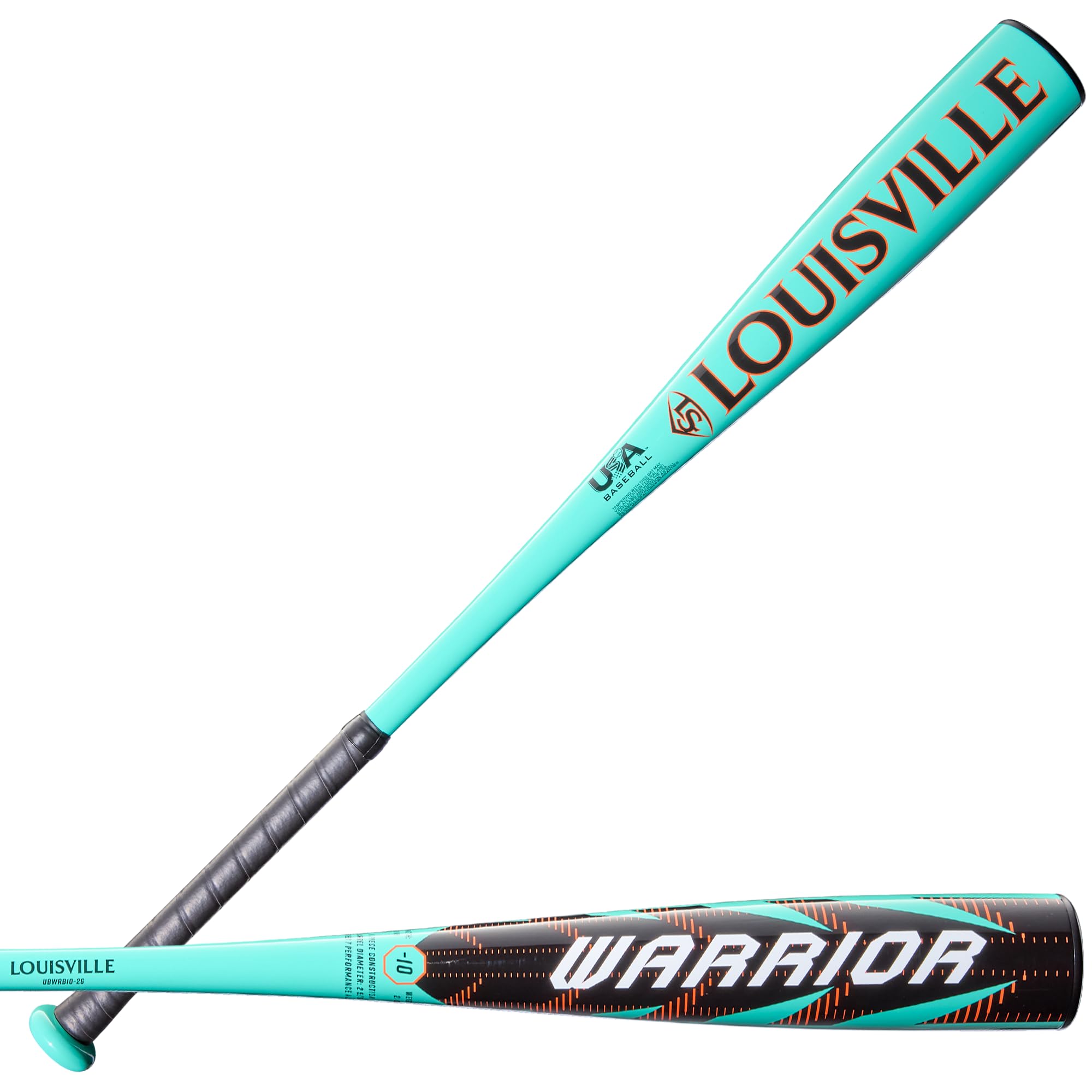
A 31-inch alloy bat that feels balanced rather than barrel-heavy, with a grip that sticks even on humid days.
The Louisville Slugger Warrior is built around a “balanced swing weight” — a profile that distributes mass evenly so the bat does not feel tip-heavy through the zone. That matters for a 10U hitter (several reviewers mentioned it worked for their 10-year-old) because it keeps the barrel on plane longer without muscling the swing. The one-piece alloy construction is stiff and designed to amplify bat speed into exit velocity, and the synthetic leather grip offers more cushioning than the basic wraps on the lower-priced Moxie or Rawlings 5150.
Customers note a noticeable difference compared to a standard starter bat. One buyer mentioned, “He noticed the difference right away and has been making more solid contact during both practices and games.” The 2 5/8-inch barrel gives a generous balance, and the 21-ounce weight (31-inch length with a -10 drop) is light enough for a 52-inch-tall 10-year-old to swing without dragging the barrel.
It lacks the speed cap of the Easton Speed, so the barrel is slightly stiffer. That reduces sting a bit on off-center hits but also cuts some of the flex-based pop that a responsive cap can give. If your kid is in that balance of being strong enough for a -10 but not yet a full-on power swinger, the Warrior’s balanced profile gives them controlled exit speed without over-challenging their strength.
Balanced alloy barrel: A balanced, comfortable alloy that a 10U hitter can control while still getting real pop off the barrel.
Best for all-around play: A player transitioning from coach-pitch to kid-pitch who needs a forgiving balance and a comfortable grip.
Not for elite power: A beginner who is still building basic strength — a -12 drop (like the Moxie) will be easier to swing.
4. Franklin Sports Heist Youth Baseball Bat
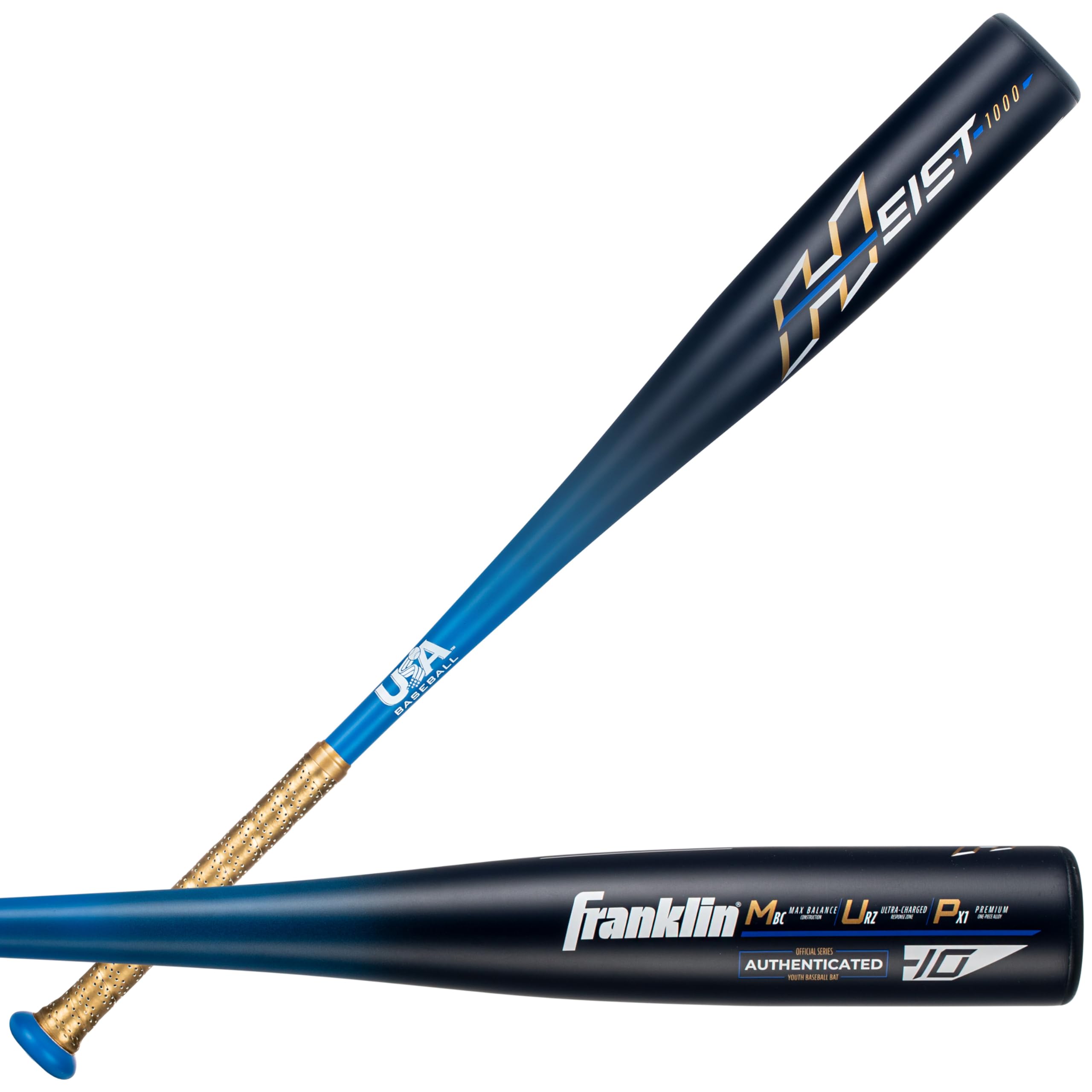
A lightweight 29-inch alloy bat that helps an 8-to-12-year-old control the barrel through the hitting zone.
The Franklin Heist is tuned for the developing hitter — specifically ages 8-12 — with a drop-9 weight ratio and an evenly balanced weight distribution. That means no heavy barrel tipping the bat forward; the weight is centered so the kid can swing level without the bat pulling their hands down. The one-piece aluminum alloy is built for use with official-size baseballs, so it holds up to real practice sessions and league play, and the 2 5/8-inch barrel gives the same generous balance as bats at nearly twice the price.
Shoppers say the lightweight feel makes a real difference for a 7 or 8-year-old. One owner reported that “the bat is lightweight and balanced, which makes it much easier for him to swing through the zone with control instead of straining — a big plus for young players still refining their swing.” That ease of swing is its main advantage over the Rawlings 5150, which has that noticeable tip weight. At 29 inches, the Heist gives a shorter lever than the 32-inch Easton Speed, so there is less bat to control — ideal for a smaller player.
A minor trade-off is that the grip tape is a simple wrap rather than a padded synthetic leather grip like the Louisville Warrior’s. After a full season, some buyers mention the top of the barrel shows wear, though it hasn’t dented. For a kid who is just starting to face real pitching, the Heist removes the heaviness barrier that can destroy swing confidence.
Lightweight swing feel: A balanced, lightweight barrel that lets a young hitter swing level without muscling the bat through the zone.
Best for speedsters: A 7-to-10-year-old beginner or intermediate player who needs a forgiving barrel weight to develop a smooth swing.
Not for heavy hitters: A power hitter who has outgrown a 29-inch length and wants a -10 drop for more authority at the plate.
5. Easton Moxie Baseball Bat

A 29-inch, 17-ounce USA bat that feels like swinging a magic wand — ideal for a first-year player.
The Easton Moxie has a -12 drop weight, which means it is 12 ounces lighter than its length in inches. At 29 inches, that is about 17 ounces — easily the lightest feel on this list. The 2 1/4-inch barrel diameter is narrower than the 2 5/8-inch barrels on the other bats here, which reduces the balance but also reduces the mass the player has to get moving. For a 7 or 8-year-old in coach-pitch or early minors, that trade-off works: it is much easier to make any contact than it is to swing a heavier barrel at all.
Buyers confirm this is practically a no-brainer for the youngest athletes. One customer observed, “A first-year minor league player finds the lightweight swing builds confidence at the plate. The balanced -12 drop and cushioned grip make it easy to control for a developing hitter.” The ALX100 Military Grade Alloy construction and 2.2mm cushioned grip provide a comfortable, durable package that one parent called “perfect for coach-pitch.”
The narrower barrel means off-center hits lose more energy than you would get from the 2 5/8-inch barrels on the Franklin Heist or Rawlings 5150. That is the reason the Moxie is best as a starting point rather than a long-term upgrade. Once a kid starts squaring balls up reliably, they will benefit more from the larger balance of a -10 bat like the Louisville Warrior or Easton Speed.
End-loaded power: A lightweight, beginner-friendly bat that is 10% shorter than the Easton Speed (29 inches versus 32 inches) and much easier to control for a small player.
Best for power hitters: A first-year minor league or coach-pitch player who needs a light, confidence-building swing to learn barrel control.
Not for contact hitters: A player who is already making consistent solid contact and would benefit from a bigger balance and more barrel weight.
Understanding the Specs
Drop Weight
The drop weight is the difference between the bat’s length in inches and its weight in ounces. A -12 drop bat that is 29 inches long weighs about 17 ounces. The higher the minus number, the lighter the bat feels. For a young player just building strength, a lighter drop (-12 or -11) helps them get the barrel to the ball faster. Once they have some power, a heavier drop (-10 or -9) gives the bat more mass to transfer into the ball on contact.
Barrel Diameter & balance
Most youth bats come in 2 1/4-inch or 2 5/8-inch barrel diameters. The bigger 2 5/8-inch barrel gives a larger hitting surface — a larger balance — so off-center hits still travel a decent distance. The 2 1/4-inch barrel is lighter through the swing and easier to control, but you sacrifice that margin of error. For beginners, the lighter barrel is often better; for developing hitters, the bigger barrel helps more balls find the outfield grass.
FAQ
How do I know what length bat to buy for my child?
What does drop weight mean on a youth baseball bat?
What is the difference between a one-piece and two-piece bat?
Can my child use a -12 drop bat in competitive leagues?
How long does a youth baseball bat typically last?
Is a 2 5/8-inch barrel better than a 2 1/4-inch barrel?
What is the difference between USA and USSSA bats?
How do I clean and maintain a youth baseball bat?
Final Thoughts: The Verdict
If you want one dependable pick, the bat for youth baseball winner is the Easton Speed because the 32-inch barrel with a 2 5/8-inch balance gives a competitive power hitter the reach and pop to drive the ball. If you want a balanced, controlled swing for a 10U player moving up, grab the Louisville Slugger Warrior. And for a first-year minors kid who needs the lightest possible swing to learn barrel control, the Easton Moxie is the lightweight starter that builds confidence at the plate.
How We Picked
We do not accept paid placement. Every pick is matched to a real buyer and a real use-case; we do not hands-on test units.
Sources & Methodology
Specifications: manufacturer listings and product documentation. Review insights: verified customer reviews, as of July 2026. Pricing: not shown on this page (it changes often); check the current price via the retailer link.
As an Amazon Associate, Gadgets Feed earns from qualifying purchases. This does not affect which products we feature.