
Our readers keep the lights on and my morning glass full of iced black tea. As an Amazon Associate, I earn from qualifying purchases.
You are setting up an off-grid solar system, and your biggest decision is the battery: it must store enough power to run your fridge, lights, and water pump through the night without failing early or costing a fortune to replace. The battery chemistry you choose decides how many years of service you get, how much weight your trailer or floor must carry, and how cold your setup can get before it shuts down. This guide compares six deep-cycle lithium iron phosphate (LiFePO₄, a type of rechargeable battery that is very long-lasting and stable) batteries, from a compact 12V mini that is lighter than a car tire up to a high-voltage 24V unit that stores 2.56 kWh (kilowatt-hours, the amount of energy needed to run a 100-watt light bulb for 25.6 hours). You can match the right capacity, voltage, and safety features to your solar array and daily power use.
I’m Min — the founder and writer behind Gadgets Feed. This guide is built by comparing the manufacturers’ published specifications and the patterns across verified customer reviews, so you get each pick’s real strengths and trade-offs instead of marketing spin.
Finding the right power source for a remote cabin, RV, or tiny house starts with a clear look at the best batteries for off grid solar, balancing cycle life (how many times you can drain and recharge it), cold-weather protection, and expandability against your actual budget.
Quick Picks
- LiTime 12V 100Ah Group 24 LiFePO₄ Battery — Best Overall
- Dyness 12V 100Ah Group 31 Lithium Battery — Cold-Weather Pick
- 24V 100Ah LiFePO₄ Battery — Voltage Value
- ECO-WORTHY 12V 280Ah LiFePO₄ Battery — Best Bluetooth
- Battle Born 100Ah 12V LiFePO₄ Battery — Premium Pick
- 12V 100Ah Mini LiFePO₄ Lithium Battery — Budget Entry
How To Choose The Best Batteries For Off Grid Solar
Every off-grid battery stores solar energy during the day and releases it at night, but the details of voltage, cycle life, and cold-weather behavior separate a system that works reliably for a decade from one that leaves you in the dark after two years. Here are the three specs that matter most.
Voltage: 12V vs 24V for Your Setup
Most small solar builds start at 12 volts because it matches common RV and marine parts. A 24-volt system, however, halves the current (the flow of electricity) for the same power, which means you can use thinner wiring and lose less energy as heat over longer cable runs. The catch is that 24V inverters (devices that turn battery DC power into AC power for your appliances) and charge controllers cost more and are slightly less common. If you plan to draw more than about 2,000 watts continuously, stepping up to 24 volts is often the smarter move.
Battery Management System and Cold Protection
The BMS is the brain inside every lithium battery. It stops charging when the battery is full, cuts power if a short circuit happens, and — critically for off-grid — prevents charging when the temperature drops below freezing, which can permanently damage LiFePO₄ cells (the individual storage units inside the battery). Some batteries include a low-temperature cutoff that automatically halts charging below around 32°F and resumes when it warms up. If your battery lives in an unheated shed or a van parked in mountain winters, this feature is non-negotiable.
Cycle Life and Energy Density
A cycle is one full discharge from 100% down to a certain depth of discharge (DoD, the percentage of the battery’s capacity you use before recharging) and back to full. Most mid-range lithium batteries deliver 4,000 cycles at 100% DoD, meaning you can use every amp-hour every day and still get over a decade of service. Cheaper options may stop at 3,000 cycles, while premium cells can push past 15,000 cycles if you avoid draining them below 60%. Weight is another factor: a lithium battery weighs roughly one-third of a lead-acid battery with the same usable capacity, so if you are mounting it in a travel trailer or boat, every pound saved improves handling and fuel economy.
Quick Comparison
On smaller screens, swipe sideways to see the full table.
| Model | Best For | Voltage | Weight | Cycle Life | Amazon |
|---|---|---|---|---|---|
| LiTime 12V 100Ah Group 24 | Week-long camps in a van | 12V | 22.1 lbs | Up to 15,000 deep cycles | Amazon |
| 12V 100Ah Mini LiFePO₄ | Price-sensitive portable setups | 12V | 21.6 lbs | 4,000 cycles at 100% DoD | Amazon |
| Dyness 12V 100Ah Group 31 | Wet and cold environments | 12V | 25.3 lbs | Up to 10-year lifespan | Amazon |
| 24V 100Ah LiFePO₄ | Higher-voltage solar builds | 24V | 48.1 lbs | 4,000 cycles at 100% DoD | Amazon |
| ECO-WORTHY 12V 280Ah | Large single-battery capacity | 12V | 61.7 lbs | 3-year warranty | Amazon |
| Battle Born 100Ah 12V | 10-year warranty confidence | 12V | 31 lbs | 3,000-5,000 deep cycles | Amazon |
In‑Depth Reviews
1. LiTime 12V 100Ah Group 24 LiFePO₄ Battery
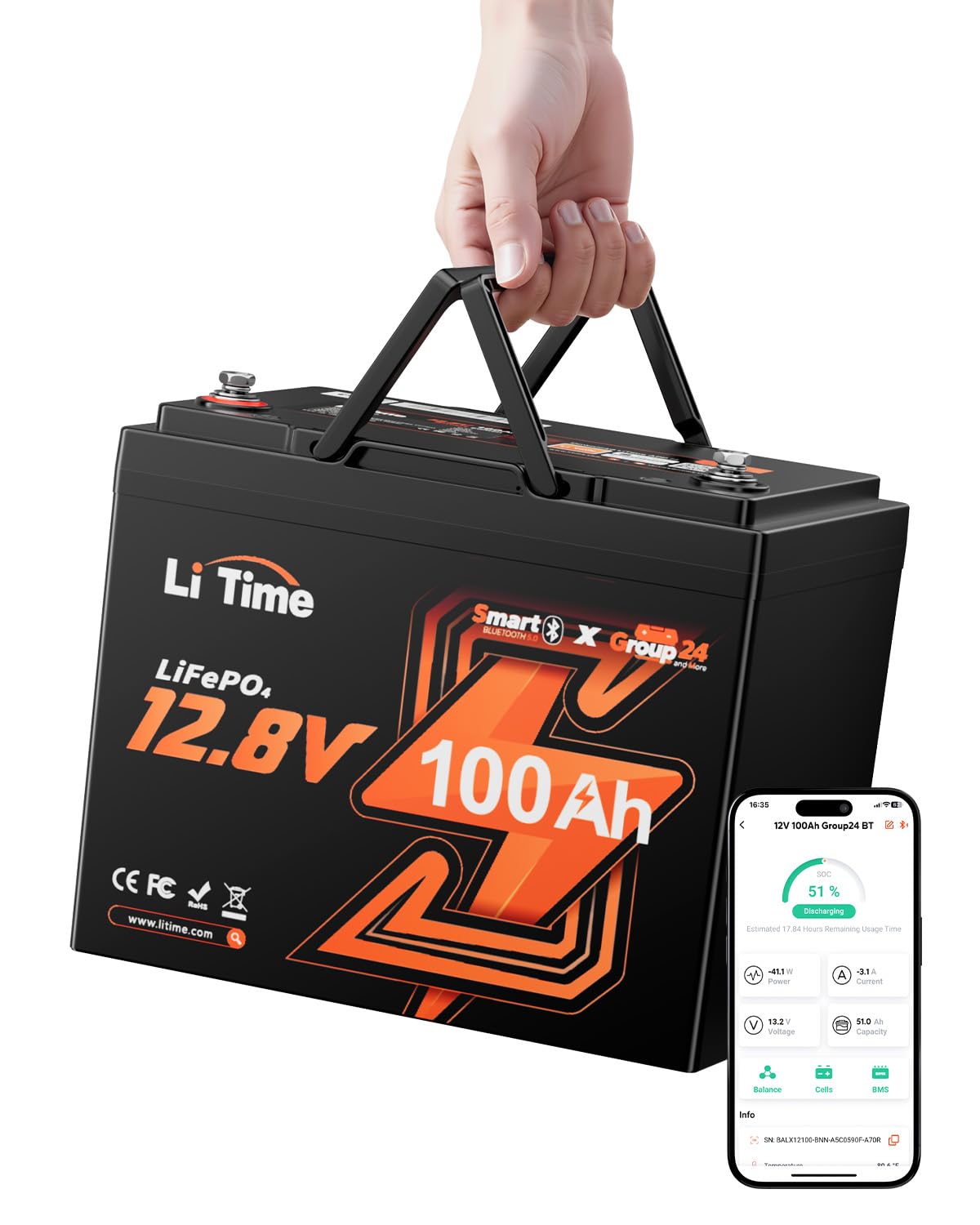
You check charge level from your phone, and the battery still works in a freezing mountain camp.
This is the battery buyers who actually live off-grid keep coming back to. The LiTime 12V 100Ah Group 24 gives you 1,280 watt-hours (Wh) of usable energy in a package that weighs only 22.1 lbs — 63% lighter than a lead-acid battery, so your trailer tongue or van cabinet gets a serious weight break. It fits Group 24, 27, and 31 boxes, meaning you can drop it into an existing battery tray without fabricating brackets.
The standout feature here is Bluetooth connectivity (a wireless link to your phone). You check state of charge, voltage, and charging status from your phone without crawling into a dark storage bay. Buyers report running a 4x 12V parallel setup since September 2024, powering a heater, fridge, and TV in a van through 50-plus cycles with no issues. The Bluetooth app also helps you plan your trip — one reviewer noted using two of these batteries to run electronics and a 55-pound trolling motor for four days straight, with the app showing charge percentage the whole time.
Cold weather is no problem. The smart cutoff stops charging below 0°F and discharging below -4°F, so the cells stay safe even in a freezing mountain camp. The built-in 100A BMS (Battery Management System, the circuit that protects the battery) guards against overcharging, over-discharging, and overheating. Unlike the 24V 100Ah LiFePO₄ (which weighs 48.1 lbs), this is a 12-volt unit that works with standard RV solar charge controllers. It comes with a 5-year warranty and UL 1973 certification, meaning it meets a safety standard from Underwriters Laboratories for stationary storage batteries. For anyone living out of a vehicle or running a small cabin, this is the strongest all-rounder on this list.
The case for it: Bluetooth monitoring lets you check the battery status from your phone, and the 5-year warranty plus UL 1973 certification mean serious long-term reliability.
The downside: The price is higher than entry-level 100Ah batteries like the 12V Mini LiFePO₄, so if you are on a tight budget and do not need Bluetooth, you can save money.
Best for: Van-lifers and RV owners who want Bluetooth monitoring and a proven track record of 50-plus cycles without issues.
Skip if: You need a 24-volt system for bigger inverters or simply want the cheapest 100Ah entry point.
2. Dyness 12V 100Ah Group 31 Lithium Battery
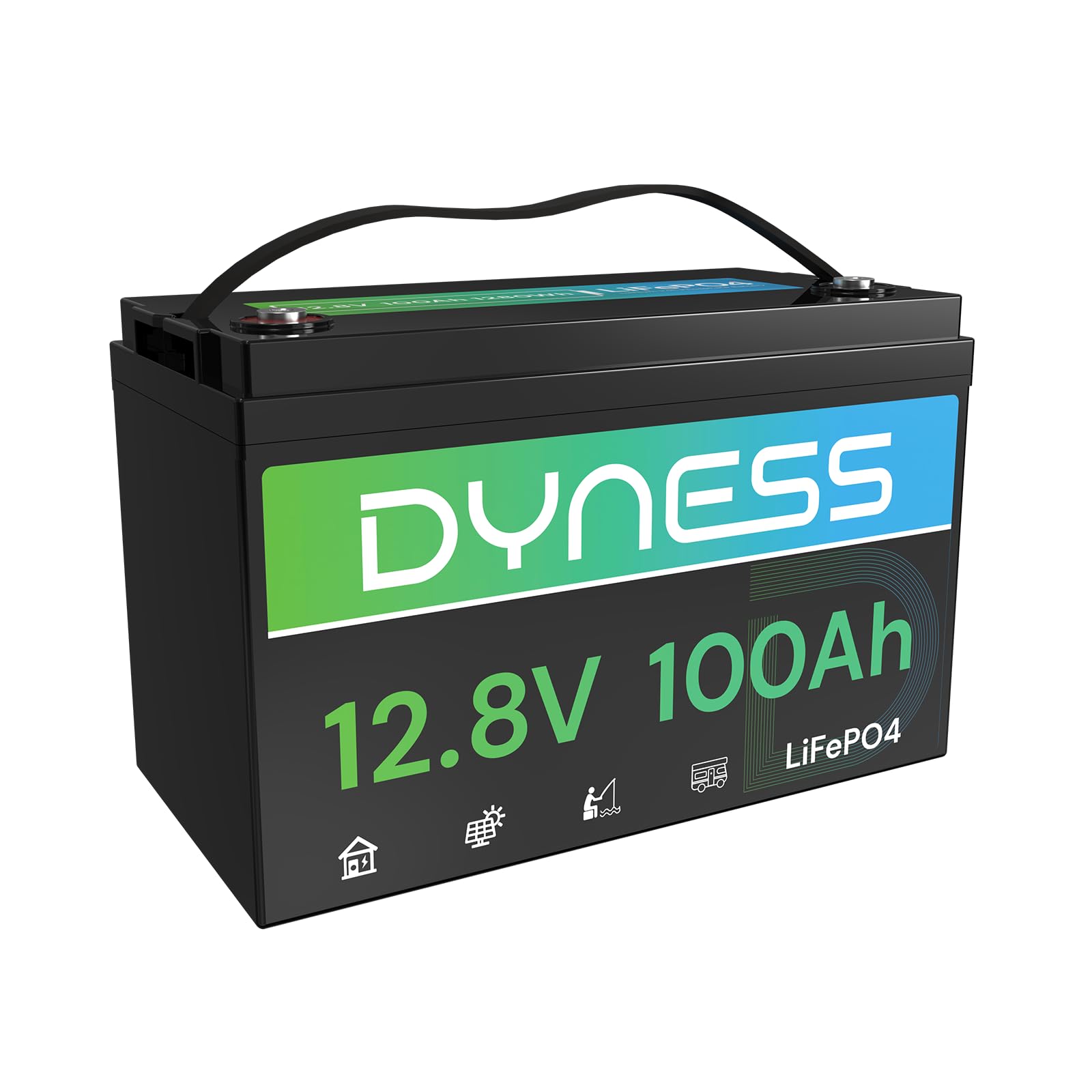
You get dust-tight sealing and automatic charging stop in freezing weather that the 12V Mini cannot do.
If your battery lives in an unheated garage, a wet marine locker, or a dusty off-grid shed, the Dyness 12V 100Ah Group 31 is the one that will shrug off the elements. It carries an IP65 rating (Ingress Protection, meaning it is completely dust-tight and protected against water jets from any direction) — no other battery on this list offers that level of environmental sealing. The low-temperature charging protection automatically disconnects charging below 32°F, with charging resuming at 41°F, and the battery cuts off power entirely at -4°F to prevent permanent cell damage.
Owners mention excellent build quality, noting that the battery arrives in a heavy-duty double cardboard box with dense foam protection. The manual is clear with large pictures, and reviewers consistently mention it holds a charge well and works with winches and other high-draw accessories. Weighing 25.3 lbs, it is about 3 lbs heavier than the LiTime, but it fits a standard Group 31 size, so it swaps into marine and RV trays without modification.
The 100A BMS covers overcharging, over-discharging, overcurrent, overheating, and short circuits, and it also includes salt-spray resistance for coastal use. You can expand up to 4 in parallel and 4 in series, hitting a maximum of 20.48 kWh — the same upper limit as the Dumfume 12V Mini — but with better moisture protection that matters if you mount it in a bilge or an exterior compartment. The A+ grade cells come with traceable production parameters, giving you more transparency than the unbranded cells in some cheaper options.
Why it’s great
- IP65 dust and water-jet protection — the only battery here rated for wet marine and outdoor environments
- Low-temperature cutoff at 32°F with automatic resume at 41°F to protect cells in cold weather
- A+ grade cells with traceable production parameters for extra quality confidence
Good to know
- Weighs 25.3 lbs, about 3 lbs heavier than the LiTime Group 24 battery
- No Bluetooth monitoring — you cannot check state of charge from your phone
Best for: RVs, boats, and off-grid shacks in cold, wet, or dusty environments where IP65 sealing matters.
Skip if: You want Bluetooth monitoring or need the lightest possible 100Ah battery for weight-critical builds.
3. 24V 100Ah LiFePO₄ Battery
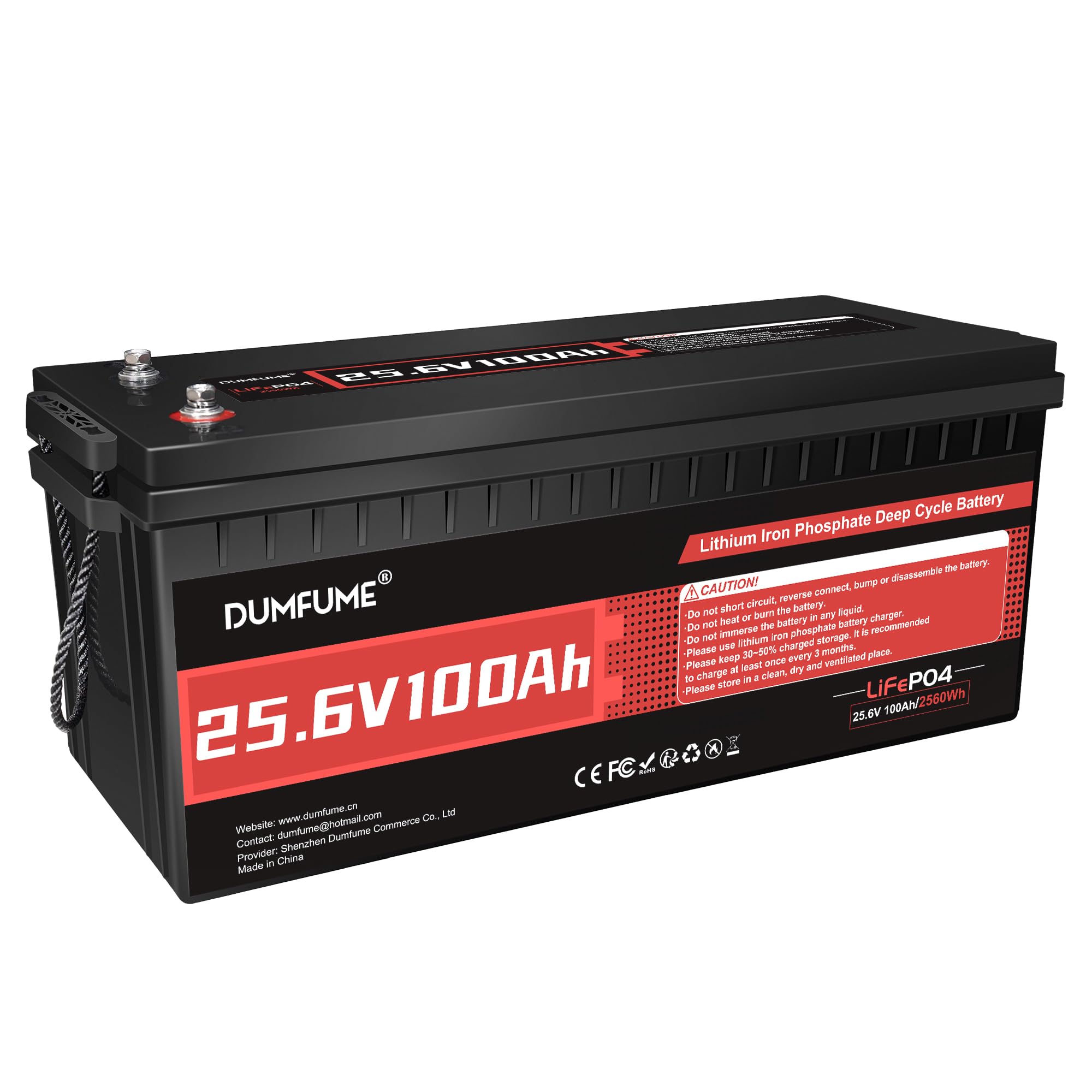
You get 2.56 kWh in one box, saving you from wiring two 12V batteries together.
Stepping up to a 24V system cuts your wire gauge (the thickness of the wire) requirements in half for the same power draw. The Dumfume 24V 100Ah LiFePO₄ battery delivers 2.56 kWh in a single unit, which is the same energy as two 12V 100Ah batteries but without the extra cables, fuses, and balancing concerns. It weighs 48.1 lbs — about the same as two 12V mini batteries combined — and supports series and parallel connections up to 2S4P for larger builds.
The 100A BMS handles continuous power up to 2,560 watts, enough to run a well pump, a refrigerator, and several lights simultaneously. Customers note that it provides stable, long-lasting power for home solar setups and connects easily to an inverter. One reviewer who runs a 24V 100Ah unit in a home solar system praised its reliability during travel, though they wished the manual was more detailed for beginners. Another buyer ran four 150Ah units and found each exceeded its rated capacity by about 7Ah (amp-hours, a measure of charge) — a sign of conservative cell rating.
A crucial difference from the 12V options: this battery needs the temperature to be 5°C (41°F) or higher to charge, and return shipping for low-temperature charging issues is not covered. If your battery sits in a freezing workshop without heating, you need a 12V option with active low-temp cutoff like the Dyness. The 5-year manufacturer warranty applies only to direct purchases, not Amazon orders — one reviewer discovered this after a battery died at one year and was unable to get warranty service through the Amazon purchase channel. Check the seller terms before buying.
Why it’s great
- Single unit delivers 2.56 kWh — equivalent to two 12V 100Ah batteries without extra wiring
- 24V system reduces current draw, saving on copper cable costs for longer runs
- Weighs 48.1 lbs, about one-third the weight of a lead-acid battery at the same capacity
Good to know
- Requires charging temperatures above 5°C; no built-in low-temp cutoff like 12V counterparts
- Warranty is only honored for direct purchases — Amazon orders may not be covered for claims
Best for: Off-grid homeowners who want a 24V system with 2.56 kWh of storage in one box to simplify wiring.
Skip if: Your battery stays in an unheated space below 41°F, or you want the warranty protection of an Amazon-purchased unit.
4. ECO-WORTHY 12V 280Ah LiFePO₄ Battery
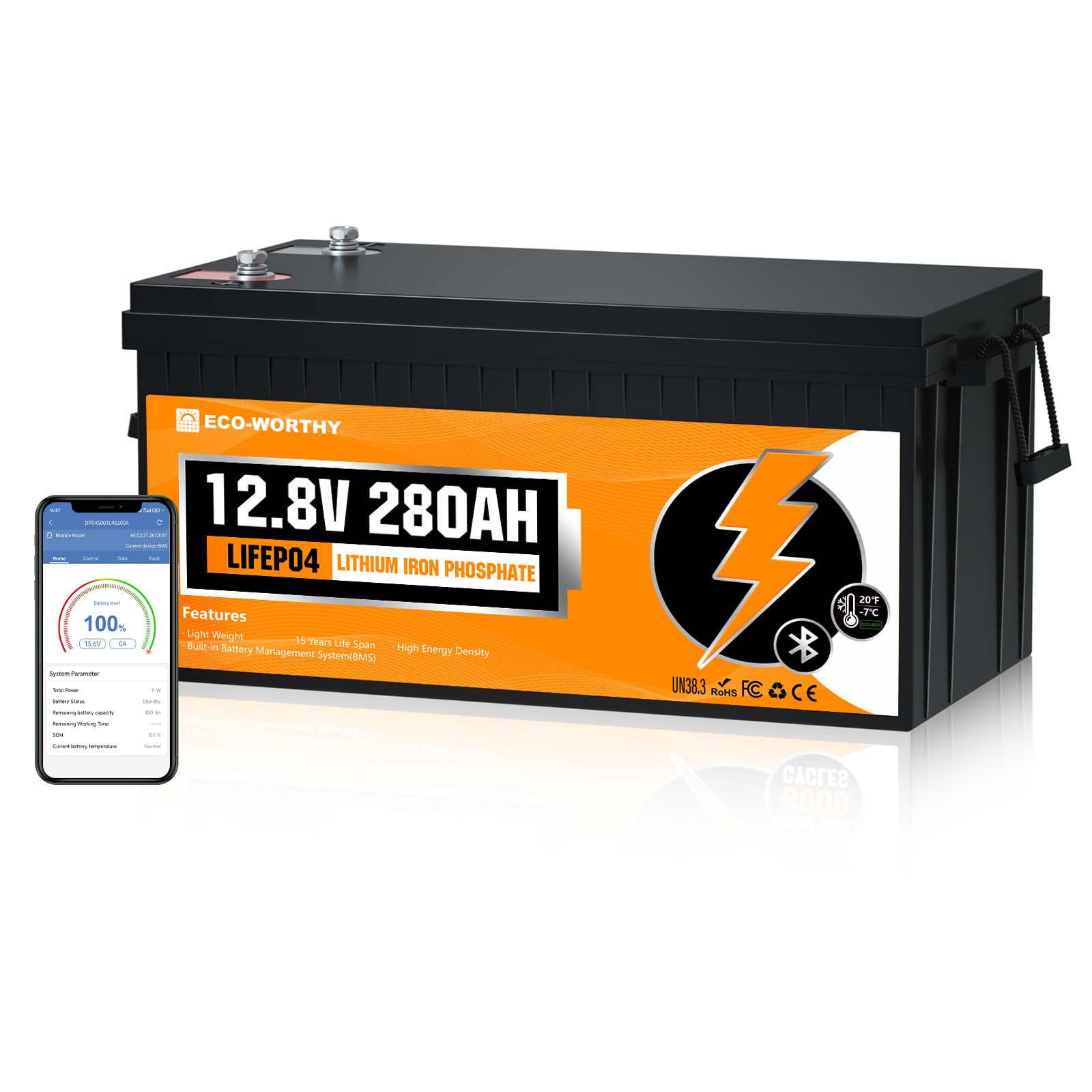
One battery holds 3,584 watt-hours — enough to replace four traditional lead-acid batteries in your RV.
Most off-grid batteries top out at 100Ah, but the ECO-WORTHY 12V 280Ah packs 3,584 watt-hours of energy in a single unit that weighs 61.7 lbs. That is about the same weight as a standard lead-acid Group 31 battery, but you get over three times the usable capacity — enough to run a 2,000-watt inverter for nearly two hours at full load. The outer casing is a high-strength metal frame with an internal compression fixture that prevents cell expansion over time, something buyers specifically praise as a durability advantage over plastic-cased batteries.
Bluetooth monitoring is built in, letting you track voltage, current, and capacity in real time via the ECO-WORTHY App. The connection range is limited to 15 meters, so keep your phone within that distance. The 200A BMS is one of the highest-current units on this list and includes low-temperature protection: charging stops below 19.4°F and resumes above 32°F, while discharging halts below -4°F. One reviewer noticed the battery is compatible with the Overkill Solar app for even more detailed cell-level monitoring, calling it the “best value on the market.”
You can run up to four of these in parallel for 1,120Ah at 12V, or four in series for a 48V solar system — the maximum total setup is 8 batteries. Buyers who upgraded their RVs from 110Ah AGM (Absorbent Glass Mat, a type of lead-acid battery) batteries to two of these 280Ah units report 560Ah total with similar weight but far more usable capacity, even in snowy 20°F camping trips. The metal case has mounting brackets so you can screw it to the floor. It comes with a 3-year warranty, which is shorter than LiTime’s 5-year and Battle Born’s 10-year, but the per-amp-hour price is significantly lower, making it a strong value for large-capacity builds.
The case for it: 3,584 watt-hours in a single battery with a 200A BMS, metal case, and Bluetooth monitoring at a per-amp-hour price that beats most 100Ah units combined.
The trade-off: At 61.7 lbs it is heavy for one person to lift, the Bluetooth range is limited to 15 meters, and the 3-year warranty is shorter than the premium picks.
Best for: RV owners who want a single large-capacity battery to replace multiple lead-acid units without wiring a parallel bank.
Skip if: You need the smallest possible footprint or you want a warranty longer than three years on a big investment.
5. Battle Born 100Ah 12V LiFePO₄ Battery
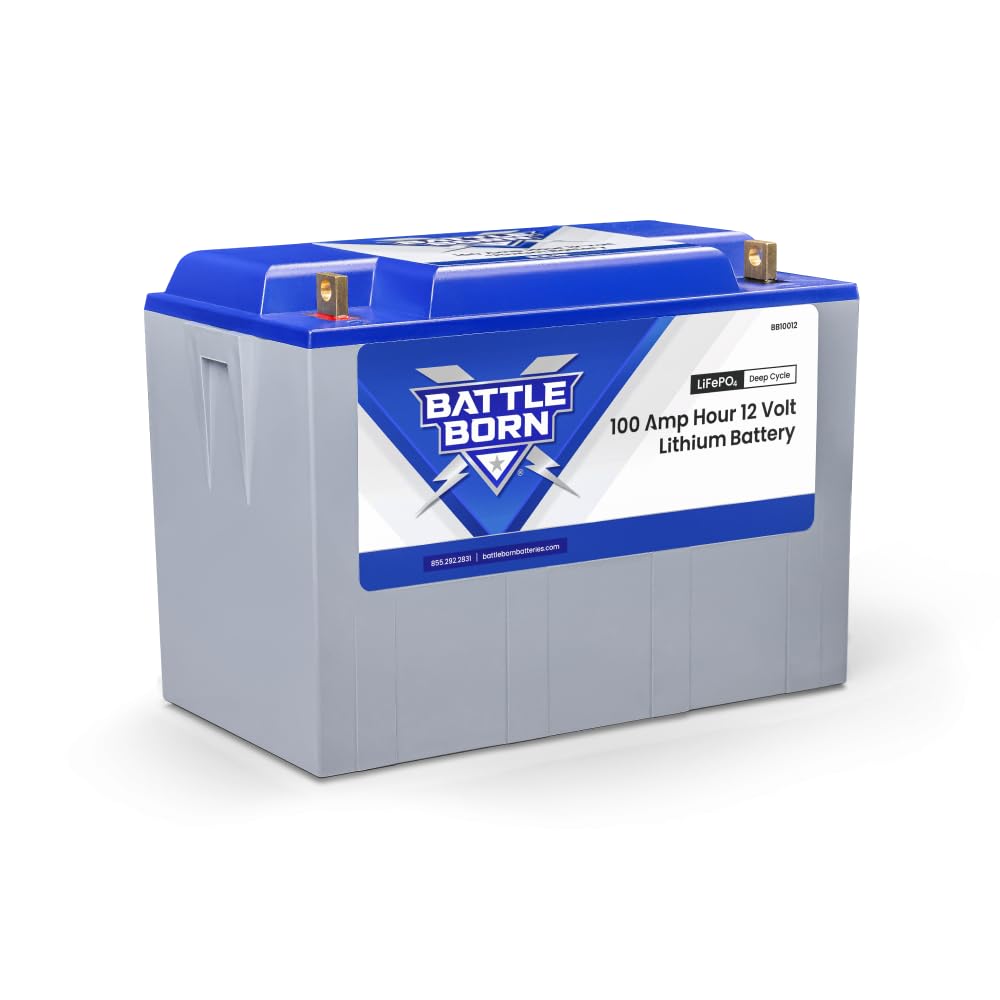
You get a 10-year warranty that doubles the coverage of the LiTime, but only if you keep the box.
When the price tag makes you flinch, the warranty should make you comfortable — and Battle Born offers the strongest coverage here at 10 years. The 100Ah 12V LiFePO₄ battery weighs 31 lbs and is a drop-in replacement for Group 27 and 31 battery boxes. That is about 30 lbs vs the 100 lbs of a lead-acid battery for the same usable capacity, which buyers notice immediately when swapping them into an RV or boat. The built-in BMS covers low-temperature protection, high and low voltage, and short circuits.
Buyers who live full-time in their RVs report impressive real-world results. One reviewer ran a 450W space heater for 1.5 hours, raising the RV temperature from 55°F to 67°F, and powered a 3,000-mile trip with LED lights, a water pump, USB charging, and a fridge running 24/7 on a single battery. Another buyer replaced lead-acid batteries in their RV with two Battle Born units and saw runtime jump from 8 hours to 28 hours — a massive leap that makes it feasible to boondock for multiple nights without generator charging.
One limitation, and it is a significant one, is the warranty process. One buyer whose battery failed after a year reported that the warranty claim took up to 8 weeks, required the original packaging, and charged for return postage if the box was missing. The company then blamed “misuse” — in this case, 4-gauge cables with matched lengths — and offered repair at per hour. That experience, even if isolated, is worth knowing before you commit. The battery also requires a compatible lithium charge controller and alternator setup, which can add to your total system cost.
The case for it: 10-year warranty and proven ability to run a full RV electrical load for days — one buyer got 28 hours of runtime vs just 8 hours from lead-acid.
The compromise: The warranty process can be slow and costly if you do not keep the original packaging, and the total system upgrade cost with charge controller can add up.
Best for: Full-time RVers and boaters who want a 10-year warranty and can budget for proper lithium-compatible charging gear.
Skip if: You are skeptical about warranty claim processes or want a more budget-friendly entry into LiFePO₄ for occasional camping.
6. 12V 100Ah Mini LiFePO₄ Lithium Battery
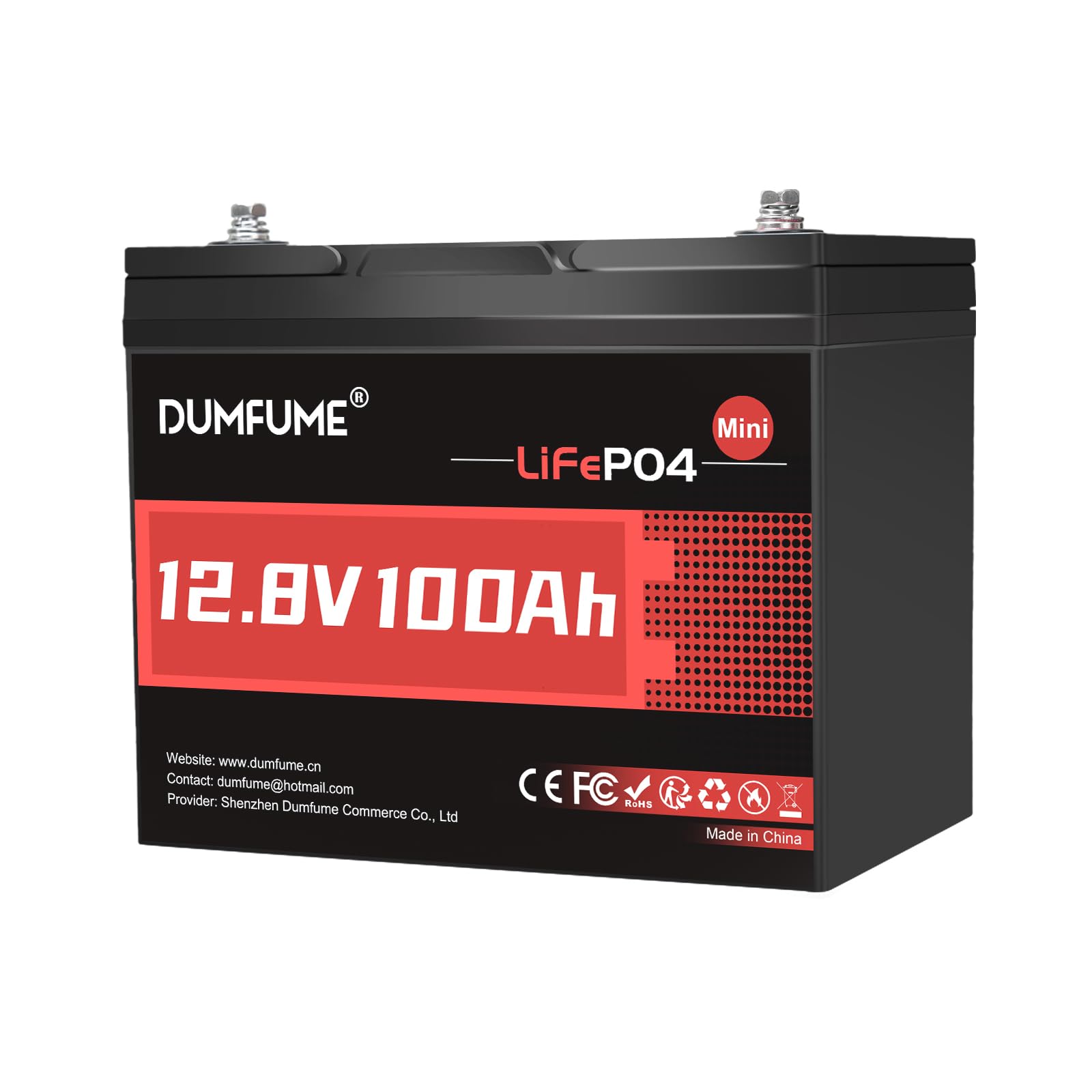
At 21.6 lbs and with 4,000 cycles, this is the lightest 100Ah lithium battery you can buy for a budget setup.
If your off-grid project is on a tight budget, the Dumfume 12V 100Ah Mini proves you do not need to spend on premium features to get reliable lithium power. It weighs just 21.6 lbs — the lightest 100Ah battery here — and uses high-quality LiFePO₄ deep-cycle cells rated for 4,000 cycles at 100% depth of discharge (DoD, meaning you can fully drain it every time). The built-in 100A BMS protects against overcharge, over-discharge, overcurrent, short circuits, and temperature extremes down to -4°F. Buyers consistently report that the battery delivers its full tested capacity and works great for solar-powered travel trailers and PC backup setups.
One reviewer bought it as the lowest-price LiFePO₄ they could find and was pleasantly surprised by its performance with a camper solar system. Another buyer noted the capacity tested full, and the package includes a clear manual with M8 bolts, nuts, washers, and red/black terminal caps. The battery supports parallel and series connections up to 4S4P, giving a maximum system of 20.48 kWh — the same expandable ceiling as the more expensive Dyness battery.
The compromises are clear. There is no Bluetooth monitoring, no low-temperature charging cutoff (the battery requires temperatures of 5°C or higher to charge), and the manufacturer explicitly states not to use it as a starting battery, golf cart battery, or jack battery. It is also not IP-rated for moisture like the Dyness. But if you need a functional 12V 100Ah lithium battery for a stationary solar shed, a backup power supply, or a budget RV build where you can keep the battery above freezing, this is the most cost-effective entry point in the lineup. Just remember to charge or discharge it once every 6 months during storage to prevent damage from disuse.
Why it’s great
- Lightest 100Ah option at 21.6 lbs — about 30% lighter than the Battle Born for easy handling
- 4,000 cycles at 100% DoD means over a decade of daily use for most setups
- Supports 4S4P expansion up to 20.48 kWh, matching the expandability of pricier batteries
Good to know
- No low-temperature charging cutoff — must be kept above 41°F to charge safely
- No Bluetooth monitoring or IP moisture rating, and manufacturer does not cover return shipping for cold-damage claims
Best for: Budget-conscious buyers setting up a stationary solar shed or backup power supply where the battery stays warm and dry.
Skip if: Your battery will sit in an unheated garage, RV, or boat in freezing winter conditions.
Understanding the Specs
Battery Management System
The BMS is an electronic circuit inside every lithium battery that monitors and protects the cells. It automatically stops charging when the battery reaches full voltage, cuts off power if it detects a short circuit or dangerously high temperature, and prevents discharging when the voltage drops too low. Some BMS units also include cell balancing, which keeps each internal cell at the same voltage for longer overall battery life. The “100A BMS” rating you see means the system can handle up to 100 amps of continuous current safely.
Depth of Discharge and Cycle Life
Depth of Discharge (DoD) is the percentage of a battery’s total capacity you use before recharging. Lithium batteries are commonly rated at 100% DoD, meaning you can drain them completely and recharge without damage. A battery rated for 4,000 cycles at 100% DoD means you can fully drain it every day for about 11 years before its capacity drops significantly. If you only drain to 60%, the cycle count jumps — some batteries here are rated up to 15,000 cycles at 60% DoD. Lead-acid batteries typically die after 200-500 cycles, so lithium delivers roughly 10 times the usable life.
FAQ
How many batteries do I need for an off-grid cabin?
Can I use a 12V battery with a 24V solar panel?
What is the difference between LiFePO₄ and lead-acid batteries?
How do I connect multiple batteries in parallel?
Can I charge a LiFePO₄ battery with a standard lead-acid charger?
How cold is too cold for a LiFePO₄ battery?
Does Bluetooth monitoring drain the battery?
What size solar panel do I need to charge a 100Ah battery in one day?
Can I mount a LiFePO₄ battery on its side?
What does “Group 24” or “Group 31” mean in battery sizes?
Final Thoughts: The Verdict
For most buyers, the batteries for off grid solar winner is the LiTime 12V 100Ah Group 24 because it combines Bluetooth monitoring, a 5-year warranty with UL 1973 certification, and proven performance from van-lifers who run it through 50-plus cycles without issues. If you want the most capacity in a single battery for large loads, grab the ECO-WORTHY 12V 280Ah with its 200A BMS and metal case. And for 24-volt solar systems that need 2.56 kWh in a single unit, the 24V 100Ah LiFePO₄ Battery saves you the wiring hassle of connecting two 12V batteries in series.
How We Picked
We do not accept paid placement, and we did not hands-on test every unit. Instead, we match each pick to a real buyer and use-case by comparing the manufacturers’ published specifications against the patterns in verified customer reviews — so you get each pick’s real strengths and trade-offs instead of marketing copy.
Sources & Methodology
Specifications: manufacturer listings and product documentation. Review insights: verified customer reviews, as of July 2026. Pricing: not shown on this page (it changes often); check the current price via the retailer link.
As an Amazon Associate, Gadgets Feed earns from qualifying purchases. This does not affect which products we feature.