
Our readers keep the lights on and my morning glass full of iced black tea. As an Amazon Associate, I earn from qualifying purchases.
Specs are compiled from manufacturer listings and verified buyer reviews and can change over time — please confirm the key details on the product page before buying.
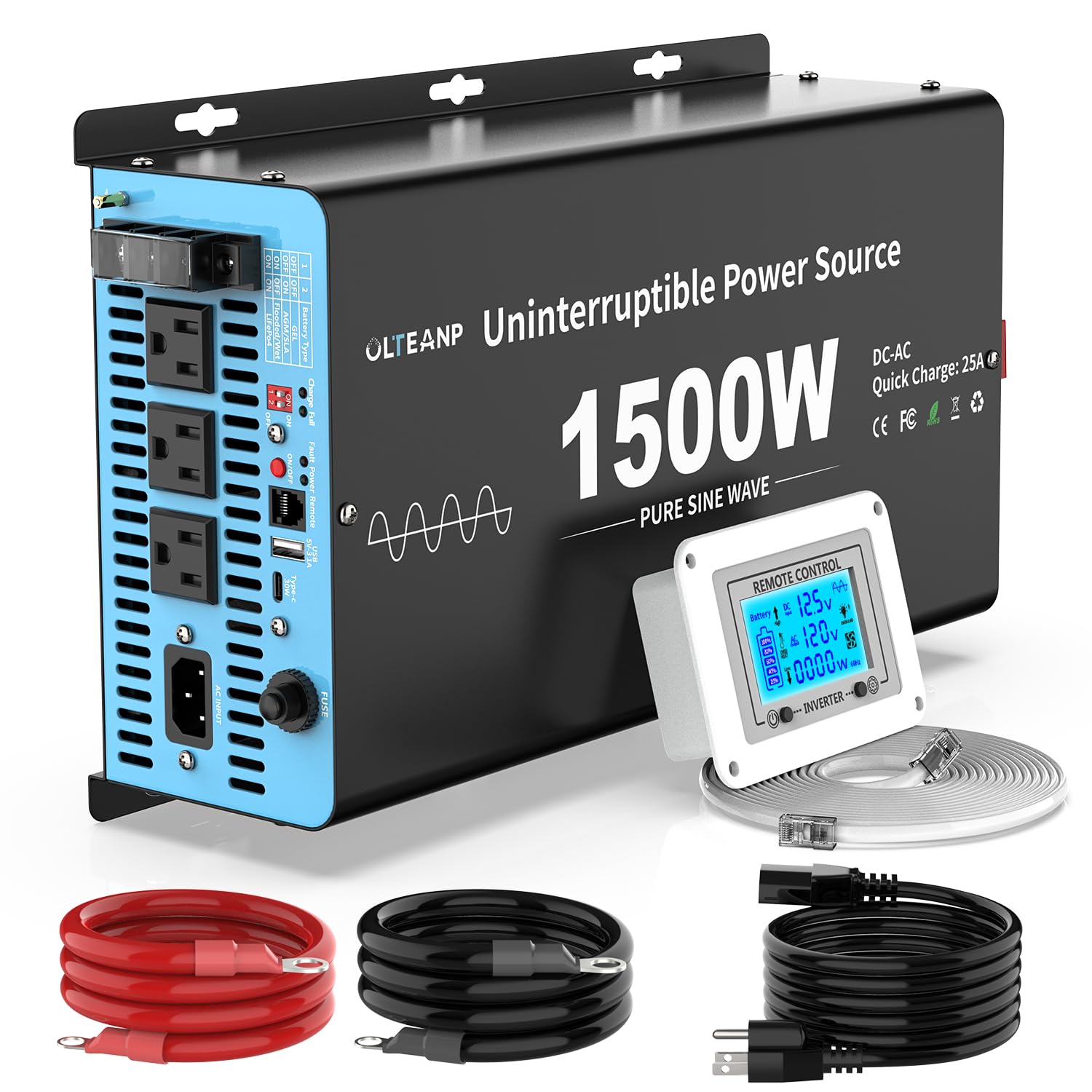
A dead sump pump during a storm is the fastest way to turn a finished basement into a swimming pool. A battery backup system keeps your pump running when the grid goes dark, and the crowd favorite here is the OLTEANP 1500W inverter — a 4.7-star unit that buyers trust to hold the line through multi-day outages.
I’m Min — the founder and writer behind Gadgets Feed. This guide is built by comparing the manufacturers’ published specifications and the patterns across verified customer reviews, so you get each pick’s real strengths and trade-offs instead of marketing spin.
When the power goes out, your sump pump stops—and your basement floods. This guide covers both fixes: a full pump replacement or just an inverter to bridge the blackout, with real-world proof from owners.
Our Picks at a Glance

How To Choose The Best Battery Backup For Sump Pumps
You first decide between two very different setups: an inverter-and-battery box that powers your existing AC pump, or a complete 12V DC pump kit that sits beside your main pump. The inverter route keeps your current pump and adds a brain that switches over when power dies. The DC pump route adds a second physical pump that only runs during an outage.
Match the inverter wattage to your pump
Every sump pump lists a wattage draw on its label, and your inverter must comfortably exceed that number. A 1/3 HP pump typically pulls 800W to 1200W on startup, while a 1/2 HP unit can spike higher. Buyers report clean operation on a 1500W unit for standard residential pumps, and recommend stepping to 2000W or 2500W if you run a larger pump or want headroom for a furnace and internet gear too.
Pick the right battery chemistry and capacity
The battery is the fuel tank, and it is almost always sold separately. Deep-cycle batteries are the only correct type — they tolerate slow, steady drains that would wreck a car starter battery. AGM batteries are the common choice for their zero-maintenance and spill-proof case, while LiFePO4 lithium packs hold more usable energy per pound and accept faster recharges, but cost more up front. Capacity is measured in amp-hours (Ah); the bigger the number, the longer your pump runs before the system cuts off to protect the battery.
Check the charger and the transfer switch
The built-in charger keeps your battery topped off between storms, and a faster charge rate (measured in amps) restores your reserve quicker. The transfer switch is the component that detects the outage and flips you to battery power — the faster it reacts, the less water gets through. Some systems include a remote LCD display that shows battery voltage and load level from a wall mount, which buyers find genuinely useful for spotting a dying battery before the storm hits.
Quick Comparison
| Model | Best For | Output / Pump Spec | Built-in Charger | Battery Required | Amazon |
|---|---|---|---|---|---|
| OLTEANP 1500W★ Best Overall | Best Overall — inverter for existing pumps | 1500W pure sine wave, 3 AC outlets | 25A multi-stage | Yes, 12V deep-cycle | Amazon |
| Basement Watchdog BWEBest Value | Complete DC pump kit — best value | 2500 GPH at 0 ft lift | 0.4-Amp automatic | Yes, AGM or wet-cell | Amazon |
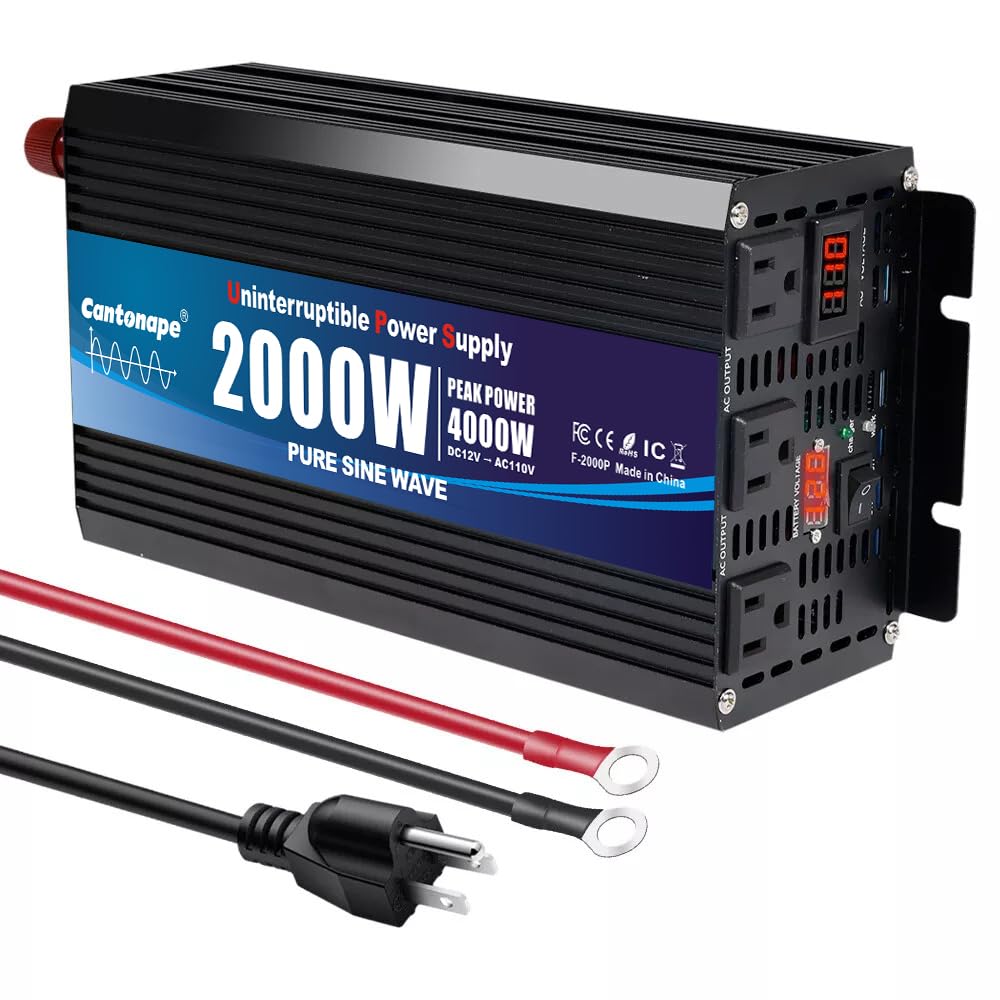
| Cantonape 2000WHigh Output | High-output inverter for larger pumps | 2000W pure sine wave, 3 AC outputs | 20A fast charger | Yes, 12V deep-cycle | Amazon |
| VIOPUMPO 2500W | Max headroom with LCD remote | 2500W pure sine wave | 25A charger | Yes, 12V deep-cycle | Amazon |
| Superior Pump 92900 | High-lift DC pump kit | 1380 GPH, 25 ft vertical lift | Charger included | Yes, 12V | Amazon |
| Red Lion RL-SPBS | DC pump with high capacity | 3240 GPH at 0 ft lift | 1 Amp charger with alarm | Yes, 85-140 Ah deep-cycle | Amazon |
| Liberty Pumps 441 | Pro-grade DC pump kit | 12V submersible pump | 12V charger included | Yes | Amazon |
| Zoeller 508-0005 | Premium build DC pump kit | 40 GPM, 0.33 hp | Charger included | Yes — Aquanot battery recommended | Amazon |
| Westinghouse WH50BBU | Dual-pump primary + backup | Up to 5200 GPH, 1/2 HP AC pump | Charger adapter included | Yes, 12V battery | Amazon |
In‑Depth Reviews
1. OLTEANP 1500W Sump Pump Battery Backup System
Our pick — over 4.5★ from 90+ verified ratings; the strongest balance of quality and price.
The inverter-plus-charger-plus-transfer-switch all-in-one that buyers call the best insurance for a finished basement.
This box does three jobs at once: it converts battery power to run your pump, charges the battery, and switches to battery the instant the grid dies. The 1500W pure sine wave inverter (clean power that protects sensitive pump electronics) mimics grid power so closely that your pump’s motor runs smoothly instead of humming or overheating. The built-in 25A multi-stage charger keeps your battery healthy, and the auto transfer switch flips you to battery automatically.
Buyers keep coming back for the headroom. One owner ran their furnace (400W) and internet (100W) off a 5kWh battery during an outage; another watched it run a sump pump for over two days on a 100Ah SLA battery, with no manual reset needed after AC was restored. The wired LCD remote shows battery voltage and load level in real time, so you can spot a weak battery before the storm arrives.
The catch is the battery — it is not included, and you must supply a 12V deep-cycle unit (LiFePO4, AGM, gel, or flooded all work). Buyers also note the inverter won’t auto-restart after a full battery drain; you’ll need to power it on manually. The instructions are described as serviceable rather than stellar. You get a 12-month warranty and 24/7 support as a safety net.
What owners love
- Massive 2500W sustained headroom handles pumps plus furnace and internet
- Pure sine wave output runs motors cleanly
- Built-in 25A charger with overcharge, overload, and short-circuit protection
- Wired LCD remote shows voltage and load from a distance
What to know first
- Battery sold separately — budget for a deep-cycle 12V unit
- Won’t auto-restart after a full battery drain
- Instructions could be clearer, per owners
Best for: homeowners who already have a working AC pump and want one clean box to power it through long outages, plus a few extra devices.
Think twice if: you want a true plug-and-play kit with the battery included — this one needs you to source a 12V deep-cycle battery.
2. The Basement Watchdog Emergency Battery Backup Sump Pump System
The complete DC pump kit that buyers praise most for reliability — a second pump that only wakes up when your main one can’t.
Unlike the inverter boxes, this is a full second pump system: a 12V DC pump, control unit, dual float switch, battery box, and a 0.4-Amp automatic charger all in one kit. The pump moves 2500 GPH at 0 ft of lift (that’s 42 GPM) and still delivers 1500 GPH at a 10 ft lift, which is plenty to keep pace with a typical sump pit during a storm. The dual float switch gives you two chances to trigger — buyers describe it as redundancy you can actually feel.
Reliability is the recurring theme across owner reports, and the numbers back it up — reliability is the single most-praised aspect, with quality right behind. One owner installed it, left it untouched for a year, and found the battery still fully charged when they finally tested it. Buyers also note the install is straightforward for anyone handy — the manual packs over 90 pictures — and the pump is quiet enough that you’ll forget it’s down there. The control panel monitors pump, power, and battery conditions 24/7 with visual alerts and audible alarms that tell you what to do.
The honest caveat is the battery. It’s not included, and the system wants specific maintenance-free AGM or wet-cell batteries, which some owners flag as a proprietary constraint. The charger is a modest 0.4-Amp unit, so recharges after a long outage take time. A few owners mention the pump’s power feels adequate rather than overwhelming for very high-demand scenarios.
Owners’ verdict: for the money, this is the complete-kit champion — a proven, quietly reliable second pump with a control panel that tells you exactly what’s happening.
Fit note: best if you’re okay supplying the compatible battery and want a whole backup pump, not just an inverter for your existing one.
3. Cantonape 2000W Sump Pump Backup Battery System
A step up in wattage for bigger pumps, with an LED display that keeps you informed at a glance.
If you’re unsure of your pump’s exact draw, this box gives you more confidence: it bumps output to 2000W of pure sine wave power, the rating buyers suggest for a 1/3 HP pump and beyond. The built-in 20A charger supports fast recharging, and the system auto-switches to battery power the moment the grid fails, so your pump keeps running without you lifting a finger. The 3 AC outputs let you plug in a light or a phone charger alongside the pump.
Performance reviews are strong — one owner ran their sump pump for over 8 hours during a heavy-rain outage, and the pump ran constantly without missing a beat. The plug-and-play setup is the other big plus: no wiring required, just connect the AC and DC cables and plug the pump into the socket. The LED display shows battery voltage and AC voltage in real time, which is a genuine aid for checking the health of your battery before a storm. Owners describe the build quality as high, and safety protections include overheat, short-circuit, low-voltage, and overcharge cutoffs.
The setup is simple enough that most owners had it running in minutes, though the manual is small-print and there’s no car adapter included. You’ll need a 12V GEL, AGM/SLA, or flooded battery — it’s not bundled. The 12-month warranty covers you, and support is via email.
Why it earns its place
- 2000W pure sine wave handles larger pumps with confidence
- Fast 20A built-in charger restores reserve quicker
- Genuinely plug-and-play — no wiring needed
- 8+ hour outage run proven by owners
Watch for
- Battery not included — needs a 12V deep-cycle unit
- Small-print manual; no car adapter in the box
- Reliability in a real long outage still unproven for some owners
Reach for this if: you want the extra 2000W headroom and the fastest possible setup for an inverter-based backup.
Look elsewhere if: you want a second physical pump rather than a power box for your existing one.
4. Superior Pump 92900 12V Battery Back Up Submersible Sump Pump
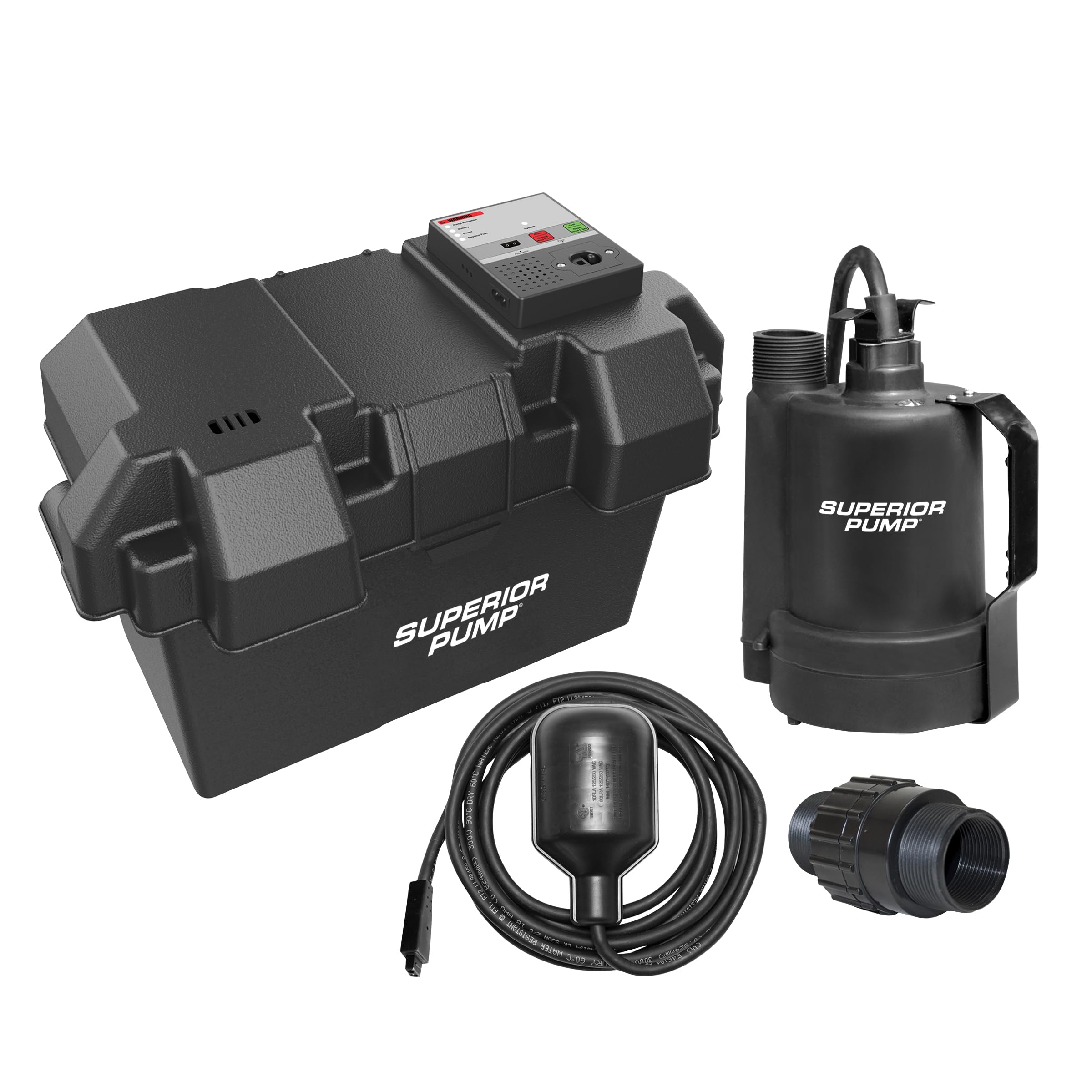
The DC pump kit that lifts water higher than most rivals — up to 25 feet of vertical head.
For deep pits or long discharge lines, this 12V submersible pump moves up to 1380 gallons per hour and lifts water 25 feet of vertical height—beating the typical backup pump’s range. The tough thermoplastic construction and 10-foot cord make it a durable fit for tight pits, and the tethered float switch automates on/off without you touching it. The 1-1/4 inch or 1-1/2 inch NPT discharge handles high-capacity pumping.
Buyers describe the install as genuinely easy and the value as strong — “much better value than I expected” and “performance is great, not very noisy at all” capture the common tone. One owner installed it and the power went out the same week; it worked exactly as expected and paid for itself immediately. The 75Ah battery pairing is a popular choice among owners.
There are two honest fit-notes here. The instructions are vague for non-standard installs, and a few buyers found the charger plug fits loosely in the case — easy to dislodge if bumped. Durability gets mixed feedback, so this is best treated as a dependable backup rather than a 24/7 workhorse. The battery is not included, so budget for a compatible 12V unit.
The trade-off: outstanding lifting power for deep pits, but treat the charger plug gently and expect instructions that assume some prior expertise.
Best fit: homeowners with a deep sump or long discharge run who want a 12V pump that actually pushes water up, not just around.
5. VIOPUMPO 2500W Sump Pump Backup Battery System

The 2500W powerhouse with an LCD remote — max headroom for the biggest pumps and extra devices.
This is the highest-output inverter box on the list, delivering 2500W of pure sine wave power—enough to run a large sump pump plus a furnace and internet gear simultaneously. Owners suggest it when you want serious margin. The built-in 25A charger supports fast charging and trickle charging for deep-cycle battery types (lithium and AGM included, though not non-deep-cycle batteries), and overcharge protection keeps your battery from being cooked. The high-definition LCD remote shows voltage, power, and battery charge status, and the side fixing holes let you lay it flat or mount it on a wall.
Owner reports read like a confidence list: “charges the backup battery flawlessly,” “instant AC-to-DC switch,” “sump pump ran uninterrupted,” and “silent, reliable in outages.” One buyer calls it superior to typical battery backups, and setup is quick enough that a YouTube video gets you running in minutes. It’s the top-rated unit by star score in this roundup.
No battery is included, so you need a 12V deep-cycle unit (LiFePO4 or AGM are the sweet spots). Owners note the instructions could be clearer—internet research helped one buyer through it—and a single report flags a noisy fan that kicks on often. The 12-month warranty and email support are standard here.
What stands out
- 2500W pure sine wave — biggest headroom in this roundup
- 25A charger with trickle and fast modes for lithium and AGM
- High-definition LCD remote for voltage and charge status
- Wall-mount or flat placement options
Keep in mind
- Battery not included — pair with a deep-cycle 12V unit
- Instructions can be unclear; a quick video helps
- Occasional report of a noisy cooling fan
Choose this if: you want the maximum wattage margin and a clear remote display to monitor your reserve from across the room.
Skip if: you’re set on a complete second-pump kit rather than a powerful inverter for your existing pump.
6. Red Lion RL-SPBS Enhanced Battery Back-up Sump System

A complete 12V pump kit with serious flow — up to 3240 GPH at zero lift for the highest-demand pits.
This full-system kit pairs a 12V pump with a charger, battery case, junction box, and the needed fittings. The pump is the headline, pushing up to 3240 GPH at 0 ft of lift with a 19-ft shutoff—the strongest raw flow on this list. It fits basins 18 inches or larger, with a 1-1/2 inch FNPT discharge. The included diaphragm switch activates the pump when water reaches 13.5 inches and shuts it off at 9 inches, and the 12V charger runs on 120VAC input with an alarm.
The catch here is reliability — this is the most mixed-reviewed unit in the roundup, and the recurring problem is the diaphragm switch. Several customers note the switch arriving faulty or failing to trigger when submerged, with one noting the pump ran continuously on an empty basin until unplugged. The pump itself gets credit for being a good unit when the switch cooperates, but the switch is the weak link. A separate, higher-rated float switch is a common workaround.
Here’s the honest fit-note: if you’re comfortable replacing a switch or wiring in a more sturdy float, the underlying pump is strong and the flow is genuinely impressive. If you want a set-and-forget system from the start, this one asks for more hands-on attention. The 2-year manufacturer warranty is a reasonable safety net.
Reality check: outstanding pump flow, but the included diaphragm switch is the recurring failure point — treat it as a component you may need to upgrade.
Who it fits: hands-on owners who want maximum pumping capacity and don’t mind troubleshooting the switch.
7. Liberty Pumps 441 Battery Back-Up Emergency Sump Pump System

A proven pro-grade 12V pump kit — buyers were surprised by how close its speed comes to a 120V primary pump.
Liberty Pumps is a name plumbers trust, and the 441 delivers on that reputation: a high-output 12V submersible pump with an automatic, mercury-free switch, a control panel, a battery box, and a 12V charger in the kit. Buyers were genuinely surprised by the pumping speed — one owner noted it moves water “very close to the speed of my Zoeller 120 volt pump,” which is high praise for a 12V backup. The install is described as easy, with good instructions.
The real-world proof is strong. One owner let it sit idle for 21 months, then a heavy rain hit — it ran 2.5 hours alongside the primary pump to keep the basement dry, flawlessly. There’s a loud alarm that sounds when the pump runs (with a silent mode available), which is a feature if you want to know it’s working from another room. Buyers describe it as one of the best backup systems available, and it teams up nicely with a standard 27M Interstate battery.
Two honest caveats: the controller housing arrived damaged for one buyer, and the install can be tricky in an 18-inch basin — one owner had to build a PVC stand because there’s no support bracket included. There’s also a single-pump capacity concern for sustained downpours. The battery is not included.
What wins people over
- Pumping speed rivals a 120V primary pump
- 2.5+ hour continuous run proven in real storms
- Loud alarm with silent mode — you’ll know when it works
- Easy install with solid instructions
What to watch
- No support bracket — you may need to build a stand
- Controller housing can arrive damaged
- Tricky fit in 18-inch basins
Pick this for: a proven, brand-name 12V backup that pumps with surprising speed and tells you when it’s running.
Think twice if: you want everything bolted down from the start — you may need a DIY stand in tight pits.
8. Zoeller 508-0005 Aquanot 508 Battery Back-Up System
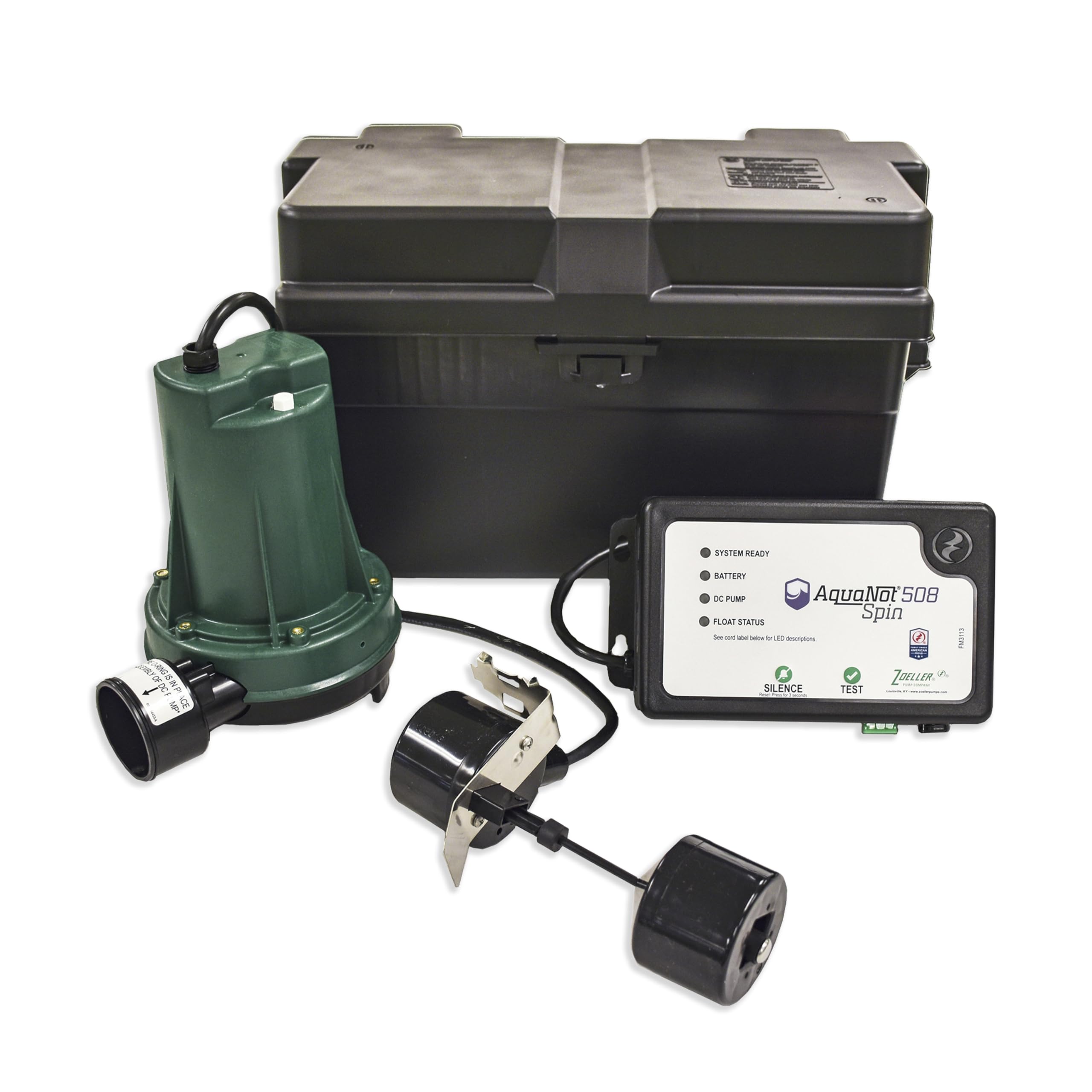
The hand-built, USA-tested premium backup — a 0.33 hp pump that owners refuse to swap for any other brand.
Zoeller’s reputation for building sump pumps that outlast everything else is the story here. The 508 Aquanot is a 0.33 hp, 40 GPM 12V pump with noncorrosive construction, an integrated check valve, a quick-disconnect discharge, and an aluminum seal pocket plus cooling plate for heat management. It’s hand-built and 100% tested in the USA, and quality is the single most-praised aspect by a wide margin—buyers describe it as “Zoeller quality in a standby sump pump” and say they’d never buy another brand.
The warranty is a real differentiator: 12 months from installation, extended to 36 months if you buy the matching Zoeller Aquanot battery. That’s a meaningful vote of confidence, and it rewards pairing this pump with the brand’s own battery for a complete system. Owners find it quiet, easy to install, and reliable right from the start.
There’s honest disagreement in the reviews on value — some say it’s worth every dollar, others advise against it at the price. Durability, battery life, and fit all get mixed comments, so this is a premium pick that rewards you most when you commit to the full Aquanot battery ecosystem. The battery is not included.
Why it’s the premium pick
- Quality is the #1 praise — hand-built and 100% tested in the USA
- Warranty extends to 36 months with the matching Aquanot battery
- 40 GPM flow with noncorrosive construction
- Integrated check valve and quick-disconnect discharge
Weigh this
- Value is genuinely disputed — it’s the premium of the lineup
- Full benefits need the brand’s own Aquanot battery
- Mixed feedback on fit and battery life
Best for: buyers who want a backup that matches their primary pump’s brand and are willing to invest in the full Aquanot ecosystem.
Skip if: you want maximum value per dollar or plan to use a generic battery anyway.
9. Westinghouse 1/2 HP Sump Pump with Battery Backup Capability
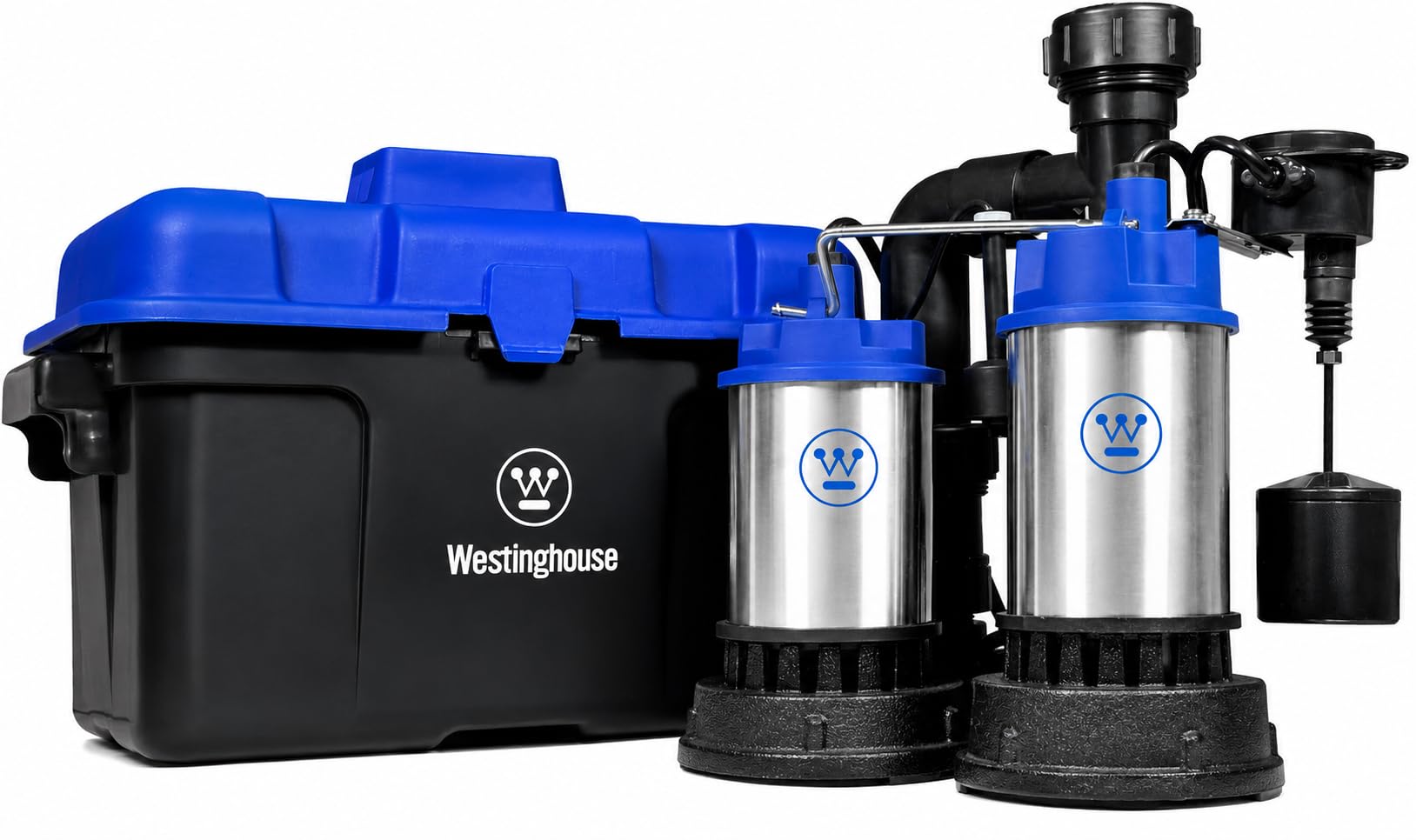
The dual-pump system that replaces your primary AND adds backup — a 1/2 HP AC pump plus a 12V DC pump in one unit.
This is the most complete solution on the list: a 1/2 HP AC primary pump that handles everyday drainage, plus a high-flow 12V DC backup pump that automatically activates when power fails — all in one compact system. The primary pump pushes up to 5200 gallons per hour, and the top-suction design prevents airlock and reduces debris buildup. The corrosion-resistant stainless steel housings on both pumps are a durability upgrade over the plastic cases elsewhere.
Buyers consistently praise the build — “heavy, solid sump pump. Not a cheap plastic thing” captures the tone — and the compact footprint fits tight pits. The PSC motor includes thermal overload protection, lubricated ball bearings, and a sealed shaft, while the motor is encased in dielectric oil for better cooling. Owners found it quieter than their old units, easy to install, and the dual float switches provide solid redundancy. The energy-efficient operation is a bonus for a pump that runs every day.
The trade-off: this is the premium end of the price range, and the battery for the backup side is sold separately — one buyer wishes there were a combo discount. The charger adapter cable is also described as short by one owner. If you want a single system that replaces your main pump and adds protection in one install, this is the cleanest path; if you already have a healthy primary pump, an inverter box will cost you less.
The big wins
- 5200 GPH primary pump with integrated 12V DC backup
- Stainless steel housings on both pumps — built to last
- Top-suction design prevents airlock and clogging
- Quieter than most primaries, per owners
Consider this
- Premium price, and the backup battery is extra
- Charger adapter cable runs short
- Long-term durability not yet proven at scale
Reach for this if: your primary pump is aging and you want to replace it and add backup protection in one install.
Look elsewhere if: you just want to bolt backup onto an existing healthy pump — a standalone inverter will stretch your dollar further.
Understanding the Specs
Pure Sine Wave vs Modified Sine
Pure sine wave output mimics the clean, smooth power from your wall outlet, which is what induction motors like sump pumps prefer. It runs them cooler, quieter, and with less vibration, and it’s safer for any sensitive electronics you might also plug in. Modified sine wave is cheaper but can cause motors to hum, run hot, and draw more current — not ideal for a device you’re trusting with your basement.
Battery Capacity (Ah) and Runtime
Amp-hours (Ah) tell you how much energy the battery holds. A 100Ah battery will power a given pump for roughly twice as long as a 50Ah battery. Real-world runtime depends on how often your pump cycles — a pump that runs 5 minutes an hour will stretch a battery much further than one that runs constantly. Reviewers point out 45 minutes to over 2 days of run time depending on pump size, battery capacity, and water load.
Transfer Switch Speed
The transfer switch is the brain that detects a power outage and flips your pump from wall power to battery power. The faster it switches, the less water slips through while your pump is off. Most modern inverters switch in a fraction of a second, which is effectively smooth for a sump pump. Look for “auto-switch” or “auto transfer” in the specs to confirm the unit does this without you pressing a button.
Charger Amp Rating
The charger keeps your backup battery topped off between storms, and its amp rating tells you how fast it refills the battery after a long outage. A 25A charger restores a depleted battery much faster than a 0.4A unit — the difference between hours and days to full. For a battery that sits idle for weeks, a trickle-capable charger also prevents overcharging and extends battery life.
FAQ
Do I need a battery backup if I have a generator?
Will a 1500W inverter run my sump pump?
What kind of battery should I buy for a sump pump backup?
How long will a battery backup run a sump pump?
Is a complete 12V pump kit better than an inverter for my existing pump?
What does pure sine wave output actually do for my pump?
How do I know if my backup battery is ready before a storm?
Can I use a lithium battery with these backup systems?
What happens when the backup battery is fully drained?
Does the battery backup charge my battery while the power is on?
Final Thoughts: The Verdict
For the majority of shoppers, the battery backup for sump pumps winner is the OLTEANP 1500W because it combines inverter, charger, and transfer switch into one reliable box that buyers trust through multi-day outages. If you want maximum wattage headroom and a remote display, grab the VIOPUMPO 2500W. And for a complete second-pump kit with proven reliability, the Basement Watchdog BWE is the one to reach for. That crowd favorite holds the highest star score in this lineup, so the recommendation starts with the unit owners trust most.
How We Picked
We do not accept paid placement. Every pick is matched to a real buyer and a real use-case; we do not hands-on test units.
Sources & Methodology
Specifications: manufacturer listings and product documentation. Review insights: verified customer reviews, as of August 2026. Pricing: not shown on this page (it changes often); check the current price via the retailer link.
As an Amazon Associate, Gadgets Feed earns from qualifying purchases. This does not affect which products we feature.