
Trolling motor batteries live a hard life—deep discharges, marine vibration, salt spray, and the constant push-pull of runtime versus weight. The wrong choice leaves you paddling back to the ramp, while the right one quietly delivers reliable thrust all day without anchoring your boat with dead lead. This guide cuts through the chemistry confusion to find the best battery for a trolling motor that actually fits your fishing style, boat size, and budget.
I’m Min — the co-founder and writer behind Gadgets Feed. For this guide I spent dozens of hours cross-referencing manufacturer spec sheets, real user runtime reports, and BMS logic to separate marketing claims from what actually holds up on the water.
Whether you run a 12V kayak or a 36V bass boat, finding the right battery for a trolling motor comes down to matching chemistry, capacity, weight, and cold-weather protection to your real-world fishing day.
How To Choose The Best Battery For A Trolling Motor
Picking the right power source for your trolling motor isn’t just about voltage. You need to match chemistry, capacity in amp-hours, physical size, and weight to your boat’s layout and your typical day on the water. A mismatch here means either dead weight or a dead battery miles from the dock.
Chemistry: Lead-Acid vs. AGM vs. LiFePO4
Flooded lead-acid is the cheapest upfront but heavy, requires water checks, and off-gasses hydrogen during charging. AGM (Absorbed Glass Mat) is sealed and maintenance-free, but still weighs around 68 lbs for a 100Ah Group 27 battery. LiFePO4 lithium weighs roughly 22-25 lbs for the same capacity, delivers nearly 100% usable energy versus 50% from lead-acid, and lasts 4,000+ cycles. The tradeoff is higher initial cost, but per-cycle cost often favors lithium within two years of regular use.
Capacity and Voltage Matching
A 12V system powers most 30-55 lb thrust trolling motors, while 24V and 36V setups handle higher-thrust motors on larger boats. Capacity in amp-hours (Ah) determines runtime: a 50Ah battery might last 3-4 hours on a 55 lb motor at medium speed, while a 100Ah lithium can run 8+ hours. Always check your motor’s amp draw at various power settings, then size your battery bank to deliver at least twice your expected daily runtime to avoid deep discharging.
BMS and Low-Temperature Protection
A built-in Battery Management System (BMS) protects against overcharge, over-discharge, short circuits, and thermal runaway. For anglers who fish in early spring or late fall, low-temperature charging protection is critical—LiFePO4 batteries should not be charged below 32°F (0°C). Premium models automatically pause charging below this threshold and resume when temperatures rise, preventing permanent cell damage.
Physical Fit and Weight Distribution
Battery group sizes (Group 24, Group 27, Group 31) dictate the physical footprint. Measure your battery tray or box before buying. Weight distribution also matters: shaving 40+ lbs off the transom by switching from AGM to lithium can improve hole shot and planing time on smaller boats. Lithium batteries often include fold-down handles or standard M8 terminals for easier installation in tight compartments.
Quick Comparison
On smaller screens, swipe sideways to see the full table.
| Model | Category | Best For | Key Spec | Amazon |
|---|---|---|---|---|
| Litime 12V 100Ah TM | Premium LiFePO4 | All-day fishing, 36V systems | 22.16 lbs, 4000+ cycles | Amazon |
| Dyness 12V 100Ah | Mid-Price LiFePO4 | Cold-weather anglers | 25.3 lbs, IP65 rated | Amazon |
| SUPER EMPOWER 12V 100Ah | Mid-Price LiFePO4 | Kayak and small boat owners | 21.6 lbs, 15000 cycles | Amazon |
| DC HOUSE 12V 100Ah BT | Mid-Price LiFePO4 | Bluetooth monitoring fans | 23.8 lbs, Bluetooth BMS | Amazon |
| ECO-WORTHY 12V 100Ah | Mid-Price LiFePO4 | LED panel visibility | 25.1 lbs, SOC display | Amazon |
| VMAX MR127 | Premium AGM | Anglers who prefer sealed lead-acid | 68 lbs, 100Ah AGM | Amazon |
| Newport 12V 50Ah AGM | Entry-Level AGM | Budget kayak setups | 32 lbs, 50Ah AGM | Amazon |
| yeagulch 2-Pack 12V 100Ah | Value 2-Pack LiFePO4 | Dual-battery solar or backup | 22 lbs each, 2-pack | Amazon |
| Elefast 24V 100Ah | Premium 24V LiFePO4 | 24V trolling motor upgrades | 42.5 lbs, 20000+ cycles | Amazon |
In‑Depth Reviews
1. Litime 12V 100Ah Trolling Motor LiFePO4 Battery

The Litime 12V 100Ah TM is purpose-built for trolling motor duty, meeting the ABYC E-13 marine electrical standard with triple-layer protection against dust, water ingress, and salt spray. At just 22.16 lbs in a standard Group 31 case, it shaves roughly 46 lbs off a comparable AGM battery, which instantly improves hole shot and adds 3-4 mph to top speed on smaller hulls. The built-in 100A BMS includes TVS diode protection that shields 12V-36V motors from voltage spikes, crucial when running a Minn Kota or MotorGuide in rough water.
Users report running a 45 lb thrust motor for 8 hours straight with only a minimal voltage drop, and a 36V Ultrex setup used just 10% of capacity over 5 hours of heavy use. The smart low-temperature protection stops charging below 32°F and discharge below -4°F, making it safe for early-season walleye trips. Expansion is supported up to 4P4S, giving you a potential 20.48 kWh system for larger boats or dual-motor rigs.
The only real downside is that the battery ships in sleep mode to preserve charge during storage, and some first-time lithium users need to force-charge it with a compatible charger to wake it up. Once active, the Litime delivers the best balance of weight savings, marine-grade protection, and cycle life (4,000+ cycles at 100% DoD) in this class.
Why it’s great
- ABYC E-13 certified with TVS spike protection for trolling motors
- 64% lighter than lead-acid, improves boat speed and handling
- Low-temp protection prevents charging damage below freezing
Good to know
- Ships in sleep mode; may need force charge to activate
- No built-in Bluetooth or SOC display
2. Dyness 12V 100Ah LiFePO4 Battery
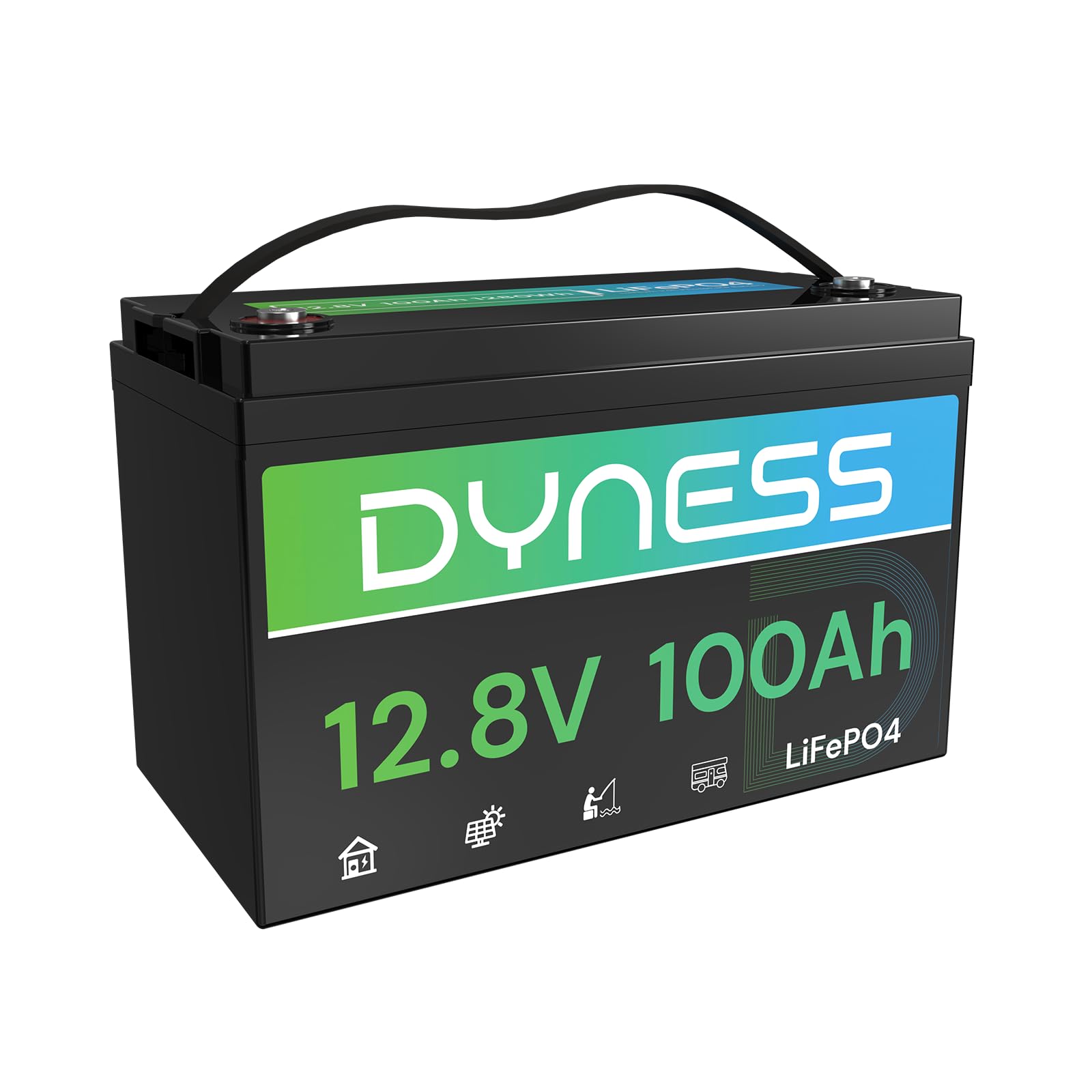
The Dyness 12V 100Ah LiFePO4 battery steps up with IP65 dust and water resistance plus salt spray protection, making it one of the most marine-ready lithium options at this price point. It weighs 25.3 lbs and fits the standard Group 31 footprint (13 x 6.77 x 8.43 inches), so it slides into most existing battery trays without adapter plates. The smart BMS includes a dedicated low-temperature charging cutoff that disconnects below 32°F and resumes at 41°F—a critical feature for fishermen who launch before sunrise in cool weather.
Buyers report excellent build quality, with dense foam packaging ensuring no damage during shipping. The battery holds voltage steady under load, and one user noted it worked flawlessly with a winch and other high-draw accessories beyond just the trolling motor. The A+ grade cells are individually traceable through production parameters, adding a layer of quality assurance that budget batteries often skip. Expansion supports up to 4P4S for a maximum 20.48 kWh system, suitable for larger solar or backup setups.
The main tradeoff is that the Dyness lacks a Bluetooth module or SOC display, so you need an external monitor or voltmeter to track state of charge accurately. The manual is clear and well-illustrated, but first-time lithium users should confirm their charger has a LiFePO4 profile before connecting.
Why it’s great
- IP65 rated with salt spray resistance for harsh marine environments
- Low-temp protection cuts charge below 32°F and discharge at -4°F
- Traceable A+ grade cells with clear production documentation
Good to know
- No Bluetooth or on-board SOC display
- Requires LiFePO4-compatible charger for optimal performance
3. SUPER EMPOWER 12V 100Ah LiFePO4 Battery
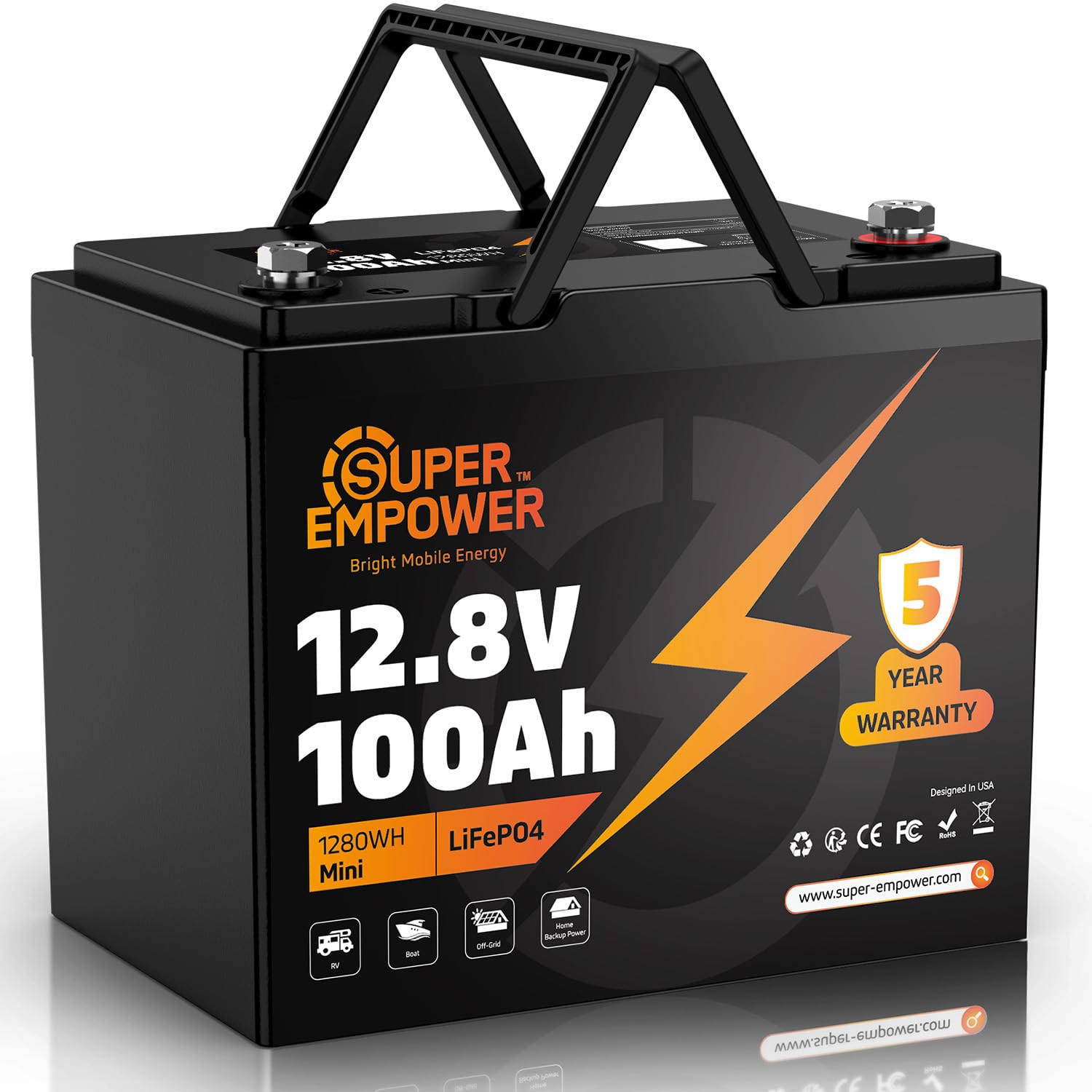
Weighing just 21.6 lbs in a compact Group 24 form factor, the SUPER EMPOWER 12V 100Ah LiFePO4 battery is the lightest 100Ah option in this roundup—ideal for kayak anglers and jon boat owners who need every pound saved for gear. Despite the small footprint (10.24 x 6.49 x 8.98 inches), it packs Grade A+ cells rated for 5,000 cycles at 100% DoD and up to 15,000 cycles at 60% DoD. The built-in 100A BMS provides comprehensive protection including low-temperature charging cutoff below 32°F.
Real-world feedback confirms the lithium advantage: one user ran a 55 lb thrust motor on a pontoon for 4 hours and recharged via solar, then repeated the next day without a top-off from shore power. Another report logged 5 hours of trolling with no voltage sag on a 55 lb motor. The battery includes folding handles for easy carry and M8 terminals that accept standard marine ring terminals. The 5-year warranty is among the longest in this price tier.
The caveat is the lack of a Bluetooth module or SOC indicator—you’ll need to monitor voltage with a multimeter or invest in an external battery monitor. The initial charge from factory storage (typically around 50%) can take 6-7 hours with a 20A charger, so plan ahead before your first trip. It also requires a dedicated LiFePO4 charger; standard lead-acid chargers may not terminate correctly.
Why it’s great
- Ultra-light 21.6 lbs for easy portability in kayaks and small boats
- Compact Group 24 size fits tight battery compartments
- Up to 5,000 cycles at 100% DoD with 5-year warranty
Good to know
- No Bluetooth or SOC display for battery monitoring
- Requires 6-7 hours initial charge from factory storage
4. DC HOUSE 12V 100Ah LiFePO4 Bluetooth Battery
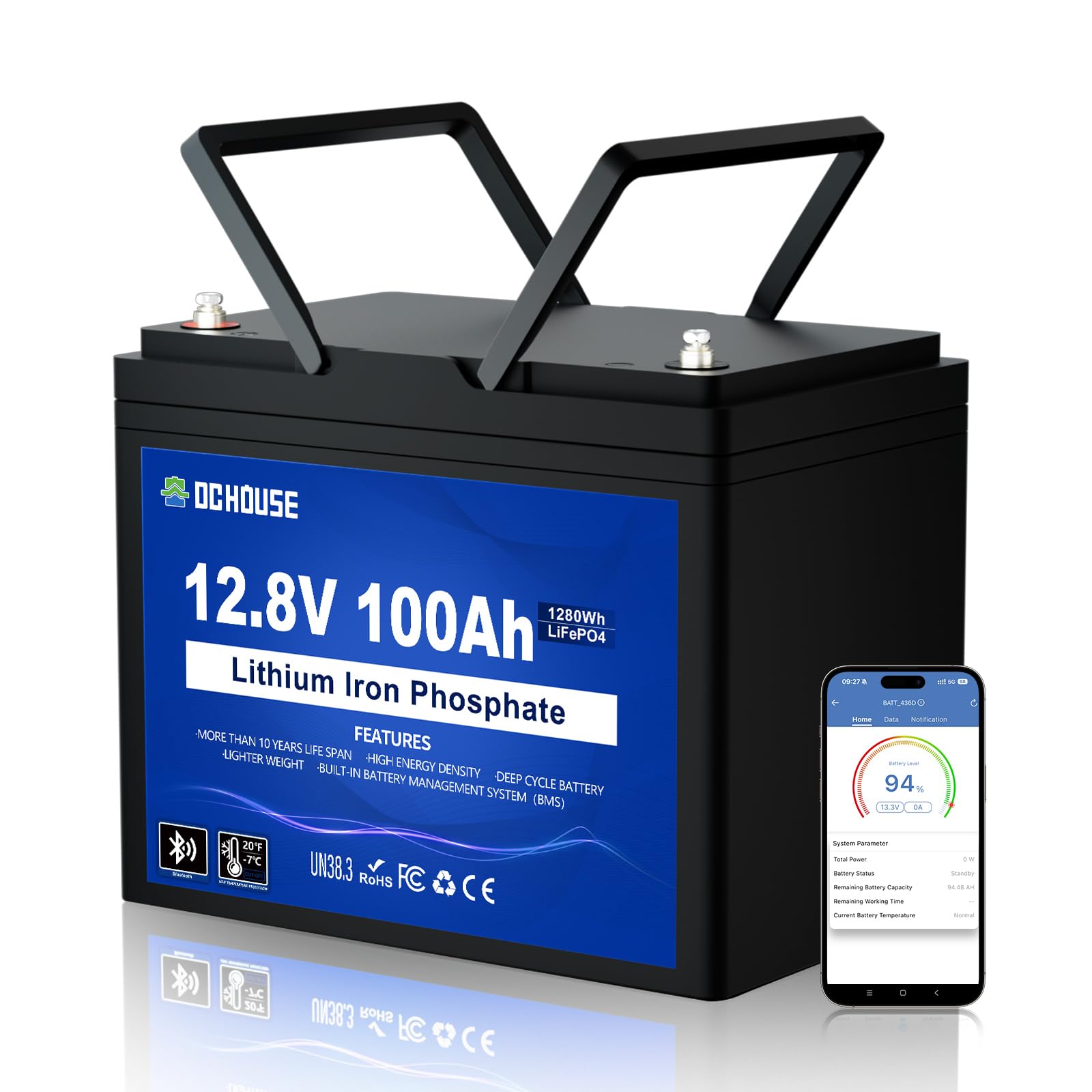
The DC HOUSE 12V 100Ah LiFePO4 battery brings Bluetooth connectivity to the mid-range price bracket, letting you monitor SOC, voltage, current, and individual cell balance through a dedicated app over a 5-10 meter range. The Group 24 form factor (10.2 x 6.6 x 9.2 inches) is slightly taller than the standard, so measure your tray height before ordering. At 23.8 lbs, it’s still 60% lighter than an equivalent AGM battery, making it manageable for one-handed installation in a bass boat compartment.
Real-world performance is impressive: one user ran a 45 lb thrust motor for 8 hours on high settings in strong wind and returned with 52% charge remaining. The Bluetooth feature includes a fault display page that pinpoints issues down to the specific cell, which is valuable for diagnosing problems without pulling the battery. Low-temperature protection cuts charge below 19.4°F and discharge below -4°F, with automatic recovery at 32°F. The 3-year warranty covers defects, and support is responsive through Amazon messaging.
The Bluetooth range is limited to 10 meters, so you need to be near the battery to connect—not useful for monitoring from the front deck while running the trolling motor. Some users experienced initial pairing hiccups that required reinstalling the app. It also cannot be used as a starting or cranking battery, so plan for a dedicated starting battery if you need both functions.
Why it’s great
- Built-in Bluetooth for real-time SOC and cell-level monitoring
- Low-temp cutoff at 19.4°F for cold-weather safety
- 8+ hours runtime on 45 lb motor with 52% remaining
Good to know
- Bluetooth range limited to 10 meters
- Slightly taller than standard Group 24—check tray height
5. ECO-WORTHY 12V 100Ah LiFePO4 Battery with SOC Display
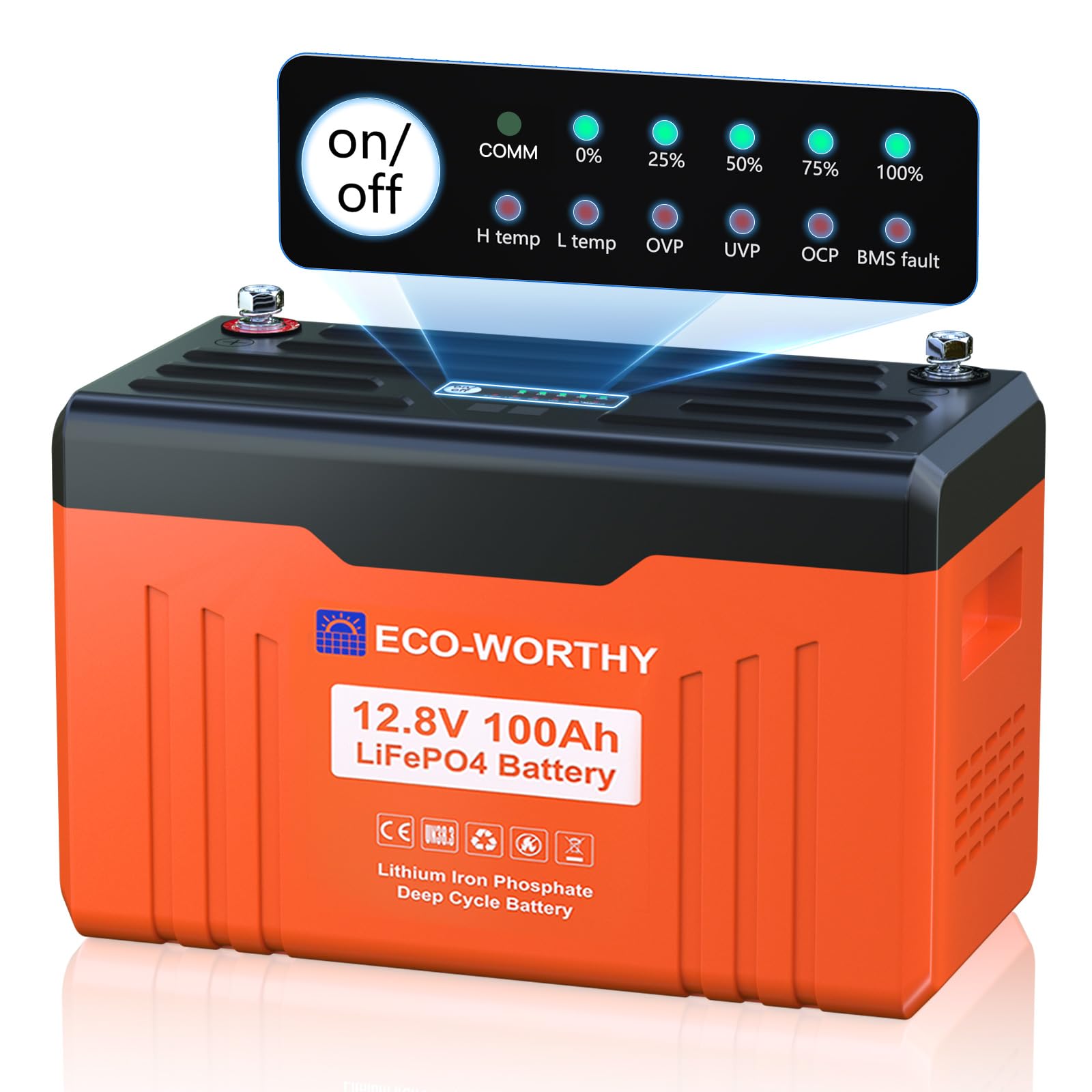
The ECO-WORTHY 12V 100Ah LiFePO4 battery stands out with a built-in LED panel that displays SOC and fault conditions at a glance—no app required. This is a practical feature for anglers who don’t want to fumble with a phone while on the water. It also includes Bluetooth monitoring for deeper data via the ECO-WORTHY app, covering voltage, current, cell balance, and runtime within 98 feet. The unit weighs 25.1 lbs and fits a Group 27 footprint (11.8 x 6.9 x 8.7 inches), so it requires a Group 27 battery box—standard Group 24 boxes will be too short.
Buyers report excellent real-world endurance: one user trolled for 6 days on a small boat and only dropped to 60% SOC. The metal fixture inside secures the cells to prevent expansion, a known failure point in cheaper lithium batteries. The built-in buzzer alerts you instantly to BMS faults, adding an audible safety layer. Expansion supports 4P2S for up to 10.24 kWh, suitable for solar and backup systems when the boat is docked.
The LED panel and Bluetooth app use coulomb counting for SOC estimation, which can drift under light loads—one experienced user noted the display showed 90% when actual SOC was closer to 10% after storage. An external shunt-based monitor is more accurate for long-term storage tracking. The battery also requires a LiFePO4-compatible charger; standard chargers may not trigger the correct charging profile.
Why it’s great
- On-board LED panel shows SOC without needing a phone
- Bluetooth app for detailed cell balance and runtime data
- Metal cell fixture prevents expansion for longer life
Good to know
- Coulomb counting can drift; use external shunt for accurate storage SOC
- Requires Group 27 battery box, not compatible with Group 24 trays
6. VMAX MR127 12V 100Ah AGM Deep Cycle Battery

The VMAX MR127 is a heavyweight contender in the AGM category, tipping the scales at 68 lbs in a Group 27 case. It uses an absorbed glass mat electrolyte suspension system with heavy-duty lead-tin grids designed to withstand repeated deep discharges without degrading as quickly as standard flooded batteries. For anglers committed to sealed lead-acid chemistry, this is one of the most reliable Group 27 AGM options on the market. The marine terminals and integrated carrying handles make installation and removal manageable despite the weight.
User reports confirm its deep-cycle credentials: one fisherman ran a 55 lb Minn Kota on a 12-foot boat for 6 hours a day, recharging every other night, and never dropped below half charge. Another series-wired two MR127s for an 86 lb thrust motor and used only 2.2V from a 26.4V starting voltage over 4 hours of trolling. The electrolyte suspension system ensures no silica gel contamination, and the sealed construction means no off-gassing or water top-ups.
The main drawback is weight—68 lbs is physically demanding to lift into a boat compartment, and the extra mass on the transom can affect small boat performance. It also requires a dedicated AGM charger with the correct absorption voltage profile (14.4-14.6V). Some users reported that discharging below 10.5V can confuse some AGM chargers, requiring a jump-start from a known good battery to restart the charging process.
Why it’s great
- True deep-cycle AGM handles repeated discharges better than flooded lead-acid
- Sealed, maintenance-free, no off-gassing during charging
- Series wiring for 24V systems works reliably with high-thrust motors
Good to know
- 68 lbs is very heavy; impacts boat weight distribution
- May require jump-start to restart charging if fully drained
7. Newport 12V 50Ah Deep Cycle AGM Marine Battery
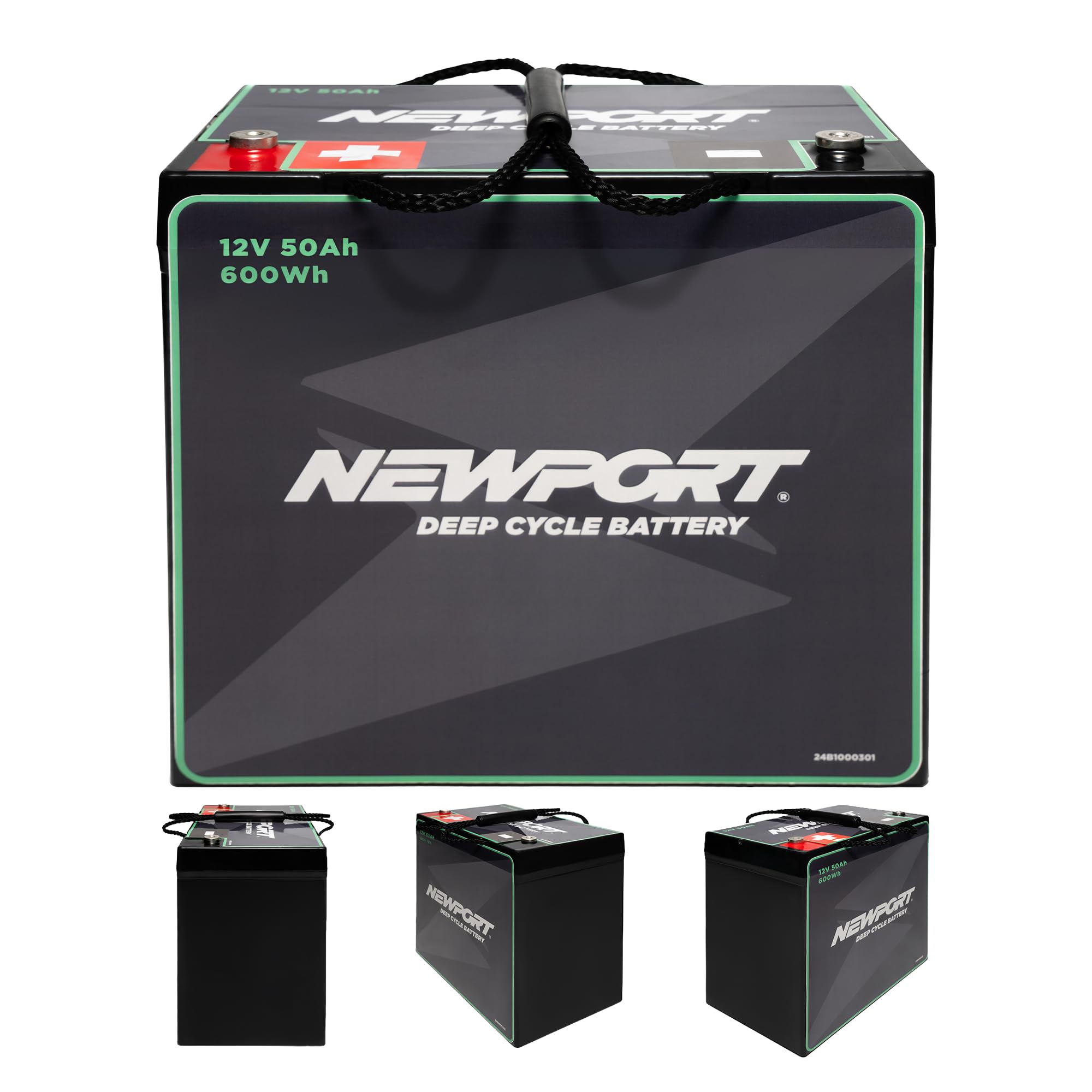
The Newport 12V 50Ah AGM battery is the budget-friendly entry point for anglers who need a reliable deep cycle battery without the upfront investment of lithium. At 32 lbs and a compact footprint, it’s manageable for a kayak or small jon boat where space is tight. The sealed AGM construction is leak-proof and maintenance-free, so it can be mounted in any orientation except inverted. The marine terminals accept standard ring connectors, and the carrying handle makes transport straightforward even with one hand.
Real-world feedback is positive for the price point: one kayak angler runs a 55 lb thrust motor for 4+ hours at moderate speeds with stable voltage output. Another uses it for a 25 lb motor on a two-person kayak and gets a full day of fishing. The battery survived a 20 mph tumble from a truck bed with only cosmetic damage and no performance issues. For , it delivers reliable power without the complexity of lithium charging profiles.
The 50Ah capacity is the limiting factor—users with higher-thrust motors or longer days will find the runtime insufficient. One reviewer reported only 7 hours on a 25 lb motor at full power and expected more. There’s no built-in charge indicator, so you need a multimeter or external monitor to track SOC. It’s not suitable for high-power applications like 80+ lb thrust motors or dual-battery 24V systems.
Why it’s great
- 32 lbs is lightweight for an AGM; easy one-hand carry
- Sealed, leak-proof, maintenance-free construction
- Budget-friendly entry point for small kayak setups
Good to know
- Only 50Ah capacity limits runtime on high-thrust motors
- No built-in charge indicator; requires external monitoring
8. yeagulch 2-Pack 12V 100Ah LiFePO4 Deep Cycle Battery
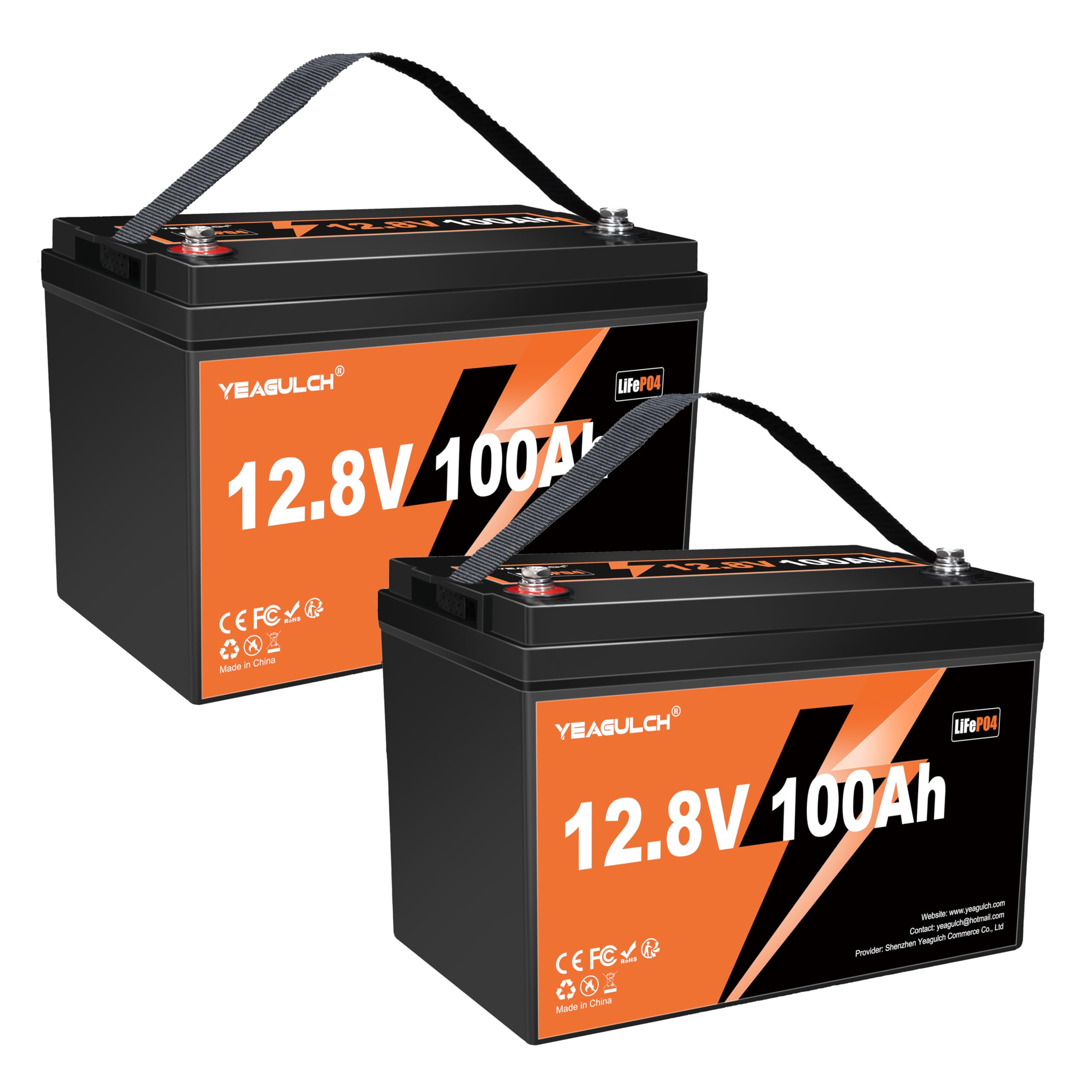
Each unit features a built-in 100A BMS with protection against overcharge, over-discharge, and short circuits. The 95% usable capacity compared to 50% for lead-acid means you get essentially double the effective runtime from the same Ah rating. The pack supports series and parallel expansion up to 4 units, giving you flexibility for 24V or 48V systems.
User reports on the water are solid: one angler runs an 80 lb thrust motor on a 10-foot pontoon and reports 1/3 the weight of his old deep cycles, plus a 10% speed boost from the higher sustained voltage. The batteries lasted 4 outings without needing a recharge, even while running the bilge pump and accessories. For solar or backup applications, the high cycle life (4000+ at 100% DoD) makes the per-pack cost competitive over time.
There are notable caveats. The 2-pack lacks Bluetooth BMS, so you can’t monitor individual cell voltage or SOC without an external system. One off-grid user reported a complete failure of all four paralleled units after a single use, though this appears to be an outlier—most reviews are positive. The manufacturer warns against using these batteries in trolling motors exceeding 700W, so verify your motor’s peak draw before purchasing.
Why it’s great
- Two batteries at 22 lbs each for versatile 24V or parallel setups
- 95% usable capacity vs 50% for lead-acid, doubling effective runtime
- Significant weight savings improves boat performance
Good to know
- No Bluetooth module for SOC monitoring
- Not recommended for trolling motors over 700W peak
9. Elefast 24V 100Ah LiFePO4 Battery

The Elefast 24V 100Ah LiFePO4 battery is a direct 24V solution for anglers running 24V trolling motors, eliminating the need to wire two 12V batteries in series and balance their voltages. At 42.5 lbs, it replaces roughly 110 lbs of lead-acid (two 12V 100Ah AGM batteries), freeing up significant transom weight for better hole shot and planing. The 100A BMS handles 300A inrush for 1 second during motor startup, and supports 1.2C discharge for up to 3 minutes with automatic overload recovery in 30 seconds.
Real-world feedback is strong: one bass boat owner swapped two 12V AGMs for this single 24V unit and reported running all day with plenty of charge remaining, plus a noticeable improvement in boat handling due to the weight reduction. Another pontoon owner with a 22-foot boat trolled for 4 hours with two people aboard without issue. The A+ grade cells are rated for 20,000+ deep cycles and come with UL, IEC, CE, and RoHS certifications for safety. The 5-year warranty adds peace of mind for a significant investment.
The main consideration is the price point and the need for a 24V LiFePO4 charger—many existing trolling motor chargers are 12V only. The battery does not include Bluetooth, so you’ll need an external monitor to track SOC accurately. The physical dimensions (13.58 x 7.48 x 9.64 inches) are larger than a Group 31, so measure your compartment carefully before ordering.
Why it’s great
- Single 24V battery replaces two 12V AGMs, saving 110 lbs
- Handles 300A inrush for motor startup without BMS cutoff
- 20,000+ deep cycle rating with 5-year warranty
Good to know
- Requires a dedicated 24V LiFePO4 charger
- No built-in Bluetooth for SOC monitoring
FAQ
Can I use a standard lead-acid charger on a LiFePO4 trolling motor battery?
How many amp-hours do I need for a full day of trolling?
Can I connect a lithium battery in series with an AGM battery for a 24V system?
How do I store my trolling motor battery over winter?
Final Thoughts: The Verdict
For most anglers, the battery for a trolling motor winner is the Litime 12V 100Ah TM because it combines ABYC marine certification, TVS spike protection, low-temperature cutoff, and the lightest weight in its class at a price that undercuts many competitors with similar specs. If you want built-in Bluetooth monitoring, grab the DC HOUSE 12V 100Ah Bluetooth. And for a 24V upgrade that drops 110 lbs of dead weight from your transom, nothing beats the Elefast 24V 100Ah.