
Nothing kills a campsite vibe faster than a dead battery. Whether you need to run a CPAP machine all night, keep your fridge cold for the weekend, or just charge four phones and a speaker without running your car, the right portable power station makes the difference between a great trip and a frustrating one. A lead-acid deep-cycle battery is heavy, slow to recharge, and degrades fast. The modern alternative is a compact lithium power station that gives you clean AC power, multiple USB ports, and the ability to recharge from solar panels.
I’m Min — the co-founder and writer behind Gadgets Feed. I’ve spent countless hours analyzing the specs, battery chemistries, and real-world performance data of portable power stations to help you find the best fit for your camping setup.
After comparing capacity, output, charging speed, and solar compatibility across the top models, this guide breaks down everything you need to make a confident choice for the best battery for camping.
How To Choose The Best Battery For Camping
Choosing the right camping battery comes down to three core factors: how much power you need, how fast you need to recharge, and how often you plan to use the unit. Let’s break each one down.
Capacity vs. Weight Trade-off
Capacity is measured in watt-hours (Wh). A 288Wh unit can run a 60W fridge for roughly 4-5 hours, while a 2048Wh unit can power the same fridge for over 30 hours. But more capacity means more weight: a 288Wh station weighs around 5-9 lbs, while a 2kWh station pushes 30-40 lbs. Decide whether you’re car camping or hiking in. For basecamp or RV use, a heavy high-capacity unit makes sense. For hike-in sites, stick to sub-300Wh models.
Battery Chemistry: LiFePO4 is King
Lithium Iron Phosphate (LiFePO4) batteries last 3,000 to 4,000 charge cycles before dropping to 80% capacity. Standard lithium-ion (NMC) batteries typically last 500 cycles. For a camping battery that lives in your car or garage and gets used seasonally for years, LiFePO4 is the only chemistry that makes financial sense long-term. The upfront cost is higher, but the lifespan is 5-10x longer.
Solar Input and Charging Speed
A unit that takes 10 hours to recharge from a wall outlet may not fully charge between day trips. Look for fast AC charging: sub-2 hours is excellent for a mid-range unit, and sub-1 hour is top-tier for premium models. Solar input wattage also matters. A 200W solar panel paired with a 600W MPPT controller refills a 1kWh battery in about 5-6 hours of good sunlight. Units with lower solar input limits (60W-100W) charge much slower off-grid.
Quick Comparison
On smaller screens, swipe sideways to see the full table.
| Model | Category | Best For | Key Spec | Amazon |
|---|---|---|---|---|
| Anker SOLIX C1000 | Premium Bundle | Rapid solar recharging | 1056Wh, 1800W output, 43-min AC recharge | Amazon |
| DJI Power 2000 | Premium Standalone | Quiet RV/backup power | 2048Wh, 3000W output, 55-min 80% charge | Amazon |
| EF ECOFLOW DELTA 3 Max | Premium Smart | App-controlled backup | 2048Wh, 3400W X-Boost, 1.13-hr charge | Amazon |
| Jackery Explorer 2000 v2 | Premium Lightweight | Lightest 2kWh camping unit | 2042Wh, 2200W output, 39.5 lbs | Amazon |
| VTOMAN FlashSpeed 2400 | Mid-Range Value | 1-hour recharge + 12V jump-start | 1408Wh, 2400W output, 1500W AC input | Amazon |
| LIBRIDS C600 | Mid-Range Compact | CPAP / reef tank backup | 640Wh, 600W output, 1.5-hr charge | Amazon |
| BLUETTI Elite 30 V2 | Mid-Range Entry | Small campsite / storm backup | 288Wh, 600W output, 70-min full charge | Amazon |
| GRECELL EB300 | Budget Portable | Budget tent camping | 288.6Wh, 330W output, wireless charging pad | Amazon |
| DaranEner NEOZ | Budget Lightweight | Ultra-light bike touring | 192Wh, 300W output, 5.73 lbs | Amazon |
In‑Depth Reviews
1. Anker SOLIX C1000 with 200W Solar Panel

Anker’s SOLIX C1000 tackles the two biggest pain points of camping batteries: recharge speed and solar compatibility. With UltraFast mode, you can go from 0 to 80% in just 43 minutes using a wall outlet — that’s faster than any other unit in this class. The bundled 200W solar panel is IP67 waterproof and has an adjustable kickstand with four angles so you can follow the sun throughout the day.
The 1056Wh LiFePO4 battery is rated for 3,000 cycles, meaning it will last roughly 10 years of weekly use. SurgePad technology pushes the output to 2400W, which is enough to run a mini-fridge, a coffee maker, and charge laptops simultaneously. The panel delivers up to 23% conversion efficiency, and in full sun you’ll see a steady 180W input — enough to refill the battery in about six hours.
At 27.6 lbs, the C1000 isn’t the lightest unit, but the handle is well-balanced and the compact footprint fits under an RV seat. The Anker app gives you real-time monitoring and lets you toggle UltraFast charging remotely. If you want a single investment that covers weekend camping and home backup, this is the most versatile package available.
Why it’s great
- UltraFast 80% recharge in 43 minutes
- IP67 waterproof solar panel included
- 2400W SurgePad handles 99% of appliances
Good to know
- Station itself is not weatherproof
- Single 200W panel may be marginal in cloudy conditions
2. DJI Power 2000
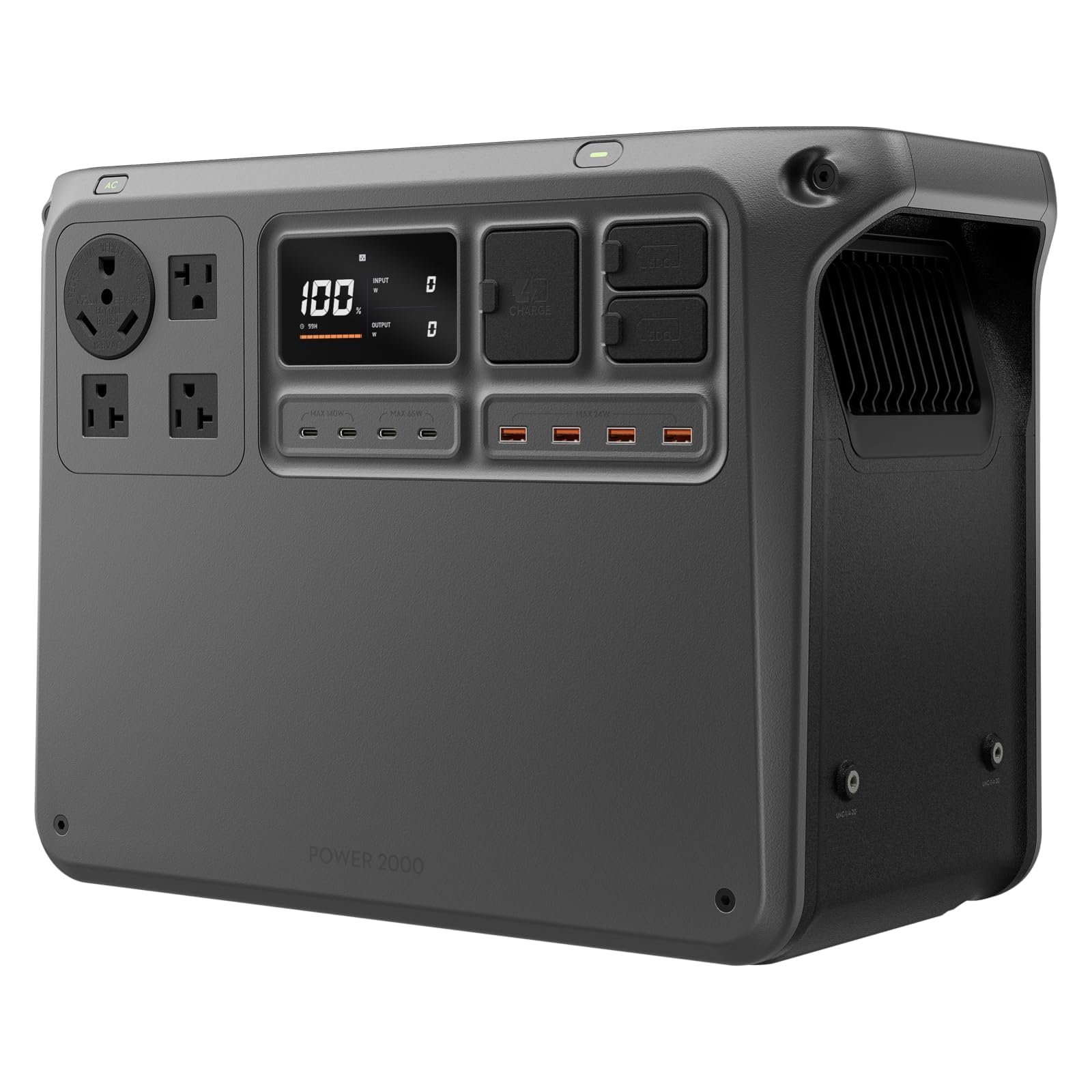
DJI brings its drone-grade engineering to the portable power station market with the Power 2000, and the result is a unit that redefines quiet operation. At under 30 dB in normal use, it’s barely audible from a few feet away — essential for RV campers who sleep next to their power source. The 2048Wh LiFePO4 battery delivers 3000W continuous output (4000W peak) and supports up to 1800W solar input.
Recharge speed is impressive: 0 to 80% in just 55 minutes via AC. The unit features 15 ports including dual full SDC ports and four USB-C (two at 140W). The 10ms UPS switch is twice as fast as the previous generation, and the flame-retardant housing with sub-nano coating adds protection in damp or dusty campsites. The DJI Home app gives you full remote control over charging schedules and output settings.
The main trade-off is weight: 47.8 lbs makes it a basecamp-only unit. There are no built-in wheels, and the proprietary connectors mean you need DJI adapters for solar and car charging. But if you need whisper-quiet power for a trailer or home backup, this is the most silent high-capacity option available.
Why it’s great
- Under 30 dB operation for silent nights
- 55-minute 0-80% AC recharge
- 4,000-cycle lifespan with smart BMS
Good to know
- No built-in MPPT or car charger adapter included
- Heavy at 47.8 lbs; no wheels
3. EF ECOFLOW DELTA 3 Max
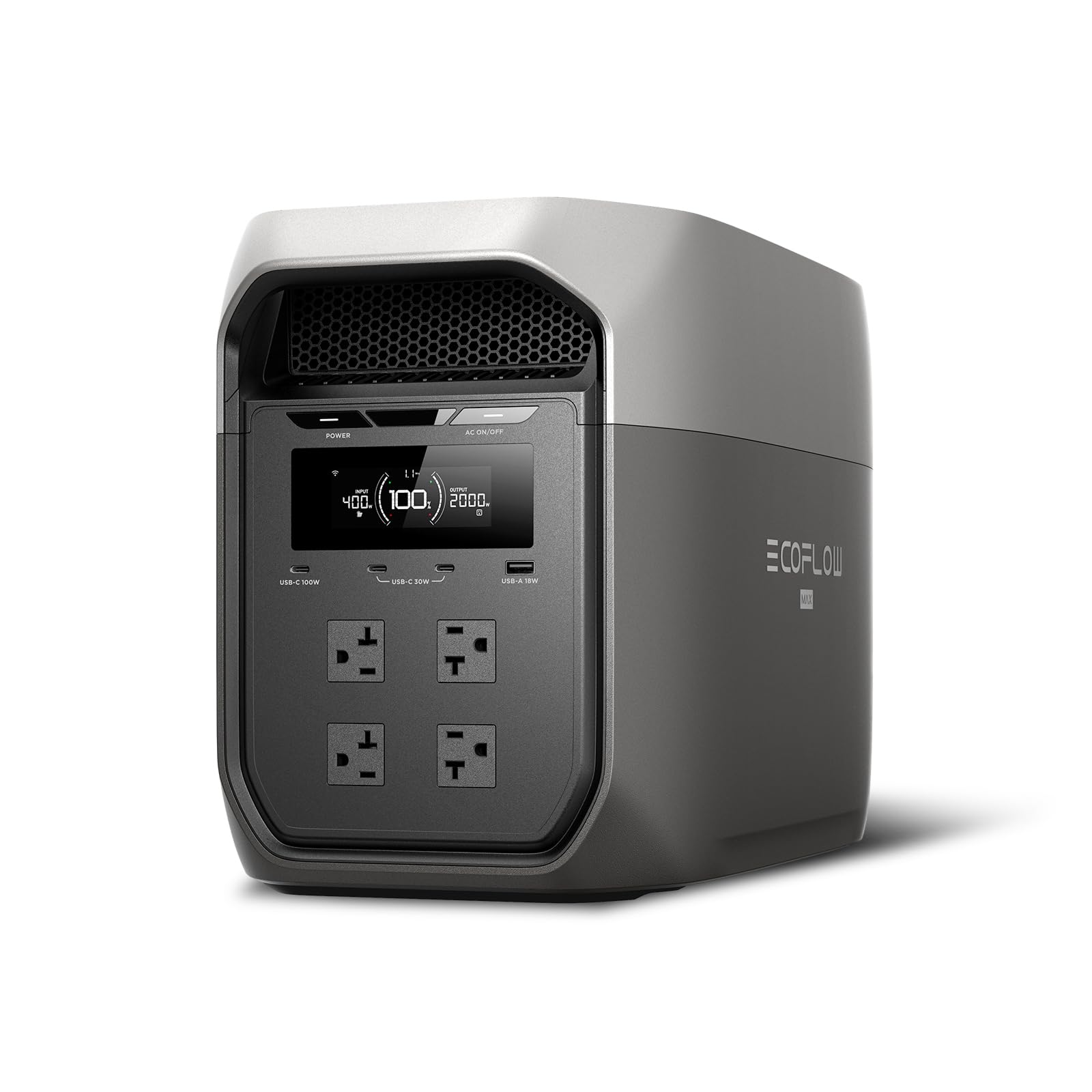
The DELTA 3 Max from EcoFlow is a smart power station that prioritizes app-based energy management without sacrificing raw output. With X-Boost mode, it can push up to 3400W continuous power, letting you run a microwave, toaster, or circular saw from a single unit. The 2048Wh LiFePO4 battery is designed for 10 years of daily use, and the X-Stream technology fills from 0 to 80% in just 1.13 hours.
The unit has a 10ms UPS transfer time, making it a legitimate substitute for a home UPS — it can keep a PC, router, and monitor running through a blackout without a hiccup. The EcoFlow app lets you set charge/discharge schedules, monitor input/output in real time, and enable silent charging mode that keeps fans barely audible.
At 9.4 inches wide and 19.44 inches tall, the form factor is taller than it is wide, so it fits into tight spaces. The dual handles make it easier to carry than the DJI, though it still weighs nearly 50 lbs. The XT60i cable supports faster solar charging, and the unit is compatible with EcoFlow’s smart home panel for whole-house integration.
Why it’s great
- 3400W X-Boost for high-demand appliances
- 0-80% fast charge in 68 minutes
- Full smart home integration via EcoFlow app
Good to know
- Heavy at ~50 lbs; no integrated wheels
- Fan can be audible at high loads
4. Jackery Explorer 2000 v2

Jackery’s Explorer 2000 v2 uses Cell-to-Body (CTB) technology borrowed from EV manufacturing to pack 2042Wh into a chassis that weighs just 39.5 lbs — 41% lighter than comparable 2kWh units. That weight reduction makes it the most portable high-capacity battery on this list, and the integrated handle makes single-person loading into a truck bed or SUV trunk genuinely manageable.
The 2200W continuous output (4400W peak) covers most camping appliances: mini-fridge, CPAP, electric griddle, and multiple device charging all at once. AC fast charging goes from 0 to 80% in 66 minutes, and a silent charging mode keeps fan noise under 30 dB for overnight charging. The 20ms UPS transfer is UL1778 certified, and the unit has passed drop tests for ruggedness.
The USB-C PD 100W port supports fast laptop charging without an extra brick. The app pairing was straightforward in testing, though some users noted the Bluetooth connection isn’t persistent. The solar barrel ports flex slightly when a cable is plugged in, so avoid high-torque connections. For campers who need 2kWh of power without the weight penalty, this is the best option.
Why it’s great
- 41% lighter than competitors at 39.5 lbs
- Silent charging mode under 30 dB
- CTB EV technology for compact build
Good to know
- Solar barrel ports are a weak point
- Bluetooth app connection is not always persistent
5. VTOMAN FlashSpeed 2400
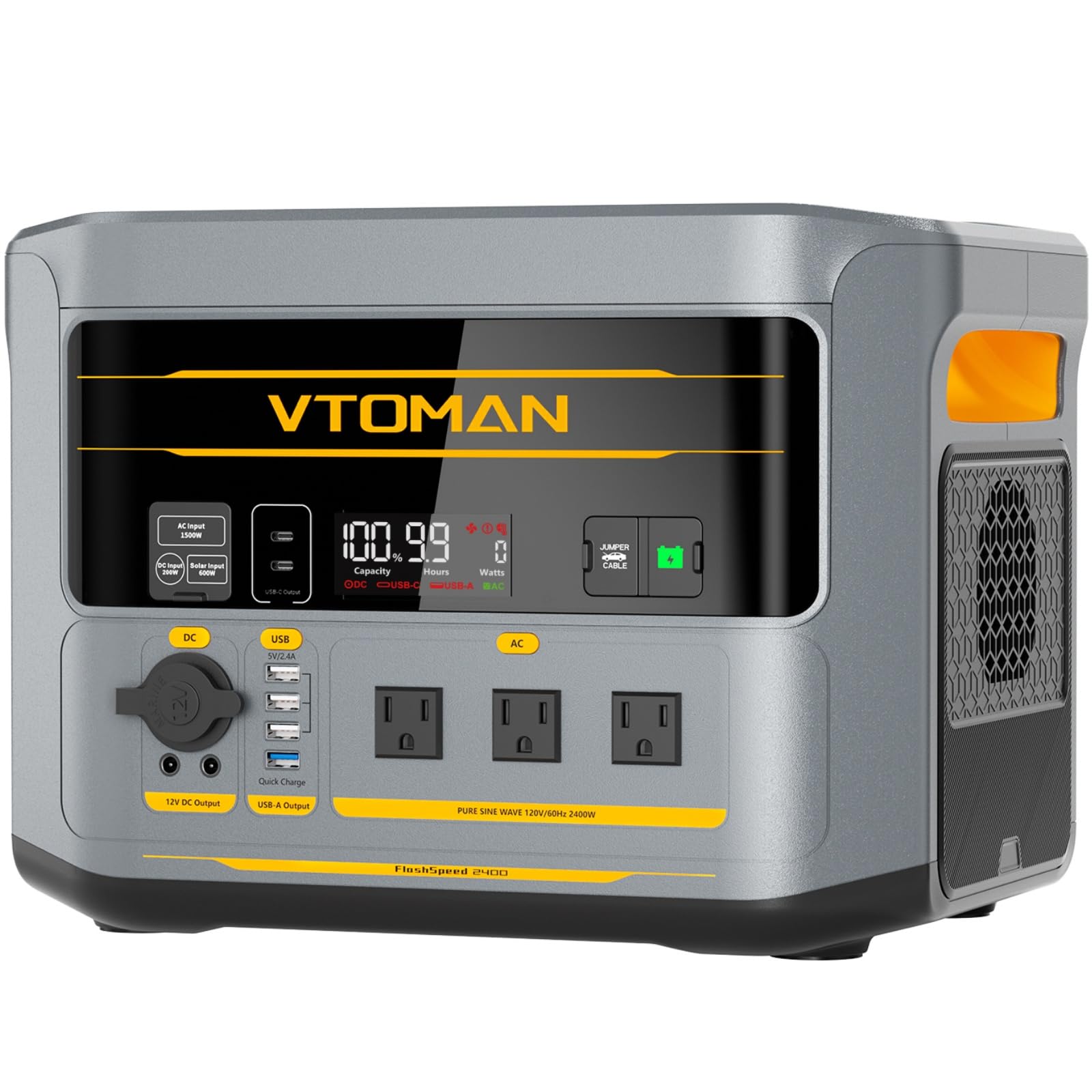
VTOMAN’s FlashSpeed 2400 hits the sweet spot of capacity and price with a 1408Wh LiFePO4 battery and 2400W continuous output (3200W peak). The headline feature is a 1500W AC input that recharges from zero to full in about one hour — faster than any other unit in this price band. The 12-port array includes three AC, four USB-A, two USB-C, and three DC outputs, covering everything from a fridge to power tools.
This unit doubles as a 12V car jump-starter, which is a rare bonus for a camping battery. Built-in MPPT supports up to 600W solar input, so you can pair it with a single large panel for off-grid recharging. The 10ms UPS keeps Wi-Fi and CPAP running through short outages. A five-mode LED light with SOS adds practical utility at the campsite.
Some early units had charging detection issues that were resolved via a hard reset (drain to 0%, press all three yellow buttons). After that fix, the unit holds charge well and performs reliably for camping and gadget use. The 27.5 lb weight is manageable for car camping. If you need a mid-range unit with premium recharge speed and a jump-start feature, this is the best value.
Why it’s great
- 1-hour full recharge via 1500W AC input
- Built-in 12V car jump-start capability
- 600W MPPT solar input for fast off-grid charging
Good to know
- Some units need a hard reset after first use
- AC output can be weak for high-wattage appliances like kettles
6. LIBRIDS C600
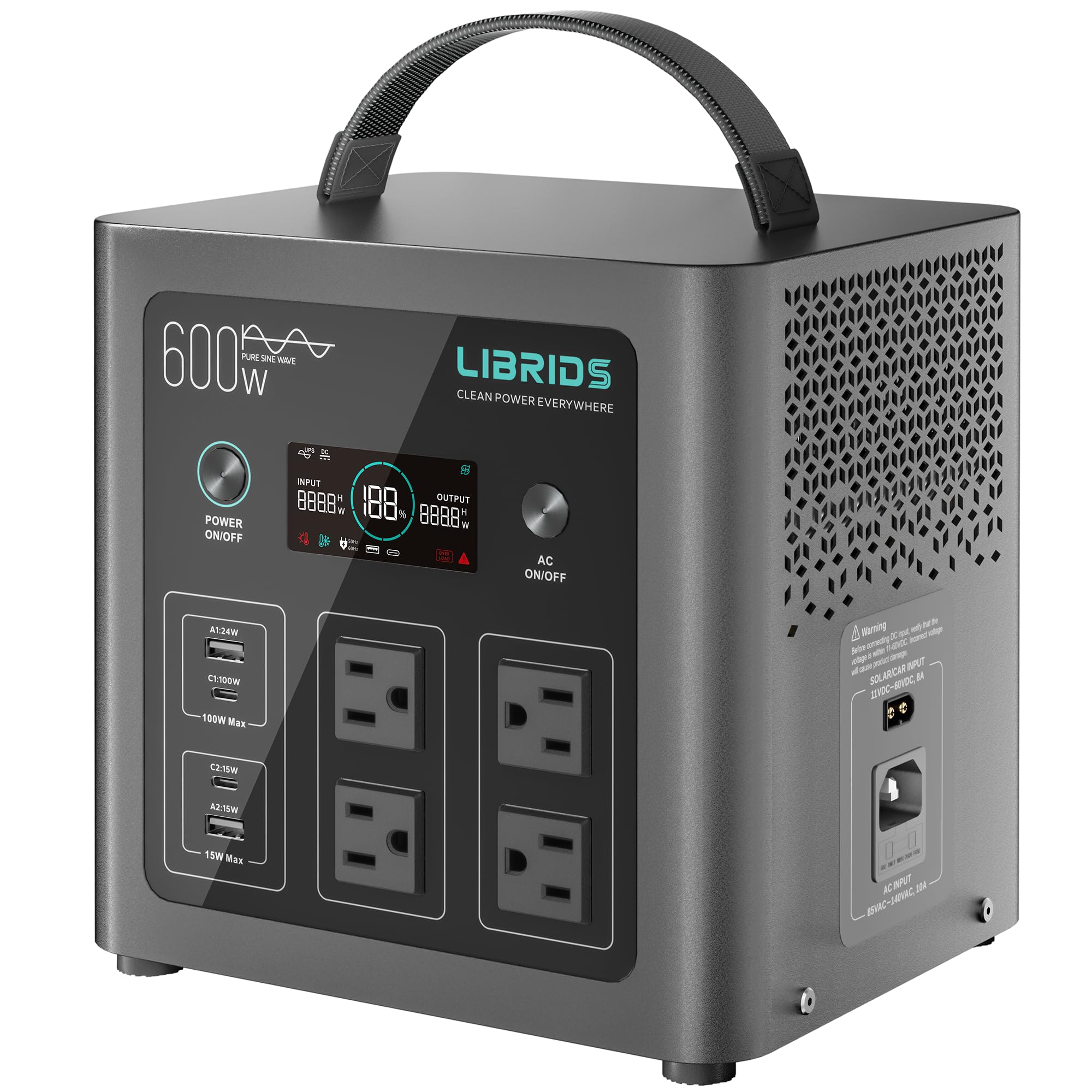
The LIBRIDS C600 packs 640Wh of LiFePO4 power into a compact metal enclosure with a comfortable handle. The 600W continuous output (1200W surge via PowerRaise) is enough for a CPAP machine, small fridge, or multiple device chargers. One user reported running a Resmed Airsense 11 CPAP for seven hours with only 24% battery drain — giving you about three full nights of CPAP use per charge.
Fast AC charging takes the battery to full in just 1.5 hours, and the 300W solar input refills it in a few hours of good sun. The unit has eight ports including four AC outlets, USB-A, USB-C, and DC. The pure sine wave inverter keeps sensitive electronics safe. The smart LCD shows real-time battery percentage and input/output watts.
Build quality is excellent: the metal frame dissipates heat well, and the fan is quiet even under load. The 18 lb weight is easy to carry from car to tent. The unit is rated for 4000+ cycles, making it a long-term investment. The only note is that it cannot run a Keurig-style coffee maker, but for CPAP, phone charging, and small appliances, it’s perfectly sized.
Why it’s great
- 7 hours CPAP use at only 24% battery drain
- Metal enclosure for better heat dissipation
- 4000+ cycle LiFePO4 battery
Good to know
- Cannot run high-power appliances like Keurig
- Labeled for indoor use; avoid rain exposure
7. BLUETTI Elite 30 V2
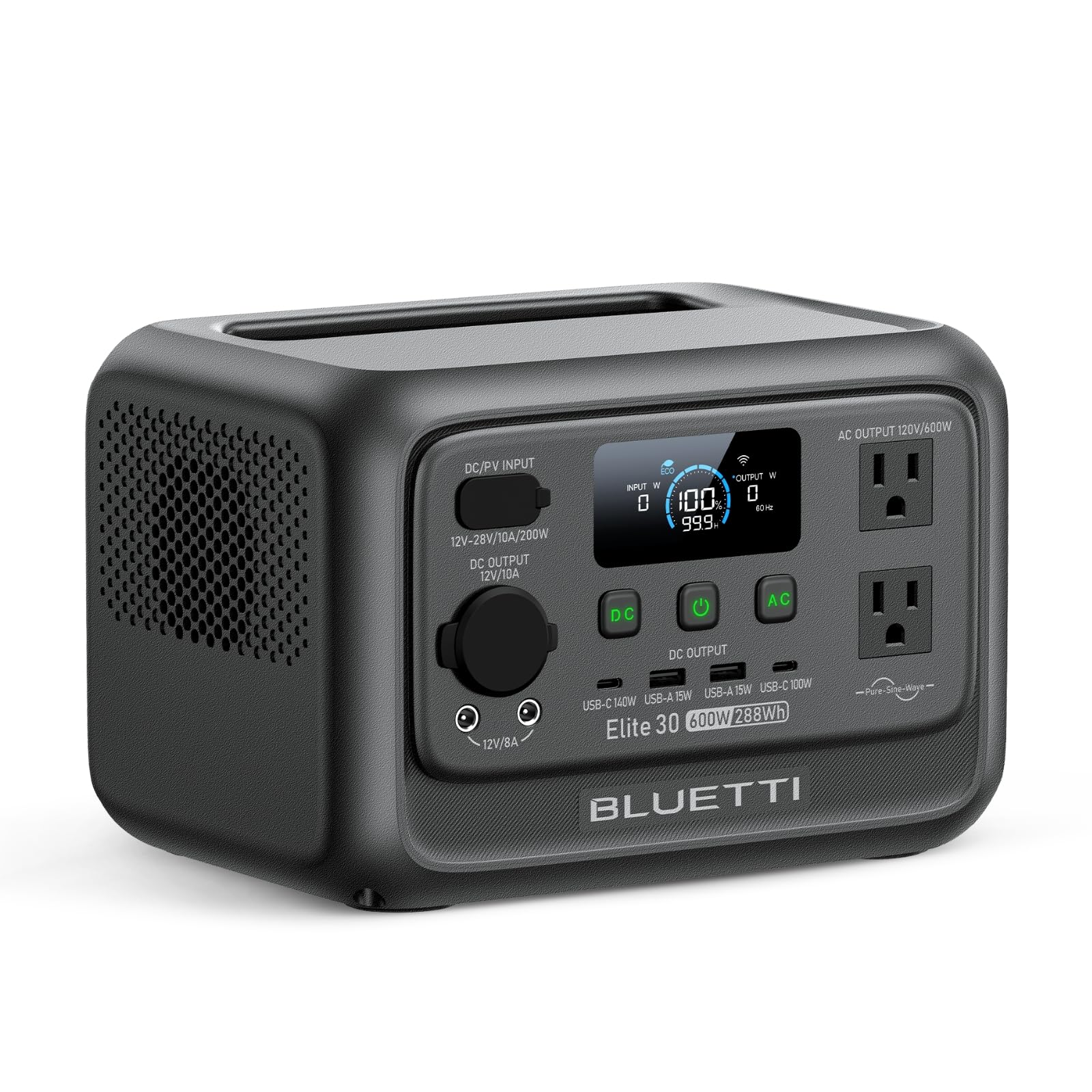
BLUETTI’s Elite 30 V2 is a 288Wh entry-level station that punches above its weight with a 600W continuous output and a Power Lifting Mode that pushes to 1500W for short bursts. That means you can run a small kettle or toaster in addition to the usual camping electronics. The unit recharges from 0 to 80% in just 45 minutes and to 100% in 70 minutes — shockingly fast for a sub-300Wh unit.
The upgraded UltraCell technology cuts standby power consumption by 50% (only 4.5W DC, 8W AC), so the battery holds its charge for months between camping trips. The 10ms UPS switch keeps laptops and CPAP running during power drops. The unit weighs only 9.4 lbs, making it one of the most portable options for hike-in campsites or car-to-tent carry.
The dual USB-C ports deliver 140W and 100W respectively, enough to charge a MacBook Pro at full speed. The app connectivity adds remote monitoring and settings adjustment. Some users found the 288Wh capacity insufficient for their needs and returned it for a larger model, so check your runtime before buying. For a compact, fast-charging unit for short trips, this is top-tier.
Why it’s great
- 45-minute 0-80% recharge
- 9.4 lbs ultra-portable design
- 1500W Power Lifting Mode for small appliances
Good to know
- 288Wh capacity may be too small for multi-day fridge use
- Some initial off-gassing from new unit
8. GRECELL EB300
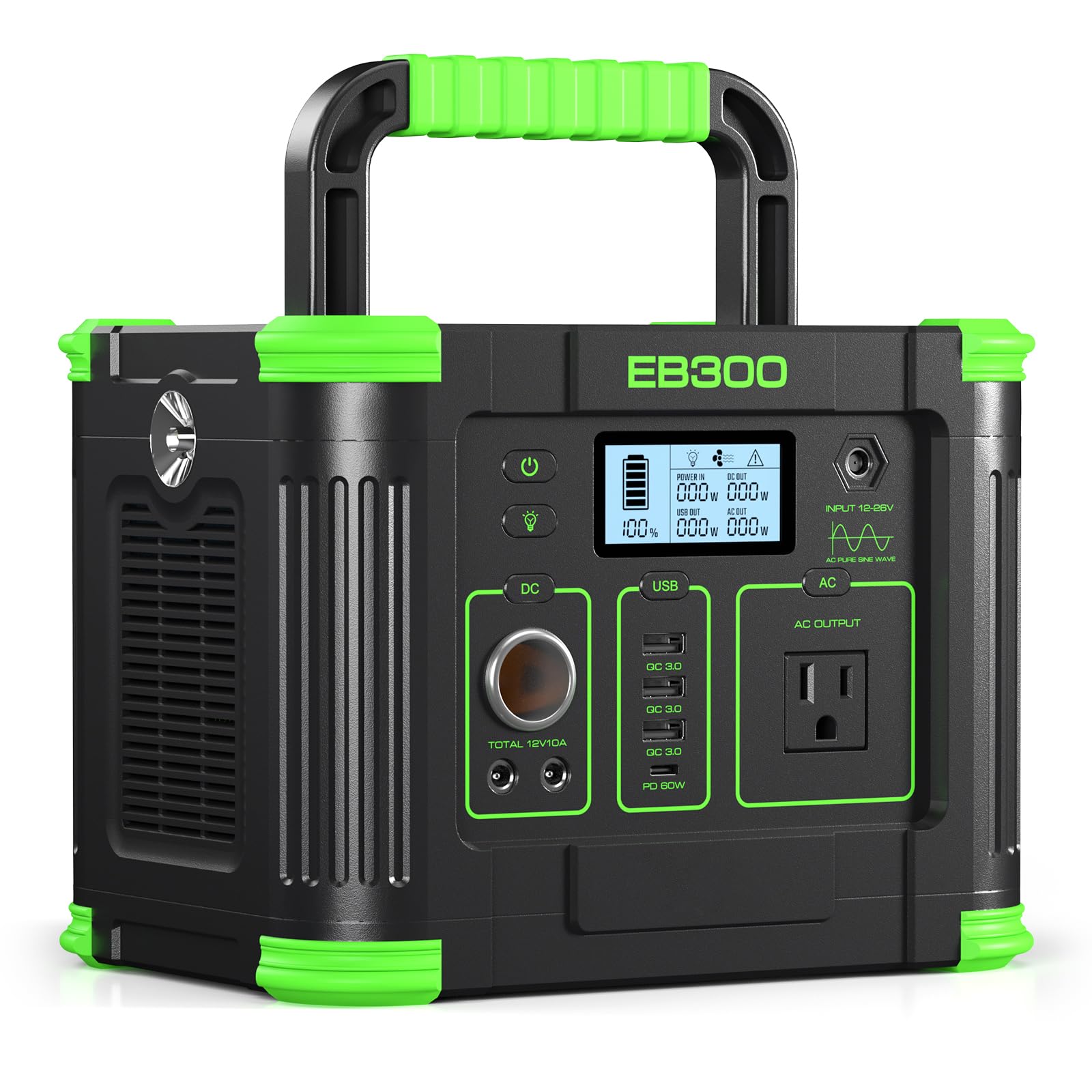
The GRECELL EB300 delivers 288.6Wh capacity and 330W continuous output (600W surge) at a price that undercuts most competitors. The unique addition of a 5W wireless charging pad on top lets you drop your phone onto the unit and charge without cables — a convenience feature that’s rare at this price tier. The 60W USB-C PD port charges a MacBook or high-end Android phone at full speed.
The unit has nine ports including one AC outlet, USB-C PD 60W, USB-C 18W, dual USB-A QC 3.0, two DC ports, and a 12V car socket. The built-in MPPT controller supports 60-120W solar panels, and the unit can be recharged via wall (6-7 hours), car (7-9 hours), or solar (5-9 hours). The 3W LED flashlight has high, strobe, and SOS modes for emergencies.
At just over 5.3 lbs (the lightest on this list), the EB300 is ideal for tent camping where weight matters. One user ran four audio devices for five hours and the battery stayed above 75%, showing good real-world efficiency. The operating range of 0-40°C (storage -20-45°C) covers most camping environments. The main limitation is the single AC outlet and the 288Wh capacity — suitable for weekend trips with light electronics.
Why it’s great
- Built-in 5W wireless charging pad
- 60W USB-C PD for laptop charging
- Only 5.3 lbs, ultra-portable
Good to know
- Single 330W AC outlet limits appliance options
- 288Wh capacity best for weekend trips only
9. DaranEner NEOZ
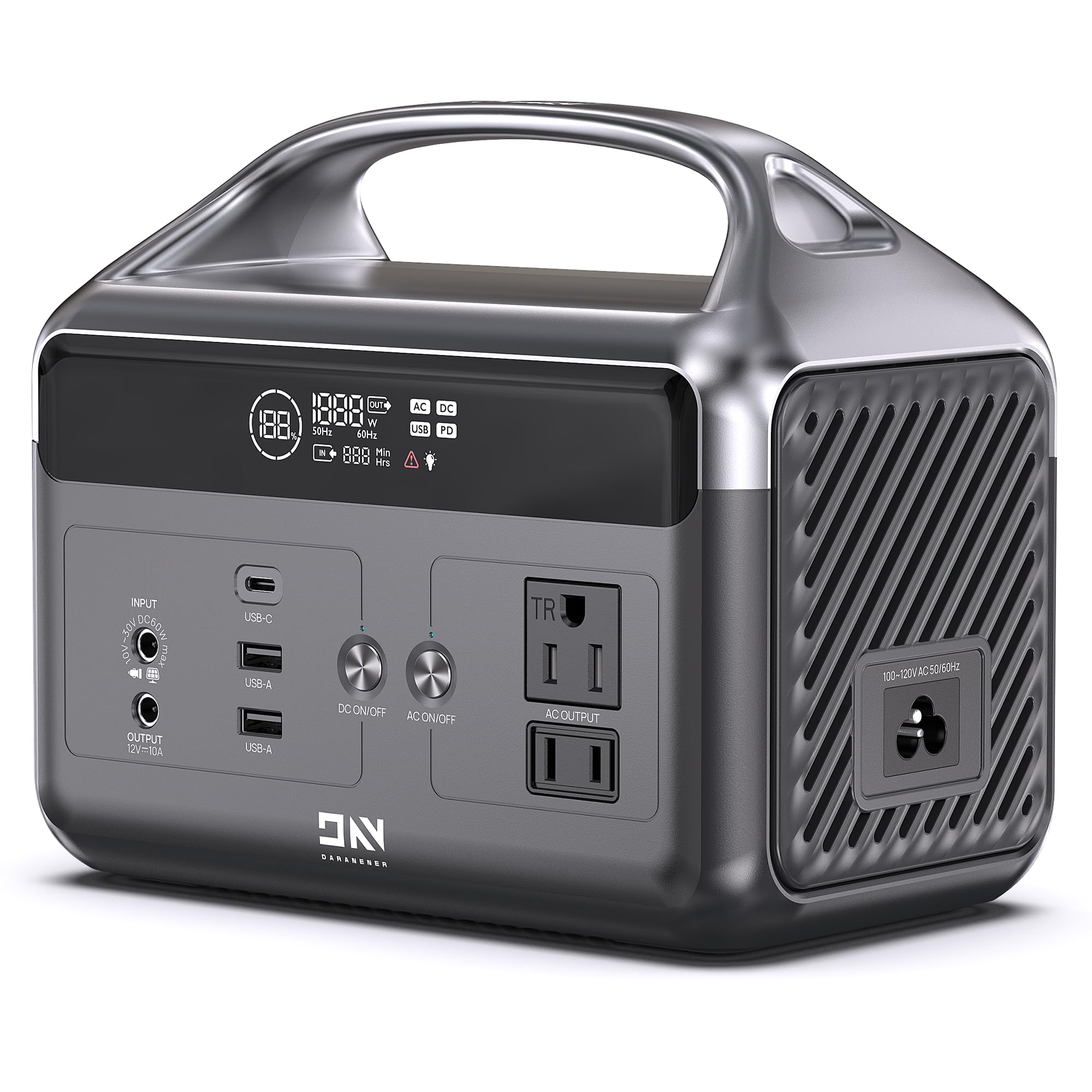
The DaranEner NEOZ is the most affordable entry point into LiFePO4 camping batteries at just 192Wh capacity. It weighs only 5.73 lbs and is smaller than a toaster, making it the best option for bike touring, backpacking, or ultralight car camping. The 300W pure sine wave output (600W surge) runs phones, tablets, laptops, fans, CPAP machines, and camera gear — just not high-power appliances like mini-fridges or hair dryers.
The unit has six ports: two AC outlets, USB-C PD 60W, two USB-A QC3.0 (18W), and one 12V DC output. The 30V DC input allows you to pair two 18V solar panels in series for bike touring setups — a specific advantage for pedal-powered campers. The built-in LED flashlight has four modes including SOS. The 3500+ cycle LiFePO4 battery outlasts standard lithium-ion by about 10x.
Customer support from DaranEner is notably good: users who experienced failures after months of use reported quick replacements without return hassle. Some units had a power gauge that didn’t sync perfectly with battery level, so it’s worth testing the display on arrival. The 192Wh capacity is best for single-night trips or as a secondary battery pack. For the price and weight, it’s an outstanding value.
Why it’s great
- 5.73 lbs ultra-light for bike touring or packing
- 30V solar input supports dual 18V panels in series
- 3500+ cycle LiFePO4 battery
Good to know
- 192Wh capacity best for single-night trips
- Power gauge occasionally desyncs with true battery level
FAQ
How many watt-hours do I need for a weekend camping trip?
Can I leave a LiFePO4 camping battery plugged in all the time?
How fast can a solar panel recharge my camping battery?
What’s the difference between the inverter wattage and the battery capacity rating?
Final Thoughts: The Verdict
For most users, the best battery for camping winner is the Anker SOLIX C1000 with 200W Solar Panel because it combines the fastest AC recharge, a quality waterproof solar panel, and enough capacity for a full weekend of camping plus home backup — all at a price that undercuts premium rivals. If you want silent 2kWh power for an RV or extended off-grid living, grab the DJI Power 2000. And for ultralight bike touring or budget-conscious weekend trips where every pound counts, nothing beats the DaranEner NEOZ.