
The battery backup in your gas fireplace’s ignition system is the single most overlooked part of home comfort, and when it drains silently, you are left with a dead remote, a stubborn millivolt valve, and zero heat output. Choosing the right chemistry and capacity for that specific tray is the difference between a seamless winter and a call to the repair tech.
I’m Min — the co-founder and writer behind Gadgets Feed. My approach to this guide involved cross-referencing dozens of gas fireplace manual specifications, mapping battery form factors to common ignition modules, and filtering customer feedback to isolate the real-world performance patterns that matter most for intermittent pilot and standing pilot systems.
Whether you are refreshing the AA tray behind the fireplace access panel or stocking up spares for the season, the right battery for gas fireplace needs to handle millivolt drain rates, maintain stable voltage in cold plenums, and survive months of standby without leaking.
How To Choose The Best Battery For Gas Fireplace
Gas fireplace ignition systems fall into two main categories: standing pilot and intermittent pilot (IPI). Standing pilot systems burn a small flame constantly and don’t rely on batteries for the pilot itself, but many use a AA-powered thermopile circuit to keep the main valve open. Intermittent pilot systems, which ignite the pilot only when heat is called for, depend entirely on battery power to spark and hold the valve. The wrong battery type here leads to nuisance shutdowns, flame flicker, or complete failure to light.
Chemistry — NiMH vs. Alkaline vs. Lithium
NiMH rechargeable batteries deliver a steady 1.2V nominal output, which is perfectly acceptable for most millivolt valve circuits that require between 120 and 250 millivolts. Their flat discharge curve means the valve stays open consistently until the very end of the charge. Alkaline cells start at 1.5V but drop steadily, which can cause marginal valves to chatter or close prematurely when the voltage dips below the threshold. Lithium primary cells (like CR123A) handle extreme cold far better but are oversized for standard AA holders — only use them if your manual explicitly calls for a 3V battery.
Capacity and Drain Rate
A gas fireplace battery tray typically powers an ignition module that draws between 2 mA (idle standby) and 200 mA (spark event). For a standard AA-based IPI system, a NiMH cell with at least 2000 mAh will run the module for four to six months of normal off-and-on use. Alkaline cells with lower mAh ratings may only last two months before the voltage sags enough to trigger low-battery beeps on the remote receiver. Always check the required battery count — four AA in series deliver 4.8V for NiMH or 6V for alkaline, which some high-end ignition boards demand for reliable spark energy.
Storage Environment and Leak Protection
The enclosure behind your fireplace — often a metal box near the burn chamber — can reach temperatures above 100°F during extended operation, even when the fire is off and the unit is cooling. Alkaline cells leak corrosive potassium hydroxide more readily in these warm conditions. NiMH cells are inherently sealed and far less prone to leaking. If you live in a region where the fireplace plenum drops below freezing, lithium primary cells are the only chemistry that maintains full voltage down to -40°F without internal resistance skyrocketing.
Quick Comparison
On smaller screens, swipe sideways to see the full table.
| Model | Category | Best For | Key Spec | Amazon |
|---|---|---|---|---|
| JiajaX AA 900mAh NiMH | Rechargeable NiMH | Low-cost reload of multiple trays | 900 mAh per AA cell | Amazon |
| Energizer Alkaline Power 32pk | Alkaline Primary | Emergency stockpile for simple remotes | 100 mAh nominal (alkaline standard) | Amazon |
| Energizer Recharge Universal AA 16pk | Rechargeable NiMH | High-cycle IPI systems needing steady voltage | 2000 mAh per AA cell | Amazon |
| PKCELL 128-Count Combo Pack | Zinc-Carbon Primary | Ultra-budget stopgap for remote-only use | Zinc-carbon chemistry (lowest capacity) | Amazon |
| Duracell CR123A 3V Lithium 12pk | Lithium Primary | Cold climates and long-term storage | 1500 mAh at 3V per cell | Amazon |
| Duracell Coppertop AA+AAA 56pk | Alkaline Primary | Trusted brand for low-drain valve circuits | 12-year storage guarantee | Amazon |
| PROCELL Intense Alkaline AA 144pk | Professional Alkaline | High-drain ignitor modules in commercial use | Designed for high-drain pro devices | Amazon |
In‑Depth Reviews
1. Energizer Recharge Universal AA 16pk

These Energizer NiMH cells deliver a consistent 1.2V across their discharge curve — critical for intermittent pilot ignition modules that rely on a stable millivolt signal to keep the gas valve open. In a typical four-AA fireplace tray, that translates to 4.8V nominal, which is the sweet spot for most IPI control boards designed to operate between 4.5V and 6V. Users report four to five months of normal on/off cycling before needing a recharge, and the self-discharge rate is low enough that a fully charged set stored in the tray during summer remains usable through fall.
The 2000 mAh capacity is double what most budget NiMH cells offer, and Energizer’s inclusion of recycled materials and leak-resistant construction makes this a solid choice for the enclosed, warm environment behind a fireplace. The 16-count pack is enough to fill four standard trays simultaneously, making rotation easy. The cells require a dedicated NiMH charger — the package does not include one — but any smart charger that can handle 2000 mAh cells will top them off in three to five hours.
Some users noted that these batteries underperform in Blink security cameras during freezing temperatures, but that scenario involves sustained high-drain pulses that differ significantly from the low, steady drain of a gas fireplace ignition board. For any IPI system that cycles on and off daily, these Energizer rechargeables offer the best balance of capacity and voltage stability without the cost or cold limitations of lithium primaries.
Why it’s great
- 2000 mAh provides months of reliable valve hold-open current
- Leak-resistant NiMH construction safe for warm enclosure
- Can be recharged hundreds of times, reducing long-term waste
Good to know
- Requires a separate NiMH smart charger
- Not ideal for sub-zero operation without periodic rotation
2. Duracell CR123A 3V Lithium 12pk

The Duracell CR123A is a 3V lithium primary cell designed for high-power devices, but its real value for gas fireplace owners lies in its extreme cold tolerance. If your fireplace sits in an uninsulated chase, a screened porch, or a vacation cabin that drops below freezing, standard alkaline cells can lose 50% of their effective capacity at 32°F and nearly stop delivering current at -10°F. The CR123A lithium chemistry maintains near-full voltage down to -40°F, ensuring the spark igniter has enough energy to fire even in brutal winter conditions.
With a 1500 mAh capacity at 3V, a single CR123A can replace two alkaline AAs in series in certain models that accept a 3V battery tray. Not all gas fireplaces support CR123A — you must check the manual or the battery compartment label for a 3V or CR123A designation. Some newer IPI modules from Heat & Glo and Napoleon include switchable voltage settings that accept either four AA or one CR123A. The flat discharge profile of lithium means the module receives consistent power until the cell is nearly empty, eliminating the voltage sag that causes nuisance mid-cycle shutdowns.
The 10-year shelf life is a bonus for emergency spares — you can stash a pack in a drawer and forget about it until the fireplace beeps for a replacement. These cells are not rechargeable, and the cost per cell is higher than alkaline, but if your fireplace environment is cold, the reliability gain justifies the premium many times over.
Why it’s great
- Delivers full voltage down to -40°F for reliable winter ignition
- Flat discharge curve prevents nuisance valve chatter
- 10-year storage guarantee for worry-free backup
Good to know
- Only compatible with fireplaces that support 3V or CR123A
- Non-rechargeable and higher per-cell cost
3. PROCELL Intense Alkaline AA 144pk

The PROCELL Intense line is Duracell’s professional-grade alkaline platform engineered for high-drain commercial devices — and that includes the spark igniters and solenoid valves inside gas fireplace ignition modules. Where standard alkaline cells sag under the sudden current draw of a spark event, the Intense formulation delivers a higher peak current that produces a hotter, more reliable spark. Users running trail cameras and electronic locks with these report significantly longer service intervals compared to standard Coppertop cells, and the same physics applies to the intermittent pilot burner cycle.
The 144-count bulk pack is designed for facilities managers and contractors who maintain multiple fireplaces across properties. At roughly 52 cents per cell, it is the most cost-effective high-performance alkaline option for anyone burning through batteries seasonally. The operating temperature range of -4°F to 129.2°F covers most indoor and protected outdoor fireplace enclosures, and the 10-year storage shelf life means the pack remains useful even if only a quarter of the cells are used per season.
These cells are not rechargeable, and their high-drain formulation is overkill for simple remote-only receivers that draw microamps. But for any IPI system where the spark output feels weak or the valve hesitates, switching from standard alkaline to PROCELL Intense can restore factory-level ignition performance without changing the battery tray or wiring.
Why it’s great
- High-drain chemistry produces stronger spark in IPI modules
- Bulk 144-pack offers best per-cell cost in premium alkaline
- Operates reliably from -4°F to 129.2°F
Good to know
- Non-rechargeable — one-use only per cell
- Formulation is overpowered for low-drain remote receivers
4. Duracell Coppertop AA + AAA 56pk
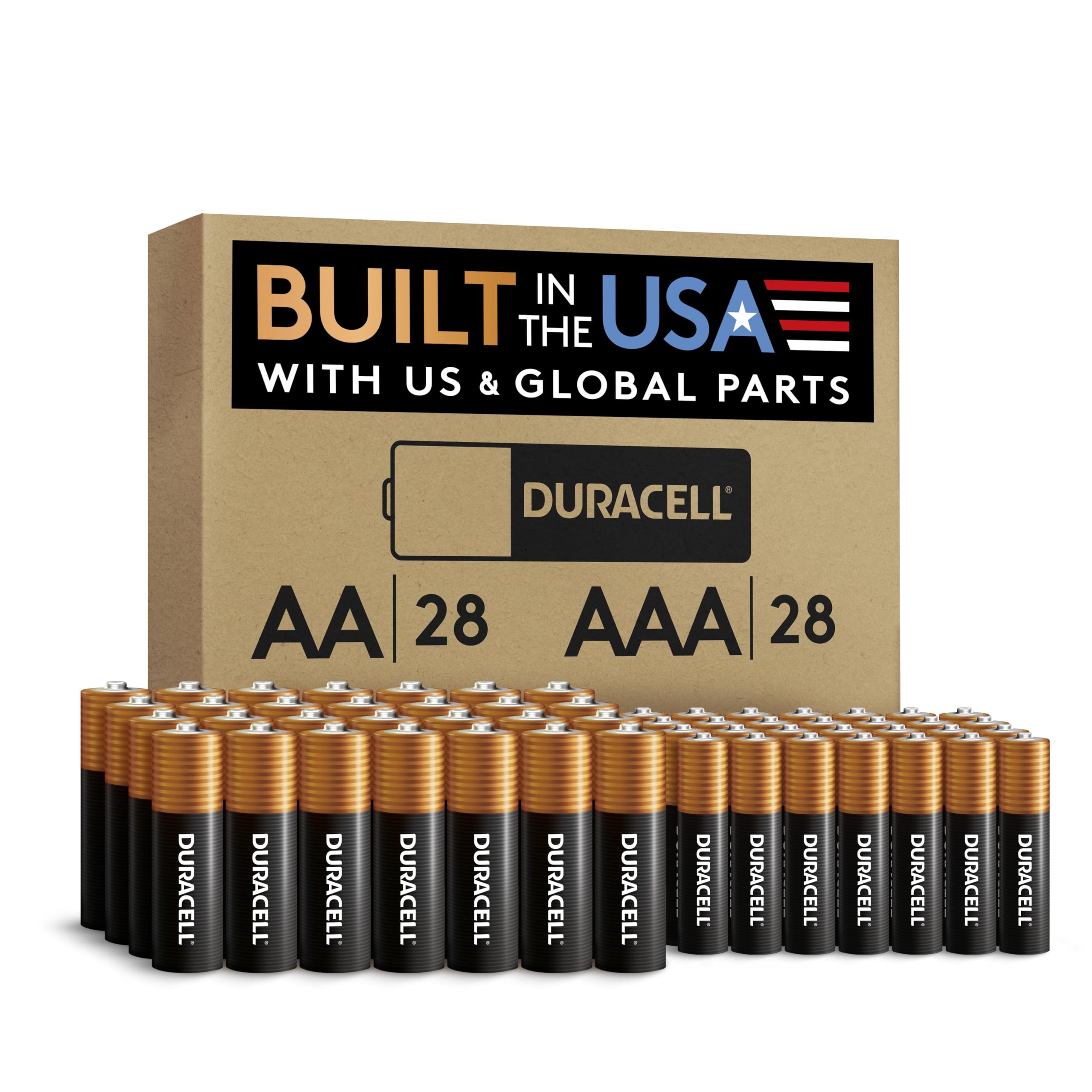
The Duracell Coppertop is the household name for a reason — its Power Boost Ingredients deliver a slightly elevated current curve compared to generic alkaline cells, which helps maintain stable voltage in millivolt valve circuits. For a standard four-AA gas fireplace tray, a fresh set of these Coppertops will typically run an intermittent pilot system for two to three months of moderate daily use, and a standing pilot’s remote receiver for up to six months. The 12-year storage guarantee means the 28 AA cells in this pack can sit in a drawer for a decade and still work when you need them.
The 56-count pack includes 28 AA and 28 AAA batteries, making it a versatile household stock that covers your fireplace plus remotes, smoke alarms, and thermostats. The re-closable packaging is a minor convenience for organized storage in a utility drawer near the fireplace. As with any alkaline cell, avoid installing Coppertops if the fireplace battery tray is in a location that regularly exceeds 100°F — the leak risk, though low with Duracell’s gasket design, increases in sustained heat.
Where these fall short is in extreme cold or in high-cycle IPI systems that fire multiple times a day. In such scenarios, the voltage drops off faster than NiMH or lithium alternatives, leading to earlier low-battery warnings. For the vast majority of residential fireplaces used a few hours per evening, however, the Coppertop is a drop-in solution that simply works.
Why it’s great
- Proven reliable power for standard millivolt valve circuits
- 12-year shelf life makes bulk storage worry-free
- Pack includes both AA and AAA sizes for multi-device coverage
Good to know
- Voltage sags faster than NiMH in high-cycle IPI systems
- Risk of leakage increases in sustained heat above 100°F
5. Energizer AA Alkaline Power 32pk

Energizer Alkaline Power is the go-to choice when you need a reliable, no-fuss AA battery for a gas fireplace remote receiver or a standing pilot’s valve circuit that draws minimal current. The 32-count pack offers a per-cell cost that is tough to beat for this brand tier, and the 10-year storage life gives you the freedom to keep a stash in the utility closet without worrying about expiration. In a simple millivolt system where the battery only powers the remote receiver and not the main ignition spark, a set of these Energizers can last a full heating season.
The chemistry is standard alkaline with a nominal 1.5V initial output. In a four-AA tray, that means 6V fresh, which drops to roughly 4.5V over the usable life. Most ignition modules accept anything from 4V to 6.5V, so this voltage envelope is acceptable for moderate-use scenarios. The cells are manufactured with up to 10% recycled steel, which is a modest but honest sustainability step compared to generic no-brand batteries.
These are not suitable for high-drain intermittent pilot modules that fire every time the thermostat calls for heat. The voltage drop under load can cause weak sparks and premature shutdown alerts. For the budget-conscious homeowner who only uses the fireplace occasionally — a few times a month — this 32-pack represents solid value without over-buying on capacity you will not use.
Why it’s great
- Low per-cell cost for bulk emergency stockpile
- 10-year storage life means no expiration stress
- Reliable for low-drain remote receivers and standing pilots
Good to know
- Standard alkaline sags under heavy spark draw
- Not recommended for high-cycle IPI modules
6. JiajaX AA 900mAh NiMH 12pk

The JiajaX 900 mAh NiMH cell is an inexpensive entry into rechargeable power for gas fireplaces that use AA-sized trays. At 1.2V nominal and 900 mAh, these cells are best suited for standing pilot systems where the battery only powers the remote receiver or the thermopile circuit — not for high-energy intermittent spark modules. Users replacing old NiCd cells in solar lights and garden fixtures praised the quick revival of function, and the same principle applies to a fireplace remote receiver that has been limping on weak alkaline cells.
The NiMH chemistry is free of lead, cadmium, and mercury, and the cells can be recharged up to 900 times. For an occasional-use fireplace in a temperate climate, these JiajaX cells can run the remote for two to three months on a single charge. The low mAh rating is the limiting factor — high-drain IPI modules will drain these in weeks rather than months.
These cells come pre-charged, so you can install them immediately out of the box. The build quality is adequate for the price, but the internal resistance is higher than premium NiMH offerings. If your fireplace cycles daily in winter, the Energizer 2000 mAh NiMH pack offers more runtime per charge and is a better long-term investment. For secondary fireplaces or seasonal use, these JiajaX cells are perfectly adequate.
Why it’s great
- Extremely low entry price for rechargeable NiMH
- Pre-charged and ready to use immediately
- 900-cycle recharge life reduces environmental impact
Good to know
- 900 mAh is low — expect frequent recharges in IPI systems
- Higher internal resistance than premium NiMH cells
7. PKCELL 128-Count Combo Pack

The PKCELL 128-count combo pack uses zinc-carbon chemistry — the oldest and least powerful primary battery formulation still on the market. In a gas fireplace application, zinc-carbon cells are suitable only for the absolute lightest duties: powering a basic remote receiver that draws microamps in standby and occasionally sends a simple on/off signal. The initial voltage is 1.5V per cell, but internal resistance is high, meaning any significant current draw — such as an ignitor spark — will cause the voltage to collapse instantly.
The pack includes 60 AA, 40 AAA, 8 C, 8 D, and 12 9V batteries, making it a convenient household master kit for low-drain devices like clocks, thermostats, and TV remotes. The per-cell cost is the lowest of any option in this guide, and for a hearth that sees decorative use only — flame effect with no real heat demand — these will suffice. The zinc-carbon cells are not made for the sustained warm environment of a fireplace enclosure; they are more prone to leakage under heat than alkaline or NiMH.
Customer reviews on this specific pack are surface-level positive, with many users noting they were adequate for general household gadgets. For a gas fireplace that you genuinely rely on for heat, investing in better chemistry is strongly advised. Treat this 128-count pack as a backup supply drawer refill, not a primary fireplace battery.
Why it’s great
- Unbeatable per-cell cost for a multi-size household pack
- Includes C, D, and 9V sizes for other appliances
- Fine for lowest-drain remote receivers
Good to know
- Zinc-carbon chemistry cannot sustain spark current draw
- Prone to leakage in warm fireplace enclosures
FAQ
Can I use rechargeable NiMH batteries in my gas fireplace?
Why does my gas fireplace remote beep low battery even with new alkalines?
How many batteries does a typical gas fireplace ignition module need?
Final Thoughts: The Verdict
For most users, the battery for gas fireplace winner is the Energizer Recharge Universal AA 16pk because it delivers a steady 1.2V over months of use, avoids leakage in the warm enclosure, and can be recharged hundreds of times. If you need reliable cold-weather performance, grab the Duracell CR123A 3V Lithium 12pk. And for high-drain intermittent pilot systems that demand peak spark energy, nothing beats the PROCELL Intense Alkaline AA 144pk.