
The single biggest frustration for any RV owner is the moment your furnace cuts out at 2 AM or your inverter beeps a low-voltage alarm just as you settle in for a movie. That anxiety comes from one thing: an undersized or outdated battery bank. Whether you are boondocking in the desert or running a residential fridge on the road, the battery you choose determines how comfortable and stress-free your trip actually is. Getting the chemistry, capacity, and cycle life right transforms your RV experience from one of constant power management to one of genuine off-grid freedom.
I’m Min — the co-founder and writer behind Gadgets Feed. My approach to this guide involved digging through hundreds of spec sheets, cross-referencing user real-world endurance tests against manufacturer claims, and stacking up amp-hour ratings against weight, BMS sophistication, and actual usable capacity so you get a straight answer on what works.
After analyzing every critical spec — from energy density and low-temperature thresholds to total cycle life and internal BMS logic — I’ve curated this list of the best battery for rv needs so you can pick the right bank without wasting time on marketing fluff.
How To Choose The Best Battery For RV
Picking an RV battery is not about grabbing the highest amp-hour number you can find. The real decision comes down to chemistry, physical dimensions, BMS quality, and how you intend to recharge. You need a bank that can handle deep discharges repeatedly without degrading and that fits inside your existing battery compartment without a custom build.
LiFePO4 vs AGM vs Flooded Lead-Acid
Lithium iron phosphate dominates for a reason: you get 100% usable capacity, 3000 to 15000 cycles, and a weight reduction of roughly 60 percent compared to a lead-acid battery of the same capacity. AGM batteries offer a middle ground with no maintenance and decent cycle life, but they only provide about 50% usable depth of discharge before voltage drops steeply. Flooded lead-acid is the cheapest upfront but requires watering, venting, and constant care, making it a poor fit for modern RV setups.
Capacity and BMS Protection
A 100Ah LiFePO4 battery delivers roughly twice the usable energy of a 100Ah AGM because you can discharge it down to 10% without damage. The Battery Management System is equally critical — look for low-temperature charging cutoff, over-current protection, and cell balancing. Without a quality BMS, your battery can shut down unexpectedly or degrade prematurely during cold-weather camping.
Quick Comparison
On smaller screens, swipe sideways to see the full table.
| Model | Category | Best For | Key Spec | Amazon |
|---|---|---|---|---|
| Redodo 12V 100Ah LiFePO4 | LiFePO4 | All-around RV upgrade | 4000-15000 cycles, 22 lbs, 100A BMS | Amazon |
| ECO-WORTHY 3584Wh 12V 280Ah | LiFePO4 | Massive capacity with Bluetooth | 280Ah, 3584Wh, 200A BMS, 61.7 lbs | Amazon |
| Wattcycle 12V 100Ah LiFePO4 | LiFePO4 | Compact group 24 fit | 15000 cycles, 23.2 lbs, BCI Group 24 | Amazon |
| DUMFUME 12V 150Ah LiFePO4 | LiFePO4 | High-capacity budget lithium | 150Ah, 1920Wh, 22.05 lbs, 100A BMS | Amazon |
| Litime 12V 100Ah Trolling Motor | LiFePO4 | Marine and RV dual use | 22.16 lbs, low-temp protection, ABYC E-13 | Amazon |
| Battle Born 100Ah LiFePO4 | LiFePO4 | Premium reliability and warranty | 3000-5000 cycles, 10-year warranty, 31 lbs | Amazon |
| Interstate 31M-AGM-A | AGM | Dual-purpose cranking and deep cycle | 825CCA, 64.5 lbs, pure lead AGM | Amazon |
| WEIZE 12V 100Ah Deep Cycle | AGM | Reliable sealed lead-acid backup | 100Ah, 63 lbs, 3% self-discharge rate | Amazon |
| Newport 12V50Ah AGM | AGM | Lightweight sealed for small setups | 50Ah, 32 lbs, marine terminal | Amazon |
In‑Depth Reviews
1. Redodo 12V 100Ah LiFePO4 Battery
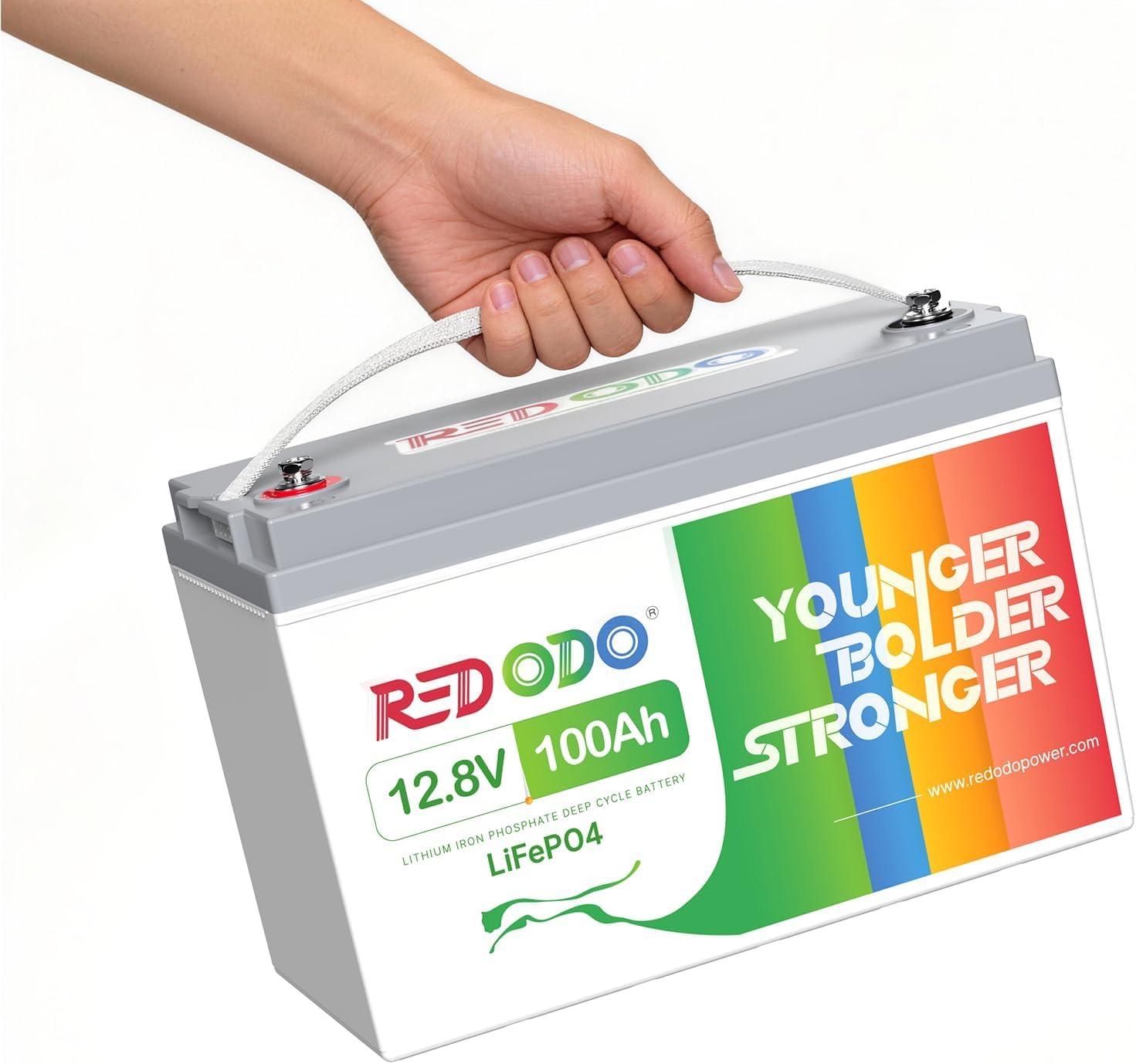
The Redodo 12V 100Ah LiFePO4 battery is the benchmark for a mid-range RV upgrade that delivers genuine premium performance without the premium price tag. It uses automotive-grade LiFePO4 cells rated for 4000 cycles at 100% depth of discharge and up to 15000 cycles at 60% DoD, which translates to roughly a decade of reliable service. At only 22.04 pounds, it is 60 percent lighter than a comparable lead-acid battery, making installation in cramped RV compartments a one-person job.
The built-in 100A BMS covers overcharge, over-discharge, over-current, short circuit, and high-temperature protection, so you can run your inverter, fridge, and lighting without worrying about sudden shutdowns. Users report that four of these batteries can handle a 2000W inverter setup for hours, and they work well with solar charge controllers, alternators, and dedicated lithium chargers. The battery fits a BCI Group 31 box perfectly, making it a true drop-in replacement for existing lead-acid banks.
Where the Redodo really shines is in real-world longevity — owners using it in motorhomes for three years report zero degradation, outperforming Trojan lead-acid batteries that typically fail at the five-year mark. The only caveat is that it lacks Bluetooth monitoring, so you will need an external shunt or battery monitor to track state of charge accurately. For the price and performance, this is the single best lithium battery for most RV owners.
Why it’s great
- Exceptional cycle life of up to 15000 cycles at 60% DoD
- Very light at 22 lbs, easy to handle and install
- Drop-in fit for Group 31 battery boxes
Good to know
- No built-in Bluetooth for state-of-charge monitoring
- Not designed for engine starting applications
2. ECO-WORTHY 3584Wh 12V 280Ah LiFePO4 Battery
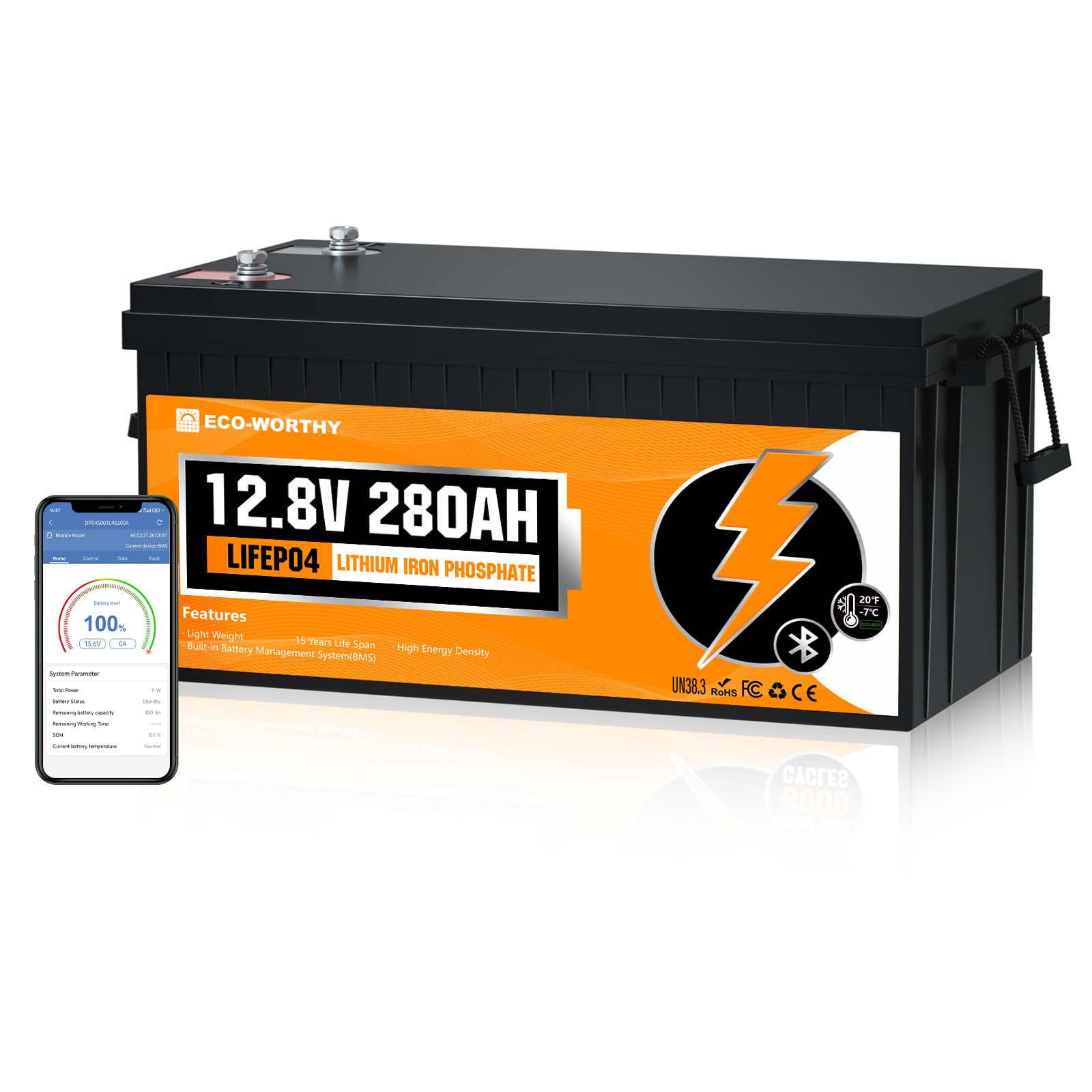
The ECO-WORTHY 280Ah battery is a beast of energy storage, packing 3584 watt-hours into a metal-cased package that includes Bluetooth monitoring, a 200A BMS, and low-temperature cutoff. This is the battery for serious off-grid RV setups where you need to run a residential fridge, an induction cooktop, and a microwave without worrying about capacity. The metal frame with internal compression fixture prevents cell expansion over time, a common failure point in budget lithium batteries.
The JBD-DP04S007 BMS is compatible with the Overkill Solar app, giving you granular data on cell voltages, current draw, and state of charge. Users report the battery exceeds its rated capacity by a small margin and maintains excellent cell balance even after months of daily cycling. With support for up to 4 batteries in parallel, you can build a 1120Ah bank at 12V or wire them in series for a 48V solar system. The low-temperature protection stops charging below 19.4°F, which is critical for winter camping.
At 61.7 pounds, the ECO-WORTHY is heavier than a 100Ah lithium battery but still far lighter than the lead-acid bank it replaces — and the usable capacity dwarfs anything a lead-acid setup could offer. The included tie-down brackets and hardware make mounting secure. The only downside is that it requires a lithium-capable converter or charge controller to function optimally. For RV owners who want a single-battery solution that can power an entire household, this is the best value on the market.
Why it’s great
- Massive 280Ah capacity with 3584Wh usable energy
- Bluetooth monitoring via dedicated app
- Metal case with compression fixture for long-term durability
Good to know
- Requires lithium-compatible converter for proper charging
- Heavier than smaller lithium batteries at 61.7 lbs
3. Wattcycle 12V 100Ah LiFePO4 Battery
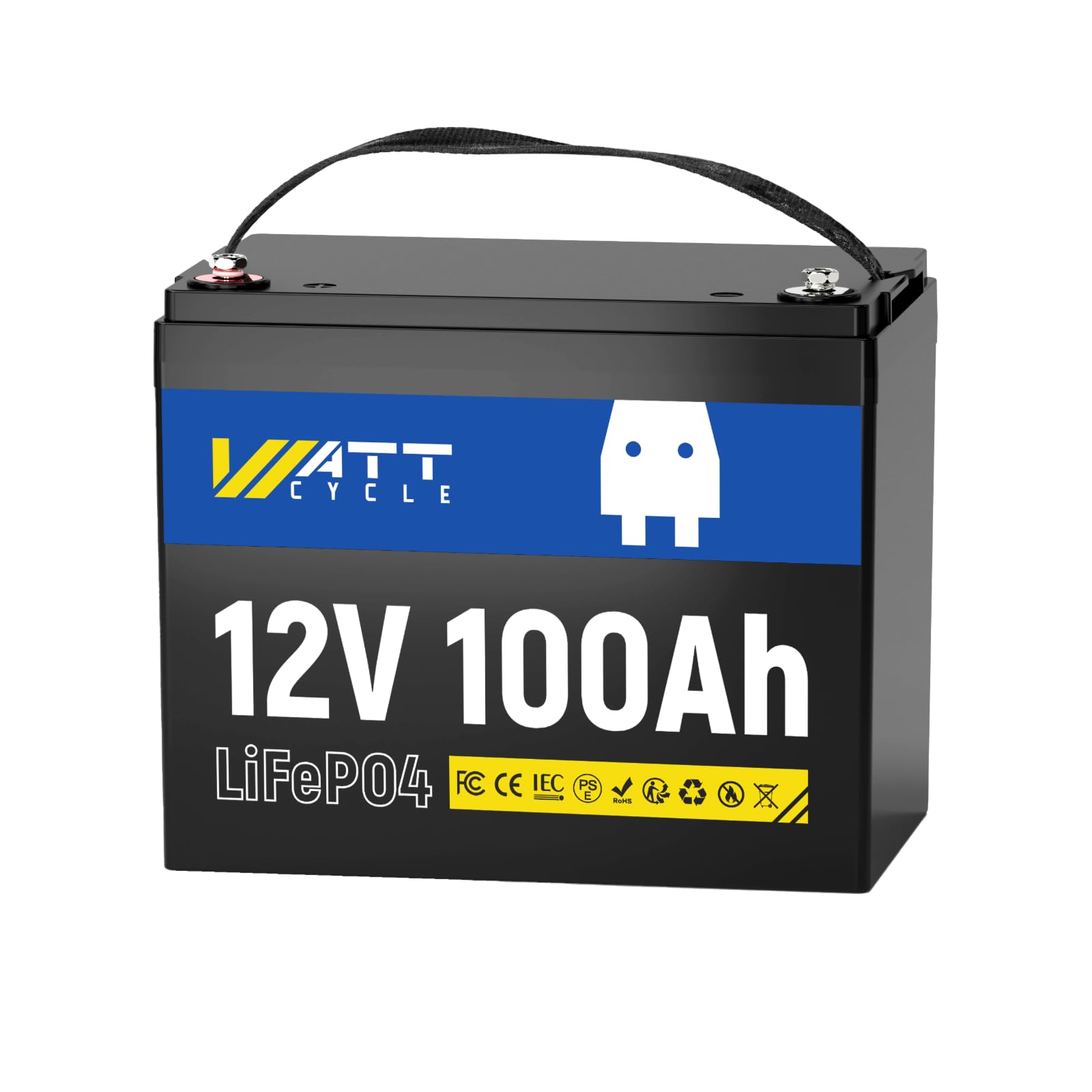
The Wattcycle 12V 100Ah LiFePO4 battery is built for RV owners who need a compact lithium upgrade that fits into a BCI Group 24 battery box without modification. Measuring only 10.2 x 6.6 x 8.2 inches and weighing 23.2 pounds, it slides into tight compartments where a full-size Group 31 battery would not fit. Despite its smaller footprint, it delivers the same 100Ah capacity and A+ grade cells rated for an astonishing 15000 cycles.
The built-in 100A BMS includes low-temperature protection that stops charging below -4°F and discharging below -20°C, making it suitable for four-season RV use. Users confirm that the battery performs well in series for 24V trolling motor setups and maintains stable voltage even after full-day use. The bolt posts are short — you will need M8 x 16mm bolts and washers for a secure connection — but once installed, the battery holds charge for months without issue.
Where the Wattcycle excels is in energy density. It packs 100Ah into a smaller case than most competitors, which is a huge advantage if you are retrofitting an older RV with limited battery space. The lack of Bluetooth is a minor inconvenience, but the price-to-performance ratio is excellent. For RV owners who need a lithium battery that fits a Group 24 tray, this is the top choice.
Why it’s great
- Compact BCI Group 24 size for tight compartments
- Up to 15000 cycles with A+ grade cells
- Low-temperature protection for winter use
Good to know
- Terminal bolts are short, may need aftermarket replacements
- No Bluetooth monitoring included
4. DUMFUME 12V 150Ah LiFePO4 Battery
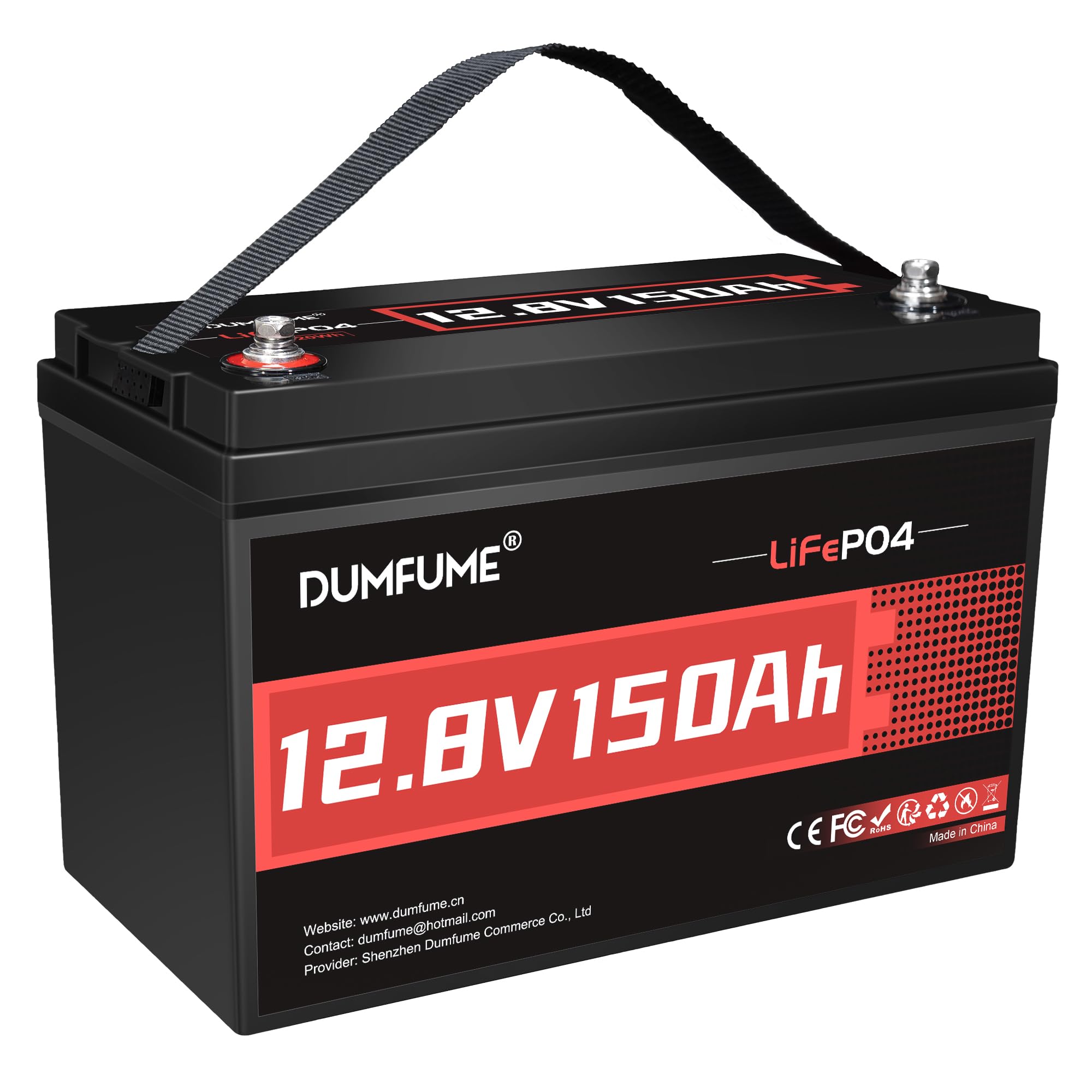
The DUMFUME 12V 150Ah LiFePO4 battery delivers 1920Wh of usable energy in a package that weighs just 22.05 pounds — the same weight as most 100Ah lithium batteries but with 50 percent more capacity. This makes it an exceptional choice for RV owners who want to maximize amp-hours without adding significant weight or requiring a larger battery box. The Group 31 dimensions fit standard trays, and the 100A BMS handles loads up to 300A for short bursts.
The battery supports series and parallel connections up to 4S4P, giving you flexibility to build a 48V system or a massive 12V bank. Users have tested these batteries and found they exceed the rated capacity by about 7Ah, which is rare at this price point. The low-temperature protection ensures safe charging across a wide range of environments, though the manufacturer recommends charging above 41°F for optimal safety.
The 5-year warranty covers direct purchases but can be tricky to navigate for Amazon orders. For the capacity per dollar and the featherlight weight, the DUMFUME is a compelling option for maximizing your RV power budget.
Why it’s great
- High 150Ah capacity at just 22.05 lbs
- Supports up to 4S4P configuration for large systems
- Often exceeds rated capacity in independent tests
Good to know
- Warranty claims may be complicated for Amazon purchases
- Some units arrived needing a jump charge to activate BMS
5. Litime 12V 100Ah Trolling Motor LiFePO4 Battery

The Litime 12V 100Ah LiFePO4 battery is certified to the ABYC E-13 marine standard, which means it has extra protection against dust, water ingress, and salt spray — making it ideal for both RV and marine environments. The built-in TVS transient voltage suppression shields your trolling motor electronics from voltage spikes, and the smart low-temperature protection prevents charging below 32°F and discharging below -4°F. At 22.16 pounds, it is 64 percent lighter than an equivalent AGM battery.
Users report exceptional real-world performance, with some running a 45lb thrust trolling motor for eight hours and returning with the battery still nearly full. In RV applications, a setup of four batteries in parallel can power a 13-foot trailer fridge for six days before reaching the BMS auto-shutdown threshold. The Group 31 form factor makes it a drop-in replacement for most RV battery trays, and the included M8 terminal bolts are properly sized.
The Litime stands out for its robust cold-weather capability and the peace of mind that comes from ABYC compliance. The flat discharge curve of LiFePO4 means you need to check voltage with loads off to get an accurate reading — at rest, 12.8V is nearly dead. For RV owners who also run a boat or want a battery that can handle the vibration and humidity of a camper, this is an excellent choice.
Why it’s great
- ABYC E-13 certified for marine and RV environments
- Excellent real-world endurance, often exceeds expectations
- Smart low-temperature protection for winter camping
Good to know
- BMS may require a force charge to wake if deeply discharged
- Flat discharge curve requires careful state-of-charge monitoring
6. Battle Born 100Ah LiFePO4 Battery
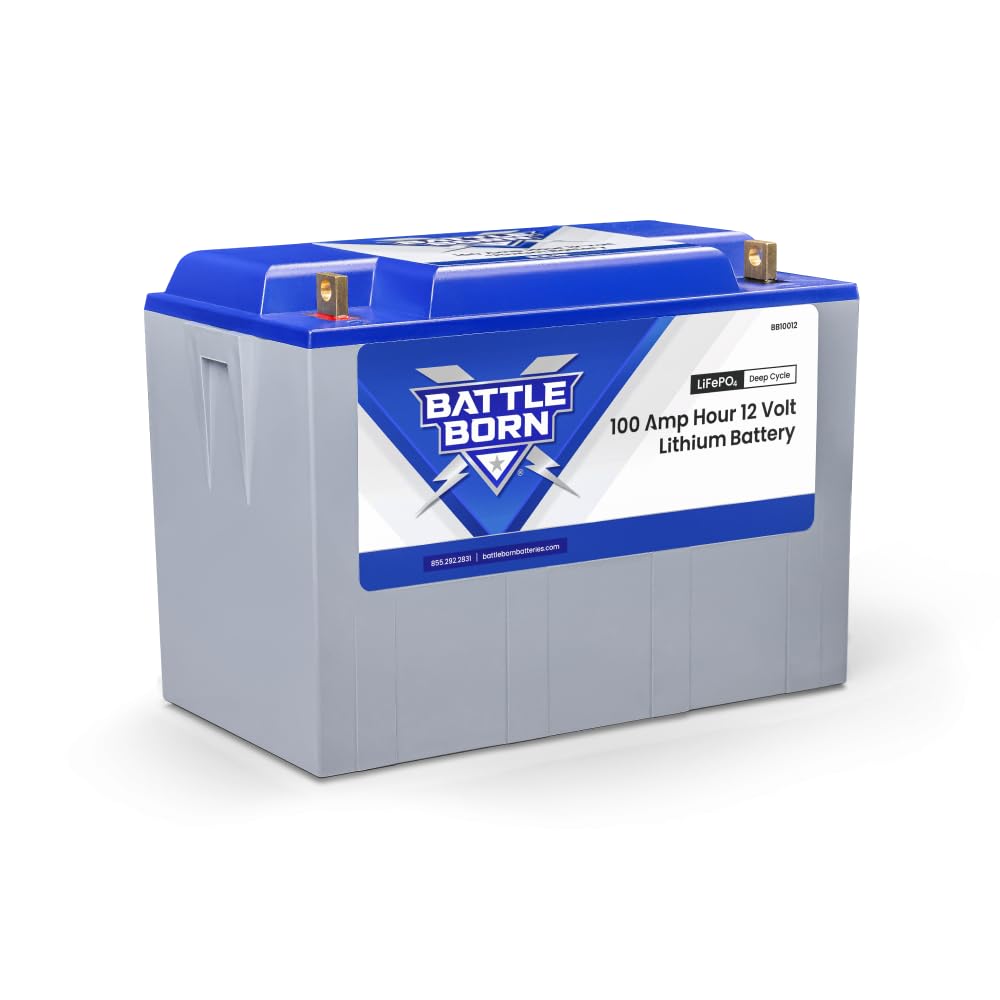
The Battle Born 100Ah LiFePO4 battery is the gold standard for RV lithium upgrades, backed by a 10-year warranty and a reputation for bulletproof reliability. It is a drop-in replacement for Group 27 and Group 31 battery boxes, weighing 31 pounds — heavier than some budget lithium batteries but still dramatically lighter than lead-acid. The internal BMS covers low-temperature protection, high and low voltage, short circuits, and more, giving you complete peace of mind.
Users report that two Battle Born batteries can run an RV fridge and lights for 28 hours versus just 8 hours from the same space occupied by lead-acid. The battery works seamlessly with solar charge controllers set to lithium profiles, and the side-post design provides a sturdy connection point. The 3000 to 5000 deep-discharge cycles translate to 10 to 15 years of service, making the higher upfront cost a sound long-term investment.
The main trade-off is price — Battle Born commands a significant premium over competitors with similar specs. You also need a lithium-compatible converter and potentially an alternator controller to avoid overcharging. But for RV owners who want a no-compromise solution with US-based customer support and a warranty that actually delivers, the Battle Born is the safest bet on the market.
Why it’s great
- 10-year warranty with excellent customer support
- 3000-5000 cycles for 10-15 year lifespan
- Drop-in fit for Group 27 and Group 31 boxes
Good to know
- Premium price, significantly higher than competitors
- Requires lithium-compatible charging system components
7. Interstate Batteries 31M-AGM-A Marine/RV Battery

The Interstate 31M-AGM-A is a dual-purpose AGM battery that serves both as a cranking battery for your RV generator or engine and as a deep-cycle battery for house loads. With 825 cold cranking amps and pure lead construction, it delivers 2 to 3 times the service life of conventional flooded or alloy AGM batteries. At 64.5 pounds, it is heavy, but the thick plates allow repeated deep discharges without significant capacity loss over time.
Users report that two of these batteries in parallel can handle a 3/4 HP sump pump and inverter setup for extended periods, and they consistently crank engines even after months of storage. The marine terminals provide secure connections, and the sealed AGM design means no watering or venting is required. Interstate has a 70-year track record and a robust recycling program, adding to the overall value proposition.
The obvious limitation is that AGM chemistry only delivers about 50 percent usable depth of discharge, so a 100Ah Interstate battery provides roughly 50Ah of usable power — half of what a LiFePO4 battery of the same capacity would give you. For RV owners who need a cranking battery or want a reliable, maintenance-free drop-in without upgrading their charging system, this remains a solid option.
Why it’s great
- Dual-purpose design for starting and deep cycling
- 825 CCA for reliable engine starting
- 2-3x longer life than standard flooded batteries
Good to know
- Only 50% usable capacity due to AGM chemistry
- Heavy at 64.5 lbs, difficult to maneuver
8. WEIZE 12V 100Ah Deep Cycle Battery

The WEIZE 12V 100Ah deep-cycle AGM battery is a workhorse for RV owners who want a maintenance-free sealed lead-acid solution without paying for lithium. It features a low self-discharge rate of just 3 percent, so it holds its charge during months of storage, and the spill-proof design means you can mount it in any orientation. Group size 31 dimensions make it a direct replacement for standard RV battery trays.
Users report that four WEIZE batteries in parallel can feed a 2000W inverter for emergency backup, powering lights, fans, and garage door openers for extended periods. In RV applications, two 100Ah AGM batteries paired with 300W solar panels have run off-grid for two years without issues. The battery requires a charge voltage of 14.4V cyclic and 13.8V float, which is standard for most RV converters.
The biggest weakness is the weight — at 63 pounds, moving and installing this battery is a two-person job. And like all AGM batteries, you only get about 50Ah of usable capacity per battery before voltage drops significantly. For RV owners on a tight budget who already have a lead-acid compatible converter, the WEIZE is a dependable choice.
Why it’s great
- Low self-discharge rate of 3% for storage
- Sealed, spill-proof AGM design
- Good value for entry-level RV battery banks
Good to know
- Heavy at 63 lbs, difficult to handle alone
- Only 50% usable capacity before voltage drops
9. Newport 12V50Ah Deep Cycle AGM Battery
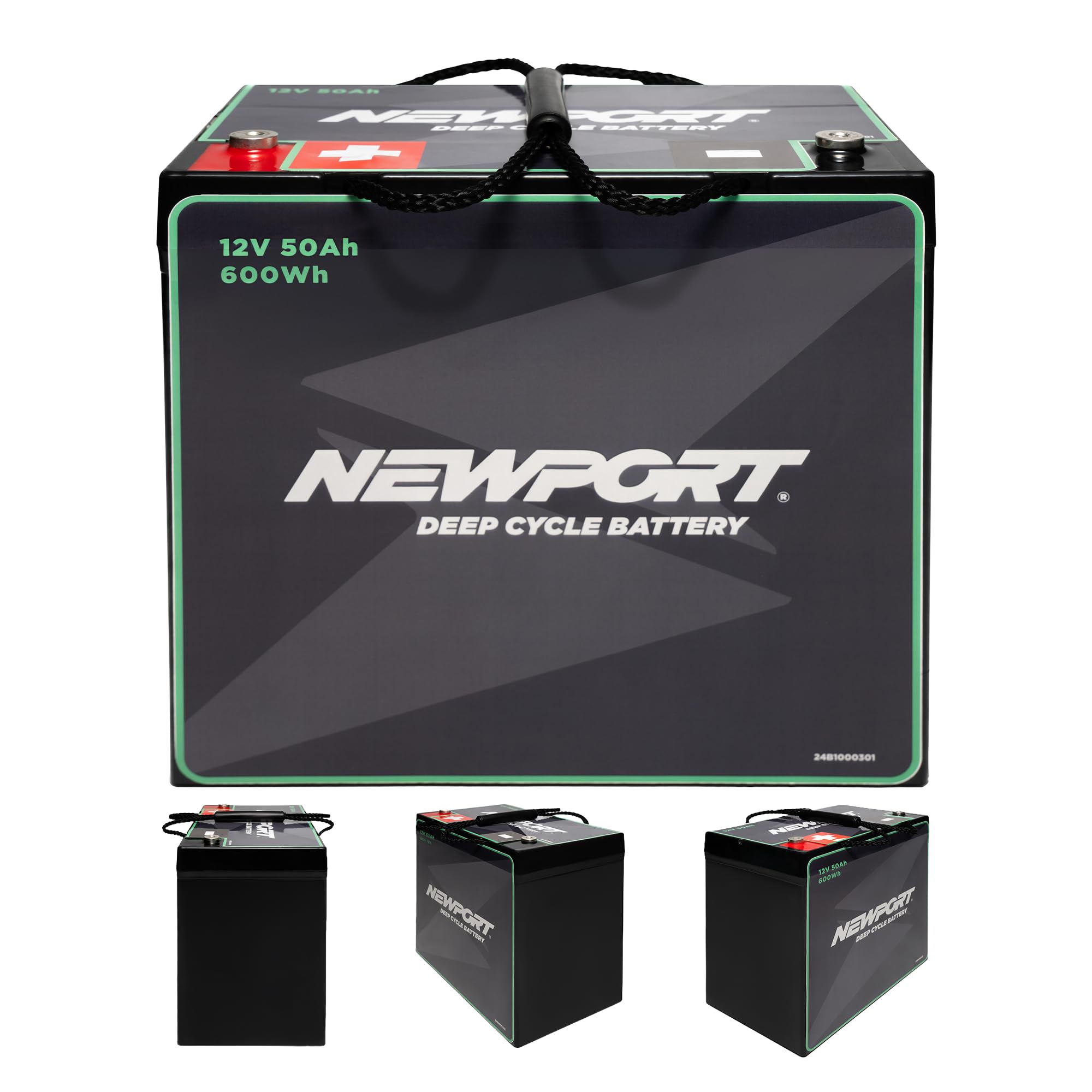
The Newport 12V50Ah deep-cycle AGM battery is a lightweight entry-level option for small RV setups, kayak trolling motors, or backup sump pump duty. At just 32 pounds, it is notably easy to transport and install, and its sealed leak-proof construction means you can store it in tight compartments without worrying about acid spills. The marine terminals are compatible with standard RV and boat wiring.
Users report that this battery can run a 55lb trolling motor for over four hours at moderate speeds, and it survived a 20 mph tumble from a truck bed with only cosmetic damage. For RV use, it is best suited as a small auxiliary battery for lights and device charging rather than as a primary house bank. The 50Ah capacity is limiting — you get roughly 25Ah of usable power from an AGM at 50% depth of discharge.
The Newport is a solid performer for its price class, but it lacks a built-in charge indicator, so you will need an external meter to monitor state of charge. For RV owners who need a lightweight, durable battery for a small solar setup or as a starter battery, this is a good budget-friendly choice. For full-time off-grid use, you would need to step up to a higher capacity lithium or AGM battery.
Why it’s great
- Very light at 32 lbs for easy handling
- Sealed, leak-proof AGM construction
- Durable build that can survive physical impacts
Good to know
- Only 50Ah capacity, limited for full RV use
- No built-in charge indicator; needs external meter
FAQ
Can I replace my RV lead-acid battery with LiFePO4 without changing my converter?
How many amp-hours do I need for off-grid RV living?
Why do my battery terminals get hot when running the inverter?
Final Thoughts: The Verdict
For most users, the best battery for rv winner is the Redodo 12V 100Ah LiFePO4 because it delivers exceptional cycle life, low weight, and rock-solid BMS protection at a mid-range price point that beats almost every competitor. If you want massive single-battery capacity with Bluetooth monitoring, grab the ECO-WORTHY 280Ah LiFePO4. And for a premium build with a 10-year warranty and US-based support, nothing beats the Battle Born 100Ah LiFePO4.