
The dead-weight of a traditional lead-acid battery is the silent thief on every fishing trip—it robs your boat of maneuverability, your back of its ease, and your day on the water of precious amp-hours that fade long before the fish stop biting. Switching to a modern, energy-dense chemistry doesn’t just lighten your load; it fundamentally changes how long you can stay out and how confidently you can navigate from one spot to the next.
I’m Min — the co-founder and writer behind Gadgets Feed. I’ve spent countless hours dissecting the technical specifications, reading real-world user reports, and mapping the performance curves of deep-cycle marine batteries to find the ones that actually deliver on their capacity claims and survive the harsh saltwater environment.
After extensive research and cross-referencing amp-hour ratings, cycle life claims, and real-world trolling motor runtime, this guide will help you find the perfect battery for trolling motor that matches your fishing style and budget without cutting corners on reliability.
How To Choose The Best Battery For Trolling Motor
Your trolling motor is only as good as the energy source feeding it. Choosing the wrong chemistry or undershooting the amp-hour capacity can leave you paddling back to the ramp. Focus on voltage compatibility, usable energy, weight, and the protective electronics inside the battery case.
Chemistry: LiFePO4 vs. AGM vs. Flooded Lead-Acid
Lithium iron phosphate (LiFePO4) delivers the full rated capacity, lasts thousands of cycles, and weighs a fraction of lead-acid. AGM batteries are a sealed, maintenance-free middle ground but offer roughly half the usable energy for the same rated capacity. Flooded lead-acid is the cheapest upfront but requires ventilation, watering, and only delivers about 50 percent of its rated amp-hours before voltage drops too low for a trolling motor.
Amp-Hours and Thrust: Matching Capacity to Motor Size
A 30-pound thrust motor drawing around 30 amps at full speed will drain a 50Ah battery in roughly an hour and a half at 100 percent speed. A 55-pound motor draws about 50 amps. Most anglers run at variable speeds, so a 100Ah battery easily covers a full day of fishing. For 24-volt systems, two 12V 100Ah batteries wired in series or a dedicated 24V battery simplifies wiring and balancing.
BMS and Low-Temperature Protection
The battery management system (BMS) is the brain that prevents overcharging, over-discharging, and short circuits. For anglers in colder climates, a BMS with low-temperature charging cut-off is critical because charging a LiFePO4 battery below freezing can cause permanent damage. Quality units automatically disable charging below 32°F and resume when temperatures rise.
Quick Comparison
On smaller screens, swipe sideways to see the full table.
| Model | Category | Best For | Key Spec | Amazon |
|---|---|---|---|---|
| Timeusb 12V 100Ah Group31 | LiFePO4 | Premium all-day fishing | 100Ah / 23 lbs / IP65 BMS | Amazon |
| Power Queen 12V 100Ah Bluetooth | LiFePO4 | Bluetooth monitoring | 100Ah / 24 lbs / Bluetooth 5.0 | Amazon |
| XZNY Compact 24V 100Ah | LiFePO4 | 24V systems without series wiring | 100Ah / 41 lbs / 300A peak | Amazon |
| HeyFuture 12V 100Ah Bluetooth | LiFePO4 | Value with app connectivity | 100Ah / 21.5 lbs / Group 24 | Amazon |
| SUPER EMPOWER 12V 100Ah | LiFePO4 | Drop-in lead-acid replacement | 100Ah / 21.6 lbs / 1280Wh | Amazon |
| CYCLENBATT 12V 100Ah Mini | LiFePO4 | Compact footprint, 30-70 lb motors | 100Ah / 20.5 lbs / Mini size | Amazon |
| FLLYROWER 12V 100Ah | LiFePO4 | Included AC charger kit | 100Ah / 22 lbs / 16500 cycles | Amazon |
| LiTime 12V 50Ah | LiFePO4 | Ultra-light kayak setup | 50Ah / 11.57 lbs / Group 24 | Amazon |
| Newport 12V 50Ah AGM | AGM | Budget-friendly entry option | 50Ah / 32 lbs / Sealed lead-acid | Amazon |
In‑Depth Reviews
1. Timeusb 12V 100Ah LiFePO4 Battery, Group31

The Timeusb Group31 delivers a dense 1280Wh of usable energy in a package that weighs just 23 pounds—roughly one-third the weight of an equivalent lead-acid battery. Its automotive-grade LiFePO4 cells are rated for 4000 cycles at 100 percent depth of discharge, meaning this battery can outlast a decade of weekend fishing trips before noticeable capacity fade.
The upgraded 100A BMS carries an IP65 rating, which provides meaningful resistance against salt spray and rain that would cripple lesser electronics. Real-world users report running a 55-pound thrust trolling motor for eight hours at moderate speeds while still showing voltage above 12.5V, and the compact Group31 footprint fits standard battery trays without modification.
Expandability options allow for parallel configurations up to 48V 400Ah, making this a scalable platform if you later upgrade to a larger boat or add a house power bank. The included M8 terminal bolts and insulating caps simplify installation, but the battery lacks built-in Bluetooth, so you will need an external monitor for precise state-of-charge tracking.
Why it’s great
- IP65-rated BMS resists moisture and salt spray
- Automotive-grade cells with 4000+ cycles at 100% DoD
- Weighs 23 lbs—fits standard Group31 trays
Good to know
- No built-in Bluetooth monitoring
- Low-temperature charging protection not advertised
2. Power Queen 12V 100Ah Group 31 LiFePO4 Battery Bluetooth 5.0

Power Queen integrates Bluetooth 5.0 directly into the BMS, allowing you to monitor real-time state of charge, voltage, and cycle count from your phone without lifting the deck hatch. The app also supports disabling charge or discharge remotely, which is useful for long-term storage or isolating the battery during maintenance.
This Group31 unit delivers a 500-amp peak surge for one second, which handles the inrush current of larger 70-pound thrust motors without tripping protection circuits. The upgraded BMS includes automatic overload self-recovery within 30 seconds, so accidental draws that exceed the continuous 100A rating won’t leave you stranded—the battery resets itself once the load drops.
Low-temperature charging cut-off is built in, automatically halting charge below freezing and resuming above 41°F. Anglers report running an Endura 30 motor at high speed for four hours and seeing only 20 percent battery consumption, translating to a full weekend of casual fishing on a single charge cycle.
Why it’s great
- Bluetooth 5.0 with remote charge/discharge control
- 500A peak surge for larger trolling motors
- Automatic overload self-recovery in 30 seconds
Good to know
- Heavier than some competitors at 24 lbs
- App required for full state-of-charge visibility
3. XZNY Compact 24V 100Ah Lithium Battery
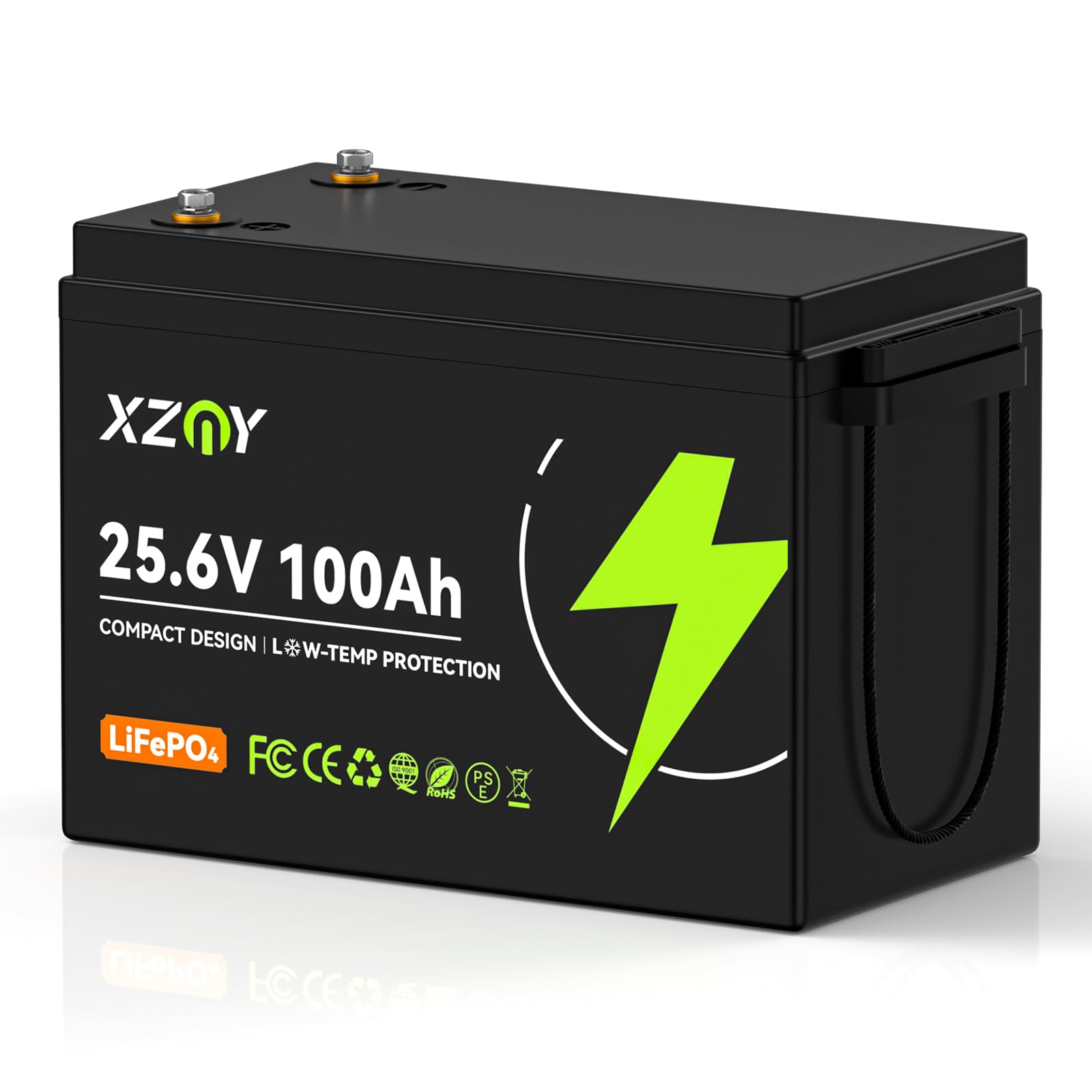
For anglers running 24-volt trolling motors (typically 70 to 100 pounds of thrust), the XZNY Compact eliminates the hassle of wiring two 12V batteries in series and worrying about cell balancing.
The built-in 100A BMS handles continuous charge and discharge at 100A with a 300A peak for five seconds, easily covering the demands of high-thrust motors. Low-temperature protection cuts charging at 32°F and stops discharging at -8°F, making this a viable choice for ice fishing setups where sub-freezing conditions are guaranteed.
Users report running a Garmin 93sv fish finder and GT-54 transducer all day without the battery dropping below 12V on the 24V bus. The compact form factor also frees up bilge space, and the M8 terminals accept standard marine lugs. The three-year replacement warranty is shorter than the five-year coverage on some competitors, but the convenience of a single 24V battery is a strong trade-off.
Why it’s great
- Single-unit 24V eliminates series wiring and balancing
- 300A peak handles high-thrust motors
- Discharge allowed down to -8°F for ice fishing
Good to know
- 41 lbs is heavy for a single battery
- Three-year warranty is shorter than industry average
4. HeyFuture 12V 100Ah Bluetooth LiFePO4 Battery

The HeyFuture packs a 100Ah LiFePO4 core with integrated Bluetooth monitoring into a Group24-sized case, making it one of the most compact 100Ah options available. At 21.5 pounds, it is easy to lift with one hand and fits into battery compartments originally designed for smaller 50Ah AGM units, giving you an immediate capacity upgrade without cutting or modifying trays.
The app-based BMS reports individual cell voltages, state of charge, and cycle count. Real-world testing confirms that running a 55-pound Minn Kota at speed level three for eight hours still leaves 89 percent state of charge, indicating the battery’s reserve capacity is genuinely usable rather than a marketing number. The five-year warranty backs this performance with minimal hassle.
Expandability allows up to 4S4P configurations (48V 400Ah max), making this battery suitable for building a larger house bank later. The M8 terminal bolts include insulating caps, and the manual is clear about charging voltage requirements (14.4–14.6V). The only catch is that the Bluetooth pairing process can be finicky on older smartphones, but most users report a stable connection after the initial setup.
Why it’s great
- Group24 size fits small compartments
- Bluetooth shows individual cell voltages
- Tested at 89% SOC after 8 hours of trolling
Good to know
- Bluetooth pairing can be finicky initially
- Not compatible with old lead-acid chargers
5. SUPER EMPOWER 12V 100Ah LiFePO4 Battery
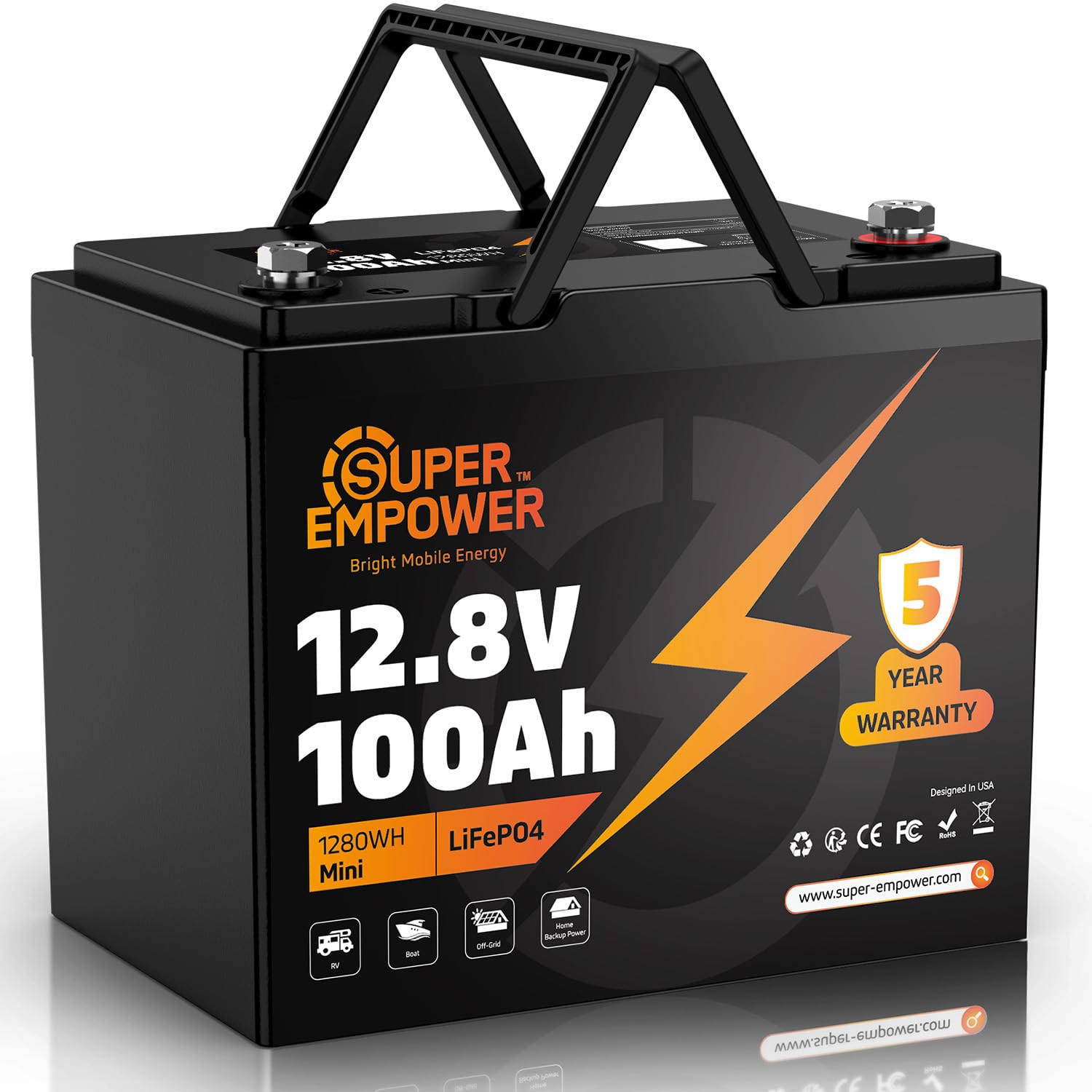
SUPER EMPOWER uses Grade A+ cells and a Group24 form factor that drops directly into existing lead-acid battery boxes without shims or adapters. The BMS handles low-temperature charging protection by pausing charge below 32°F and automatically resuming above 41°F, a critical feature for anglers who store their boats in unheated garages through the winter.
Cycle life ratings reach 5000 cycles at 100 percent depth of discharge and up to 15,000 cycles at 60 percent DoD. In practical terms, a weekend angler cycling at 60 percent will see this battery outlast their boat. Users report running a 55-pound trolling motor on a pontoon boat for four hours, then recharging via solar and using it for another four hours the next day without voltage sag.
The battery supports up to 4S4P expansion for systems up to 48V 400Ah. The included manual recommends using a LiFePO4-specific charger at 14.4–14.6V, and the BMS disables charging below freezing—so pairing this with a standard lead-acid charger will not work. The 5-year warranty adds peace of mind, but the lack of a built-in charge indicator means you will need an external meter or a Bluetooth dongle for accurate monitoring.
Why it’s great
- Grade A+ cells with 5000 cycles at 100% DoD
- Automatic low-temp charging cut-off and resume
- Drop-in fit for Group24 lead-acid boxes
Good to know
- No built-in Bluetooth or charge indicator
- Requires LiFePO4-specific charger
6. CYCLENBATT 12V 100Ah Mini LiFePO4 Battery
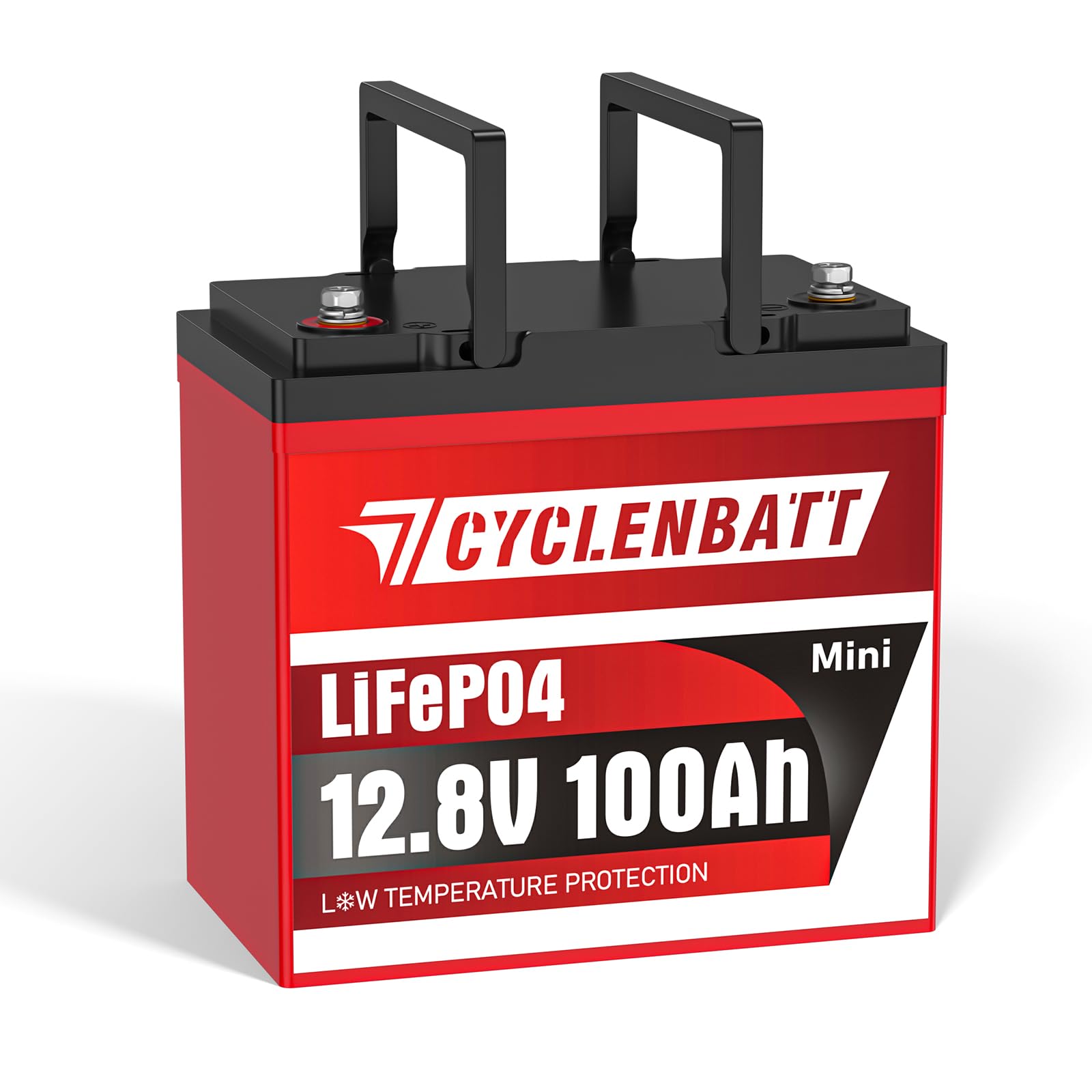
The CYCLENBATT Mini reduces the physical footprint by nearly 46 percent compared to a standard Group31 100Ah battery while still delivering the same 1280Wh of energy. At just 5.43 inches deep and 20.5 pounds, it fits into battery trays originally designed for 50Ah AGM units, making it the go-to option for kayaks and small jon boats where every inch of hull space matters.
The built-in 100A BMS supports continuous 100A charge and discharge with a 350A peak for one second, easily handling 30 to 70-pound trolling motors. The BMS also includes low-temperature charging protection that cuts off below 32°F and automatically restores function when the temperature rises. Enthusiasts who tested the battery with a 55-pound motor on a flat-bottomed boat reported solid power delivery through a full day of bass fishing with no voltage drop noticeable on the fish finder.
Bluetooth connectivity is available on the standard model, providing real-time monitoring of voltage, current, charge cycles, and cell balancing through the companion app. Users confirm roughly 104Ah actual capacity and cells balanced within 0.04V straight from the factory. The 5-year warranty and responsive customer service add security, but the non-standard Group27 box size may require slight modification to existing mounting brackets.
Why it’s great
- 46% smaller than standard Group31 100Ah
- Bluetooth app shows cell balance and cycles
- 350A peak for large motor inrush current
Good to know
- Non-standard size may need bracket adjustment
- Bluetooth model costs more than base version
7. FLLYROWER 12V 100Ah LiFePO4 Battery

FLLYROWER bundles a 7A AC charger and a dual USB output directly into the battery package, making it the most complete out-of-box solution for anglers who do not already own LiFePO4 charging equipment. The 100Ah battery uses Grade A cells rated for 16,500 cycles under ideal conditions, and independent capacity testing confirms it delivers a genuine 103Ah right out of the box.
The BMS includes the full suite of protections: low-temperature cut-off, high-temperature cut-off, short circuit, overcharge, over-discharge, and overcurrent. Users running a Minn Kota on a saltwater boat report a full ocean rockfish season without any performance degradation, and the weight savings from replacing a 64-pound lead-acid battery are immediately noticeable when loading gear. The included USB ports can charge a phone or fish finder directly, eliminating the need for a separate 12V-to-USB adapter.
The built-in 7A charger is slow—taking roughly 14 hours to fully charge from empty—but functional for overnight charging at home or camp. The battery does not include Bluetooth or any wireless monitoring, so you will need to use a voltmeter or a separate battery monitor to track state of charge accurately. The threaded terminals can be tight initially, so care is needed when installing ring terminals.
Why it’s great
- Includes 7A AC charger and dual USB output
- Tested capacity of 103Ah from factory
- Grade A cells rated for 16,500 cycles
Good to know
- No Bluetooth monitoring built in
- Included 7A charger is slow for 100Ah
8. LiTime 12V 50Ah Lithium LiFePO4 Battery
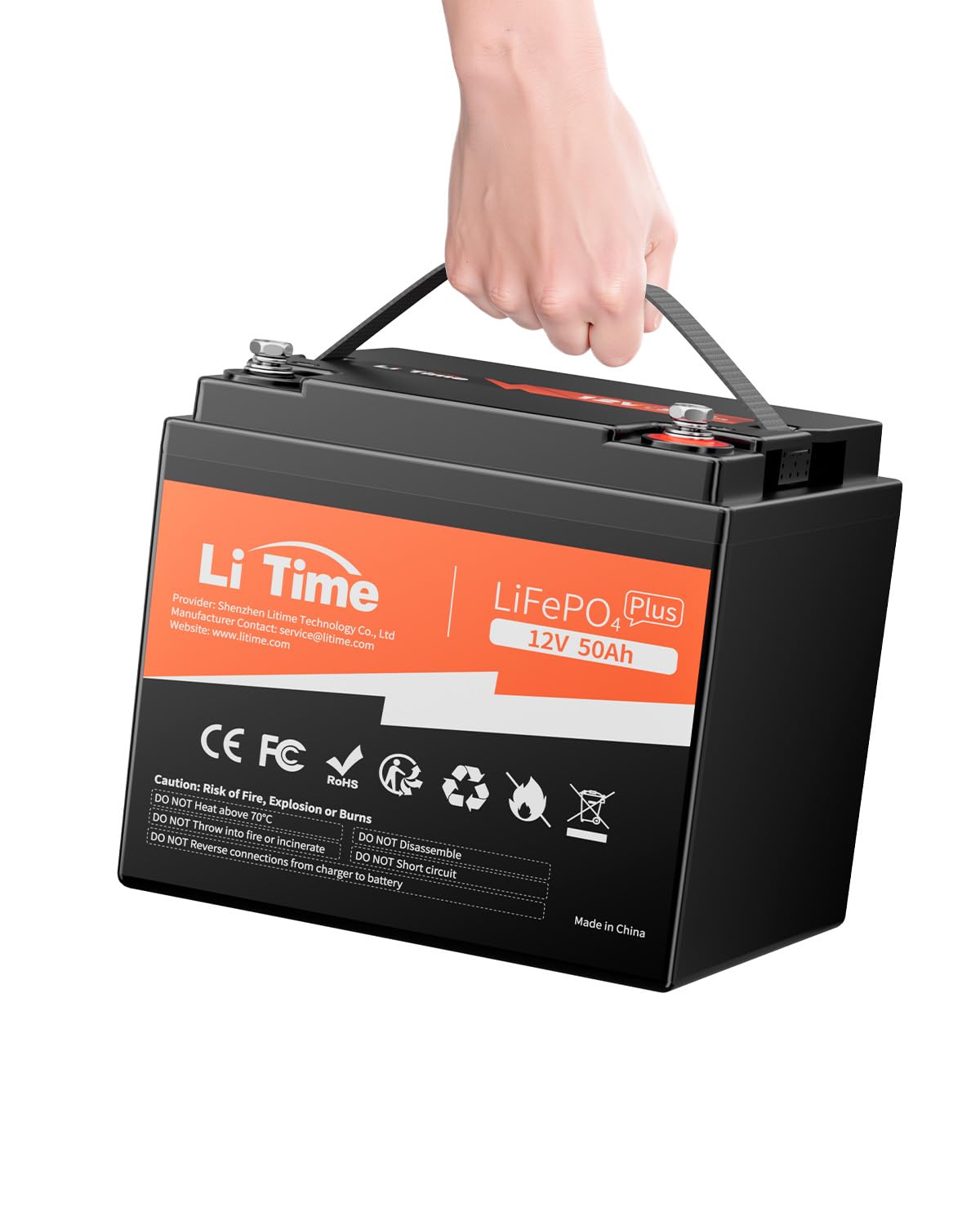
At just 11.57 pounds, the LiTime 50Ah is the lightest battery on this list and is purpose-built for portable applications where weight is the primary constraint. Weighing roughly one-sixth of an equivalent 100Ah lead-acid battery, it transforms how a kayak angler or ice fisherman loads and balances their gear—no more strained lifting or awkward hull distribution.
The 50Ah capacity delivers approximately three hours of runtime on a 62-pound thrust motor at full speed, which covers a typical morning session for most anglers. For lighter 30-pound motors, users report a full day of variable-speed trolling before needing a recharge. The LiFePO4 chemistry maintains voltage above 12.8V throughout the discharge curve, so you get the full rated amp-hours instead of the 50 percent usable capacity typical of lead-acid batteries.
The BMS provides standard protection against overcharge, over-discharge, and short circuits, but this unit does not include low-temperature charging cut-off. If you store or charge the battery in freezing conditions, you will need to manually ensure the battery is above 32°F before connecting a charger. The 5-year warranty covers defects, but some users report the battery degrading after two years of heavy daily use in commercial cleaning applications, so recreational anglers with lighter cycling will likely see the full ten-year lifespan.
Why it’s great
- Weighs only 11.57 lbs—easiest to carry
- Full 50Ah usable capacity vs. 25Ah from lead-acid
- Compact footprint fits small kayak trays
Good to know
- No low-temperature charging protection
- 50Ah may be insufficient for full-day 55lb motors
9. Newport 12V 50Ah Deep Cycle Heavy-Duty Marine Battery
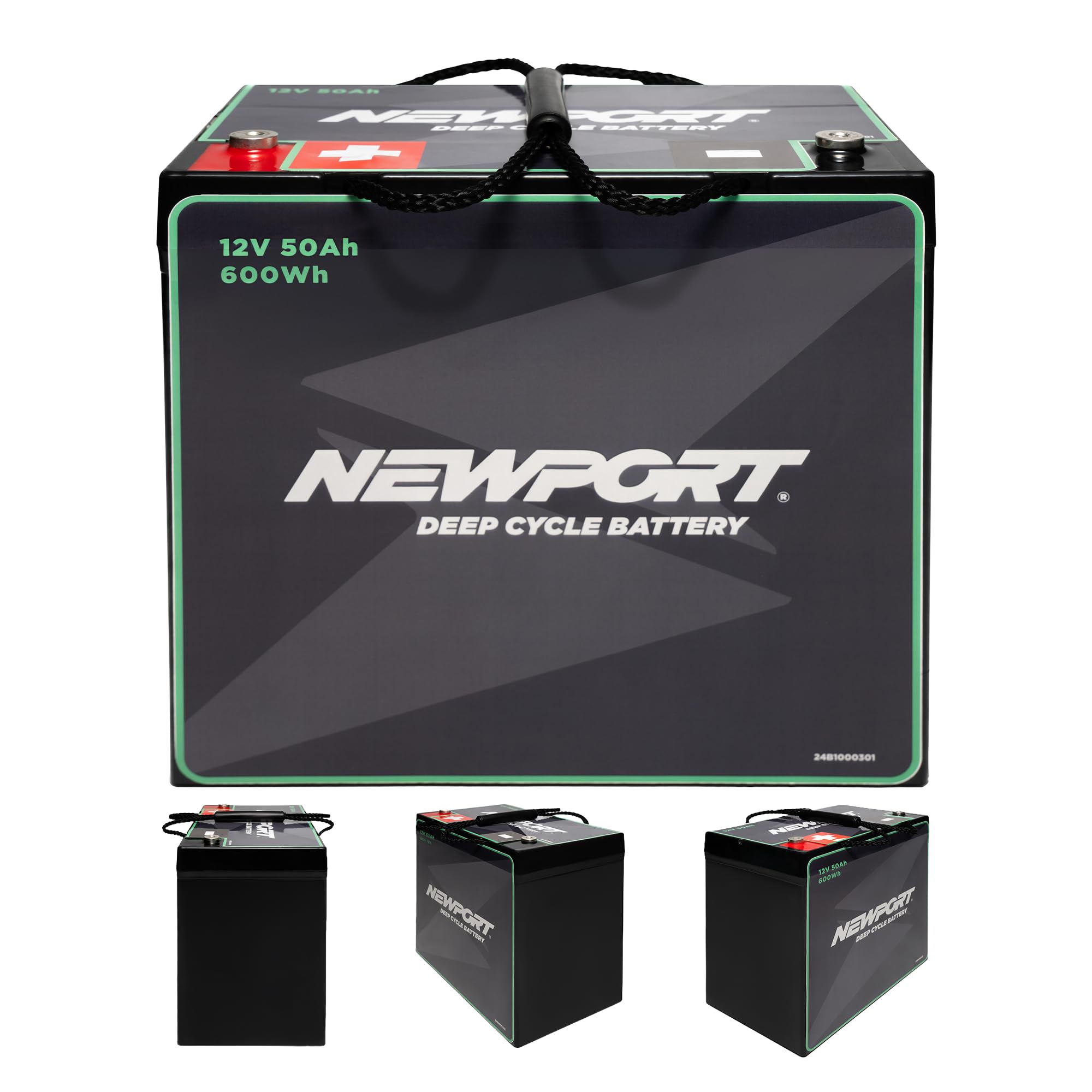
The Newport 50Ah AGM battery is the entry-level workhorse for anglers who do not need the cycle life or weight savings of lithium chemistry. At 32 pounds and 50Ah, it is a sealed lead-acid battery that requires no watering or venting, making it a direct replacement for older flooded batteries in boats that already have a suitable charging system.
It delivers steady power for roughly four hours on a 55-pound trolling motor at moderate speeds, which is adequate for short afternoon trips on smaller lakes. The AGM construction is spill-proof and vibration-resistant, and users report it surviving a 20 MPH tumble from a truck bed onto asphalt with only cosmetic scuffs and no internal damage. For a kayak with a 25-pound motor, one user reported approximately seven hours of runtime at full power before voltage dropped too low.
The battery uses standard marine terminals that accept common accessories and battery box connections without adapters. The 1-year limited warranty reflects the shorter lifespan of AGM chemistry compared to LiFePO4, but for the upfront savings, this battery makes sense for occasional anglers who fish close to the ramp and are comfortable with a heavier, less efficient energy source. No Bluetooth, no BMS communication, and no low-temperature issues to worry about—a simple, dumb battery that just works.
Why it’s great
- Sealed AGM—no watering or ventilation needed
- Survives drops and vibrations without damage
- Compatible with standard lead-acid chargers
Good to know
- 32 lbs is heavy for 50Ah capacity
- Only 50% usable capacity before voltage sag
- 1-year warranty is shorter than lithium options
FAQ
Can I use a regular lead-acid charger on a LiFePO4 trolling motor battery?
How many amp-hours do I need for a 55-pound thrust trolling motor?
What voltage should my trolling motor battery show when fully charged?
Final Thoughts: The Verdict
For most users, the best battery for trolling motor winner is the Timeusb 12V 100Ah Group31 because it delivers industrial-grade cycle life, an IP65-rated BMS that shrugs off salt spray, and a 23-pound weight that transforms how your boat handles. If you want built-in Bluetooth monitoring so you never guess your remaining charge, grab the Power Queen 12V 100Ah. And for kayak anglers who prioritize weight above all else, nothing beats the LiTime 12V 50Ah at just 11.57 pounds—enough power for a morning session without the back strain.