
That ear-splitting, middle-of-the-night chirp from a low battery isn’t just a nuisance—it’s a signal that a critical safety device is about to fail. Battery interconnected smoke detectors solve this by pairing a sealed, decade-long power source with wireless linking, so when one unit detects a threat, every alarm in the system screams in unison. The result: no more hunting for a ladder at 2 a.m. to replace a 9-volt, and no more wondering if a fire in the basement will wake the kids upstairs.
I’m Min — the co-founder and writer behind Gadgets Feed. After spending dozens of hours cross-referencing UL compliance certifications, battery chemistry specs, and customer longevity reports across multiple brands, I’ve narrowed down the models that deliver real protection without hidden compromises.
Read on to find the best battery interconnected smoke detectors that keep your home safer for a full decade without a single battery swap.
How To Choose The Best Battery Interconnected Smoke Detectors
Choosing the right battery-powered interconnected smoke detector means looking past the packaging and into three critical factors: the type of sensor, the battery chemistry and longevity, and how the wireless interconnection actually works. A mismatch on any one of these can leave your home with either too many false alarms or no alarm at all when you need it most.
Sensor Type: Photoelectric vs. Dual-Sensor
Photoelectric sensors excel at catching slow, smoldering fires before they burst into flames, making them ideal for bedrooms and hallways where a fire might start from an electrical fault. Dual-sensor models add an ionization chamber that detects fast-flaming fires, but they are more prone to nuisance alarms from cooking or steam. For a combination smoke and carbon monoxide alarm, you also need an electrochemical CO sensor certified to UL 2034, not just a smoke sensor in a different chassis.
Battery Chemistry and 10-Year Claims
Not all 10-year batteries perform identically. A sealed lithium-metal cell (often found in premium models) holds voltage steady for the full decade, while lithium-polymer or standard alkaline AA packs can fade after five years in high-humidity environments. Look for models that explicitly list “sealed 10-year lithium battery” in the technical specs, and verify that the end-of-life chirp activates before the sensor itself drifts out of calibration—most brands trigger it at 9.5 years.
Interconnection Protocol and Range
Battery-powered interconnection typically uses an RF (radio frequency) built into each unit. The critical spec is the maximum distance between alarms, often rated at 50-100 feet in open air. Walls, floors, and large appliances reduce real-world range. For a 2,500-square-foot two-story home, you need at least three units placed so that each is within RF range of another. Some systems also allow a base station or Wi-Fi bridge, but that adds complexity and app maintenance.
Quick Comparison
On smaller screens, swipe sideways to see the full table.
| Model | Category | Best For | Key Spec | Amazon |
|---|---|---|---|---|
| X-Sense SC06 | Standalone | 10-year sealed combo unit | 85 dB / 10-Year Lithium | Amazon |
| Kidde p3010b | Standalone | Photoelectric-only simplicity | 1.6″ Thin / 10-Year Lithium | Amazon |
| X-Sense XP0H-SN | Standalone | Large bracket hides old holes | 5.7″ Mounting / LCD Display | Amazon |
| First Alert SMCO100 | Standalone | Precision Detection anti-nuisance | 5.6″ Diameter / AA Batteries | Amazon |
| First Alert SMICO110 | Standalone | 10-year sealed combo + CO | 10-Year Sealed / 5.6″ x 2″ | Amazon |
| Kidde 30CUDR-V | Standalone | Voice alerts for fire and CO | 85 dB / 2x AA Batteries | Amazon |
| SITERWELL GS525A | Standalone | 3-pack budget-friendly value | 3.93″ Compact / 10-Year Lithium | Amazon |
In‑Depth Reviews
1. X-Sense SC06 Smoke + CO Combo
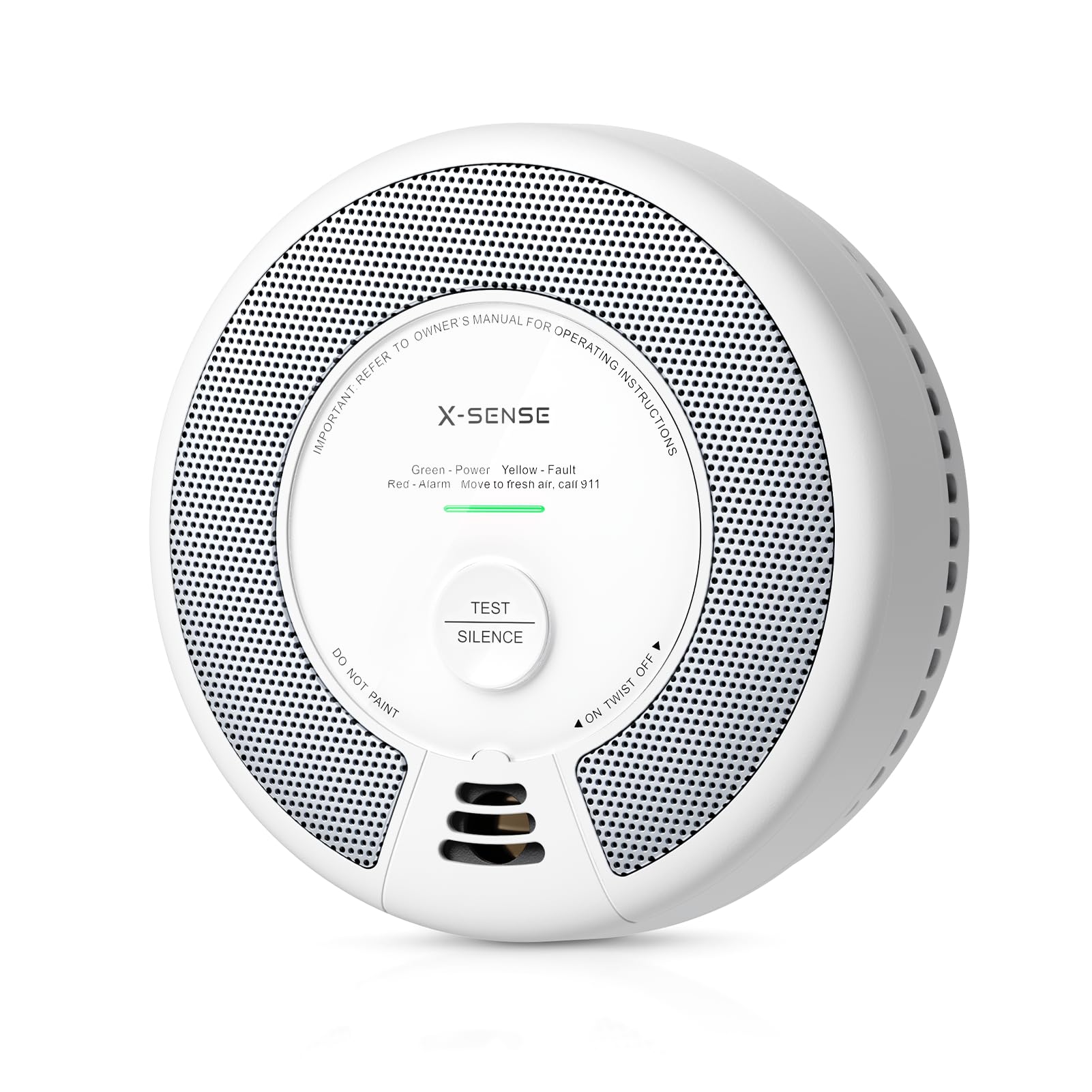
The X-Sense SC06 packs both smoke and carbon monoxide detection into a single standalone unit powered by a sealed 10-year lithium battery. Its photoelectric sensor handles smoldering fires while an electrochemical CO sensor meets UL 2034, giving you two certifications in one compact 5.7-inch housing. The 85 dB alarm is loud enough to wake even deep sleepers, and the one-button test/silence function simplifies weekly checks.
Build quality stands out here: the heat-resistant PC plastic enclosure feels dense, and the mounting process takes under 10 minutes with the included screws and anchors. Customer reports note that four out of five units performed flawlessly over the long term, though a single reviewer experienced a CO nuisance alarm at 14 months—worth monitoring if you place it near a furnace room.
For a balanced approach that combines dual-threat protection with true 10-year battery peace of mind, this model delivers the most safety per dollar in a simple, no-app, no-hub package.
Why it’s great
- Two-in-one detection in a single battery-operated form factor.
- Sealed 10-year lithium cell eliminates all battery changes.
- Easy one-button operation with clear 85 dB tone.
Good to know
- Standalone unit does not support wireless interconnection.
- Very small number of units may develop CO false alarms over time.
2. Kidde p3010b Photoelectric Smoke Alarm

Kidde’s p3010b is a photoelectric-only smoke detector that prioritizes reliability and a slim footprint. At just 1.6 inches deep, it sits nearly flush on ceilings or walls, making it one of the most discreet 10-year battery models on the market. The integrated lithium battery powers the unit for the full decade, and the alarm automatically activates when you twist it onto the mounting bracket—no separate pull-tab to forget.
The Test-Hush button lets you silence nuisance alarms from cooking steam without removing the battery, which is critical for photoelectric sensors that can be triggered by shower humidity. Some customers report that the battery doesn’t always hold the full 10 years in practice, with failures emerging around year 9 rather than year 10. That’s still a strong lifespan, but worth factoring into your replacement schedule.
If you want a trusted name with a thin profile and no frills, this Kidde model is a solid pick for bedrooms and hallways where smoke-only detection is sufficient.
Why it’s great
- Very low-profile design fits tight ceiling spaces.
- Auto-activation on bracket saves an installation step.
- Test-Hush button reduces false alarm frustration.
Good to know
- Some units may not reach the full 10-year battery claim.
- No carbon monoxide detection—smoke only.
3. X-Sense XP0H-SN Combo with LCD
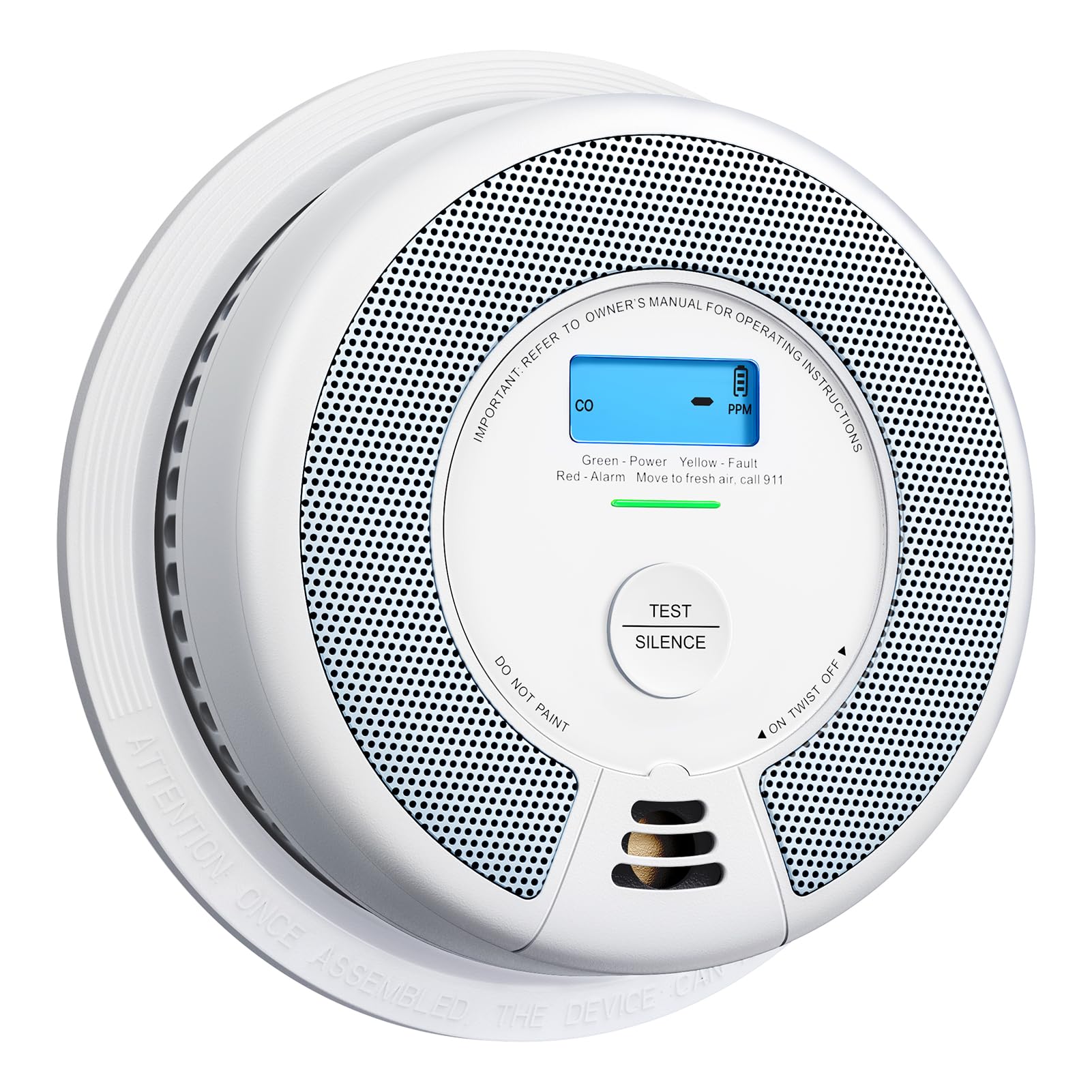
The X-Sense XP0H-SN differentiates itself with a helpful LCD screen that shows real-time CO levels and remaining battery life without disturbing sleep—the display stays off during standby and lights up only during an alarm or self-test. The built-in self-test runs every 60 seconds, checking sensors, electronics, and battery automatically, which is a convenience rarely found at this tier.
Another practical touch is the extra-large 5.7-inch mounting bracket, which easily covers old screw holes or paint stains left by a previous alarm. This is a real time-saver if you’re replacing a legacy model with a different footprint. Note that this version is a standalone unit—it does not support wireless interconnection—so it’s best for single-room replacement rather than whole-home coverage.
Combining 2-in-1 smoke/CO detection, a sealed 10-year lithium battery, and an informational LCD at this price point makes the XP0H-SN the smart pick for anyone patching multiple old holes while upgrading to combo protection.
Why it’s great
- LCD screen shows CO levels and battery status at a glance.
- Oversized bracket hides up to 5.5-inch old mounting holes.
- Automatic 60-second self-test verifies sensor health.
Good to know
- No interconnection or smart-home integration.
- LCD may be hard to read in dark hallways without backlight.
4. First Alert SMCO100 Precision Detection

First Alert’s SMCO100 uses the company’s Precision Detection technology, which is designed to comply with new UL 217 standards that reduce nuisance alarms from cooking and steam. That’s a meaningful upgrade if your kitchen is adjacent to a hallway detector that previously chirped every time you sautéed. The unit runs on 2 AA batteries rather than a sealed 10-year lithium cell, which means you’ll replace batteries once or twice a year, but the trade-off is a lower initial investment and the ability to use standard batteries available anywhere.
At 5.6 inches in diameter and 1.9 inches deep, it sits visually between the slim Kidde and the larger X-Sense models. The test/silence button is responsive, and the end-of-life warning chirps well before the sensor drifts. Users report a 7-8 year effective life before the unit needs replacement, which is typical for AA-powered combos despite the 10-year warranty on the device itself.
If you prefer the flexibility of replaceable batteries and want a proven brand with advanced false-alarm filtering, this model is a strong contender for kitchen-adjacent placements.
Why it’s great
- Precision Detection significantly reduces cooking-related false alarms.
- Replaceable AA batteries are easy to source.
- Compact and compatible with existing First Alert brackets.
Good to know
- AA batteries require replacement every 1-2 years.
- No sealed 10-year battery—higher long-term maintenance.
5. First Alert SMICO110 10-Year Sealed Combo

The SMICO110 takes the same Precision Detection chassis as the SMCO100 but swaps the AA-battery tray for a sealed 10-year lithium cell. This eliminates low-battery chirps forever and protects the sensor from the voltage drop that can cause late-life false alarms. The 2-in-1 smoke and CO protection is tested to UL 217 and UL 2034, and the end-of-life warning chirps at the appropriate 9.5-year mark.
Installation is straightforward if you already have a First Alert mounting bracket—the SMICO110 twists onto the existing hardware in seconds. Some customers note that the test button only works after the unit is fully mounted on the bracket, a design quirk not always clear in the quick-start guide. Users also report variable real-world lifespans; a small number experienced issues within two years, though the majority hit the full decade.
As a premium sealed-battery combo from the most recognized brand in residential fire safety, this alarm is ideal for homeowners who want set-and-forget protection with the lowest total lifetime maintenance.
Why it’s great
- Sealed 10-year lithium battery removes all battery maintenance.
- Precision Detection reduces false alarms from cooking and steam.
- Compatible with existing First Alert mounting brackets for quick swap.
Good to know
- Test button is inactive until alarm is fully mounted.
- Inconsistent battery life reported in a small percentage of units.
6. Kidde 30CUDR-V with Voice Alerts

The Kidde 30CUDR-V brings voice alerts to the table: a clear, synthesized voice says “Fire” when smoke is detected and “Warning, Carbon Monoxide” when CO levels rise. This feature alone can cut response time because sleepers wake faster to a human voice than to a tone alone. The sensor is rated for over 25% faster smoke detection compared to earlier Kidde models, and the 85 dB alarm is backed by a red LED strobe for the hearing impaired.
It runs on 2 AA alkaline batteries (included), not a sealed 10-year cell, so you’ll swap batteries periodically. Early adopters have reported some units developing false fire alarms after a few months, though Kidde’s 10-year limited warranty covers manufacturing defects. The voice announcements and the low-profile 5-inch diameter make it a strong option for those who prioritize clear hazard communication over battery longevity.
For homes with elderly residents, children, or anyone who might not immediately recognize a standard beep pattern, the verbal hazard declaration is a legit safety upgrade worth the slightly higher maintenance.
Why it’s great
- Voice alerts distinguish between fire and CO threats.
- 25% faster smoke detection over previous Kidde models.
- Red LED strobe adds a visual warning layer.
Good to know
- AA batteries need periodic replacement—lower convenience than sealed models.
- Some units have shown early false alarm behavior.
7. SITERWELL GS525A 3-Pack
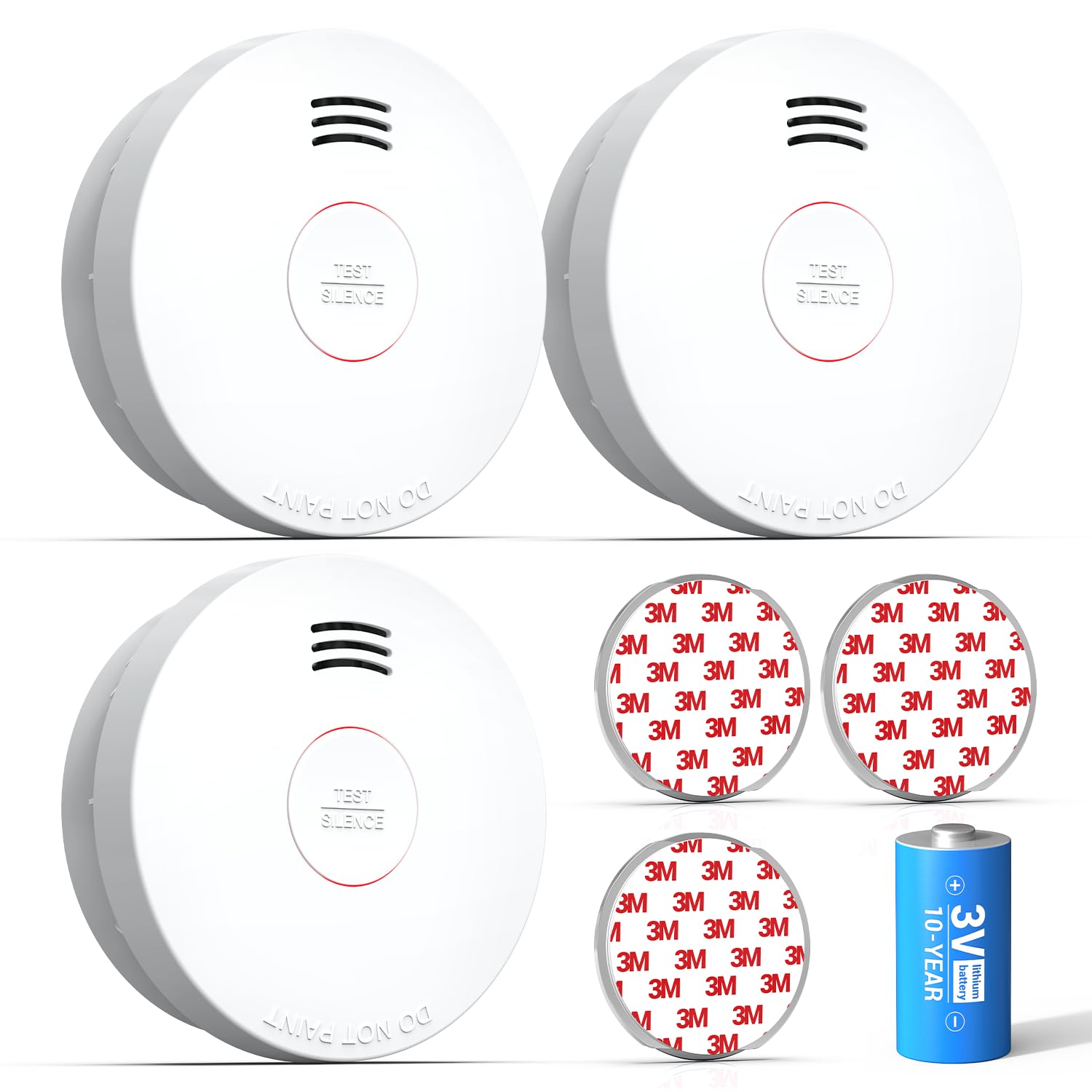
The SITERWELL GS525A delivers a 3-pack of photoelectric smoke detectors with built-in 10-year lithium batteries at an entry-level price. Each unit is compact at 3.93 inches in diameter—noticeably smaller than the 5.7-inch X-Sense or Kidde models—which makes them less obtrusive on a ceiling. The UL 217 certification ensures basic fire detection compliance, and the photoelectric sensor is a good match for smoldering fire scenarios common in bedrooms.
What sets this pack apart is the included magnetic fastening kit: you can stick the metal plate to a magnetic surface or use the adhesive pads for rent-friendly, no-drill installation. This is a unique convenience for apartments or temporary setups. Customers confirm the units are loud when tested, though the smaller sensor chamber may trigger occasional false alarms from kitchen steam if placed too close.
If you need to cover three rooms on a tight budget and want the quickest possible installation, this value pack is hard to beat—just be prepared for slightly higher sensitivity to ambient cooking vapors.
Why it’s great
- Three detectors in one box at a per-unit cost well below competitors.
- Magnetic mounting kit enables drill-free installation.
- Compact 3.93-inch diameter fits small ceiling spaces.
Good to know
- Photoelectric only—no carbon monoxide detection.
- More prone to false alarms from steam or cooking than larger models.
FAQ
How does wireless interconnection work without hardwiring?
Can I mix a 10-year sealed battery model with a regular battery alarm in the same interconnected system?
Final Thoughts: The Verdict
For most users, the best battery interconnected smoke detectors winner is the X-Sense SC06 because it packs both smoke and CO detection into a sealed 10-year battery package with zero maintenance. If you want a thin profile and a trusted brand name, grab the Kidde p3010b. And for covering multiple rooms on a budget without drilling holes, nothing beats the SITERWELL GS525A 3-pack.