
Sweltering inside a nylon tent after a long hike is a quick way to ruin any camping trip. A battery-operated air conditioner for camping changes that equation entirely, turning a sweat-soaked sleeping bag into a genuinely restful night under the stars without relying on a noisy generator running all night.
I’m Min — the co-founder and writer behind Gadgets Feed. After spending countless hours analyzing compressor types, BTU ratings, power consumption figures, and real-world user reports across every major camping AC release this season, this guide is built on the data that actually matters for real outdoor use.
Whether you are powering it from a portable power station or a vehicle battery, finding the right battery operated air conditioner for camping comes down to balancing cooling power with efficient energy draw.
How To Choose The Best Battery Operated Air Conditioner For Camping
Not every portable AC unit is built for the unique demands of tent or RV camping. The key factors involve the type of cooling technology, the efficiency of the compressor, and the power source you plan to use in the field.
Compressor vs Evaporative Cooling
A true compressor-based air conditioner uses refrigerant to actively remove heat and humidity, delivering genuinely cold air regardless of ambient humidity. An evaporative cooler (swamp cooler) relies on water evaporation and only works well in dry climates — it adds humidity and fails entirely in muggy conditions. For reliable camping comfort, prioritize a unit with a sealed compressor system.
Power Consumption and Battery Compatibility
The wattage draw of the unit determines what battery or generator you need. A typical camping AC consumes between 300W and 800W per hour. A 1,000Wh power station can run a 400W unit for roughly two hours at full load, while a 12V DC unit may draw as little as 200W in eco mode, stretching battery life considerably. Always check the startup surge wattage — some compressors spike 2-3x their running wattage for the first few seconds.
BTU Rating vs Tent Size
British Thermal Units measure cooling capacity. For a small 2-person tent (around 50 sq ft), 5,000 BTU is more than adequate. For a larger tent or small RV (up to 200 sq ft), you may need 6,000 to 8,000 BTU. Oversizing a unit for a tiny tent leads to rapid cycling and higher power waste, while undersizing leaves you sweating. Match the BTU to the volume of air you need to cool, not just the floor area.
Quick Comparison
On smaller screens, swipe sideways to see the full table.
| Model | Category | Best For | Key Spec | Amazon |
|---|---|---|---|---|
| Cybertake S2 Pro | Premium Portable | All-Power Off-Grid | 5100 BTU / 40dB / 3-Way Power | Amazon |
| Baykul 6-in-1 | Mid-Range Portable | Heating & Cooling | 6800 BTU / 550W / 46dB | Amazon |
| OUTOHOME 5100 BTU | Mid-Range Portable | Compact Tent Cooling | 5100 BTU / 46dB / 35 lbs | Amazon |
| OUTOHOME 5200 BTU | Mid-Range Portable | Energy Efficiency | 5200 BTU / 400W / 31.9 lbs | Amazon |
| BODEGACOOLER 6000 BTU | Mid-Range Portable | Small Enclosed Tents | 6000 BTU / ≤50dB / 5 Modes | Amazon |
| ZAFRO Smart Inverter | Premium Portable | Large Spaces & Home | 16000 BTU / 42dB / Dual Hose | Amazon |
| Ashihoti 4-in-1 | Budget-Friendly | Windowless Spot Cooling | 2-Gal Tank / 38dB / 65W | Amazon |
| Countrymod 12V 10000 BTU | Premium Rooftop | RV & Van Batteries | 10000 BTU / 45dB / 300-900W | Amazon |
| Outequip 12V 10000 BTU | Premium Rooftop | Low Profile RV Install | 10000 BTU / 40dB / w/ Heater | Amazon |
In‑Depth Reviews
1. Cybertake S2 Pro Portable Camping Air Conditioner
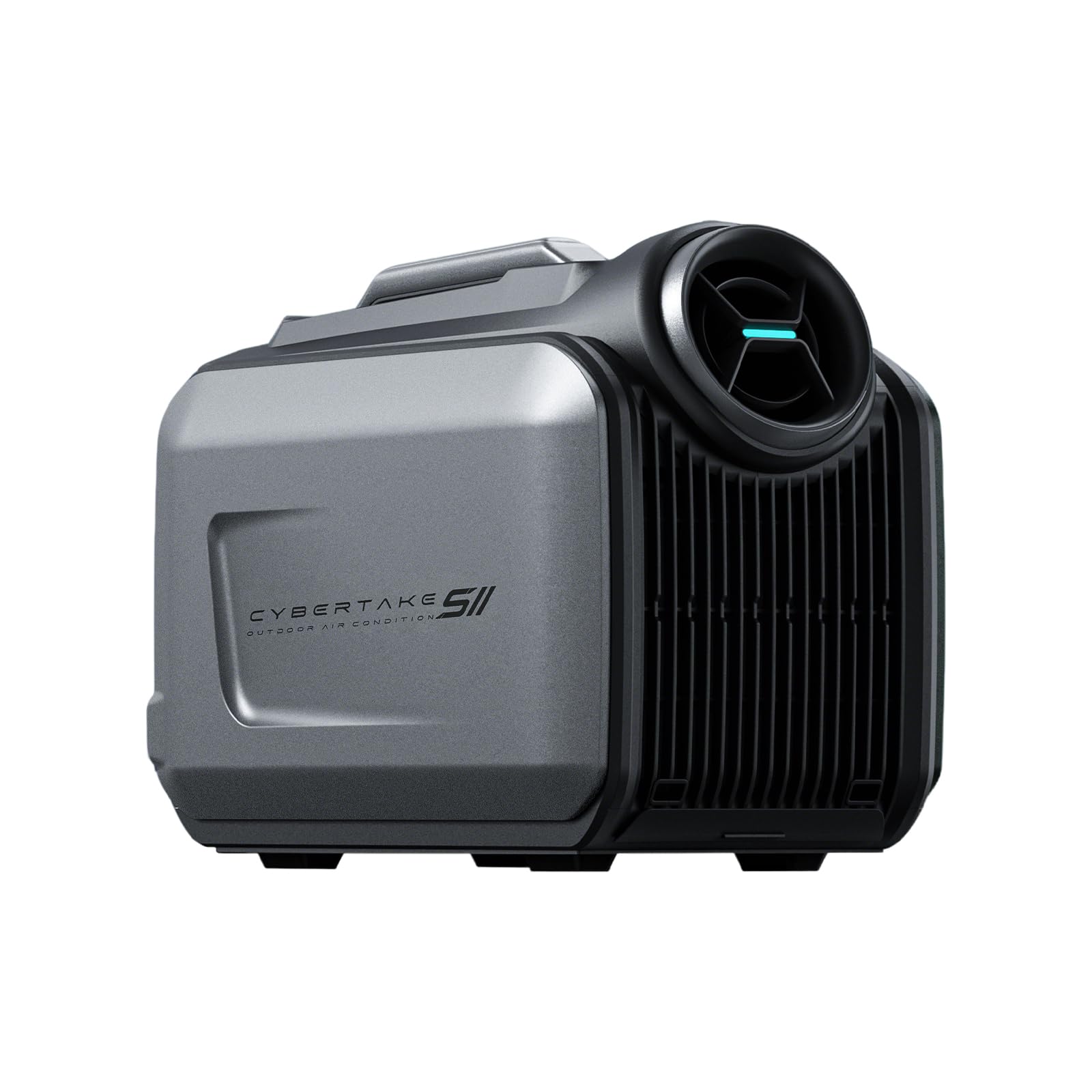
The Cybertake S2 Pro redefines portable camping cooling with genuine 5100 BTU output and a unique triple-power compatibility — 48V DC from a power station, 12-24V from a vehicle, or standard 100-240V AC wall power. That flexibility means you can run it off a dedicated battery bank during a multi-day off-grid trip and then plug it into shore power at a campground without any adapters. The IPX4 water-resistant shell adds real durability against splashes and rain during outdoor use.
At just 21 pounds, it is remarkably light for a compressor-based unit, and the whisper-quiet 40dB noise level on sleep mode is barely louder than a refrigerator, making it ideal for light sleepers inside a tent or small RV. Eco+ mode squeezes up to 8 hours of runtime on just 1kWh of energy, which is class-leading efficiency for this BTU class. The cooling range spans 60°F to 90°F, and the heating function delivers 6100 BTU for shoulder-season camping.
The dual-duct design delivers consistent airflow without recirculating hot air, and the Bluetooth app control lets you adjust temperature and fan speed without leaving your sleeping bag. Some users note that the included AC adapter runs warm during extended use, though this is normal for the power class. The optional remote control uses AAA batteries and is sold separately, but the app covers most adjustments effectively.
Why it’s great
- Triple power input for total off-grid freedom
- Exceptionally quiet at 40dB on eco modes
- Lightweight 21 lb construction for easy portability
- IPX4 weather-resistant shell handles outdoor use
Good to know
- AC adapter runs warm under continuous load
- Separate boost converter needed for 12V vehicle operation
- App control only, no physical remote included in base package
2. Countrymod 12V DC RV Air Conditioner 10000 BTU
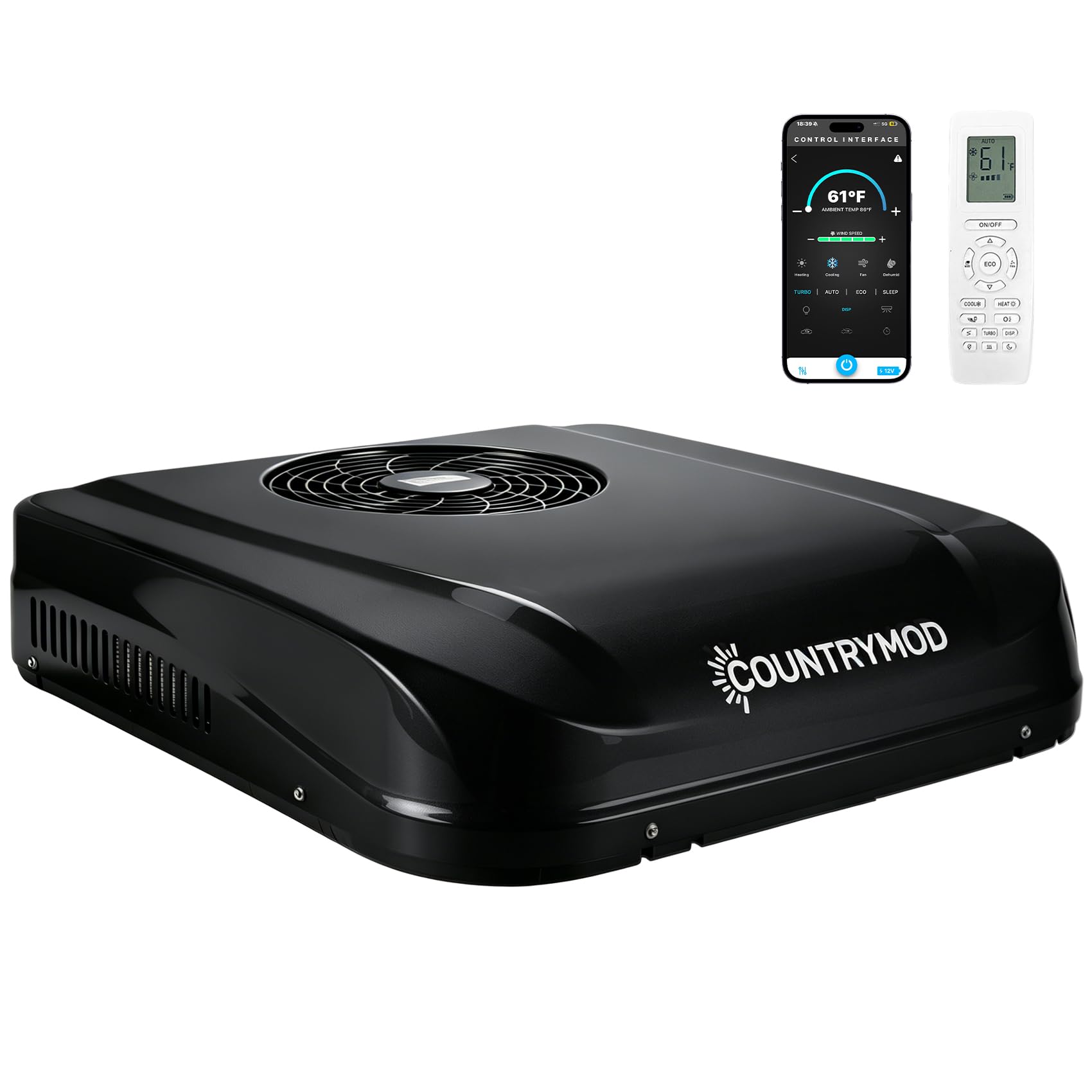
The Countrymod 10000 BTU unit is a rooftop-mounted inverter AC designed for RVs, vans, and campers, consuming only 300-900W with a variable-frequency compressor. That power draw is roughly one-third of a standard 15,000 BTU roof unit, translating to up to 10 hours of runtime on a 480Ah battery bank in eco mode. The horizontal compressor design lowers the center of gravity compared to traditional vertical units, improving stability during travel. Sleep mode noise drops to 44dB, which is barely a whisper inside a camper.
Fitting standard 14″ x 14″ roof vent openings, installation is straightforward for DIY owners, though users note that thicker roofs may require all-thread rods longer than the included hardware. Once mounted, the unit delivers rapid cooling drops from 113°F interior temperatures down to 80°F, and nighttime stable cooling to 72°F. The inverter technology ramps compressor speed smoothly, reducing the startup surge that often trips smaller generators or inverters.
Customer service appears responsive — several reviews mention direct support from a representative named Tony Allen who resolved compressor cycling issues promptly. The remote control makes operation easy from anywhere in the living space. Some owners report the included corner brackets can break under torque, and the instruction manual is minimal, but the overall cooling efficiency and quiet operation make this a top-tier choice for serious vanlife setups.
Why it’s great
- Ultra-efficient inverter draws 300-900W for extended battery life
- Near-silent 44dB sleep mode noise level
- Fits standard 14×14″ RV roof vent with no duct modification
- Strong customer support with direct manufacturer assistance
Good to know
- Corner brackets may need reinforcement
- Thicker roofs require longer bolts and spacers
- Manual is sparse; installation comfort with DIY is assumed
3. BAYKUL Portable Camping Air Conditioner 6800/7500 BTU
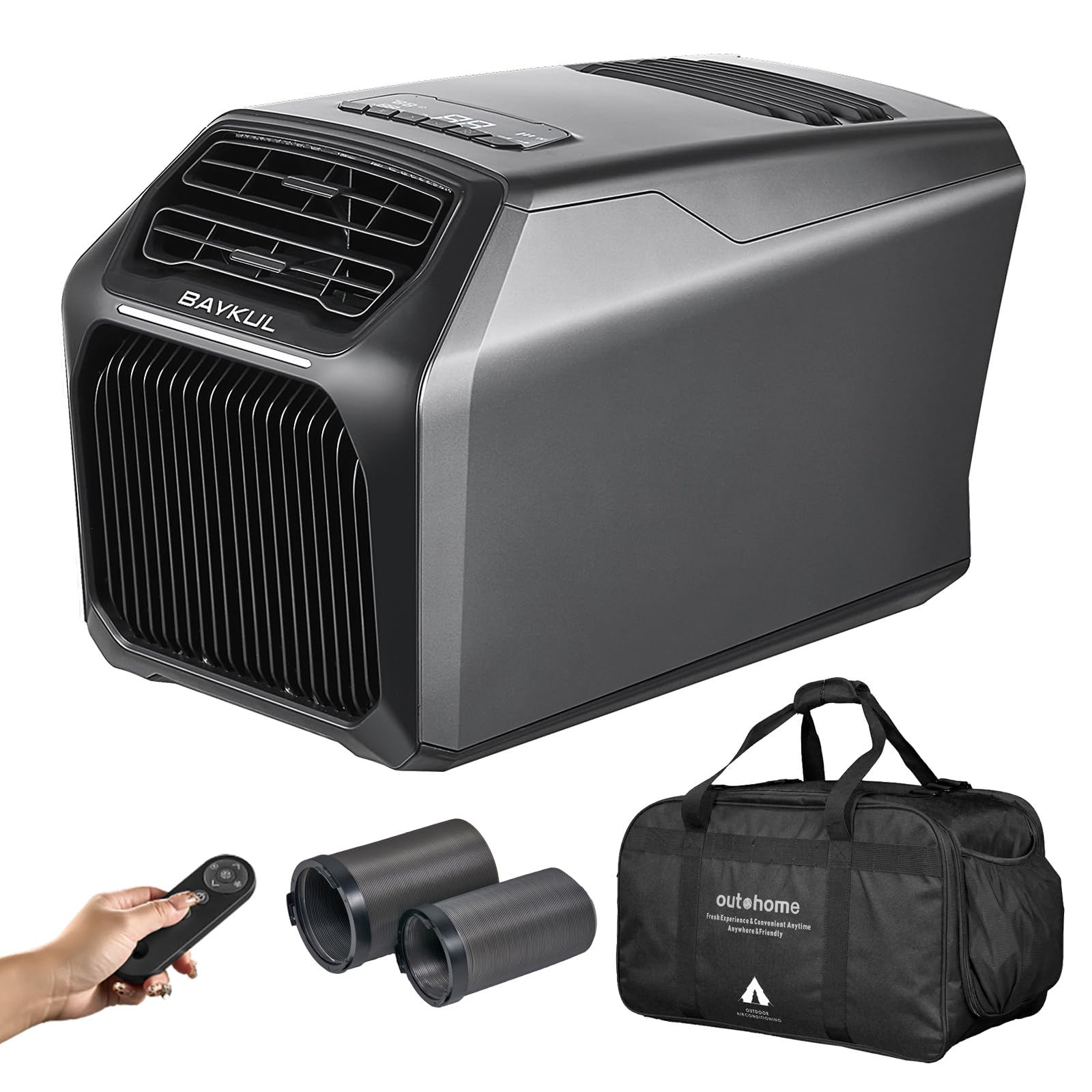
The BAYKUL 6-in-1 unit packs 6,800 BTU of cooling and 7,500 BTU of heating into a compact 35.7-pound portable body, making it one of the most versatile mid-range camping ACs on the market. It runs on standard 110V AC outlets, meaning you will need a generator or a power station with sufficient AC inverter capacity — typical draw averages 550W. The included carrying bag and pre-cut foam window barrier simplify setup for both tent and indoor use. The RF remote works through walls, which is a rare and useful feature when the unit sits outside the tent.
The six operating modes — cooling, heating, fan, dehumidifier, sleep, and timer — cover every season, and the eco-friendly R-32 refrigerant offers better thermal performance than R-410A in a smaller charge volume. Real-world users report an 18°F temperature drop at the output on a 90°F day, and the 46dB noise level is quiet enough for undisturbed sleep. The heating function is a genuine differentiator for early-spring or late-fall camping when nights get cold.
Some units shipped configured for outdoor use by default and require a simple adjustment to switch to indoor window exhaust mode. The unit is slightly bulkier than ultralight options at 13.6 inches tall, but the trade-off is genuine dual-function capability. A small number of users reported insufficient cooling for very large tents, so verify your space is under 200 sq ft for best results.
Why it’s great
- Heating and cooling in one portable unit for year-round use
- RF remote works through walls and tent fabric
- Includes carrying bag and window kit for immediate setup
- Eco-friendly R-32 refrigerant with 550W average draw
Good to know
- Default configuration may need adjustment for tent exhaust
- Requires AC power source; not natively DC compatible
- Heavier than some dedicated tent ACs at 35.7 lbs
4. OUTOHOME 5200 BTU Portable Tent Air Conditioner
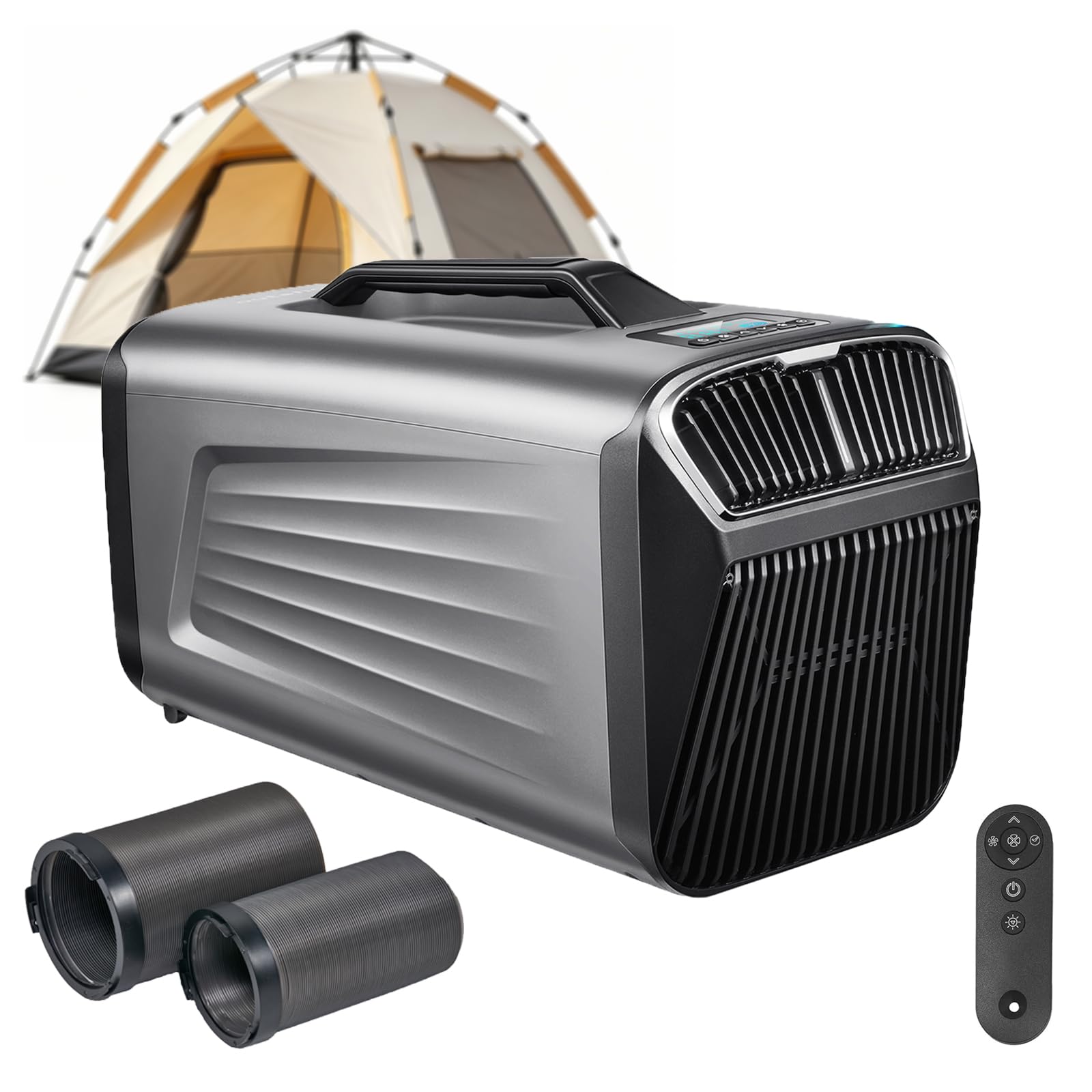
The OUTOHOME 5200 BTU model strikes a strong balance between cooling power and portable size, weighing just 31.9 pounds with dimensions of 22.4 x 11.2 x 14.6 inches. The GMCC high-end compressor delivers an 18°F temperature drop in 5 minutes under standard cooling mode, while consuming only 400W per hour — making it highly compatible with mid-range portable power stations like the EcoFlow Delta series. The metallic spray paint finish gives it a durable, non-tacky look that holds up well to outdoor handling.
The four operating modes (Cool, Dry, Sleep, Fan) cover typical camping scenarios, and the remote control works up to 16 feet away. Drainage-free operation is possible when humidity stays below 70%, which covers most dry-climate camping conditions. When humidity exceeds that threshold, a supplied drainage pipe handles the excess condensate. The dehumidification function also outperforms standalone semiconductor dehumidifiers for muggy tent environments.
Sleep mode drops noise to 46-50dB, with the compressor cycling down to a barely audible fan-only hum. A small number of users reported that the unit struggled to cool very large campervans, so it is best matched to spaces under 150 sq ft. The hose kit and window adapter are included, but the default Celsius display requires pressing a button combination to switch to Fahrenheit.
Why it’s great
- Low 400W power draw for efficient battery pairing
- Drainage-free cooling below 70% humidity
- Compact 31.9 lb design with convenient carry handle
- Rapid 18°F temperature drop in 5 minutes
Good to know
- Fahrenheit display requires manual setting adjustment
- Not powerful enough for large campervans over 150 sq ft
- No heating function; cooling only
5. OUTOHOME 5100 BTU Portable Tent Air Conditioner
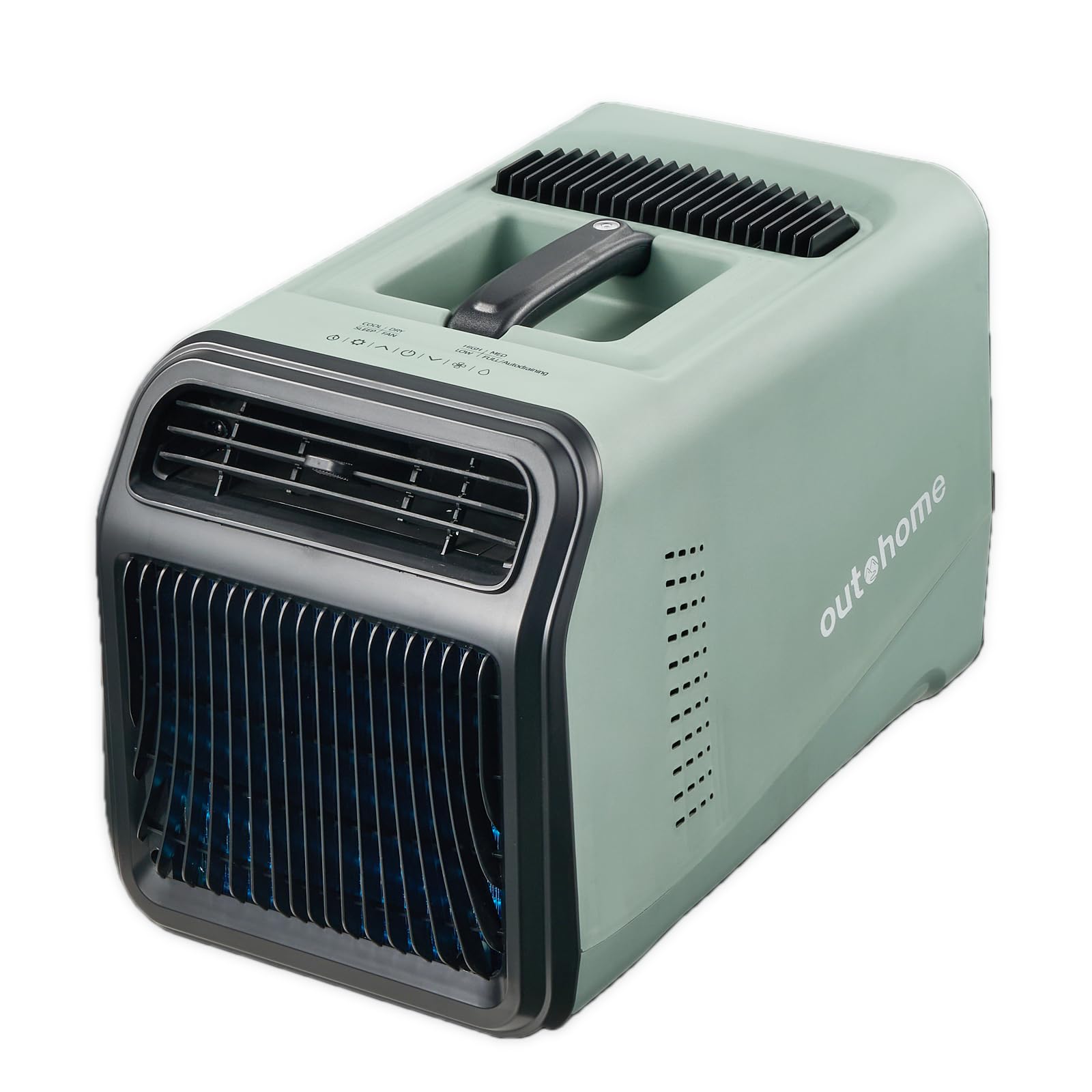
This OUTOHOME 5100 BTU unit is purpose-built for tent camping, with a compact footprint of 20.3 x 12.0 x 13.2 inches and a built-in handle for one-handed carrying. The 5100 BTU compressor reportedly cools spaces up to 200 sq ft, with a measured 60°F outlet temperature differential — meaning it can drop the air coming out by up to 60°F compared to the intake. The green color scheme blends well with outdoor environments, and the smart auto-evaporation system eliminates the need to manually drain condensate during normal operation.
The 4-in-1 functionality includes cooling, dehumidifying, fan, and sleep modes. Noise levels sit at a conversation-quiet 46dB, which is low enough for undisturbed sleep inside a tent. The 24-hour programmable timer allows you to set it to turn on before sunrise when temperatures are lowest, or to shut off automatically after you fall asleep. Operating temperature range is rated from 60°F to 86°F ambient, covering most summer camping conditions.
Truck campers have reported successful integration in camper shells, cooling the sleeping area from 80°F to 65°F in under 20 minutes. However, the unit requires a dedicated AC power source — either a campground hookup or a sufficiently large generator (2,000W+ startup surge). Some users found it would not start on smaller inverter generators or portable power stations rated under 1,800W continuous. The dual-hose design is not included; the unit uses a single exhaust hose, which is less efficient in extreme heat but simpler to set up.
Why it’s great
- Powerful 60°F temperature differential for quick tent chilling
- Compact and easy to carry with integrated handle
- Auto-evaporation eliminates condensate draining
- 24-hour timer for automated comfort scheduling
Good to know
- High startup surge may not work with small portable power stations
- Single exhaust hose design, not dual-hose
- Heavier at 35 lbs for true backpacking
6. Outequip 12V 10000 BTU RV Air Conditioner w/ Heater
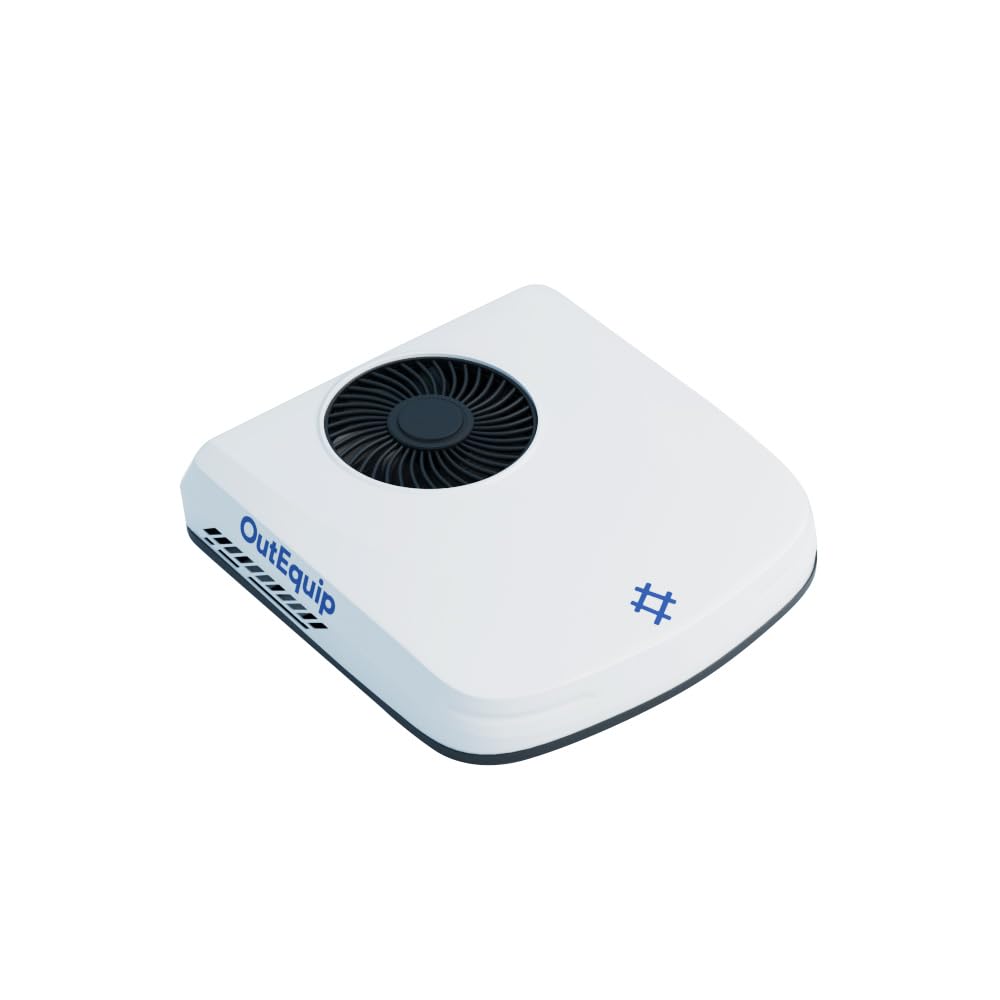
The Outequip 10000 BTU rooftop unit is engineered for off-grid RV and vanlife use, drawing just 200-300W in eco mode with its variable-speed inverter compressor. That efficiency translates to overnight cooling on a moderate 300Ah lithium battery bank — around 16 hours of runtime at 200W draw. The low-profile design stands only 6 inches tall and weighs 43 pounds, making it one of the most aerodynamic and lightweight rooftop ACs available. The 4,500 BTU PTC heater provides supplemental warmth for cool nights, though it is not intended as a primary heat source in freezing conditions.
Installation fits standard 14″ x 14″ roof openings, with three mounting options included for different roof thicknesses. The UV-stabilized ABS shell, EPDM foam gasket, and zinc-coated condenser provide genuine weather resistance against rain, sun, and road vibration. The brushless copper motor fans produce only 40dB in eco mode — quieter than many residential window units. Smart control modes include eco, sleep, and turbo settings, all accessible via the included remote control with temperature monitoring.
Customer service has been highly responsive — one user reported that the manufacturer swapped a 12V unit for a 24V version at no cost after installation. Some reviews note that the lid screws are difficult to remove during initial installation, and the connector plugs feel fragile when handled roughly. Once installed and running, the cooling performance and battery efficiency consistently earn praise from full-time van dwellers and weekend RVers alike.
Why it’s great
- Ultra-low 200-300W eco draw for all-night battery runtime
- Lightweight 43 lb, 6″ low-profile rooftop design
- Variable-speed compressor with 40dB whisper-quiet operation
- Includes PTC heater for mild-temperature camping
Good to know
- Lid screws can be difficult to remove during install
- Connector plugs are fragile — careful handling required
- PTC heater is not adequate for below-freezing conditions
7. ZAFRO Smart Inverter Portable Air Conditioner 16000 BTU
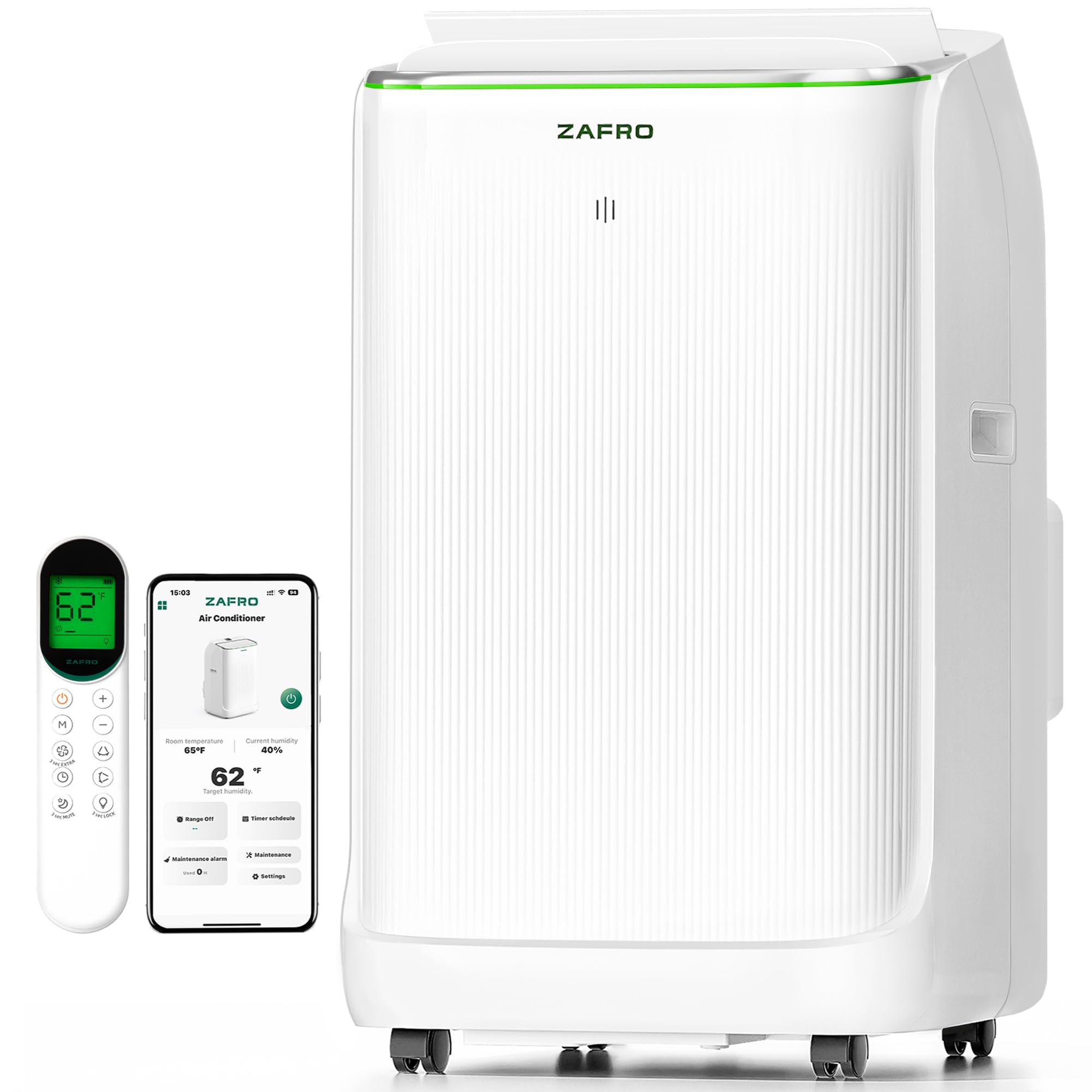
The ZAFRO Smart Inverter delivers a massive 16,000 BTU of cooling (12,000 BTU SACC) with a dual-hose system and smart inverter compressor — designed for larger camping trailers, cabin tents, or home backup use. The CEER rating of 12.8 far exceeds the federal minimum of 7.83, meaning it uses significantly less energy per cooling output than non-inverter units. The dual-hose design pulls air from outside for the condenser and exhausts hot air separately, eliminating the negative air pressure that single-hose units create inside sealed spaces. Self-evaporating condensate management means no manual draining for up to 72 hours in humidity below 90%.
At 42dB in sleep mode, this is genuinely quiet for such a high-capacity unit, and the 4-way oscillation directs airflow both vertically and horizontally for even temperature distribution. The smart app control allows scheduling, mode switching, and temperature monitoring from anywhere, plus a filter-clean reminder and power-off memory that restores the last settings after a power outage. The Extra mode locks the temperature at 61°F and runs at full power for instant relief during extreme heat waves.
The trade-off for this power is size and weight — this is not a unit you backpack into a remote campsite. It includes two exhaust hoses, five window panels, a drain hose, sealing foam, and mounting hardware. Some users found the included window panel too thin for their slider windows, requiring additional sealing. The inverter ramp-up is gentle enough to avoid tripping small generators, but the 1,158 kWh annual energy consumption is higher than smaller units, as expected for the capacity class.
Why it’s great
- Dual-hose design with smart inverter for exceptional efficiency (CEER 12.8)
- 72-hour drainage-free cooling in most humidity conditions
- Full smart home integration with app, remote, and touch controls
- 4-way oscillation for even cooling across large spaces
Good to know
- Heavy and large — not suited for backpacking or small tents
- Window panel may require shimming for proper fit
- Annual energy consumption is high at 1,158 kWh
8. BODEGACOOLER 6000 BTU Portable Tent Air Conditioner

The BODEGACOOLER 6000 BTU unit is built specifically for small enclosed tents (32-54 sq ft / 3-5 sq meters) and uses a real compressor with fin evaporator — not a fan-based swamp cooler. The measured 6000 BTU output is high for such a small form factor, and the five modes (Cool, Fan, Sleep, Dehumidifier, and Max Cool/Forced Cooling) give you fine control over tent climate. The compact dimensions (11.1 x 22.2 x 12.3 inches) and 36.4-pound weight are reasonable for car camping where you can drive gear to the site.
The 110V AC power requirement means you will need a campground hookup or a portable power station with a pure sine wave inverter rated for at least 1,000W continuous. Operating noise is rated at ≤50dB, which is comfortable for sleeping but not whisper-quiet. The remote control lets you adjust settings from your cot or sleeping bag, and the touch control panel on the unit itself provides backup. Dehumidifier mode effectively cuts down muggy tent air, making mornings less sticky.
Customer feedback is divided — while many praise the cooling speed and compact size, a significant number report units arriving with loud banging noises from the fan or compressor, indicating potential quality control issues. The manufacturer appears responsive to warranty replacements, but this is worth noting. The max cool mode pushes around 500W draw, which is reasonable for the BTU output. For the price, the cooling performance is strong when the unit functions correctly.
Why it’s great
- Genuine 6000 BTU compressor cooling for tiny tents
- Five modes including dedicated dehumidifier function
- Remote control for adjustment without leaving sleeping bag
- Compact footprint fits tight camping setups
Good to know
- Quality control inconsistencies reported by some buyers
- Requires pure sine wave AC power — not natively DC
- Noise floor at 50dB is higher than premium alternatives
9. Ashihoti 4-in-1 Portable Evaporative Air Cooler
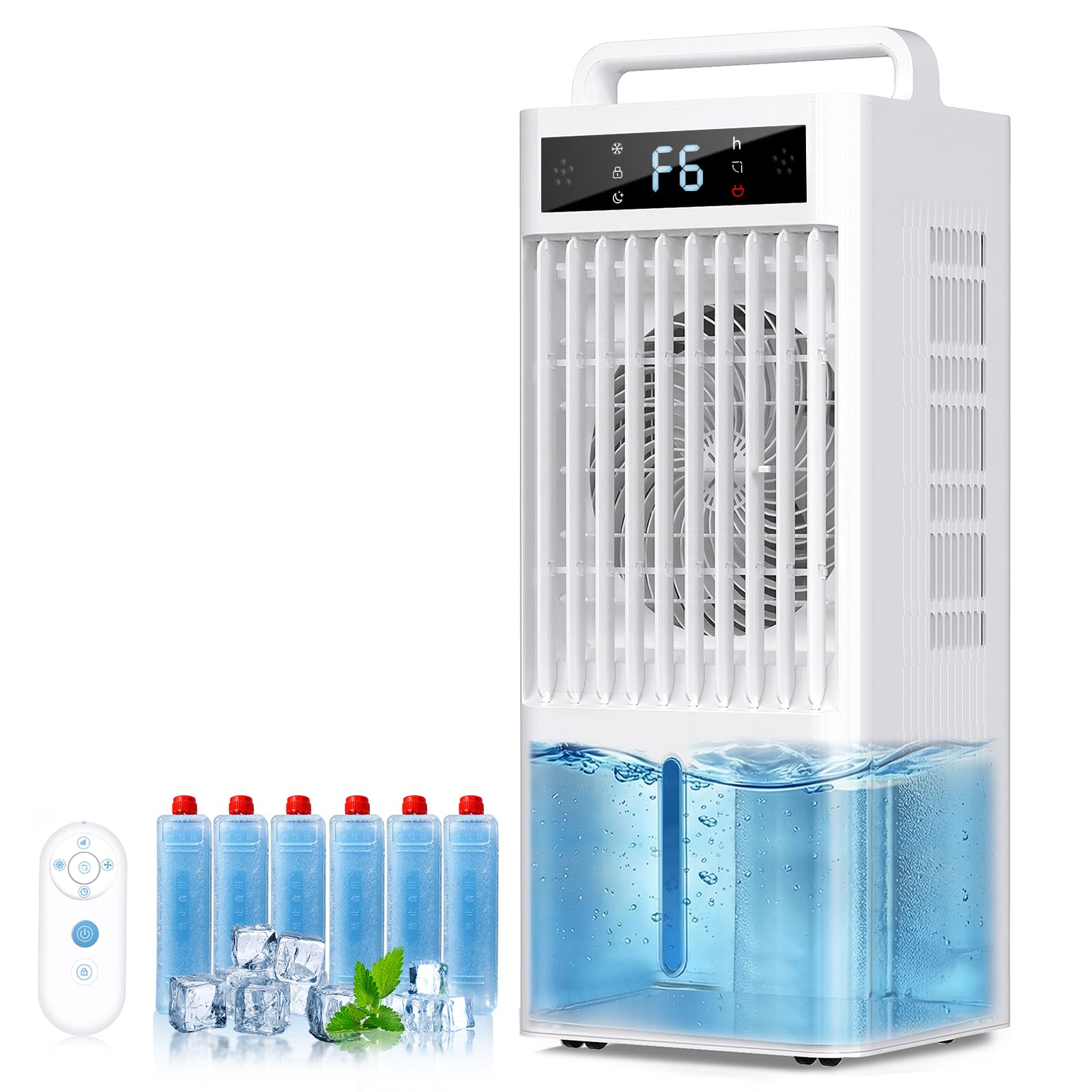
The Ashihoti 4-in-1 is an evaporative swamp cooler, not a compressor-based air conditioner. It uses a 65W motor to pull air through water-soaked cooling pads, achieving a temperature drop of 5.4°F to 16.2°F depending on ambient humidity. The 2-gallon water tank provides up to 20 hours of continuous operation on a single fill, and the 38dB noise level is exceptionally quiet — quieter than most compressor ACs. It requires no exhaust hose or window kit, making it truly plug-and-play.
The three modes (Cooling, Natural, Sleep) and six precision speed settings give you control over airflow volume and pattern. The 12-hour timer allows automated shut-off, and the 16-foot remote control range is generous. The built-in wheels and 12.5-pound weight make it easy to move between tent, car, and campsite. The transparent water level window lets you see remaining tank capacity at a glance. When the water runs out, the unit automatically switches to fan-only mode to protect the pump.
The critical limitation is that evaporative coolers only work in dry climates — below 50% relative humidity for the advertised temperature drop. In humid conditions near lakes or coastline, the cooling effect becomes negligible, and the added moisture can make the tent feel clammy. This is not a replacement for a true AC in muggy weather. Best used in arid western US camping spots, desert environments, or as a highly efficient fan with mild cooling boost.
Why it’s great
- Ultra-low 65W power draw can run all day on small power stations
- Near-silent 38dB operation for undisturbed sleep
- No hose, no window kit — zero installation required
- Long 20-hour runtime on a single water tank fill
Good to know
- Evaporative cooling only; ineffective in humid environments
- Adds moisture to the air inside a sealed tent
- Not a true air conditioner — limited temperature drop
FAQ
Can I run a camping air conditioner off a portable power station like the EcoFlow Delta or Jackery Explorer?
What is the difference between a battery-operated air conditioner and an evaporative swamp cooler for camping?
How many watts does a typical tent air conditioner use per hour?
Do I need a generator for a camping air conditioner, or will a battery bank work?
Final Thoughts: The Verdict
For most users, the battery operated air conditioner for camping winner is the Cybertake S2 Pro because it combines 5100 BTU of genuine compressor cooling with triple-power flexibility and whisper-quiet 40dB operation in a lightweight 21 lb package. If you want true 12V battery efficiency for an RV or camper van, grab the Outequip 10000 BTU for its 200W eco draw and ultra-low-profile rooftop design. And for dry-climate campers on a strict power budget, nothing beats the Ashihoti 4-in-1 Evaporative Cooler for silent, low-wattage relief under the right conditions.