
Our readers keep the lights on and my morning glass full of iced black tea. As an Amazon Associate, I earn from qualifying purchases.
Specs are compiled from manufacturer listings and verified buyer reviews and can change over time — please confirm the key details on the product page before buying.
Before you buy any solar generator, you need one honest fact: solar panels are a slow trickle of energy, not a fire hose. A good solar battery pack is the one that manages your expectations and still delivers when the sun goes down. This guide cuts through the wattage hype to show you which portable power stations actually earn their place on your camping trips and in your emergency kit.
I’m Min — the founder and writer behind Gadgets Feed. This guide is built by comparing the manufacturers’ published specifications and the patterns across verified customer reviews, so you get each pick’s real strengths and trade-offs instead of marketing spin.
You need power away from an outlet, whether that is a slim bank for a day hike or a big unit to keep your fridge running in a blackout. This guide to the battery pack solar market shows you which models recharge fastest, last longest, and fit your real plan for using them.
Our Picks at a Glance

How To Choose The Best Battery Pack Solar Unit
Before you buy a solar power station, ask what you plan to run and for how long. A small power bank can recharge a phone, but it will not keep a mini-fridge cold overnight. So start with the capacity you genuinely need, measured in watt-hours (Wh, the total energy the unit can store).
Capacity vs. Weight
Capacity is measured in watt-hours (Wh) or milliamp-hours (mAh), and more of either usually means a heavier box. A 288Wh unit might weigh around 8 pounds, while a 519Wh unit can push past 14 pounds. You have to decide if you’re carrying it to a campsite or rolling it out of your car trunk for a tailgate.
Solar Charging Realism
Here is where marketing collides with physics. A 40W solar panel can only add about 40 watts of power per hour in perfect sun, which means topping up a 288Wh battery could take most of a day. Solar charging works best as a slow top-up over hours, not a quick emergency refill.
Output Ports Matter More Than You Think
Count your AC outlets, USB-C ports, and DC car sockets before you buy. If you need to power a laptop and a camera simultaneously, you need both a USB-C PD port rated for 60W or more and a standard AC plug. Check the wattage rating on each port to avoid overloaded devices.
Quick Comparison
| Model | Best For | Capacity | AC Output | Weight | Amazon |
|---|---|---|---|---|---|
| EF ECOFLOW DELTA 3 Max★ Best Overall | Whole-home backup & RV | 2048Wh | 2400W (3400W X-Boost) | Heavy | Amazon |
| Anker SOLIX C300Solar Speedster | Family camping & solar speed | 288Wh | 300W (600W Surge) | 15.5 lbs | Amazon |
| Jackery Solar Generator 300Featherweight Trekker | Van life & hiking | 292Wh | 300W (600W Peak) | 7.5 lbs | Amazon |
| GRECELL 500W Station | Small appliances & weekend trips | 519.48Wh | 500W | 14.1 lbs | Amazon |
| DaranEner NEO 350W | CPAP users & emergency kits | 288Wh | 350W (600W Surge) | 8.2 lbs | Amazon |
| Powkey 200W Generator | Power outages & job sites | 146Wh | 200W (Pure Sine Wave) | 3.0 lbs | Amazon |
| HOWEASY 135W Station | Motorcycle camping | 98Wh | 135W | 2.3 lbs | Amazon |
| Daran 100W Station | Carry-on travel & laptops | 89.6Wh | 100W | 2.54 lbs | Amazon |
| MINRISE Solar Bank 40000mAh | Multi-night backpacking | 40000mAh | — (USB only) | 1.1 lbs | Amazon |
In‑Depth Reviews
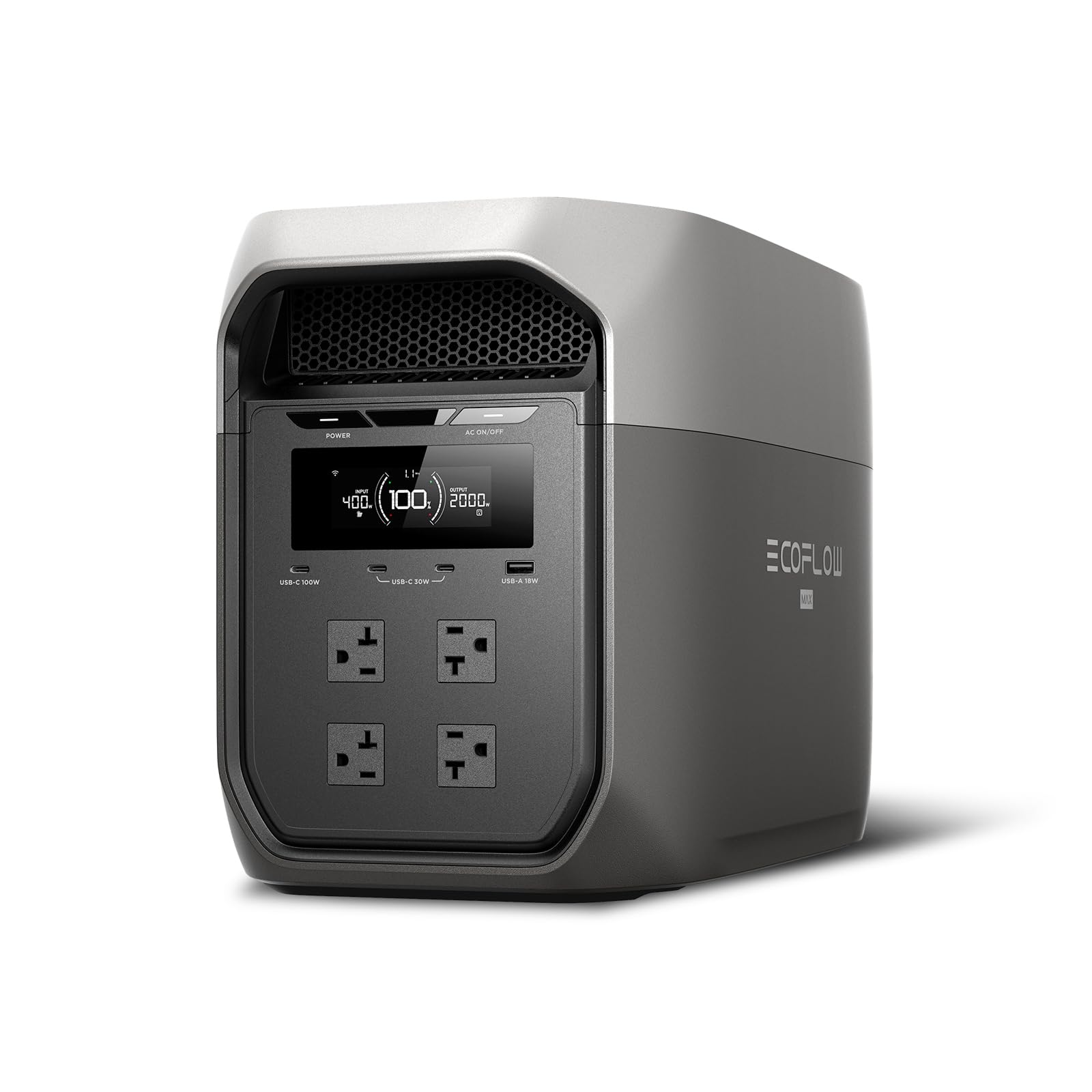
1. EF ECOFLOW DELTA 3 Max
Our pick — over 4.5★ from 550+ verified ratings; the strongest balance of quality and price.
A whole-home backup station that recharges faster than most small units drain.
The single biggest pain with big battery backups is the waiting time to refill them after a blackout. This EcoFlow unit leapfrogs that problem — it jumps from 0–80% charge in just 1.13 hours using X-Stream technology. That’s faster than many smaller models, which means you’re not stuck twiddling your thumbs mid-crisis.
Its 2048Wh LiFePO4 battery is rated for 10 years of daily use., and the 2400W inverter can surge to 3400W in X-Boost mode. Buyers report this reliably runs a TV for about 12 hours, and powers fridges, microwaves, and power tools without tripping. The fan stays quiet enough to keep it in a bedroom during an outage, and the less-than-10ms transfer time protects sensitive electronics like computers.
Weighing in heavy due to its massive capacity, it’s more of a “roll it to the RV” unit than a “strap to your backpack” one. Owners mention the 12V plug placement feels odd and the buttons are hard to see in dim light, but the app control more than makes up for it. One buyer sums it up: “This EcoFlow power station is simply top-notch.”
What Justifies the Cost
- Ultra-fast wall recharge: 0–80% in 1.13 hours
- Runs high-draw appliances via 3400W X-Boost
- Smart app for energy monitoring and scheduling
Consider Before Buying
- Heavy — you’ll feel the 2048Wh cells in the handles
- Solar panel sold separately
- Side buttons can be hard to locate in the dark
The home-resilience choice: If you face frequent outages and want one unit to run essentials, this is your insurance policy.
Who should look elsewhere: If your needs are truly portable, a 14-pound-plus unit is overkill when a 288Wh model fits a cooler better.
2. Anker SOLIX C300
This 288Wh station sips 60W of sun and turns it into a near-full battery before lunch.
Anker has engineered the solar experience to feel easy with this C300 bundle. The included 60W foldable panel recharged the station from 63% to 100% by noon in real-world testing, and even pulls energy pre-sunrise. If “set it up and forget it” is your goal, this is the unit that delivers that experience without constant fiddling.
It packs 288Wh of LiFePO4 power into a body rated for 300W continuous output (600W surge) with three AC outlets ready for a cooking pan or a CPAP machine. The eight total ports include a 140W two-way USB-C for ultra-fast device charging. The dual AC outlets and fast solar top-off make it a family camping favorite, as owners mention it handles an air mattress pump for 10–12 minutes using just 5% battery.
The power section runs at a whisper-quiet 25dB from 3.3 ft away, so it won’t disturb a tent or bedroom.. Some owners wish the USB port count was higher, but that’s the only real complaint for a station that’s rated for 3,000 charge cycles under its 5-year warranty.
The anchor quote: The review pages sum it up: “I absolutely love this battery unit. It recharges quickly and quietly, provides a lot power and is very reliable.”
The catch to know: It won’t accept Anker SOLIX PS30 or other 5V~3A USB-C panels, so check compatibility before buying extra solar gear.
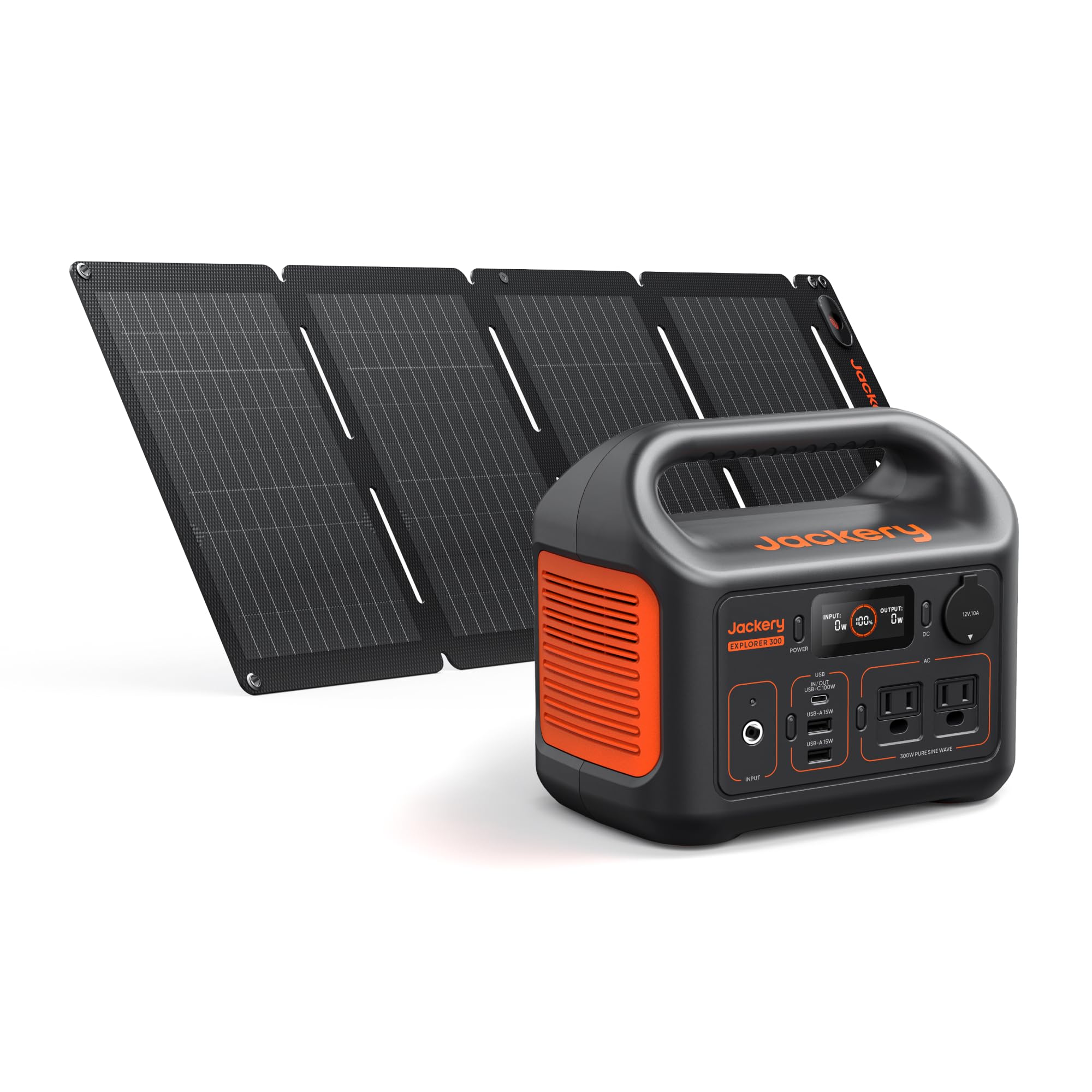
3. Jackery Solar Generator 300
The new Explorer 300 is 17% lighter than its class average, so it rides along on long hikes without complaint.
Jackery’s updated Explorer 300 tips the scales at just 7.5 lbs, which makes it an easy throw into a hiking pack or a van’s storage nook. Its 292Wh LiFePO4 battery is rated for over 4,000 charge cycles before hitting 70% capacity, giving more than 11 years of service..
The solar performance is predictable and honest: reach 80% in about 2.8 hours with a 100W panel, or let the bundled 40W Air version top it up over a full day (80% in 7.5 hours). It offers 300W rated output with a 600W peak surge, plus a 100W USB-C PD port to keep laptops and drones humming. Owners have run CPAP machines all night and still woke up with 20% power left.
A van-lifer favorite, it can charge via wall socket, car lighter, or solar panel — three paths to full. Owners note the included 40W panel alone won’t fully refill the station in a single sunny day, so pairing it with a 100W panel is a smart upgrade for constant off-grid use.
The verdict: For an ounce-counting traveler who needs reliable laptop juice without a heavy backpack bulging, this is the clear market leader.
Who it doesn’t suit: Heavy-duty off-grid living that demands a multi-hour 500W draw will exceed this 292Wh ceiling quickly.
4. GRECELL 500W Station
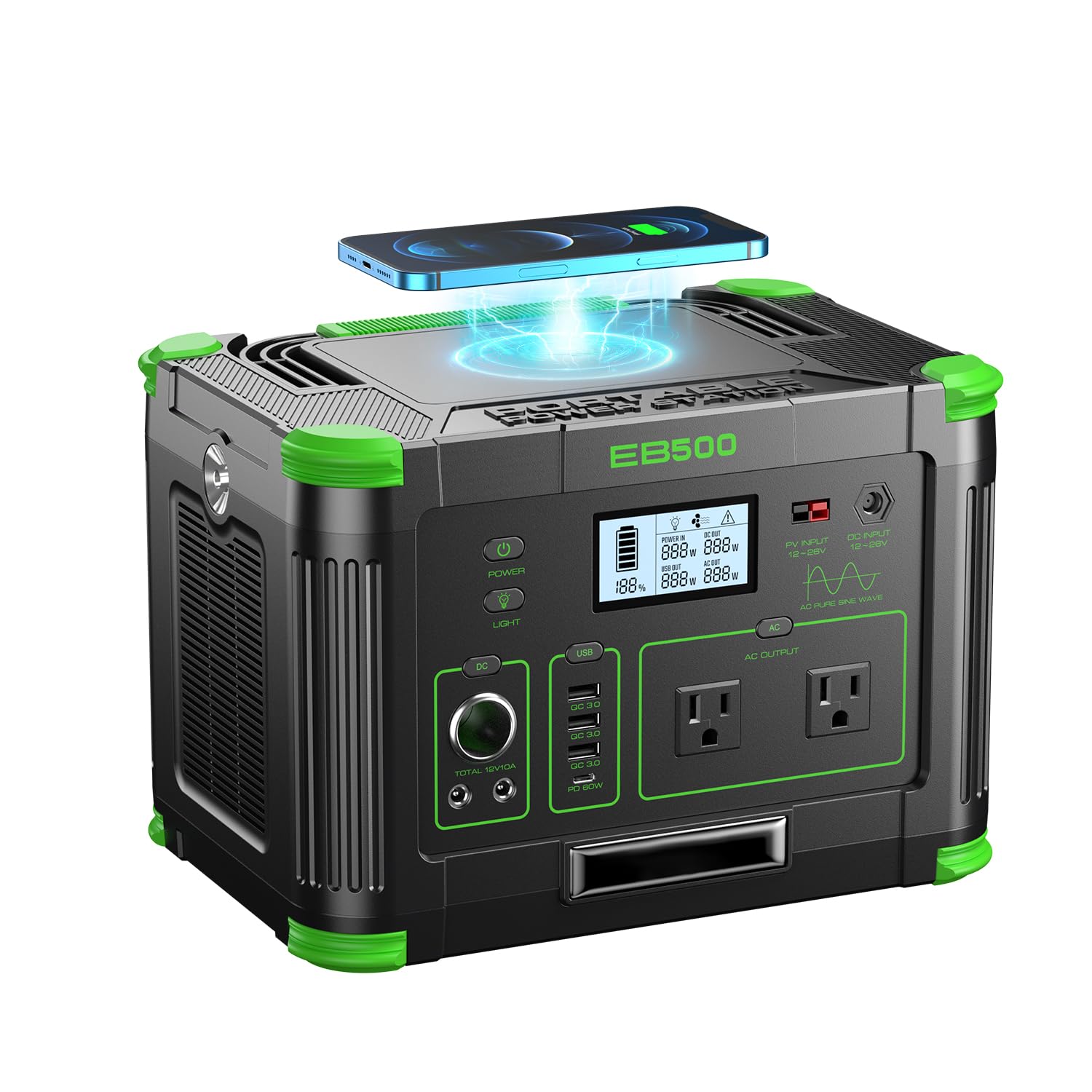
This 519.48Wh unit runs a full 500W surge and still lands at the lowest cost per watt-hour.
GRECELL packs a 519.48Wh battery into a 14.1-pound frame that powers up to ten gadgets simultaneously. With a 500W pure sine wave inverter and a 1000W peak burst, customers note it runs a Ninja woodfire grill for about two hours and then drops to just 60% capacity. The pass-through charging lets you refill from the wall while still pulling power to your devices.
Ten output options include two AC ports, three USB-A QC3.0 ports, a 60W USB-C PD port, two DC ports, and a handy 10W wireless charging pad on top for quick iPhone top-ups. Owners consistently describe it as the smallest and lightest unit for its capacity class at the lowest cost per watt-hour.
This is also the station that earns the crowd’s approval as a family backup unit, earning strong marks for value in its reviews. Sun-based charging needs a compatible 100W or 200W panel (not included), which gets it from empty to full in 6–9 hours of clear skies. The single honest trade-off: charging capacity opinions are split, so checking your exact devices against the wattage ratings is wise.
The head-to-head: With 519.48Wh, this carries 231.48Wh more usable capacity than the Anker SOLIX C300 above, while the wireless pad gives it a feature the Anker lacks.
The fit note: Choose this if a one-unit-does-all weekend needs a small kettle and car fridge to run side-by-side without constant recharging.
5. DaranEner NEO 350W
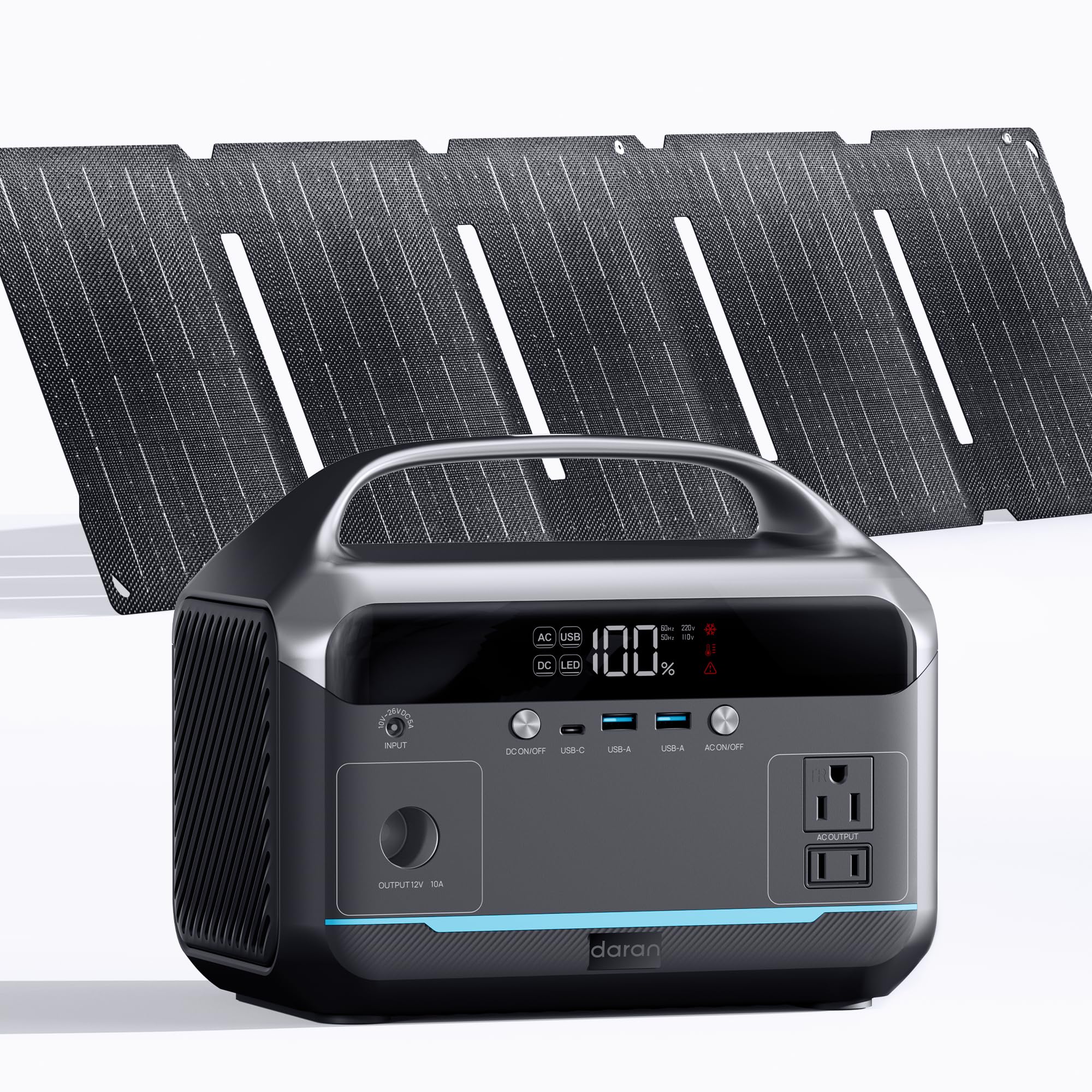
CPAP owners found a hurricane-season partner in this 8.2-pound 350W station with a 40W solar top-up.
For anyone who relies on a CPAP machine during storms, this DaranEner NEO is a specific lifesaver. CPAP users tested it via AC adapter and reported a 7-to-31-hour runtime depending on breathing cycle, without running a humidifier. That full-night confidence is exactly what you want when hurricane season knocks the grid out.
The 288Wh LiFePO4 chemistry lasts four times longer than standard lithium-ion., and the 600W surge handles the startup draw of small fridges. It powers up to six devices from two AC outlets, a 60W USB-C PD port, two 18W USB-A ports, and a 12V/120W car port. The bundled 40W foldable panel relies on a built-in MPPT controller to squeeze out efficiency even under low light.
Owners have fit one inside a Harbor Freight.50-cal ammo can, ran queen air mattresses all weekend, and kept a workspace going—printer, modem, Mac, and a second screen—for 3.5 to 4 hours. The only setup surprise: batteries can ship fully drained (which risks cell damage), so it pays to charge it fully before you need it. This unit does not include a car charger cable.
The expert take: As a medical-adjacent safety net plus a daily campsite workhorse, this balances portability and pure sine wave output better than most at 8.2 lbs.
Who should pass: If your CPAP has a humidifier or heated tube you can’t skip, the 288Wh ceiling might leave you short before dawn.
6. Powkey 200W Generator
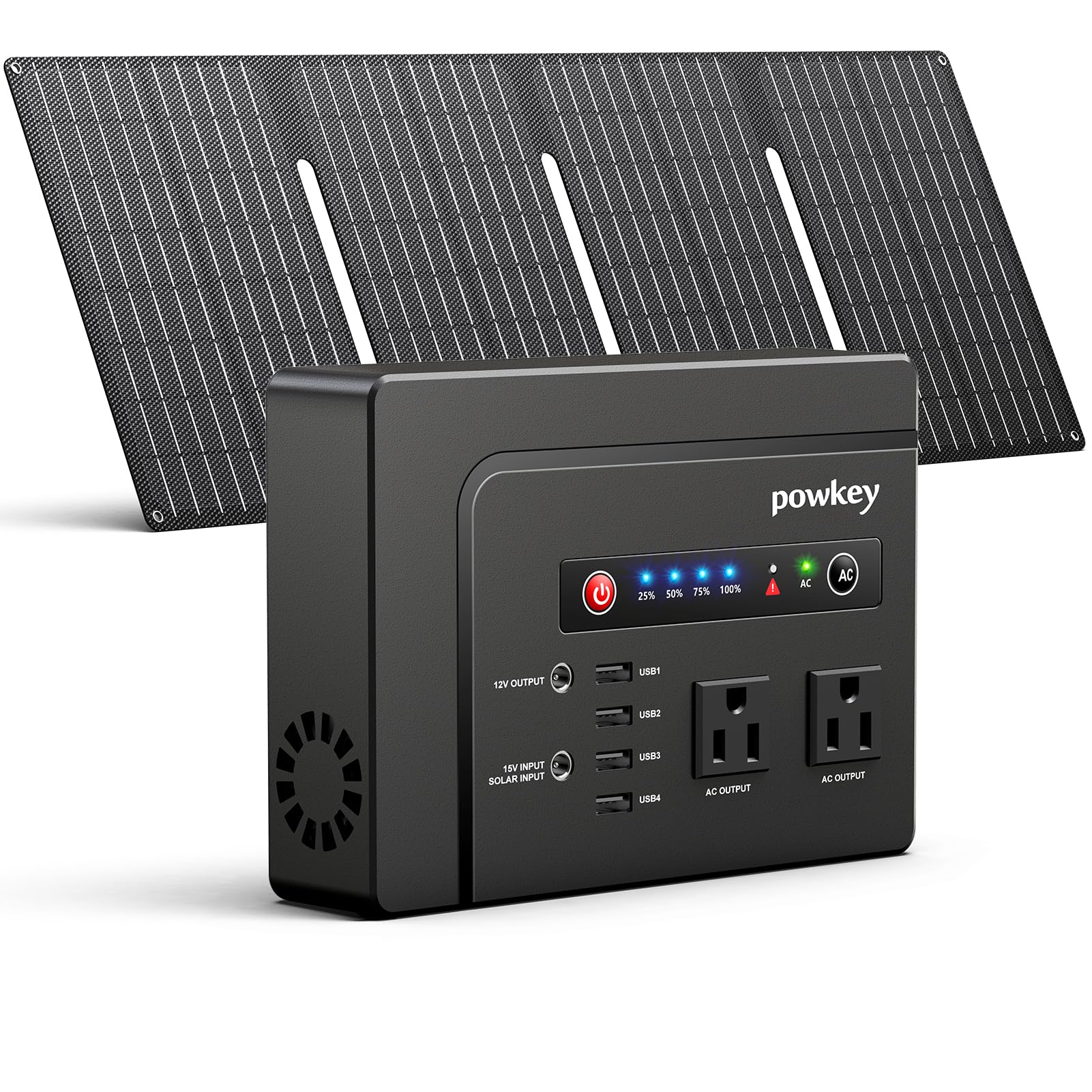
This complete bundle—146Wh station plus 40W panel—rescued one homeowner from a costly dead-outlet repair.
This Powkey set is arguably the smartest budget island-kit on the list because it ships with everything you need to start harvesting sun the day it arrives. The 200W pure sine wave AC inverter delivers clean 110V power across two outlets, while the included 40W foldable panel keeps things topped up during daytime beach use. Being a “solar power station” is its actual point, not a marketing aside.
On a full charge, it powers phones about 24 times (5W), cameras 12 times (15W), and a laptop 2.5 times (50W).. Owners have used it to power CD players and LED strands for over 4 hours on a job site, and one person solved a dead bathroom outlet without calling an electrician. The unit recharges from a wall in 5–6 hours, or faster in the car.
Quality and reliability reviews are genuinely mixed — you’ll see glowing 5-star posts next to rare dead-on-arrival units. A few reviewers point out it only holds charge for 3–4 hours, and one even wrote a frustrated “DO NOT BUY” review after the unit refused to charge their laptop. This tells us to test it fully within the return window. At 3.0 lbs, it’s light enough to mount on a shelf with Velcro as a permanent power fix.
The All-In-One Appeal
- Bundle includes the 40W solar panel — no extra purchases needed
- Lightweight at 3.0 lbs
- Two pure sine wave AC outlets protect sensitive electronics
The Quality Question
- Reviewers are split on long-term reliability
- Some units fail to hold charge past 3–4 hours
- Laptop charging via AC can be finicky
Pick this if: You need a complete, affordable solar starter kit for short outage windows and light device loads.
Look elsewhere if: You’re planning multi-day off-grid trips where a random dead unit isn’t an option — pay more for a trusted brand’s reliability.
7. HOWEASY 135W Station
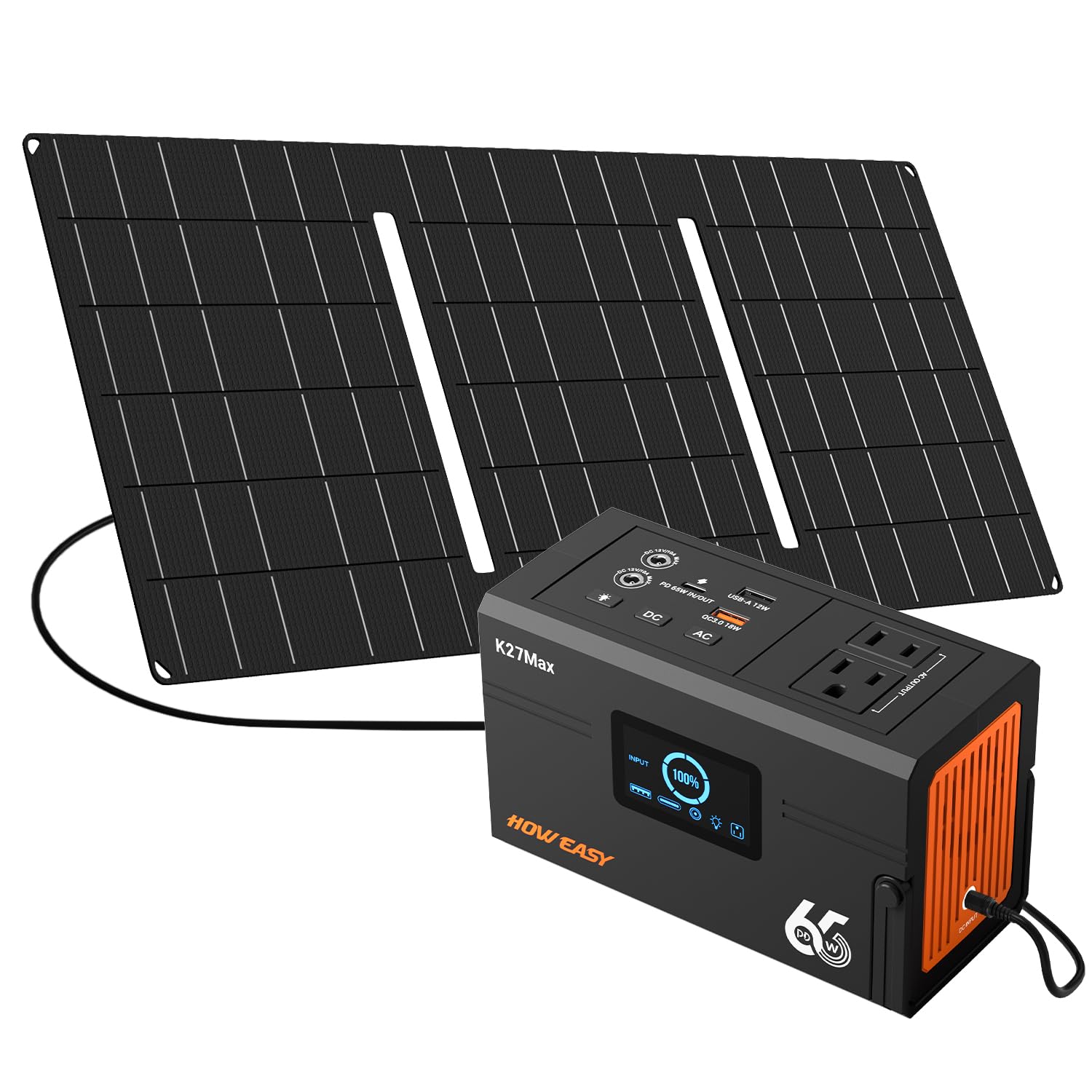
A 2.3-pound unit small enough for motorcycle saddlebags that still tops up a Galaxy phone three times over.
Motorcycle campers and deer-season hunters love this HOWEASY because it disappears into a bag without a second thought. The 98Wh capacity tucks into a 6.7 x 3.1 x 4-inch frame and ships with a 30W foldable solar panel, making it a genuine solar generator from the start. It recharges from 0–80% in just one hour when plugged into a 65W PD wall charger.
Output options span two AC outlets (110V), a PD65W USB-C port, a QC3.0 port, plus two 12V/10A DC ports to power laptops, mini-fridges, and drones simultaneously. Shoppers say charging a Galaxy phone from empty three times plus an iPad, with power to spare.. The integrated LED light offers adjustable brightness and an SOS flash for night campsite safety.
It lacks a proper on/off switch—you’ll need to use the DC button—and the cooling fan runs loud during heavy AC use. But for a 2.3-pound unit with a 30W panel included, it’s a strong mid-range pick with a 2-year guarantee. The FAA-compliant rating also makes it a legitimate carry-on item for plane trips.
The fit: This is for solo adventurers who need one compact power source for phone, GPS, and a heated jacket liner—not for families running fridges.
Who it won’t satisfy: If you need to run a laptop all day, the 98Wh ceiling will drain quickly under a 65W PD draw.
8. Daran 100W Station
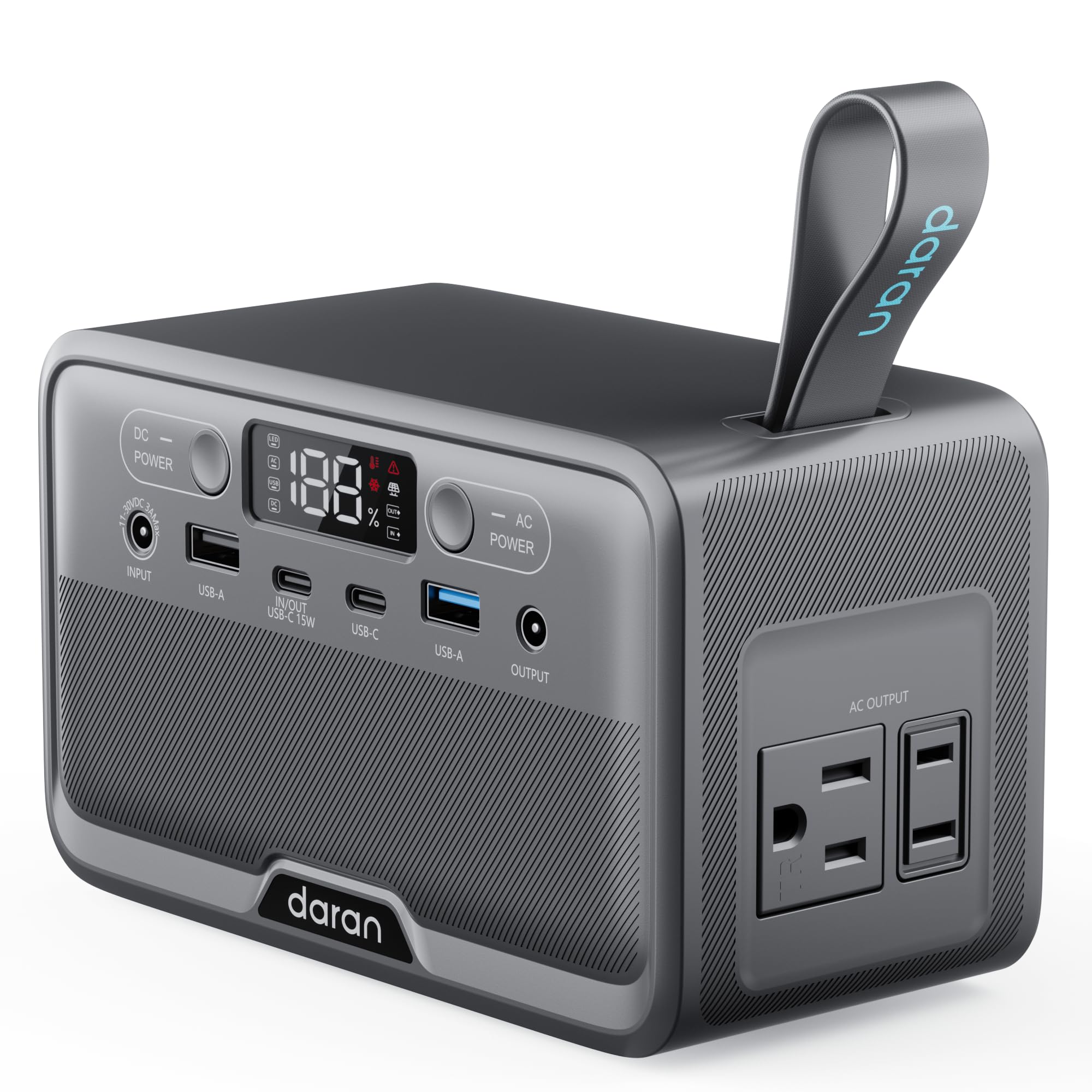
A pocketable 89.6Wh station that squeezes under the FAA’s 100Wh carry-on limit for remote work anywhere.
The Daran fits in a glove box or daypack, so you do not have to haul a heavy case just to get backup power. It measures 6.5 x 3.3 x 4 inches and weighs 2.54 pounds, and its fanless design (no cooling fan inside) keeps overnight bedside operation silent. It will not run a fridge, but one owner reports their Starlink Mini (a compact satellite internet receiver) stayed online for roughly two hours per charge through the AC outlet (the standard wall-socket output) — impressive for the size.
The 89.6Wh LiFePO4 battery is rated for 3,500+ life cycles, enough for years of remote work.. Seven output ports cover two AC sockets (100W), dual USB-C (45W/15W), dual USB-A (18W/15W), and DC5521 (60W). It recharges 0–100% in 1.2 hours thanks to its simultaneous AC plus USB-C fast-charge capability, which is genuinely quick for this class.
Ham radio operators ran it for about 12 hours on moderate use, though they called out the loud fan during AC charging. Owners also note solar charging works even on overcast days, but that panel is sold separately, so keep that in mind. It can power laptops, phones, and speakers side-by-side, but the 100W ceiling means it’s not for hair dryers.
The concise take: If you need a TSA-friendly, long-lasting power brick for a laptop-peppered work trip, this Daran fits the bill precisely.
The trade-off: Its fan noise during wall charging is annoying if you plan to use it as a bedside UPS.
9. MINRISE Solar Power Bank
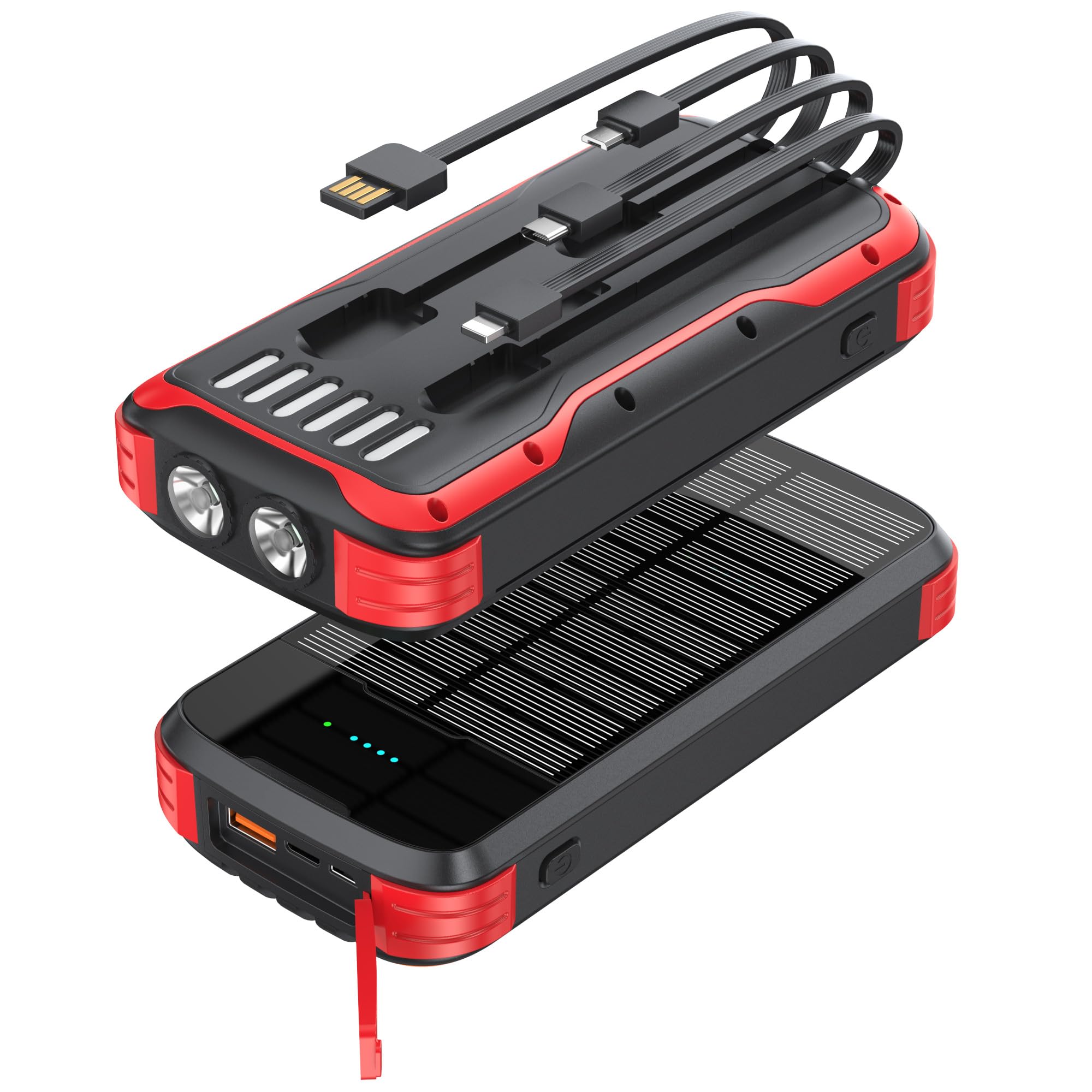
A rugged 40000mAh bank with four built-in cables, purpose-built for 1–2 night adventures off the grid.
This MINRISE is the budget-tier pick that makes sense when your power needs are purely USB-sized. For a 10-day camping trip reviewer, it charged two phones plus an Apple Watch nightly without complaint. But there’s an honest catch: they noted the solar panel only really sustained them for about 3 days max in the wild — solar here is a survival supplement, not a rapid refuel.
The 40000mAh cell outputs 20W PD fast charging — enough to take an iPhone 15 from 15% to 65% in 30 minutes. It packs three built-in output cables (Type-C, iOS, and Micro USB) plus a USB-A input, meaning you can leave the cord tangle at home. The dual LED flashlights illuminate up to 165 feet for up to 25 hours, a genuine emergency asset..
Durability comes from a thick silicone armor over ABS corners — the anti-fall design includes dustproof and waterproof protections. The battery itself weighs 1.1 pounds, which is acceptable for its capacity. Buyers report solar charging proved “ineffective after 8h sun” per one buyer’s test, so treat the solar aspect as emergency insurance rather than your primary charging path. Owners also mention the built-in cords are on the short side.
Why Grab It
- 40000mAh capacity for multi-day phone and tablet top-ups
- Four built-in cables eliminate cord clutter
- 165-foot dual flashlights double as camp lanterns
The Reality Check
- Solar recharge is slow — a full day of sun barely dented a full drain
- Positively heavy for a “power bank” at 1.1 pounds
- No AC outlet for anything beyond USB devices
Smart buy if: You need a tough, cable-included power source for 1–2 nights of phone and wearable charging.
Reach for an outlet if: You plan to rely on sun alone to keep it alive for a week — that expectation won’t survive contact with real sunlight.
Understanding the Specs
Watt-Hours (Wh) — The Real Capacity
Watt-hours tell you how long any device will run, not just how big the battery looks. A 288Wh unit can run a 60W laptop for roughly four hours, while a 2048Wh station can run that same laptop for a full day plus. Always compare watt-hours when weighing two stations of similar size — it’s the most honest number on the box.
Pure Sine Wave vs. Modified
Pure sine wave inverters deliver the same clean power you get from a wall outlet, which is essential for sensitive electronics like laptops, CPAP machines, and medical gear. Cheaper models may use modified sine wave inverters, which can cause humming in fans or erratic behavior in delicate power supplies. Look for the “Pure Sine Wave” label when you care about protecting costly devices.
Solar Recharge Realism
A 100W solar panel takes about 6–9 hours to fully charge a typical 300Wh station in ideal sun. Panels are great to have, but they won’t rescue you from a flat battery at dusk. Plan solar charging as a daytime, ongoing top-up, not a last-minute emergency method.
Charge Cycles & Lifespan
LiFePO4 (lithium iron phosphate) chemistry is the gold standard now. These cells are rated for thousands of charge cycles (typically 3,000–4,000) before degrading to 70% capacity, which is roughly 10+ years. Standard lithium-ion batteries wear out much quicker — about 500 cycles — making LiFePO4 the superior choice if you plan to keep the unit for the long haul.
FAQ
How long does a solar battery pack take to charge fully in the sun?
Can I use a solar battery pack to run a mini-fridge?
What is the difference between LiFePO4 and lithium-ion solar batteries?
Can I take a solar generator on an airplane?
What does USB-C PD mean and why does it matter?
Is a solar battery pack worth it for home emergency backup?
What is surge power vs. rated power on a solar generator?
Do I need a special solar panel for my portable power station?
How do I maintain a solar battery pack during the off-season?
Final Thoughts: The Verdict
For whole-home backup, the EcoFlow DELTA 3 Max turns a blackout from a crisis into an inconvenience. Its 2048Wh capacity (enough to run a fridge for hours) and 3400W X-Boost output (a feature that lets it power high-draw appliances beyond its rated limit) handle most household loads, and it recharges from 0–80% in 1.13 hours, so you wait less. For family camping, the Anker SOLIX C300 balances true solar speed and portability, and it comes with a 60W panel (a solar panel rated to deliver 60 watts of power). For an ultra-light hiking companion, the Jackery Explorer 300 is the one to reach for over miles of trail. Buyers rate the Anker 4.5 stars across 400+ reviews, while the EcoFlow earns 4.7 stars from 500+ owners, which makes a case for stretching your budget if you need whole-home power.
How We Picked
We do not accept paid placement. Every pick is matched to a real buyer and a real use-case; we do not hands-on test units.
Sources & Methodology
Specifications: manufacturer listings and product documentation. Review insights: verified customer reviews, as of September 2026. Pricing: not shown on this page (it changes often); check the current price via the retailer link.
As an Amazon Associate, Gadgets Feed earns from qualifying purchases. This does not affect which products we feature.