
Our readers keep the lights on and my morning glass full of iced black tea. As an Amazon Associate, I earn from qualifying purchases.
Specs are compiled from manufacturer listings and verified buyer reviews and can change over time — please confirm the key details on the product page before buying.
When the grid goes dark, a battery powered generator keeps your fridge running without fuel or fumes. You plug it in to charge, then flip it on during an outage for clean, silent electricity. For most homes, the balance is a unit with a LiFePO₄ (lithium iron phosphate—a long-life battery chemistry) core, enough watts to start a fridge, and an outlet count that matches your appliances.
I’m Min — the founder and writer behind Gadgets Feed. This guide is built by comparing the manufacturers’ published specifications and the patterns across verified customer reviews, so you get each pick’s real strengths and trade-offs instead of marketing spin.
Homeowners need to know which stations actually keep essentials running through a blackout, so here are the top battery powered generator for home choices ranked by real-world performance.
Our Picks at a Glance

How To Choose The Best Battery Powered Generator For Home
Before you pick, focus on three things: how much power you need at once, how long you need it to last, and how you plan to refill it. Your choice hinges on whether you’re protecting a single fridge or running a home office.
Match Capacity to Your Real Load
Capacity is measured in watt-hours (Wh)—the total energy the unit stores. A typical fridge pulls a few hundred watts while running, so a station around 1,000Wh might keep it going for less than a day, while a 2,000Wh unit can stretch closer to two. Add up the wattage of everything you would plug in and multiply by the hours you want to run them.
Check the Surge, Not Just the Steady Output
Motors in fridges and freezers draw a big burst of power for a few seconds when they start. A station rated for 1,500W continuous might need a 3,000W surge peak just to kick a fridge into motion. If the surge number is too low, the unit trips off even though the appliance runs fine on far less.
Decide How You Will Refill It
AC wall charging is the fastest and most common way to top up. Solar input matters if you want off-grid independence, and it is measured in watts—higher solar input means faster refill on sunny days. A UPS function (switching to battery in milliseconds when grid power drops) protects computers and routers from stuttering or shutting down mid-task.
Quick Comparison
| Model | Best For | Capacity | AC Output | Weight | Amazon |
|---|---|---|---|---|---|
| Jackery Explorer 1000 v2★ Best Overall | Camping & light home backup | 1,070Wh | 1,500W | 23.8 lbs | Amazon |
| LIBRIDS H1008Compact Pick | CPAP & small essentials | 640Wh | 600W | — | Amazon |
| ABOK Ark2000Expandable Pick | Expandable home backup | 1,536Wh | 2,000W | — | Amazon |
| DABBSSON 2000L | Heavy-duty appliances | 2,048Wh | 2,200W | 41 lbs | Amazon |
| Anker SOLIX S2000 | Long fridge runtime | 2,010Wh | 1,500W | 35.7 lbs | Amazon |
| EcoFlow DELTA 3 Max | Fast charging powerhouse | 2,048Wh | 2,400W | — | Amazon |
| BLUETTI AC200L | RV & expandable off-grid | 2,048Wh | 2,400W | 61.4 lbs | Amazon |
| Jackery Explorer 2000 v2 | Whole-fridge 3-day backup | 2,042Wh | 2,200W | 39.5 lbs | Amazon |
| Anker SOLIX C2000 Gen 2 | Appliance + A/C running | 2,048Wh | 2,400W | 41.7 lbs | Amazon |
| BLUETTI Elite 200 V2 | Long lifespan & efficiency | 2,073.6Wh | 2,600W | 53.4 lbs | Amazon |
| EcoFlow DELTA Pro | Whole-home serious backup | 3,600Wh | 3,600W | 99 lbs | Amazon |
In‑Depth Reviews
1. Jackery Explorer 1000 v2
Our pick — over 4.5★ from 3,500+ verified ratings; the strongest balance of quality and price.
The crowd-pleasing 1,070Wh station that keeps your fridge cold without breaking your back
This is the unit most households should start with. The Jackery Explorer 1000 v2 packs a 1,070Wh capacity with a 1,500W AC output and a 3,000W surge peak, which is enough to start a fridge and keep it running through a long outage. It weighs just 23.8 lbs with a foldable handle, so you can move it from the kitchen to the garage without a second person.
What wins people over is the build quality—buyers single it out for the sustained 1,500W output, and the charging speed gets strong praise too. It powers a full-size 16 cu ft refrigerator for 6-1/2 hours, and boats anchored overnight run three small fridges, an ice maker, and a fan for 7-8 hours. For outages specifically, it handles shop vacs and small tools fine, and stays quiet while charging. It even keeps a CPAP going for nights on end.
The honest catch is that it does not include a solar panel—solar charging needs Jackery panels separately. It also has no 12V barrel ports, which matters if you run 12V gear directly. The app lets you switch to a 1-hour emergency charge from 0 to 100%, though it defaults to a gentler 1.7-hour mode to protect battery health. Buyers report the app works reliably via Bluetooth from about 30 feet away.
fast solar recharging
- Strong build quality and dependable 1,500W sustained output
- Fast charging—roughly 1.7 hours standard, 1 hour in emergency mode
- Light enough to carry around easily at 23.8 lbs
- Pure sine wave AC ports run sensitive devices safely
weighty power brick
- Solar panel sold separately, and only Jackery panels work
- No 12V barrel ports for direct 12V gear
- Fails on heavy tools like a 12″ miter saw
compact powerhouse: you want one reliable, portable station for a fridge, CPAP, lights, and small tools through an outage.
heavy for travel: you need to run a 12″ miter saw or heavy-draw appliances regularly—its 1,500W ceiling will trip.
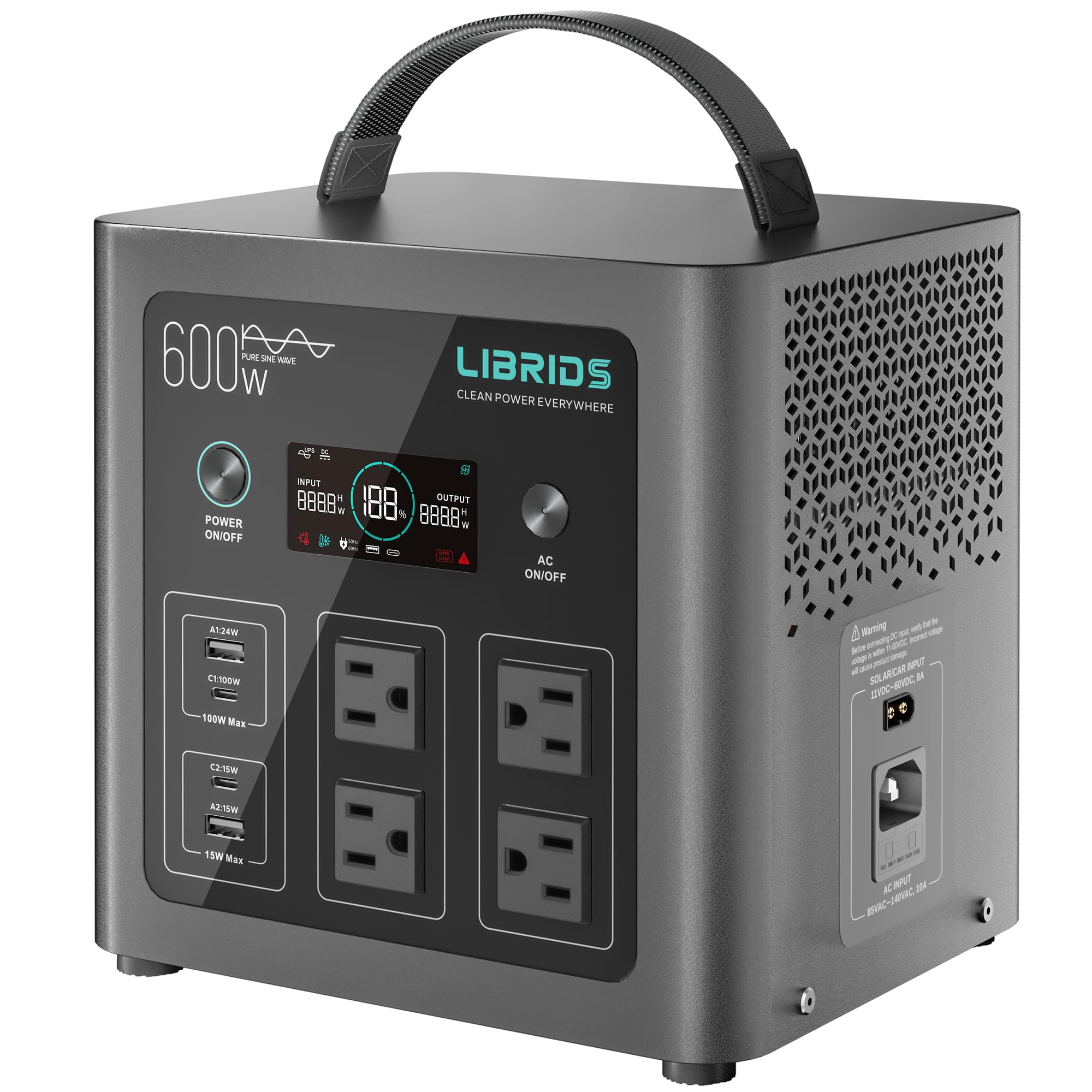
2. LIBRIDS Portable Power Station 640Wh
A small metal cube that makes CPAP sleep and internet uptime its entire personality
If your priority is keeping a CPAP and Wi-Fi router alive through a blackout, this 640Wh unit earns its place. It has a 600W continuous output with a 1,200W surge, and it packs four AC outlets—the most on any unit near this size, with a 33% wider outlet count than the Jackery Explorer 1000 v2 above. Its 10ms UPS (uninterruptible power supply—instant battery takeover when the grid drops) keeps routers and medical devices running without a blink.
The thing everyone raves about is the reliability—owners mention a CPAP ran for 7 hours using just 24% of the battery. A 45L fridge powered for 3 hours at roughly half capacity. It charges from empty to full in 1.5 hours, and the metal shell feels solid and sleek. Eight total ports let you charge two phones and two iPads at once.
The limit is clear: at 640Wh and 600W, this is not for fridges long-term or big appliances—a Keurig tripped it. It is best as a compact bedside and networking backup, not a whole-home solution. It is also labeled for indoor use, though dry, well-ventilated outdoor spots like campsites work fine.
value pick: overnight CPAP users and anyone who needs the router and phone charged through a short outage.
low wattage: running a full-size fridge or coffee maker—the 600W ceiling is the boundary.
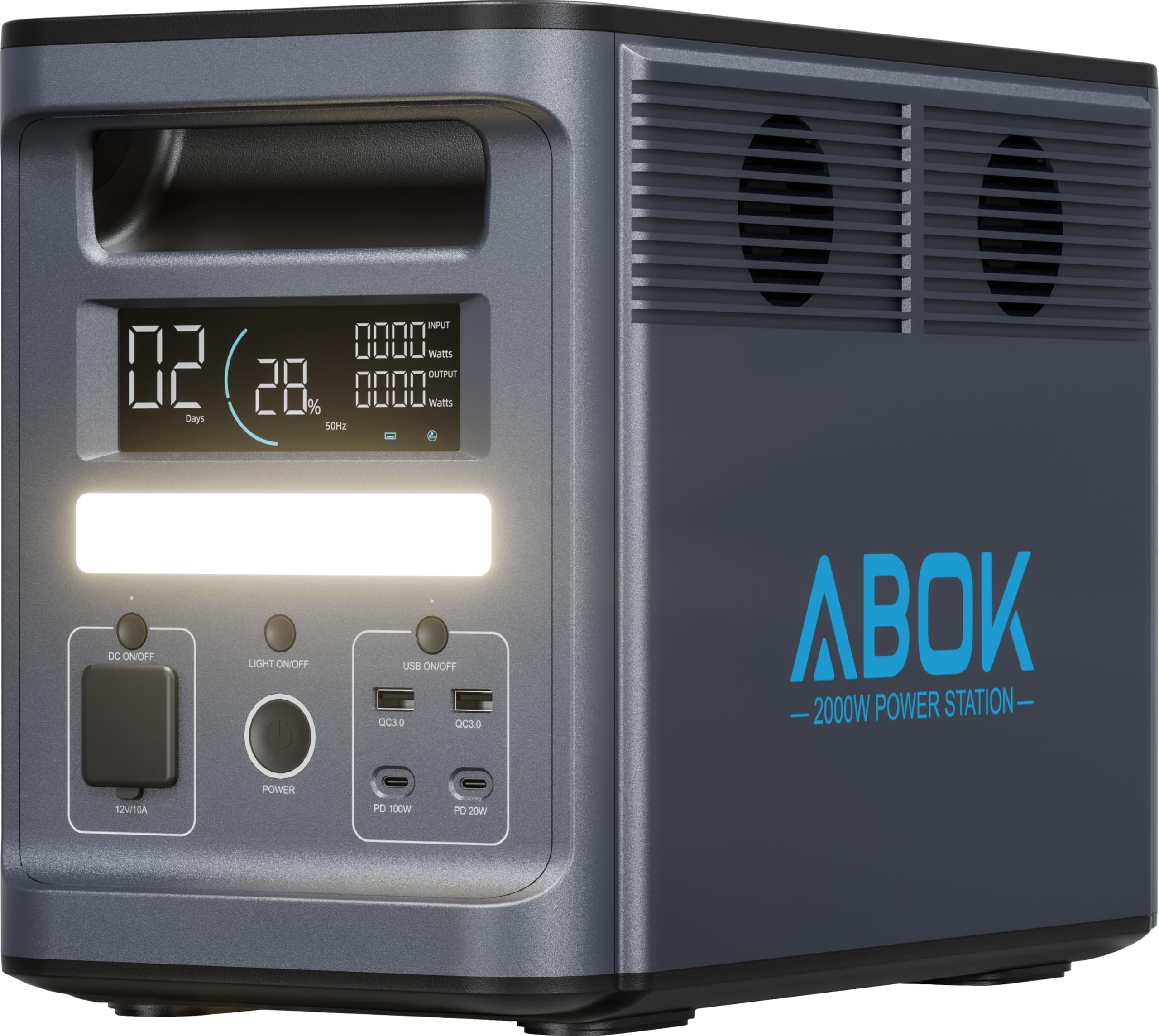
3. ABOK Ark2000 1536Wh
Starts at 1,536Wh, scales past 4,600Wh—a one-unit-now, whole-house-later strategy
The ABOK Ark2000 gives you a 2,000W continuous output on a 1,536Wh base, and it is the most future-proof option here because you can add expansion batteries to hit 3,072Wh or even 4,608Wh. That is a 2.4x capacity gap over the LIBRIDS above at 640Wh, and a 3.3x gap in raw output watts. It serves 2,000W across eight ports: three AC outlets, two USB-A, two USB-C, and a 12V car port.
Real outage experience is strong. During a 6+ hour outage, it powered three garage fridges smoothly and recharged quickly after. One buyer in Jamaica went four months without grid power—it charged phones, ironed clothes, boiled water, and ran a TV. Recharge to 100% takes as little as 80 minutes at up to 1,500W AC, and a built-in UPS (uninterruptible power supply—a system that switches to battery instantly) protects computers and medical gear within 10ms.
The trade-off is that the hefty cables restrict where you can place it, and one unit arrived with a defective battery—though the brand replaced it under warranty without hassle. Solar input reaches 1,200W, giving a full charge in about 1.6 hours on good sun. A full-size fridge 24/7 is beyond its reach, but for long outages and off-grid living it is a genuine workhorse.
capacity king: homeowners who want to start strong and grow capacity later with add-on batteries instead of buying a second unit.
space hog: the stiff, heavy cables before planning where it will sit, and budget for expansion batteries separately.
4. DABBSSON 2000L 2048Wh
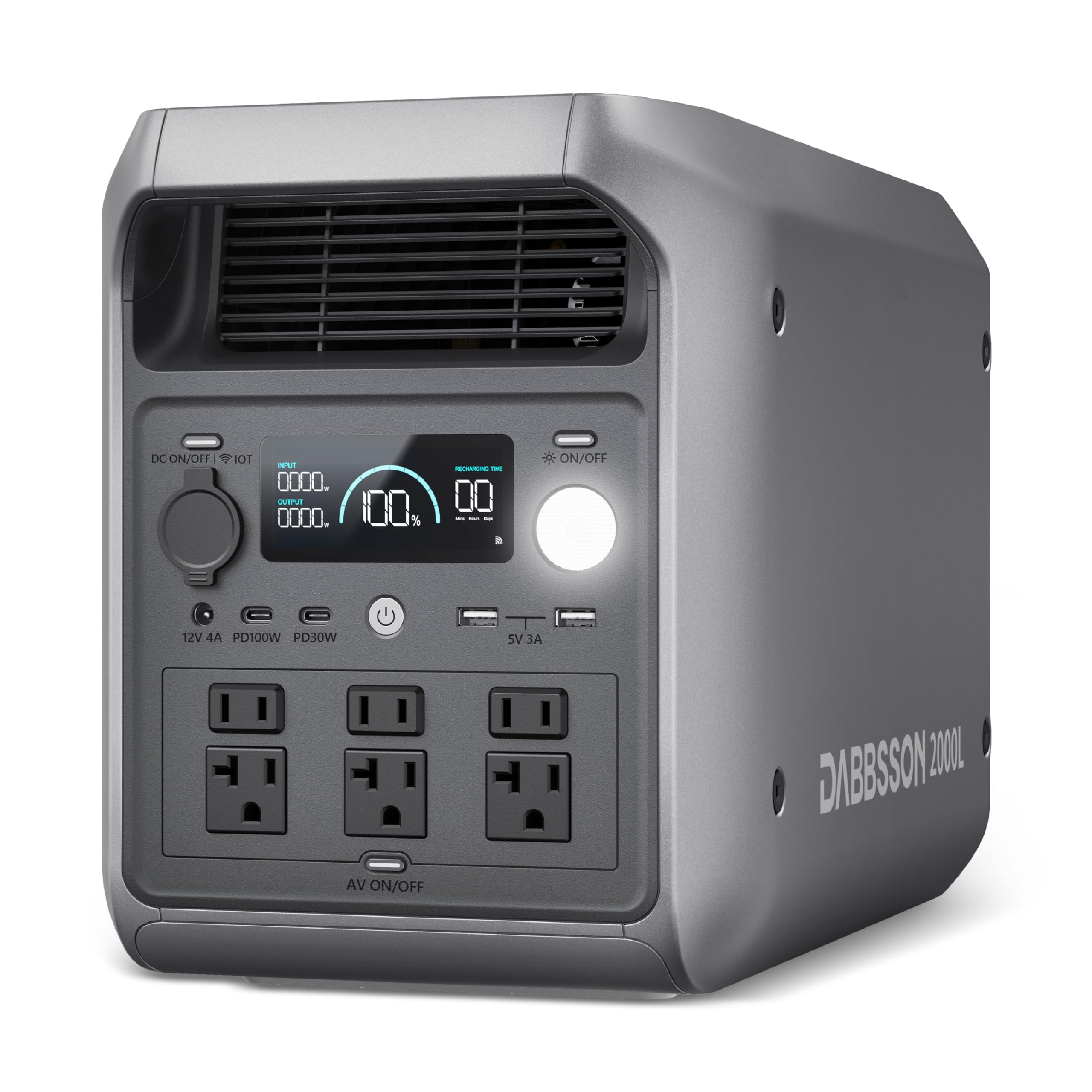
A 2,048Wh station that surges to 3,300W, so your microwave, heater, and power tools keep working
Most big stations cap their surge around 2,400W, but the DABBSSON 2000L pushes a 2,200W rated output up to a 3,300W power boost. That headroom is what lets it start a refrigerator, run heaters, grills, and even power tools that stall smaller units. Six AC outlets mean you can run several appliances at once during a home outage.
Buyers call it the best value in the 2,000Wh class, and the reliability is the most-praised trait. It runs an air fryer, microwave, and tools on the 2,200W continuous output. The 2,048Wh battery is rated for 1.3x longer runtime than comparable stations., and the semi-solid LiFePO₄ cells (a stabler form of lithium iron phosphate) come with a UL94-V0 flame-retardant housing. It recharges to full in just 1 hour on AC.
The recurring gripe is that the fan gets audible under heavy load at high wattage, and one reviewer noted the plastic shell feels flimsier than metal rivals. At 41 lbs it is lighter than most 2,000Wh stations, and the app lets you watch it remotely. An EPS (uninterruptible) switch under 10ms protects computers from data loss when the grid flickers.
long endurance: running heavy appliances and tools plus multiple outlets at once—the 3,300W boost is the headline.
slow refill: the fan noise at high loads and the plastic housing if you expect near-silent operation or metal toughness.
5. Anker SOLIX S2000
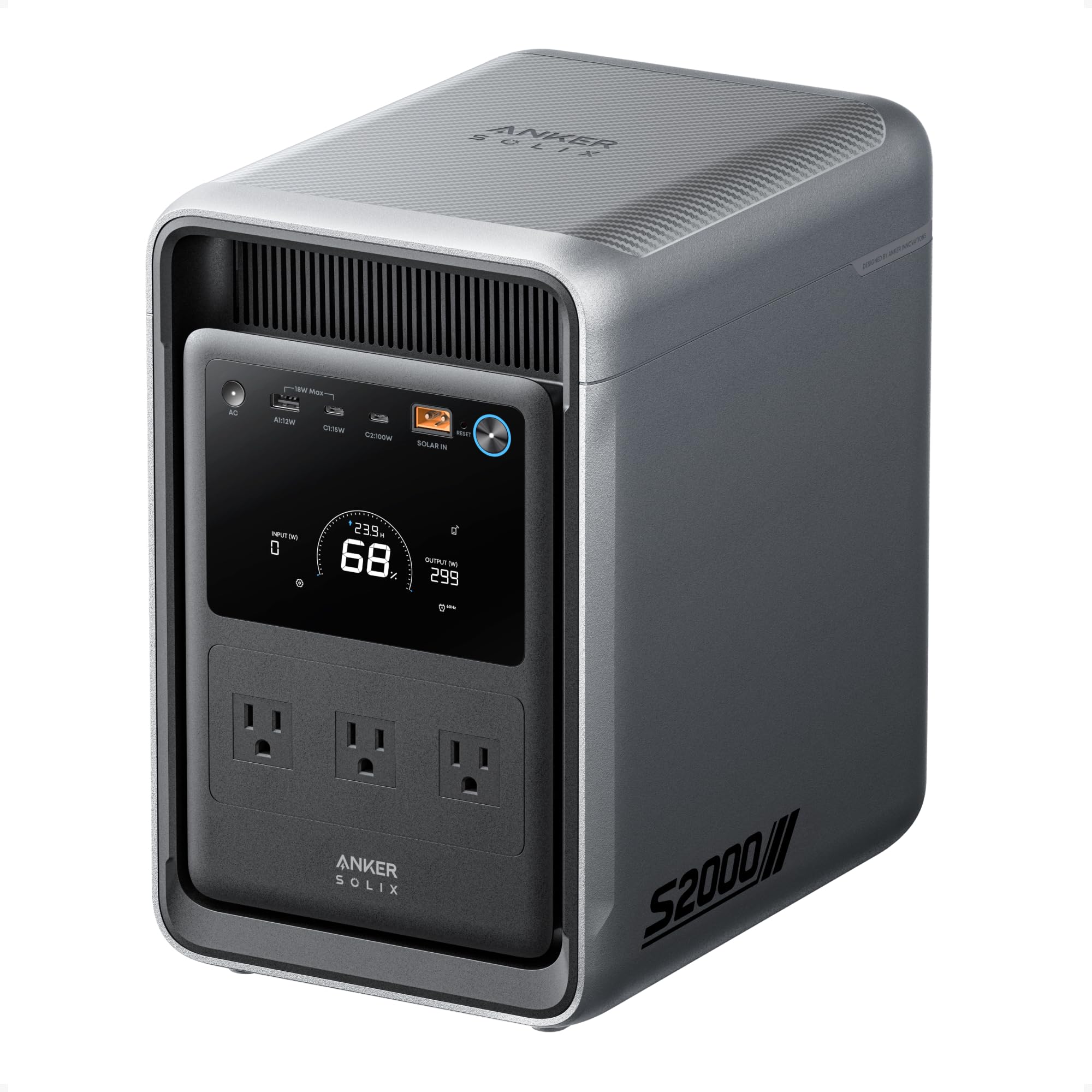
The most efficient pick—a 6W idle draw stretches its 2,010Wh into a 35-hour fridge run
If your biggest fear is losing the contents of your fridge, the Anker SOLIX S2000 is engineered for exactly that. Its 6W idle power draw and high-efficiency design let this 2,010Wh station run a fridge for up to 35 hours, which buyers confirmed in real outages. One stress test ran a 220L fridge at just 3% battery per hour. Through a 13-hour outage, a lamp, fridge, coffee, and a hot shower all ran with 30% left.
Its performance wins over buyers., and the 1,500W continuous output with 3,000W peak covers 99% of home essentials. It measures a compact 8.2 x 11.1 x 12.7 inches and weighs 35.7 lbs, making it one of the lightest 2,000Wh stations. Six ways to recharge include up to 400W solar, and the UPS switches in under 10ms to protect your computer.
The mixed feedback lands on noise—most find it very quiet, but the fan gets loud at high charging wattage, and one unit produced a burning smell on first charge that faded. It has no 12V DC port, so pure 12V car gear needs an adapter. A 13-hour outage with a window A/C for an hour left the battery around 80%, so real-world endurance holds up.
speedster: maximum fridge preservation in a compact, lighter-than-average 2,000Wh frame.
pricey: the fan at high charge rates gets noisy, and there is no 12V barrel port for direct 12V accessories.
6. EcoFlow DELTA 3 Max
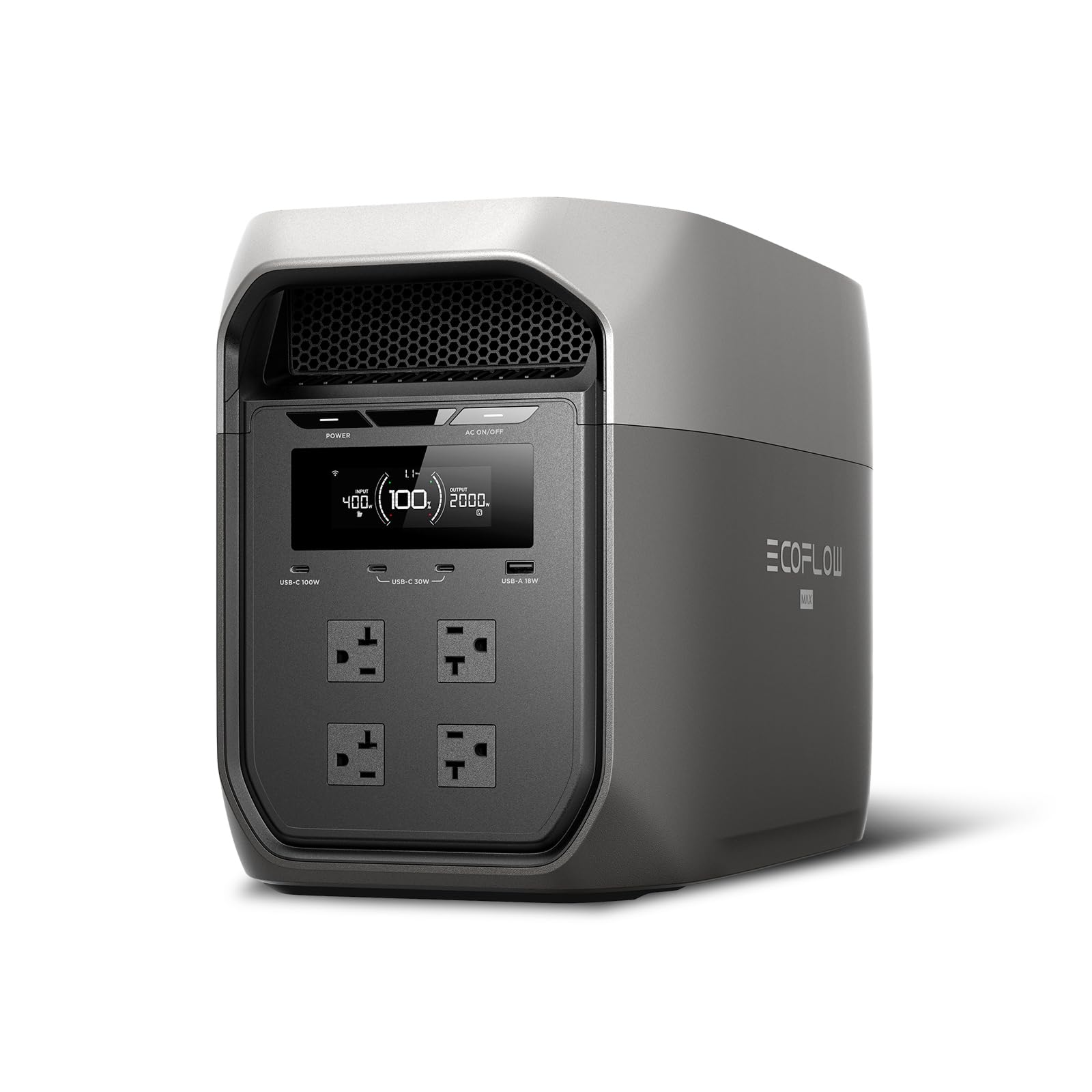
Recharges 0–80% in just 1.13 hours, so your backup is ready again almost before the outage ends
The EcoFlow DELTA 3 Max pairs a 2,048Wh LiFePO₄ battery with a 2,400W output and a 3,400W X-Boost surge mode. That X-Boost lets it run fridges, microwaves, and even power tools that would stall a standard 2,400W unit. Its 10ms transfer time protects sensitive electronics from even a flicker, and the ultra-quiet operation keeps nights peaceful.
The standout trait is charging speed—0 to 80% in 1.13 hours is remarkable for a 2,000Wh (watt-hour—a measure of energy capacity) class station, and buyers describe the battery as “lasting forever.” It runs most appliances across a home, making it a genuine whole-essentials backup. Solar input is supported for off-grid refills, and the EcoFlow app tracks usage and sets schedules.
The trade-off is weight—it is heavy, rated for reliability across outages but not exactly a carry-everywhere unit. Its dimensions (9.4 x 12 x 19.44 inches) demand floor space. Charging capability gets mixed feedback from buyers, so expect the fast times on the right AC input. For frequent-outage households, the fast recharge is the edge.
scalable power: the fastest recharge in its class, so a drained station is ready again within the hour.
large unit: the heavy, bulky footprint when planning where it lives between outages.
7. BLUETTI AC200L

The expandable 2,048Wh station with a 30A RV port that runs a whole motorhome
The BLUETTI AC200L is built for owners who want serious, expandable power. Its 2,048Wh core pushes 2,400W of output with a 3,600W power-lifting surge, and a 30A RV port lets it feed a motorhome’s entire electrical system. Customers note it runs everything in a motorhome, plus a 1,500W kettle and a 12,000 BTU air conditioner for 4 hours on solar alone.
The versatility is legendary here—capacity expands up to 8,192Wh by adding B300K, B210, or B300 battery packs. It recharges fast too: 0–80% in 45 minutes on a max 2,400W AC input, and a full charge in 1.7–2.2 hours off up to 1,200W of solar. Eleven ports include two 100W USB-C, USB-A, a 12V port, and the 48V/8A DC port for RV battery charging.
The honest limits are weight and price. At 61.4 lbs, reviewers point out it is very heavy—one calls it a two-person lift—and expansion modules add meaningful cost. Battery life draws mixed feedback, and one buyer mentioned the ~100 lb shipping weight. But the service story is strong: a failed unit was replaced fast with free pickup arranged. Fair for long weekend off-grid trips.
dependable: RV owners and off-grid users who want one station that can grow to 8,192Wh and feed an RV’s 30A system.
heavyweight: the 61.4 lb weight—this stays near a wall outlet or vehicle, not a carry-on.
8. Jackery Explorer 2000 v2

A 2,042Wh station light enough to move, tough enough to keep a fridge and freezer cold for 3 days
The Jackery Explorer 2000 v2 is the bigger sibling that delivers whole-fridge endurance. With 2,042Wh and 2,200W across three AC ports, shoppers say keeping refrigerators and freezers running up to 3 days without a charge. Through a 30-hour outage, each full charge lasted about 10 hours and recharged in roughly 2. It also ran a medium fridge, large fan, and dehumidifier simultaneously.
At 39.5 lbs, it is 41% lighter and 34% smaller than typical 2kWh LiFePO₄ stations, using the same CTB (Cell-to-Body) tech found in EVs. Charging is fast: 0–80% in 66 minutes on AC, full in 102 minutes in emergency super-charging mode, or about 6 hours on 400W of solar. A silent charging mode runs at under 30dB—quieter than a whisper—and a 20ms UPS switch keeps essentials running through storms.
The main gripe buyers flag is the app—Bluetooth connection reliability is inconsistent, and one electrical engineer found effective capacity below rated due to idle power loss, though a second test fell closer to spec. The solar barrel ports flex inward when plugged, so the frame needs care. For quieter, simpler backup than a 7,000W gas generator, this is a strong pick.
big battery: homeowners who want multi-day fridge and freezer protection in a unit that is easy to move between rooms.
slow top-up: the app can be finicky, and the solar ports feel less sturdy than the rest of the build.
9. Anker SOLIX C2000 Gen 2
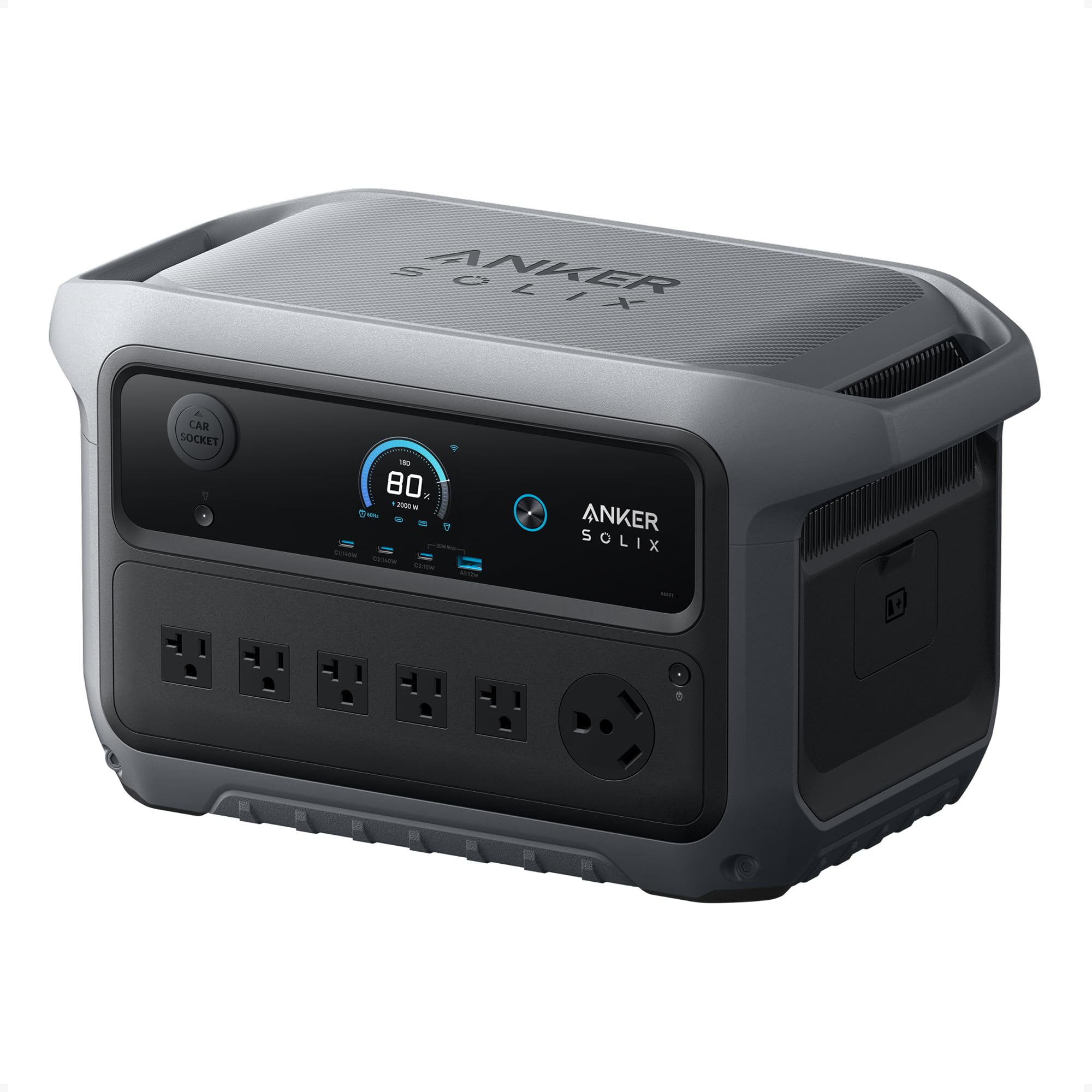
A 2,048Wh unit with a 4,000W peak that runs window A/Cs and powers tools with ease
The Anker SOLIX C2000 Gen 2 is the appliance-runner of the list. Its 2,400W rated output jumps to a 4,000W peak, which handles most window and RV air conditioners—something few stations can claim. Buyers ran a miter saw, drill, and charged tool batteries without issue, and a camper ran an A/C for 1.5 hours with the fridge lasting days.
Efficiency is this unit’s trademark: just 9W on standby lets it power a dual-door fridge up to 32 hours, and adding an expansion battery pushes that to 64 hours at 4kWh. It recharges from empty to full in 58 minutes on AC, or in 3 hours via an 800W alternator connection—8x faster than a standard car socket. At 41.7 lbs it is 25% lighter and 29% smaller than similar products.
Buyers report the weight as mixed—it is still a 41.7 lb box that often ends up on a wheeled case. The app’s runtime estimates run inaccurate for cycling appliances like fridges. A unit damaged in transit was replaced promptly, which says good things about support. For powering real appliances through outages, this is among the most capable picks.
portable choice: you want to run window A/Cs, power tools, and a fridge from a single 4,000W-peak station.
limited power: to treat the 41.7 lb weight seriously—plan a wheeled cart for regular use.
10. BLUETTI Elite 200 V2

A 2,073.6Wh station rated for 6,000 charge cycles—buy it once, use it for over a decade
The BLUETTI Elite 200 V2 is the longest-lasting option here. Its automotive-grade LiFePO₄ battery (a premium battery chemistry) is rated for over 6,000 cycles before dropping to 80% capacity., that translates to a claimed 17-year lifespan with daily use.. Buyers call it the best power station they have owned, noting substantial power in a compact 50 lb package.
Output is strong: 2,600W continuous with a 3,900W power-lifting surge, running induction stoves, air fryers, pressure cookers, dishwashers, and a 3D printer all at once. Its ~10W standby draw is 3x lower than similar stations, so less energy is wasted when idle. A 60W diesel heater running 10 hours a day lasts 3.3 days. Fast charging hits 0–80% in 50 minutes with dual AC and DC input.
The honest notes: charging speed gets mixed feedback—some find it fast, others slow—and the weight is flagged as maybe too bulky by some buyers. It is non-expandable, with a 1,000W/60V solar limit, and it lacks a 30A RV port. The buttons feel rubbery and there is no 30A 12V output. For daily, long-term use rather than occasional outages, this is the value pick of the premium tier.
safe cells: daily off-grid or frequent-outage use where the 6,000-cycle, 17-year lifespan pays off.
few ports: it is not expandable and lacks an RV port—it is a fixed-capacity powerhouse, not a grower.
11. EcoFlow DELTA Pro 3600Wh
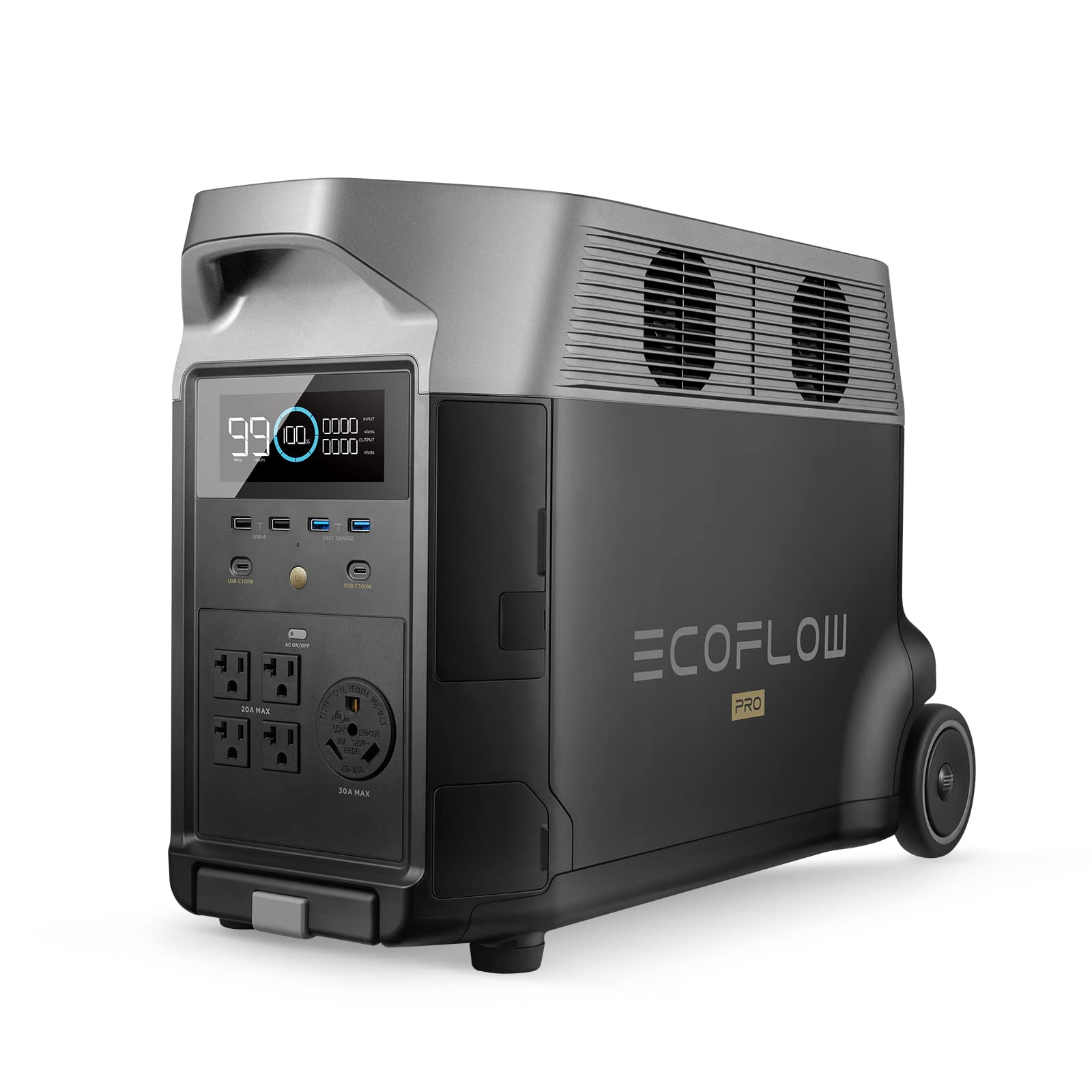
A 3,600Wh giant that scales to 25kWh, so a serious outage barely registers
For households that want true whole-home backup, the EcoFlow DELTA Pro is the flagship choice. It stores 3,600Wh and delivers a 3,600W AC output that expands to 4,500W with X-Boost, and two units can pair for 7,200W. With extra batteries or a smart generator, capacity grows from 3.6kWh all the way to 25kWh—enough to carry a home through days, not hours.
Buyers run heat presses at vendor markets flawlessly on its 5 AC outlets, and one ran a fridge and lights overnight with 30% left. Recharge from empty takes 1.8 hours on a 240V outlet, 2.7 hours on a standard 180V wall outlet, or 2.8 hours off four 400W solar panels. The app tracks every device and power source, and it can even top up an EV.
One unit shipped with a torn box and was non-returnable, though buyers still recommend turning breakers off before connecting to avoid injury. Fifteen output methods cover everything from USB to an Anderson port. This is the endgame for home backup.
powerhouse: whole-home or serious off-grid setups where multi-day capacity and 3,600W are non-negotiable.
hard to move: a 99 lb unit that belongs on a cart, plus fan noise at high draw—this is not a bedside device.
Understanding the Specs
Watt-Hours (Wh) vs Watts
Watt-hours tell you the total fuel tank—how much energy the station stores overall. Watts tell you the size of the pipe—how much power it can push at any single moment. A fridge might need 150W to run but 600W to start, so you need both a big enough tank (Wh) and a wide enough pipe (surge watts).
LiFePO₄ vs Other Batteries
LiFePO₄ (lithium iron phosphate) is the battery chemistry behind most modern stations. It lasts thousands of charge cycles before dropping to 80% capacity and runs cooler than older lithium-ion cells.. It costs a little more but is the standard for home backup because you charge and drain it regularly for years.
FAQ
How long will a battery powered generator run a refrigerator?
Can a battery powered generator run a window air conditioner?
What does the UPS function do in a power station?
Is it safe to use a battery powered generator indoors?
How long does a LiFePO₄ battery last?
Can I recharge a battery powered generator with solar panels?
What size battery powered generator do I need for home backup?
Can I expand the capacity of a power station later?
Final Thoughts: The Verdict
Across the board, the battery powered generator for home winner is the Jackery Explorer 1000 v2 because it balances a 1,070Wh capacity, 1,500W output, and 23.8 lb portability with proven real-world reliability. If you need multi-day fridge protection, the Jackery Explorer 2000 v2 holds refrigerators and freezers for up to 3 days. And for truly serious whole-home backup, the EcoFlow DELTA Pro scales to 25kWh and runs heavy appliances around the clock.
How We Picked
We do not accept paid placement. Every pick is matched to a real buyer and a real use-case; we do not hands-on test units.
Sources & Methodology
Specifications: manufacturer listings and product documentation. Review insights: verified customer reviews, as of September 2026. Pricing: not shown on this page (it changes often); check the current price via the retailer link.
As an Amazon Associate, Gadgets Feed earns from qualifying purchases. This does not affect which products we feature.