
The beep that wakes you at 3 a.m. from burnt toast isn’t just annoying—it trains you to ignore the one alarm that matters. A combination smoke and carbon monoxide detector solves two threats with one device, but the wrong choice means nuisance trips, confusing chirps, or a dead battery exactly when you need it loudest. Battery-powered units eliminate electrician visits and work during power outages, making them the standard for every home.
I’m Min — the co-founder and writer behind Gadgets Feed. I’ve spent countless hours comparing sensor technologies, battery chemistries, and false-alarm rates across the latest UL-certified combo alarms to find the units that actually deliver on their 10-year promises.
This guide breaks down six top-rated, battery-powered smoke and CO detectors that balance real-world sensitivity with installation ease. Whether you’re replacing expired units or outfitting a new home, these picks cover every scenario you’ll face when shopping for a battery powered smoke and carbon monoxide alarm.
How To Choose The Best Battery Powered Smoke And Carbon Monoxide Alarm
Every combo alarm on this list is battery-powered and UL-certified, but subtle differences in battery chemistry, sensor type, and user feedback separate a set-it-and-forget-it unit from one that chirps annoyingly in month three. Focus on three factors.
Sealed Lithium vs. Replaceable AA Batteries
Sealed lithium batteries promise a full decade of power with zero user swaps, but the entire unit must be discarded when the battery dies. Replaceable AA packs let you refresh power without tossing the hardware, though you risk forgetting to change them. For most homeowners, the sealed lithium design eliminates the single largest failure point: human forgetfulness. Look for units advertising a 10-year battery life and an end-of-life chirp that triggers six months before total shutdown.
Sensor Technology and False Alarm Behavior
Photoelectric sensors respond faster to smoldering, smoky fires and are far less likely to trigger from cooking steam than older ionization sensors. Electrochemical sensors handle carbon monoxide detection. Some mid-range and premium models now include Precision Detection or proprietary algorithms that analyze sensor data over several seconds before sounding an 85 dB alarm—this is the single biggest factor in nuisance alarm reduction. Read real user reviews for phrases like “goes off when frying fish” to gauge false-alarm frequency.
Voice Alerts and Status Indicators
A standard beep tells you something is wrong, but voice alerts that announce “Fire” or “Warning, Carbon Monoxide” cut reaction time significantly, especially for children or elderly occupants. LED status lights—green for normal, amber for error, red for alarm—help you diagnose issues without climbing a ladder. Units with an LCD screen add real-time CO concentration readouts, which are helpful if you live near attached garages or gas appliances.
Quick Comparison
On smaller screens, swipe sideways to see the full table.
| Model | Category | Best For | Key Spec | Amazon |
|---|---|---|---|---|
| X-Sense SC06 | Mid-Range | Best Overall Value | Sealed Lithium, 10-Year | Amazon |
| X-Sense XP0H-SN | Mid-Range | Real-Time CO Readout | LCD Display, 10-Year | Amazon |
| First Alert SMCO100 | Mid-Range | Trusted Brand Simplicity | Precision Detection, AA | Amazon |
| First Alert SMICO100 | Premium | Premium False Alarm Rejection | Precision Detection, 9V | Amazon |
| Kidde 30CUDR-V | Premium | Voice Alerts for Quick Response | Voice, 85 dB, AA | Amazon |
| Kidde 900-CUDR-V | Premium | Self-Testing Reliability | 24/7 Self-Test, AA | Amazon |
In‑Depth Reviews
1. X-Sense SC06
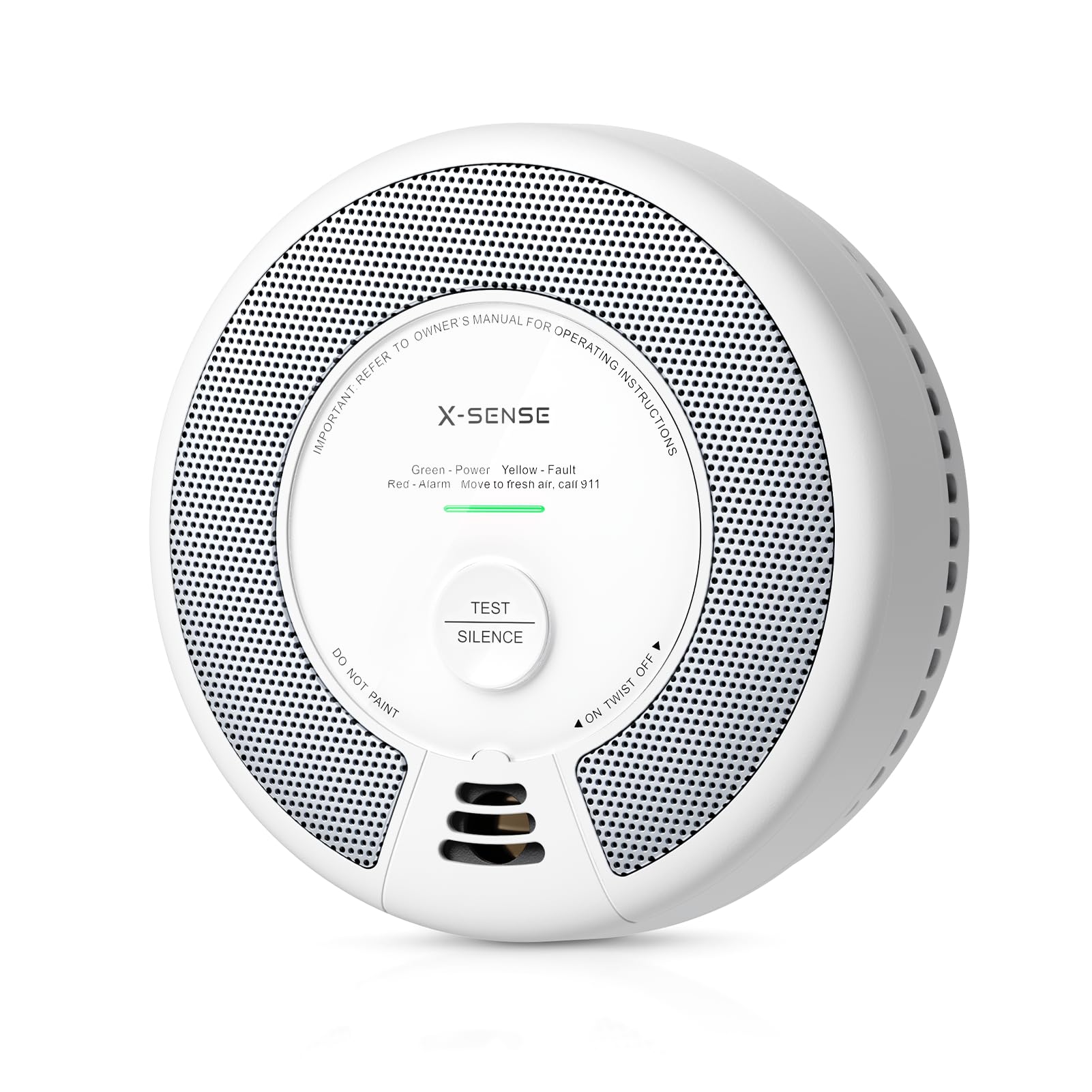
The X-Sense SC06 earns the top spot because it nails the most important job of any battery-powered combo alarm: deliver a sealed 10-year lithium battery with zero maintenance at a price that undercuts almost every competitor. The 85 dB siren fires from upgraded photoelectric and electrochemical sensors that respond faster to both smoldering smoke and CO buildup while actively filtering out false triggers from cooking or shower steam. Heat-resistant PC plastic construction and a simple one-button test/silence interface make installation and daily operation trivial.
Customer reports confirm the SC06 is loud enough to wake heavy sleepers, with multiple verified buyers replacing five or more units across their homes at once. The 5.7-inch footprint matches standard ceiling cutouts, so you won’t need to patch drywall or drill new holes. One reviewer noted a single unit triggered a CO nuisance alarm at 14 months, but the defect was isolated—four other identical units in the same home performed flawlessly. The 60-day money-back guarantee and 5-year warranty add a layer of confidence rarely seen at this price tier.
For anyone who wants a fire-and-forget safety solution without monthly battery checks or wiring, the SC06 is the default recommendation. The value proposition is simple: one purchase, ten years of protection, no excuses.
Why it’s great
- Sealed lithium battery eliminates battery swaps for a full decade
- Upgraded sensors reduce false alarms from daily cooking
- Heat-resistant PC housing feels solid compared to flimsy budget units
Good to know
- Rare unit defects reported—check warranty coverage before discarding
- No LCD display for real-time CO concentration readout
2. X-Sense XP0H-SN
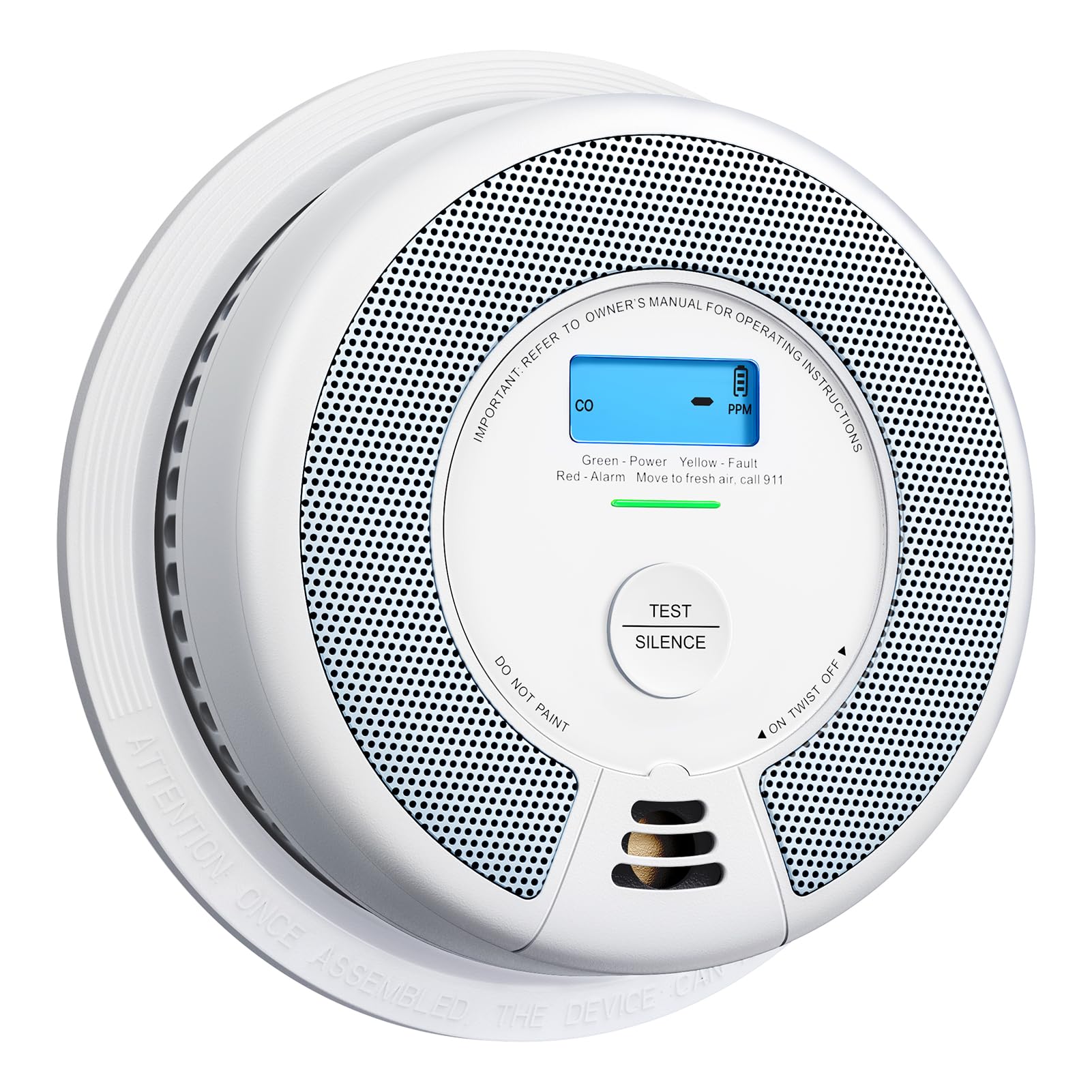
The X-Sense XP0H-SN differentiates itself with an integrated LCD that shows real-time carbon monoxide levels and remaining battery life, a feature usually reserved for units that cost significantly more. The screen stays dark during standby to avoid disturbing sleep but lights up immediately during an alarm or test, giving you actionable data—like whether a rising CO reading means evacuation or just a false trigger from a warming car in the attached garage. The same 10-year sealed lithium battery and UL 217/UL 2034 certification underpin its safety claims.
One standout hardware detail is the extra-large 5.7-inch mounting bracket that covers old screw holes and ceiling stains from previous detectors. This makes the XP0H-SN a strong choice for landlords or homeowners replacing hardwired units that left behind unsightly wall damage. The self-test function checks sensors, electronics, and battery every 60 seconds, and multiple verified buyers have installed whole-home sets of nine or more units with consistent performance.
This unit does not support wireless interconnection or Wi-Fi connectivity—it’s a standalone device by design. If you need a networked system, X-Sense offers the XP0H-WN variant. For anyone who wants to visually confirm CO levels at a glance without pulling out a separate monitor, the XP0H-SN delivers that insight at a mid-range price.
Why it’s great
- LCD screen shows live CO concentration and battery status
- Large mounting bracket hides imperfections from older hardware
- 60-second self-test cycle verifies all systems continuously
Good to know
- No wireless interconnect or smart home integration
- LCD only activates during alarms—no always-on readout option
3. First Alert SMCO100

First Alert’s SMCO100 brings the brand’s Precision Detection technology to a battery-operated combo unit, a feature designed to reduce nuisance alarms from cooking and steam while still providing fast warning during an actual fire. The 5.6-inch round form factor uses standard AA batteries (included in the box) instead of a sealed lithium pack, so you can refresh power without discarding the entire alarm at the 10-year mark—though you do lose the convenience of a decade-long no-maintenance battery. The test/silence button is large and responsive, and the end-of-life warning chirp gives you a clear six-month window to order a replacement.
Long-time homeowners in the review pool consistently cite First Alert as their go-to brand, with one family using the brand exclusively for over 40 years across multiple homes. The SMCO100’s performance is straightforward: install it, test it monthly, and trust that the Precision Detection algorithm will ignore your morning toast while catching a real smoldering fire. A few users noted the unit can still trigger from uncovered frying pans, which is expected behavior for any photoelectric sensor placed near a kitchen.
If you prefer the flexibility of replaceable batteries and want a brand with decades of safety-product pedigree, the SMCO100 is the sensible middle-ground pick. It lacks the LCD or voice features of higher-priced models, but it delivers the core function without complexity or premium markup.
Why it’s great
- Precision Detection technology actively reduces cooking-related false alarms
- Replaceable AA batteries let you keep the unit alive without replacing hardware
- Trusted brand reputation with consistent long-term customer loyalty
Good to know
- Standard AA batteries require periodic replacement
- May still false-alarm from heavy grease frying without a lid
4. First Alert SMICO100

The First Alert SMICO100 shares the same Precision Detection platform as the SMCO100 but uses a 9-volt battery and a redesigned base plate that offers multiple mounting hole configurations, making it a go-to choice for replacing older ceiling-mounted units with non-standard screw patterns. The 10.56-ounce weight and 5.6-inch diameter feel substantial, and the 10-95% non-condensing humidity tolerance means it performs reliably in bathrooms or near laundry rooms where steam is common. The end-of-life warning system is identical to the SMCO100, giving you ample notice before the unit expires.
Verified buyers consistently praise the SMICO100 for its easy adaptation to existing ceiling holes, with several noting that the multiple slot options saved them from patching drywall or drilling new pilot holes. This makes it a top-tier pick for property managers or owners of multi-unit buildings where previous detectors left a mess. The test button and silence function are straightforward, and the device operates reliably in RVs where temperature swings and humidity vary widely.
The premium price over the SMCO100 is justified almost entirely by the improved mounting flexibility and the slightly higher durability feel. If you’re replacing a single unit and your current holes line up with standard 3-inch spacing, the SMCO100 is the better value. But for retrofit scenarios, the SMICO100 saves measurable installation time and frustration.
Why it’s great
- Multiple base-plate hole patterns simplify replacement of any brand’s old hardware
- Wide humidity tolerance range works in bathrooms and basements
- Precision Detection reduces false alerts while maintaining rapid real emergency response
Good to know
- 9V battery must be replaced manually every few years
- Long-term false alarm behavior not yet established by long-term reviewers
5. Kidde 30CUDR-V

The Kidde 30CUDR-V is the first unit on this list to combine voice alerts with enhanced sensing technology that the manufacturer claims delivers over 25% faster smoke detection compared to standard models. When the alarm triggers, the unit doesn’t just beep—it speaks: “Fire” for smoke events, “Warning, Carbon Monoxide” for CO events, and “Low Battery” when the two included AA batteries are running out. The 85-decibel alarm pairs with a flashing red LED to provide a clear visual and audible warning that even sleeping occupants can interpret immediately.
The 5-inch diameter is noticeably smaller than the 5.6-inch X-Sense and First Alert units, which helps if you’re installing in tight hallway ceiling spaces. The 10-year limited warranty from the date of purchase adds peace of mind, though the battery itself is replaceable—so you could theoretically run this unit for well over a decade with periodic AA swaps. UL 217 10th Edition and UL 2034 5th Edition compliance means it meets the latest safety standards for smoke and CO detection.
Customer experiences are split: most users love the voice feature and find installation simple, but a small number report false alarms or units failing within a few months. The mixed feedback is worth noting, though Kidde’s brand recognition and the specific “Fire” vs. “Carbon Monoxide” voice distinction make this a compelling choice for households with children or elderly occupants who might not recognize a generic beep pattern.
Why it’s great
- Clear voice announcements identify the specific hazard type immediately
- Compact 5-inch form factor fits tighter ceiling spaces
- Enhanced sensing aims for faster smoke detection than standard units
Good to know
- Some units reported false alarms or early failure within months
- Manufacturer customer service response times can be slow
6. Kidde 900-CUDR-V

The Kidde 900-CUDR-V offers essentially the same feature set as the 30CUDR-V—voice alerts, 85 dB siren, AA battery operation—but adds 24/7 self-testing that continuously monitors the device’s sensors, electronics, and battery level. It does not replace the monthly manual test that safety codes recommend, but provides an extra layer of passive oversight between those tests. The voice alert system is identical, announcing “Fire” or “Warning Carbon Monoxide” based on the detected hazard, plus a “Low Battery” message when the two AA batteries need replacement.
The photoelectric sensor handles smoke from slow, smoldering fires, while the electrochemical sensor targets carbon monoxide. LED indicators give a glanceable status: green for normal operation, amber for a detected error, and red during an active alarm. The mounting bracket supports four orientations for flexible placement, and the 10-year limited warranty on the alarm itself (not the batteries) provides a defined lifespan. As with the 30CUDR-V, the unit meets UL 217 10th Edition and UL 2034 5th Edition requirements.
User feedback mirrors the sibling model: easy installation and clear voice alerts are the highlights, but isolated reports of units chirping a fault code within 3-4 months exist. The self-test feature might catch these issues earlier than a standard unit would, potentially saving you from a dead detector masquerading as a working one. For homeowners who want maximum passive safety checks and voice differentiation, the 900-CUDR-V is the logical upgrade from the 30CUDR-V.
Why it’s great
- 24/7 self-test automatically verifies sensors and battery between manual checks
- Voice alerts with color-coded LEDs provide clear hazard identification
- Four mounting orientations offer flexible installation options
Good to know
- Self-test does not replace the recommended monthly manual push test
- Early failure reports similar to sibling model—verify batch date on purchase
FAQ
How often should I physically test a battery-powered smoke and CO alarm?
Can I install a battery-powered combo alarm in a kitchen without triggering false alarms constantly?
What does the end-of-life warning sound like on these detectors?
Final Thoughts: The Verdict
For most users, the battery powered smoke and carbon monoxide alarm winner is the X-Sense SC06 because it delivers a sealed 10-year battery, reliable sensor performance, and a price that makes whole-home replacement affordable. If you want real-time CO level readouts at a glance, grab the X-Sense XP0H-SN with its integrated LCD screen. And for households that need voice alerts to differentiate between fire and CO hazards, nothing beats the Kidde 30CUDR-V for speed of occupant response.