
Our readers keep the lights on and my morning glass full of iced black tea. As an Amazon Associate, I earn from qualifying purchases.
Specs are compiled from manufacturer listings and verified buyer reviews and can change over time — please confirm the key details on the product page before buying.
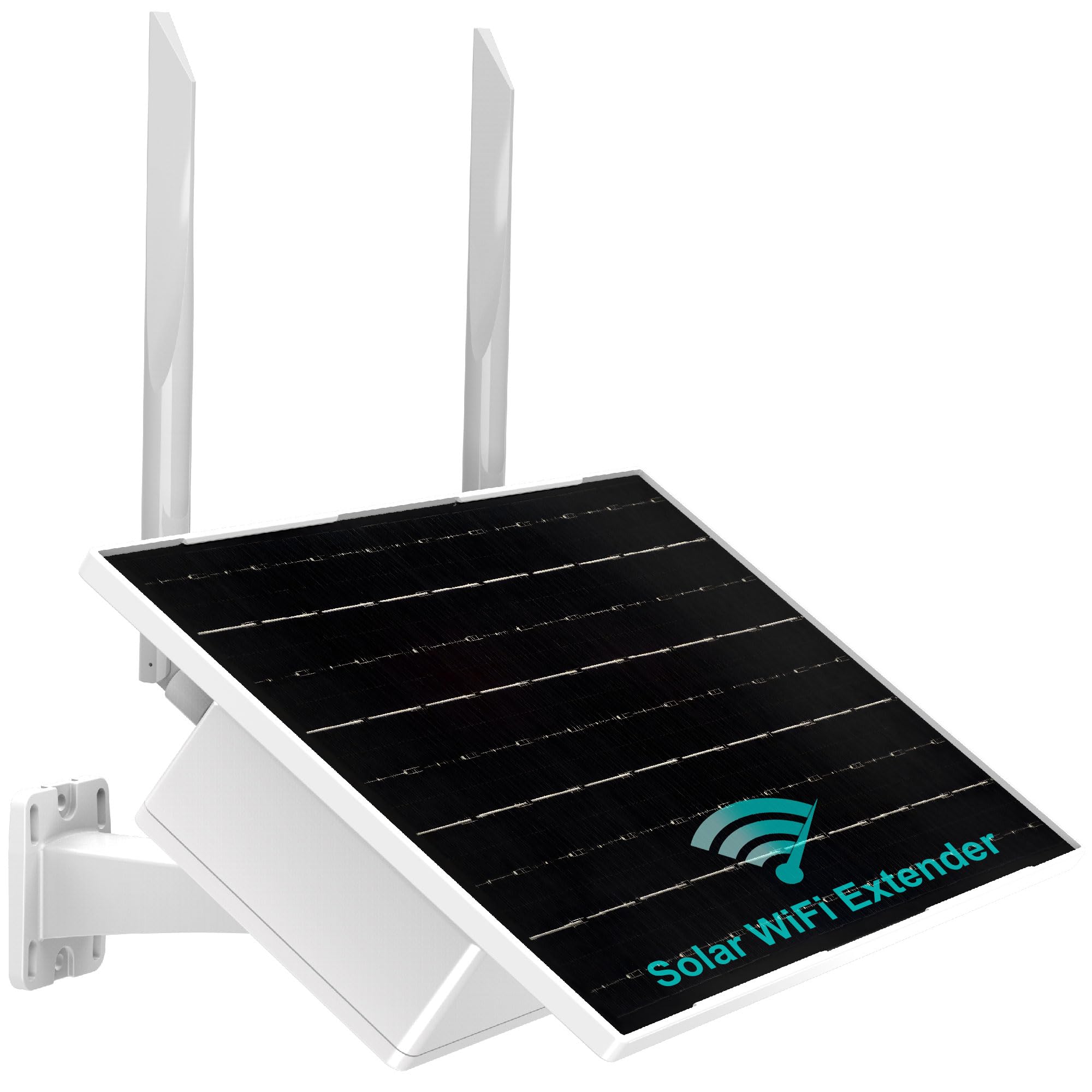
If your home WiFi dies the moment you step into the yard, the garage, or a campsite, you don’t need a stronger router — you need a gadget that keeps running where there isn’t a power outlet. A battery powered WiFi extender is the fix for dead zones in places like sheds, farms, and RVs, because it runs on its own juice and works with the router you already have. The challenge is picking one that actually holds a signal and doesn’t need recharging every day.
I’m Min — the founder and writer behind Gadgets Feed. This guide is built by comparing the manufacturers’ published specifications and the patterns across verified customer reviews, so you get each pick’s real strengths and trade-offs instead of marketing spin.
if you need to connect a security camera at the far end of a field or get online in a camper van, the right battery powered wifi extender means you never have to worry about finding an outlet to stay connected.
Our Picks at a Glance

How To Choose The Best Battery Powered WiFi Extender
Buying a battery powered WiFi extender is different from picking a normal plug-in one. You are choosing between two very different designs: a solar-powered outdoor unit that lives on a wall, or a portable hotspot you carry in a bag. The wrong pick will leave you with no signal when you need it. Here is what separates a winner from a dud.
Battery Capacity — The Simple Number That Predicts Everything
The battery capacity, written in mAh (milliamp-hours), is the single biggest clue to how long your extender will last before it needs more sun or a USB charger. A portable hotspot with a 2100mAh battery is fine for a single day of light use. A solar-powered extender with a 27000mAh battery can run for days even in cloudy weather. Bigger batteries also weigh more, so if you plan to carry the device, you will feel the difference.
Signal Range — Why The Number On The Box Is Always Optimistic
Manufacturers list ranges like 300 feet or 500 feet, but those numbers are measured in open space with no walls. In real life, expect about half that distance. A 2.4GHz signal (the only frequency nearly all these battery extenders use) travels farther through walls than 5GHz does, but it is still blocked by thick concrete or metal siding. If you need to reach a building 200 feet away, pick a model that claims at least 400 feet — the extra margin helps.
Solar vs. Portable — Each One Lives In A Different Place
Solar-powered extenders are meant to be mounted outside in direct sunlight. They are heavy, weatherproof, and never need to be moved. Portable hotspots are small, light enough for a pocket, and run on a battery you charge indoors. The two are not interchangeable. Do not buy a solar extender for a road trip, and do not expect a pocket hotspot to power a security camera all week.
Quick Comparison
| Model | Best For | Battery | Range | Speed | Amazon |
|---|---|---|---|---|---|
| RoamWiFi R10 (Product 1)★ Best Overall | Global travel & multi-device | 27000mAh | ~15 ft | 150 Mbps | Amazon |
| AQUZO Outdoor (Product 4)Also Great | Off-grid outdoor 24/7 use | 27000mAh | 200 ft | 300 Mbps | Amazon |
| AT&T Turbo Hotspot 3 (Product 3)Caravan Ready | AT&T network, 16 devices | 3000mAh | 30+ ft | 1000 Mbps (LAN) | Amazon |
| GULZIIYA Solar (Product 7) | Yard/workshop coverage | 26000mAh | 300 ft | 300 Mbps | Amazon |
| Tigerpai Solar (Product 8) | Farm/barn long range | 26000mAh | 492 ft | 300 Mbps | Amazon |
| VERVERAY Solar (Product 6) | Security cameras, large properties | 20000mAh | 500 ft | 150 Mbps | Amazon |
| LCLCTEK Solar (Product 5) | Budget solar for basic IoT | 26000mAh | 300 ft | 300 Mbps | Amazon |
| ciciglow Pocket (Product 2) | Emergency last resort | 2100mAh | ~15 ft | 150 Mbps | Amazon |
In‑Depth Reviews
1. RoamWiFi 4G LTE Mobile Hotspot Router (Product 1)
Our pick — 4.5★ from 2,000+ verified ratings; the strongest balance of quality and price.
The pocket-sized global hotspot that works in over 170 countries without a SIM card.
This is a different beast from the solar units above. The RoamWiFi R10 is a portable hotspot, not a mounted extender, and it connects via 4G LTE rather than boosting an existing router’s signal. It ships with 1GB of US data pre-loaded so you can power it on and go. It supports up to 10 simultaneous devices, which is handy for a family or a small work team on the road.
At 0.28 kg, it is heavier than the ciciglow, which weighs 0.11 kg — but the payoff is a much bigger battery and a stronger build. Its data speed tops out at 150 Mbps over a 2.4GHz connection. What wins owners over is reliability: it is the top-rated aspect by a huge margin, with 680 positive mentions. The device is described as “fast enough for everyday use” and works well for remote work in rural areas. The catch is the range. As buyers report, “only downside: limited range (~10-15 ft radius); cannot connect across different house levels.” That is fine for a hotel room or a coffee shop, but do not expect it to cover a large house. A one-time data plan purchase is also required after the initial 1GB runs out — ongoing costs are not zero.
What wins people over
- Reliable, fast connection for remote work and travel — the thing owners praise most, by a wide margin
- Compact and light enough for a pocket, with long battery life for a full day of use
- No contract and no SIM card to swap — buy the device, pick a data plan, and go
The real-world trade-off
- Short range of about 10-15 feet means you have to be in the same room as the device
- Requires an ongoing data plan purchase after the initial 1GB — not a one-time cost
Reach for this if: you travel internationally, work remotely from hotels or cafes, and want a reliable connection without juggling local SIM cards.
skip it if: you need to cover a whole house or connect devices across different floors — the range is simply too short.
2. AQUZO Outdoor WiFi Extender Solar Powered (Product 4)
The solar-powered extender that keeps running even when the sun hides for a week.
This is the one you mount on a fence or a shed and forget about. It uses a 12W solar panel and a 27000mAh battery — enough juice, the maker says, to run continuously for 7 days even in cloudy or rainy weather. This battery has 27000mAh, while a tiny portable hotspot often has 2100mAh; so you get real 24/7 operation without touching a cable.
Setup is entirely wire-free. You mount it in direct sunlight, connect it to your existing 2.4GHz router through a web interface, and it boosts that signal to cover your yard, farm, or campsite. It delivers speeds up to 300Mbps and is rated IP66 against dust and water, so rain and snow won’t stop it. It also has two USB-C solar inputs, meaning you can plug in an extra solar panel for even more charging power — a clever detail. The range is listed at 200 feet, and owners confirm it works well for security cameras and robotic mowers in spots that previously had no signal. The crowd favourite is its ability to completely eliminate signal dropouts in places like a detached garage, with some reporting “instant notifications” and smooth video at the far end of their property. A few users hit a snag connecting the device to their local internet, and an occasional unit did not hold a stable connection — treat the initial setup guide carefully and you will likely be fine.
Set-and-forget reliability: the 27000mAh battery and 12W solar panel mean you install it once and it keeps your outdoor cameras and smart devices online without any maintenance.
The honest caveat: a couple of owners could not get it to connect — this is not a plug-and-play gadget if you are not comfortable logging into a router’s web portal.
The right pick for: anyone who needs WiFi in a yard, farm, RV campsite, or shed and wants zero wiring or monthly fees after the upfront cost.
Look elsewhere if: you want a portable hotspot you can carry in a pocket — this one is meant to be mounted outside.
3. AT&T Turbo Hotspot 3 (Product 3)
The open up AT&T hotspot that connects up to 16 devices and runs over 15 hours on one charge.
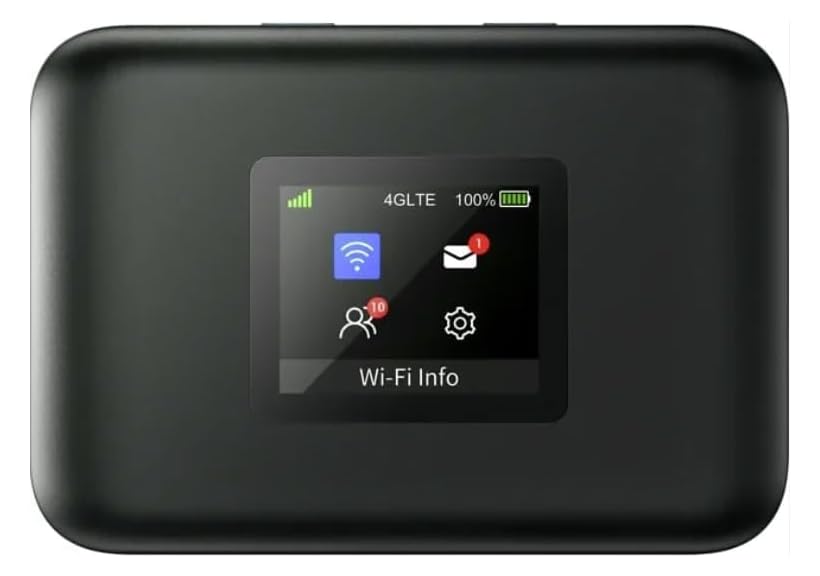
This pocket-sized hotspot from AT&T is open up, meaning you can use it on the AT&T network without committing to a carrier contract — you just buy a prepaid plan. It stands out for supporting up to 16 devices at once, which is more than most travel hotspots. The 3000mAh battery is rated for over 15 hours of continuous use, so it easily lasts a full day of camping or a long road trip.
Its 1.77-inch color LCD screen shows device info and signal strength, which is a rare convenience at this level. The dual-band WiFi (2.4GHz and likely 5GHz) helps reduce congestion, and the LAN port bandwidth is rated at 1000 Mbps for when you plug in a computer. As buyers put it, the device is “perfect for our camper” and “works fine” after getting a SIM from an AT&T store. One owner did note there is no physical port for plugging in cameras — this is a pure wireless hotspot. It is also worth remembering you must buy a prepaid AT&T plan separately; the device will not connect without one. Some owners found the requirement for a store visit slightly inconvenient, but once set up, the reports are strong.
Why it stands out
- open up and cheaper than carrier-branded options, as many owners pointed out
- Runs over 15 hours on a single charge — plenty for a day out
- Connects up to 16 devices, which is more than almost any other portable hotspot
Before you buy
- Requires an AT&T prepaid plan to work — it is not a pay-as-you-go device from the start
- No physical Ethernet or USB port for wired cameras or other gear
Best for: anyone already using or willing to use AT&T prepaid who needs a reliable, high-capacity hotspot for a camper, RV, or family trip.
Not for you if: you want to avoid carrier-specific plans or need to plug in cameras directly.
4. LCLCTEK WiFi Extender Signal Booster Solar (Product 5)

The solar extender that needs a long first charge but then works reliably for cameras.
The LCLCTEK has a 26000mAh battery and an IP66 weatherproof housing that handles extreme temperatures from -30°C to 70°C. Its claimed range is 300 feet on a 2.4GHz network, and it delivers speeds up to 300 Mbps. One experienced owner reported that a 6-10 hour initial USB-C charge is mandatory before it works, and that direct sun can recharge the battery from 21% to 99% in about 6 hours.
The same owner noted that the device drains about 20% overnight when supporting one Ring camera, which means you need decent daily sun to keep it topped up. An owner who bought a second unit called it “a breeze” to set up and said it works smoothly with Starlink networks. A few users could not get it to connect at all or found no SSID broadcast even after a full charge, and some noted that the promised 24/7 tech support contact info was not included. An Apple USB-C cable also reportedly did not charge the unit — use the included cable or a generic one. For a budget-facing solar extender, the performance per dollar is strong when it works, but the setup step is less forgiving than the premium options.
Solid performer after a patient first charge: once it is up, the connection is stable and the solar charging keeps it going, but the initial 6-10 hour USB-C charge is non-negotiable.
The catch: the 20% overnight drain with a single camera means you need a sunny spot — buyers in shaded areas may find the battery running low after a few cloudy days.
Pick this if: you have a garden camera or a small outdoor device in a mostly sunny spot and want a budget-friendly solar extender that just works once set up.
Think twice if: your mounting location gets heavy shade or you want a truly set-and-forget device without reading the full setup guide.
5. Tigerpai Solar WiFi Extender Outdoor (Product 8)
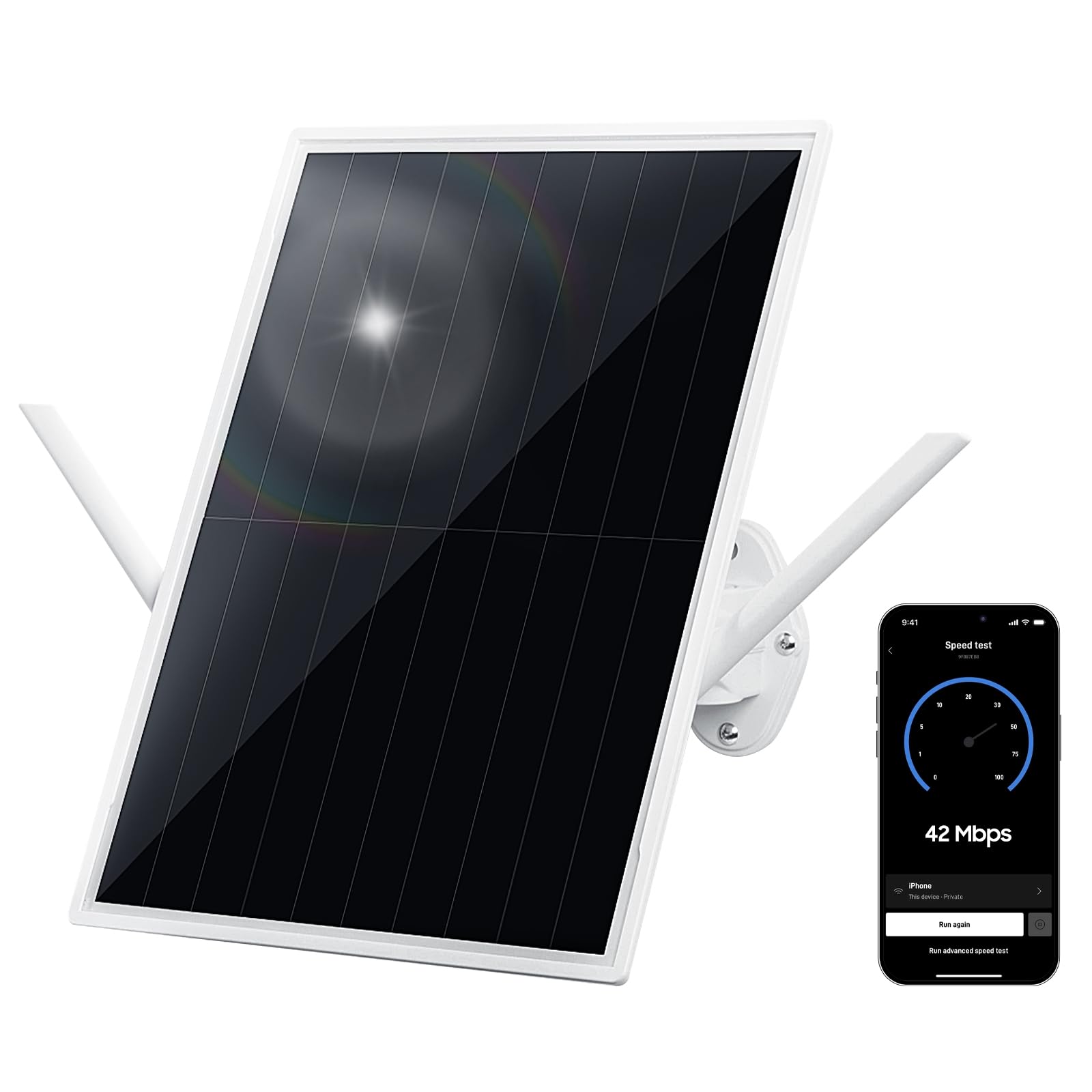
The solar extender with the longest advertised range — 492 feet — backed by a 15W solar panel.
This Tigerpai unit pushes the range out to 492 feet, which is roughly 100 feet farther than the GULZIIYA and LCLCTEK models. It uses a 2.4GHz signal and a 26000mAh battery paired with a 15W solar panel, so the charging capacity is slightly higher than the 12W panels on some competitors. The weatherproofing is IP65, which handles rain and dust, though it is a notch below the IP66 rating on the AQUZO and GULZIIYA.
One Vine reviewer reported a 14dB signal improvement in a detached shop — from unacceptably weak to fully usable. Another owner noted the setup can be non-intuitive and that you must charge the battery fully via USB before the solar panel takes over. The 15W panel may struggle in persistent cloud cover, one review noted, and the battery housing is not built for extreme temperature swings. But for large properties and farms, owners say it delivers stable coverage where nothing else worked. The built-in channel selection page was also reported to be non-functional in some units, showing greyed-out Chinese channels — a minor annoyance that does not affect core performance.
The standout strengths
- 492-foot range is the longest among these solar extenders — ideal for large farms or between buildings
- 15W solar panel charges faster than 12W models, and the 26000mAh battery keeps it running 24/7
- IP65 weatherproof build that stands up to rain and sun year-round
Know before you mount
- Setup requires careful attention to the manual — it is less intuitive than the GULZIIYA or AQUZO
- Some units shipped with a non-functional channel selection page — a firmware issue
- The battery housing may not hold up well to extreme temperature swings
Reach for this if: you need to bridge a long distance — such as from the house to a barn or a shop — and have direct sun for the panel.
pass on it if: you want a simple plug-and-play setup or your mounting spot is shaded during the day.
6. VERVERAY Solar WiFi Extender Signal Booster (Product 6)
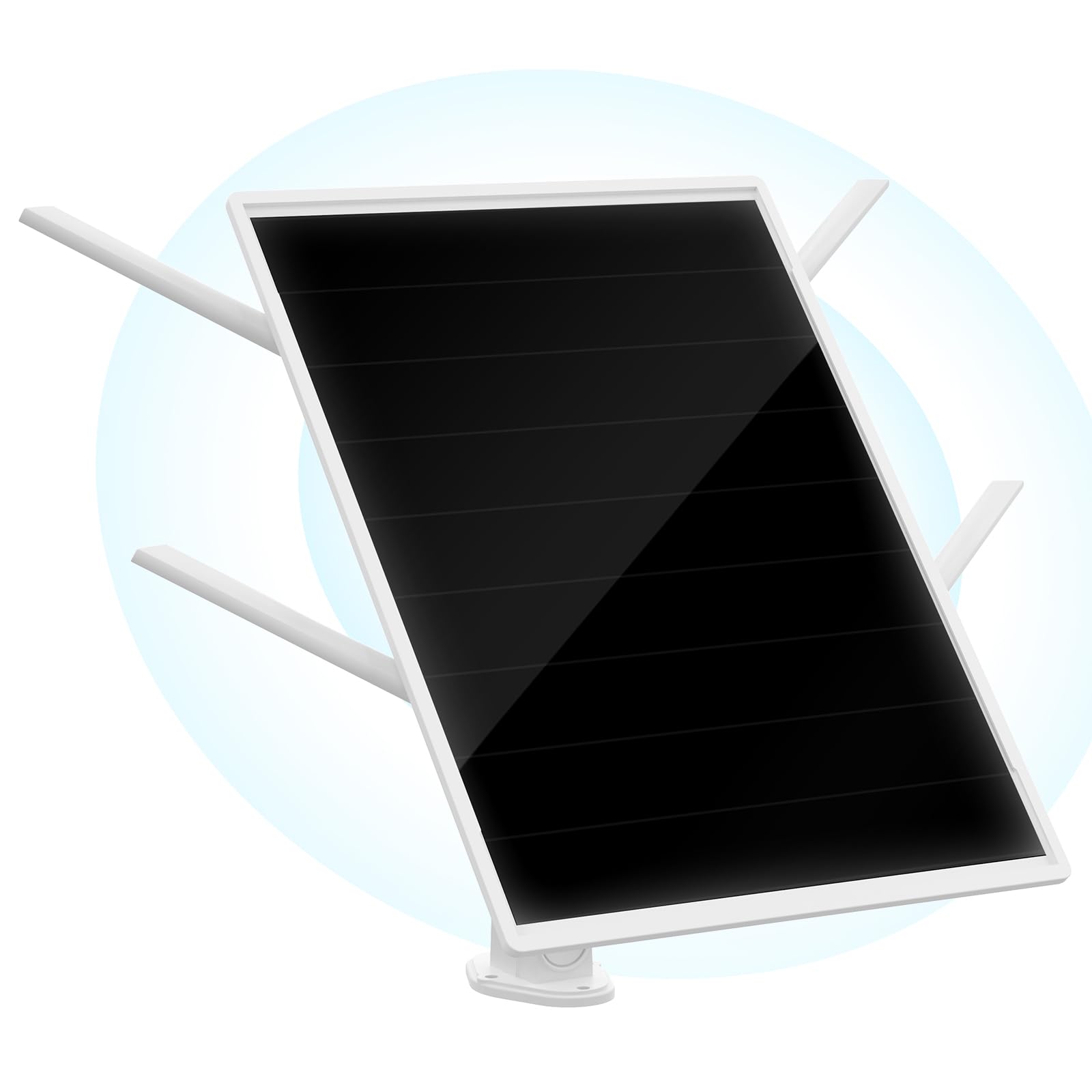
The solar extender built for security cameras, with a 500-foot range and 20AH battery.
The VERVERAY comes with a 15W solar panel and a 20AH (20000mAh) battery, which is slightly smaller than the 26000-27000mAh packs on other solar units but still enough for sustained operation. Its standout spec is a 500-foot range, which matches the Tigerpai for the longest distance among these picks. It uses a 2.4GHz signal at 150 Mbps — slower than the 300 Mbps units but fine for security camera feeds. It supports between 32 and 64 connected devices, which is a lot for an outdoor extender.
One owner reported it completely eliminated dropouts for four cameras in a detached garage 75-80 feet away. Another called it “awesome” for outdoor connectivity. The device works in WISP mode (it assigns its own IP range rather than extending the home network directly), which means it may not work smoothly with local printers or Sonos speakers. A handful of owners also reported the unit stopped working after rain, despite the IP65 weatherproof rating. For security cameras, this is a strong option — just keep it to that primary use case and you will be satisfied.
Perfect for security cameras: the long 500-foot range and high device count (32-64) mean you can cover a large property with cameras and never worry about dropouts — as long as you have a sunny spot to mount it.
The limitation: it uses WISP mode, which creates its own network segment, so local devices like printers or speakers on your main home network won’t see it.
Best for: large property owners who want reliable WiFi for outdoor security cameras and video doorbells without running Ethernet cables.
Not the one if: you need to extend your main home network for printers or media streaming, or if your area gets persistent rain.
7. GULZIIYA Solar WiFi Extender Outdoor (Product 7)
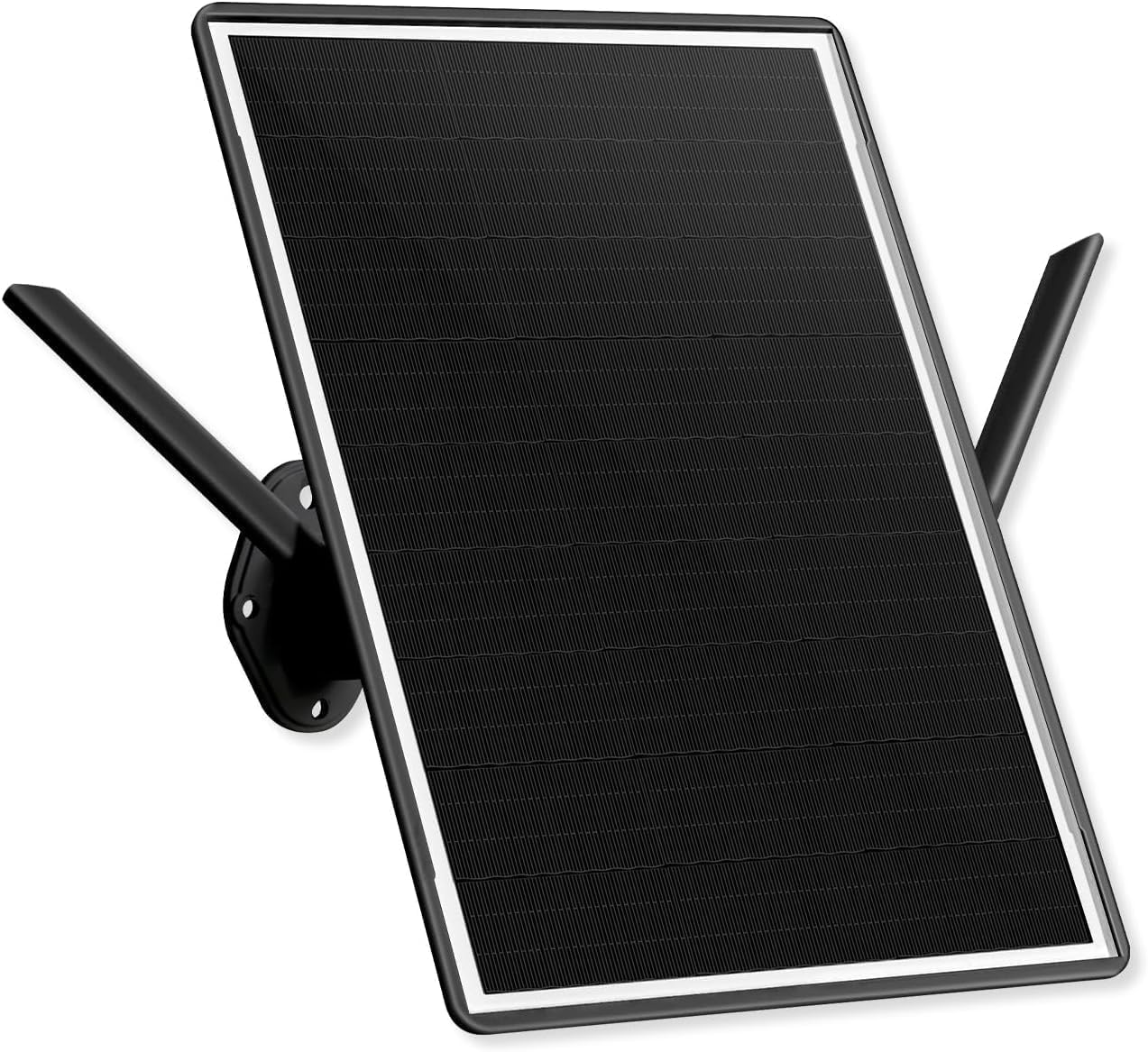
The solid solar extender with a 26000mAh battery that one owner says lasts 7 days in cloudy weather.
The GULZIIYA sits in the middle of the solar-powered pack with a 26000mAh battery, a 300-foot range, and speeds up to 300 Mbps via a 2.4GHz connection. It has two external antennas for 360-degree coverage and an IP66 weatherproof housing. The adjustable bracket makes it easy to point the panel toward the sun. One owner reported that the solar charging works so well that the 26000mAh battery can run for 7 continuous days even in cloudy weather — that is strong real-world performance.
Setup is done through a web browser, and some owners found it tricky because the device defaults to WISP mode, meaning you have to change a setting before it works as a simple extender. One owner also mentioned that the USB-C charging port on their unit did not work, though solar charging was fine. The speed in real use was around 6-8 Mbps, which is enough for a workshop or garden browsing but not for 4K video. A savvy owner recommended putting the device on an isolated guest or IoT network because the firmware phones home to a Chinese server — a security step that most users should follow. For a back garden or a workshop, this is a reliable extender with a few quirks that are easy to live with once you know them.
What works well
- 26000mAh battery runs for 7 days even in cloudy weather — owners confirm this
- IP66 weatherproof housing is durable in rain, snow, and heat
- Dual antennas provide 360-degree coverage across a 300-foot range
What to watch for
- Setup defaults to WISP mode, which requires a setting change before it works as a simple extender
- Real-world speeds of 6-8 Mbps are fine for browsing but not for streaming 4K video
- USB-C charging port may not work on some units — solar charging still works fine
Reach for this if: you want a workhorse solar extender for a backyard, garden, or workshop and don’t mind a brief web-based setup.
Look elsewhere if: you need high-speed streaming outdoors or want a truly zero-maintenance plug-and-play device.
8. ciciglow Mobile Hotspot, Portable Travel Router (Product 2)

The cheapest portable hotspot on this list, but one with a real risk of not working.
This pocket router from ciciglow is light at 0.11 kg and runs on a 2100mAh battery, which is rated for up to 72 hours of standby. It supports up to 10 users at once via 4G LTE on a 3.5GHz frequency band. It uses a standard SIM card (not included) and is aimed at car users and travelers. The price is entry-level, but the reviews tell a different story than the spec sheet.
Many buyers could not get the device to connect at all. As one owner put it, “Don’t buy this item!!!! It doesn’t work!!! It’s a Waste of Good Money!!! And it certainly isn’t a Plug & Play Item like they make it sound!!!!” That sentiment echoes across several reviews, with “piece of trash” and “the service does not work” appearing repeatedly. Even a few positive reviews — one calling it a “nice size to carry on” — do not outweigh the pattern of failures. There is also a crucial setup step: the battery may have a spacer sticker that must be removed before the device turns on. For an emergency backup or a zero-budget option, this is the play. But for anything more reliable, the extra cost of the AT&T or RoamWiFi is worth every cent.
The only case for it: if you absolutely need the lowest upfront cost and are willing to risk a non-functional unit, the price is tough to top.
The honest truth: a large share of owners mention the device simply does not work, and the instructions for setup are unclear. This is a gamble, not a reliable extender.
Consider this only if: your budget is extremely tight and you have the patience to troubleshoot a finicky device with unclear instructions.
Skip this entirely if: you need a hotspot that works from the start for a trip or work — the failure rate in reviews is too high to rely on.
Understanding the Specs
Battery Capacity (mAh)
mAh stands for milliamp-hours, and it tells you how much energy the battery holds. A higher number means longer run time without a recharge. A portable hotspot with 2100mAh might last a day of light use. A solar extender with 27000mAh can run for days even without sun. This is the single most important number for a battery powered WiFi extender because it determines whether the device stays online when you need it most.
Signal Range
The range number on the box (200 feet, 300 feet, 500 feet) is measured in open space with no obstacles. In real life, expect about half that when walls, trees, or metal siding are in the way. A 2.4GHz signal travels farther than 5GHz, which is why nearly all battery powered extenders use 2.4GHz. If you need to reach a building 200 feet away, pick a model that claims at least 400 feet of range to have a fighting chance.
Weatherproof Rating (IP65 vs IP66)
IP stands for Ingress Protection, and the two digits after it tell you how well the device resists dust (first digit) and water (second digit). IP65 means it is dust-tight and can handle low-pressure water jets. IP66 is a step tougher — it can handle high-pressure jets and more extreme weather. For a device mounted outside all year, IP66 is preferable. An IP65 unit is fine for a covered patio or a spot that does not get direct downpours.
WISP Mode vs True Repeater Mode
Many solar extenders operate in WISP mode (Wireless Internet Service Provider mode). This means the extender grabs the WiFi signal from your router and creates its own separate network with a different IP range. Devices on that separate network cannot talk to devices on your main network, which can be a problem if you want to use a local printer or media server. A true repeater mode keeps everything on the same network. If you plan to extend your home network for local devices, look for an extender that clearly supports repeater mode, not just WISP.
FAQ
Can a battery powered WiFi extender work without any internet source?
How long does the battery last on a solar powered extender in cloudy weather?
Can I use a battery powered WiFi extender indoors?
Is a 2.4GHz extender enough for security cameras?
How many devices can a portable hotspot support at once?
Do I need a SIM card for a solar powered WiFi extender?
What does IP65 or IP66 mean for outdoor use?
Can I mount a solar WiFi extender in the shade?
How long does the first charge take for a solar extender?
Is a battery powered extender faster than a powerline adapter?
Final Thoughts: The Verdict
For the majority of shoppers, the battery powered wifi extender to choose is the AQUZO Outdoor Solar WiFi Extender because it combines the largest battery capacity (27000mAh), a reliable solar panel, and IP66 weatherproofing in a set-and-forget design that owners genuinely praise for eliminating outdoor dead zones. If you travel globally need a portable hotspot, grab the RoamWiFi R10. And for covering a large farm or barn where every meter of range counts, the Tigerpai Solar Extender is the one to reach for. Match the extender to your power source — sun or battery — and you will never hunt for an outlet again.
How We Picked
We do not accept paid placement. Every pick is matched to a real buyer and a real use-case; we do not hands-on test units.
Sources & Methodology
Specifications: manufacturer listings and product documentation. Review insights: verified customer reviews, as of July 2026. Pricing: not shown on this page (it changes often); check the current price via the retailer link.
As an Amazon Associate, Gadgets Feed earns from qualifying purchases. This does not affect which products we feature.