
The jump from a standard solar panel setup to a true energy-independent home hinges on one crucial component: the battery storage system. Without a robust battery, your solar panels are just expensive decorations when the sun goes down or the grid goes out. The right battery storage solar power system determines whether you’re running your whole house through a blackout or just charging a phone.
I’m Min — the co-founder and writer behind Gadgets Feed. After spending countless hours analyzing capacity ratings, BMS specifications, chemistry types, inverter compatibility, and charge cycles across dozens of models, I’ve built this guide to cut through the noise and help you identify the exact battery storage solar power solution that matches your energy needs and budget.
Whether you’re prepping for emergencies, building an off-grid cabin, or just want to maximize your solar investment, this guide breaks down the best options available right now for every scenario. This is the definitive analysis of the best battery storage solar power.
How To Choose The Best Battery Storage Solar Power
Selecting a solar battery system isn’t about picking the biggest number. It’s about matching voltage, capacity, chemistry, and expandability to your actual load profile and inverter. Here are the three most critical factors to get right.
Capacity vs. Usable Energy
Manufacturers often advertise total kWh, but what matters is usable energy. Most LiFePO4 batteries allow 80-100% depth of discharge (DoD), while older lead-acid types cap at 50%. A 3.8kWh rated battery with 100% DoD gives you a true 3.8kWh to use. Always check the usable capacity spec and compare it to your daily watt-hour consumption.
BMS and Inverter Communication
The Battery Management System (BMS) protects against overcharge, over-discharge, and temperature extremes. For a seamless solar system, your battery must communicate with your inverter via CAN or RS485 protocols. Without this, charging may be inefficient or the BMS may trip prematurely. Models with Bluetooth or app monitoring let you track voltage, current, and cycle count in real-time.
Expandability and Voltage Matching
Think ahead. A single 48V battery rack can often be paralleled to 15 units, scaling from 5kWh to 50kWh+. Ensure your inverter supports the final voltage and amperage. 12V systems are simpler for RVs, but 24V or 48V systems reduce current and allow thinner cables for larger home setups. Verify the max series/parallel configuration before buying.
Quick Comparison
On smaller screens, swipe sideways to see the full table.
| Model | Category | Best For | Key Spec | Amazon |
|---|---|---|---|---|
| EF ECOFLOW DELTA Pro | Power Station | High-Power Home Backup | 3600Wh / 3600W Output | Amazon |
| Anker SOLIX F3800 | Power Station | Whole-Home 240V Power | 3840Wh / 6000W Output | Amazon |
| Jackery HomePower 3000 | Power Station | Compact 3kWh Backup | 3072Wh / 3600W Output | Amazon |
| AOUSK 48V 200Ah V2 | Rack Battery | Server Rack Solar Systems | 10.24kWh / 48V Rack | Amazon |
| ECO-WORTHY 48V 280Ah 4-Pack | Battery Bank | Large Off-Grid Arrays | 14.34kWh / 48V Bank | Amazon |
| OSCAL PowerMax 6000 | Solar Generator | All-in-One 240V Kit | 3600Wh / 6000W Output | Amazon |
| ECO-WORTHY 1200W Kit | Complete Kit | Turnkey Off-Grid Setup | 5.52kWh Daily / 24V | Amazon |
| DJI Power 2000 Bundle | Power Station | Ultra-Quiet Camping | 2048Wh / 3000W Output | Amazon |
| Jackery Explorer 2000 v2 | Power Station | Lightweight 2kWh Travel | 2042Wh / 2200W Output | Amazon |
| AFERIY 3840Wh P310 | Power Station | Value 3.8kWh Home Backup | 3840Wh / 3600W Output | Amazon |
| ABOK Ark3600 | Power Station | Expandable Budget Power | 3840Wh / 3600W Output | Amazon |
| VATRER POWER 460Ah | RV Battery | Self-Heating RV Storage | 5880Wh / 12V 460Ah | Amazon |
| DC HOUSE 48V 100Ah Pro | Golf Cart Battery | Golf Cart & Light Solar | 4.8kWh / 48V 100Ah | Amazon |
In-Depth Reviews
1. EF ECOFLOW DELTA Pro
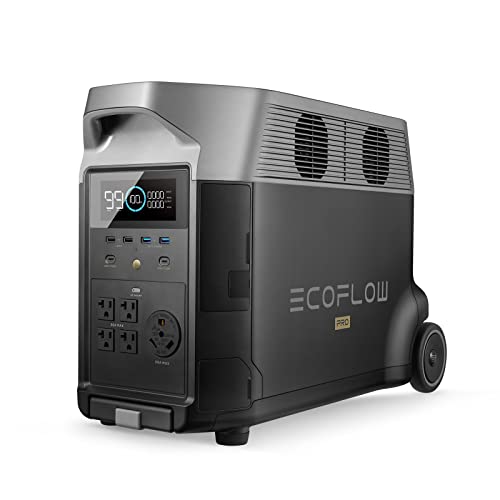
The EF ECOFLOW DELTA Pro sits at the sweet spot of capacity and power delivery. With 3600Wh of LFP storage and a 3600W continuous output (4500W with X-Boost), this unit can handle a refrigerator, lights, wifi, and a coffee maker simultaneously during a blackout. The X-Stream charging technology refills from a wall outlet to 80% in under an hour, which is critical when you need a quick top-up before a storm hits.
Expandability is where the DELTA Pro truly shines. You can daisy-chain extra batteries to reach up to 25kWh, and even pair two units for a massive 7200W output at 240V. The 15 output ports include two USB-C at 100W each, five AC outlets, and an Anderson port for high-current devices. The smart app gives you granular control over charge/discharge schedules and real-time monitoring of every parameter.
Users report it powers a home oxygen concentrator for over 10 hours, runs a heat press at vendor markets without voltage drop, and seamlessly switches via its UPS mode during grid failures. The trade-off is weight — at 99 pounds it’s not truly portable, but the integrated wheels and sturdy handle make it manageable. This is the gold standard for serious home battery backup.
Why it’s great
- Fast 1.8-hour full charge via 240V AC input
- Expandable from 3.6kWh to 25kWh
- 15 versatile output ports including 100W USB-C
Good to know
- Weighs 99 pounds; requires effort to move
- X-Boost reduces surge capacity for heavy loads
2. Anker SOLIX F3800

The Anker SOLIX F3800 is the only unit in this roundup that delivers true 120V/240V split-phase output from a single station — a game-changer for powering a well pump, dryer, or EV charger. With 3840Wh of LFP capacity and 6000W continuous output (12000W with two units), it handles nearly any household appliance. The built-in NEMA 14-50 port lets you plug your EV directly in without extra grounding accessories.
Expandability is massive: you can add up to six expansion batteries for a total of 26.9kWh, or pair a second F3800 for 12 battery packs pushing 53.8kWh. The InfiniPower technology promises a 10-year lifespan, and the 5-year warranty backs it up. The app provides full remote monitoring, though some users note it lacks a time-of-use scheduler for optimizing solar self-consumption.
Real-world feedback shows the F3800 handles a 10-circuit transfer switch flawlessly, providing seamless backup during outages. The main downsides are its 132-pound weight and the BMS limiting charge rates below 50°F. For users needing 240V output from a single portable unit, nothing else comes close. It’s a premium investment for whole-home preparedness.
Why it’s great
- True 120V/240V split-phase from one unit
- Expandable to 26.9kWh capacity
- NEMA 14-50 port for direct EV charging
Good to know
- Very heavy at 132 pounds
- Charging speed reduced below 50°F
3. Jackery HomePower 3000
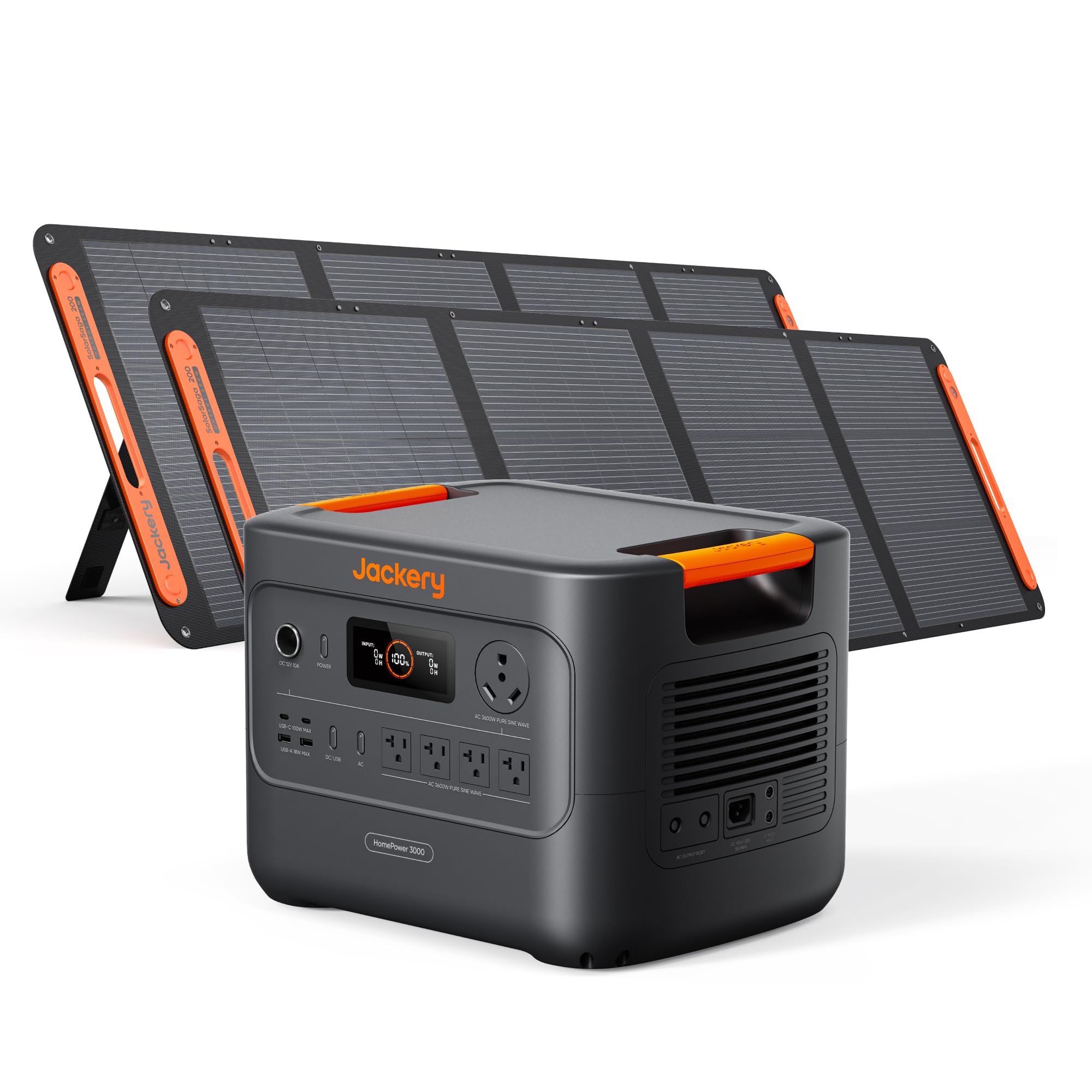
Jackery’s CTB (Cell-to-Body) technology makes the HomePower 3000 a standout for anyone who values a compact footprint. Despite packing 3072Wh and a 3600W output (7200W surge), it’s 43% lighter and 47% smaller than comparable 3kWh stations at just 59.5 pounds. The honeycomb shell adds structural rigidity, and the integrated PV/inverter design simplifies installation.
The ≤20ms UPS switching is UL-certified, making it a reliable choice for sensitive electronics like security cameras and medical devices. Dual 100W USB-C PD ports charge laptops and drones rapidly. The included TT-30 port is a welcome addition for RV owners, providing plug-and-play compatibility without adapters. AC charging hits full in 2.2 hours, while hybrid AC+DC cuts that to 1.7 hours.
Users report it runs a refrigerator for two days while simultaneously charging two e-bikes and powering the TV and internet router. The ChargeShield 2.0 algorithm extends cycle life to 4000 charges with 70% retention. The primary limitation is the lack of expandability — unlike the EcoFlow or Anker, you cannot add extra battery packs. It’s a sealed, self-contained unit best for medium-term backup.
Why it’s great
- Extremely compact and light for 3kWh class
- UL-certified ≤20ms UPS switching
- TT-30 port for direct RV connection
Good to know
- Not expandable beyond built-in capacity
- Heavier than advertised for some users
4. AOUSK 48V 200Ah V2
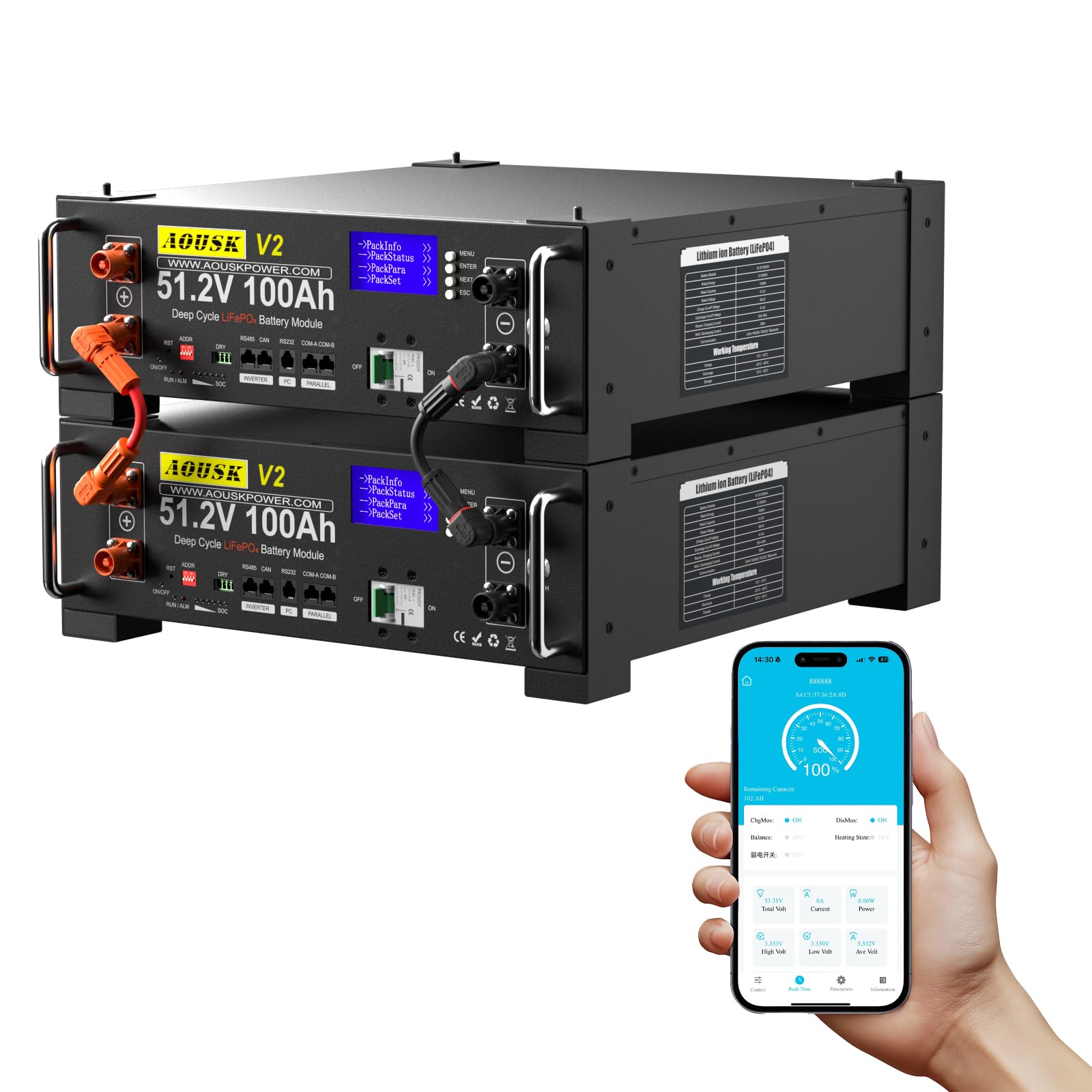
The AOUSK 48V 200Ah V2 is a 2-pack of 48V 100Ah rack-mount batteries delivering 10.24kWh of usable energy. Built with automotive-grade prismatic LiFePO4 cells, these units are designed for standard 3U server cabinets, allowing clean, vertical installation that saves floor space. The CAN/RS485 communication ports ensure seamless integration with popular all-in-one solar inverters from brands like Growatt, MPP Solar, and EG4.
Each pack weighs just 94.8 pounds, making it manageable for a single person to rack-mount. The 100A BMS provides overcharge, over-discharge, overcurrent, and short-circuit protection, plus a 125A air switch for manual disconnect. Up to 15 batteries can be paralleled, scaling your system from 10kWh to over 70kWh. The Bluetooth app displays voltage, current, cycle count, and individual cell balance in real-time.
Buyers report these batteries arrive well-packed, with all necessary parallel and communication cables included. The 5-year warranty is among the longest in this class. A few users noted the need to set charge controller voltage to 14.1V to avoid BMS overvoltage cycling in 24/7 off-grid systems — a minor tweak for solid performance. For building a permanent home solar bank, this is the most cost-effective rack solution.
Why it’s great
- 10.24kWh total capacity in a 2-pack rack mount
- CAN/RS485 for inverter communication
- 5-year warranty with fast shipping
Good to know
- Requires compatible 48V inverter for full function
- BMS may need voltage tweak for 24/7 cycling
5. ECO-WORTHY 48V 280Ah 4-Pack
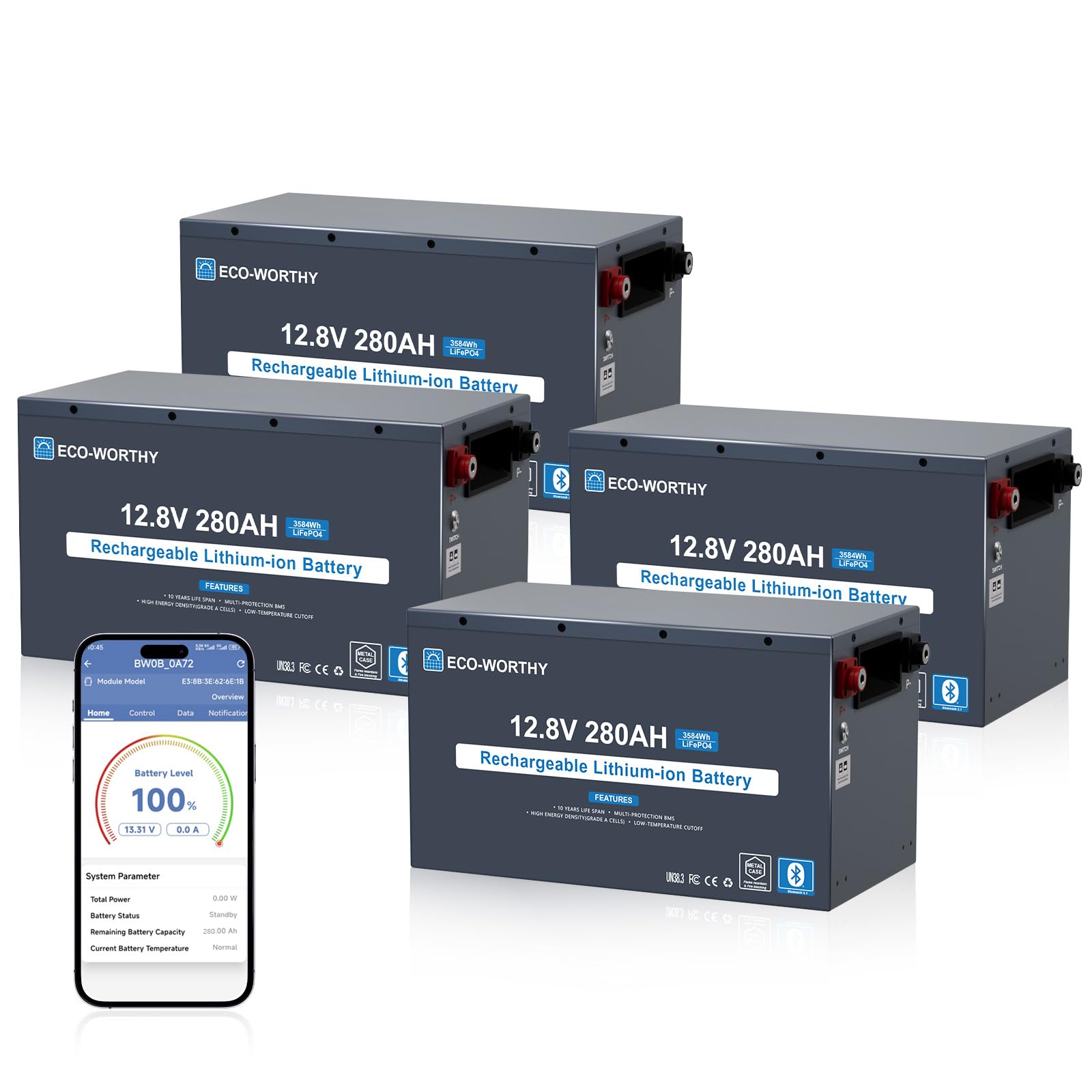
The ECO-WORTHY 48V 280Ah solution is a 4-pack of 12V 280Ah batteries wired in series, offering a colossal 14.34kWh of storage at 48V. Each battery features a newly upgraded metal case (as of June 2026) that provides superior durability and thermal dissipation compared to plastic enclosures. The internal compression fixture prevents cell expansion, extending the lifespan beyond the industry-standard 4000 cycles.
Bluetooth 5.1 monitoring via the ECO-WORTHY app shows voltage, current, capacity, and cell balance history up to 15 meters away. The 200A BMS includes low-temperature cutoff, halting charging below 19.4°F and discharging below -4°F to prevent permanent damage. This makes the bank suitable for unheated garages and outdoor sheds. Each battery weighs 61.7 pounds, so the full 4-pack totals 247 pounds — plan your mounting accordingly.
Users have successfully replaced aging flooded lead-acid arrays, reporting far less maintenance and better usable capacity. Measured capacity on some units reaches 290Ah, exceeding the rated 280Ah. The main learning curve is setting the charge controller to 14.1V max to prevent BMS overvoltage cycling in continuous off-grid systems. For DIY builders wanting the most kWh per dollar in a 48V format, this is the clear winner.
Why it’s great
- 14.34kWh total at a very competitive per-kWh cost
- Metal case with internal compression fixture
- Bluetooth monitoring on each battery
Good to know
- Very heavy total weight of 247 pounds
- Charge controller voltage tweak recommended
6. OSCAL PowerMax 6000
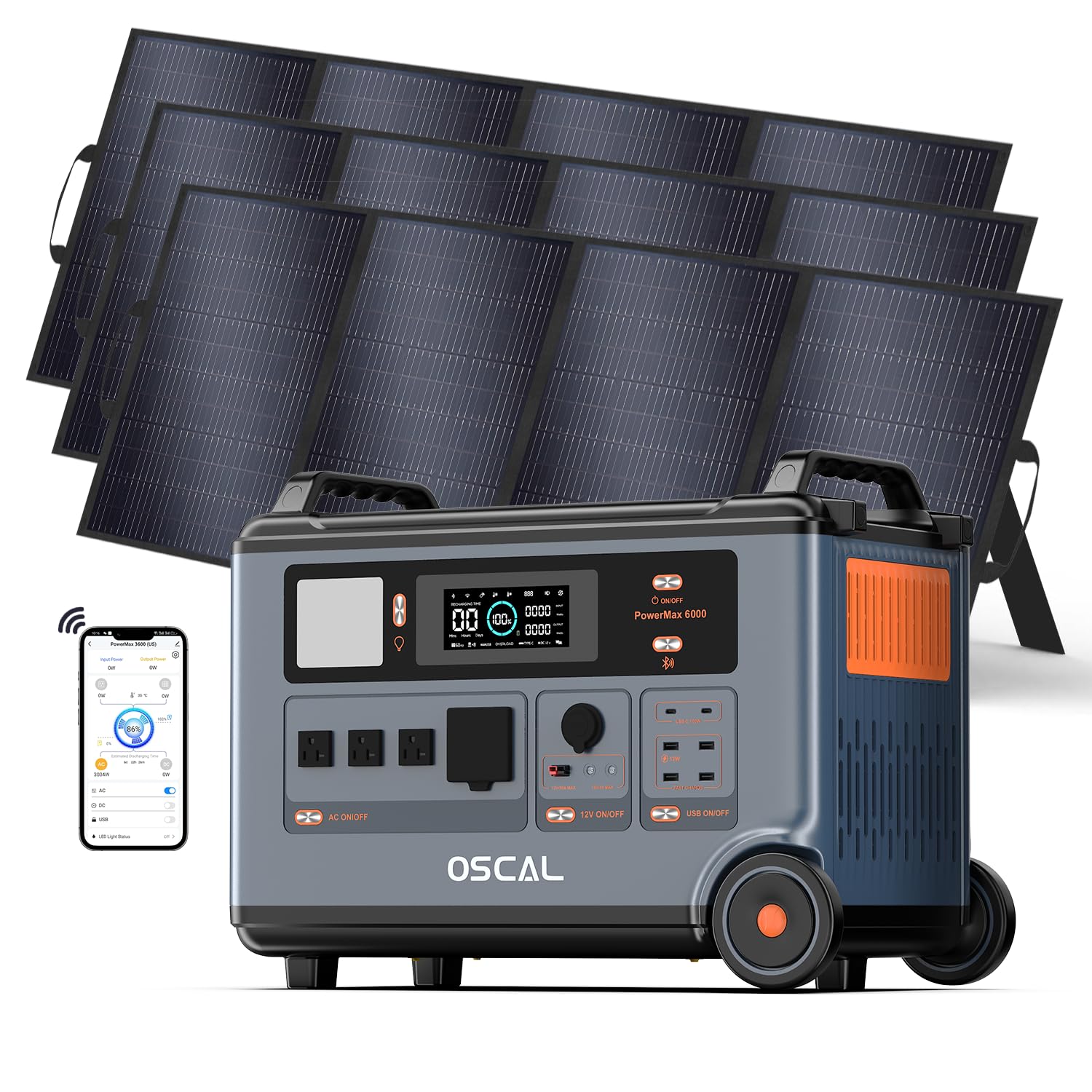
The OSCAL PowerMax 6000 bundles a 3600Wh station with three 400W solar panels, creating a complete solar generator out of the box. Its 6000W AC output with 120V/240V split-phase capability lets it run a central air conditioner, well pump, or even a workshop table saw. The bi-directional inverter supports 2200W AC charging, refilling from 0-100% in just 1.44 hours — incredibly fast for a system this size.
The 14 output ports include four AC outlets, multiple USB-C/USB-A ports, and a car outlet. The EPS switchover happens in 5-8ms, which is fast enough to keep desktop computers and network gear online during a flicker. The OSCAL app provides remote monitoring of charge status, load draw, and battery health. The LiFePO4 cells are rated for 3500 cycles, translating to a roughly 10-year service life at daily cycling.
Early users praise the quiet operation and the convenience of the included 1200W of solar panels. However, some report the battery drains faster than expected under light loads (85% in 2 hours with a single LED bulb, though this may indicate a measurement inconsistency). The weight is a substantial 100 pounds, but the built-in handle and wheels aid mobility. For a turnkey 240V solar generator, the PowerMax 6000 offers exceptional value.
Why it’s great
- Comes with 3x400W solar panels included
- 120V/240V split-phase built in
- Ultra-fast 1.44hr AC recharge
Good to know
- Heavy and requires careful placement
- Some reports of faster than expected drain
7. ECO-WORTHY 1200W 24V 5.52KWH Kit
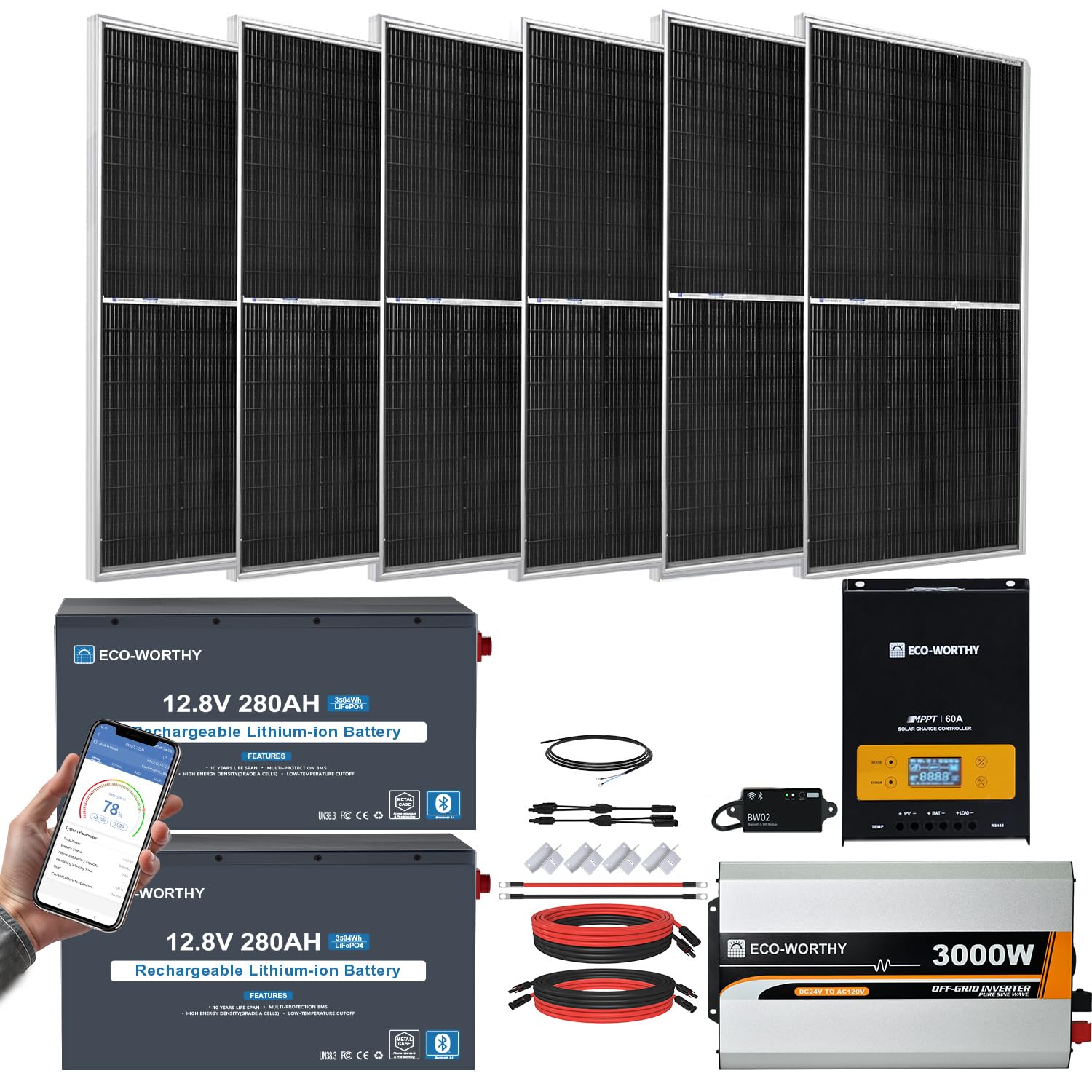
The ECO-WORTHY 1200W kit is the only complete solar system in this guide, containing everything needed for a fully functional off-grid setup: six 195W solar panels, two 12.8V 280Ah batteries (7.168kWh total), a 60A MPPT charge controller, and a 3000W pure sine wave inverter. The daily generation of 5.52kWh (under 4 hours of peak sunlight) is enough to run a small cabin, RV, or emergency backup for essential circuits.
The solar panels feature 12BB cells with a transparent backsheet achieving 25% conversion efficiency. The 60A MPPT controller uses maximum power point tracking with 99% efficiency to optimize energy harvest from the panels. Bluetooth monitoring on the charge controller lets you check system status from 82 feet away. The dual 280Ah batteries give you 7.168kWh of storage — enough to keep a refrigerator and lights running through the night.
Buyers report easy 30-minute setup and successful powering of TVs, Starlink, laptops, and a 6000 BTU air conditioner on the 3000W inverter. The 17-year track record of ECO-WORTHY in the solar industry adds confidence. Downsides include some components arriving with shipping damage (bent charge controller, broken temp probe), and the included 14-gauge wires being undersized for the 12V side. For a true turnkey experience, this is a solid entry point.
Why it’s great
- Complete all-in-one off-grid solar system
- High-efficiency 25% solar panels
- 99% efficient MPPT charge controller with Bluetooth
Good to know
- Some components may arrive with shipping damage
- Included wires may be undersized for 12V
8. DJI Power 2000 Bundle
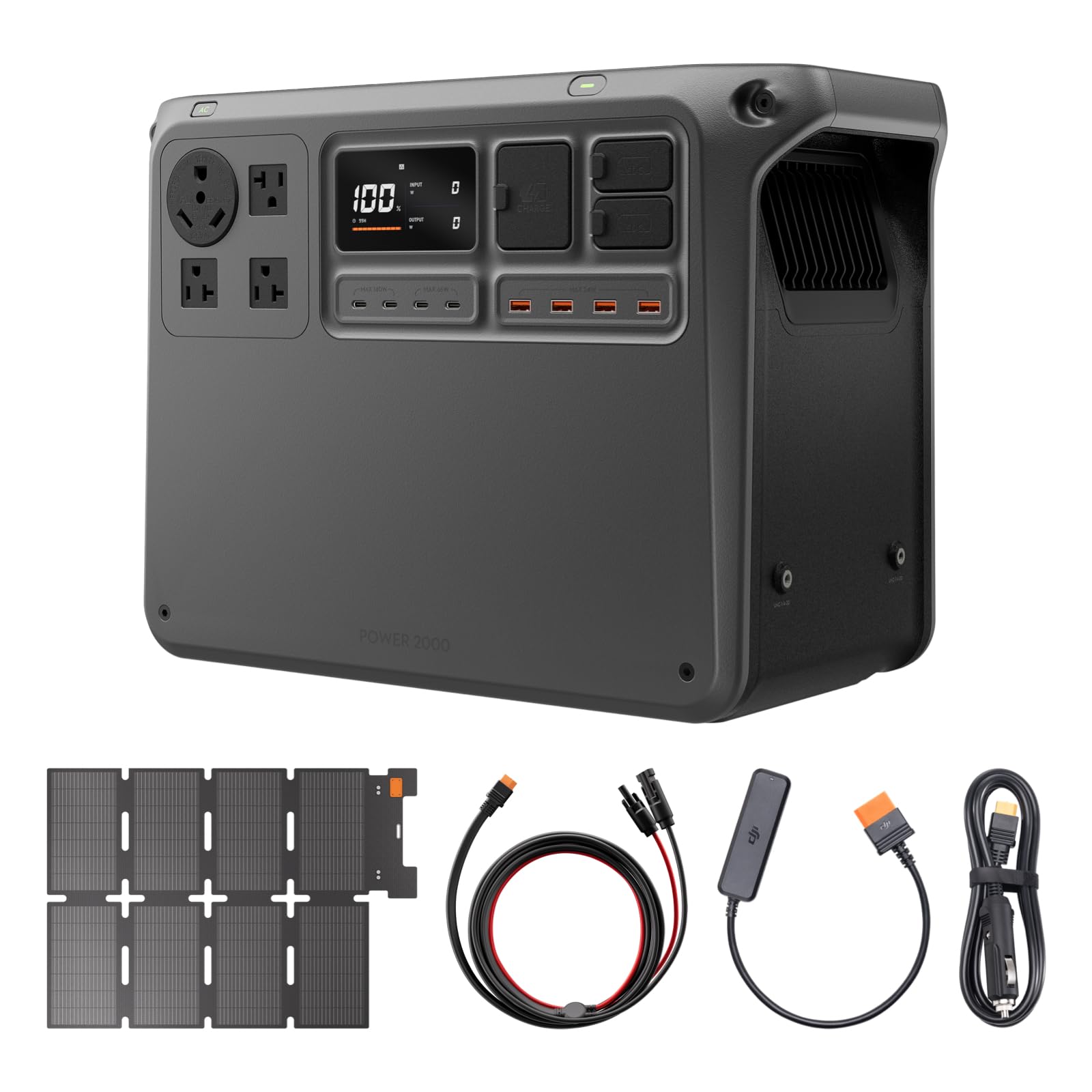
The DJI Power 2000 bundle pairs the power station with a 100W foldable solar panel, making it a ready-to-go solution for campers and drone operators. The 2048Wh LFP battery and 3000W continuous output (4000W peak) run 99% of common appliances. The headline feature is the 30 dB noise floor — quieter than a library, making it the best choice for sleeping quarters in an RV or tent.
Charging speed is exceptional: 0-80% in 55 minutes via AC, and full in 90 minutes. The 10ms UPS switching (half the time of the previous Power 1000) keeps sensitive gear online without a blink. The sub-nano coating on the internal electronics protects against humidity and dust, a thoughtful touch for outdoor environments. Expansion to 22.5kWh is possible with add-on batteries, providing up to 6 days of home backup.
The proprietary connectors and required DJI app are the main friction points. Users note the unit heats up noticeably under moderate load, and some European gray-market units have shown 50Hz lock issues. But for pure silence and rapid recharging, the DJI Power 2000 is unmatched. It’s especially well-suited for mobile businesses where quiet operation is non-negotiable.
Why it’s great
- Ultra-quiet operation at 30 dB
- 0-80% charge in just 55 minutes
- 10ms UPS switching for sensitive devices
Good to know
- Proprietary connectors required
- Gray market units may have 50Hz lock issues
9. Jackery Explorer 2000 v2
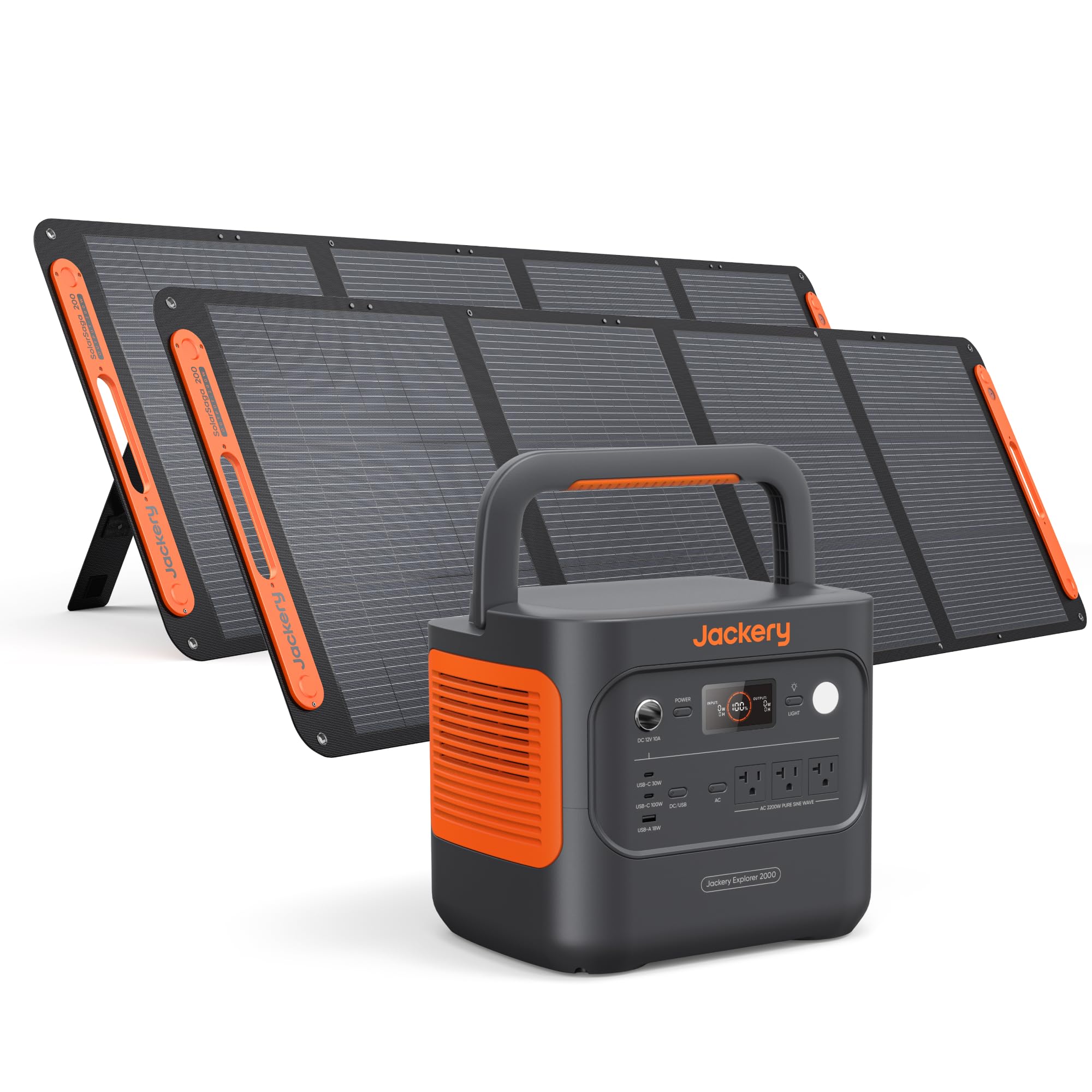
At just 39.5 pounds, the Jackery Explorer 2000 v2 is the lightest 2kWh power station you can buy, thanks to CTB (Cell-to-Body) technology borrowed from the EV world. The 2042Wh LFP battery feeds a 2200W continuous output, which can run a standard window air conditioner, full-size refrigerator, or a set of power tools. The 20ms UPS switchover is UL1778 certified, making it a risk-free backup for desktop computers and network equipment.
AC charging hits 80% in 66 minutes and full in 102 minutes with the app-activated Emergency Super Charging mode. Silent Charging mode delivers a full charge in 5 hours at just 30 dB. The included dual 200W solar panels charge the unit in about 6 hours under full sun. Three AC ports, plus USB-C PD 100W and USB-A ports, cover most needs. The compact 13.2×10.4×11.5-inch footprint fits easily under a desk or in a car trunk.
Users confirm it runs a TV for two days plus a lamp for 6 hours before hitting 10% battery. The solar panels produce 397W in good conditions. The main limitation is the non-expandable battery — what you buy is what you get. For portable backup where weight and size are paramount, the Explorer 2000 v2 is nearly impossible to beat.
Why it’s great
- Lightest 2kWh station at 39.5 lbs
- UL1778-certified 20ms UPS
- Compact footprint for easy transport
Good to know
- Battery is not expandable
- Solar charging limited to 400W max input
10. AFERIY 3840Wh P310

The AFERIY P310 punches well above its price point with 3840Wh of LFP storage and 3600W continuous output (7200W peak) — spec-for-spec matching premium units at a mid-range cost. The expandable design allows adding battery packs to reach 11.5kWh. The <10ms UPS transfer time is faster than most competitors, making it one of the best for protecting sensitive electronic equipment during storms and surges.
The 15 output ports include five AC outlets, three USB-C (one PD 100W), and a dedicated XT60 port for high-current solar input. The smart app allows you to schedule charging times, monitor discharge, and even set a target state of charge for storage. Pull handles and rugged wheels make the 80-pound unit easier to maneuver than its weight suggests. AC charging hits full in 1.5 hours at 2400W input.
Users running entire RVs (minus A/C) report plenty of power, and expansion batteries are straightforward to add. A few early units had display connection issues, but AFERIY’s responsive customer support resolved them quickly. The 7-year support period and UL listing provide peace of mind. For buyers who want maximum capacity without paying flagship prices, the P310 is a smart choice.
Why it’s great
- 3840Wh capacity at a mid-range price
- Faster than <10ms UPS switching
- Expandable to 11.5kWh
Good to know
- Some units had display connection issues initially
- Weight of 80 pounds is still significant
11. ABOK Ark3600
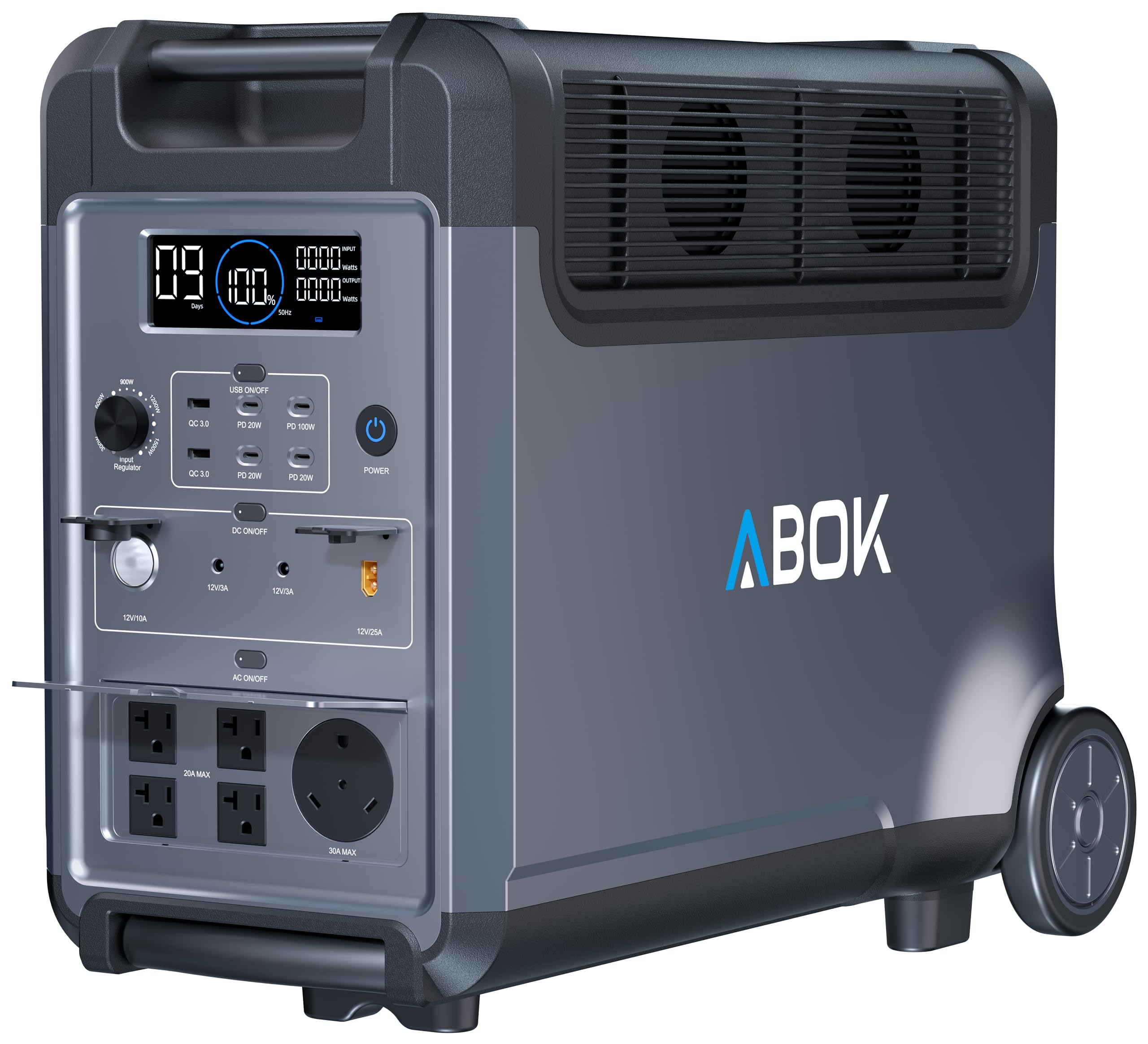
The ABOK Ark3600 delivers 3840Wh and 3600W output (4500W peak) at a price that undercuts many 3kWh competitors. Expandability up to 11,520Wh via extra battery packs makes it a future-proof investment for growing energy needs. The 15-port panel includes a 30A AC outlet for high-demand devices, plus the usual USB-C 100W and QC3.0 USB-A ports.
Charging flexibility is a strength: 1500W AC input, 2000W solar input (MC4), and 120W car charging. Combined AC+PV hits full charge in just 1.29 hours. The telescoping handle and durable wheels make the 92-pound unit reasonably portable for its class. Bluetooth app control enables remote monitoring of capacity, load, and charging status.
User reviews highlight excellent customer service from ABOK, including free out-of-warranty repairs for units damaged by overvoltage. The Ark3600 has been used to run a boiler through -20°F weather, preventing frozen pipes — a real-world testament to its reliability. The app documentation is sparse and the cooling fan is audible under heavy load, but the overall value proposition is hard to beat for budget-conscious buyers seeking expandability.
Why it’s great
- 3840Wh expandable to 11,520Wh
- Fast combined AC+PV charging
- Outstanding customer support
Good to know
- App documentation is sparse
- Fan noise noticeable under heavy load
12. VATRER POWER 460Ah
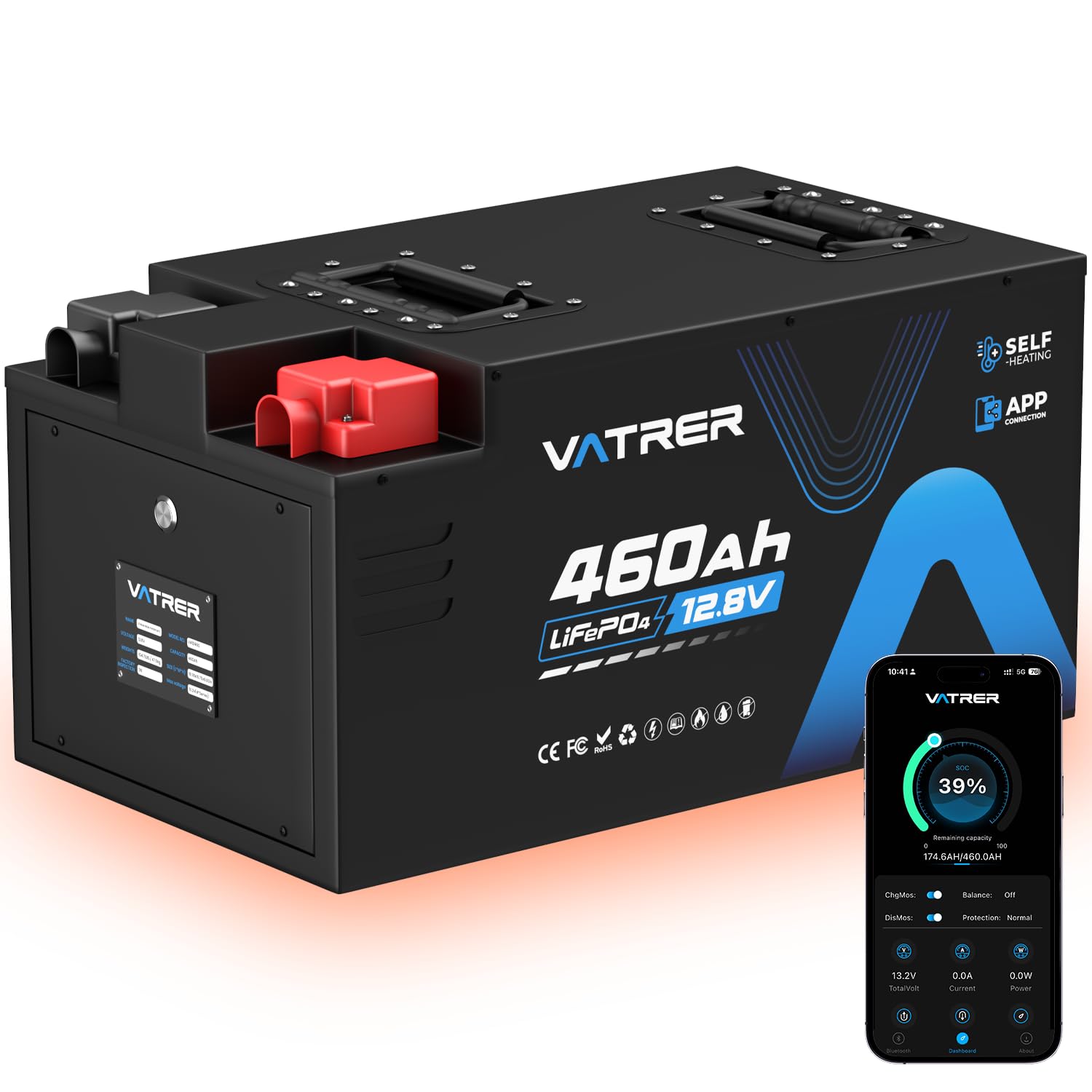
The VATRER POWER 460Ah self-heating battery solves a major pain point for cold-climate RV and cabin owners: charging lithium below freezing. The automatic self-heating BMS activates when connected to a charger at temperatures between -4°F and 41°F, warming the cells to a safe charging temperature before accepting current. This makes it viable year-round in northern climates where standard LiFePO4 would shut down.
The 5880Wh usable capacity is equivalent to five 100Ah batteries in a single 104-pound package, saving space and wiring complexity. The 300A BMS supports continuous loads up to 3840W, enough for air conditioners, electric ovens, and RV appliances. The SPCC steel case is wear-resistant and includes a main switch for physical disconnection. The battery can be expanded to a 4P4S configuration for 1840Ah (94.2kWh) at 51.2V.
Users report running a desktop computer all night off-grid and fast charging from 600W of solar. The basic Bluetooth app is functional, showing voltage, current, temperature, and cycle life. The physical size (18.8 x 10.8 x 9.9 inches) requires adequate compartment space. If you need reliable winter charging without bricking your battery, the self-heating 460Ah is purpose-built for the job.
Why it’s great
- Automatic self-heating for sub-freezing charging
- 5880Wh capacity in a single battery
- 300A BMS for high-power appliances
Good to know
- Heavy at 104.7 pounds
- Requires adequate compartment space
13. DC HOUSE 48V 100Ah Pro
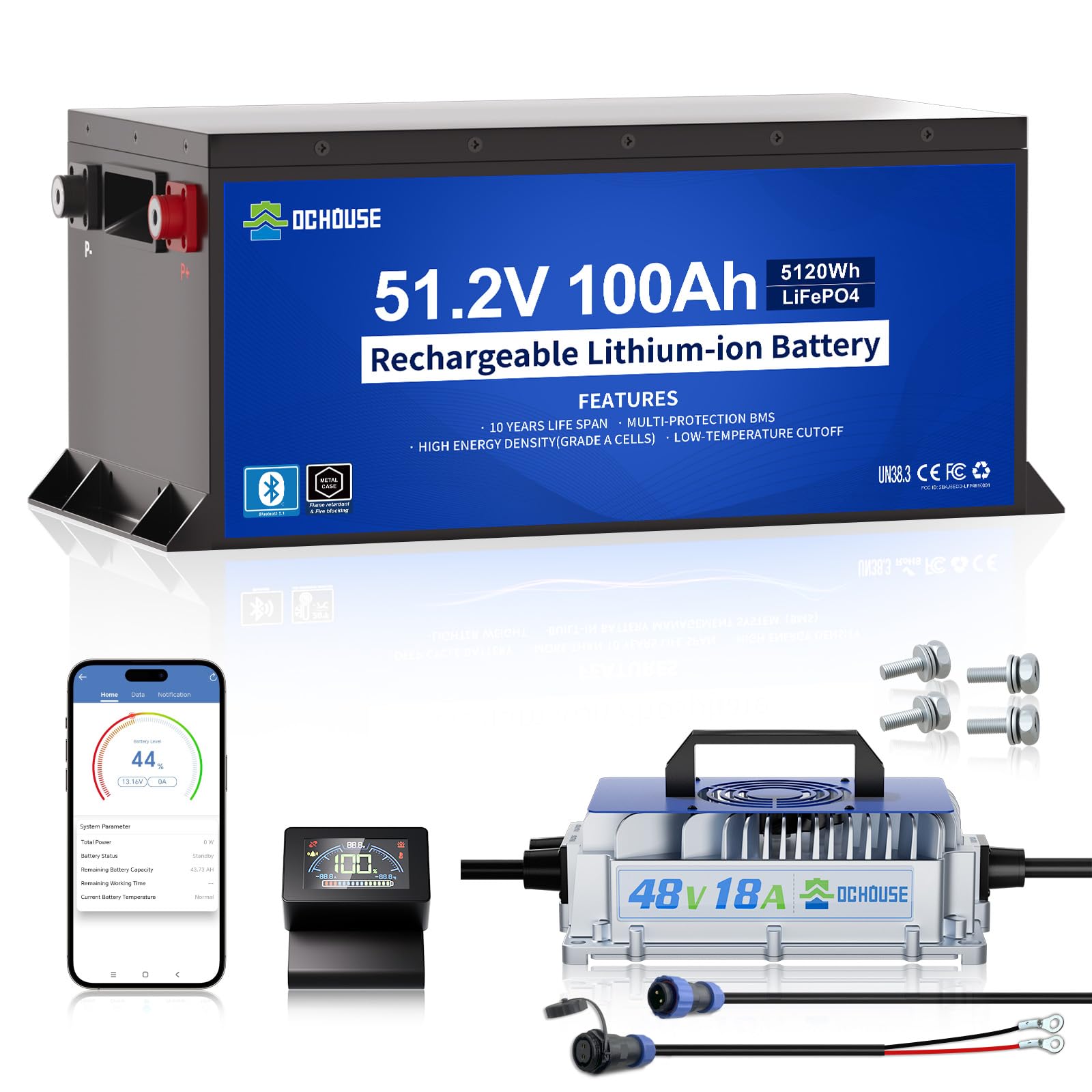
The DC HOUSE 48V 100Ah Pro is a dedicated golf cart battery that also works well for small 48V solar systems. Its 200A BMS delivers continuous 2C discharge (250A for 30 seconds) and a peak of 670A, providing snappy acceleration for golf carts. The 900W fast charger fills the battery from flat in 5.5 hours. The 99-pound weight is 74% lighter than the lead-acid equivalent, improving range and handling.
The fireproof metal case with vent and one-key safety switch is a safety improvement over ABS-cased lithium batteries. Internal metal fixtures secure the Grade A cells, reducing swelling risk and boosting lifespan by an estimated 30%. The dual Bluetooth and LCD monitor display voltage, capacity, and fault codes. Installation is plug-and-play, directly replacing six 8V 100Ah lead-acid batteries without rewiring.
Buyers report completing 18 holes with 78% charge remaining, and some describe it as “life-changing” compared to lead-acid. The included monitor requires connection to the golf cart’s key switch for power. The 3-year warranty and US-based support provide reassurance for a first-time lithium converter. For entry-level 48V storage, the DC HOUSE Pro offers a solid introduction at a low barrier to entry.
Why it’s great
- 74% lighter than lead-acid equivalent
- Plug-and-play upgrade, no rewiring needed
- Fireproof metal case with one-key switch
Good to know
- Primarily designed for golf cart fitment
- Monitor requires key switch connection
FAQ
Can I mix different battery chemistries in one solar bank?
How many watts of solar do I need to charge a 10kWh battery in one day?
Why does my LiFePO4 battery stop charging at 32°F or below?
Final Thoughts: The Verdict
For most users, the best battery storage solar power winner is the EF ECOFLOW DELTA Pro because it balances 3600Wh capacity, 3600W output, fast X-Stream charging, and seamless expandability up to 25kWh — all with reliable app control. If you need true 240V split-phase output for a whole-home setup, grab the Anker SOLIX F3800. And for building a permanent low-cost 48V solar bank, nothing beats the wholesale kWh value of the ECO-WORTHY 48V 280Ah 4-Pack.