
Forget the loot crate and the shrinking circle—a true battle royale board game captures the tension of outsmarting rivals in direct, violent conflict without a screen. The board game version eliminates RNG drop luck and forces you to bet on your own tactical deployment and combat reads every round. Whether you are maneuvering mechs, controlling wildfire, or leading a cyber-gang into a neon alley, the category is built on player elimination and asymmetric power escalation.
I’m Min — the co-founder and writer behind Gadgets Feed. By scrutinizing session reports, playthrough videos, and real Amazon feedback across dozens of competitive board games, I have mapped exactly which titles deliver genuine battle royale pacing and which just slap a bracket on a standard area-control game.
After filtering the pile, these five entries represent the smartest buys for anyone searching for the ultimate best battle royale board game to bring to their next game night.
How To Choose The Best Battle Royale Board Game
Not every competitive board game deserves the battle royale label. You need specific mechanics — player elimination, asymmetric starting positions, and a shrinking or contested play area — to feel the genre’s signature tension. Focus on the pillars below to avoid buying a dressed-up area-control game.
Player Count and Elimination Rules
A battle royale board game must support at least four players — six is better — because the genre relies on the chaos of multiple threats. Check whether eliminated players have a way to stay engaged. Some games let fallen players return as environmental hazards or automated enemies, which keeps everyone involved even after their mech is wrecked or tower burns down.
Mechanics: Action Programming vs. Turn-Based
Simultaneous action programming systems — where all players lock in moves before execution — create the frantic, unpredictable feeling of a real-time lobby. Turn-based systems, where one player goes at a time, slow the pace and allow reactive play. If you want rapid-fire rounds under 45 minutes, prioritize games with simultaneous programming phases. If you prefer methodical positioning and deep combo setups, a structured turn order works fine.
Component and Miniature Quality
Battle royale games are visual spectacles. The miniatures, tokens, and board build the world. Look for pre-painted or high-detail plastic miniatures, custom dice, and thick cardboard player boards. Fire gems, custom meeple designs, and engraved dice are signs the publisher prioritized table presence. Cheap punchboard tokens and standard cubes can break immersion in a genre built on high-stakes confrontation.
Quick Comparison
On smaller screens, swipe sideways to see the full table.
| Model | Category | Best For | Key Spec | Amazon |
|---|---|---|---|---|
| Cyberpunk Red: Combat Zone | Premium Skirmish | Reaction-based tactical combat | 2 pre-assembled gangs + terrain | Amazon |
| Tiny Epic Mechs Deluxe | Mid-Range Programming | Portable, simultaneous action | ITEMeeples step into mechs | Amazon |
| Fire Tower Deluxe | Mid-Range Environment | Fast family-friendly battles | 135 fire gems + wind die | Amazon |
| D&D: Bedlam in Neverwinter | Cooperative Escape/Combat | Solo-friendly puzzle combat | 3 acts, 90 mins each | Amazon |
| Unbroken | Solo Survival Card Game | 1-player revenge narrative | 28 combat/resource cards | Amazon |
In‑Depth Reviews
1. Cyberpunk Red: Combat Zone Core Game

Cyberpunk Red: Combat Zone drops two fully assembled gangs into a neon-drenched arena with pre-printed terrain and color-coded tactical action cards. The core box includes everything you need for a campaign — unit cards, gear tokens, and a reaction mechanic borrowed from Infinity that lets you interrupt an opponent’s turn when your units are in line-of-sight. That reaction system alone cements the battle royale feel: you never fully control the tempo because a rival can always trigger an overwatch shot or a quick dodge.
The starter supports a full two-player campaign out of the box, and with the included terrain sprues and 12 miniatures, the table presence is immediately cinematic. Players report the rules reference is minimal after one or two games, which means the 90-minute session stays focused on positioning rather than flipping through a rulebook. The Tiger Claw leader miniature is notoriously brittle at the contact point, so handle that figure with care during assembly.
For players who crave modular expansions, Combat Zone is built to scale. Additional squad packs let you bump the player count up to four or five, and free PDF updates keep the rules fresh. This is the gold standard for a premium, ready-to-play battle royale board game that delivers a tight skirmish loop without bloat.
Why it’s great
- Reaction mechanics create genuine battlefield chaos and tension
- All gang rules are printed on cards — no cross-referencing rulebook
- Complete starter supports a full 2-player campaign with terrain included
Good to know
- Tiger Claw leader miniature is fragile and prone to breakage at the base
- New starter edition released soon after this version hit shelves
- Shipping can take up to three weeks with sparse tracking updates
2. Tiny Epic Mechs Deluxe
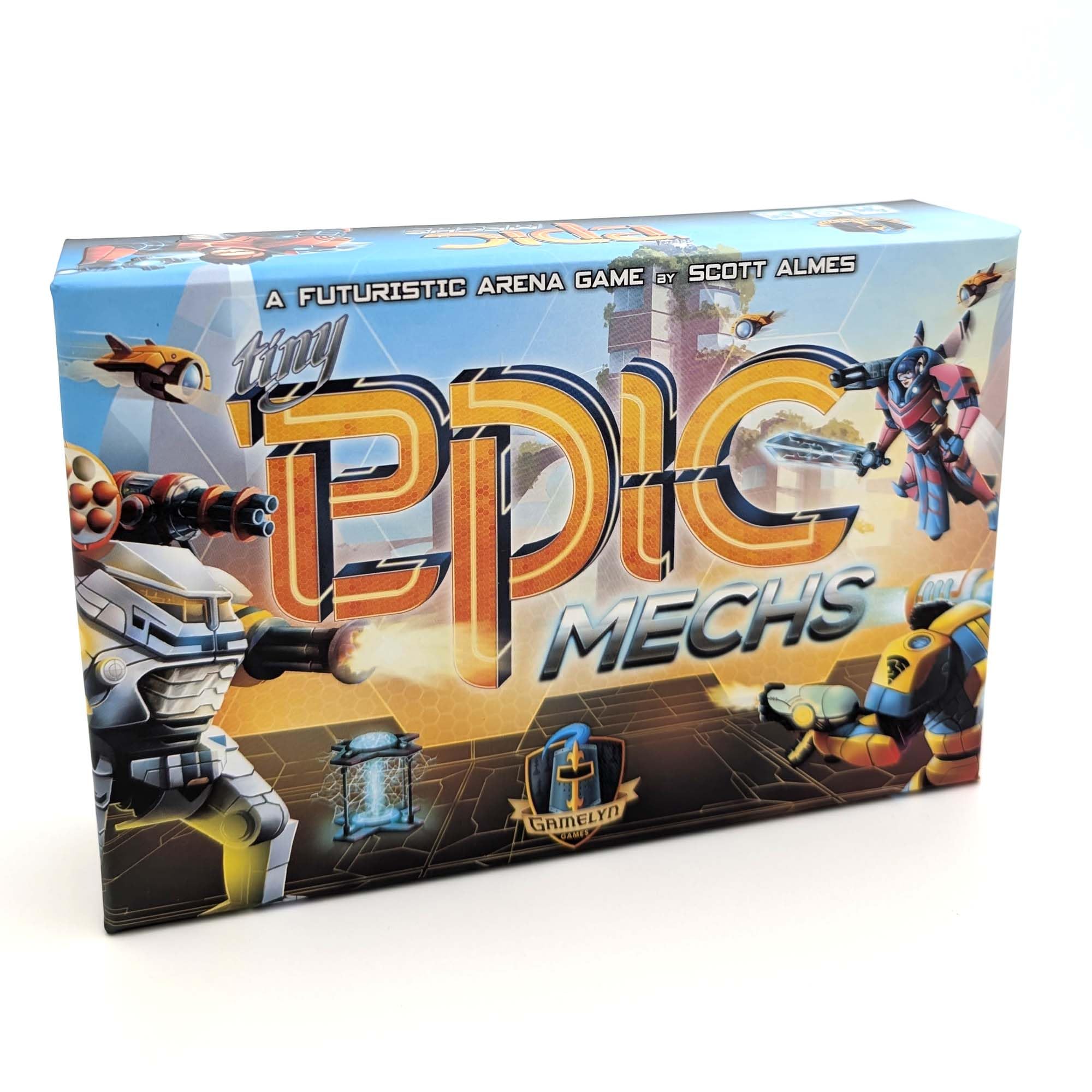
Tiny Epic Mechs Deluxe packs a surprising amount of depth into a small box. The key mechanic is action programming: all four players secretly lock in their move, attack, and collect orders each round, then everything resolves simultaneously. This simultaneous phase is the closest analog to a real-time battle royale lobby — you commit to a plan without knowing where your opponents will be, and the round can flip completely when two mechs land on the same space. The Deluxe edition adds ITEMeeples, which are miniature figures that your wooden meeples physically step into, plus exclusive weapons and pilot cards.
The weapon market rotates every round, and each pilot has a unique ability, so no two games play the same. Players praise the high-quality cardstock with a fabric-like weave and the engraved wood components. The learning curve is moderate — expect one or two matches to fully grasp the programming phase and upgrade paths. The portability of the box is a massive advantage: you can throw it in a bag and have a full battle royale session on any table in under an hour.
Combat lacks counterplay though. When someone reveals a weapon that trumps yours, there is no reaction option. Some players house-rule victory points toward combat rather than turret/mine placement to keep aggression higher. For solo or two-player modes, the automated opponent (Bot) works well and maintains the chaotic energy of a full lobby.
Why it’s great
- Simultaneous action programming replicates real-time battle royale tension perfectly
- High portability — small box with premium wooden components
- Rotating weapon market and pilot abilities deliver high replay value
Good to know
- Combat lacks a counterplay mechanic — the reveal phase is binary
- Tiny parts can be difficult to handle for players with dexterity issues
- Initial playthroughs are slower while players learn the programming flow
3. Fire Tower Deluxe Edition

Fire Tower flips the battle royale premise on its head: instead of shooting rivals, you manipulate a forest fire to burn their tower while protecting your own. The wind die determines the direction the flames spread each turn, and you play action cards to dispatch fire engines, drop smoke jumpers, or build firebreaks. The real genius is the Shadow of the Wood mechanic — players whose towers are destroyed re-enter as a vengeful forest spirit with special powers, keeping everyone engaged until the final flame goes out. This eliminates the biggest pain point of the genre: sitting out after elimination.
The Deluxe edition is a tactile showpiece. The 135 fire gems catch the light beautifully, the engraved wind die feels hefty, and the watercolor artwork by Kevin Ruelle gives the board a hand-painted look that draws players into the theme. Setup takes about 30 seconds — shuffle the cards, place the towers, drop the gems — so you can go from box to gameplay in under a minute. Each round plays in 15 to 30 minutes, making it ideal for families or as a warm-up for a longer session.
The downside is that the puzzle element can feel shallow after repeated plays. Every game is essentially the same decision tree: where is the wind blowing and which card do I hold. The high-quality components compensate, and the low barrier to entry makes it the easiest recommendation for a mixed-age group, but serious tactical gamers might outgrow it within five sessions.
Why it’s great
- Shadow of the Wood keeps eliminated players active and engaged
- Glimmering fire gems and engraved wind die create fantastic table presence
- Extremely fast setup and rules — playable within 1 minute of opening the box
Good to know
- Strategic depth plateaus after about 5 plays — limited decision variety
- Wind direction randomness can feel punishing rather than tactical
- Best at 3-4 players; 2-player mode lacks the chaotic crossfire
4. D&D: Bedlam in Neverwinter

Bedlam in Neverwinter is not a competitive battle royale — it is a cooperative three-act escape room dungeon crawl that channels the D&D spirit through a clever numbered-card exploration system. Players choose a race, class, and starting weapon, then move plastic figures around a dynamic gameboard that reveals locations and clues via puzzle solutions. The combat uses a d20 skill test system that feels authentic to the tabletop RPG without requiring a Dungeon Master. For a group that wants the party-banter of a battle royale lobby without the direct player elimination, this hybrid scratches the same narrative itch.
The three-act structure is a double-edged sword. Each act takes about 90 minutes and ends with a natural stopping point, so you can split the campaign over multiple nights. The puzzle variety — from wordplay riddles to multi-card visual challenges — keeps the group engaged, and the rulebook does a solid job of explaining everything without requiring prior D&D knowledge. Customer reviews consistently praise the accessibility and the fact that the game does not destroy cards on first play, making it easy to pass along to another group.
Replayability is the main limitation. The puzzles have fixed solutions, so the second playthrough loses all the surprise. The box includes six plastic figures and 11 gameboards, but the minis are unpainted and the cardboard is standard quality. If your group enjoys cooperative deduction and doesn’t mind a linear story, this is a strong entry-level option that bridges the gap between escape rooms and tabletop combat.
Why it’s great
- Three-act structure with natural break points — perfect for campaign play
- No card destruction — easy to reset and pass to another group
- Accessible rules that non-D&D players can pick up in minutes
Good to know
- Low replay value — fixed puzzles lose impact after the first playthrough
- Combat feels easy and lacks the tension of player-versus-player conflict
- All character cards and miniatures depict female figures, which may not suit every group
5. Unbroken: A Solo Game of Survival and Revenge

Unbroken is the lone survivor of the solo-only card game genre — a dark fantasy resource-management experience where you control a single character trying to survive and eventually strike back at the boss who betrayed you. Each turn you draw monster cards, allocate resources like health and stamina, and decide whether to fight, flee, or craft equipment. The gameplay loop is tight: a full run takes 20 to 30 minutes, and the card-driven AI keeps each encounter unpredictable. It is essentially a one-player battle royale where the map is a deck of 28 cards and the shrinking circle is your dwindling health pool.
The retail version includes all Kickstarter add-on content, including blank cards for custom encounters and alternate character variants. The decisions have meaningful weight — using a health potion now might leave you exposed in the final boss fight, and the resource sliders require careful planning. Players report high replayability because the card order changes each game and the resource AI scales differently based on which monster set you face. The flavor text is thick and immersive, though some reviewers note the font is small enough that they skip it after the first read.
Component quality is the weak point. The cards are noticeably thin compared to mid-range board games, and the rulebook placed the soundtrack QR code in a location that confuses new players. There is also publisher drama in the background — the Kickstarter fulfillment issues sour the story, but the actual game design from the developer is excellent. If you want a solo-only experience that captures the survival-against-the-odds feeling of a battle royale without needing opponents, this is your buy.
Why it’s great
- Fast 20-to-30-minute runs perfect for solo gaming sessions
- Includes all Kickstarter add-ons — blank cards for custom content
- Resource management decisions carry real weight and tension
Good to know
- Card stock feels thin and cheap compared to the premium price point
- Rulebook has a confusing soundtrack QR code placement
- Kickstarter fulfillment issues have created negative sentiment around the product
FAQ
What player count is ideal for a battle royale board game?
How does action programming compare to traditional turn-based combat for battle royale games?
Can you play a battle royale board game with just two players?
Final Thoughts: The Verdict
For most users, the best battle royale board game winner is the Cyberpunk Red: Combat Zone Core Game because it delivers a complete two-player campaign with reaction-based combat, high-quality miniatures, and terrain that immediately sells the theme. If you want the closest analog to real-time action programming in a portable box, grab the Tiny Epic Mechs Deluxe. And for the fastest, most accessible entry point with an elimination mechanic that keeps everyone playing, nothing beats the Fire Tower Deluxe Edition.