
The difference between a good backyard rib and a competition-worthy rack often comes down to a single bottle. The right barbecue sauce walks the line between sweet, smoky, tangy, and spicy, but the wrong one can mask the meat’s natural flavor under a curtain of high-fructose corn syrup, artificial smoke, or watery vinegar.
I’m Min — the co-founder and writer behind Gadgets Feed. I’ve spent hundreds of hours combing through label ingredients, comparing sugar content per serving, and analyzing customer feedback across dozens of regional blends, from Kansas City’s thick tomato base to Memphis’s vinegar-forward kick, to find the bottles that deliver genuine pit-master results at the dinner table.
After every test and side-by-side taste comparison, the winner in the best bbq sauce category goes to the bottle that delivers authentic regional flavor without hidden additives.
How To Choose The Best BBQ Sauce
Not every barbecue sauce is built for the same job. Some are designed to be a thin marinade that tenderizes tough brisket overnight, while others are thick finishing glazes meant to caramelize over direct heat. Understanding the base ingredient, sugar content, and viscosity will help you match the right bottle to the right cut of meat every time you fire up the grill.
Regional Style Determines The Flavor Foundation
Kansas City sauces are typically thick, sweet, and tomato-forward with a heavy molasses or brown sugar base. Memphis sauces lean tangier and thinner, often built on vinegar and mustard. Texas sauces tend to be savory and mild, using beef drippings and smoke as primary notes. North Shore roast beef sauces (like the James River) are unique sharp blends that double as sandwich condiments. Know the style you want before you buy.
Sugar Per Serving Changes How The Sauce Performs
A standard barbecue sauce can pack 12 to 16 grams of sugar per two-tablespoon serving — often from high-fructose corn syrup. If you are grilling over high heat, sugar-heavy sauces burn quickly and turn bitter. For slow smoking or low-and-slow cooking, a sauce with moderate sugar content around 4 to 8 grams per serving gives you a stable glaze without scorching. For keto or low-carb diets, zero-sugar options using sucralose or stevia maintain sweetness with minimal carb impact.
Thickness And Vinegar Level Dictate Application Method
Thin sauces with high vinegar content (often around the first or second ingredient) are excellent as marinades and mops — they penetrate meat fibers and tenderize tough cuts. Thick, spoon-coating sauces work best as finishing glazes applied in the last 15 to 20 minutes of cooking or as dipping sauces at the table. If a sauce has a viscosity similar to ketchup, expect it to cling to ribs and wings; if it pours like oil, treat it as a basting liquid, not a final coat.
Quick Comparison
On smaller screens, swipe sideways to see the full table.
| Model | Category | Best For | Key Spec | Amazon |
|---|---|---|---|---|
| G Hughes Sugar Free | Sugar Free | Low-carb & keto diet | 2g carbs per serving | Amazon |
| Lillie’s Q Smoky | Premium | Gourmet grilling & slow cooking | Gluten-free, no HFCS | Amazon |
| Blues Hog Champions’ Blend | Competition | Competition & versatile cooking | 64 oz bulk container | Amazon |
| Gates Original Classic | Kansas City | Kansas City style barbecue | Vinegar-forward KC recipe | Amazon |
| Claude’s Original Brisket Marinade | Marinade | Tenderizing brisket & large cuts | 64 oz, hickory smoke base | Amazon |
| James River BBQ Sauce | Regional | North Shore roast beef sandwiches | 1950s original recipe | Amazon |
| Open Pit Blue Label | Bulk Classic | Family gatherings & large batches | 12-pack, 216 oz total | Amazon |
In‑Depth Reviews
1. G Hughes Sugar Free BBQ Sauces (Pack of 2)

The G Hughes Sugar Free combo hits a rare double: it satisfies the craving for sweet barbecue sauce while keeping carbs at just 2 grams per serving. Both the hickory and original varieties avoid the chemical aftertaste that plagues many sugar-free alternatives, using sucralose as the sweetener without the bitter finish. The texture is slightly thinner than traditional KC-style sauces, which makes it easier to brush onto chicken wings without clumping.
Keto dieters and low-carb followers will appreciate that each 18-ounce bottle is completely gluten free and contains zero sugar, yet the flavor profile still delivers that molasses-like depth that makes barbecue feel indulgent. The hickory variant brings a mild wood-smoke note that complements pork shoulder and brisket equally well.
One trade-off worth noting — this sauce is thinner than most supermarket standards, with a vinegar-forward profile that leans more Memphis than Kansas City. If you prefer an ultra-thick glaze that piles on ribs, this will feel light. But for everyday grilling, meal prep, and anyone watching their carb count, it’s the most versatile bottle in this lineup.
Why it’s great
- Only 2g net carbs per serving — ideal for strict keto diets
- No sugar or artificial preservatives, yet tastes surprisingly rich
- Two distinct flavors (hickory and original) in one value pack
Good to know
- Texture is noticeably thin compared to traditional thick sauces
- Vinegar taste may overpower if you prefer sweet-forward blends
2. Lillie’s Q Smoky Barbeque Sauce
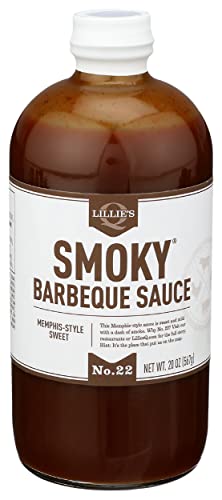
Lillie’s Q draws straight from Memphis barbecue tradition, and the Smoky variant is a textbook example of how brown sugar and cayenne can coexist without either dominating. The texture lands right in the sweet spot — thick enough to cling to a smoked chicken thigh but fluid enough to spread evenly across a rack of ribs. There is no high-fructose corn syrup, no MSG, and no preservatives in the ingredient list; just tomato concentrate, brown sugar, vinegar, and natural smoke flavor.
BBQ enthusiasts who can taste the difference between artificial smoke and real hardwood will appreciate that Lillie’s uses actual wood smoke essence rather than liquid smoke concentrate. The cayenne pepper adds a mild tingle on the back of the palate, but this is not a spicy sauce — it is a balanced, sweet-smoky sauce with just enough heat to keep things interesting. The gluten-free certification also makes it safe for anyone with celiac concerns.
At 20 ounces per bottle, the size is on the smaller end for the premium price point, and the price has crept upward recently based on customer feedback. But for special occasions, holiday smoking sessions, or gifting to a barbecue fanatic, the ingredient quality and authentic flavor profile justify the investment.
Why it’s great
- Real wood smoke flavor without artificial additives or HFCS
- Ideal thickness for glazing — sticks well without running off
- Gluten-free with a clean, high-quality ingredient list
Good to know
- 20 oz bottle is small for the premium price
- Price has increased noticeably since initial release
3. Blues Hog Champions’ Blend Barbeque Sauce
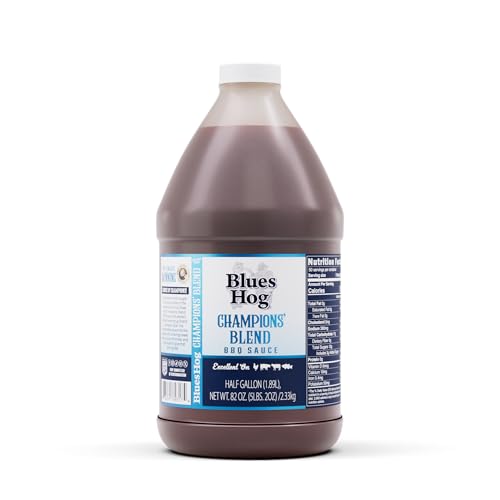
Blues Hog is the closest thing to an industry secret among competitive BBQ teams — roughly 90% of Memphis in May competitors reportedly use it. The Champions’ Blend hits the trifecta of sweet, smoky, and tangy without any single note bullying the others. The texture is medium-thick, perfect for both basting during a long smoke and finishing as a glaze in the last 15 minutes.
The 64-ounce jug is a serious investment for home cooks, but the per-ounce cost lands well below most premium glass bottles. If you host regular cookouts, smoke briskets every weekend, or simply hate running out of sauce mid-summer, this bulk container will last through multiple large pork shoulders. It is all-natural, gluten-free, and now made without high-fructose corn syrup — a recent reformulation that improved the ingredient profile without changing the iconic flavor.
Because this sauce is designed for versatility, it does not specialize in any single regional style. If you want an authentic Kansas City or Texas-specific flavor, you might find it too general. But for a one-bottle-does-all solution that works on chicken, pork, beef, fish, and even fries, the Blues Hog is the most competent all-rounder in this category.
Why it’s great
- Trusted by competition BBQ teams — proven performance under heat
- 64 oz bulk container offers exceptional per-ounce value
- Balanced sweet-smoky-tangy profile works on every meat type
Good to know
- Bulk size is heavy and takes up significant pantry space
- Generalist profile lacks regional specificity for purists
4. Gates Original Classic Bar-B-Q Sauce (Pack of 2)

Gates is an institution in Kansas City barbecue, and the Original Classic sauce is the version served at their legendary restaurants. Unlike the thick, syrupy sweet sauces that many associate with KC barbecue, Gates takes a more aggressive vinegar-forward approach with a noticeable spice kick that builds as you eat. It is thinner than a typical KC sauce, closer to a mop than a glaze, which makes it excellent for drenching pulled pork sandwiches or soaking into chopped brisket.
This two-pack of 18-ounce bottles gives you 36 ounces of sauce that tastes unmistakably like a barbecue joint — not a grocery store condiment. The spice blend includes black pepper, red pepper, and paprika, creating a layered flavor that works as both a cooking sauce and a table sauce. It pairs particularly well with fatty meats like pork shoulder, where the acidity cuts through the richness.
The downside is that if you are looking for a sweet, ketchup-like sauce that kids and mild-palate eaters enjoy, this is not it. The vinegar bite is front and center, and several reviewers noted that it tastes better as a cooking ingredient than a straight dipping sauce. If you are a KC barbecue purist or you want that authentic restaurant tang, Gates delivers exactly what it promises.
Why it’s great
- Authentic Kansas City restaurant recipe — tastes like the real deal
- Vinegar-heavy profile cuts through fatty meats perfectly
- Two-bottle pack offers good total volume for the category
Good to know
- Very vinegar-forward — not a sweet, kid-friendly sauce
- Thinner consistency may not suit thick-glaze preferences
5. Claude’s Original BBQ Brisket Marinade Sauce
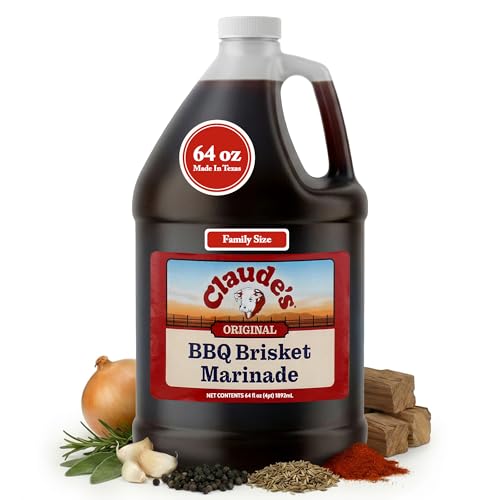
Claude’s is not a sauce you brush on at the end — it is a marinade you soak your meat in before it ever touches the heat. The formula uses natural hickory wood smoke, vinegar, and spices to tenderize tough cuts of beef, making it ideal for brisket, chuck roast, pork shoulder, and even leg of lamb. Unlike a standard barbecue sauce that sits on the surface, Claude’s penetrates deep into the muscle fibers, delivering flavor from the inside out.
The 64-ounce jug is built for large cuts of meat and backyard smoking sessions. The recommended method is simple: pour half a cup into the pan, half a cup over the meat, cover tightly with foil, and cook low and slow at around 250°F for three to six hours until fork-tender. The result is a juicy, smoky roast with a natural beef flavor that does not rely on sugar caramelization. The sauce is gluten-free, kosher certified, and contains no artificial preservatives.
Important distinction — Claude’s is not a table sauce or a finishing glaze. It is very thin, very vinegary, and designed to be absorbed during cooking. Using it as a dipping sauce straight from the bottle will leave you disappointed. But for transforming a cheap cut of beef into a competition-worthy brisket, there is no better marinade in this roundup.
Why it’s great
- Specifically formulated to tenderize tough brisket cuts
- 64 oz bulk container at a low per-ounce cost
- Clean ingredient list — gluten free, kosher, no preservatives
Good to know
- Too thin and vinegary to use as a finishing glaze or dip
- Flavor profile is mild and beef-forward, not sweet or spicy
6. James River BBQ Sauce

James River holds a cult-level status in Massachusetts for one specific purpose: the North Shore roast beef sandwich. The sauce uses a recipe unchanged since the 1950s, producing a sharp, tangy, mildly spicy liquid that is unlike any traditional barbecue sauce on the market. It is not thick, it is not sweet, and it does not rely on tomato as its primary base — instead, it delivers a unique savory punch with a noticeable spice kick that lingers.
Fans of Kelly’s Roast Beef, Big Fred’s, and other North Shore institutions will recognize this immediately as the sauce that makes the sandwich. It works best when poured directly onto a toasted onion roll stacked with thinly sliced roast beef, a slice of provolone, and mayo. The sauce can be used cold straight from the bottle or heated slightly to open up the spice notes. Some customers also report using it as a base for pasta sauces and marinades.
The 18-ounce bottle is on the smaller side, and the uniqueness of the flavor means it is not a universal barbecue replacement. If your cooking revolves around traditional sweet or smoky sauces, James River will feel out of place. But for anyone chasing the authentic North Shore roast beef experience outside of Massachusetts, this bottle is irreplaceable.
Why it’s great
- Unchanged 1950s recipe with a sharp, unique flavor profile
- Perfect match for North Shore roast beef sandwiches
- Works as a versatile base in pasta sauces and marinades
Good to know
- Not a traditional barbecue sauce — not sweet or thick
- Small 18 oz bottle for the price
7. Open Pit Blue Label Original Barbecue Sauce (Pack of 12)

Open Pit Blue Label is the most nostalgic sauce in this lineup — a mid-century Southern original that has been a staple in Midwestern and Southern kitchens for generations. The vinegar-based red sauce uses a proprietary blend of spices that creates a robust, tangy flavor that is noticeably less sweet than modern grocery-store sauces. It is an excellent base for customization: add honey, hot sauce, garlic, or liquid smoke to tailor it to your exact preference.
This 12-pack delivers a massive 216 total ounces of sauce, making it the highest-volume option by a wide margin. If you are feeding a large family, running a food truck, or want to stock the pantry for an entire summer of grilling, the per-bottle cost is extremely low compared to any other sauce in this review. Customers from the Midwest particularly praise its use in family recipes — it works in everything from country ribs to baked beans to spaghetti sauce.
The trade-off is that Open Pit does not have the premium ingredient profile of smaller-batch sauces. It contains high-fructose corn syrup and artificial flavors, which disqualifies it for clean-eating buyers. But as a workhorse sauce that tastes great straight out of the bottle and serves as a blank canvas for experimentation, it is the most practical choice for high-volume cooking.
Why it’s great
- Massive 12-pack (216 oz) for unbeatable bulk value
- Classic tangy flavor works as-is or as a customization base
- Deep nostalgic Midwest barbecue heritage with proven recipes
Good to know
- Contains high-fructose corn syrup and artificial flavors
- Thin consistency closer to a mop than a thick glaze
FAQ
Is sugar-free barbecue sauce actually good for grilling?
What is the difference between Kansas City and Memphis barbecue sauce?
Can I use a marinade sauce like Claude’s as a regular BBQ sauce?
Is James River sauce good for traditional American barbecue?
How long does an opened bottle of barbecue sauce last in the fridge?
Final Thoughts: The Verdict
For most users, the best bbq sauce winner is the G Hughes Sugar Free because it delivers genuine barbecue flavor with only 2 grams of carbs per serving, making it the most versatile option for both everyday grilling and strict dietary needs. If you want that thick, competition-grade trifecta of sweet, smoky, and tangy, grab the Blues Hog Champions’ Blend. And for authentic Kansas City restaurant flavor at home, nothing beats the Gates Original Classic.