
Our readers keep the lights on and my morning glass full of iced black tea. As an Amazon Associate, I earn from qualifying purchases.
Specs are compiled from manufacturer listings and verified buyer reviews and can change over time — please confirm the key details on the product page before buying.
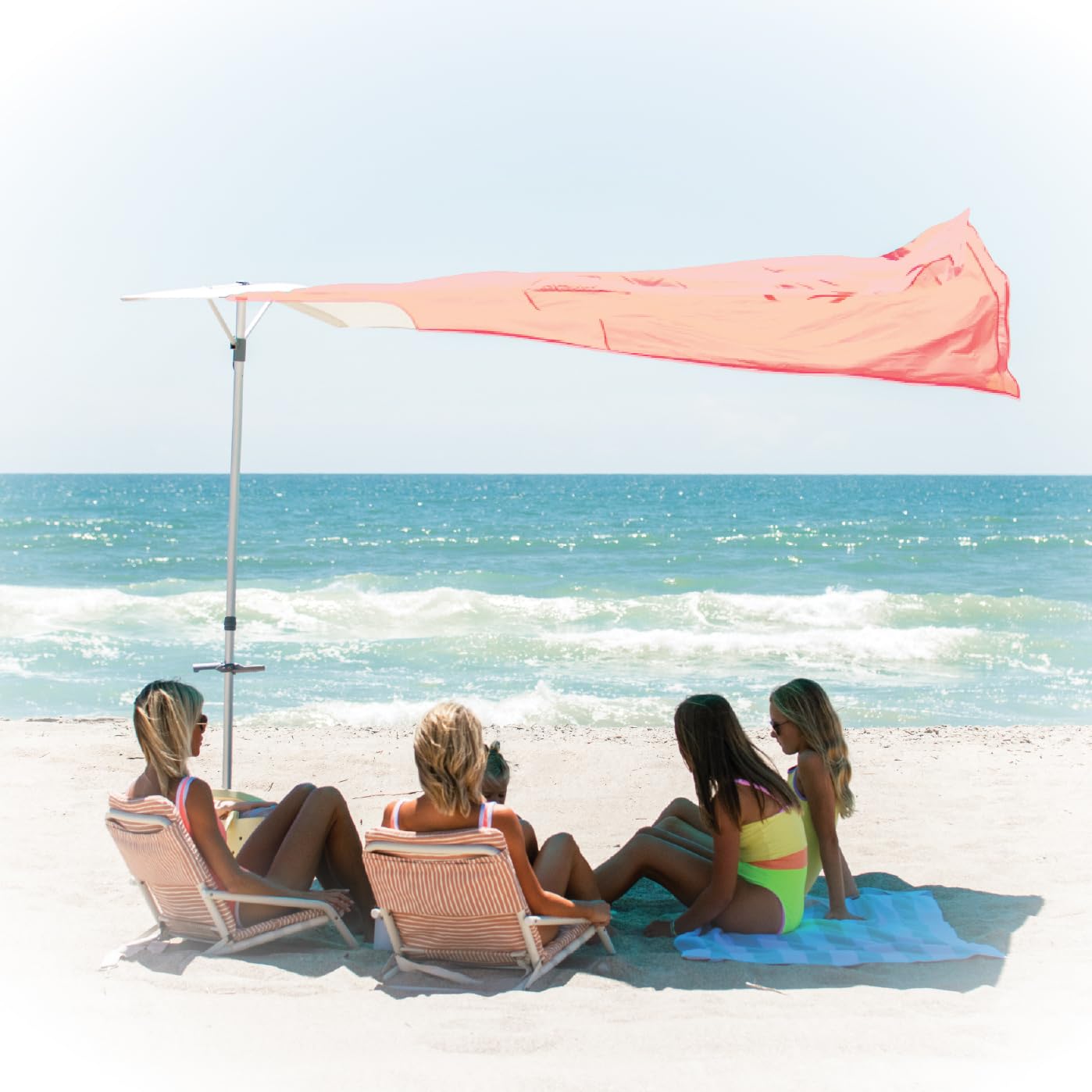
A classic beach umbrella becomes a projectile in any breeze, but a wind-driven shade sail stays put by harnessing that same wind. This guide compares wind-powered sails, anchored canopies, and backyard rectangles to find which design truly holds up on sand. You’ll see wind-driven canopies that self-adjust, sail shades that need a stiff breeze, and backyard-style rectangles that might tempt you — each with the real pros and cons owners live with.
I’m Min — the founder and writer behind Gadgets Feed. This guide is built by comparing the manufacturers’ published specifications and the patterns across verified customer reviews, so you get each pick’s real strengths and trade-offs instead of marketing spin.
Here are the beach shade sail options that survive wind, sand, and a full day of sun. Here is our breakdown of the beach shade sail options that actually hold up on sand, in wind, and through a full day of sun.
Our Picks at a Glance


How To Choose The Best Beach Shade Sail
Before you click buy, you need to match the shade to the beach you actually visit. A breezy ocean shoreline rewards a wind-driven sail that floats on the breeze, while a calm lake beach with no breeze will leave that same sail collapsed in a heap. The key specs are square footage, UPF rating, and wind-handling design.
Wind-powered sails vs. anchored canopies
Sail-style shades are the breakout category for a reason: they catch the breeze and float on it, so the wind that destroys umbrellas is the very force holding them up. The catch is hidden in the fine print — most need a minimum breeze (often around 3 MPH) just to function. If your spot is dead calm, you’ll be anchoring a limp sail. The alternative is a pole-and-sandbag canopy that stands on its own but weighs more and catches gusts like a kite.
Square footage and UPF — the two numbers that matter
Coverage is measured in square feet, and a 150-square-foot canopy swallows a family of eight plus coolers while a 75-square-foot mini shades two. Pair that with the UPF rating — UPF 50+ blocks roughly 98% of UV rays, while UPF 30+ still blocks most but lets a little more through. Match square footage to your group size and UPF rating to your skin’s sensitivity.
Setup time and weight
Some shades screw an anchor into the sand and twist together in under three minutes, while others demand hardware kits, poles, and tension tuning that belongs in the backyard, not the beach. Weight runs from a feathery 2-pound travel shade you pack in a carry-on to a 4-pound canopy that covers a crowd. Choose weight based on how far you’ll carry it—from a 2.3-pound travel sail to a 6.88 kg permanent install.
Quick Comparison
| Model | Best For | Shade Coverage | UV Block | Weight | Amazon |
|---|---|---|---|---|---|
| Solbello Shade★ Best Overall | Windy beach days, easy solo setup | Shades 3+ people | UPF 50+ | 4.52 lbs | Amazon |
| ColourTree 7′ x 12′Budget Pick | Backyard patios, light rain cover | 7′ x 12′ | 95% UV, UPF 50 | 1.59 kg | Amazon |
| HappyTrends 12′ x 12′Cool Comfort | Backyard decks, breathable shade | 12′ x 12′ (144″ x 144″) | UV protection | — | Amazon |
| Amgo 14′ x 14′ | Patios and pergolas needing rain protection | 14′ x 14′ (168″ x 168″) | 98% UV | 3.33 kg | Amazon |
| Shark FIN Shade (Large) | Families needing quick wind setup | 9′ x 10′ (90 sq ft) | UPF 50+ | — | Amazon |
| OOTONAT 20′ x 20′ | Large backyard areas, high wind zones | 20′ x 20′ (240″ x 240″) | 95% UV | 6.88 kg | Amazon |
| HOMA 15′ x 16′ | Cooling a house side or large patio | 15′ x 16′ (192″ x 180″) | 95% UV | — | Amazon |
| Shibumi Shade Mini | Couples traveling light | 75 sq ft | UPF 30+ | 2.3 lbs | Amazon |
| Shibumi Quiet Canopy | Groups up to 8 on breezy shores | 150 sq ft | UPF 50+ (98% UV) | 4 lbs | Amazon |
In‑Depth Reviews
1. Solbello Wind-Driven Beach Umbrella
Our pick — over 4.5★ from 900+ verified ratings; the strongest balance of quality and price.
The wind-driven umbrella that self-adjusts so it never tumbles down the beach.
It rotates to face gusts, using wind as a stabilizing force instead of a tipping hazard. Instead of fighting gusts, the umbrella rotates to face them, so a breeze that would flip a classic beach umbrella just keeps this one standing — owners describe it as being impossible to blow over and needing no sandbags at all. At 4.52 pounds, it’s light enough that a single person carries it easily, and the screw-style anchor pole twists into the sand in about a minute once you get the hang of it.
Owners praise its fast, solo setup—one person can anchor it in about a minute, ideal for those with limited mobility. In practice, it shades three or more people, and the canopy swaps out easily if you want a fresh look. It’s genuinely quiet too, with no flapping fabric noise to annoy you.
There is a learning curve around wind awareness, and the screw anchor is sharp, so you’ll want to pay attention during assembly. One owner noted that in dead-calm conditions you may need to stake it lean-to style, which is a minor wrinkle given how well it behaves in the breeze. As owners put it: “Best beach umbrella ever! It works exactly as described, don’t know how it’s possible but it never falls down and no risk of wind pulling out of sand.”
Windproof beach anchor
- Self-adjusts to wind direction so it stays put
- One-person, roughly 2-minute setup
- Lightweight at 4.52 lbs and easy to carry
- Shades 3+ people comfortably
Heavy pole to lug
- Requires some breeze to work at its best
- Sharp screw anchor needs careful handling
- Premium price for a beach shade
steady in gusts: you want a beach shade that survives windy days without sandbags, stakes, or a wrestling match — and you value a quick solo setup.
needs car space: you mostly visit completely still lakes where there’s never a breeze to catch.
2. ColourTree 7′ x 12′ Rectangle Sun Shade Sail
The budget-friendly rectangle that cools a patio fast but demands a tilt.
This is a backyard-and-patio shade first, not a sand-anchored beach canopy, so think pergola, greenhouse, or carport rather than shoreline. The 220GSM PES fabric wears a thick PU coating that blocks rain effectively, and it cuts 95% of UV rays while lowering surface temperature noticeably — one owner hung it in a greenhouse and saw the heat drop immediately. Weighing 1.59 kg, it’s light to handle during installation.
You hang it with tie mounts at the corners, and the curved edges pull it tight for a clean look. It’s versatile enough for weddings, patios, pools, and driveways.
The honest catch is water. Because the fabric is non-permeable, heavy rain pools on top in gallons unless you hang it at that 20 to 40-degree tilt the listing recommends — owners who skipped the angle ended up poking holes to drain it. As buyers report: “I didn’t realize this when I purchased it, but the fabric is non-permeable.” It’s also not recommended for high-wind areas, and colors can run slightly darker than the photos.
wide patios: budget-conscious backyard setups where you can nail the tilt angle and avoid extreme winds.
DIY mounting: you must install it with a slope or you’ll be draining pooled rainwater yourself.
3. HappyTrends 12′ x 12′ UV Protection Shade Sail
The breathable woven square that keeps you noticeably cooler underneath.
This 12′ x 12′ (144″ x 144″) sail is built from High Density Polyethylene fabric that lets air pass right through, so you get shade without the stuffy greenhouse effect. Owners raving about using it in Arizona’s 100°F heat describe sitting underneath as significantly cooler, and the material filters most of the light while keeping the area comfortable. The woven texture even lets rainwater pass through, which sidesteps the pooling problem entirely.
Quality is the most-praised trait here, with owners noting the sturdy woven material feels thicker than expected and holds up against heat and wind. Reinforced corners with rust-resistant stainless steel D-rings take the strain, and the curved edges pull tight to prevent sagging. Each corner ships with thick PE ropes measuring 5.4 feet so you can adjust the tension to your mounting points.
The catch is that you provide your own mounting hardware — it arrives with rope only, so owners typically grab a hardware kit separately for a clean install. One owner found the material runs a bit thinner than expected for a very basic setup. As owners mention: “This Sun Shade Sail works great in my backyard. It is light, and provides a lot protection and is cool.”
sunny afternoons: you want breezy, breathable shade for a deck or patio in serious heat and don’t mind buying mounting hardware.
stormy days: you expect everything needed for installation right in the box.
4. Amgo 14′ x 14′ Waterproof Shade Sail
The heavy 220GSM square that blocks 98% of UV and shrugs off rain.
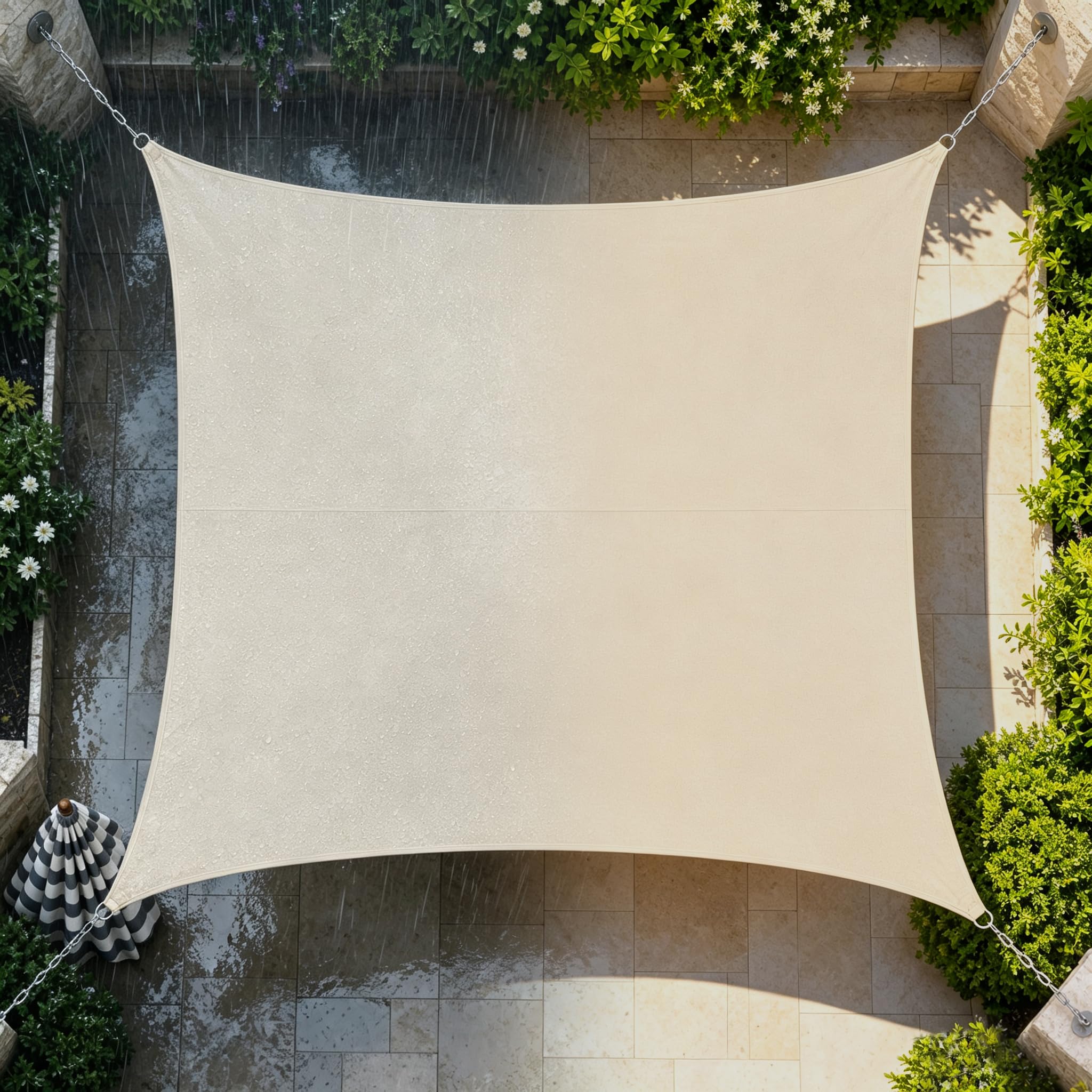
Step up to a denser fabric: this 14′ x 14′ (168″ x 168″) sail uses 220GSM PES canopy material with a thick PU coating, which pushes UV blockage to 98% and repels water so your patio stays dry in a shower. The concave borders hold tension for a smooth look, and the beige color resists fading under constant sun. Owners describe the stitching as heavy duty and the color as magnificent.
Quality and sun protection are the two most-praised aspects, and the consensus is that it works exactly as a waterproof shade should when hung at the recommended 20 to 40-degree angle. It’s locally produced in American facilities, and your purchase carries a 3-year performance support window in case anything goes wrong. It suits pergolas, pools, patios, driveways, and yards.
Size is where opinions split. Some owners find it perfect, while others note the actual shade narrows in the middle — one measured roughly 6 feet of usable width through the bulk of the sail even though the corners span 14 feet, which matters if you’re trying to cover a table. Like most waterproof sails, it’s not suggested for high-wind regions, and the fabric can feel similar to the budget ColourTree above.
rainy climates: you need maximum UV blocking and rain protection over a pergola or patio and have the proper slope installed.
high winds: you need a perfectly uniform square of shade for a wide table — the middle runs narrow.
5. Shark FIN Shade Beach Tent (Large 9′ x 10′)
The sandbag-anchored canopy that handles everything from calm to 30 MPH gusts.
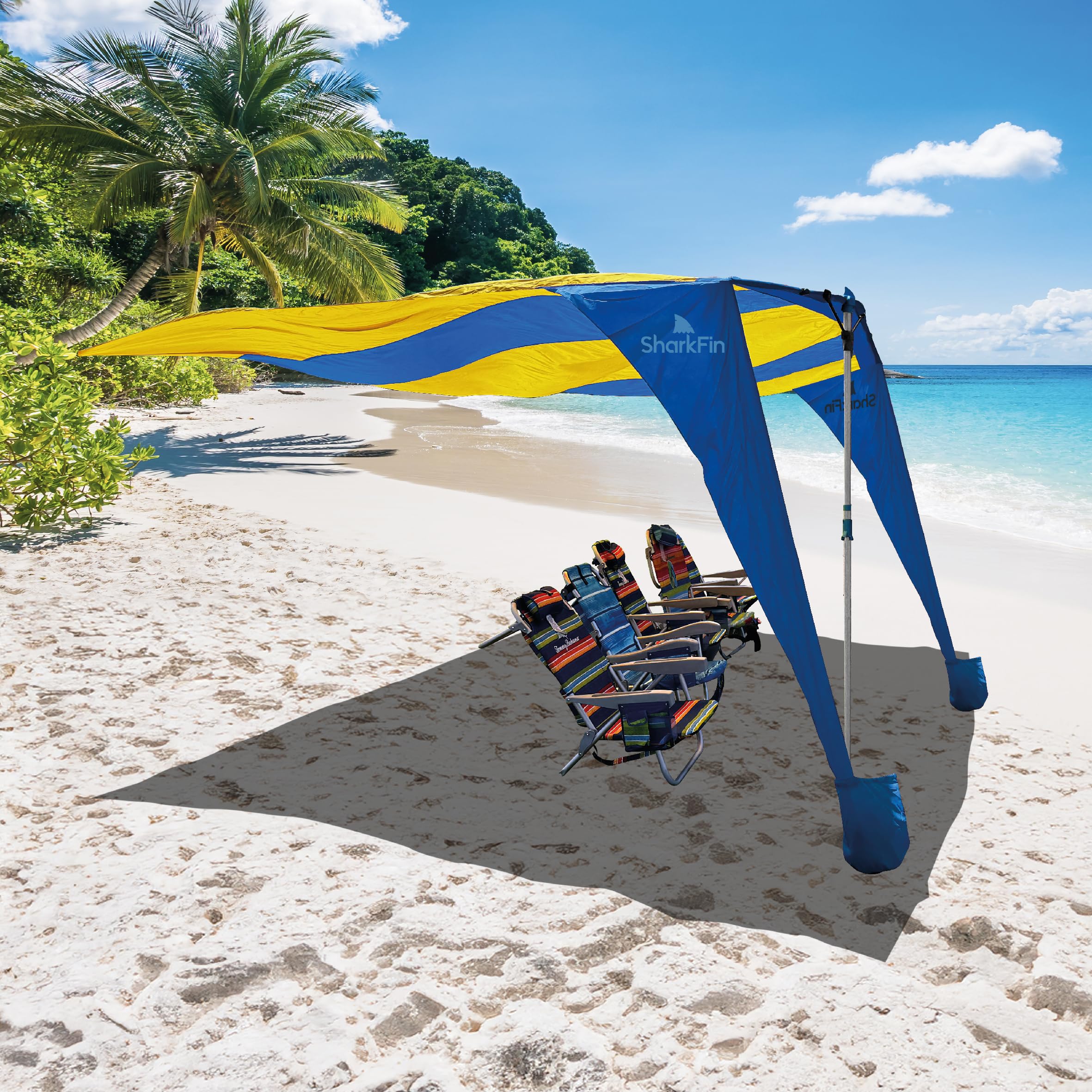
This is the hybrid answer: a pole-and-fabric canopy that works in as little as 3 MPH of wind and holds firm up to 30 MPH, with sandbags doing the anchoring work. Setup is genuinely fast — screw the bottom pole into the sand to the red line, expand the top pole, and fill the two sand bags — with owners routinely finishing in under five minutes and one timing it under three. The 90 square feet of coverage fits 2 to 4 people, and the top pole even has hooks for hanging a speaker.
Easy setup is the top praise by a wide margin, with quality and value for money close behind. Customers note it holding steady in 10 to 15 MPH winds without ever blowing over, and two different families compared it directly to the far pricier Shibumi brand and preferred this one. The frame is metal with fabric, and the whole thing packs into a carrying bag with a strap.
The durability feedback is genuinely mixed. One owner reported all but one of the four sandbag loops tearing after three uses, and a light wind dropping the top onto their heads — a real outlier compared to the many positive experiences, but worth knowing. There’s also a no-wind solution built in: two included strings anchor the back with sandbags so you’re not stuck on a still day.
quick shade: you want a fast-pitching family canopy that covers 90 square feet and survives gusty beach days without the premium price tag.
breezy beaches: you’ll be rough on the sandbag loops — treat them gently to avoid the durability complaints.
6. OOTONAT 20′ x 20′ Rectangle Shade Sail
The oversized 20-footer with integrated steel cables that shrug off brutal wind.
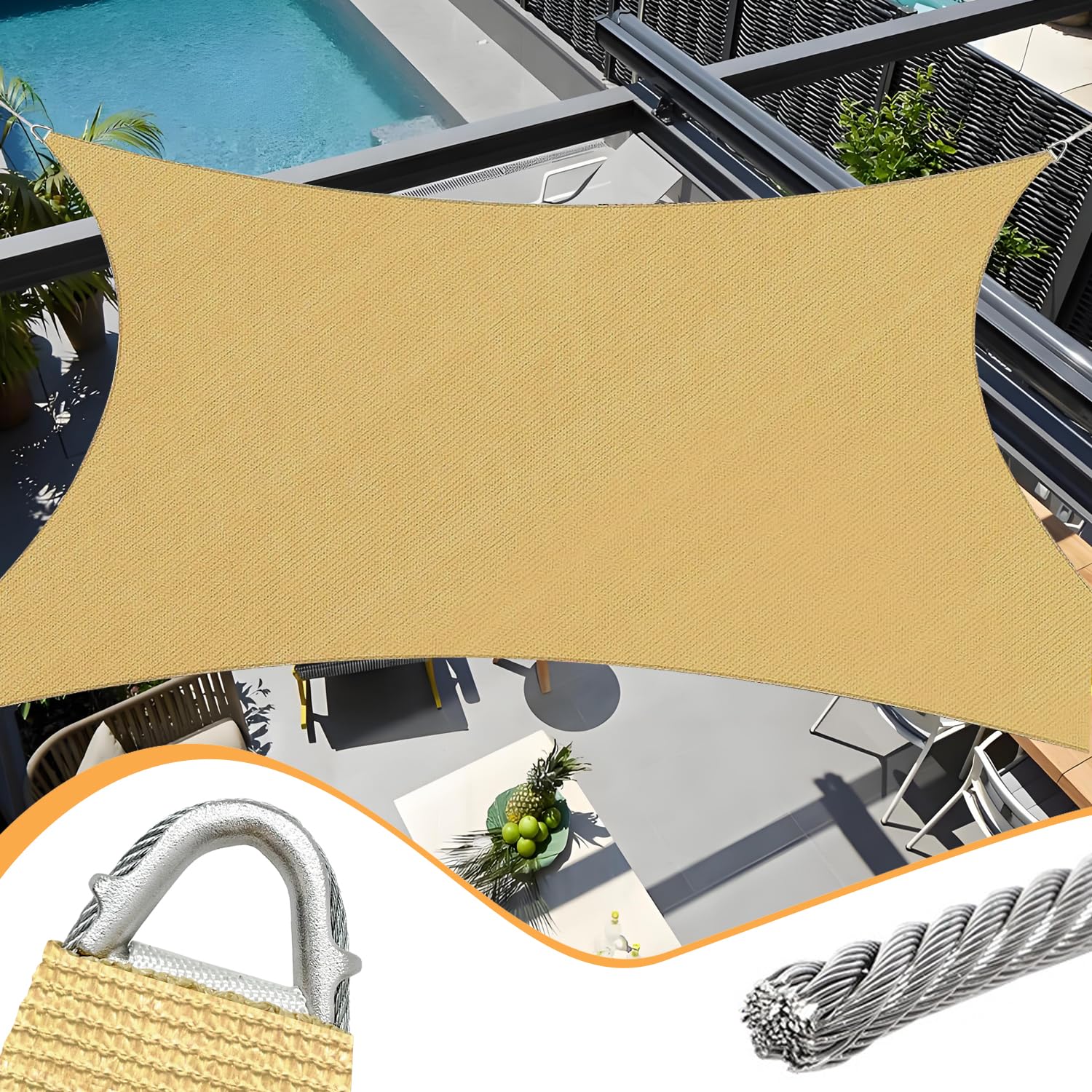
This is the heavy artillery of shade sails. The 240″ x 240″ (20′ x 20′) rectangle pairs a 195 GSM permeable fabric with integrated cable wires along every edge, so all the pulling tension goes into the steel instead of the cloth. That engineering pays off — one owner reported it withstanding 30-mile-per-hour winds, and another ran it through brutal wind and harsh sun shading their Japanese maples. It’s beastly at 6.88 kg, so this is a low-maintenance backyard installation, not a beach carry.
Quality and durability lead the praise here, with owners also noting it’s simple to tighten without damaging the cloth. The breathable fabric blocks up to 95% of UV while letting cooling breezes and light pass through, and because it’s permeable, rainwater passes right through — no pooling, no sagging puddles. The curved edges stretch tight against sagging, and it covers decks, pools, pergolas, sandboxes, and driveways.
The weaknesses are minor but real. Hardware kits are sold separately, so budget for that, and the included rope drew a complaint as the weak point from one owner. Another noted a significant droop — roughly 3 feet down from the edges — under its own weight, though it still did the job. If you order too large, one owner simply folded and tied the corners to fit a pergola, which works fine.
big yards: large backyard areas where you want a permanent-feeling, wind-tough sail that never pools water.
small budgets: you want something portable for the beach — this one is a heavy, hardware-dependent install.
7. HOMA 15′ x 16′ Rectangle Sun Shade Sail

The commercial-grade rectangle that cools the sunny side of your whole house.
Owners buy this one to fight the sun at house scale — one bought two just to cool the sunny side of their home and reported lower electric costs, another has run it for two seasons shading a tiny home. The 185GSM High Density Polyethylene fabric is woven and breathable, so water and breeze pass through, preventing pooling while still blocking up to 95% of harmful UV. It measures 192″ x 180″ (15′ x 16′), a serious footprint for patios, pools, carports, and driveways.
Quality is the most-praised aspect by a wide margin, with sun protection and easy installation close behind. The strong stitched seams and stainless steel D-rings hold tension well, and owners note it handles sun, wind, and heavy rain without drooping. It’s made in the USA with custom sizes available, and installation guidance leaves a 1.5 to 2-foot allowance between the fixing point and sail for hardware.
Durability is the one mixed note: most say it holds up over time, but a few report the fabric ripping after roughly a year of heavy use. One owner was disappointed by D-hooks instead of grommets and a sparkly grey fabric finish not shown in photos, though they still acknowledged it reduces heat. Expect to re-tighten hardware after a few days as the material stretches normally.
angled sun: you want a big, breathable, US-made sail that cools a large patio or house side and cuts energy costs.
fade picky: you demand a fabric that never degrades in direct sun for many years.
8. Shibumi Shade Mini
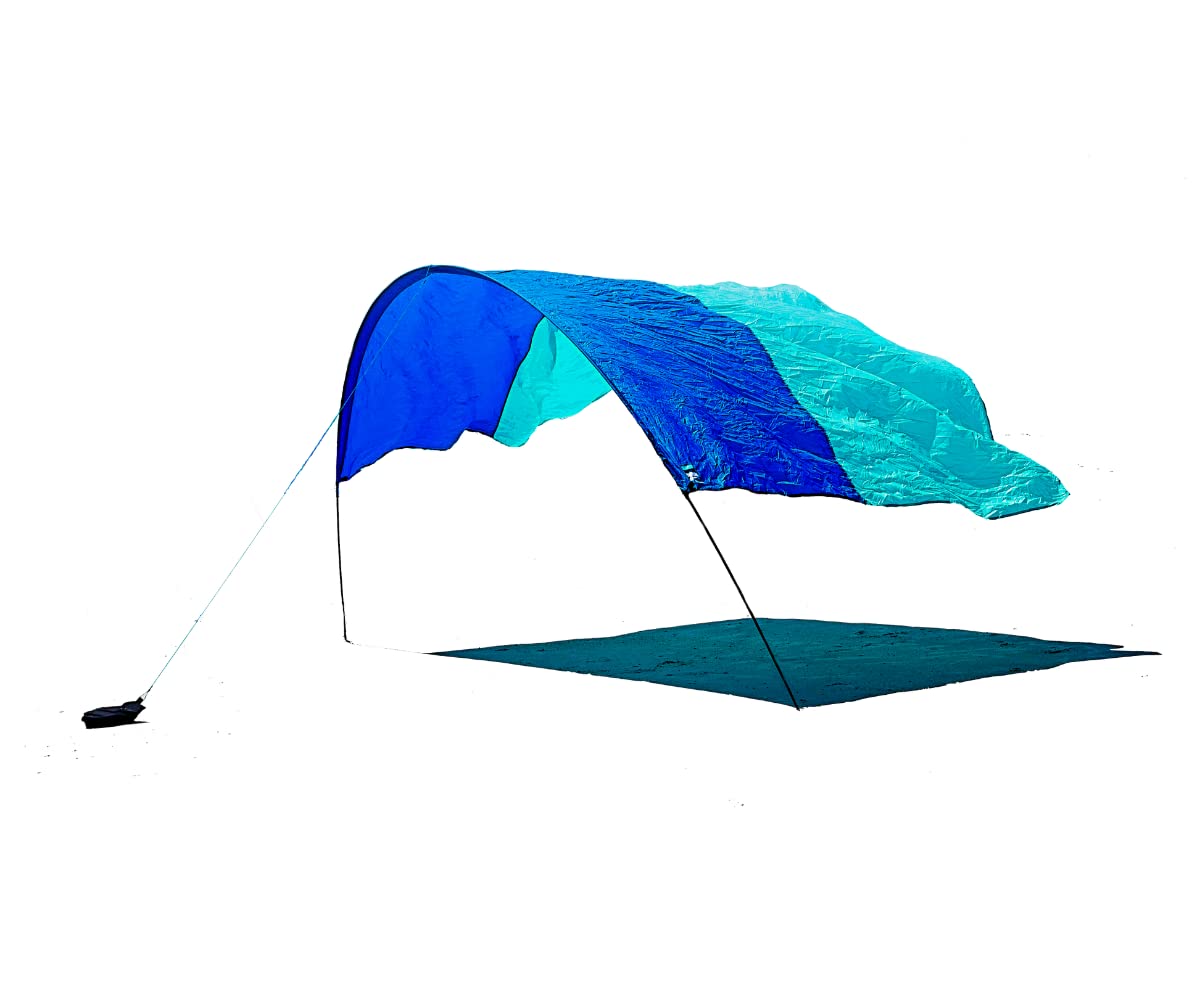
The 2-pound wind sail that folds into your carry-on for any beach.
If you travel to beaches, this is the shade that goes with you: at 2.3 pounds with hard-anodized aluminum poles, it folds small enough for a carry-on suitcase. It earns its “wind-powered” name by sailing on the ocean breeze with as little as 3 MPH of wind, spreading 75 square feet of UPF 30+ shade for 1 to 2 people plus bags, coolers, and gear. Setup is a genuine one-person job in about 2 minutes — face the wind, plant the poles, relax.
The consensus from owners is that it’s incredibly easy to set up and take down, with one noting it’s particularly useful for solo parent trips where you have one hand full. Another owner has used theirs across two seasons and describes it as durable, lightweight, and stable even in high wind, as long as there’s a sea breeze. One called it “the go to beach side shade” for blazing-hot days when you just want a little cover.
The literal catch is in the name “wind-powered”: with no breeze at all, it doesn’t function — a handful of owners dock it a star for exactly that reason. It also makes a flapping or crackling sound in the wind, which some find soothing (“like being in a kite”) and others find annoying. Value for money draws mixed opinions given the premium price for a mini footprint, and it fits 2 people plus gear, not 4.
backpack trips: traveling couples who want featherweight, packable shade on breezy beaches.
calm days: calm days or anyone who can’t tolerate flapping fabric noise.
9. Shibumi Shade Quiet Canopy Version
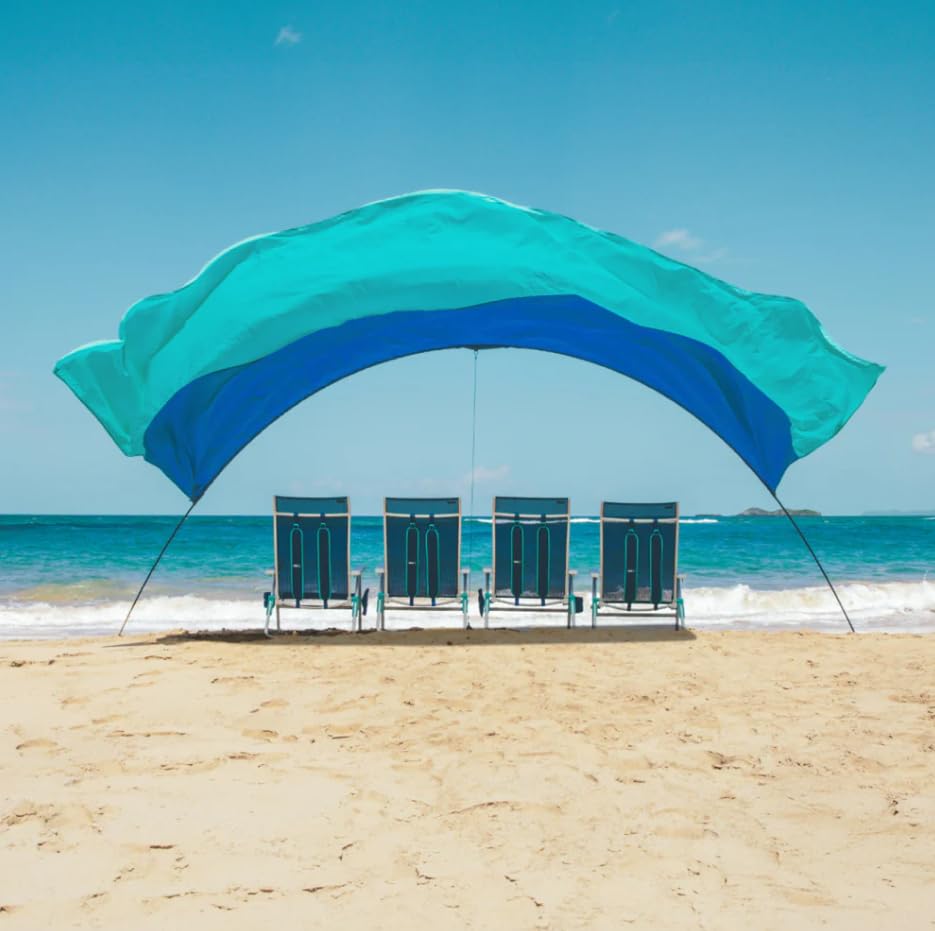
The 150-square-foot wind canopy that covers eight people in UPF 50+ shade.
This is the gold standard for group beach days, and the review volume backs it up — it’s the crowd favorite of the entire list, holding a 4.6-star average across thousands of owners. It spreads 150 square feet of UPF 50+ shade that blocks 98% of UV rays, enough for up to 8 people with room for chairs, coolers, and gear. The arched, open design keeps air flowing so you stay cooler than inside a stuffy tent, and at 4 pounds one person can carry it over the dunes and pitch it in about 3 minutes.
Owners are emphatic that it’s “better than an umbrella,” noting it handles high winds and even a light rain shower while keeping the group dry. It’s made from 40% ocean-bound recycled plastic bottles, which pairs nicely with the beach-friendly mission. Setup needs one set of hands: plant the poles, fill the anchor, face the wind. It packs into a compact travel bag that fits in beach bags and carry-on luggage.
The premium price is the recurring sticking point — value for money draws genuinely mixed feedback even among owners who love it, with many saying it’s expensive but worth it. Like any wind-powered shade, it requires a breeze to function; several owners note the wind assist is worth adding for calmer days. Expect some flapping noise, though the Quiet Canopy version is notably less loud than the Mini above.
windy shores: you regularly host group beach days and want the most spacious, wind-proof, premium shade available.
tight budgets: your beach days happen on dead-calm water or you can’t justify the high-end price tag.
Understanding the Specs
Square footage and coverage
This is the number that tells you how many bodies you can fit under the shade. A 75-square-foot mini covers a couple plus a cooler, while 150 square feet swallows a family of eight with chairs and gear. For anchored rectangle sails, the listed dimensions (like 12′ x 12′ or 20′ x 20′) are measured from corner to corner — but remember the actual usable shade can run narrower in the middle, so size up if you’re covering a wide table.
UPF rating and UV blockage
UPF (Ultraviolet Protection Factor) measures how much UV radiation the fabric blocks. UPF 50+ blocks roughly 98% of UV rays, while UPF 30+ still blocks the vast majority but lets a little more through. Some sails list UV blockage as a percentage instead — 95% and 98% are the numbers you’ll see. If you burn easily, prioritize UPF 50+ or 98% blockage; for casual shade, UPF 30+ is plenty.
Wind-powered vs. anchored design
This is the fork in the road. Wind-powered sails (like the Shibumi and Solbello) catch the breeze and float on it, so the wind holds them up — but they need a minimum breeze (often around 3 MPH) to function at all. Anchored canopies (like the Shark FIN) use sandbags and poles to stand on their own and work in calm conditions, but they catch gusts and weigh more. Match the design to your beach’s typical weather.
Weight and portability
Weight dictates whether this shade lives in your carry-on or stays bolted to your pergola. A 2.3-pound sail folds into a suitcase, while a 6.88 kg rectangle with steel cables is a permanent backyard install. Consider how far you’ll carry it — over dunes, across a parking lot, or just from the garage to the patio — and let that decide how light you need to go.
FAQ
Will a wind-powered shade sail work on a calm day with no breeze?
What is the difference between UPF 30+ and UPF 50+ shade fabric?
Why does my waterproof shade sail pool water in the middle?
Can I use a backyard rectangle shade sail at the beach?
How many people fit under a 150 square foot shade canopy?
How long does a shade sail last before it needs replacing?
Do I need separate hardware to install a rectangle shade sail?
Which is better for wind: a sandbag canopy or a wind-powered sail?
Is a heavier shade sail always a better shade sail?
What is the difference between 95% and 98% UV blockage?
Final Thoughts: The Verdict
For most beachgoers, the beach shade sail winner is the Solbello Shade because it self-adjusts to the wind so you never chase an umbrella down the sand, and it sets up solo in minutes — backed by one of the strongest owner ratings in this lineup. If you want cavernous group coverage and don’t mind the premium price, grab the Shibumi Quiet Canopy. And for a budget-friendly backyard rectangle that cools a patio fast, the ColourTree 7′ x 12′ is the one to reach for.
How We Picked
We do not accept paid placement. Every pick is matched to a real buyer and a real use-case; we do not hands-on test units.
Sources & Methodology
Specifications: manufacturer listings and product documentation. Review insights: verified customer reviews, as of August 2026. Pricing: not shown on this page (it changes often); check the current price via the retailer link.
As an Amazon Associate, Gadgets Feed earns from qualifying purchases. This does not affect which products we feature.