
Our readers keep the lights on and my morning glass full of iced black tea. As an Amazon Associate, I earn from qualifying purchases.
Specs are compiled from manufacturer listings and verified buyer reviews and can change over time — please confirm the key details on the product page before buying.
If you make bracelets in batches, hand-stringing one seed bead at a time is the part that eats your evening. A bead spinner fixes that: you pour beads into a rotating bowl, hold a curved needle at the right angle, and the beads climb onto it on their own. The catch is that not every spinner does this well — some bowls wobble, some needles snap on the first use, and some simply do not pick up clay beads at all despite what the listing claims.
I’m Min — the founder and writer behind Gadgets Feed. This guide is built by comparing the manufacturers’ published specifications and the patterns across verified customer reviews, so you get each pick’s real strengths and trade-offs instead of marketing spin.
What separates a spinner you will keep using from one that ends up in a drawer is the bowl balance, the needle, and how much you have to fill it before beads start climbing. Below is what actually holds up in daily beading, so you can pick the right one first time with this guide to the best bead spinner.
Our Picks at a Glance

How To Choose The Best Bead Spinner
Bead spinners look nearly identical in photos — a bowl on a base and a curved needle. The differences that decide whether yours works are almost entirely in three places: how the bowl spins, what needle comes with it, and how full you have to keep the bowl for beads to climb. Get those right and you can string a strand of seed beads in minutes instead of an evening.
Powered or hand-cranked
An electric spinner runs the bowl for you, so both hands stay free for the needle and the wire — that is the whole point when you are working fast. A manual wooden spinner needs one hand on the bowl to keep it rotating, which slows you down but gives you total control over speed. If you are making bracelets in quantity, the powered route usually wins. If you make the occasional necklace and want zero setup, a hand-cranked bowl is simpler and never needs a cord.
Bowl size and how much you have to fill it
A wider bowl holds more beads at once, so you refill less often and the beads keep their momentum against the outer wall where the needle picks them up best. A narrow bowl is easier to store and needs fewer beads to work, which matters if you are stringing a short strand and do not want to pour out a whole tube. The trade-off is real: beads sit low and stop catching once the bowl thins out, so you refill more often. Match the bowl to your typical project length, not to the biggest one you might attempt.
Needle shape and thickness
The needle is where most spinners fall down. A “big eye” needle has a long open slot that folds shut once you thread it, which makes loading easy but leaves the shaft thin enough to bend. A clip-style needle is sturdier and better for heavier wire. Match the needle to your bead size: fine 11/0 and 15/0 seed beads need a thin needle, while chunkier clay and pony beads can take a thicker one without jamming.
Quick Comparison
| Model | Best For | Power | Bowl / Trays | Included Needles | Amazon |
|---|---|---|---|---|---|
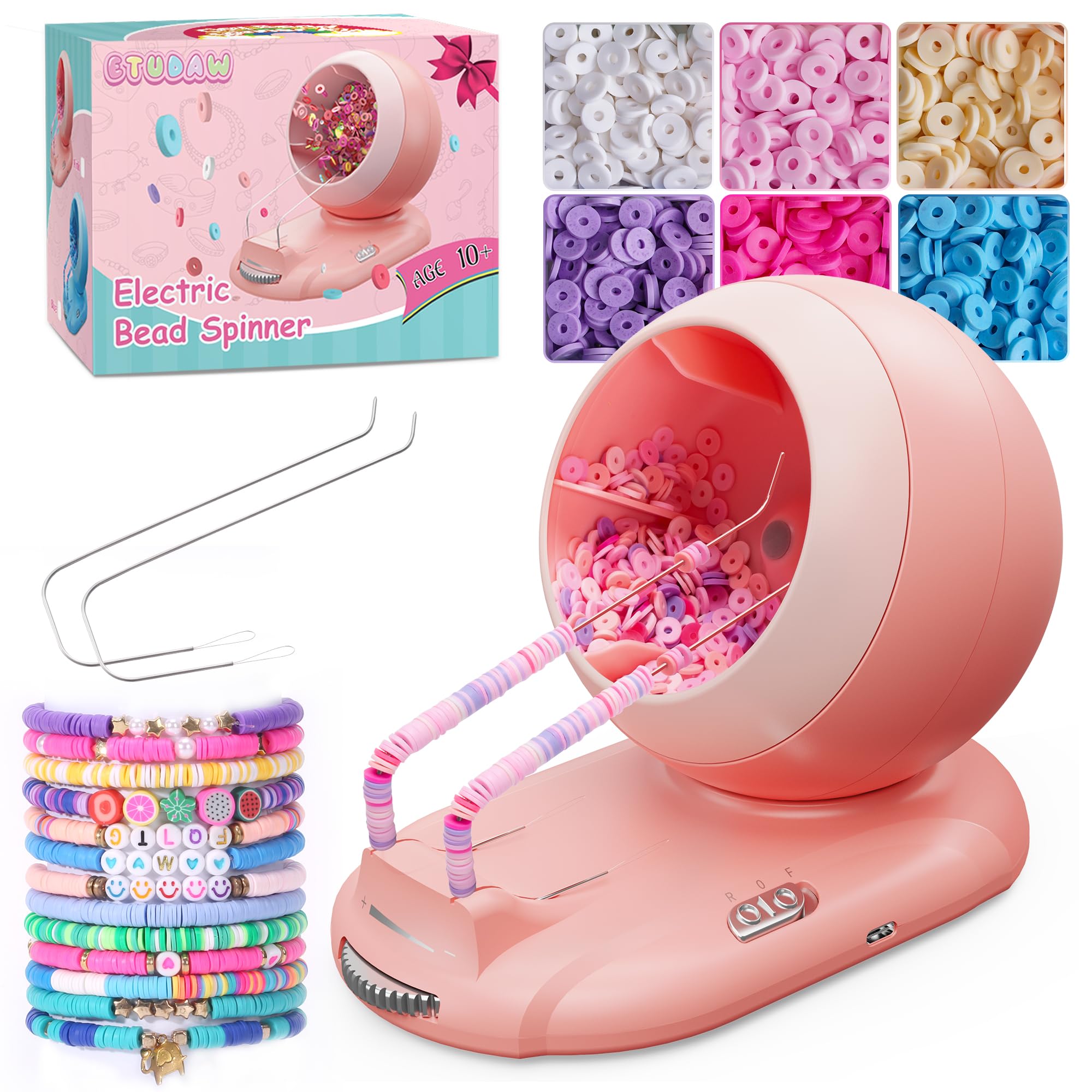
| ETUDAW Rechargeable Clay Bead Spinner Kit★ Best Overall | Beginners who want a full kit | Rechargeable 2000mAh battery, dual needles | Single bowl | 2 big eye needles | Amazon |
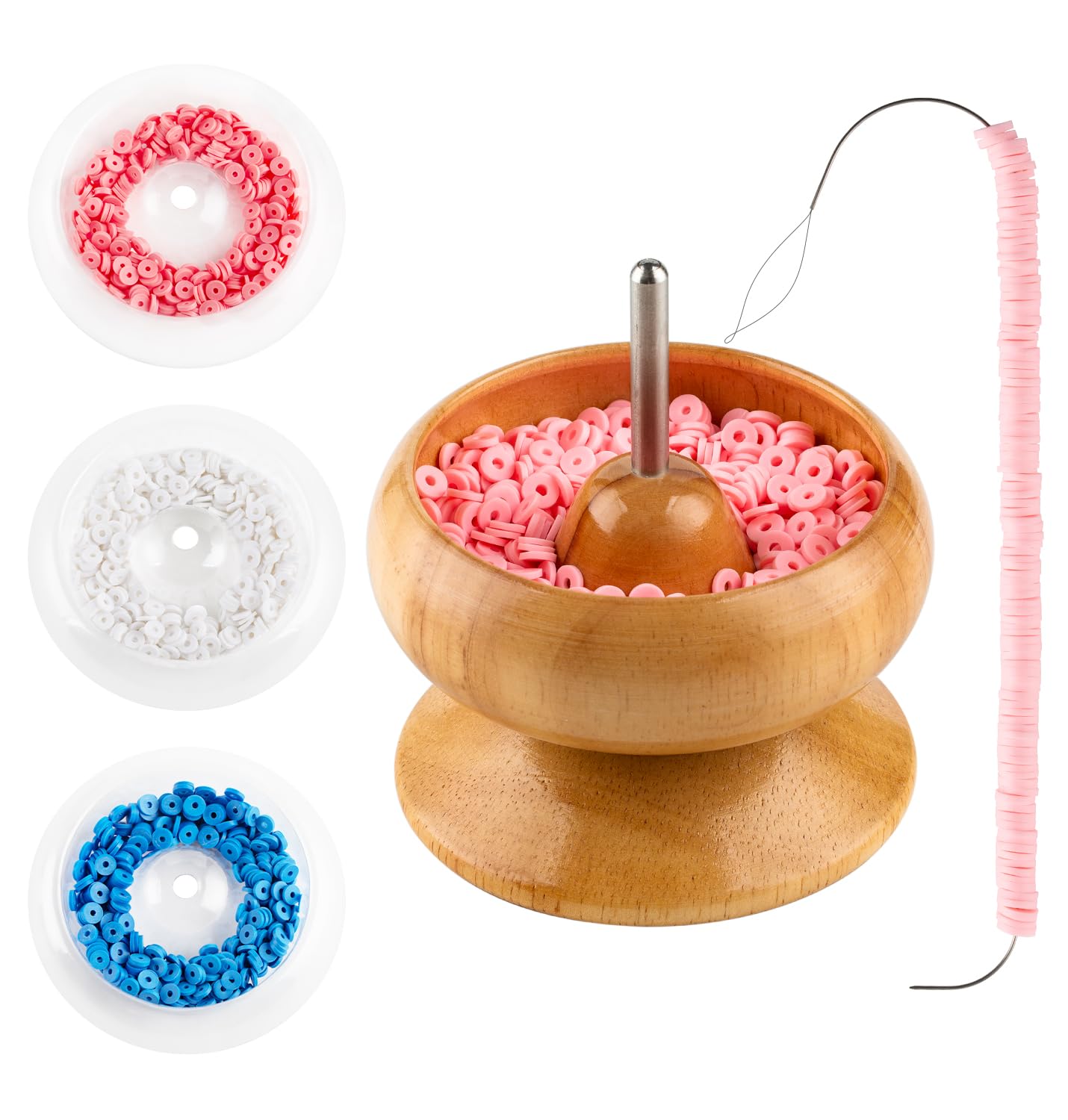
| hobbyworker Bead SpinnerBest Value | Quick color swaps on a budget | Hand-cranked, no power needed | 3 quick-change trays | 1 beading needle | Amazon |
| INDIVSHOW Clay Bead SpinnerBest for Color Swaps | Switching bead colors mid-project | Hand-cranked, no power needed | 3 transparent bowls | Beading needles | Amazon |
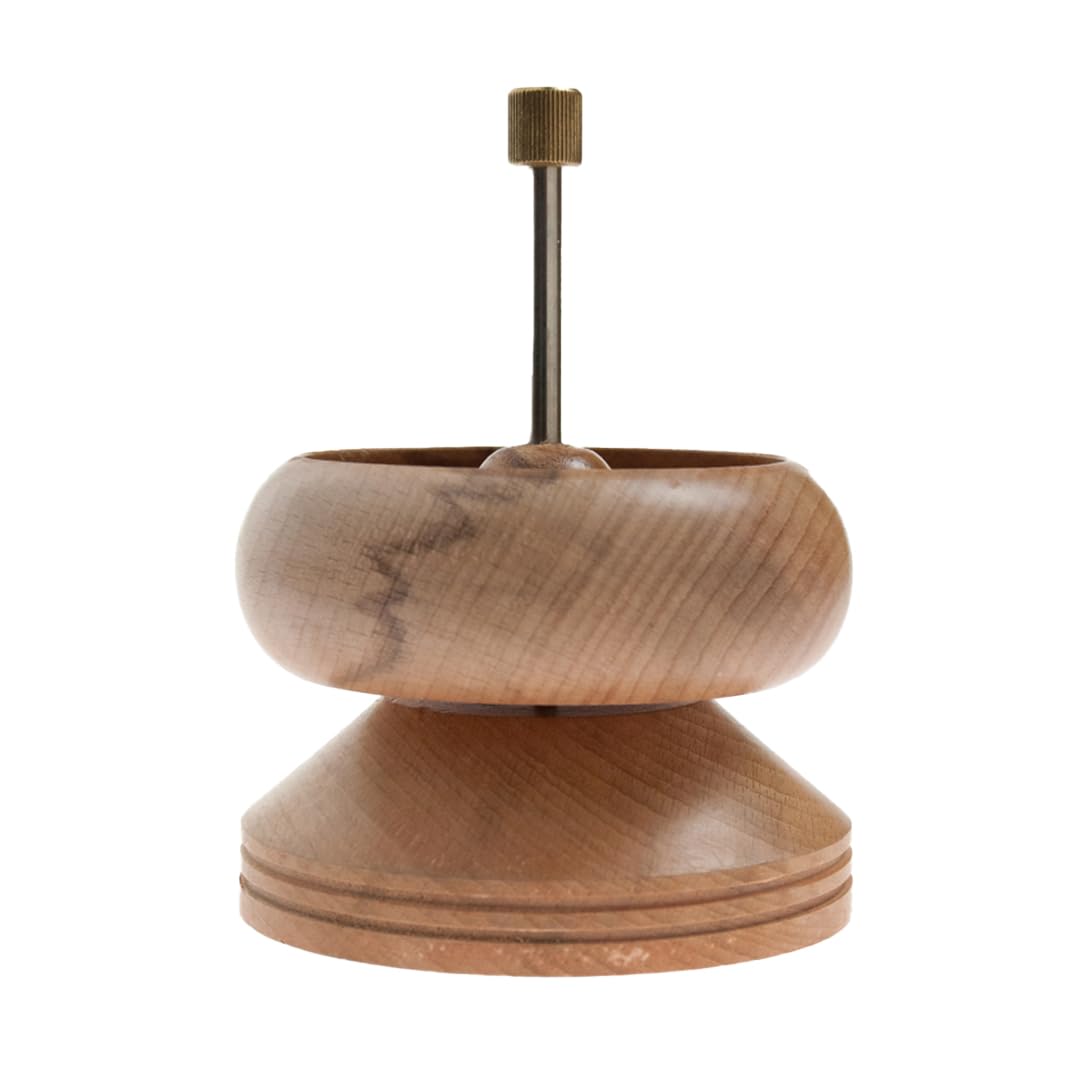
| SE Standard Wooden Bead Spinner | High-volume seed bead work | Hand-cranked with adjustable speed | Single round bowl | — | Amazon |
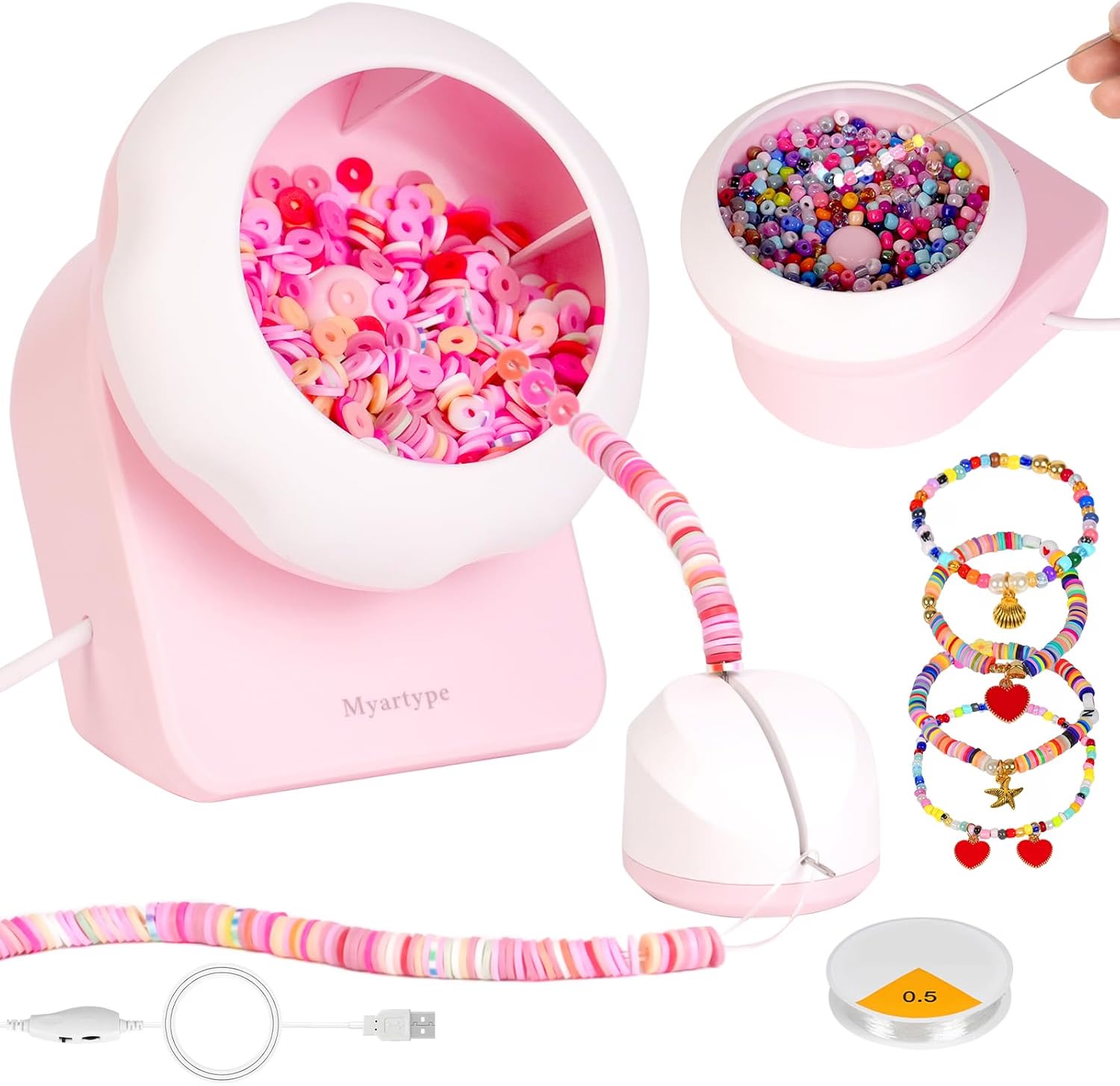
| Myartype 2-in-1 Electric Bead Spinner | One tool for clay and seed beads | USB-powered electric | 2 bowls (clay + seed) | 2 needles | Amazon |
| MegaCast Wooden Bead Spinner | Small seed beads on a budget | Hand-cranked, no power needed | Bowl and base, 4.5 x 4.5 x 6 in | 1 flat-tip needle | Amazon |
| Xmada Electric Bead Spinner | Waist bead makers scaling up | AC motor, USB-powered, 83RPM | Wood-grain bowl | 2 clip-style needles | Amazon |
| Shop LC Clay Seed Bead Spinner | Adults wanting a larger bowl | Hand-cranked, no power needed | Pinewood bowl, 5.25 in | 1 stainless steel big eye needle | Amazon |
| Beadalon Spin N Bead Spinner | Long seed bead strands | Hand-cranked, no power needed | Wood bowl, 4.5 x 4.5 x 4.75 in | 1 curved big eye needle | Amazon |
In‑Depth Reviews
1. ETUDAW Rechargeable Electric Clay Bead Spinner Kit (Pink)
Our pick — over 4★ from 100+ verified ratings; the strongest balance of quality and price.
The cordless kit that turns a table of loose beads into finished bracelets without a single charging cable.
Gift buyers land here first, and for good reason. This is a complete kit rather than a bare tool — you get the rechargeable spinner, clay beads, letter beads, charms, two big eye needles, thread, a small scissor, and a USB cable all in one box. That is 4,500 pieces in total, so the person unwrapping it can start stringing the same afternoon with nothing extra to buy.
The built-in 2000mAh battery is the feature that changes how you use it. A 2000mAh pack means you can bead across a full session without hunting for an outlet, and because there is no cord trailing across the table, it travels easily to a friend’s house or a craft group. Speed adjusts from slow to fast, and the bowl rotates both left and right — flip the direction when a stubborn bead refuses to climb. The dual-needle setup is meant to let you keep going without stopping to rethread, and the maker claims it cuts beading time by up to 80% versus hand stringing.
You need to fill the bowl generously for beads to catch, and small clay beads can slip out if you run it light. Buyers report it plainly: “Great bead spinner but small clay beads do fall out and if you don’t dump in a ton of beads they won’t catch on the metal beader.” Fill it to roughly a third and that disappears. Compared with the smaller hobbyworker bowl at 3.94 x 3.94 x 3.94 inches, this one measures 7 x 3.8 x 5 inches, so there is noticeably more room for beads to travel.
What earns its place
- Rechargeable 2000mAh battery runs a full session cordless
- 4,500 pieces in the box, so no extra purchases to start
- Adjustable speed plus left and right rotation for stubborn beads
- Two big eye needles included as spares
Where it asks patience
- Needs a well-filled bowl to catch beads consistently
- Small clay beads can hop out when the bowl runs low
Reach for this if: you want one box that covers a beginner’s entire setup and you value beading without a cord.
Look elsewhere if: you would rather own a simple wooden bowl you control by hand and never charge.
2. hobbyworker Bead Spinner (3 Trays, 1 Bead Plug)
Three trays mean you swap bead colors without pouring anything back into a bag.
Switching colors eats up your bracelet-making time, and this kit fixes that for less money. You get 3 quick-change trays plus 20g of seed beads, a bead cord clip stopper, a beading needle, cotton thread, and the beading machine itself — three trays versus the three-piece count on the hobbyworker spec sheet, against 4,500 pieces in the ETUDAW kit above, which tells you exactly how much filler you are buying versus how much tool.
The rotating shaft is stainless steel, and the maker states it is anti-rust and corrosion-resistant with a widened diameter for stability. The inner wall of the turntable is polished, which is what lets beads slide instead of snagging. It is a hand-cranked wooden bowl, so there is no cable and no charging — you spin with one hand and hold the needle with the other.
Two things to know before you buy. Spinning takes practice, not just a flip of a switch — success depends on your needle angle and how fast you twirl, and it does not suit barrel-shaped beads. The other is the needle, which has a reputation for bending or snapping; a beader who let family use it found it gave out early — “Used it 3x and the needle broke.” Buy a spare needle alongside it and this becomes a very usable tool.
The strongest case: for a hand-cranked wooden spinner, the three quick-change trays are genuinely useful — swap bead colors mid-project without emptying the bowl, and nothing needs charging between sessions.
Plan around this: the included needle is the weak link, and barrel-shaped beads do not feed well here. Neither is a reason to skip it — just order a spare needle and stick to round seed beads.
Who it beats: anyone rotating through several bead colors in one sitting gets more out of the three-tray swap than a single-bowl spinner can offer.
What to accept: you are trading motor convenience for hand control, and needle quality is the part you will likely replace first.
3. INDIVSHOW Clay Bead Spinner (Wooden, 3 Transparent Bowls)
Three clear bowls let you see bead levels at a glance and swap colors in seconds.
Transparent bowls are a small detail with a real payoff: you can see exactly how many beads are left in the bowl without stopping the spin, so you top up before the strand stalls. The three bowls snap in and out, which means no pouring rice beads out and back in between color changes.
It handles a wider bead menu than most — clay beads, mud beads, letter beads, colored seed beads, wood beads, stone beads, pony beads, glass beads, and rice beads all get named as compatible. The body is wood with a smooth inner wall, a stainless steel shaft with an anti-slip metal head, and a thick base designed to stop the whole thing walking across the table while you spin.
Two owners in three are happy with it, but reviews vary widely. Some call it “the perfect bead spinner” while others could not get it working, and it asks for a specific technique: keep only a few strands on the needle at a time or beads jam, and very thin thread is required — standard-size thread fails at the needle. A few users also found it smaller than expected, and one noted they planned to sand the base for smoother rotation. Slower to learn, but it works well once you have your rhythm.
The honest trade: this is a spinner with a learning curve attached. Get the thread weight and strand count right and it loads smoothly; rush it and beads jam on the needle.
What to pair it with: thin beading thread, a beading mat to catch escapees, and a little patience for the base. Owners who dial those in tend to keep using it.
The standout: three transparent, quick-swap bowls — you can see your bead level and change color without stopping to pour anything out.
If thread patience is not your thing: a powered spinner will suit you better than this hand-cranked wooden bowl.
4. SE Standard Wooden Bead Spinner with Knob (JT-BS04)
Seven hundred happy owners and a bowl that swallows 120 grams of seed beads in one pull.
The headline number here is capacity: this spinner supports up to 120 grams of 11/0 seed beads at once. That is a serious load for a hand-cranked bowl, and it is why people who string long strands keep coming back to it. The adjustable speed control lets you spin slow for delicate beads and faster for heavier ones, so you can tune the pull to whatever is in the bowl.
You get a solid feel that wins people over. The wooden construction feels solid rather than hollow, and owners describe it as smooth, quiet, and not made of cheap materials — one owner calls it “a standout for jewelry making.” The same bowl holds up over repeated sessions, which is more than you can say for several spinners in this list.
The genuine caveat is a break-in period. It also ships without a needle, so factor that into your first order. Once set up properly, this is the sturdiest wooden bowl in the group.
Why it earns top marks
- Handles up to 120 grams of 11/0 seed beads in one load
- Adjustable speed control from slow to fast
- Solid wooden body that runs smooth and quiet once broken in
- Delivers exactly as pictured and strings bracelets right away
Before your first spin
- Arrives gritty with a metal grinding sound; needs cleaning and oiling
- No needle included in the box
The mic drop: 120 grams of 11/0 seed beads per load in a hand-cranked wooden bowl that keeps its spin smooth.
Only if you want a cordless motor: skip it and look at the powered spinners further down, because this one is all manual.
5. Myartype 2-in-1 Electric Bead Spinner (Pastel Pink)
Two bowls, two needles — the one spinner that covers both clay and seed beads without a second purchase.
Most spinners are tuned for one bead family. This one ships with two operating modes: a clay bead bowl with baffles inside and a seed bead bowl without, plus a thicker needle for clay beads and a thinner one for seed beads. If you make clay bracelets one week and seed bead projects the next, you are not buying a second machine. The maker claims the two-bowl setup strings beads 68% faster than hand stringing.
It runs on USB power, so it works from a wall charger or a power bank, and the adjustable speed lets you slow the bowl to chase a particular bead. Everything mounts on one adjustable base — set the needle angle, switch the motor on, and the bowl rotates while beads slide up the wire. The package also includes a magnetic needle holder and transparent stretchy string to get you started.
You need to watch bead pickup. The bowl is on the smaller side, and beads that are not pushed against the needle stay put — one reviewer noted the compartment “didn’t get all of the beads onto the metal wire,” and another found it slower than expected next to the speed the listing suggests. Tiny seed beads also wear out the included needles fast. Keep your needle angle tight and it performs well; let the angle drift and it eases off.
What it solves: two bead families, two bowls, two needle sizes in one USB-powered unit. That is the versatility that a single-mode electric spinner cannot match.
Where to adjust: bead pickup depends on needle angle, and the smaller bowl slows throughput versus the SE spinner’s 120-gram capacity. Ease of use is the most-discussed point in its owner feedback, with praise and frustration in about equal measure.
Best if: you want one USB-powered tool that handles both clay and seed beads without buying a second machine.
Not if: you string long seed bead strands in volume — a bigger-capacity bowl will serve you faster.
6. MegaCast Wooden Bead Spinner

Hand-carved beechwood that loads the tiniest beads fastest, if you supply your own needle.
This is the smallest-seed specialist in the group. Owners say the smaller the bead, the more easily it loads onto the wire — and this spinner is built for exactly that. The bowl and base stand about 7.1 inches tall and 3.7 inches wide, with a beading needle around 6.1 inches long that has a hole at both the head and the tail for different threading styles.
It is hand-crafted from beechwood, which gives it a bit more character than the molded spinners, and the flat-tip needle is designed so small beads slide on without snagging. A buyer who invests in it called it “super useful,” saying it saved a lot of time beading onto wire and spins smoothly.
Where you need to plan ahead is the needle and the bowl lock. The included needle is a genuine weak point — one user found it “worthless” and simply advised buying sturdier ones separately, and the needle’s eye is small enough that fishing line will not thread through. The bowl also does not lock to the rod, so lifting by the rod separates the two halves. Neither is fatal, but both shape how you set it up.
For small beads specifically: the flat-tip needle and hand-carved beechwood bowl load fine liquid silver and small seed beads quickly, faster than manual stringing on short projects.
Factor this in: buy a sturdier needle with it, and carry the bowl and base together — the two parts do not lock, so lifting by the rod alone will separate them.
If small seed beads are your world: this hand-carved bowl loads the tiniest beads onto wire faster than any manual method.
If you want everything included: plan on buying a proper needle alongside it — the supplied one is the part most buyers replace.
7. Xmada Electric Bead Spinner (AC Motor, USB)

The AC-motor workhorse built to run far longer than the hobby spinners around it.
Where hand-cranked bowls wear out their shafts, this one leans on a durable AC motor rated for at least 2000 hours of use — a figure aimed squarely at anyone turning beading into steady production. The factory preset tops out at 83 RPM, and the maker is upfront that higher speeds splash beads, so the steady rate is deliberate rather than a fault. You get a wood-grain bowl with anti-slip stickers on the bottom to stop the unit creeping while it spins.
Speed and direction both adjust, and the listing notes no technique is required. It draws power over USB, so a power bank or wall charger runs it — no proprietary adapter to lose. In the box you get the spinner, 2 clip-style beading needles, 0.7mm clear jewelry wire, and 1,200 glass seed beads, enough to make your first few waist chains straight away.
The technique story is real though. Angle the needle correctly and beads stream on; angle it wrong and they push back. Keep the hook tip near the bowl surface, avoid dead center where beads lose direction, and it rewards you. The included clip-style needles also bend under heavy use, so order spares before a long batch run. Waist bead makers putting out volume get the most from it.
Built for volume: a motor rated to at least 2000 hours with steady, splash-free 83 RPM rotation. If you bead most days, that lifespan is the difference between a tool and a disposable.
Learn the angle: the spinner does nothing useful until your needle tip sits just right. Ease of use divides its owner feedback more than any other point, with some finding it simple and others slow to master.
Made for makers: anyone stringing waist chains and bracelets in batches gets a motor rated for at least 2000 hours at a steady 83 RPM.
Not for a first-timer: the needle angle takes practice, and the supplied needles will need replacing with heavier ones.
8. Shop LC Clay Seed Bead Spinner (Haldoo, 5.25-Inch Bowl)

A grab-and-go wooden bowl sized for adult hands, not a child’s, right from the start.
The bowl is the point here: 5.25 inches across in polished pinewood. That width gives adult hands room to work without crowding, and a beader who found their first kit too small for their fingers picked this one specifically and reported it worked — “Now we can do beading together.”
The kit is genuinely complete from the start: the pinewood bowl, a 5.5-inch stainless steel big eye needle that folds open for wire and shut for stringing, and 3 meters of jewelry wire. No assembly and no charging — it is a hand-cranked bowl on a balanced base, designed to hold beads securely while it spins and keep spillage contained. It is compatible with seed beads, clay beads, pony beads, and small jewelry beads.
What you accept is a bowl that needs attention. The recurring gripe is spin smoothness — a few owners found their bowl lopsided or off-balance, and one needed to oil it to keep it turning; if the bowl rocks, beads spill over the rim. A couple also reported a crack in the wood from the start. It is still a lovely-looking, lightweight bowl; it just wants a flat surface and a little care rather than being slammed around.
The size advantage: 5.25 inches of pinewood bowl — bigger than most hobby spinners, which makes it easier for adult hands to settle into a rhythm.
Handle with care: the wood can arrive cracked or spin unevenly, and the bowl sometimes needs oiling. Set it on a level surface and treat it gently and it works fine.
Its standout: a roomy 5.25-inch pinewood bowl that fits adult hands comfortably and arrives ready to use with needle and wire included.
Not if you want zero fuss: this wooden bowl wants a level surface and occasional oiling — a powered spinner would suit better.
9. Beadalon Spin N Bead Spinner (Standard)

A no-motor bowl that people who string in bulk keep reaching for, provided they tune the needle.
Beadalon’s reputation here comes from repetition — this is the spinner most often found on experienced beaders’ benches, and the reason is throughput. Owners run 30 feet of beads in under an hour, and one finished a necklace plus three bracelets in the same session. That is the whole proposition: sit down, spin the wooden bowl, and let the beads climb a curved big eye needle while your other hand guides the wire.
You get instant threading for wire with the included curved big eye needle, though its thin shaft means it will not handle the heaviest beads — 6/0 and 8/0 beads were too much for one user’s needle, who bent their own wire to the same shape instead. The wooden bowl measures 4.5 x 4.5 x 4.75 inches, and it is smooth, quiet, and sturdy in daily use. There is a technique to learn: keep the needle hook near the outer wall, angle it against the spin direction, and keep the bowl topped up — beads slow down and stop catching once the bowl runs thin.
The needle and the bowl texture are the two points worth knowing. The supplied big eye needle is thin and bends, and one owner found it too thick for size 15 seed beads, preferring 3-inch size 11 English needles instead. Some also noted the wooden bowl’s interior grain can snag a needle mid-spin. Neither is a dealbreaker for patient stringers — this is a tool you tune, then use for years.
Why it has a following
- Runs long strands fast — 30 feet of beads in under an hour for one owner
- Sturdy wooden bowl that spins smooth, quiet, and steady
- Includes a curved big eye needle that threads wire instantly
- Simple enough once you find the needle’s balance
What to sort out first
- Supplied needle is thin and bends; heavy beads need a bent-wire substitute
- Wood interior grain can occasionally snag the needle mid-spin
The play: if you string seed beads for hours, this bowl turns 30 feet in under an hour for owners who master the needle angle.
The catch: order a set of sturdier English beading needles alongside it — the included one is thin and bends on heavy beads.
Understanding the Specs
Bowl size and bead capacity
Bowl diameter decides how many beads you can spin at once and how often you refill. A wider bowl, like the 5.25-inch pinewood one, holds more beads and keeps them pinned to the outer wall where the needle picks best. A narrower bowl, like the 4.5-inch round one, needs fewer beads to work but runs dry faster on long strands. If you string bracelets in batches, go wider; if you make short necklaces occasionally, the smaller bowl is easier to store and cheaper to fill. This spec gets at both: how many beads it spins at once, and how often you top up.
Needle type and thickness
The needle decides what your spinner can actually load. A big eye needle has a long open slot that folds shut once you thread it, so loading is fast, but its shaft is thin and bends under heavy beads or rough handling. A clip-style needle is sturdier and better for heavier wire. Fine seed beads like 11/0 and 15/0 need a thin needle; chunkier clay and pony beads take a thicker one. The practical move is to buy replacements separate from the kit — matching needle thickness to bead size is what separates a spinner you keep using from one you shelve.
FAQ
Will a bead spinner work with clay beads as well as seed beads?
How full does the bowl need to be for beads to start catching?
Is an electric bead spinner better than a hand-cranked wooden one?
Why does my bead spinner needle keep breaking?
What angle should I hold the needle at for best pickup?
Can a bead spinner handle very small seed beads like size 11/0 and 15/0?
How do I keep beads from spilling out of the bowl while I spin?
Do these spinners come with everything I need to start beading?
Will a wooden bead spinner work for making waist beads?
Does the bowl have to be wood?
Final Thoughts: The Verdict
For most people picking up a bead spinner for the first time, the ETUDAW Rechargeable Clay Bead Spinner Kit is the one to grab — it arrives with 4,500 pieces, runs cordless on a 2000mAh battery, and covers a beginner’s whole setup in one box. If you want the steadier long-run tool, the SE Standard Wooden Bead Spinner handles up to 120 grams of 11/0 seed beads per load and has been the go-to for high-volume hand stringers for years. And if you bead waist chains in batches, the Xmada Electric Bead Spinner carries a motor rated for at least 2000 hours and holds steady at 83 RPM, so it keeps up with steady production. The one honest nudge here: if your first kit ever feels too small for your hands, the Shop LC Haldoo bowl opens up to 5.25 inches and makes the whole rhythm easier to find.
How We Picked
We do not accept paid placement. Every pick is matched to a real buyer and a real use-case; we do not hands-on test units.
Sources & Methodology
Specifications: manufacturer listings and product documentation. Review insights: verified customer reviews, as of September 2026. Pricing: not shown on this page (it changes often); check the current price via the retailer link.
As an Amazon Associate, Gadgets Feed earns from qualifying purchases. This does not affect which products we feature.