
Our readers keep the lights on and my morning glass full of iced black tea. As an Amazon Associate, I earn from qualifying purchases.
Specs are compiled from manufacturer listings and verified buyer reviews and can change over time — please confirm the key details on the product page before buying.
You have the pattern ready, the thread is waxed, and the needle is threaded. What stops a beautiful bead-weaving project from becoming a frustration is the beads themselves — uneven sizes that throw off your tension, finishes that dull after a few wears, and tiny holes that fight every needle pass. The right pack turns hours of stitching into smooth, meditative rhythm. The wrong one leaves you culling half the batch.
I’m Min — the founder and writer behind Gadgets Feed. This guide is built by comparing the manufacturers’ published specifications and the patterns across verified customer reviews, so you get each pick’s real strengths and trade-offs instead of marketing spin.
You need beads that stay the same size, have a hole big enough for two needle passes, and keep their finish through hours of stitching. These three picks deliver on all three — no wavy edges, no broken needles, no flaking color — whether you are making your first peyote bracelet or adding to a mature collection of delicas.
Our Picks at a Glance
How To Choose The Best Bead Weaving Beads
Three things decide if a bead works for weaving: shape consistency, hole size, and finish durability. If the diameter varies by even a few hundredths of a millimeter, you get wavy edges and uneven tension. Japanese brands like Miyuki hold tighter tolerances than most, which is why serious bead weavers use them. You also need a hole big enough for at least two needle passes — especially for off-loom stitches like peyote or herringbone.
Shape: Cylinder vs. Round
You will see two main shapes: round seed beads and cylinder (often called Delica-style) beads. Cylinder beads have flat sides that stack perfectly, giving you that crisp, fabric-like surface in peyote or brick stitch. Round beads are better for organic, bumpy textures and fringe work. The choice is really about the look you want — but for precise patterns, cylinders are king because they have almost zero variation from one bead to the next.
The Real Value Pack Math
Bulk packs with 24 or more colors look tempting, but you need to check the per-color gram weight. A 5-gram bag of size 11/0 holds roughly 500 beads — enough for a single bracelet, but not a large loom project. Bigger tubes like 22-gram packs hold closer to 2,000 beads of one color, which is what you actually need when a pattern calls for repeating the same shade across dozens of rows. The real value is in buying the color quantity your pattern demands, not just the widest palette.
Quick Comparison
| Model | Best For | Size / Shape | Quantity (Approx.) | Finish | Amazon |
|---|---|---|---|---|---|
| Miyuki Delica 11/0 Gold★ Best Overall | Precision peyote / brick stitch | 11/0 (1.6mm) Cylinder | 1,440 | 24K Gold Plated | Amazon |
| Miyuki 11/0 Sea Foam | High-volume monochrome projects | 11/0 Round | 2,000 | Galvanized Duracoat | Amazon |
| Miyuki Delica Turquoise Bundle | Multi-color palette for patterns | 11/0 (1.6mm) Cylinder | ~4,200 (3 x 1,400) | Silver Lined & Opaque | Amazon |
| INSPIRELLE 12/0 24-Color Kit | Budget variety / beginner projects | 12/0 (2mm) Cylinder | ~500 per color | 24 Opaque Colors | Amazon |
In‑Depth Reviews
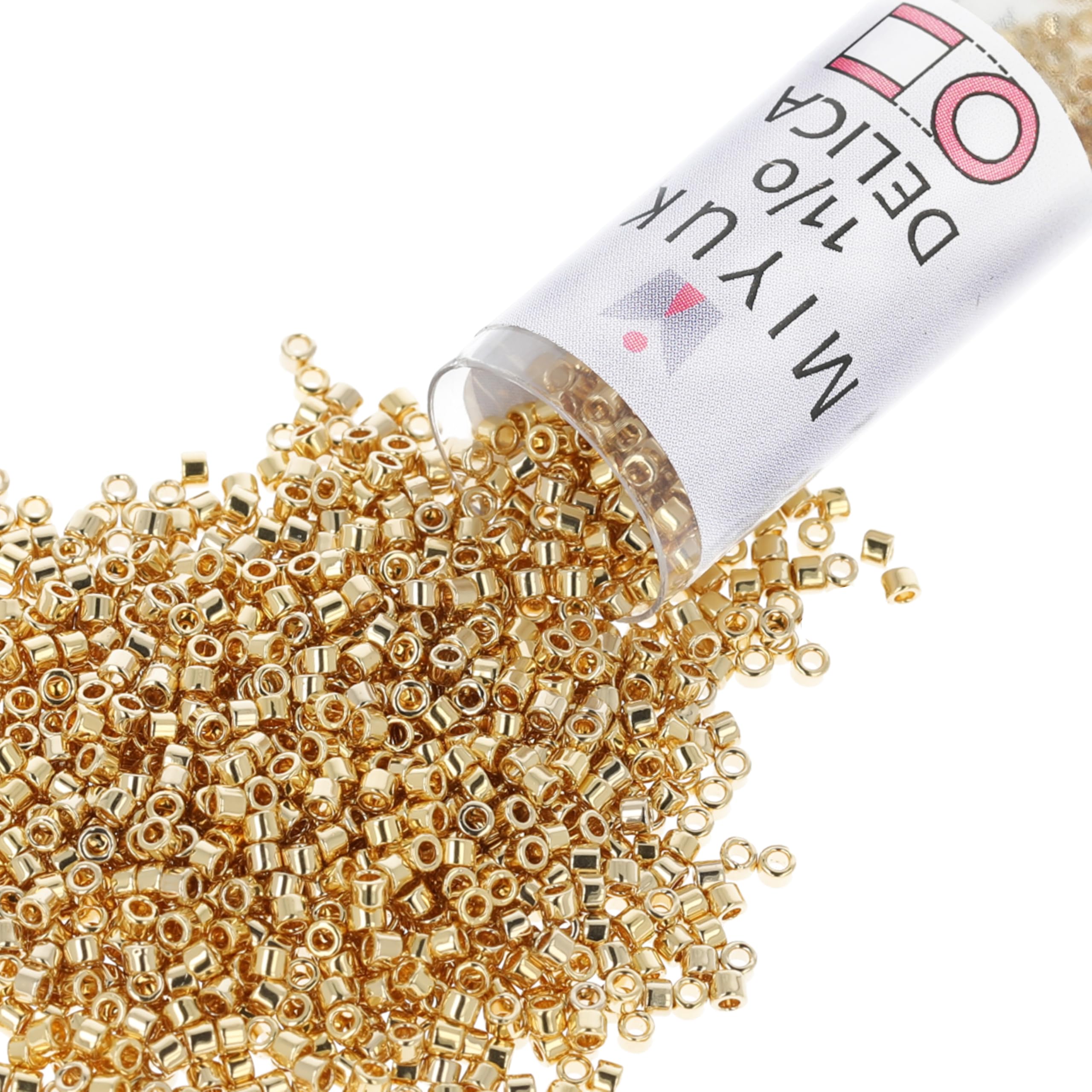
1. Miyuki Delica Seed Beads | Size 11/0 (1.6 mm), DB0034, Light 24K Gold Plated, 7.2 g
Our pick — over 4.5★ from 950+ verified ratings; the strongest balance of quality and price.
The precision standard that every peyote pattern is built around.
This single tube of 1,440 beads in Light 24K Gold Plated is the ruling champion for serious bead weavers — and the numbers back it up. It holds the highest crowd rating in this entire list, which makes sense when you hear what people actually say: the consistency is the headline. The uniform cylinder shape means every bead sits flush against its neighbor, so your brick stitch or peyote fabric lays flat with no wavy edges. That same consistency is what owners praise most — the quality across all 38 mentions in the review data is rated positive.
The finish sets this bead apart from standard colored glass. The 24K gold plating gives a true metallic sheen that does not look painted on. The size is 11/0, which measures 1.6 mm — the most common size in published patterns, so you are unlikely to hit a sizing mismatch with your tutorial. It weighs 7.2 grams and carries roughly 175 to 200 beads per gram, giving you plenty for a solid bracelet or a pair of earrings with leftovers.
One thing to note: some owners mention the size can run slightly larger than some other 11/0 batches. For a single-color project that is rarely an issue, but if you are mixing this tube with other 11/0 delicas from different dye lots, test a few beads first to confirm they align before stitching a whole row.
Why stitch with it
- Uniform cylinder shape delivers flat, even fabric in peyote or brick stitch
- 24K gold plating resists tarnish better than standard metallic paints
- 11/0 is the pattern standard — works with most tutorials and needles
Consider this
- Single tube only — one color per purchase, no palette variety here
- A few owners found the bead slightly larger than other 11/0 delicas
Grab it if: precision is your priority and you want the single most trusted cylinder bead for fine stitch work.
Hold off if: you need a spread of colors in one order — this is a one-tube, one-shade buy.
2. Miyuki Seed Bead 11/0 APX.22g – Galvanized Duracoat Sea Foam Japanese Glass Seed Beads
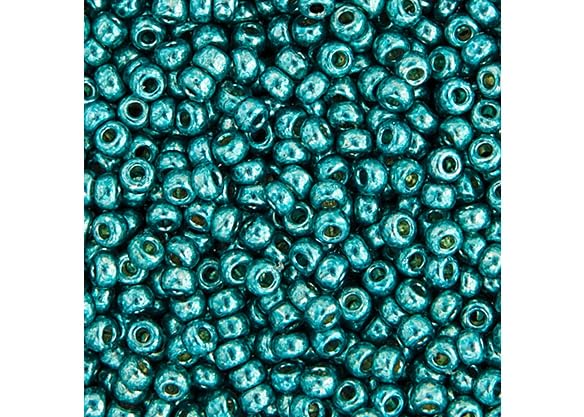
A 2,000-bead supply of Sea Foam that actually lets you finish a big project.
While the Delica above is built for precision stacking, this Miyuki 11/0 round bead is the volume workhorse you reach for when a design calls for a lot of one color. The 22-gram pack holds about 2,000 beads — a 666-bead advantage over the 1,440-bead Delica tube of the same size grade, and a huge difference when you are filling rows on a loom or doing dense fringe work. Buyers report the hole size is consistent and works with a regular needle, so you do not have to hunt for extra-thin beading needles.
The finish here is Galvanized Duracoat in Sea Foam — a soft green-blue that holds up well to daily wear without fading. Because these are round seed beads rather than cylinders, the finished surface will have a more organic, textured look compared to the flat fabric of peyote with delicas. That is a feature, not a flaw, for anyone doing brick stitch embellishment or branching fringe.
One trade-off to keep in mind: round 11/0 beads have a slightly smaller hole channel than cylinders, so if you plan to pass thread through three or more times per bead, you might feel the squeeze. For standard single-pass weaving and stringing though, the hole works fine.
Best for volume: This is the pick when your pattern calls for a single dominant color and you do not want to run out halfway through a bracelet or necklace.
Watch for: The round shape gives a bumpier texture than cylinders — ideal for fringe, less ideal for flat peyote.
Reach for this if: you need a generous supply of one consistent color for a large weaving or stringing project.
Look elsewhere if: your pattern specifically demands the flat stacking of cylinder/Delica beads.
3. Miyuki Delica Seed Beads Bundle: Size 11/0, Turquoise Silver Lined Palette Collection DB44, DB149, DB1208
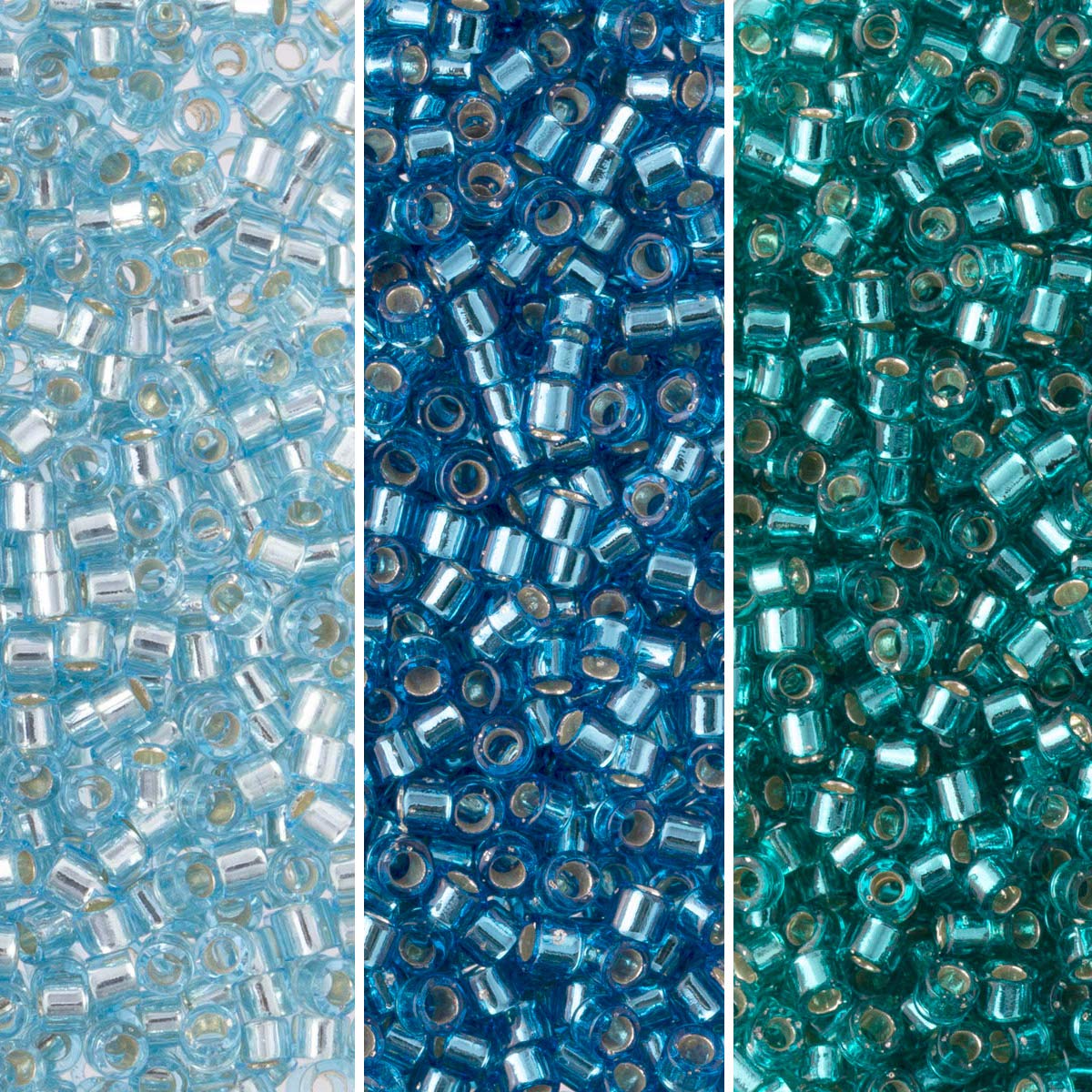
Three curated turquoise shades that make gradient patterns simple.
This bundle solves the problem of hunting down coordinating colors by giving you three tubes of 11/0 Delica beads in a matched turquoise-and-silver palette: DB44, DB149, and DB1208. Each tube holds 7.2 grams (approximately 1,400 beads), so the total across all three is about 4,200 beads. The silver-lined finish inside some of these gives the beads an inner sparkle that catches light from the hole — a subtle effect that shows up nicely in open stitches like herringbone or daisy chain.
Because these are genuine Miyuki Delicas, you get the same uniform cylinder shape as the gold single-tube version above. That means they stack flat and true for peyote stitch, and the large holes accommodate multiple thread passes for bead weaving patterns that require re-crossing the same bead. The 11/0 size is 1.6 mm, identical to the solo tube, so everything lines up if you mix them.
The catch is the smaller per-color quantity. At roughly 1,400 beads per tube, a single color in this set holds noticeably fewer beads than the 2,000-bead round pack. If your pattern demands heavy use of one shade — say, an entire bracelet in DB44 — you may want to supplement with a full-size tube of that single color.
Why grab the bundle
- Three matching turquoise hues for instant gradient or pattern work
- Cylinder shape gives smooth, flat stitch surfaces
- Silver-lined finish adds interior sparkle that plain opaque beads lack
Keep in mind
- Each tube is 7.2g — less than half the volume of a 22g pack in a single color
- If your project uses one shade heavily, you may run out of that tube first
Best for: color-block patterns, ombré transitions, or any project where three coordinated turquoise tones do the heavy lifting.
skip it if: you need more than 1,400 beads of a single turquoise shade in one go.
4. INSPIRELLE Uniform 120 Gram 12/0 (2mm) Cylinder Glass Seed Beads for Craft Jewelry Making, 24 Opaque Painted Colors

A full rainbow of 24 colors for less than the cost of two premium single tubes.
This kit takes a different approach: instead of one or three premium colors, you get 24 opaque painted shades in a single 120-gram package, with 5 grams of each color. That works out to roughly 500 beads per color, enough to sample every shade and complete small projects like earrings, stitch markers, or patterned bookmarks without committing to full-size tubes. The bead size is 12/0 (2 mm by 1.5 mm), which is noticeably larger than the 11/0 Delica at 1.6 mm — the data shows a size gap of about 9% more per bead. That matters when you follow patterns written for standard 11/0 delicas; these will stand out as chunkier.
The shape is described as an almost uniform cylinder. Owners praise the color variety above all — 37 positive mentions — and the uniformity comes in second. The large hole, about 1 mm across, easily handles multiple thread passes, which is a genuine advantage for dense weaving patterns.
The biggest honest trade-off is the painted opaque finish. Some owners note that the color can wear off over time, especially on edges that rub against each other. The data also flags size as mixed — these 12/0 beads measure 2 mm, which users say is larger than standard 11/0 delicas, so they cannot always be used together in the same pattern.
Ideal for beginners: The low cost per color makes this a fantastic starter palette for learning peyote, brick stitch, or loom weaving without a big investment.
Not for heirloom pieces: The painted finish is less durable than galvanized or plated beads — spray with a clear sealant if you want longevity.
Go for this if: you want maximum color variety on a budget and your projects are earrings, small patterns, or learning pieces.
Pass on it if: you are stitching a large single-color piece where finish durability over years is the priority.
Understanding the Specs
Bead Size (Aught System)
Bead sizes use an “aught” system written like 11/0 or 12/0. The larger the first number, the smaller the bead — so 11/0 (1.6 mm) is actually smaller than 12/0 (2 mm). This is the opposite of what most beginners expect. All weaving patterns specify a size, so always match the aught number to your pattern’s call-out. Using the wrong size throws off your stitch count and finished dimensions.
Size 11/0 is the standard for most bead weaving — it is small enough for detail work but big enough to pass a needle through comfortably. Size 12/0 is visibly larger and works best when you want the bead color to be a bigger part of the visual, or when you need a larger hole for thick thread or multiple passes.
Uniformity & Culling
“Culling” is the tedious process of sorting out beads that are a different size or shape from the rest of the batch. Lower-quality beads can vary by 0.2 mm or more, which creates wavy edges and gaps in tight stitches. Top Japanese brands like Miyuki hold tolerances tight enough that you rarely need to cull — the bead-to-bead variation is almost invisible to the eye.
For cylinder beads (Delicas), uniformity is even more critical because the flat sides rely on each bead being exactly the same diameter. If one bead is a whisker wider, the whole row bows. That is why serious weavers pay a premium for Japanese glass: less culling time, better results.
FAQ
Can I use round seed beads instead of cylinder Delicas for peyote stitch?
What needle size works best for 11/0 Delica beads?
How many 11/0 Delica beads do I need for a 7-inch bracelet?
Why are Japanese seed beads more expensive than Czech or Chinese beads?
What does “Galvanized” or “Duracoat” finish mean for bead quality?
Can I mix 11/0 and 12/0 beads in the same pattern?
What is the difference between a “seed bead” and a “Delica bead”?
How do I store leftover beads without mixing colors?
Will painted opaque beads fade over time?
Why does my beadwork curve or warp even with uniform beads?
Final Thoughts: The Verdict
Across the board, the bead weaving beads winner is the Miyuki Delica 11/0 Gold Plated because it delivers the tightest size uniformity and the most durable finish in the standard 11/0 size — the foundation of reliable, warp-free stitch work. If you want a large, single-color supply for loom work, grab the Miyuki 11/0 Sea Foam round pack with 2,000 beads. And for a budget-friendly color palette to learn on, the INSPIRELLE 24-color kit gives you the broadest spectrum for the lowest entry cost.
How We Picked
We do not accept paid placement. Every pick is matched to a real buyer and a real use-case; we do not hands-on test units.
Sources & Methodology
Specifications: manufacturer listings and product documentation. Review insights: verified customer reviews, as of July 2026. Pricing: not shown on this page (it changes often); check the current price via the retailer link.
As an Amazon Associate, Gadgets Feed earns from qualifying purchases. This does not affect which products we feature.