
Our readers keep the lights on and my morning glass full of iced black tea. As an Amazon Associate, I earn from qualifying purchases.
Specs are compiled from manufacturer listings and verified buyer reviews and can change over time — please confirm the key details on the product page before buying.
The projector you should buy depends on one thing most listings bury: can the room you actually own survive its light output? A beam of 2,000 ISO lumens looks cinematic in a dark basement and washed out beside a window at noon. So before brand loyalty or a long spec sheet, decide whether you are building a blackout theater or a living-room screen that stays on during the day. That single answer narrows this whole list.
I’m Min — the founder and writer behind Gadgets Feed. This guide is built by comparing the manufacturers’ published specifications and the patterns across verified customer reviews, so you get each pick’s real strengths and trade-offs instead of marketing spin.
Every pick below is grouped by how it handles ambient light, gaming lag, and setup fuss, so you can match the projector to your wall, your console, and your patience. The right pick for a bright family room is rarely the same as the right pick for a dedicated dark room, which is the whole point of a beamer for home shortlist built around real rooms rather than showroom conditions.
Our Picks at a Glance

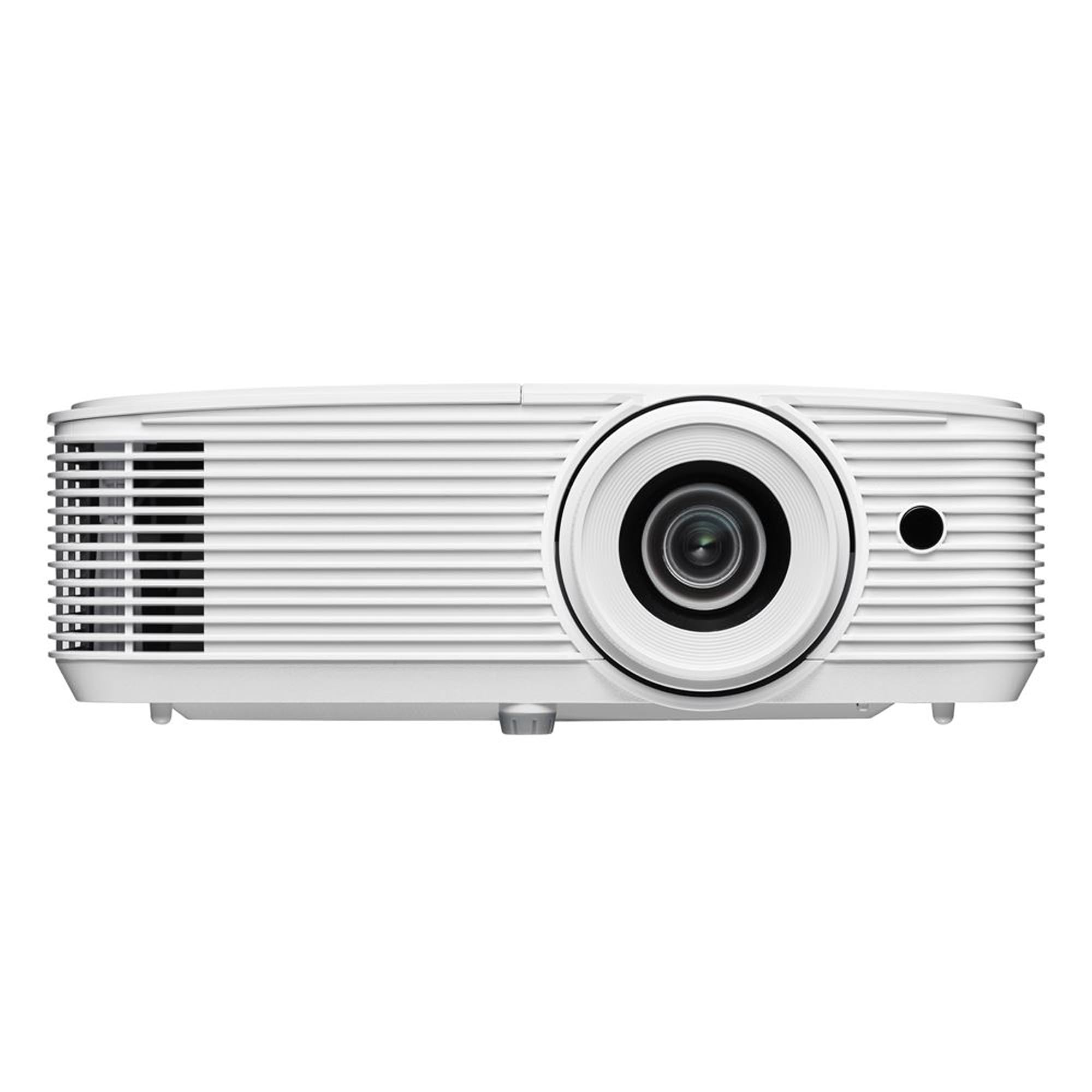

How To Choose The Best Beamer For Home
Projectors are unforgiving about two things: room light and wall distance. Get those two right and almost any modern unit looks good. Get them wrong and the most expensive laser beam in the world still looks gray. Here is the short version of what actually matters before you spend.
Match brightness to your room, not the spec sheet
Brightness is measured in lumens — the raw amount of light the projector throws at the wall. A dim, light-controlled room can look rich at 2,000 lumens. A living room with afternoon sun through blinds often needs far more to stay punchy. Buy for the brightest time of day you plan to watch, because that is when a weak beam falls apart.
Work out your throw distance before you buy
Throw ratio is the relationship between how far the projector sits from the wall and how big the picture gets. A short-throw model can fill a 100-inch screen from close up, which keeps people from walking through the beam. An ultra-short-throw model sits right against the wall on a cabinet. Standard-throw models need more room depth, so measure first.
Decide if you are a gamer or a movie-first viewer
Input lag is the delay between pressing a button and seeing it happen, measured in milliseconds (ms). Low lag under about 20ms feels instant, and high-refresh modes at 120Hz or 240Hz keep fast motion smooth. If you mostly watch films, contrast and color matter more than lag. If you play competitive shooters, lag decides the pick.
Quick Comparison
| Model | Best For | Brightness | Resolution | Light Source | Amazon |
|---|---|---|---|---|---|
| Valerion StreamMaster Plus2★ Best Overall | All-around movie and gaming | 2000 ISO lm | 3840 x 2160 | Laser | Amazon |
| Optoma HD30LVBrightest Beam | Bright-room 1080p viewing | 4500 lm | 1920 x 1080 | Lamp | Amazon |
| BenQ TH671STShort-Throw Star | Short-throw gaming den | 3000 lm | 1920×1200 | DLP lamp | Amazon |
| Epson Home Cinema 1080 | Color-accurate movie nights | 3400 lm | 1920 x 1080 | LCD lamp | Amazon |
| ViewSonic PX701-4K | Entry 4K with 240Hz gaming | 3200 lm | 3840 x 2160 | DLP lamp | Amazon |
| Hisense M2 Pro | Portable backyard cinema | 1300 lm | 3840 x 2160 | Triple laser | Amazon |
| Optoma UHZ36 | Bright laser home theater | 3500 lm | 3840 x 2160 | Laser | Amazon |
| JMGO N1S Ultra | Gimbal portable 4K | 2800 lm | 3840 x 2160 | Triple laser | Amazon |
| XGIMI HORIZON 20 | Bright all-in-one smart beam | 3200 lm | 3840 x 2160 | RGB triple laser | Amazon |
| AWOL VISION LTV-3000 Pro | Ultra-short-throw laser TV | 2000 lm | 3840 x 2160 | Triple laser | Amazon |
| Epson Home Cinema 5050UB | Dedicated dark-room theater | 2600 lm | 4K PRO-UHD | LCD lamp | Amazon |
In‑Depth Reviews
1. Valerion StreamMaster Plus2 4K Laser Projector
Our pick — 4.5+★ from 550+ verified ratings; the strongest balance of quality and price.
A 4ms, 240Hz laser that treats a movie night and a firefight with equal seriousness.
What earns the top spot here is speed paired with depth. Inside sits an AI-9618 chipset (the processor that runs the smart interface and streaming apps) with 4GB of RAM and 128GB of storage — memory and space that keep Google TV menus snappy and let you install streaming apps without running out of room. That is double the 2GB/32GB layout common on cheaper projectors, so scrolling Netflix and swapping apps feels quick instead of sticky.
For gamers the headline is a 4ms input lag — the delay between your button press and the frame changing — at a 240Hz refresh rate, which is how many times per second the picture redraws. In plain terms, a racing game or shooter feels wired-in rather than floaty. There are dedicated RPG and FPS modes plus night-vision crosshair overlays, so you tune the picture to the genre instead of settling for one default.
The picture itself is an RGB triple-laser engine rated at 2000 ISO lumens, with a 110% Rec. 2020 color gamut (a wide color range that covers more of what the eye can see) and ISF-certified calibration. Note the contrast figure: its 10,000:1 ratio sits far above the 2500:1 of the ultra-short-throw AWOL below, so dark scenes keep their shape. Add Dolby Vision, HDR10, and IMAX Enhanced for a screen that stretches from 50″ to 300″, and the setup helpers — auto focus, auto keystone, obstacle avoidance — do the fiddly alignment for you.
Where it pulls ahead
- 4ms lag and 240Hz refresh keep fast games fluid
- Google TV built in, with AirPlay 2, Miracast, and Chromecast for casting
- 2000 ISO lumens of triple-laser light with Dolby Vision and HDR10
- Alexa, Google Home, and Apple HomeKit voice control plus auto setup
Worth knowing first
- Keystone correction is the most-mixed area users discuss — expect to fine-tune placement by hand
- Its 2000 lumens is the lowest on this list, so a sun-flooded room may want the Optoma HD30LV instead
Reach for this if: you want one laser box that handles 4K films and competitive gaming without a second device.
Look elsewhere if: your wall faces full daylight or you need the brightest possible beam — the lamp-lit HD30LV hits 4500 lm.
2. Optoma HD30LV 1080p Full HD Home Projector
The one that shrugs off a lamp being on — 4500 lumens of raw daylight-fighting output.
If your room refuses to get dark, this is the pick. Optoma rates the HD30LV at 4500 lm, and on this list that is the highest figure of any projector here — it sits 50% above the 3000 lm of the BenQ TH671ST below, which in practice means a far easier time against lamps and windows. It also carries a strong picture reputation, with crisp detail the core of what buyers describe as its quality.
Resolution tops out at 1920 x 1080 (Full HD), and it accepts 4K UHD and HDR signals — the upscaling on a 4K source looks sharp, though the native panel is 1080p. Contrast is a solid 22000:1, well above the BenQ’s 10000:1, so dark scenes hold up better than the spec on paper might suggest. It takes HDMI-style gaming gear across PS5, Xbox Series X, Switch, and Steam Deck, so it doubles as a console screen.
The honest catch is the built-in speaker — several owners describe the output as weak, so budget for a soundbar or use the RCA/connected audio path. The other thing to weigh is that this is a lamp projector, not a laser, so it is a great entry into bright-room viewing rather than a lifetime light engine.
Brightness you can use: At 4500 lm it is the strongest light cannon here, aimed at the room full of windows nobody will black out.
Plan for audio: The onboard speaker is thin — a soundbar covers the one real weak point.
Pick this if: a bright, light-filled room and a 1080p console setup is your reality.
Pass if: you need native 4K sharpness or a strong built-in speaker.
3. BenQ TH671ST 1080p Short Throw Projector
A 100-inch screen from 5 feet away — no one walks through the beam.
Short throw is the feature that sells this one, and it is worth explaining plainly. A short-throw lens projects a big image from close to the wall, so a 100-inch screen lands from just 5 feet of distance — and it can stretch to 300 inches if your room allows. That means the projector sits near the wall, the sofa stays clear of the light path, and a small room suddenly fits a cinema.
Brightness is a healthy 3000 lm, and the color is rated at 92% Rec. 709 accuracy (how closely the picture matches the standard color range used for film and TV). On resolution, note the panel value: 1920×1200 pixels — a step beyond the 1080p of the Epson Home Cinema 1080, though both are HD, not 4K. Buyers consistently call it sharp enough for 1080p on a 100-inch screen.
Gaming is the second strength — low input lag and a refresh rate matched to modern consoles keep fast motion clean. The trade you make is against true 4K projectors further up this list: at 1920×1200 you get sharp HD, not the 3840 x 2160 of the Valerion, so pixel-counters should look skyward for more detail.
What it brings
- 100-inch image from 5 feet; up to 300 inches total
- 3000 lm of brightness with 92% Rec. 709 color
- Low-lag gaming performance and console-friendly refresh
- 3-year limited parts and labor coverage
The fine print
- Resolution stops at 1920×1200 — no native 4K panel here
- Its 10000:1 contrast trails the 22000:1 of the Optoma HD30LV above
Best for: cramped rooms and gaming dens where distance is precious and 4K detail is less so.
Not for: pixel-purists chasing native 4K resolution.
4. Epson Home Cinema 1080 3LCD Projector

Three LCD chips, zero “rainbow” flicker — color that stays steady frame after frame.
Here is the reason this one earns a spot: a true 3-chip 3LCD engine displays 100% of the RGB color signal on every frame. In everyday terms, you get consistent color brightness without the “rainbowing” (a flickering color fringe some DLP projectors show in fast motion). Brightness lands at 3400 lm, and its dynamic contrast ratio reaches 16,000:1 — higher than the 10,000:1 of the BenQ TH671ST, so dark scenes read with more depth.
The practical upside is a picture that holds up in ordinary room light. A 1080p image with fast data processing keeps sports and games crisp, and there is a built-in picture-skew sensor that auto-corrects the keystone (squares up the image when the projector is off-angle) for a straight-edged frame. Four color modes — Dynamic, Bright Cinema, Cinema, and Game — let you shift the look per source.
Worth flagging honestly: discussion of long-term functioning is mixed, with some units reportedly failing around the 18-month mark, and fan noise comes up as a complaint. Neither is the common story, but for a projector you plan to run nightly, note them. Two HDMI ports mean a console and a streaming box can stay connected at once.
The color case: The 3LCD design keeps color bright and flicker-free, a real benefit for animation and sports.
Sized honestly: Long-term reliability chatter and fan noise are the trade-offs to weigh against that picture quality.
Choose it if: accurate, flicker-free color on a 1080p screen is what you value most.
Think twice if: you want a laser light engine or a guaranteed quiet fan.
5. ViewSonic PX701-4K UHD Projector

True 4K and a 240Hz gaming mode in one of the more accessible bodies on this list.
This is the value route into genuine 4K. The panel resolves a true 3840 x 2160, and it fires out 3200 lumens, so a media room with some ambient light still gets a bright, detailed picture. Buyers routinely call it a favorite precisely because it is the more affordable way to land native 4K sharpness.
Gamers should look closely at the numbers: 240Hz refresh and a 4.2ms input lag put it in the same speed class as the far pricier Valerion. A 100-inch image lands from 10.9 feet, and auto-keystone plus four-corner adjustment straighten the frame without wrestling menus. HDR and HLG support add depth to compatible movies.
The catch is brightness consistency — brightness and reliability both draw mixed reports, meaning some owners find it less steady than a premium laser. It is also a lamp/DLP unit, so expect a light source that ages rather than a sealed laser engine.
Strong points
- True 4K 3840 x 2160 at 3200 lm
- 240Hz refresh and 4.2ms lag for competitive play
- Auto-keystone and four-corner adjust for a straight image
- Dual HDMI plus a powered USB-A for streaming sticks
Keep in mind
- Brightness and reliability reports are mixed
- Lamp-based, so not a sealed laser light source
Go here for: native 4K and fast gaming without the top-tier spend.
Look up-market if: steady laser brightness is a must.
6. Hisense M2 Pro Triple Laser Portable Projector
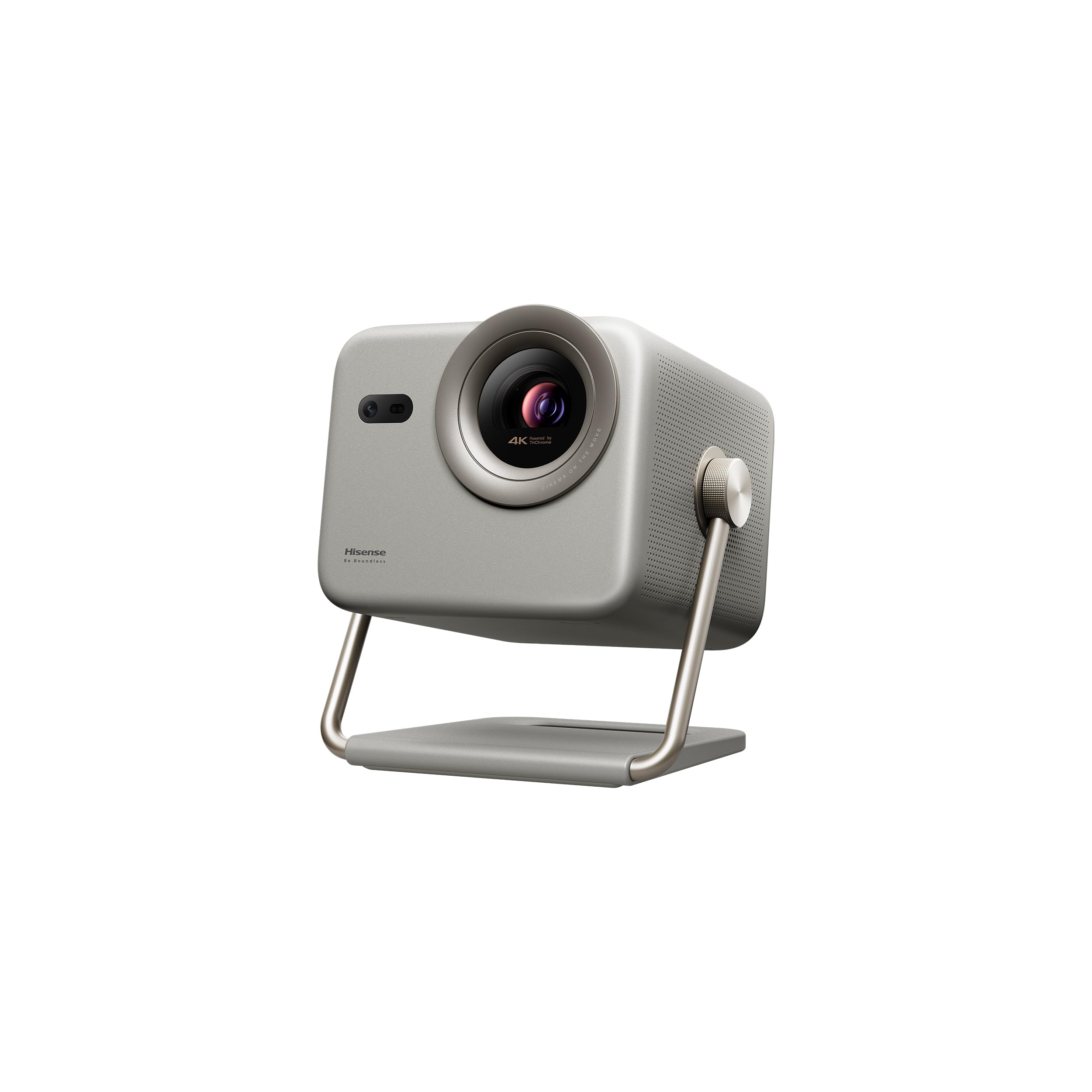
Built to move — a triple-laser 4K that swings from the living room to the garden.
Portability is the whole idea here. The M2 Pro is a portable triple-laser 4K unit that projects from 65″ to 200″, so the same box powers a family movie night indoors and a backyard screening outdoors. Buyers describe it as a great little workhorse that works right from the start, and the picture quality lands well — some compare it to owning a 200-inch OLED.
Its light engine is an MCL38 triple-laser design at 1300 ANSI lumens, tuned for low-light rooms — this is a dim-room and evening-outdoor projector, not a daylight fighter. Dolby Vision steps in to adjust brightness, contrast, and color scene by scene, and the optical zoom with a 1.0-1.3:1 ratio keeps the image at 4K detail regardless of how close you sit.
Everyday convenience is strong: an AI “Magic” auto-adjust system handles alignment, VIDAA smart OS puts Netflix and YouTube on-screen, and active 3D adds depth for compatible content. The honest read: 1300 lumens means it wants a dark room after all, so manage that expectation before you buy.
Carry-and-go appeal: The 65″–200″ range and built-in smart OS make it a genuine take-anywhere 4K beam.
Light it wisely: At 1300 ANSI lumens it is a low-light performer — a bright afternoon room will look washed out.
Made for: flexible indoor/outdoor movie nights where the projector has to travel.
Skip for: a permanently bright room that never dims.
7. Optoma UHZ36 4K UHD Laser HDR Projector
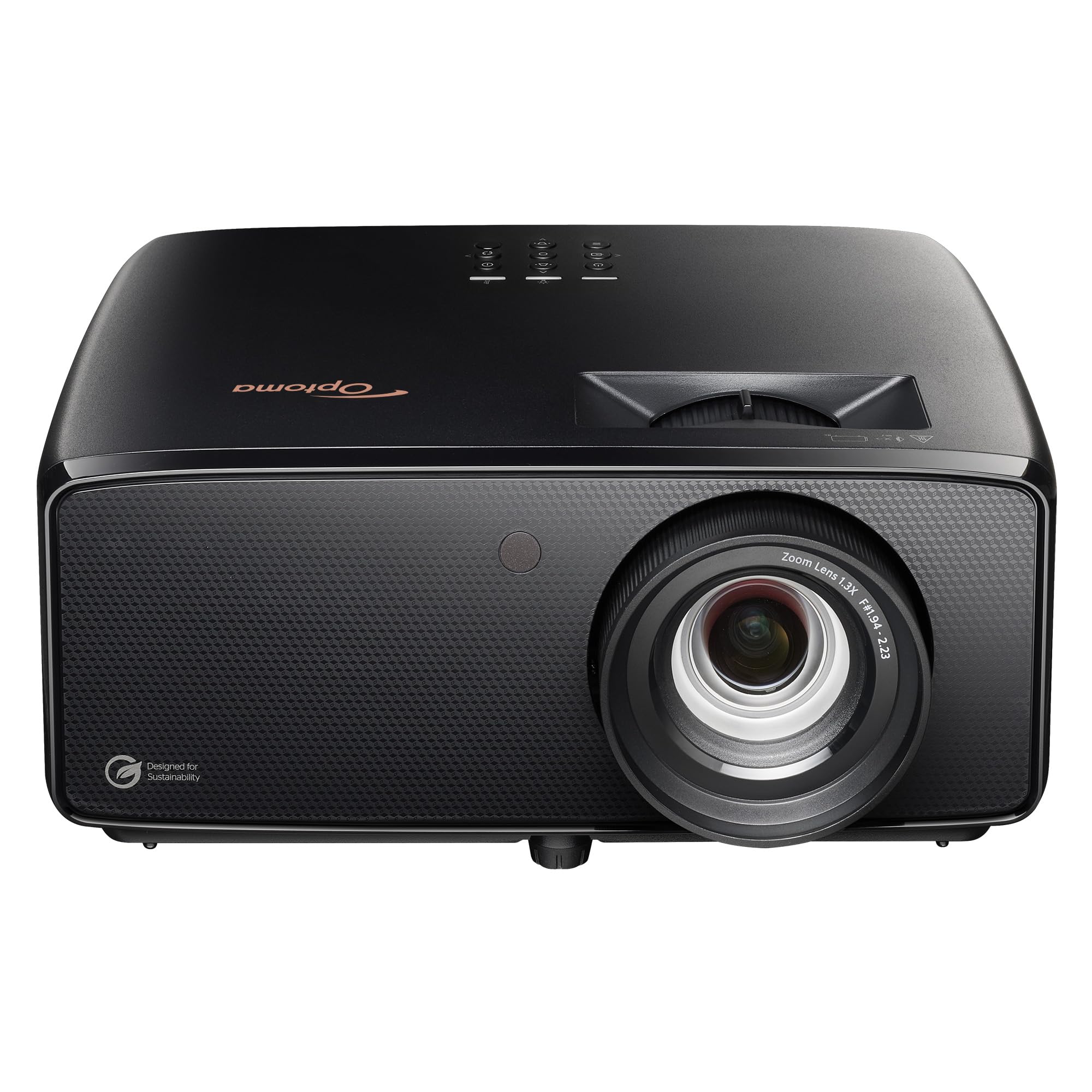
A 3500-lumen 4K laser built to stay visible with the overhead lights still on.
Brightness and light-source life are the two reasons to look here. It throws 3500 lm — more punch than the 2600 lm of the Epson 5050UB — and uses a laser rated for 30K hours, so the light engine is a long-haul one rather than a bulb you replace. Its contrast is listed at 1,500,000, and image quality is the top thing buyers point to, with crisp focus and no artifacts the recurring theme.
Resolution is native 3840 x 2160, and HDR support adds range to compatible films. FILMMAKER MODE is included to preserve the director’s original picture intent — it dials the processing back so the movie looks as intended rather than over-sharpened. It self-describes as 4K UHD with a bright, laser, home-cinema focus, and connects across 4K Blu-ray, Apple TV 4K, PS5, Roku 4K, and Xbox Series X.
The caveat is data depth: fewer buyers have lived with this exact model long-term, so the track record is thinner than the crew of well-reviewed standbys around it. For a bright, film-first room, though, the brightness-plus-laser combination is a clean fit.
Why it earns a look
- 3500 lm of laser light with a 30K-hour engine rating
- Native 4K with HDR and FILMMAKER MODE
- Crisp focus with clean detail and no artifacts reported
- Broad 4K source compatibility across major consoles and streamers
Be aware
- A newer entry with a thinner long-term track record
- Fewer buyer descriptions to lean on than established rivals
Worth your money if: you want a bright 4K laser for a film-first room that never gets fully dark.
Hold off if: you want a long established reputation before buying.
8. JMGO N1S Ultra 4K Triple Laser Projector
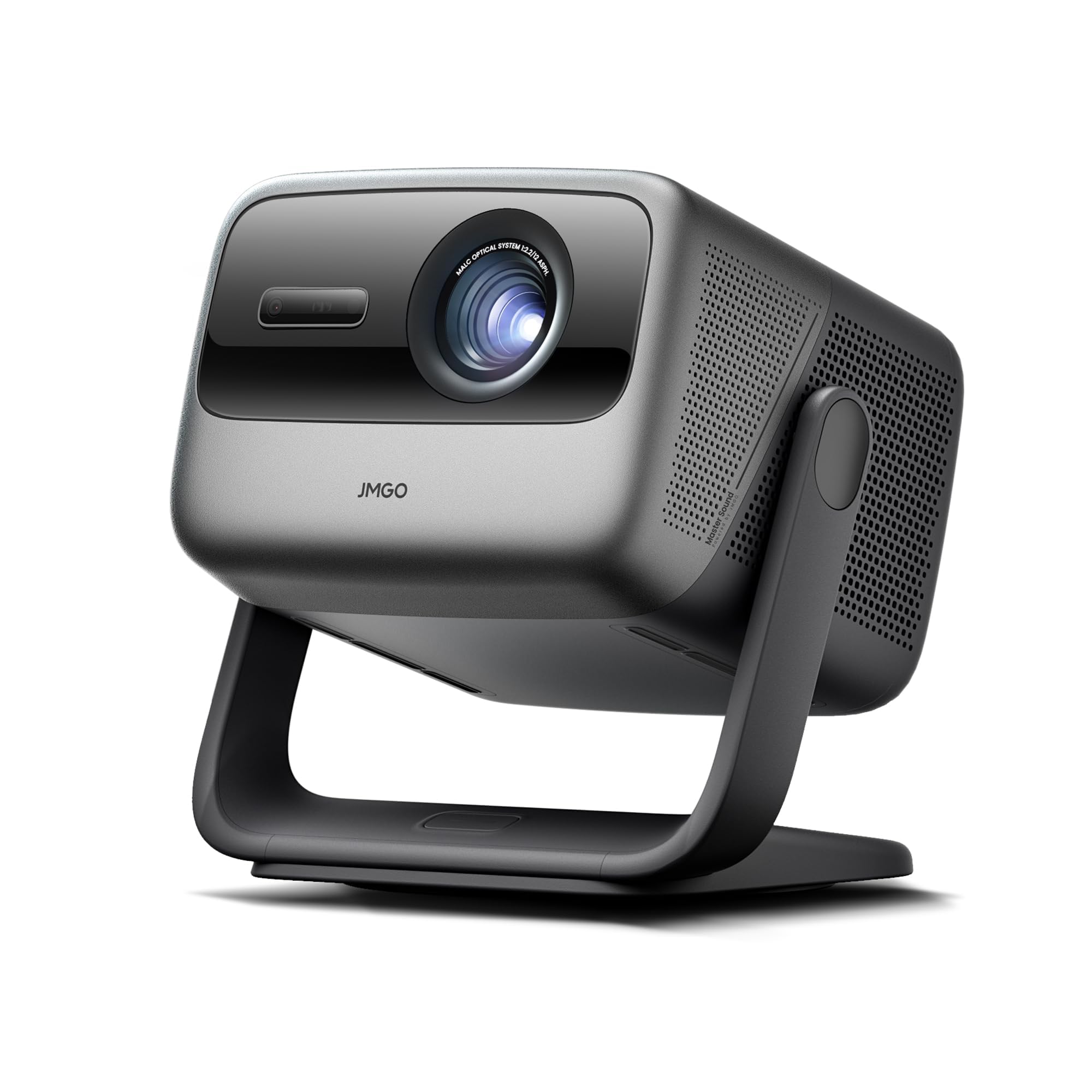
Point-and-play 4K — an integrated gimbal that keeps the image square wherever you aim it.
The defining feature is a built-in gimbal, a pivoting mount that lets you aim the projector and still get a perfectly aligned picture. Move it, tilt it, and real-time autofocus plus keystone correction re-square the image for you. That is what makes it the most forgiving projector here to set up casually — no tripod gymnastics required.
Light comes from a triple RGB laser (Qualas 22 lasers) at 2800 ISO lumens, with a wide color gamut and ΔE<1 color accuracy (a technical measure where lower means color is closer to the source). Its 1600:1 FOFO contrast is the number to understand before buying: dark-room blacks won’t match the higher-contrast lasers up this list, but the color punch and brightness in a lit room are real.
Streaming is handled by built-in Google TV with Google Assistant and Chromecast, and 20W dual speakers with Dolby Digital Plus reach down to 45Hz, so dialogue and bass are present without extra gear. HDMI 2.1 with eARC makes wiring a console or soundbar simple, and Blu-ray 3D adds depth for compatible discs.
The setup win: The gimbal plus 3D TOF sensor and camera deliver genuinely hands-off alignment — aim and it corrects.
The honest limit: That 1600:1 contrast is modest for a dark theater; it is happiest in mixed light.
Correct fit for: people who want a portable, self-aligning 4K laser they can move room to room.
Wrong fit for: a pitch-black room where deep blacks are the priority.
9. XGIMI HORIZON 20 4K RGB Triple Laser Projector
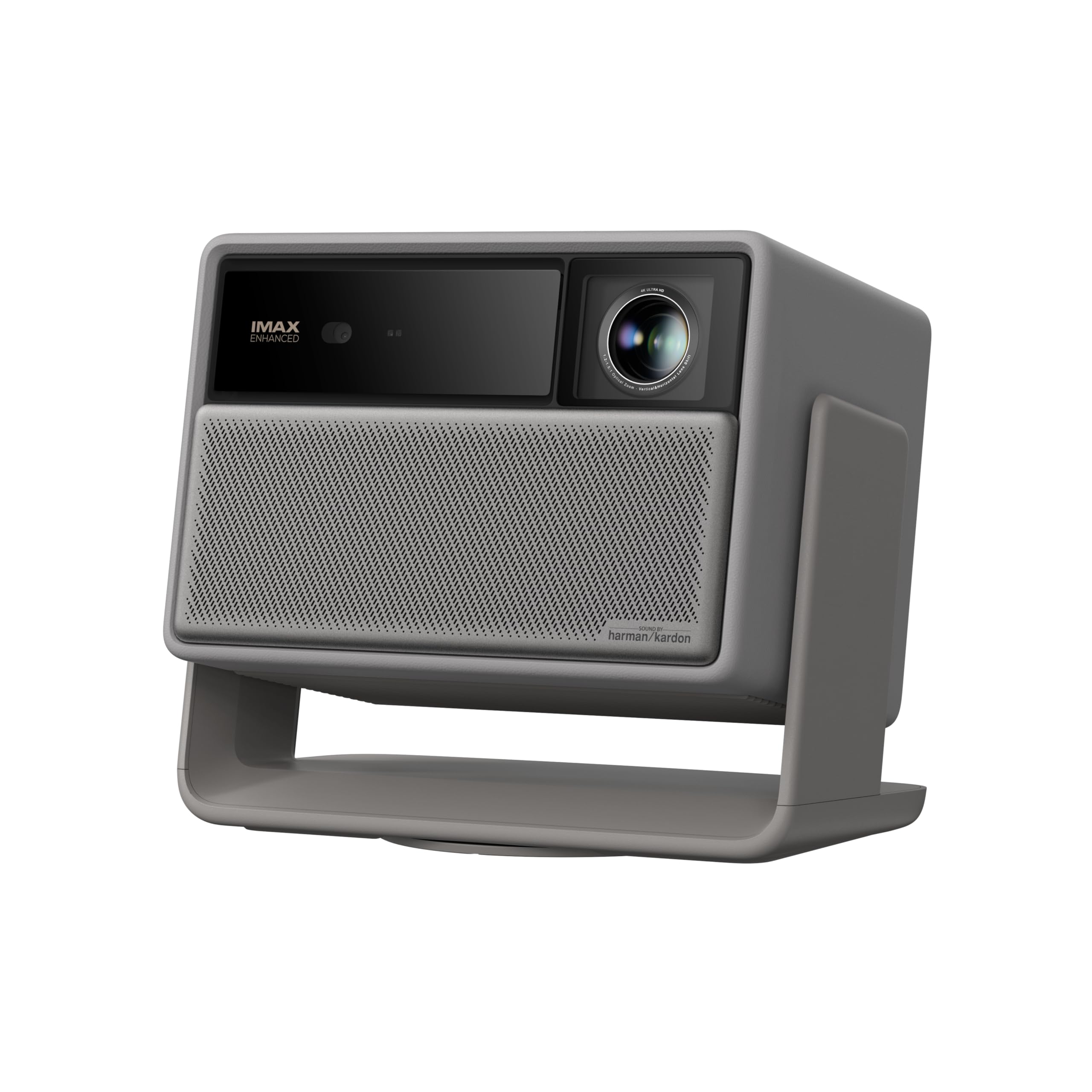
3200 lumens with a 100,000:1 contrast — bright enough to watch through the day.
The X-Master RGB triple laser engine is the heart of this one, pushing 3200 ISO lumens to a 100,000:1 contrast ratio — the kind of figure that keeps daylight from washing the picture to gray, and gives dark scenes real depth. Buyers routinely say it is bright enough to watch during the day, which is the practical test most projectors fail.
It is certified cinematic across IMAX Enhanced, Dolby Vision, HDR10+, and Filmmaker Mode, and gaming gets pro-level attention: a 1ms response and 240Hz refresh with VRR and ALLM (features that sync the projector to a console so frames stay smooth and lag stays low). The integrated stand plus flexible lens shift and optical zoom mean placement is forgiving, and Harman Kardon speakers handle sound without a separate system.
Performance is the mixed spot in buyer feedback — some find the day-to-day speed and software less snappy than the picture deserves. Also worth noting: it projects up to 300 inches, so a smaller room needs care choosing where it sits. But on raw brightness and contrast at this tier, it is hard to argue with.
What stands out
- 3200 ISO lumens with a 100,000:1 contrast ratio
- IMAX Enhanced, Dolby Vision, HDR10+, Filmmaker Mode
- 1ms response and 240Hz with VRR and ALLM for gaming
- Harman Kardon audio, Google TV, and an integrated stand
Things to weigh
- Performance/software feedback is mixed
- The 300-inch maximum asks for a room big enough to use it
Right call if: you want maximum daytime brightness and contrast in a smart all-in-one.
Look elsewhere if: a flawless, snappy interface matters more to you than raw picture power.
10. AWOL VISION LTV-3000 Pro 4K UST Projector
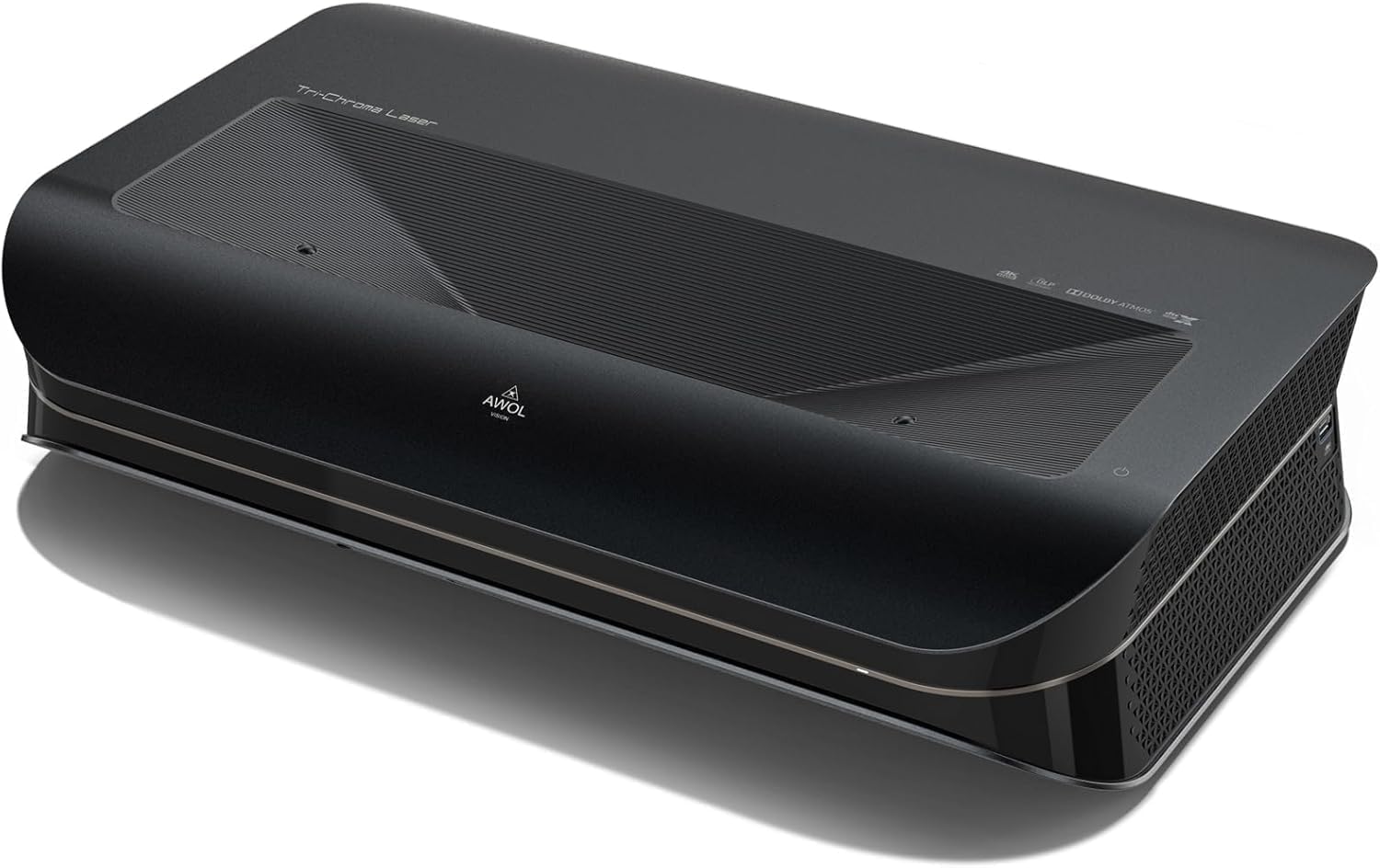
Sits on the cabinet against the wall and throws a 150-inch laser-TV image.
Ultra-short-throw means the projector lives right against the wall — here a fixed 0.25:1 ratio (roughly 8.54″ for a 100″ image, 12.84″ for 150″). That tabletop placement is the appeal: nobody crosses the beam, the wall becomes a giant TV, and the unit itself stays out of sight on a media console. It is the one pick designed to replace a screen rather than sit across the room from it.
The picture comes from a triple-laser 4K engine with Dolby Vision, HDR10+, and 3D support, covering 107% BT.2020 and 147% DCI-P3 (color-range figures that put it in cinema-grade territory). Brightness is 2000 lm, and the firm surface-like experience is often described as rivaling the best projectors on picture and color. A built-in center-channel speaker maps dialogue to the screen, and it integrates with control systems like Control4.
Two setup facts decide if this is for you. First, its 2500:1 contrast is the lower end of this list — the Valerion above sits at 10,000:1 — so pure blacks are not its strength. Second, at 0.25:1 throw it needs correct cabinet depth; without sufficient space a dedicated sliding mount is required to land focus and size.
The living-room-TVer: A 0.25:1 lens and 3D laser make a wall-filling theater without anyone walking through the light.
The placement reality: A shallow cabinet won’t cut it — this needs the right depth or a sliding mount for focus.
Fits if: you want a wall-replacing ultra-short-throw and can give it proper placement depth.
Doesn’t fit if: your console is shallow or you prize deep blacks above screen size.
11. Epson Home Cinema 5050UB 4K PRO-UHD 3LCD Projector

For a pitch-dark room and a love of deep blacks, this is the one built for it.
This is the dedicated-theater option, and its headline is black level. A contrast ratio up to 1,000,000:1 delivers the deep blacks and tonal depth that dark-room viewing is all about — buyers describe gorgeous black levels and excellent contrast, and a 125-inch 4K display that fills a wall. If contrast is what you value above all, nothing here beats it.
It uses a true 3-chip 3LCD design, displaying 100% of the RGB signal for bright, accurate color with no “rainbowing.” A pixel-shift processor controls three HD LCD chips to enhance resolution, while a full 10-bit HDR processor and 12-bit digital imaging work to keep transitions smooth and banding at bay. Brightness is 2600 lm, so this is a light-controlled-room projector by nature.
Two honest notes: it is often described as quiet, which suits a dark room, but its size draws mixed reviews — it is a big, stationary unit. And the LCD-plus-processing approach is different from the sealed lasers up this list, so decide whether contrast or laser convenience is your priority.
The dark-room case
- Contrast up to 1,000,000:1 for deep blacks
- 3-chip 3LCD color with no rainbowing
- Full 10-bit HDR and 12-bit processing
- Described as super quiet in use
The reality check
- 2600 lm suits a light-controlled room, not a bright one
- Size feedback is mixed — it is a large stationary unit
Buy it for: a dedicated dark room where deep blacks and color purity win.
Not for: a bright living room or a space where a big stationary box is a problem.
Understanding the Specs
Brightness (Lumens and ISO Lumens)
Brightness is the amount of light thrown at the wall, measured in lumens — ISO lumens is a standardized way of measuring that light output. Higher numbers hold up better against room light; lower numbers look richer in a dark room. A 4500-lm lamp unit stays visible with lamps on, while a 1300-lm laser portable wants the lights down. Match the figure to your brightest viewing time, not the darkest.
Contrast Ratio
Contrast ratio compares the brightest white to the deepest black — a higher ratio means dark scenes keep their detail instead of going flat gray. Units here range from 1600:1 (the JMGO N1S Ultra) up to 1,000,000:1 (the Epson 5050UB). For a dark theater, contrast matters as much as brightness; for a bright room, brightness wins first.
Throw Ratio and Placement
Throw ratio is how far the projector sits versus how wide the image is. A 0.25:1 ultra-short-throw (AWOL) sits nearly against the wall; a short throw (BenQ) fills 100 inches from 5 feet; standard throw needs more room depth. Measure your room before choosing, because you cannot cheat the geometry after it ships.
Input Lag and Refresh Rate
Input lag is the delay in milliseconds between your input and the on-screen result — lower is more responsive for gaming. Refresh rate in Hz is how many times per second the image redraws — 240Hz keeps fast motion fluid. The Valerion’s 4ms/240Hz and the ViewSonic’s 4.2ms/240Hz are the gaming-focused numbers here.
FAQ
Do I need a completely dark room for a home projector?
Is a laser projector better than a lamp projector for home use?
How far should the projector sit from the screen?
Can I use a home projector for gaming?
What is the difference between 1080p and 4K on a projector?
Will a projector work outdoors for a backyard movie night?
Do I need a separate sound system with a projector?
How long does a projector’s light source last?
What does keystone correction do on a home projector?
Is an ultra-short-throw projector worth it over a standard one?
Final Thoughts: The Verdict
For most rooms, the beamer for home winner is the Valerion StreamMaster Plus2 because it pairs a 4ms, 240Hz game mode with a 4K triple-laser picture, Google TV, and automatic alignment in one box — it covers movie and console duty without a second device. If raw daytime brightness is your problem, grab the Optoma HD30LV at 4500 lm. And for a wall-replacing theater, the AWOL VISION LTV-3000 Pro is the ultra-short-throw one to reach for.
How We Picked
We do not accept paid placement. Every pick is matched to a real buyer and a real use-case; we do not hands-on test units.
Sources & Methodology
Specifications: manufacturer listings and product documentation. Review insights: verified customer reviews, as of November 2026. Pricing: not shown on this page (it changes often); check the current price via the retailer link.
As an Amazon Associate, Gadgets Feed earns from qualifying purchases. This does not affect which products we feature.