
The gap between a mediocre office coffee pot and a truly great espresso bar is a single machine — one that transforms whole beans into a hot, crema-topped cup at the press of a button. Bean-to-cup machines eliminate the stale pre-ground coffee that ruins most home brews, replacing guesswork with integrated grinders, tampers, and milk frothers that deliver consistent results every morning.
I’m Min — the co-founder and writer behind Gadgets Feed. For this guide I analyzed the extraction technology, grinder durability, and milk system complexity across eleven of the most capable models on the market, cross-referencing customer experiences to separate the real workhorses from the expensive paperweights.
Whether you want a quick espresso shot or a latte with microfoam, the right best bean to cup coffee machine turns your kitchen counter into a cafe you never have to tip.
How To Choose The Best Bean To Cup Coffee Machine
A bean-to-cup machine is a multi-year investment in your morning routine. The wrong choice leads to lukewarm coffee, frustrating cleaning rituals, or a grinder that chokes on light roasts. Nail these four factors and you will land on a machine that pays for itself within a year.
Grinder Quality: Conical Burr vs. Flat Burr vs. Ceramic
Every bean-to-cup machine relies on its grinder to produce uniform particles for even extraction. Conical steel burrs (found on De’Longhi and Breville models) excel at longevity and consistent grind size across the full 13–45 setting range. Ceramic burrs, like those in the Bosch TIU20109, run cooler and resist dulling but often limit grind adjustment to fewer steps. Flat burrs, reserved for premium Jura machines, deliver the most uniform particle distribution but generate more heat. For daily espresso, look for at least 10 grind settings — fewer than that means your beans cannot compensate for humidity or roast level changes.
Milk Frothing: Integrated Wand, LatteGo, or LatteCrema
Milk systems separate the good machines from the great ones. A traditional steam wand gives you total control over texture but adds a skill curve. Proprietary systems like Philips’ LatteGo (three parts, rinse-clean in ten seconds) prioritize speed and hygiene over microfoam precision. De’Longhi’s LatteCrema Hot and Cool systems offer programmable foam density and work with both dairy and plant-based milks. If you drink straight espresso, skip the milk complexity entirely and save money with a dedicated espresso model — but for daily lattes, a self-cleaning milk system prevents the sour smell that plagues detachable carafes left unwashed.
Pump Pressure and Extraction Technology
The standard 15-bar pump is adequate for most home espresso, but extraction quality depends more on how the machine manages water flow through the puck. Jura’s Pulse Extraction Process (P.E.P.) pulses water at intervals to maximize flavor from short shots like ristretto, while Breville’s ThermoJet system heats water on demand at 32% higher efficiency than traditional thermoblocks. Machines lacking pre-infusion (a low-pressure wetting phase before full pressure) tend to produce sour or channeled shots, especially with light-roast beans. Look for explicit pre-infusion or pulse-extraction features in the spec sheet.
Maintenance and Total Cost of Ownership
The purchase price is only half the story. High-end machines like the Jura E8 require proprietary cleaning cartridges (–30 per month) and descaling tablets, adding –400 annually to your coffee habit. Mid-range Philips and De’Longhi models use AquaClean filters that delay descaling for up to 5000 cups, dramatically lowering upkeep. Removable brew units — standard on Bosch, Philips, and De’Longhi — let you rinse the group head under the tap weekly, preventing oil buildup that creates bitter flavors. Skip any machine with a non-removable brew unit; it will degrade your coffee irreversibly within six months of daily use.
Quick Comparison
On smaller screens, swipe sideways to see the full table.
| Model | Category | Best For | Key Spec | Amazon |
|---|---|---|---|---|
| De’Longhi Eletta Explore | Premium | Cold brew & iced coffee fans | Cold Extraction under 3 min | Amazon |
| Breville Oracle Jet | Premium | Consistency w/ automated tamping | 22g dose, 45 grind settings | Amazon |
| Philips 5500 Series | Mid-Range | Multiple user profiles & quiet brew | 40% quieter SilentBrew | Amazon |
| Jura E8 | Premium | High-volume, multi-specialty homes | 17 programmed specialties | Amazon |
| De’Longhi Dinamica Plus | Mid-Range | 4-user profile customization | 3.5″ TFT touchscreen | Amazon |
| KitchenAid KF7 | Mid-Range | Metal-clad durability | 2.2L water tank, metal build | Amazon |
| Cafe Bueno CB-3000 | Mid-Range | Budget-friendly 7-inch touchscreen | 19 customizable drink options | Amazon |
| Ninja Luxe Café Pro | Mid-Range | Guided barista assist for beginners | Weight-based dosing, 25 grind settings | Amazon |
| Philips 3300 Series | Entry-Level | Simple one-touch iced coffee | LatteGo 3-part milk system | Amazon |
| Jura E4 Piano Black | Premium | Pure espresso & coffee purists | Pulse Extraction Process | Amazon |
| Bosch VeroCafe 300 | Entry-Level | Compact size, couples | Durable ceramic grinder | Amazon |
In‑Depth Reviews
1. De’Longhi Eletta Explore

The De’Longhi Eletta Explore delivers over 50 one-touch recipes, including cold brew extracted in under three minutes — a feature absent from most machines at this level. The dual LatteCrema systems handle hot and cold milk separately, so you get genuine cold foam for iced lattes without diluting the drink with warm froth. Its 3.5-inch TFT touchscreen and Coffee Link app allow per-recipe customization of strength, volume, and temperature, and the Bean Adapt Technology guides you through grind adjustments based on the specific roast you load into the hopper.
The built-in conical burr grinder offers 13 settings, which is adequate for most beans but noticeably coarser than the 25-step grinders found on mid-range competitors. Owners report the self-cleaning cycle consumes a significant amount of water, requiring more frequent drip tray emptying — roughly every six servings. The milk drinks exit at around 125°F for flat whites, which some users find cooler than the 157°F coffee-only brew; if you prefer scalding-hot milk beverages, you may need to microwave the finished cup.
For cold brew enthusiasts and households that cycle through iced and hot drinks throughout the day, this machine is the most versatile bean-to-cup option under the premium tier. The included travel mug compatibility and 60-ounce water tank make it practical for both solo use and small gatherings, though the plastic-heavy construction does not feel as substantial as the all-metal KitchenAid or Jura alternatives.
Why it’s great
- Cold brew in under 3 minutes via Cold Extraction Technology
- Separate hot and cold milk systems produce genuine cold foam
- App connectivity enables remote recipe tuning and bean-specific grind recommendations
Good to know
- Milk drink temperature hovers around 125°F, noticeably cooler than coffee-only output
- Self-cleaning cycles waste water and require frequent drip tray emptying
- Plastic chassis feels less premium than the price suggests
2. Breville Oracle Jet
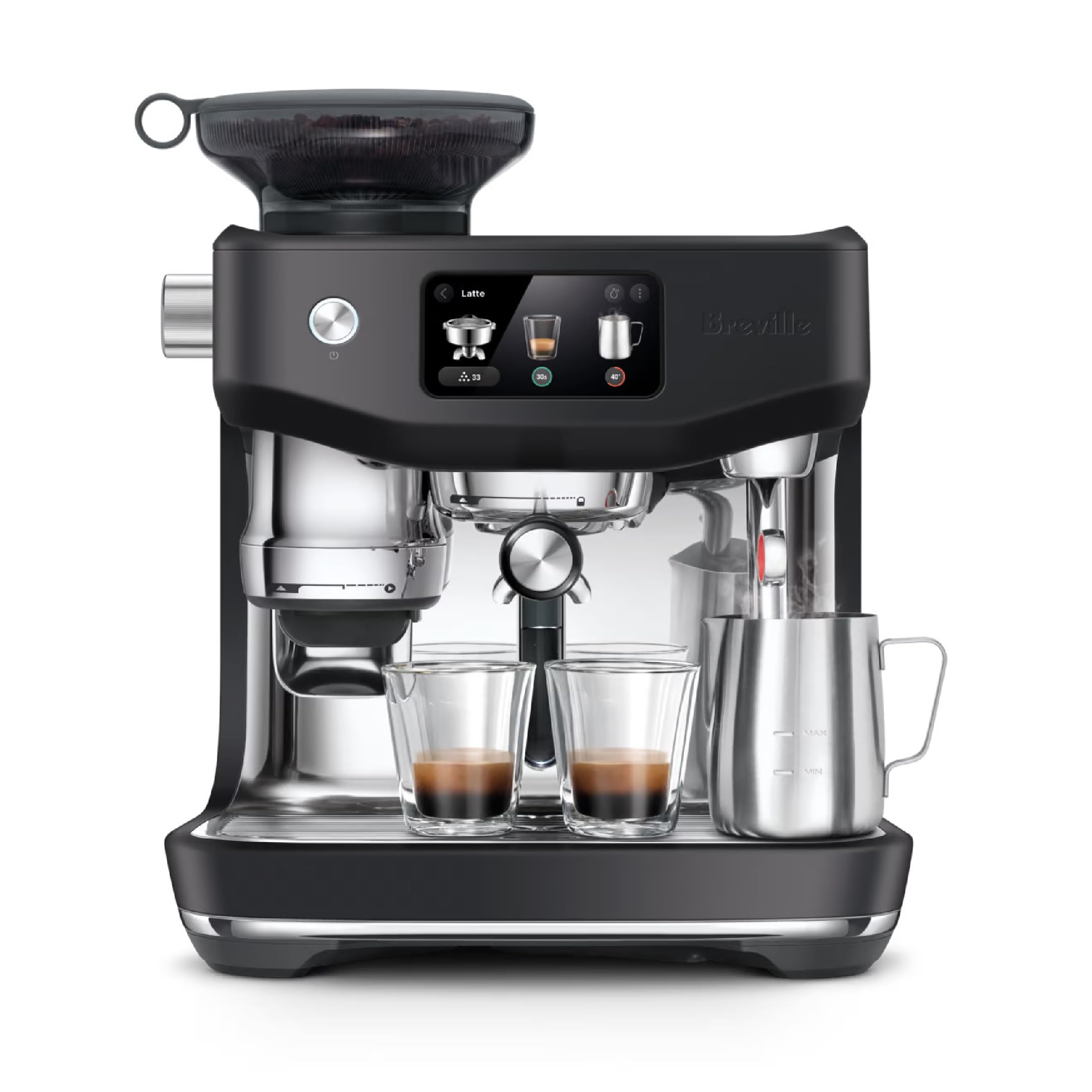
The Oracle Jet eliminates the two biggest obstacles to consistent home espresso: dosing and tamping. Its integrated Baratza European Precision Burrs auto-grind, dose, and tamp exactly 22 grams into the 58-millimeter stainless steel portafilter — the same diameter used in commercial cafe machines. The ThermoJet heating system reaches extraction temperature in roughly three seconds and uses 32% less energy than a traditional thermoblock, so you can pull back-to-back shots without waiting. The Auto MilQ system offers eight texture levels and temperature adjustment from 104°F to 167°F, with dedicated settings for dairy, soy, almond, and oat milks.
However, the Oracle Jet requires a minimum 8-ounce cup clearance, which limits its usefulness for small espresso demitasse cups. A firmware update reportedly broke the auto-tamping function on some units, producing watery shots with loose pucks — a risk of any Wi-Fi-enabled appliance that cannot roll back updates. At nearly 27 pounds and with a 15-inch width, it demands significant counter space and the included Knock Box for spent pucks.
This machine is for the enthusiast who wants cafe-grade results without the learning curve of a manual lever machine. The cold brew and cold espresso modes extract at lower temperatures to produce smooth, low-acid profiles that rival dedicated cold brew systems. It is expensive, but the combination of professional-grade dosing automation and milkIQ intelligence means you will not outgrow it unless you pursue competition-level extraction tweaks.
Why it’s great
- Commercial 58mm portafilter with auto 22g dose and tamp for repeatable shots
- ThermoJet heats in 3 seconds at 32% energy savings over thermoblocks
- Auto MilQ calibrates foam texture for dairy and plant-based milks separately
Good to know
- Firmware updates have reportedly disabled auto-tamping on some units with no rollback option
- Minimum 8oz cup height limits espresso glass compatibility
- Heavy 27-pound footprint requires dedicated counter real estate
3. Philips 5500 Series (EP5544/94)
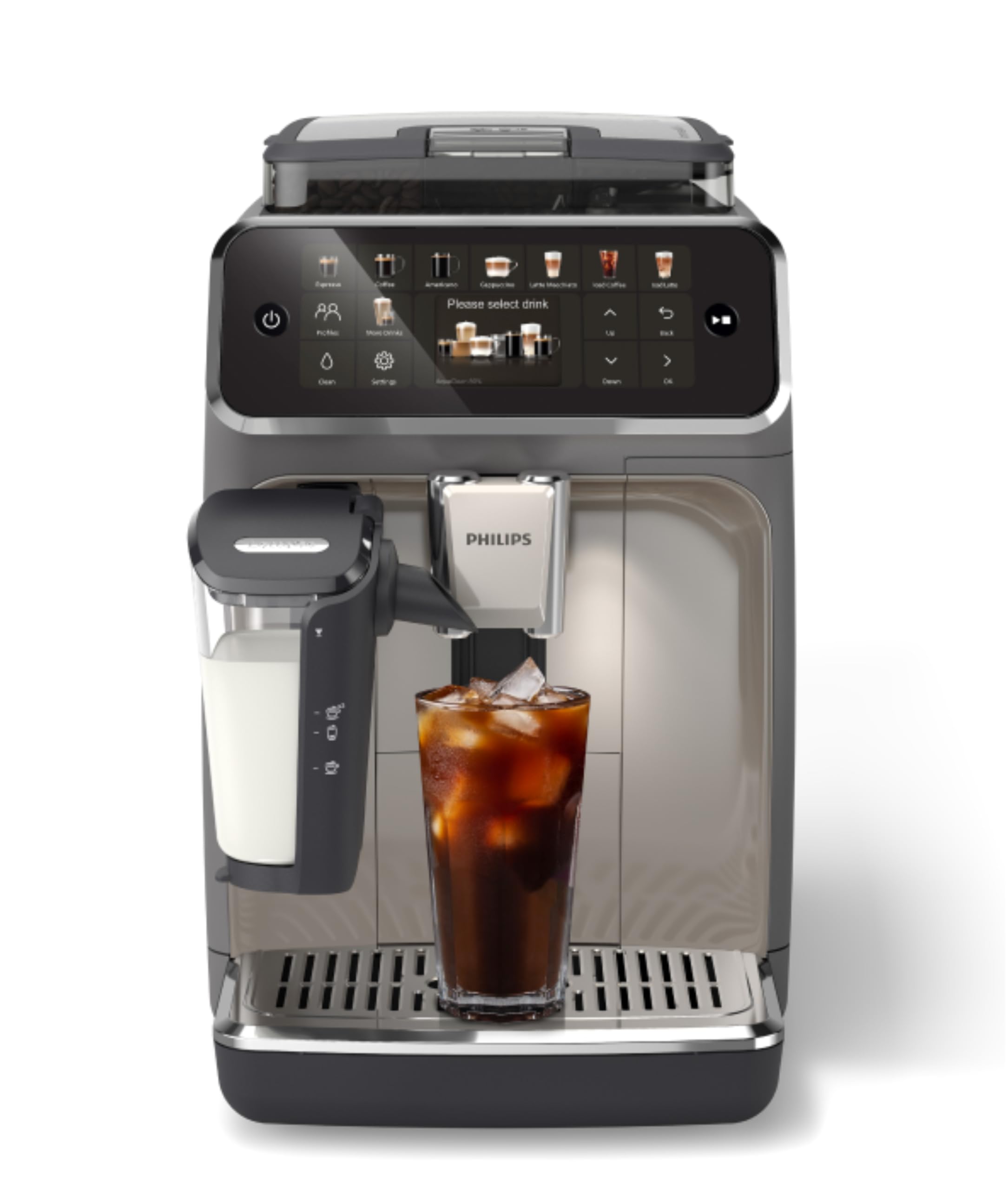
The Philips 5500 Series upgrades the brand’s entry-level formula with 20 presets, four saved user profiles, and SilentBrew technology that makes it 40% quieter than earlier models — a meaningful detail for early-morning brewing in open-plan homes. The LatteGo milk system remains the fastest-clean design on any bean-to-cup machine: three parts, no internal tubes, and dishwasher safe. You can go from a latte to a rinsed carafe in about ten seconds flat. QuickStart mode has the machine ready to brew in three seconds, which beats most competitors by a full minute.
The color touchscreen interface is intuitive enough for guests to navigate without instruction, and the 1.8-liter water tank supports multiple drinks before needing a refill. Customers who owned the previous Philips 4300 report that the 5500 fixes the older machine’s issues with brew temperature and puck consistency. On the downside, the plastic and acrylic build quality does not match the metal construction of the KitchenAid KF7 or the Jura E8, and some units have arrived with faulty grinders that required immediate replacement under warranty.
For households with two or three regular coffee drinkers who want individual strength and volume settings saved per profile, the 5500 delivers exceptional convenience at a mid-range price. The iced coffee preset works well, but the machine lacks a dedicated cold brew function. Consider this the best pick if you value silent operation and minimal cleaning over all-metal prestige.
Why it’s great
- LatteGo milk system rinses clean in 10 seconds with only 3 parts
- SilentBrew technology produces 40% less grinding noise than previous models
- QuickStart heats up in 3 seconds and supports 4 personalized user profiles
Good to know
- Plastic and acrylic housing does not match the premium feel of metal-clad rivals
- Quality control on grinders has shown variability with some DOA units reported
- No dedicated cold brew extraction — iced coffee preset relies on hot brew over ice
4. Jura E8

The Jura E8 is the most fully-featured machine on this list, capable of 17 programmed specialties from a standard espresso to a flat white, cortado, and even an Americano. Its Professional Aroma Grinder delivers 12.2% more aroma extraction than the previous generation, and the Pulse Extraction Process (P.E.P.) pulses water through the puck to maximize flavor for short drinks like ristretto. The 2.8-inch color display uses an AI-driven Cockpit that highlights pending maintenance, adapts product positions, and lets you show or hide drink names on the home screen — small touches that reduce daily decision fatigue.
But the E8’s hidden cost is significant: proprietary filters, milk system cleaner, and cleaning tablets add roughly –55 per month in consumables. The bean hopper design means some oily beans (like Starbucks roasts) can bridge and fail to feed reliably, frustrating users who prefer dark roasts. The milk spout on certain units is positioned far to the side, causing splatter that requires counter wiping after every milk drink. Jura’s warranty enforceability depends on buying from an authorized dealer, and third-party sellers may leave you without support when the internal plastic parts inevitably wear.
This is the machine to choose if you want the widest range of one-touch specialty drinks and are comfortable with ongoing consumable costs. The construction quality and longevity reputation — many users report 10+ year lifespans from earlier Jura models — offset the high upfront and recurring expense, but only if you budget for the annual + in filters and cleaning supplies.
Why it’s great
- 17 one-touch specialties including Flat White, Cortado, and Espresso Doppio
- Pulse Extraction Process extracts maximum flavor from short shots
- AI Cockpit display simplifies maintenance scheduling and interface customization
Good to know
- Proprietary consumables add -55 per month in ongoing costs
- Bean hopper design can clog with oily dark roasts like Starbucks
- Milk spout placement causes counter splatter on some units
5. De’Longhi Dinamica Plus
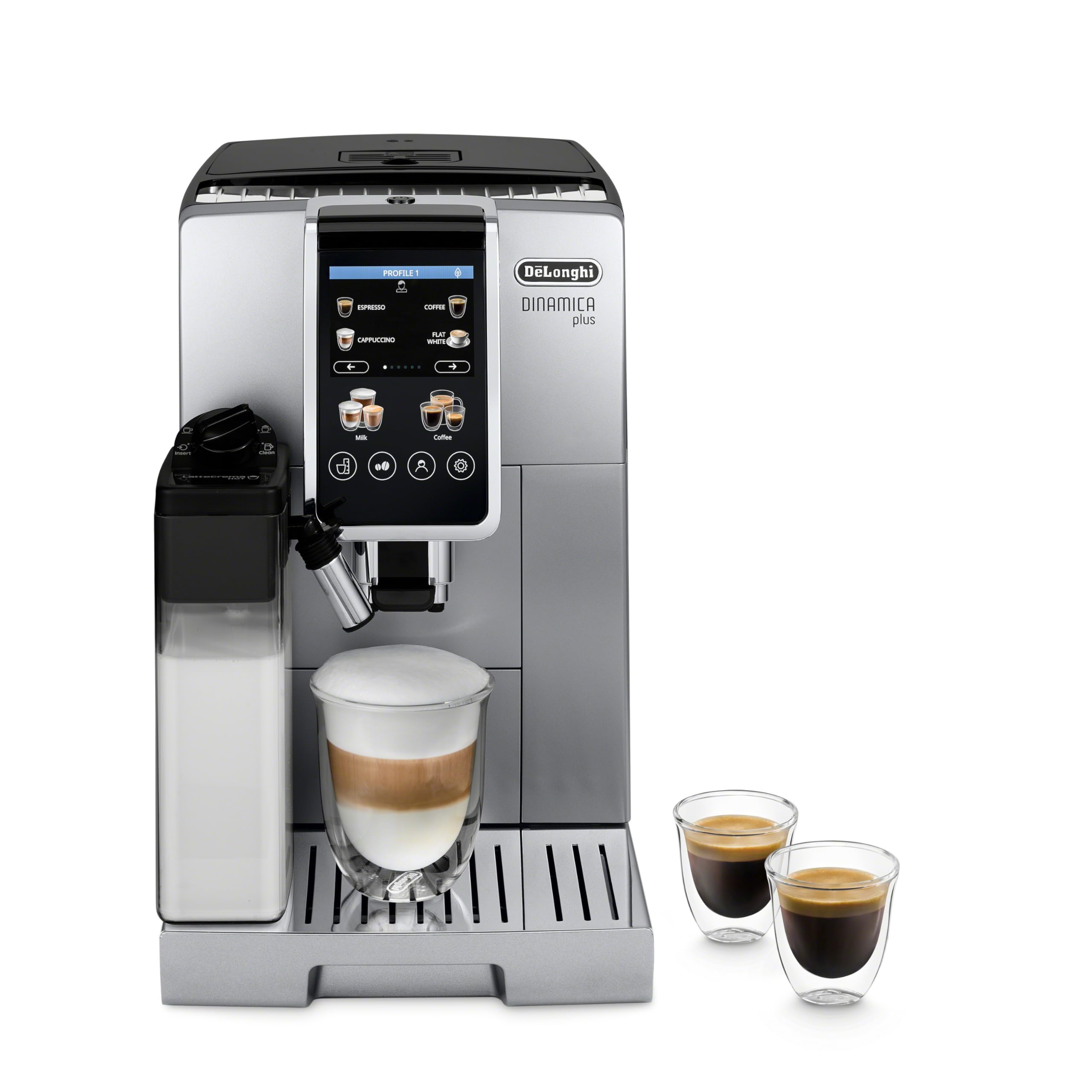
The Dinamica Plus is De’Longhi’s best-selling super-automatic for a reason: it balances 24 one-touch recipes with a Smart One-Touch system that learns your most frequent selections and surfaces them first. The 3.5-inch full-color TFT touchscreen is responsive and easy to navigate, and the 13-setting conical burr grinder covers enough range for medium to dark roasts. The LatteCrema Hot System does a solid job with dairy milk and alternatives, producing thick, velvety microfoam that holds its shape for simple latte art.
Users report that the machine purges water frequently — every time it cycles between grinding and brewing — which sends significant water to the drip tray. The milk carafe port is exceptionally tight on some units, requiring two hands and considerable force to detach for cleaning. Several owners noted a loud “grumpy” startup grind that dissipates after a few seconds but may be jarring in a quiet kitchen. The plastic exterior, while sturdy, does not convey the + price point as well as the metal-bodied KitchenAid KF7.
If you want a reliable, feature-rich automatic that handles up to four individualized profiles and learns your habits, the Dinamica Plus is a strong mid-range performer. It lacks cold brew capability and the milk system cannot produce cold foam, but for traditional hot espresso drinks, it matches the output of machines costing more.
Why it’s great
- Smart One-Touch learns your drink patterns and surfaces favorites first
- LatteCrema Hot System produces cafe-quality microfoam from dairy and plant milks
- 3.5-inch TFT touchscreen is snappy and intuitive to navigate
Good to know
- Frequent purge cycles waste water and fill the drip tray quickly
- Milk carafe port is very tight, requiring significant force to detach
- Plastic chassis feels underwhelming given the premium price bracket
6. KitchenAid Fully Automatic Espresso Machine KF7

The KitchenAid KF7 stands out for its metal-clad construction, which immediately distinguishes it from the plastic-heavy competition at this price point. The removable bean hopper lets you twist and lift to swap between beans — a feature that prevents stale blends from lingering when you switch roasts. The automatic smart dosing technology adjusts grind volume and consistency based on your drink selection, eliminating the guesswork that plagues cheaper machines when switching between a lungo and a single espresso.
The milk system uses a reversible hose that you drop into any milk container, rather than an integrated carafe, giving you flexibility in portion size. The 2.2-liter water tank is among the largest on the list, and the puck container holds more spent grounds than most units, meaning fewer trips to the compost bin. Several customers report that the brew temperature could be hotter for Americano drinkers, and the lack of granular coffee volume control (only single or double settings) frustrates those who want a precise 14-gram or 18-gram dose. One owner experienced a cracked spout holder bracket after three months, which may indicate a heat-stress weak point on early units.
For buyers who prioritize durability and a physical interface over screen-based navigation, the KF7 delivers a solid, serviceable experience. The menu-driven cleaning prompts take the guesswork out of maintenance, and the four user profiles cover most multi-person households. It is not the most feature-dense machine — 20 drink options feels limited against the De’Longhi Eletta’s 50 — but its build quality suggests it will still be making coffee long after the plastic-paneled competitors have failed.
Why it’s great
- Full metal-clad construction feels premium and durable over plastic competitors
- Twist-lift removable bean hopper allows easy bean-switching between roasts
- Large 2.2L water tank and high-capacity puck container reduce maintenance frequency
Good to know
- No granular coffee volume control — limited to single or double dose only
- Some units develop spout holder bracket cracks from heat stress
- Brew temperature may be too cool for drinkers who prefer very hot Americanos
7. Cafe Bueno CB-3000
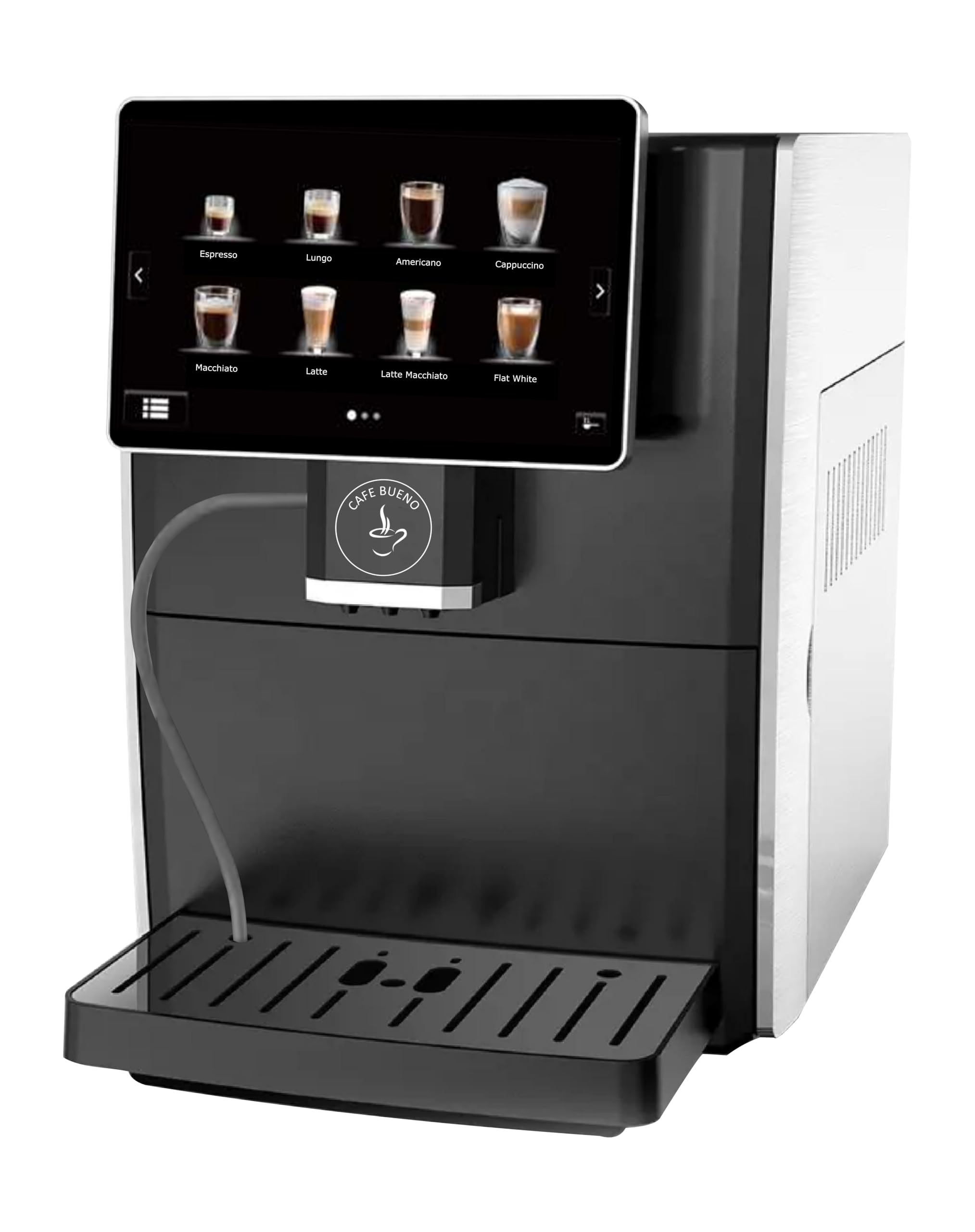
The Cafe Bueno CB-3000 offers the largest touchscreen display — a 7-inch panel — of any machine in this roundup, making navigation simple even for users who are not tech-savvy. It provides 19 fully customizable drink options including double versions of espresso, cappuccino, latte macchiato, and flat white. The grinder covers a range from very fine to coarse, and you can adjust temperature, water volume, milk foam, and milk warmth independently for each recipe. Four self-cleaning options (milk system clean, brewer clean, descaling, deep clean) are accessible directly from the display, reducing maintenance complexity.
However, reliability reports are divided. While many users praise the consistent puck quality and smooth, rich extraction after tuning the grinder, others report frequent breakdowns and non-responsive customer service. The water tank is positioned at the back of the machine, making it difficult to refill if you keep the unit under low cabinets. The self-cleaning cycles use more water than expected, but many owners note that the machine rinses itself immaculately between uses, preventing the stale coffee residue that builds up in less thorough designs.
This is the best mid-range option for buyers who want a large, accessible touchscreen interface and the flexibility to fine-tune nearly every brewing parameter. The US-based customer service is responsive for in-warranty issues, but out-of-warranty repairs may be difficult given the relatively new brand presence in the super-automatic market.
Why it’s great
- Generous 7-inch touchscreen makes recipe selection and customization effortless
- Four automated cleaning cycles handle maintenance without manual scrubbing
- Temperature, volume, grinder, and milk foam independently adjustable for 19 drink options
Good to know
- Reliability concerns with some units experiencing frequent mechanical failures
- Water tank at the back is hard to refill under standard-height cabinets
- Customer service responsiveness varies significantly between users
8. Ninja Luxe Café Pro ES701

The Ninja Luxe Café Pro is the only machine on this list that does espresso, drip coffee, and cold brew without requiring a separate appliance. Its Barista Assist Technology monitors each brew and recommends grind size adjustments based on the previous shot — a closed-loop feedback system that helps novices dial in without wasting beans. The integrated tamper compresses grounds via a push-lever, eliminating the messy hand-tamping that deters many would-be espresso drinkers. The conical burr grinder offers 25 settings and uses weight-based dosing rather than timed grinding, meaning your dose stays consistent regardless of bean density.
The Dual Froth System Pro combines steaming and whisking for hands-free milk texturing, handling both dairy and plant-based milks with five preset foam levels including cold foam. Customers consistently praise the guided experience, noting that the machine practically eliminates trial-and-error extraction. However, users upgrading from a Breville or Gaggia report that the quad shot espresso option produces a watery, overfilled cup with wet grounds that do not compact into a clean puck. The unit is also heavy at over 27 pounds, and the brew basket pucks need a dedicated knock box to avoid wet messes on the counter.
For beginners who want a single machine that does espresso, drip coffee, and cold brew without requiring semi-professional skills, the Luxe Café Pro is unmatched. The built-in storage compartment keeps baskets, brushes, and cleaning discs organized, and the stainless steel construction feels solid for the price. It may not satisfy strict espresso purists, but it covers the widest range of brew styles in one footprint.
Why it’s great
- Barista Assist Technology actively recommends grind changes based on previous brew results
- Weight-based dosing eliminates dose inconsistency from timed grinding
- Hands-free Dual Froth System handles dairy and plant milks with cold foam capability
Good to know
- Quad shot option produces watery espresso with wet, uncompacted pucks
- Heavy 27-pound build requires permanent counter placement
- Pucks require a separate knock box for clean disposal
9. Philips 3300 Series (EP3341/50)

The Philips 3300 Series is the entry-level champion of super-automatic machines, providing six presets (espresso, coffee, iced coffee, cappuccino, latte macchiato, hot water) at a price that recoups its cost against coffee shop purchases within roughly six months. The LatteGo milk system is identical to the one on the 5500 Series — same three-part design, same sink-cleanable speed — making this the cheapest way to get Philips’ best milk technology. The 15-bar pump, integrated conical burr grinder, and AquaClean filter combine to deliver up to 5000 cups before descaling is required, dramatically reducing maintenance.
The user interface relies on a full-color display but lacks the personalization depth of the 5500 Series: no multi-user profiles, only 6 presets compared to 20, and no SilentBrew sound shielding. Some units have leaked water internally during the brew cycle within the first few weeks, pointing to a design weakness that Philips has not publicly addressed. The 1.8-liter water tank is generous, but the overall plastic construction feels lightweight, and customers with arthritis report that the button interface requires more force than expected.
This machine makes sense for singles or couples who primarily drink milk-based espresso drinks and want the lowest possible barrier to entry for quality bean-to-cup brewing. The LatteGo system alone justifies the purchase if you would otherwise avoid a milk machine due to cleaning hassle, but be aware that the build quality reflects its budget position and may require warranty service within the first year.
Why it’s great
- LatteGo milk system is identical to premium models with fast 3-part cleaning
- AquaClean filter enables up to 5000 cups before descaling is needed
- Six preset options cover the most popular drink styles at an accessible price
Good to know
- Some units suffer from internal water leaks during brewing within weeks of purchase
- Lacks user profiles, SilentBrew noise shielding, and preset variety of the 5500
- Plastic build and stiff buttons may be difficult for users with hand mobility issues
10. Jura E4 Piano Black
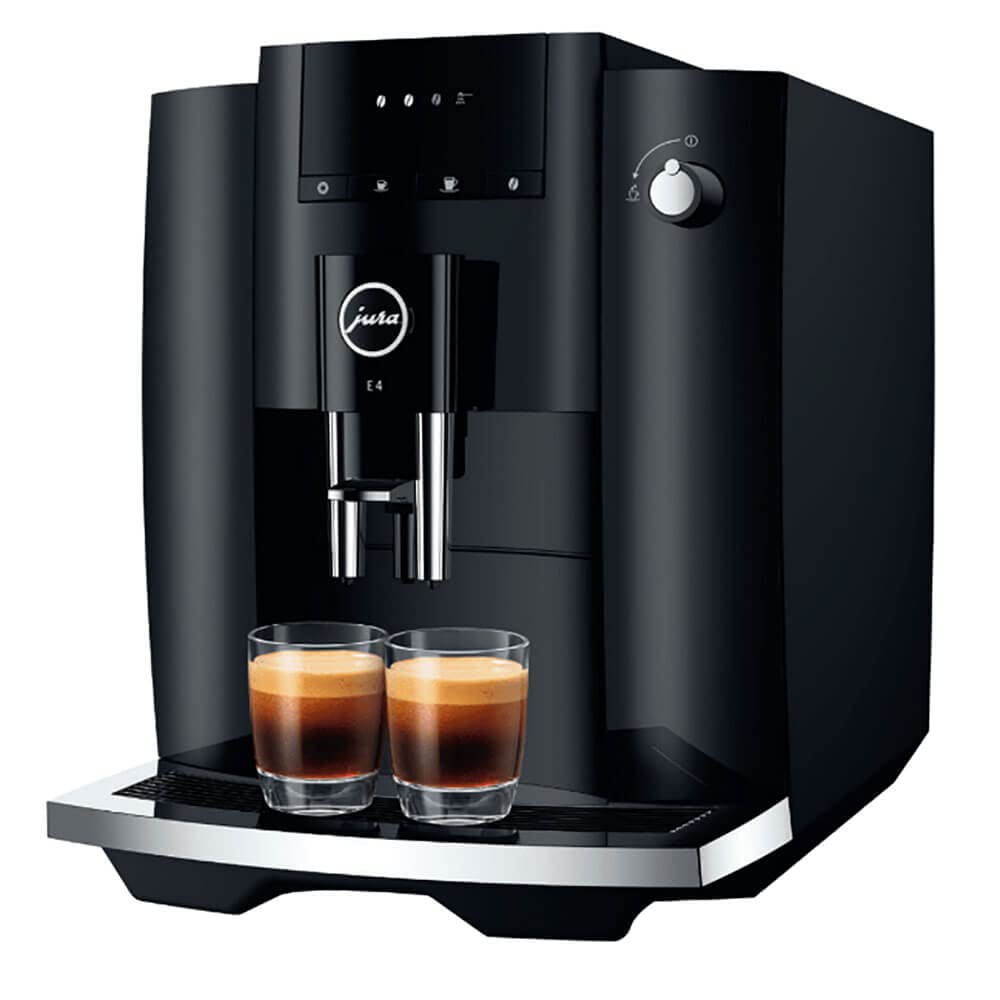
The Jura E4 is a focused machine designed for drinkers who want exceptional espresso, coffee, ristretto, and lungo without paying for milk frothing capabilities they will not use. Its Pulse Extraction Process delivers the same flavor-maximizing technology found in the flagship Jura E8 and Giga models, but the interface is stripped down to a straightforward button system with a small screen. The Professional Aroma Grinder uses conical steel burrs that Jura claims maintain ideal grinding results over the entire service life of the machine. The 64-ounce water tank and 10-ounce bean hopper support multiple servings before refilling.
The lack of a milk system means no cleaning cartridges for milk lines, but the E4 still requires Jura’s proprietary filter system to avoid descaling mode lockouts. Users report that the hot water output is not hot enough for proper tea brewing and that brew temperature is not adjustable. The interface uses symbols rather than text for strength and volume adjustments, making initial programming less intuitive than a touchscreen. Buyers should also verify they purchase from an authorized Jura dealer, as third-party sellers void the warranty and Jura charges + for out-of-warranty repairs.
For the espresso purist who values extraction quality above all else and prefers a simple machine with no milk-related components, the E4 represents Jura’s best price-to-extraction ratio. The previous generation E4 from owners who upgraded report that their old units lasted over 16 years, suggesting the build quality justifies the premium for long-term ownership — provided you are willing to pay for the proprietary consumables.
Why it’s great
- Pulse Extraction Process extracts maximum flavor from short espresso and ristretto shots
- No milk system means fewer components to clean and maintain
- Legendary Jura durability with many owners reporting 10-16 year lifespans
Good to know
- Requires proprietary Jura filters with chip recognition to avoid descaling mode
- Hot water output is not hot enough for proper tea; brew temperature not adjustable
- Symbol-based button interface is less intuitive than touchscreen competitors
11. Bosch VeroCafe 300 (TIU20109)
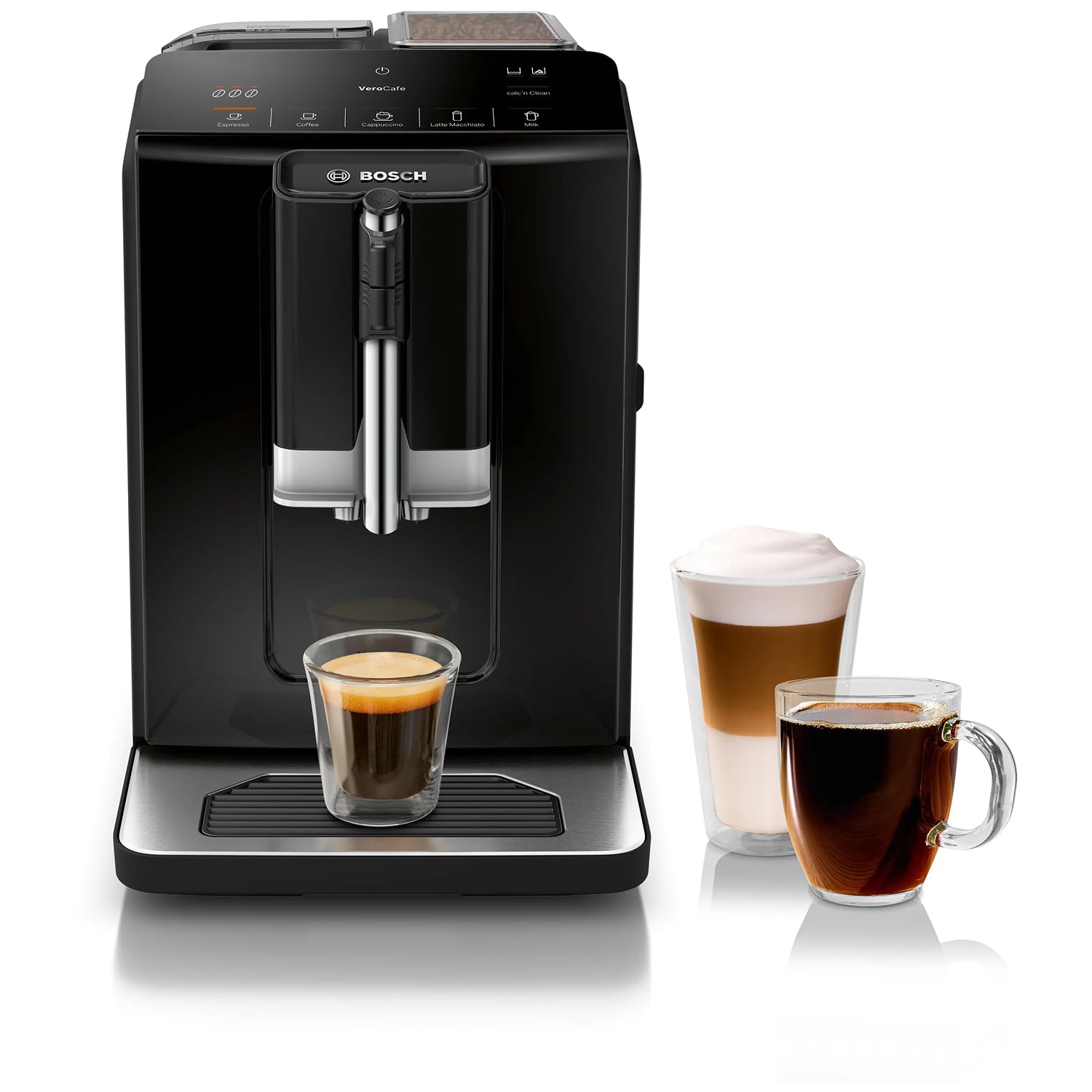
The Bosch VeroCafe 300 is the most compact and affordable fully automatic machine on this list, designed for individuals or couples who want fresh-ground espresso without committing to a counter-dominating footprint. Its durable ceramic grinder runs cooler than steel alternatives, preserving bean aroma during the grinding process, and the removable brew unit can be rinsed under the tap for maintenance. The straight magnetic milk wand produces decent foam directly into your cup, though it lacks the automatic milk systems found on more expensive models. The 45-ounce water tank is adequate for 2–3 days of moderate use.
Customer reviews highlight a critical shortcoming: the lack of a temperature setting results in lukewarm espresso that some users find undrinkable without preheating the cup. The grinder has also exhibited early failure on some units, producing only hot water after just a few days of use. The button interface is basic and requires deliberate pressing, which users with arthritis or dexterity issues find difficult. At 14.74 pounds, it is significantly lighter than competitors, which is a plus for countertop mobility but also suggests a less robust internal structure.
If your budget is very tight and you prioritize the ability to brew fresh-ground espresso without pods, the Bosch VeroCafe 300 will produce acceptable shots — provided you warm your cup first and are prepared to navigate potential quality control issues. It is best suited for the occasional espresso drinker who does not rely on the machine as their primary morning caffeine source; daily heavy users would be better served by the more reliable Philips 3300 Series.
Why it’s great
- Compact footprint (16.5 x 9.75 x 14.88 inches) fits small countertops well
- Ceramic grinder runs cooler than steel, preserving more bean aroma
- Fully removable brew unit makes rinsing maintenance accessible
Good to know
- No temperature control results in lukewarm brew without preheated cups
- Grinder reliability varies with some units failing within the first week
- Button interface requires firm pressure and is not arthritis-friendly
FAQ
How many grind settings do I actually need for a bean to cup machine?
Is a separate milk carafe better than an integrated frothing wand?
Why does my bean to cup machine coffee taste sour or bitter?
How often do I need to descale a bean to cup machine?
Final Thoughts: The Verdict
For most users, the best bean to cup coffee machine winner is the De’Longhi Eletta Explore because it delivers genuine cold brew and cold foam alongside 50 hot recipes, making it the only machine that covers the full spectrum of modern coffee consumption without compromising extraction quality. If you want automated tamping and commercial-grade consistency, grab the Breville Oracle Jet. And for the most extensive specialty drink menu with the lowest daily maintenance, nothing beats the Philips 5500 Series — it saves you ten seconds of cleaning per latte that adds up to hours over the machine’s life.