
Our readers keep the lights on and my morning glass full of iced black tea. As an Amazon Associate, I earn from qualifying purchases.
Specs are compiled from manufacturer listings and verified buyer reviews and can change over time — please confirm the key details on the product page before buying.
When you hike in grizzly or black bear country, your food must go in a certified canister—not a stuff sack—to keep both you and the bears safe. Your pick hinges on capacity for your trip length, pack weight, and how easily you can open it with cold, tired hands. This guide compares the exact specs and what thousands of buyers report from real trips, so you can pick the canister that fits your style without overpaying.
I’m Min — the founder and writer behind Gadgets Feed. This guide is built by comparing the manufacturers’ published specifications and the patterns across verified customer reviews, so you get each pick’s real strengths and trade-offs instead of marketing spin.
We’ve matched each canister to a specific trip length, from weekend solo hikes to two-week expeditions, and weighed every trade-off for you. bear canister for backpacking choices come down to capacity, weight, and ease of opening—we make that call simple.
Our Picks at a Glance


How To Choose The Best Bear Canister For Backpacking
Before you buy, you need to know your trip length and the regulations of the park you’re visiting. A canister that’s too small leaves food outside (a fine and a safety risk), while one that’s too big adds unnecessary pounds to your back.
Capacity: Match It to Your Trip Length
Capacity is measured in liters, and it dictates how many days of food you can carry. A solo hiker on a weekend can get away with a smaller canister, while a group of two or a week-long trek needs something in the 9-liter-plus range. The SABRE Frontiersman holds 11.86 liters (734.64 cubic inches), which is a 48% more gap compared to the UDAP’s 8 liters — that’s the difference between a long weekend and a full week.
Weight: The Trade-off You Feel Every Mile
Each extra pound is a pound you haul uphill. A lightweight canister like the UDAP comes in at 2.4 lbs, while heavy-duty options like the Bear Keg tip the scales at 3.5 pounds. Heavier canisters often use tougher materials, but ultralight hikers will balk at the added load.
Opening Mechanism: Tested by Cold, Tired Hands
The design must foil bears yet stay operable for you. Some models require a coin or tool to twist the lid, which is secure but annoying at 6 a.m. in the cold. Others use tool-free screw tops or push-button mechanisms that are easier on your fingers but sometimes harder to close perfectly.
Quick Comparison
| Model | Best For | Capacity | Weight | Opening | Amazon |
|---|---|---|---|---|---|
| BearVault BV500 Series★ Best Overall | Week-long trips & groups | 9.3 liters | 1030 g | Tool-free screw | Amazon |
| SABRE FrontiersmanMax Capacity | Large capacity & easy packing | 11.86 liters | 3.6 lbs | Locking lid | Amazon |
| UDAP Bear-Resistant Canister | Solo & short trips | 8 liters | 2.4 lbs | Coin twist | Amazon |
| NO-FED-BEAR UDAP Canister | Budget trips with carry case | 2 gallons | 3.2 lbs | Coin twist | Amazon |
| Counter Assault Bear Keg | Campground & car-adjacent camping | 716 cu in | 3.5 lbs | Screw fasteners | Amazon |
| BearVault BV ONE | Ultralight adjustable packing | 8.3 liters | Lightest ever | Push button | Amazon |
In‑Depth Reviews
1. BearVault Canister for Backpacking (BV500 Series)
Our pick — over 4.5★ from 2,000+ verified ratings; the strongest balance of quality and price.
The crowd favorite that balances room, weight, and bear-proofing for most backpackers
Owners praise this canister most for its capacity—you can fit a surprising amount of food inside. It holds 9.3 liters and comes in four sizes (BV500, BV475, BV450, BV425), so you can match the capacity to your trip length. The BV475 fits a 5-day trip at about 2 lbs of food per day (3000 calories), making it the balance for solo hikers or small groups.
The clear sides are the standout feature: you can see exactly what’s left without dumping everything on the forest floor. The wide opening makes packing and grabbing food easy, and the tool-free screw top means you don’t need a coin. It doubles as a camp stool, which owners use constantly at camp. It’s Grizzly (IGBC) tested and approved, so it’s legal in parks that require certified canisters.
The main compromise is weight. At 1030 g, it’s not the lightest option, and some owners find it bulky for short trips. The latch can snag on overfilled food bags, but a few owners note that aftermarket slider keys make opening even easier. It fits sideways in most mid or large packs with strap guides to tie it on top.
What Wins People Over
- Spacious 9.3-liter capacity with four size options
- Tool-free screw top that opens with one thumb
- Clear sides for easy organization
The Honest Trade-offs
- Heavier than ultralight alternatives at 1030 g
- Latch can snag if you overfill the bag
Your best bet if: you want one canister that works for weekend trips and week-long group adventures, and you value being able to see your food at a glance.
Look elsewhere if: you’re an ultralight purist counting every gram, since the sturdy polycarbonate construction adds heft.
2. SABRE Frontiersman Bear Safe Food Storage Container
The giant that holds ten days of food and slips into pack corners
If you’re feeding multiple people or planning a long expedition, this is the biggest option here. It packs 11.86 liters (734.64 cubic inches) of storage — that’s a 48% more gap compared to the UDAP’s 8 liters. Owners mention it fits a 60L REI Flash pack perfectly and holds ten days of food for one person or enough for a family.
The tapered shape separates it from a blunt cylinder: it narrows to fit better in your pack, so it slides into a 45-liter or larger bag alongside other gear. That shape also reduces banging against your body while you walk, which makes long hikes more comfortable. The water- and airtight gasket locks in freshness, which helps prevent food odors from attracting bears.
The high-pressure release valve is a clever touch — it lets the container flex when a bear attempts to break open, preventing it from shattering. It’s field-tested and certified by the Interagency Grizzly Bear Committee’s (IGBC) bear-resistant products testing program and meets U.S. Forest Service specifications.
The catch is the lid. It uses slotted screws that need a coin or tool, and customers note it’s slower to open than a Bear Vault or Keg. The screws are easy to lose if you’re not careful. Weighing 3.6 pounds, it’s also one of the heavier options, so it’s best for basecamp or shorter carries.
Who it beats: it holds more food than any other canister here — a full 48% more than the 8-liter UDAP — making it the pick for groups and extended trips where capacity is king.
Reach for this if: you need maximum capacity for multiple people, a dog, or a two-week expedition and don’t mind carrying 3.6 lbs.
Think twice if: you want rapid in-and-out access to your food; the screw lid takes practice and a tool.
3. UDAP Bear-Resistant Food Canister
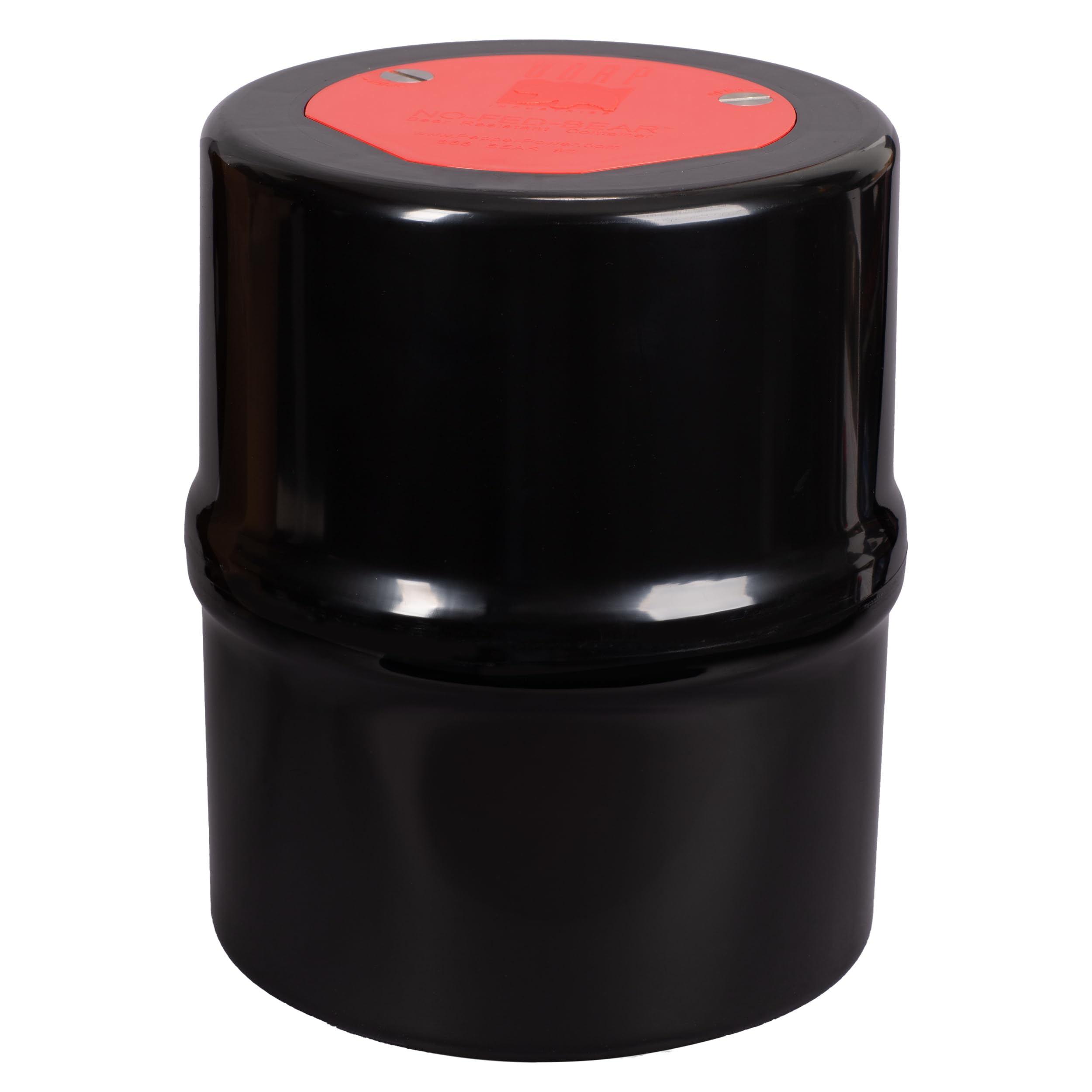
Built by a grizzly attack survivor, this is the narrow canister that disappears into your pack
This canister has a story: it was designed by Mark Matheny, who survived a grizzly bear attack and made it his mission to build reliable bear protection. It’s IGBC approved and tested for use in areas where certified canisters are required. The 8-liter capacity holds 2.1 gallons, which translates to 4-6 days of food depending on how you pack it.
At 2.4 lbs, it’s one of the lightest certified canisters you can buy, and the narrower shape is what wins people over. Owners who like clear alternatives keep coming back to this one for the reliability and ease of opening “— at least for humans,” as one review put it. The metal fastener opens with a simple coin but resists claws, teeth, and brute force from bears. It’s built from a proprietary bear-resistant polymer blend with metal fasteners that reviewers point out staying rust-free even after years left in the rain.
The compromises are straightforward. The opening is narrower, which limits access to food at the bottom, and you need a coin or multi-tool to twist it open. Some owners note it must be stored upside down for waterproofing. The weight is the most-discussed negative — it’s solid, but 2.4 lbs is noticeable on a long haul, and for the volume, some find it heavy.
The reliability pick: shoppers say it’s solid as a rock and holds about a week’s worth of food, with the narrower profile fitting packs more naturally than round canisters.
Best suited to: solo hikers and pairs on short trips who want the lightest certified option that still handles 4-6 days of food.
Not ideal for: anyone who wants tool-free access or needs a wider opening to grab food at the bottom.
4. NO-FED-BEAR UDAP Bear Resistant Canister

Same certified protection with a fabric carry case for strapping to your pack
This is essentially the UDAP design with one key addition: a durable fabric carry case with adjustable straps. That case lets you attach the canister to the outside of your pack or carry it by hand when you’re not wearing the pack. It holds 2 gallons (about 4-6 days of food) and measures 8″ diameter x 10″ height.
At 3.2 lbs with the case, it’s the middleweight of the group. It’s developed by Mark Matheny, the same experienced outdoor safety advocate behind the standard UDAP, and tested to meet recognized standards for food storage in national parks and outdoor areas that require certified wildlife-resistant containers. The metal fastener opens with a coin while keeping contents securely stored.
The lid is the main drawback. Owners consistently report it’s hard to open even when open up, needing a tool, which is the most-mentioned negative aspect. The carry case gets mixed reviews — some find it handy, while others report the straps unraveling and the handle ripping. It’s sturdy and functional, but it fits 3-day gear including toiletries, so it’s best for shorter trips.
The trade-off in one line: you get the certified bear protection and a handy case, but you trade easy access — the lid is the biggest frustration buyers report.
Pick this if: you want a certified canister with a built-in carrying solution for strapping to your pack and don’t mind using a coin to open it.
skip it if: you struggle with fine motor skills in the cold or want a smooth push-button lid; the screw mechanism is the main complaint.
5. Counter Assault Bear Keg Food Storage Container
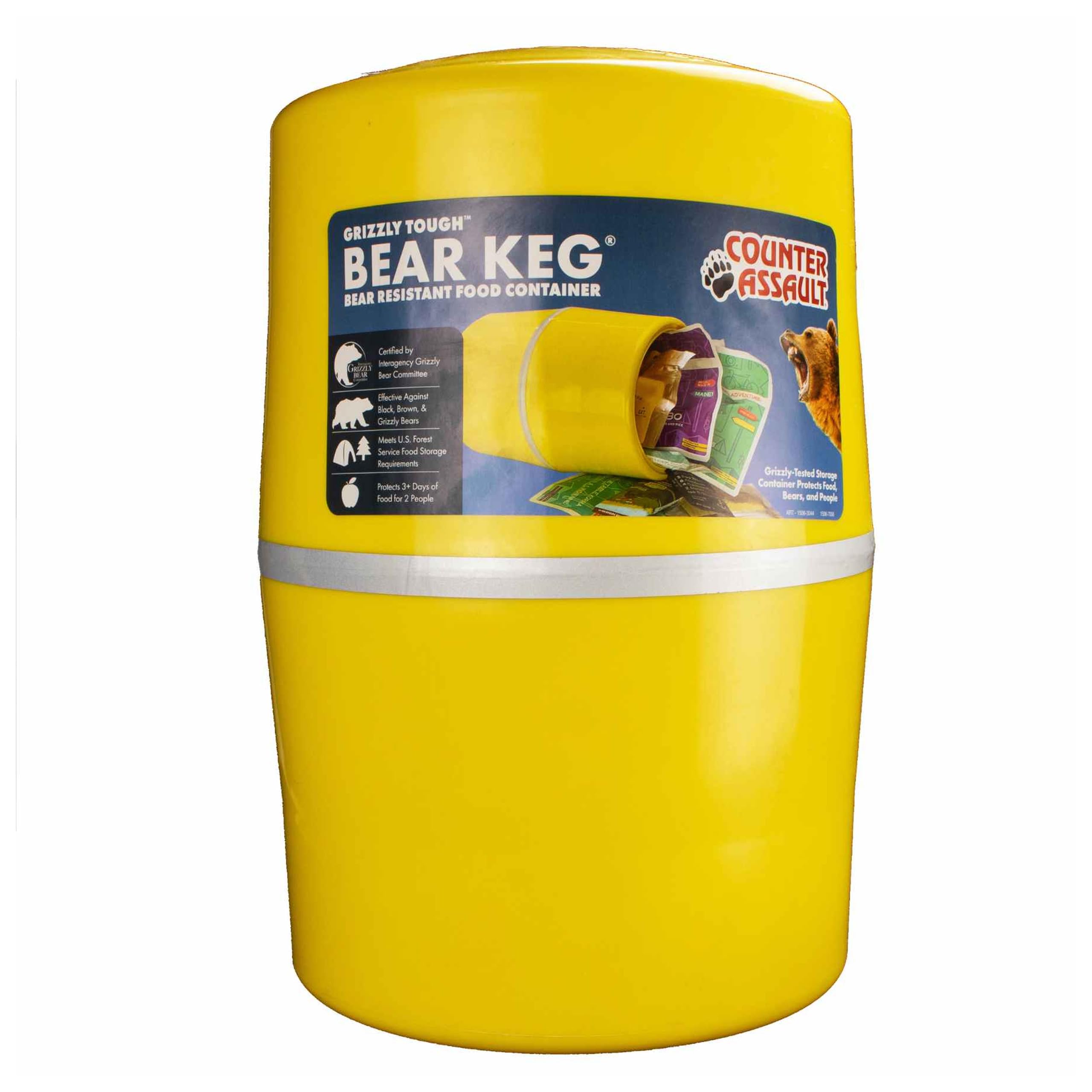
The bright yellow keg that’s mandatory in many national parks and survives 25-foot drops
This is the canister that’s been on the trail for years, and it’s mandatory in many National Parks. It offers 716 cubic inches of storage, which fits 4-5 days of food for two people, and it’s approved by both the IGBC and the SIBBG, making it universally park-approved. Owners mention no failure reports — it’s the one you trust when regulations are strict.
The bright yellow color and reflective surface are a genuine safety feature: you can spot it easily in the woods, and owners say it’s easy to find if a critter moves it overnight. The screw fasteners are easy to use, and the proprietary polymer blend lid has survived a 25-foot drop in owner testing. It doubles as a camp stool at camp.
The main trade-off is size and weight. At 3.5 pounds, it’s one of the heaviest options, and customers note it’s too big for packs smaller than 60 liters — it fits best in an 80L pack. It’s also not waterproof, so you’ll need to be careful in heavy rain. It’s better for campgrounds or car-adjacent camping than ultralight backpacking.
Why it endures: owners call it the best value canister because it’s cheaper than premium brands like Wild Ideas yet holds the same capacity as the BearVault BV500.
Your move: if you camp where canisters are required and want a tough, universally-approved container that’s easy to spot, this is a safe call.
Hold off if: you’re a long-distance hiker; the 3.5 lb weight and bulky profile make it a burden on long carries.
6. BearVault BV ONE Adjustable Bear Canister
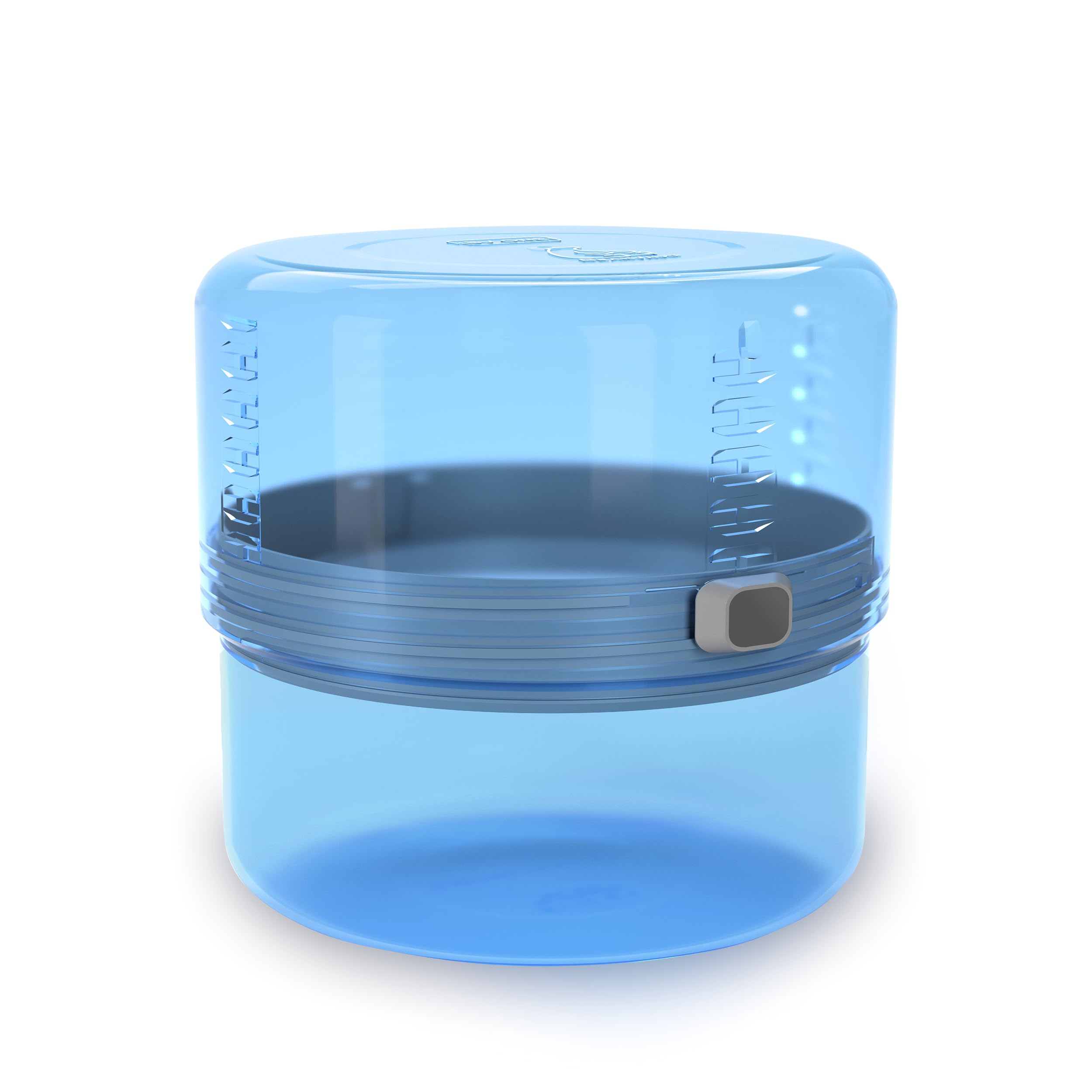
The collapsible canister that shrinks as your food supply does
This is a genuinely new idea in bear canisters: one canister that adjusts its size as your food supply changes. It expands and collapses for 1-4+ day trips, reducing wasted space in your pack — the size flexibility is what owners praise most. It’s BearVault’s lightest canister ever, delivering 20% better weight-to-volume efficiency while maintaining durability for backcountry use.
The two halves have wide openings for fast access, and the center access point with an optional divider helps you stay organized on the trail. It closes with soft-touch buttons and smooth threads that give tactile feedback, and it’s easy to open in all temperatures. It’s Grizzly (IGBC) tested and approved (IGBC #255500) and built from rugged polycarbonate.
The trade-offs are genuine. Reviewers point out it’s slippery in cold weather and needs dexterity to operate — one owner suggested duct tape helps. The airtight seal can leak (one owner had a “pesto incident”), and at 8.3 liters, it’s too small for long trips — one owner says it only fits two days of food even at its biggest form. It’s pricey for the capacity you get.
The flexibility win: if you hate buying multiple canisters for different trip lengths, this one adapts — owners love that it gets smaller as food decreases.
Grab this if: you want one canister for both weekend and longer trips and value pack-space efficiency over raw capacity.
Pass on it if: you need to carry more than two days of food or want a wide-mouth can you can easily see inside; the sliding mechanism and smaller capacity will frustrate you.
Understanding the Specs
IGBC Approval: The Stamp That Matters
The Interagency Grizzly Bear Committee (IGBC) tests canisters against real bears to certify they’re bear-resistant. If a product doesn’t have this stamp, it’s often not legal in national parks like Yosemite or Glacier. This is the single most important spec to verify before buying; a canister without it is just a heavy plastic box.
Capacity in Liters: Your Trip Length in Food
Capacity tells you how many days of food you can safely store. A good rule of thumb used by owners is about 2 lbs of food per day (3000 calories) per person. An 8-liter canister handles short solo trips, while an 11.86-liter option like the SABRE is built for groups or week-long carries. Buy for your longest trip, not your typical one.
FAQ
Which bear canister is required in national parks?
How many days of food fits in an 8-liter canister?
Is a bear canister necessary or can I hang my food?
How do I open a coin-operated bear canister?
What is the difference between a BearVault and a Bear Keg?
Can I use a bear canister as a camp stool?
How much does a bear canister weigh?
Is the BearVault BV ONE worth the extra cost?
Are bear canisters waterproof?
What size bear canister fits a standard backpack?
Final Thoughts: The Verdict
For the majority of shoppers, the bear canister for backpacking winner is the BearVault because it balances generous 9.3-liter capacity, clear sides, and tool-free opening in a way no other canister matches. If you want maximum storage for a group or long expedition, grab the SABRE Frontiersman with its 11.86-liter capacity. And for the ultralight hiker who hates wasted pack space, the BearVault BV ONE is the one to reach for—it shrinks as you eat your food.
How We Picked
We do not accept paid placement. Every pick is matched to a real buyer and a real use-case; we do not hands-on test units.
Sources & Methodology
Specifications: manufacturer listings and product documentation. Review insights: verified customer reviews, as of August 2026. Pricing: not shown on this page (it changes often); check the current price via the retailer link.
As an Amazon Associate, Gadgets Feed earns from qualifying purchases. This does not affect which products we feature.