
A ceramic heat emitter is the critical piece of hardware that lets you heat your bearded dragon’s tank at night without bathing it in disruptive light. Unlike colored bulbs that look dark but still emit visible wavelengths, a true CHE produces zero light—only intense, penetrating infrared heat that keeps your dragon’s core temperature stable while it sleeps.
I’m Min — the co-founder and writer behind Gadgets Feed. I’ve spent dozens of hours comparing the thermal output curves, safety ratings, and build quality of the most popular reptile heat emitters on the market to separate the long-lasting performers from the ones that burn out in months.
This guide breaks down the seven best options available so you can confidently choose the right bearded dragon ceramic heat emitter for your setup without wasting money on bulbs that fail early or fail to heat properly.
How To Choose The Best Bearded Dragon Ceramic Heat Emitter
Choosing the right ceramic heat emitter involves more than just grabbing the highest wattage you can find. A 150W bulb in a small 20-gallon tank can create dangerous hotspots, while a 60W unit in a large 75-gallon enclosure may not raise the ambient temperature enough. You need to balance wattage, heat distribution, and the physical size of your bearded dragon’s habitat.
Wattage and Enclosure Size
The most common wattages for bearded dragon ceramic heat emitters are 100W and 150W. For a standard 40-gallon breeder tank, a 100W CHE is usually sufficient to raise the nighttime temperature by 10-15°F above the room ambient. Larger enclosures, or very cold rooms, typically require the extra push of a 150W unit, but remember to check your lamp fixture’s maximum wattage rating beforehand—most standard domes are rated for 150W or 250W.
Build Quality and Longevity
Look for emitters made from high-purity ceramic that can withstand constant thermal cycling. Most rated CHEs claim a 10,000-hour lifespan, which translates to roughly 13 months of 24/7 use. Premium brands like Zoo Med and Fluker’s have track records of lasting 2-5 years in real-world conditions. Avoid any bulb that feels rough or shows uneven coloring on the ceramic surface, as that can indicate manufacturing inconsistencies.
Quick Comparison
On smaller screens, swipe sideways to see the full table.
| Model | Category | Best For | Key Spec | Amazon |
|---|---|---|---|---|
| Fluker’s Ceramic Heat Emitter 100W | Premium Single | Proven long-term reliability | 100W, E12 base, 10,000+ hrs | Amazon |
| Zoo Med Repticare 100W | Premium Single | Flat-face efficiency | 100W, E26, flat-face design | Amazon |
| Zoo Med 2-Pack Repticare 100W | Premium 2-Pack | Large enclosures/dual setups | 100W per bulb, 2-pack, 5yr life | Amazon |
| Fluker’s Deep Thermal 100W | Mid-Range Single | Deep infrared penetration | 100W, carbon filament, IR-A/B | Amazon |
| REPTI ZOO 100W 2-Pack | Budget 2-Pack | Best value 2-pack | 100W, E26, crack-resistant | Amazon |
| LUCKY HERP 150W 2-Pack | Budget 2-Pack | High heat output for cooler rooms | 150W, E26, heats in 4min | Amazon |
| Simple Deluxe 150W 2-Pack | Budget 2-Pack | Energy efficient for large tanks | 150W, E26, spiral filament | Amazon |
In‑Depth Reviews
1. Fluker’s Ceramic Heat Emitter, 100 Watt
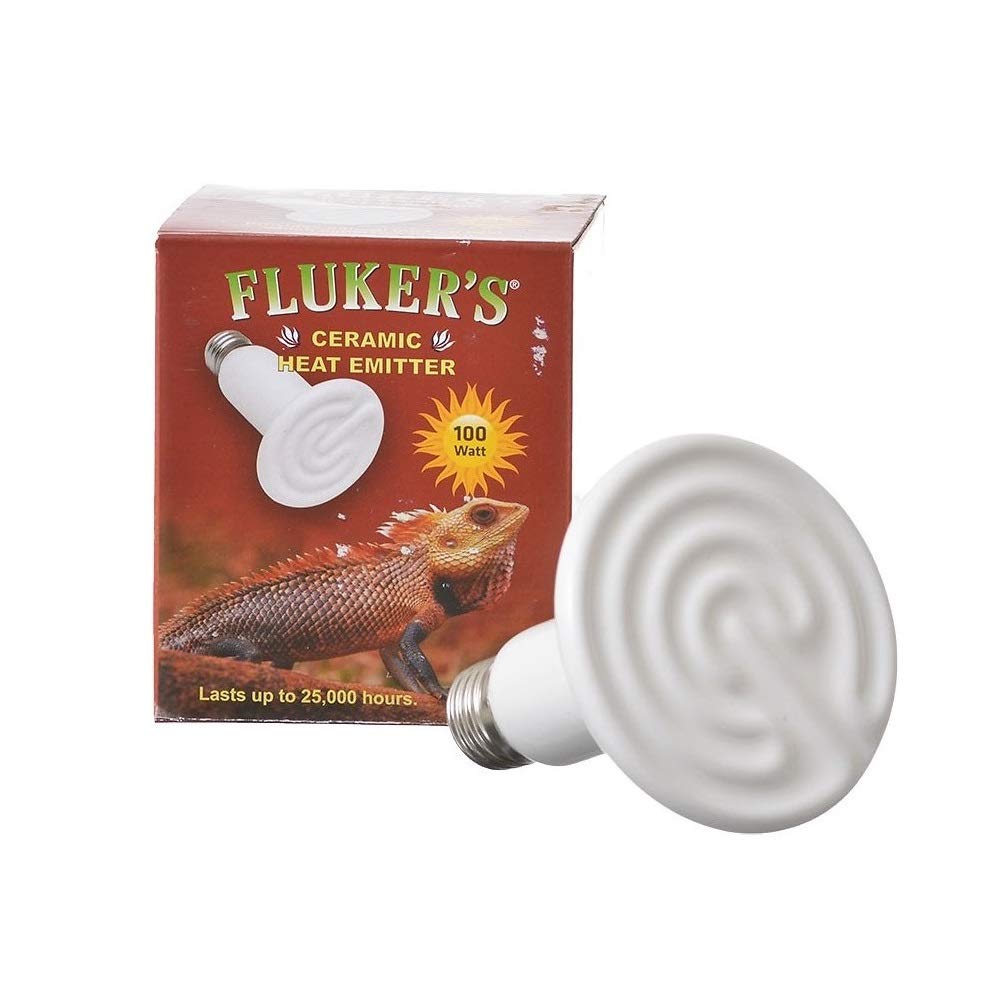
Fluker’s 100W ceramic heat emitter is the benchmark for reliability in this category. Customer reports from 2014 showed one unit still running strong after 8 years of continuous use—a lifespan that far exceeds the typical 10,000-hour industry claim. The large circular emitter face distributes heat over a wider basking area than smaller conical designs, making it particularly effective for bearded dragons that prefer a broad thermal gradient.
The E12 (candelabra) base is a notable departure from the standard E26 medium base found on most competitors. You will need a lamp fixture with an E12 socket, or an adapter, which adds a small friction point. However, the trade-off is that the bulb sits more deeply in compatible domes, reducing the risk of accidental contact with the mesh screen enclosure.
Bearded dragon owners specifically report that switching to this emitter from a colored night bulb dramatically improved their dragon’s sleep behavior. The complete absence of visible light means your dragon experiences natural dark cycles while still receiving the 75-80°F nighttime ambient temperature it needs for proper digestion and immune function.
Why it’s great
- Proven multi-year lifespan in real-world use
- Wide heat dispersion covers more of the basking zone
- Zero visible light output ensures proper sleep cycles
Good to know
- Uses E12 base, not the more common E26—requires compatible fixture or adapter
- 100W may struggle with very large or cold enclosures
2. Zoo Med 2 Pack Repticare Ceramic Infrared Heat Emitters, 100 Watt

Zoo Med’s two-pack of 100W emitters offers the most efficient way to heat a 75-gallon or larger enclosure where a single bulb cannot generate a consistent thermal gradient. The flat-face design is more efficient at directing infrared energy downward compared to the conical alternatives that scatter heat sideways into the fixture. This means more of the 100 watts goes into your dragon’s temperature zone rather than heating the lamp dome.
Each emitter is rated for up to 5 years of continuous operation, which is twice the industry standard. The 2-pack configuration also works well for keepers who run separate day/night setups—one bulb covers the warm side bask while the other provides overnight heat—without needing to swap bulbs twice daily.
Owners of Hermann’s tortoises and Sulcata tortoises also praise this unit for its consistent 130-degree beam angle, which prevents harsh hotspots directly under the bulb. For a bearded dragon, this means the basking rock can be placed closer without risk of thermal burns, as long as it’s paired with a thermostat.
Why it’s great
- Flat-face design maximizes downward heat efficiency
- Two bulbs cover dual-zone or large enclosures
- Rated for 5-year lifespan with consistent performance
Good to know
- Bulkier physical size may not fit shallow domes
- Higher upfront cost than single-bulb alternatives
3. Zoo Med Repticare 100 Watt Ceramic Infrared Heat Emitter
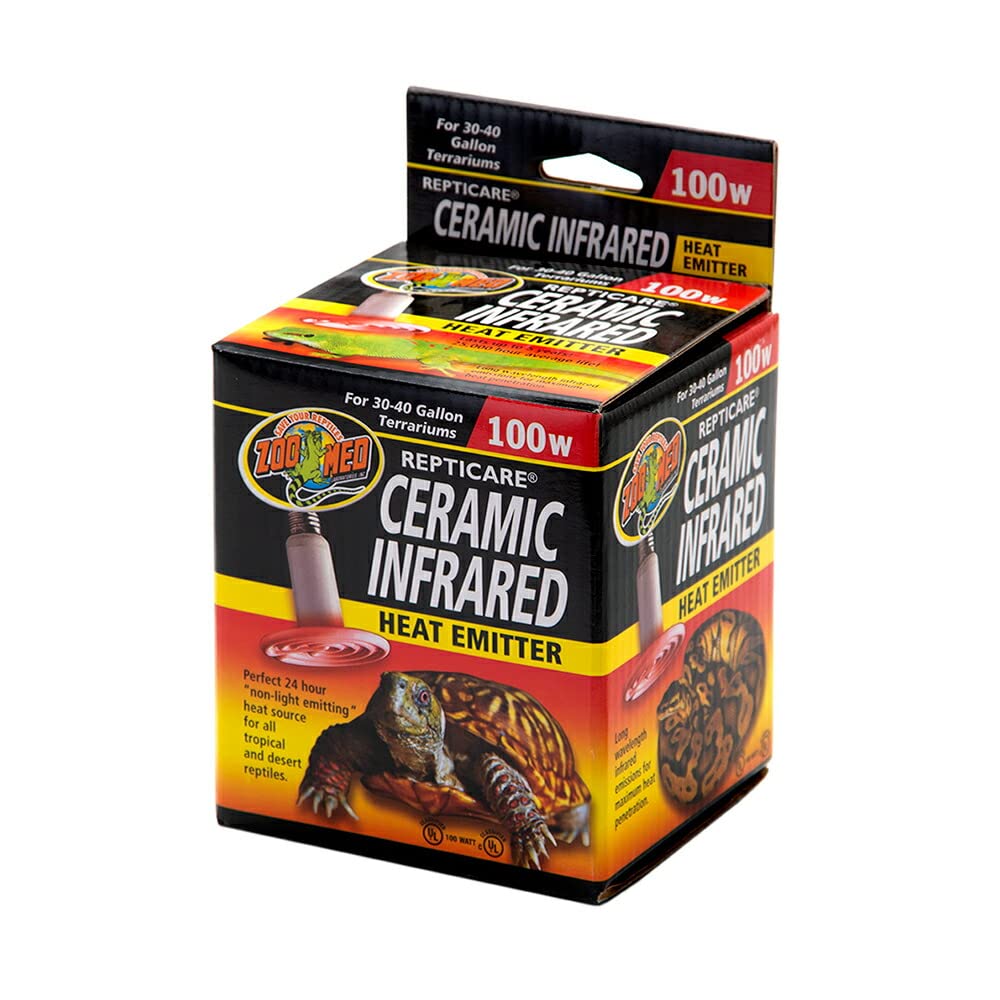
The single-bulb Zoo Med Repticare is the gold standard for the standard E26 screw-in dome. Its flat face design raises the surface temperature of the ceramic disc to approximately 449°F, which generates enough radiant heat to raise the air temperature inside a 40-gallon terrarium by 10-20°F above the surrounding room temperature. This performance makes it especially effective for basking spots where you need a concentrated pocket of warmth.
Owners who use this bulb with a thermostat report extremely stable temperature control, with the emitter responding quickly to power cycling without the flicker or buzzing associated with cheaper incandescent alternatives. The 100% heat efficiency means zero light is emitted, even at full power, so you can run it 24/7 without disrupting the photoperiod.
A unique application reported by users is using this emitter as a supplemental heat source for small pets in open enclosures, such as parrots or even indoor chickens. For a bearded dragon, the 100W rating hits the sweet spot—enough heat for a 40-gallon tank without overwhelming the enclosure’s ability to maintain a cool side gradient.
Why it’s great
- Standard E26 base fits most existing lamp fixtures
- Consistent 10-20°F temperature lift above ambient
- Zero light emission at any brightness level
Good to know
- Some units reported shorter lifespan than Fluker’s equivalent
- Flat face can accumulate dust that slightly reduces output over time
4. Fluker’s Deep Thermal Heat Lamp with Carbon Infrared Technology, 100 Watt

Fluker’s Deep Thermal model uses a carbon fiber filament instead of standard NiCr resistance wire, producing both Infrared A and B wavelengths. Infrared A penetrates deeper into muscle tissue, mimicking the way natural sunlight heats a basking lizard, while Infrared B provides the ambient air temperature needed for the enclosure. The result is a more natural basking experience that may help with digestion and calcium absorption.
The parabolic reflector inside the bulb housing focuses the heat into a narrow, intense beam. This means the basking spot temperature can reach higher levels than a standard CHE of the same wattage, but the heat drop-off beyond the focal zone is sharper. You will need to carefully position the lamp to create a defined hot spot with a distinct cool side—ideal for bearded dragons that thermoregulate by moving in and out of the beam.
Users consistently report this bulb lasts 4-6 months of heavy use before the carbon filament degrades, which is shorter than the 10,000-hour ceramic coils. However, the improved heat penetration and the ability to maintain higher humidity levels (because less air movement is needed to distribute heat) make it a worthwhile trade-off for keepers focused on bioactive setups or tropical species.
Why it’s great
- Carbon filament produces IR-A for deep tissue heating
- Parabolic reflector creates intense, focused basking spot
- Minimal humidity reduction compared to air-moving heaters
Good to know
- Shorter lifespan than standard ceramic emitters
- Narrow heat beam requires precise positioning
5. REPTI ZOO 100W Reptile Heat Lamp 2-Pack Ceramic Heat Emitter

The REPTI ZOO 100W two-pack delivers the most cost-effective entry point into ceramic heating for a 40-gallon bearded dragon tank. Each bulb is rated for 10,000 hours and made from high-purity ceramic that handles the thermal shock of being turned on and off without cracking. The 2.9-inch diameter and 3.9-inch height make it compact enough to fit inside most standard dome fixtures without touching the sides.
User testing shows these bulbs reach full operating temperature within 30 seconds of power-on, and they maintain a consistent heat output when paired with a thermostat. The G40 bulb shape sits flush in dome reflectors, directing the heat downward rather than sideways. Some owners running these in 20-gallon long tanks report needing to use a dimmer or elevate the lamp to prevent the basking zone from exceeding 95°F.
While the lifespan is decent—most reviewers report 9-10 months of continuous use before one bulb fails—the consistency can vary between units in the same pack. The fact that it’s a 2-pack means you always have a spare ready, which is a practical advantage for emergency replacements during cold nights.
Why it’s great
- Two bulbs for the price of one premium single
- Compact size fits all standard dome fixtures
- Rapid heat-up in under 30 seconds
Good to know
- Inconsistent lifespan between bulbs in the same pack
- Provides slightly less temperature lift than 150W alternatives
6. LUCKY HERP 150W Ceramic Heat Emitter 2-Pack

The LUCKY HERP 150W emitter is the go-to option for bearded dragon owners in colder climates or those with large 75-gallon enclosures where a 100W bulb cannot raise the ambient temperature enough. It reaches full rated temperature in about 4 minutes, and the heating element ramps up noticeably within 10 seconds of power-on. The thick ceramic shell is reinforced compared to budget alternatives, reducing the risk of cracking if accidentally splashed during misting.
Safety is a primary consideration with 150W emitters because the surface temperature can exceed 500°F. LUCKY HERP explicitly recommends maintaining a minimum distance of 12 inches from your reptile and using only a ceramic-base lamp fixture. The included packaging instructions are clear about not cycling the bulb on and off rapidly, as thermal shock can damage the internal resistance wire.
Customer feedback consistently praises the heat consistency for large tortoises and snakes, though some bearded dragon owners note that the 150W output in a 40-gallon tank requires careful thermostat calibration to avoid overheating the basking spot. Pairing this with a high-quality proportional thermostat is strongly recommended, as simple on/off thermostats can produce temperature swings of several degrees.
Why it’s great
- Strong 150W output for large or cold enclosures
- Thick ceramic shell resists damage from humidity
- Fast heat-up reaching full temperature in 4 minutes
Good to know
- Extremely hot surface—requires strict safety positioning
- Must use with ceramic-base fixture; plastic bases can melt
7. Simple Deluxe 150W Mini Ceramic Heat Emitter 2-Pack
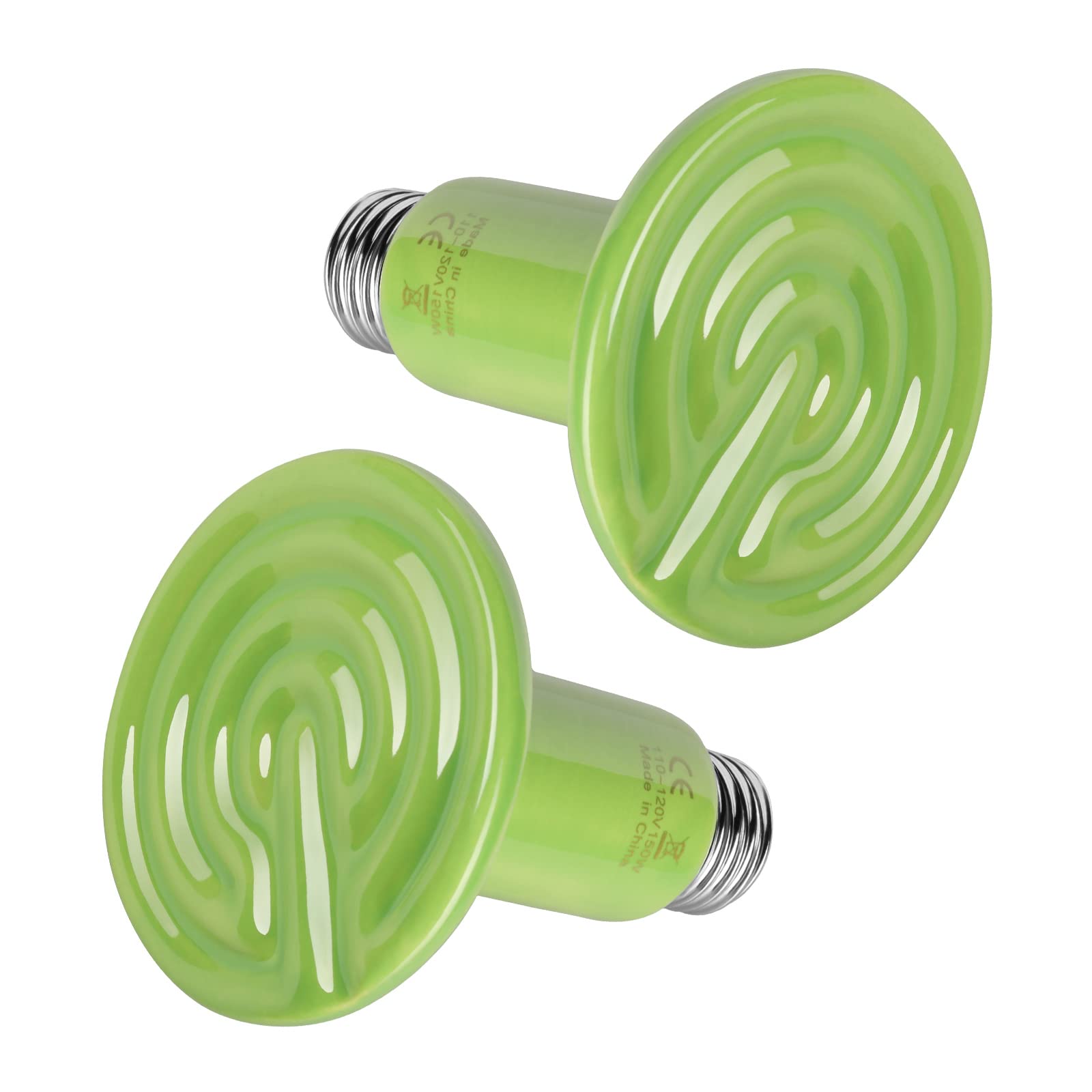
Simple Deluxe’s 150W 2-pack has a coil that runs up to 99% thermal efficiency—meaning almost all the electricity drawn is converted directly into usable infrared heat. The spiral surface design uses a nickel-chromium alloy resistance wire that increases the heating area and reduces energy consumption compared to straight-wire alternatives. For keepers running heat 24/7, the energy savings can add up over a full season.
One unique feature is the green pigment in the ceramic that deepens in color as the bulb heats, providing a visual indicator that the emitter is active. While you cannot see this from across the room, it helps during setup to confirm the bulb is functioning without touching it. The recommended tank size is 50-60 gallons, which aligns well with the 150W rating for standard rectangular terrariums.
Customer reports are mixed on reliability. Some users report running one bulb 24/7 for over 5 months without issue, while others received a bulb that arrived chipped from shipping. The manufacturer has improved the packaging and crack prevention on newer batches, but still, inspect the ceramic surface carefully before installation. When they work, they provide excellent heat output for outdoor tortoise houses or large chameleon cages.
Why it’s great
- 99% thermal efficiency reduces power draw
- Spiral filament design increases heat distribution area
- Color-changing ceramic acts as a heat indicator
Good to know
- Incidence of shipping damage in some batches
- Bulb gets extremely hot; never touch while operating
FAQ
Can I use a ceramic heat emitter for both day and night heating?
What safety precautions should I take with a 150W ceramic heat emitter?
Final Thoughts: The Verdict
For most users, the bearded dragon ceramic heat emitter winner is the Fluker’s Ceramic Heat Emitter because its proven multi-year reliability and wide heat dispersal make it the most trustworthy option for consistent nighttime heating. If you want deep infrared penetration for a more natural basking experience, grab the Fluker’s Deep Thermal. And for large enclosures requiring dual-zone heating, nothing beats the Zoo Med 2-Pack Repticare.