
Our readers keep the lights on and my morning glass full of iced black tea. As an Amazon Associate, I earn from qualifying purchases.
Specs are compiled from manufacturer listings and verified buyer reviews and can change over time — please confirm the key details on the product page before buying.
The moment a flowering tree arrives at your door, the dream of a blooming yard hinges on one thing: whether that root ball survives the box. Between the magnolias, dogwoods, cherries, and crape myrtles in this list, the most reliable pick balances healthy roots, honest sizing, and a bloom that actually shows up in your hardiness zone.
I’m Min — the founder and writer behind Gadgets Feed. This guide is built by comparing the manufacturers’ published specifications and the patterns across verified customer reviews, so you get each pick’s real strengths and trade-offs instead of marketing spin.
You want a tree that greets spring with color, not a twig that fades by June; this roundup of the best beautiful flowering trees weighs bloom colors, mature sizes, and real buyer outcomes to get you there.
Our Picks at a Glance


How To Choose The Best Beautiful Flowering Trees
Buying a tree online is a bet on logistics as much as horticulture. A healthy sapling packed well can thrive for decades, while a stressed one arrives as a sad stick. Your job is to pick a species suited to your climate and a seller with a track record of shipping live roots.
Match the Zone Before You Match the Color
Every tree listing should state its USDA hardiness zones — the temperature range it survives. A crape myrtle that loves zones 7 through 10 will struggle in a zone 5 winter, no matter how pretty the bloom photos are. Check your zone first, then let the flower color be the fun part.
Size the Tree for Its Full Grown, Not the Box
A 1-foot sapling can become a 20-foot tree. That sounds obvious, but many buyers plant a future giant a few feet from their foundation. Read the mature height and width before you dig the hole, especially for magnolias and dogwoods that want room to spread.
Deciduous vs. Evergreen Changes Your Winter View
Deciduous trees drop their leaves in fall and can arrive looking bare and dead in winter. That is normal dormancy, not a dead plant. Evergreens like the Little Gem Magnolia keep their leaves year-round, which is why they shine as privacy screens and corner fillers.
Quick Comparison
| Model | Best For | Mature Height | Bloom Color | USDA Zones | Amazon |
|---|---|---|---|---|---|
| Perfect Plants Little Gem Magnolia★ Best Overall | Compact evergreen privacy | 20–25 ft | White | 6–10 | Amazon |
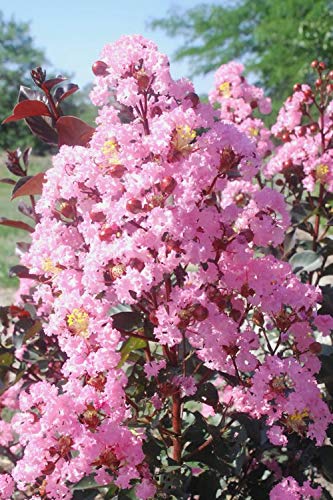
| Rhapsody in Pink® Crape MyrtleSummer Showstopper | Long summer bloom show | — | Light Pink | 7–10 | Amazon |
| 6-Pack Red Crape MyrtleBest Value | Budget hedge planting | 20+ ft | Red | 6 | Amazon |
| Kousa Pink Dogwood | Elegant late-spring focal point | 15–20 ft | Pink | 5–9 | Amazon |
| Alexandrina Japanese Magnolia | Early-spring tulip blooms | ~20 ft | Pinkish-purple | 5–9 | Amazon |
| Higan Japanese Pink Weeping Cherry | Dramatic cascading branches | 20 ft | Pink | 4–8 | Amazon |
| 2 White Flowering Dogwoods | Deer-resistant white bloomers | — | White | 5 | Amazon |
| Brussel’s Bonsai Satsuki Azalea | Patio and balcony color | 5–8 in | Vibrant blooms | — | Amazon |
In‑Depth Reviews
1. Perfect Plants Little Gem Magnolia Tree
Our pick — over 4★ from 650+ verified ratings; the strongest balance of quality and price.
The crowd favorite that arrives healthy, stays green all year, and never needs your pruners.
This Little Gem Magnolia is the rare online tree purchase that consistently delights — the health of the plant at arrival is the single biggest thing owners praise, with over 60 buyers calling it out. It shows up with shiny, deep-green leaves, and many report it looking larger than the 1–2 ft listing suggested. “Came in perfect condition and quickly. I highly recommend this vendor for trees” is a recurring chorus in the reviews.
What makes it special is the evergreen habit: unlike the deciduous magnolias on this list that drop leaves in fall, this one keeps its foliage for year-round structure. It blooms white flowers with a sweet-note aroma from summer to fall, and its narrow, compact growth means you genuinely do not need to prune to keep it shapely. It matures to 20–25 ft tall and 10–15 ft wide, so give it room at the entryway, patio corner, or mulch bed.
The honest caveat is durability — a few buyers report the tree died within the first week of arrival. That is a real risk with any shipped live plant, so inspect the root ball and soil moisture the day it lands, and plant promptly. The trade-off is worth it for most: a fragrant evergreen bloomer suited for zones 6-10 that handles tough climates well, even the harsh Texas heat.
Why it wins
- Healthy plants with shiny green foliage on arrival
- Evergreen — holds leaves and structure all winter
- Sweet-scented white blooms from summer to fall
- No pruning needed to keep its compact shape
The trade-off
- A minority report the tree perished within the first week
- Mature spread of 10–15 ft needs real yard space
Reach for it if: you want a low-effort evergreen magnolia that hides building corners and frames entryways with white summer blooms.
Look elsewhere if: your space caps out well under 10 ft wide — this one earns its keep with room to grow.
2. Rhapsody in Pink® Crape Myrtle
A fast-growing pink bloomer whose summer-long flower show wins over nearly every owner.
Growth is the story here — it is the most-discussed aspect by a wide margin, with 73 owners praising how quickly the tree takes off once the weather warms. This is the fastest grower in this lineup, shipped at 1 foot tall in a trade gallon container and double boxed for safe transport, thriving in zones 7 through 10 with full sun. One owner described it looking “like one big flower” in full bloom.
Unlike the magnolias above that bloom once, this crape myrtle delivers an extended bloom period with light pink flowers that keep coming through summer. The care instructions are refreshingly simple: water regularly, plant in sandy soil, and let the sun do the work. The maker backs it with a 30-day successful transplant guarantee if you follow the included planting instructions with correct location and water.
The catch is sizing expectations — some buyers find the young tree smaller than the mature photos suggest, and a few feel it is not worth the price at that size. There is also the occasional quality miss, with one arriving covered in sooty black mold. But the overwhelming pattern is positive: budding within two weeks of planting and a profusion of summer flowers that owners watch from their breakfast nook.
Best in its lane: No other tree here matches its combination of rapid growth and an extended summer bloom window for warm-climate yards.
Fair warning: Temper your expectations on arrival size — the payoff is the first full summer, not the shipping box.
3. 6 Pack – Red Flowering Crape Myrtle Trees
Six red bloomers for the price of one specimen, built for heat-loving southern yards.
If you are planting a hedge or a whole border, this six-pack stretches your dollar further than any single tree on this list. Each sapling is grown in a quart container, measuring 6–12 inches tall, and the pack carries vibrant red blooms that mature to 20+ feet tall with distinctive exfoliating bark for year-round interest. Owners mention the plants arrive well packed with healthy leaves and solid roots, and the health of the plants is the most-praised aspect.
The growth rate is the real hook — these trees put on 3-4 feet per year, so a modest six-pack becomes a proper flowering screen faster than you expect. The extended blooming period keeps red flowers coming through the entire summer, and they tolerate heat well enough to be planted at any time of year, suited for Southern state climates across USDA zone 6. It is the closest thing to an instant landscape payoff in this list.
The honest catch is survival — it is mixed, with some owners proudly reporting flourishing trees while a few saw none of their six make it. Seed size also draws mixed notes; a couple of buyers expected larger starts. For the price per plant and the heat tolerance, though, this remains the smart hedge play for warm-climate gardeners willing to baby the first season.
The math that matters: Six established saplings with 3–4 ft of annual growth out-paces any single premium tree for filling a sunny, southern expanse.
Know before you buy: The first winter is the survival test — plant promptly and water consistently through establishment.
4. Generic Kousa Pink Dogwood

A late-spring pink bloomer with heart-shaped leaves and a canopy that anchors any garden.
The appearance and health of this Kousa dogwood are what owners rave about most, with both earning 11 positive mentions apiece. It arrives as a well-packed live plant in a 1-gallon nursery pot, showing vibrant green heart-shaped leaves that build into a picturesque canopy. When the pink blossoms arrive in spring, they add an elegance that the more common white dogwoods cannot match.
It is a deciduous tree that reaches a mature height of 15–20 ft, making it a versatile focal point for gardens of any size. The care instructions are straightforward: plant in well-draining acidic soil, prune in late winter for shape, and water regularly especially in dry periods. It also attracts pollinators, which makes it a lively addition to a garden that supports bees and butterflies.
Size on arrival is where opinions split. A handful of buyers found the young tree smaller than expected, one calling it a “very small plant in a large box.” That is a fair heads-up if you expect a substantial start. The counterpoint is strong, though: many customers note trees arriving “very large for the price” and healthy, thriving in zones 5–9.
What wins people over
- Striking pink blossoms in late spring
- Healthy, well-packaged arrivals with strong roots
- Pollinator-friendly and easy to shape with late-winter pruning
- Mature height of 15–20 ft suits most garden sizes
Size reality check
- Some shipments arrive notably smaller than the listing implies
- Requires acidic, well-draining soil — not a set-and-forget tree
Pick this if: you want a refined pink-flowering anchor for a mid-size garden and will give it acidic soil and steady water.
skip it if: you expect a substantial sapling on day one — size on arrival varies.
5. Alexandrina Japanese Magnolia
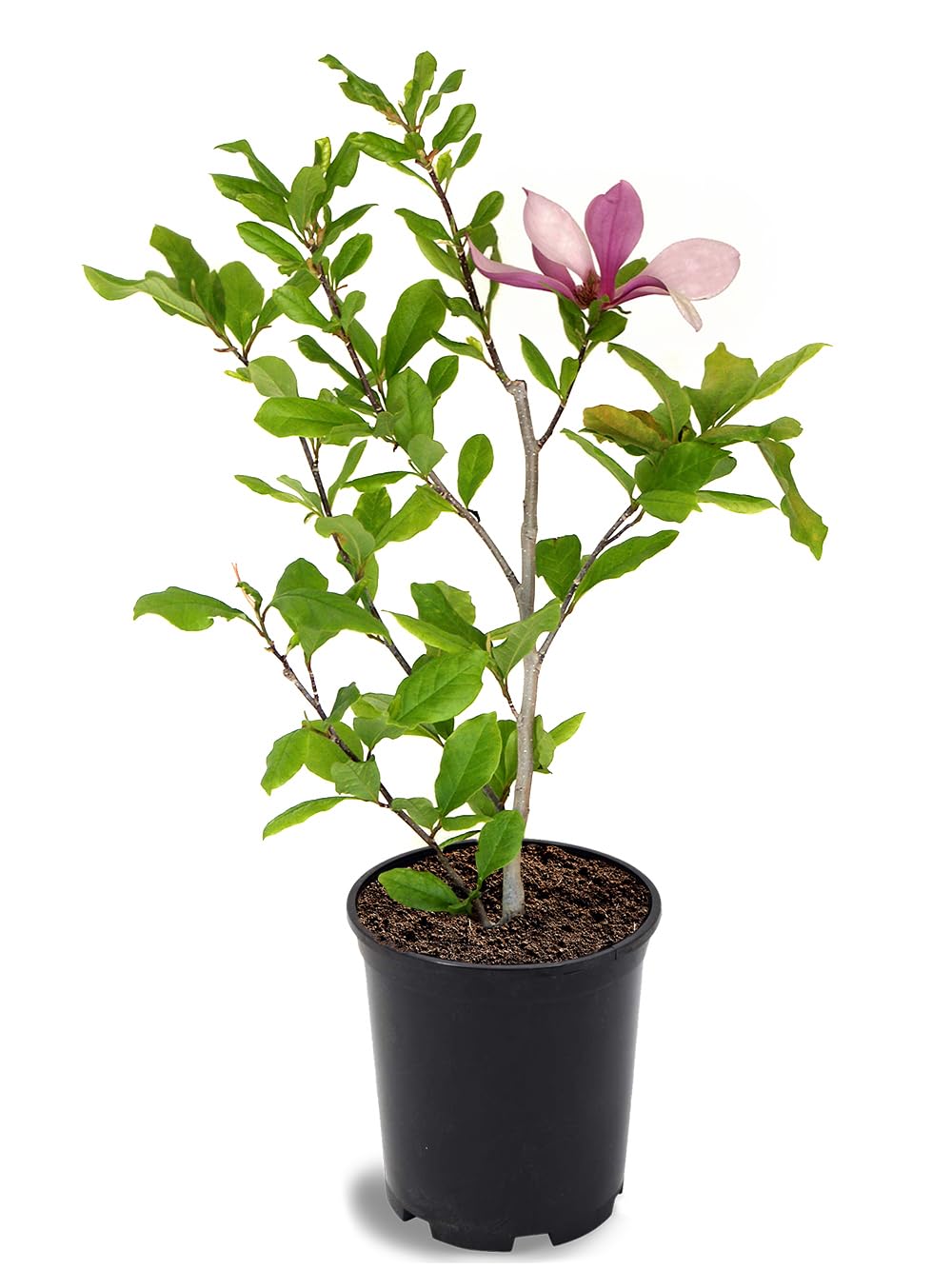
The earliest flush of spring, with big tulip-shaped blooms in a rich pinkish-purple.
What makes ‘Alexandrina’ special is timing — its large, tulip-shaped flowers are among the earliest to appear in spring, and the health of the tree on arrival is the standout theme in owner feedback, with 7 positive mentions. It shipped at 12–18 inches tall in a 1-gallon nursery pot and grows to roughly 20 feet tall with a similar spread. The bloom color is a rich pinkish-purple that is noticeably deeper than the soft pinks elsewhere on this list.
Like many magnolias, it is deciduous, shedding its leaves in the fall so you fully appreciate the floral display on bare branches each spring. It prefers full to partial sunlight to produce those spectacular blooms, and it thrives in USDA zones 5–9. Owners who planted it in cold, snowy regions report it surviving winter and blooming reliably with light and dark pink flowers.
Quality feedback is genuinely mixed. Many received healthy, sturdy trees, but one arrived already wilting and another came with fungus that did not revive. Shipping is also restricted: this tree cannot be delivered to California, Arizona, Alaska, or Hawaii due to agricultural laws. Service recovery matters here, though: at least one owner whose tree arrived in rough shape called the seller and received a beautiful replacement with a bloom already on it.
Standout trait: No other pick here beats it for the earliest, most dramatic pink-purple spring display on a deciduous frame.
Heads up: Arrival condition varies more than the top pick — expect to inspect on delivery and lean on seller support if needed.
6. Higan Japanese Pink Weeping Cherry

The showpiece tree: cascading pink branches that make any yard look curated.
This weeping cherry is the emotional purchase of the group — the appearance and quality of the tree are the top praised aspects, with 30 positive mentions each. It is shipped at 1 to 2 feet tall in a gallon pot, double boxed for safe transport, and grows to a mature height of 20 feet with dramatic cascading branches. Thriving in zones 4 through 8 with full to part sun, it is also the most cold-hardy cherry on this list.
The maker backs it with a 30-day successful transplant guarantee if the included planting instructions are followed with the correct location and water, and deciduous plants bought dormant in winter are guaranteed to leaf out in spring. Owners describe the arrival as quick and healthy, with trees sprouting new leaves within days and growing on steadily without disease. The nursery’s customer service earns glowing notes for responding fast to inquiries.
Growth and durability are genuinely split. Others note the shipped size feels tiny, with one owner advising you “buy a larger tree than this.” For the dramatic payoff of a weeping pink canopy, the gamble is on establishment — plant straight into the ground on arrival, never a pot, and follow the instructions to the letter.
The payoff
- Breathtaking cascading pink blooms in spring
- Cold-hardy to zone 4, the toughest on this list
- Strong seller support and a 30-day transplant guarantee
The gamble
- Arrival is often a bare stick with uncertain survival odds
- Shipped size is small — patience is mandatory
Choose it for: the single most dramatic, conversation-starting silhouette you can plant in a cold-climate yard.
Be ready for: a stick-on-arrival reality and an anxious first month while it decides to live.
7. 2 White Flowering Dogwood Trees

Two white bloomers in one order, bred to shrug off deer and dry spells.
For the price of a single premium tree, this listing delivers two Cornus Florida white dogwoods, each already 24–36 inches tall — the tallest starting size in this entire roundup. That head start is meaningful because it shortens the wait to your first spring bloom. The trees are flagged as fragrant, deer resistant, drought tolerant, fast growing, and low maintenance, which makes them a practical choice for rural or woodland-edge yards where deer are a constant threat.
They prefer full sun and clay soil with moderate watering, suited to zone 5. One owner’s account captures the patience involved: the trees stayed as bare green sticks all winter, then fully leafed out and grew steadily by spring, with packaging described as ingenious. The white blooms that follow are the classic dogwood look that defines eastern American spring.
Growth and quality are where opinions split hard. Some trees arrive healthy and grow well, while a disheartening number reportedly died almost immediately — one owner found “very small roots” and suspected the tree was transplanted the day before shipping. A few also arrived bent and wilted after a tight USPS box. If you buy, inspect the roots the moment they land and plant fast; the two-tree value is real, but the survival odds are the weakest in this group.
The value angle: Two 2–3 ft white dogwoods for roughly the cost of one premium sapling, with deer resistance baked in.
The reality: Arrival health is a coin flip — some thrive, some die in week one, so plan to plant immediately.
8. Brussel’s Bonsai Satsuki Azalea
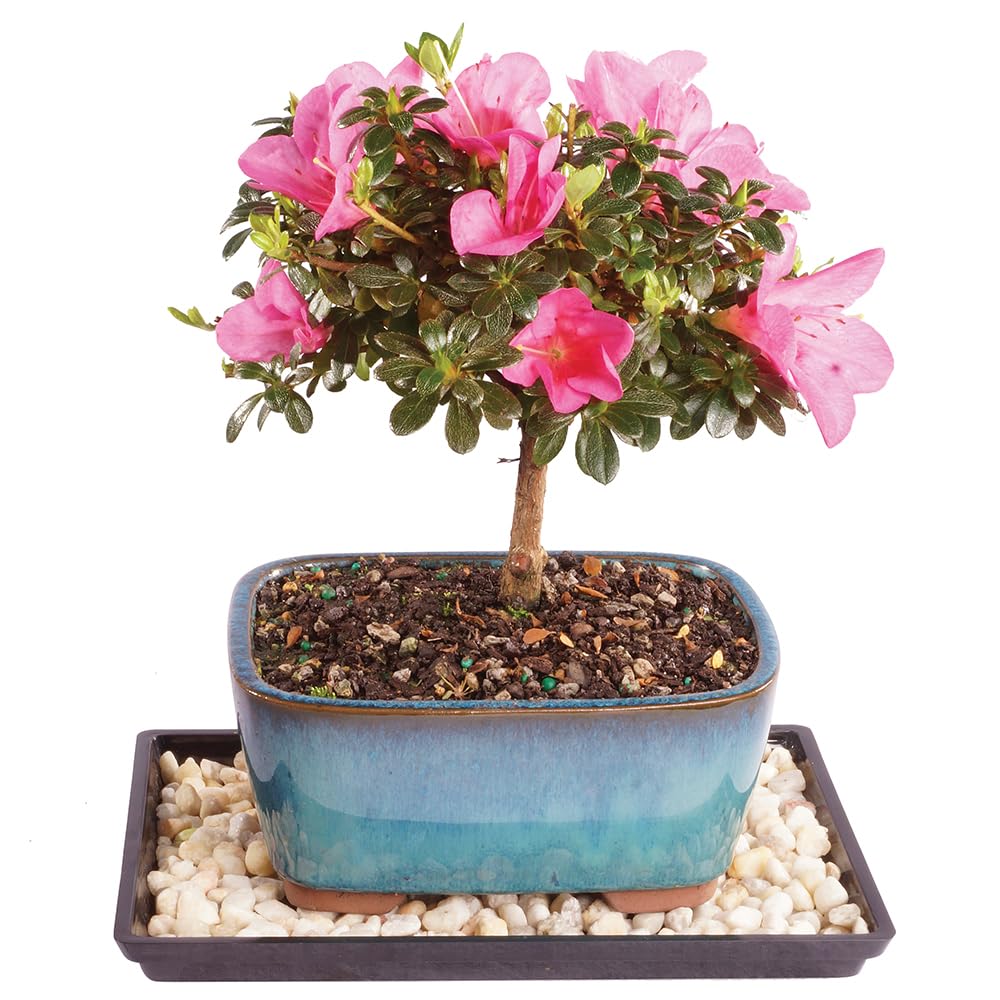
A 5-year-old bonsai already in its pot, ready for patios and balconies with zero digging.
This is the only pick here that is not a yard tree — it is a living bonsai that arrives planted in a ceramic container with a humidity tray included, ready to display on a patio, porch, or balcony. At 5 years old and roughly 5–8 inches tall, it is a compact flowering accent rather than a landscape anchor. The quality of the little tree is the most-praised aspect, with owners describing it arriving in perfect shape and thriving.
It blooms in spring with vibrant azalea flowers, and it is grown by bonsai experts in Mississippi, with the caveat that it cannot ship to Alaska or Hawaii and is best shipped when nighttime temps exceed 50°F between Mississippi and your door. The included pot and tray mean you can enjoy it immediately without buying extra supplies. At 7 pounds, it is a solid little package — notably heavier than the 5-pound saplings on this list because of the ceramic pot.
The durability feedback is the weakest in this roundup — a concerning number of these have died on arrival or shortly after, including one that arrived cold-damaged in Denver at 9°F with leaves dropping. There is also a packaging and color lottery: some arrive with blooms knocked off by filler material, and the pot color can differ from the photo. The counterpoint is superb customer service, with the company agreeing to replace damaged trees.
Why it stands out
- Arrives potted with humidity tray — display-ready instantly
- Genuine 5-year-old bonsai with vibrant spring blooms
- Perfect scale for small outdoor spaces and gifts
What to watch
- Cold shipping can damage it — check temps before ordering
- Pot color varies and blooms can be knocked off in transit
Best for: apartment dwellers and gift-givers who want a live flowering tree without a shovel.
Think twice if: your region is mid-freeze — this one hates cold transit more than any tree here.
Understanding the Specs
Mature Height & Spread
The size a tree reaches at full growth — not what ships in the box. A 1-2 ft sapling can become a 20-25 ft magnolia, so your planting spot needs to accommodate the adult tree, not the nursery pot. Check overhead wires, foundations, and neighboring plants before you dig.
USDA Hardiness Zones
The standard map of average annual minimum winter temperatures. A tree rated for zones 7-10 will struggle or die in a zone 5 winter. Match the tree’s zone range to your location and you give it the basic chance to survive its first year in the ground.
Deciduous vs. Evergreen
Deciduous trees shed leaves in fall and arrive looking bare in winter — that is dormancy, not death. Evergreens like the Little Gem Magnolia hold foliage year-round. Choose based on if you want winter structure or a bare-branch spring bloom show.
Bloom Period
The season when flowers actually appear. Magnolias and cherries open earliest in spring, dogwoods follow in late spring, and crape myrtles bloom through summer. Stagger your picks and you can have color from first thaw to late summer.
FAQ
How do I know if a flowering tree will survive my winter?
My tree arrived looking like a dead stick, is it ruined?
Should I plant my crape myrtle in a pot or the ground?
How fast will my new tree grow?
Why do some trees arrive with no leaves in winter?
Can these trees be shipped to any state?
What does “deciduous” mean for my yard?
How much water does a new flowering tree need?
Will deer eat my flowering tree?
Which tree blooms the longest?
Final Thoughts: The Verdict
For most people, the best beautiful flowering trees winner is the Perfect Plants Little Gem Magnolia because it pairs the healthiest arrival track record with an evergreen habit and sweet white blooms from summer to fall. If you want a long summer flower show in a warm climate, grab the Rhapsody in Pink Crape Myrtle. And for the most dramatic cold-hardy silhouette, the Higan Japanese Pink Weeping Cherry is the one to reach for — just plant it straight into the ground the day it arrives.
How We Picked
We do not accept paid placement. Every pick is matched to a real buyer and a real use-case; we do not hands-on test units.
Sources & Methodology
Specifications: manufacturer listings and product documentation. Review insights: verified customer reviews, as of August 2026. Pricing: not shown on this page (it changes often); check the current price via the retailer link.
As an Amazon Associate, Gadgets Feed earns from qualifying purchases. This does not affect which products we feature.