
The moment a loved one with dementia stands unassisted, the risk of a life-altering fall spikes. A dedicated bed alarm bridges that critical gap between movement and response, giving caregivers those precious seconds needed to intervene. Choosing the right system is about understanding which sensor type and alert method fits your specific care scenario.
I’m Min — the co-founder and writer behind Gadgets Feed. I’ve spent countless hours analyzing caregiver feedback, technical specifications, and real-world failure points across dozens of pressure pad and motion sensor systems to separate reliable tools from false alarms waiting to happen.
Whether you need an invisible under-mattress sensor for a resistant loved one or a loud wireless pager for a large home, this guide delivers clarity to help you choose the most effective bed alarms for dementia patients available today.
How To Choose The Best Bed Alarms For Dementia Patients
Selecting a bed alarm system isn’t just about volume — it’s about matching the sensor type to the patient’s mobility level, sleep habits, and willingness to cooperate. The wrong choice leads to false alarms that cause caregiver fatigue or a system the patient simply removes or ignores.
Pressure Pad vs. Motion Sensor
Pressure pads sit under the fitted sheet and alert when weight is removed — detecting the moment the patient rises. They work well for consistent monitoring but can trigger false alarms from incontinence pad shifting or restless movements. Motion sensors use infrared detection aimed at the foot of the bed, alerting when feet hit the floor. These avoid false triggers from bed movements but require precise positioning to avoid dead zones. For patients who refuse visible equipment, an under-mattress pressure sensor is the only reliable option.
Alert Method and Range
The best alarm is one the caregiver actually hears. Wired systems keep the alarm in the patient’s room, which can disorient or frighten them. Wireless systems transmit to a handheld pager or receiver with ranges from 300 to 500 feet, allowing the caregiver to move freely. Look for adjustable volume levels and a vibration-only mode if you need discretion during nighttime checks. A receiver that clips to your clothing or mounts on a wall gives you flexibility.
Power Source and Durability
Battery-powered alarms remain functional during power outages, a real advantage for home care settings. Some systems use standard alkaline batteries, while others include rechargeable options. Pressure pads are consumable items — their lifespan varies from 12 months to over 15 months depending on build quality and frequency of use. Latex-free water-resistant vinyl construction is the baseline for hygiene and daily cleaning.
Quick Comparison
On smaller screens, swipe sideways to see the full table.
| Model | Category | Best For | Key Spec | Amazon |
|---|---|---|---|---|
| Smart Caregiver Cordless Bed Exit Alert | Wireless Pressure Pad | Professional-grade reliability | 300 ft range, 20×30 inch pad | Amazon |
| Lunderg Under Mattress Bed Alarm | Under-Mattress Sensor | Resistant patients, early alerts | PreRise early-alert technology | Amazon |
| Smart Caregiver Wireless Bed Pad Alarm System | Wireless Pressure Pad | Multi-device expandability | Up to 6 devices, 300 ft range | Amazon |
| Lunderg Wireless Bed Alarm System | Wireless Pressure Pad | Discreet caregiver pager | 300 ft range, vibration mode | Amazon |
| CallToU Bed Alarm | Motion Sensor | Minimizing false alarms | 110 dB max, 18 ringtones | Amazon |
| Secure Safety Solutions Bed Exit Alarm | Wired Pressure Pad | Budget-friendly, basic function | 80 dB, 12×30 inch pad | Amazon |
| Patient Aid Bed Alarm | Wired Pressure Pad | Entry-level monitoring | 10×30 inch pad, 80-90 dB | Amazon |
In‑Depth Reviews
1. Smart Caregiver Cordless Bed Exit Alert
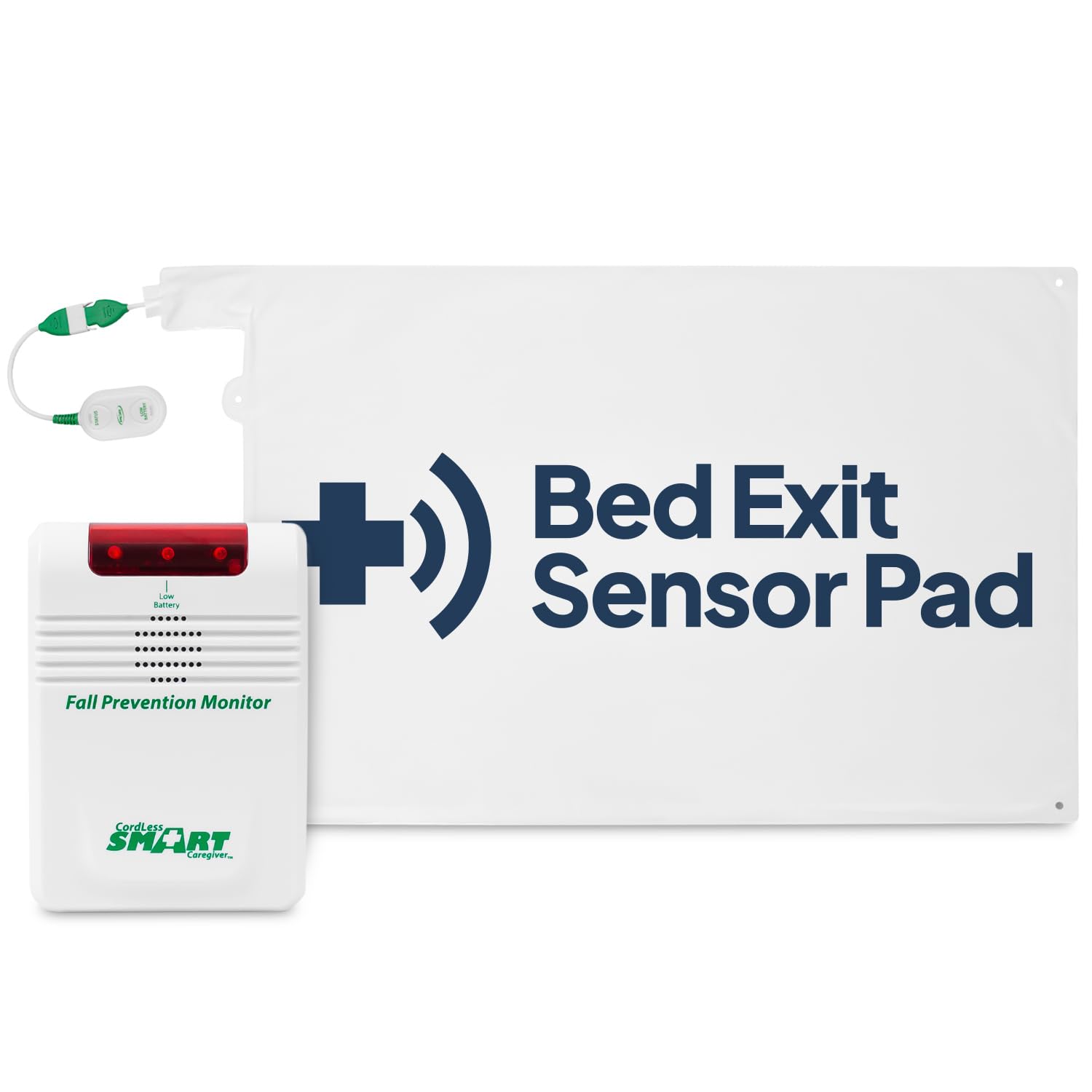
The Smart Caregiver Cordless system uses a 20-by-30-inch weight-sensing pad — the largest surface area in this lineup — which provides excellent coverage for detecting sit-up and stand movements. The 300-foot wireless range means you can carry the monitor throughout the house, and the engineered delay of two to three seconds filters out false triggers from repositioning during sleep. The monitor clips to your clothing or mounts on the wall, giving you flexibility without locking you into one room.
The system operates on three C batteries, which offer months of runtime, but no AC adapter is included for those who prefer a corded backup. Caregivers consistently report that the pad works best when placed under the shoulders, providing a brief window to reach the patient before they fully stand. The pad’s latex-free vinyl composition withstands daily wiping, though some users note vinyl may crack over extended use. The monitor offers three volume settings, with the loudest option clearly audible across a two-story home.
Where this system truly excels is in its expandability — it pairs with nurse call buttons, motion sensors, chair pads, and floor mats from the same Smart Caregiver ecosystem. This modular approach lets you build a comprehensive fall prevention network without needing separate receivers. The 300-foot range and expandability make this the strongest foundation for a multi-room safety setup.
Why it’s great
- Large 20×30 pad provides maximum detection area
- Expandable system integrates with chair pads and motion sensors
- Engineered delay reduces false alarms from minor movements
Good to know
- Powers on 3 C batteries only — no AC adapter included
- Vinyl pad may show wear after extended daily use
2. Lunderg Under Mattress Bed Alarm

The Lunderg Under Mattress Bed Alarm solves the most common failure point in dementia care: the patient who refuses to be monitored. The pressure sensor pad slides completely under the mattress, making it invisible and untouchable. There’s no pad to kick away, no crinkling sound, and no visible indicator that could trigger agitation. This design is specifically engineered for patients who resist visible alarm systems or pull off wearable fall detectors.
Lunderg’s patented PreRise early-alert technology detects weight shifts before the patient fully stands, giving caregivers a genuine head start instead of a reactive alert. The system works optimally with mattresses 13 inches or thinner. The sensor pad has a 15-month lifespan, significantly longer than the 12-month standard found in most competing pressure pads. The wireless pager receiver offers adjustable volume with a vibration-only mode, and the 300-foot range covers most homes and small facilities without signal drop.
The trade-off is cost — this is the most expensive system in the guide. However, for caregivers managing a resistant dementia patient who would otherwise disrupt any visible monitoring system, the under-mattress placement and early-alert capability justify the investment. The batteries in the sensor unit are non-replaceable, so the entire pad becomes a disposable item after its lifespan ends.
Why it’s great
- Invisible under-mattress placement prevents patient resistance
- PreRise technology alerts before standing — not after
- 15-month pad lifespan exceeds industry standard
Good to know
- Requires mattress thickness of 13 inches or less
- Sensor pad batteries are non-replaceable
3. Smart Caregiver Wireless Bed Pad Alarm System
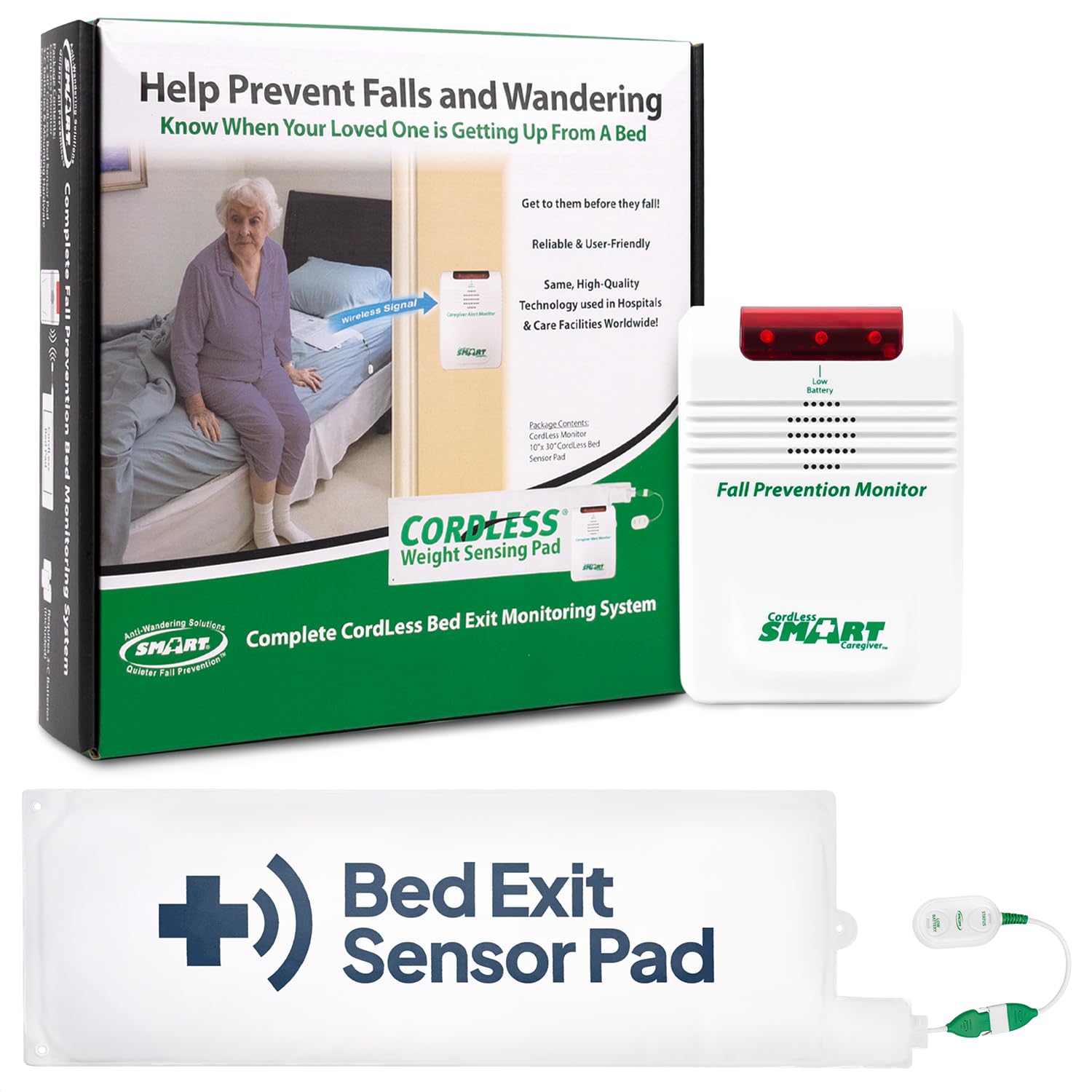
This Smart Caregiver system is nearly identical to the cordless model above but uses a smaller 10-by-30-inch pad and focuses on a single-monitor, multi-device approach. The cordless weight-sensing pad pairs wirelessly with a portable monitor that supports up to six paired devices. You can combine a bed pad, a chair pad, a floor mat, and a door alarm all feeding into one receiver — ideal for a single caregiver managing a patient across multiple rooms.
The monitor uses three C batteries and offers 300 feet of range. The pad is made from soft latex-free vinyl with a thin foam interior, and it fits discreetly under the fitted sheet. Caregivers report best results placing the pad at shoulder height, which triggers the alert as the patient sits up rather than when they are already standing. The monitor’s adjustable volume prevents startling the patient, and the device can be wall-mounted or carried in a pocket.
The key difference from the larger pad system is the detection area — the 10-by-30-inch pad is standard and adequate for most patients, but the 20-by-30-inch version provides better coverage for heavier or more active sleepers. Choose this model if you plan to expand to multiple sensor types; choose the larger pad version if you only need bed monitoring and want maximum detection reliability.
Why it’s great
- Monitor pairs with up to 6 different sensor devices
- 3 adjustable volume levels for discretion
- Wireless design removes bedside alarm noise
Good to know
- Pad area smaller than the 20×30 version
- Only battery-powered — no AC adapter option
4. Lunderg Wireless Bed Alarm System

The standard Lunderg wireless system takes a different approach from its under-mattress sibling — it uses a traditional 10-by-30-inch pressure pad but sends alerts to a lightweight pager you carry. The pager fits in your pocket, clips onto a waistband, or mounts on the wall, and offers three modes: high volume, low volume, and vibration only. The vibration mode is particularly useful for caregivers who sleep in a different room and don’t want to wake the entire household.
The 300-foot range covers most homes, and the pad’s anti-slip stickers prevent shifting that causes false alarms. The pad has a foam interior with an incontinence-resistant surface that wipes clean easily. Setup takes minutes — place the pad under the fitted sheet at shoulder level, pair the pager, and you’re operational. The system uses two AA batteries for the pager and the pad powers independently.
Some users report occasional pairing loss that can masquerade as dead batteries. Always check the pairing indicator before replacing batteries. The system qualifies for FSA and HSA reimbursement, a practical benefit for families managing care costs. This is an excellent choice for a single caregiver who needs to move freely throughout the house while staying connected to the patient’s bed status.
Why it’s great
- Lightweight pager clips to clothing for true portability
- Vibration-only mode prevents household disruption
- FSA/HSA eligible for tax-advantaged purchase
Good to know
- Occasional pairing loss requires re-sync
- Pad shifting can cause false alerts without anti-slip stickers
5. CallToU Bed Alarm
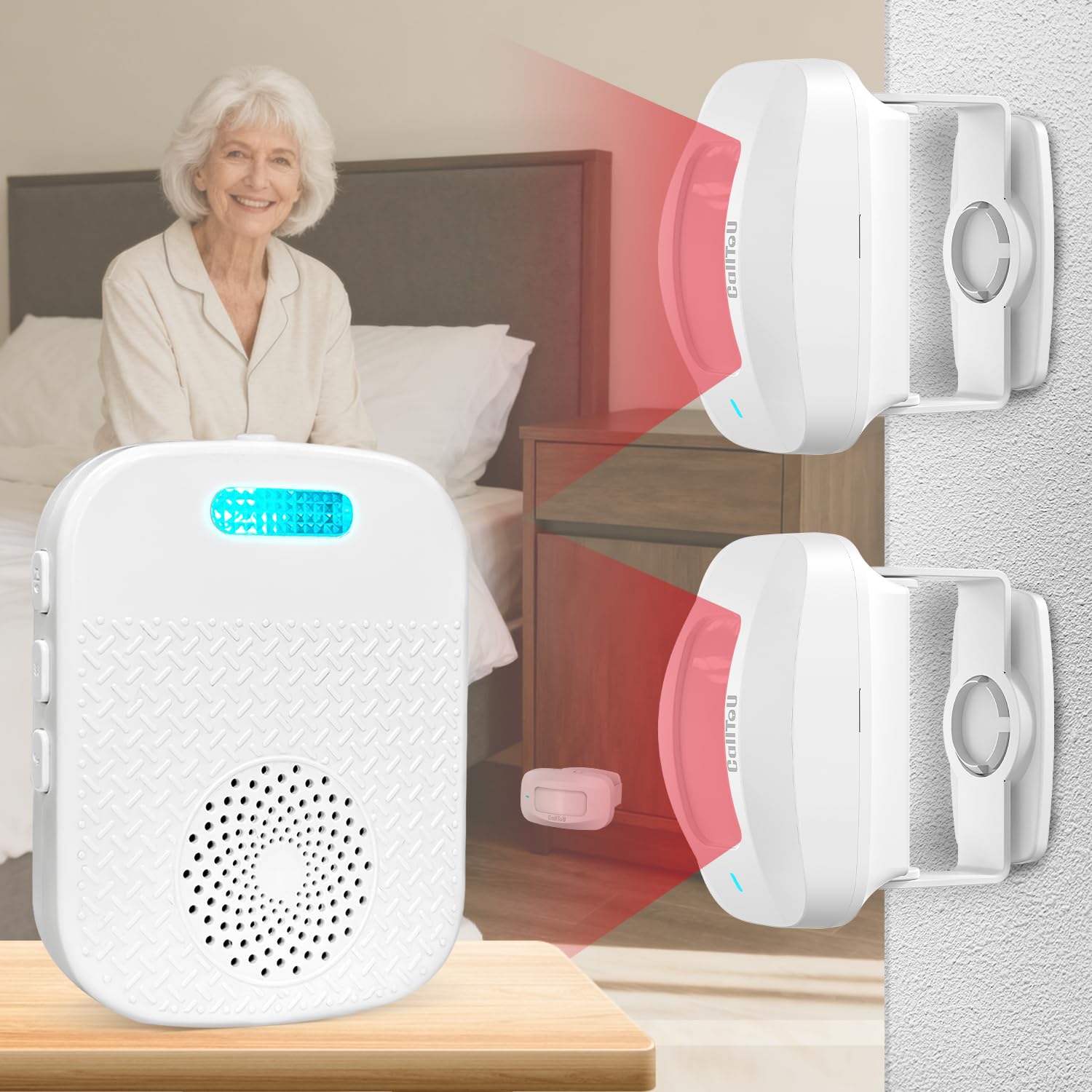
The CallToU bed alarm uses a 433MHz infrared motion sensor instead of a pressure pad — a fundamental design difference that changes how it monitors. The sensor mounts on a wall or tabletop 1 to 3 feet from the bed, aimed at the area where the patient’s feet will touch the floor. When the legs cross the infrared beam, the alarm triggers on the caregiver’s receiver. This completely eliminates false alarms from bed pad crinkling, incontinence pad shifting, or restless leg movements during sleep.
The receiver offers 5 volume levels up to 110 decibels and 18 ringtone options, with silent and vibrate modes for nighttime discretion. The sensor runs on three replaceable AAA batteries, avoiding the disposable pad replacement cost that pressure pad systems require. The receiver has a Type-C charging port and a 500-foot range in open environments. The 360-degree rotation on the sensor mount lets you fine-tune the detection zone to avoid false triggers from passing pets or curtains moving near a window.
The trade-off is that motion sensors only detect the moment of standing, not the sit-up preparation that pressure pads catch. For patients who rise quickly or shuffle their feet before standing, the sensor may trigger slightly later than a pad system. However, the near-total elimination of false alarms makes this a strong value for caregivers frustrated by constant false alerts from traditional pads.
Why it’s great
- Infrared detection avoids false alarms from bed movement
- Replaceable AAA batteries — no disposable pad waste
- 110 dB max volume with 18 ringtone choices
Good to know
- Requires precise sensor positioning for reliable detection
- Triggers only on floor-level movement, not sit-up motion
6. Secure Safety Solutions Bed Exit Alarm
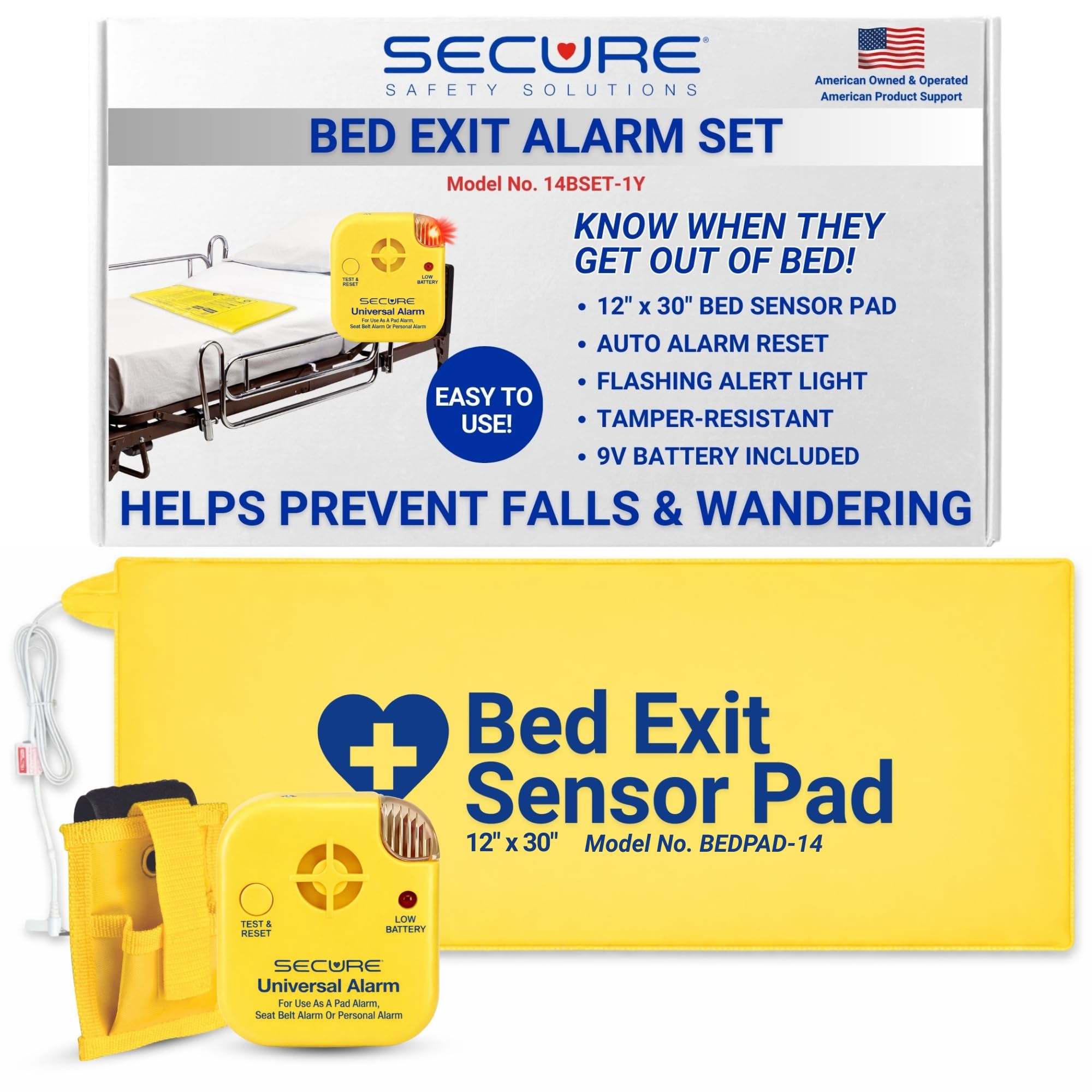
The Secure Safety Solutions system, from Personal Safety Corporation, has been on the market since 2012 and is widely used in hospitals, nursing homes, and assisted living facilities. The wired design means the alarm unit sits in the patient’s room and sounds an 80-decibel alert with a flashing indicator light when pressure is removed from the 12-by-30-inch pad. For care facilities that prefer a bedside audible alert rather than a wireless pager, this is a proven workhorse.
The pad is ultra-thin at 0.2 inches, fits under the fitted sheet without discomfort, and uses a durable metal connection pin and tamper-resistant reset. The alarm triggers instantly when weight lifts but resets automatically when the patient returns to bed. The kit includes a 9V battery, an alarm holder with a mounting strap, and the pad — everything you need in one box. The system is also compatible with optional pull-pin cords for chair or door monitoring.
The main limitation is the in-room alarm, which can startle some dementia patients or cause agitation. The 80-decibel volume is moderate — loud enough to hear down the hall but not as penetrating as the 90-110 dB wireless options. Some older caregivers find the high-pitched tone difficult to hear. This is a functional, no-frills solution best suited to caregivers who stay in the same room or adjacent area and want a simple trigger without wireless setup.
Why it’s great
- Trusted in hospitals and nursing homes for over a decade
- Automatic reset eliminates manual rearming
- Thin pad design fits discreetly under any bedding
Good to know
- Bedside alarm can startle dementia patients
- High-pitched tone may be hard for older caregivers to hear
7. Patient Aid Bed Alarm

The Patient Aid Bed Alarm offers the most accessible entry point into pressure pad monitoring. The 10-by-30-inch pad connects via wire to a bedside alarm unit that lets you choose between alarm and music tones at either 80 dB or 90 dB volume. The one-button reset is convenient — no complicated menus or multi-step reactivation. The alarm unit includes multiple mounting options: a U-bracket for bed rails, wall bracket with screws, or adhesive velcro strips for flat surfaces.
The pad is made from advanced vinyl that is tear-resistant, water-resistant, latex-free, and foldable for storage. It’s designed to be placed under the patient’s buttocks or shoulders, and the flat cord profile prevents pressure points. The alarm triggers when weight lifts from the pad, but cats or pets jumping on the bed can also trigger false alerts. Unplugging the pad when not in use helps preserve battery life.
This is a no-frills wired tool that gets the job done if you’re within earshot of the patient room. The lightweight unit clips easily to bed rails, and the dual-volume choice gives you basic customization. However, the lack of a wireless pager means you’re tethered to the patient’s room. Choose this if you need a low-cost, straightforward wired alarm for a single room where you’ll be present most of the time.
Why it’s great
- Multiple mounting options for bed rails, walls, or surfaces
- Choice of alarm or music tones at two volume levels
- One-button reset for simple caregiver operation
Good to know
- Battery drains quickly if left active continuously
- Wired design limits caregiver mobility to the patient room
FAQ
Should I choose a pressure pad or a motion sensor for dementia patients?
Can a bed alarm work with an alternating pressure mattress?
How do I prevent false alarms from restless sleep or pets?
Final Thoughts: The Verdict
For most users, the bed alarms for dementia patients winner is the Smart Caregiver Cordless Bed Exit Alert because its large 20×30 pad combined with 300-foot wireless range and expandable ecosystem provides the most reliable fall detection for any home or facility. If you need an invisible solution for a resistant loved one, grab the Lunderg Under Mattress Bed Alarm. And for a budget-friendly entry point with minimal false alarms, the CallToU Bed Alarm motion sensor system offers excellent value by eliminating pad-related false triggers entirely.