
Our readers keep the lights on and my morning glass full of iced black tea. As an Amazon Associate, I earn from qualifying purchases.
Specs are compiled from manufacturer listings and verified buyer reviews and can change over time — please confirm the key details on the product page before buying.
The right bedding for a ball python has one main job: hold humidity steady so your snake sheds in one clean piece instead of coming off in dry patches. Coconut chip and coco fiber substrates do that job best, because they soak up water and release it slowly into the air inside the tank. Aspen chips run dry in comparison, which suits desert species but leaves a ball python fighting for moisture. This guide covers nine real substrates that owners actually keep coming back to, so you can match one to your snake and your routine.
I’m Min — the founder and writer behind Gadgets Feed. This guide is built by comparing the manufacturers’ published specifications and the patterns across verified customer reviews, so you get each pick’s real strengths and trade-offs instead of marketing spin.
Some bags are clean and ready to pour, while others arrive compressed and need a soak before they fluff up. Below you will find the exact chip size, bag volume, and cleanup quirks that separate a keeper favorite from a bag that just sits on the shelf. If you want a substrate that keeps one steady humidity band between changes, this breakdown of the best bedding for ball pythons will point you straight to it.
Our Picks at a Glance


How To Choose The Best Bedding For Ball Pythons
A ball python comes from tropical West Africa, so its body expects air that stays damp rather than dry. Your substrate is the tool that keeps that dampness steady between mistings. Pick the wrong material and you will be spraying the tank twice a day just to stop the skin from flaking.
Humidity retention versus arid bedding
Coconut-based bedding holds water inside its fibers and releases it slowly, which is why it is the default choice for a ball python. Aspen chips absorb moisture instead of giving it back, so they suit desert species far better. If your snake has ever had a stuck shed around the eye caps, the bedding material is the first thing worth changing.
Chip size and burrowing
Ball pythons like to push into their bedding and hide, so a loose chip that holds a tunnel shape keeps them calmer. Small chips are easier to spot-clean, because waste sits on top rather than sinking through gaps. Larger chunks look natural but are harder to work around and can be awkward if your snake grabs one during feeding.
Loose bags versus compressed blocks
Loose bedding pours straight from the bag and is ready in minutes, which suits a quick tank refresh. Compressed blocks cost less per quart but need you to add water and wait for them to break apart, and the expansion can surprise you if you do not read the label first. Neither is better — it depends whether you value speed or bulk.
Quick Comparison
| Model | Best For | Material | Volume | Weight | Amazon |
|---|---|---|---|---|---|
| BabiChip Coconut Chip Substrate★ Best Overall | All-round ball python setup | Coconut husk chip | 12 Quart | 2.16 pounds | Amazon |
| Zilla Reptile Bedding SubstrateBest Value | Dry-climate keepers | Heat-treated aspen chips | 24 Quart | 9.9 pounds | Amazon |
| RediChip Reptile Bedding Loose MediumTop Performer | Humidity plus burrowing | Organic coco chip | 12 Quart | 2.68 pounds | Amazon |
| Josh’s Frogs Super Cypress Mulch | Mold-resistant humidity | Pure cypress mulch | 10 Quarts | 4.29 pounds | Amazon |
| Gro-Med ReptiCare Compressed Chip Block | Bulk value for big tanks | Triple-washed coco husk | 64 Quart block | 9.92 pounds | Amazon |
| Legigo 4 Pack Coconut Fiber | Small enclosures and mixes | Coco coir fiber | 4 pack | 5.59 pounds | Amazon |
| Zoo Med Eco Earth Brick 3 Pack | Multi-tank keepers | Compressed coco fiber | 3 bricks | 4 pounds | Amazon |
| Zoo Med Forest Floor 8qt 2 Pack | Tropical forest look | Cypress mulch | 8 quart, 2 pack | 7.5 pounds | Amazon |
| Josh’s Frogs BioBedding Tropical | Bioactive natural setup | Bioactive soil mix | 10 quarts | 2.61 kg | Amazon |
In‑Depth Reviews
1. BabiChip Coconut Chip Substrate for Reptiles 12 Quart Loose Small Sized Coco Husk Chip Bedding
Our pick — over 4.5★ from 650+ verified ratings; the strongest balance of quality and price.
The loose coco chip that keeps tropical humidity steady and pours straight from the bag.
If your ball python fights a dry tank, this is the one to reach for. The chips are small coconut husk pieces that soak up water and let it back out slowly, so the air inside the enclosure stays humid without you spraying it all day. It comes out of the bag ready to pour — no soaking, no waiting for a block to break apart. It weighs 2.16 pounds and holds 12 quarts, which is a genuinely light bag to lift and store above a stack of other supplies.
You get less dust to breathe in, because the chips are sorted and refined in the United States to strip out dust and debris. That means pouring a fresh bag does not kick up a cloud. Buyers report it holds moisture without turning soggy, and the small chip size is a favorite because it is easy to work around while still holding a burrow. That clean, sorted texture is why it takes the top spot ahead of thicker-chip options that leave more crumb to sort through.
It runs a little pricier per quart than a compressed block, which is the one honest trade. A larger, heavier cypress mulch like the Zoo Med Forest Floor covers more floor for the same routine, but it cannot match this humidity hold. The other quirk: some buyers find the chip size too sharp and pokey for a large snake, so it is worth handling a handful before you commit if your animal is on the bigger side.
Where It Wins
- Small refined chips pour ready to use and hold moisture without turning to muck
- Dust and debris sorted out, so setup stays clean and easy to breathe through
- Light 2.16-pound bag that is easy to lift and store
- Small chip size that lets your snake burrow and still spot-cleans fast
What To Plan For
- Costs more per quart than buying a compressed block and expanding it yourself
- The chips can feel sharp to a very large snake, so handle it first
Grab this if: you want a fast, clean pour that keeps ball python humidity locked in with no prep.
Think twice if: you want maximum floor coverage from a heavy bag or your snake is a large adult and you suspect the smaller chips will bother it.
2. Zilla Reptile Bedding Substrate, Snake Bedding, 24 Quart
A big, honest aspen bag for keepers who want dry and tidy over tropical damp.
Here is the thing about aspen: it absorbs moisture rather than feeding it back, which suits a snake that does not need a wet tank. This bag holds 24 quarts for a fraction of the per-quart cost of the smaller coco bags, and it is heat-treated aspen chips made with a material commonly used by professionals in the herpetology world. The chips are hypo-allergenic and free from aromatic oils, which matters if your snake is sensitive to cedar or pine dust.
Its standout feature is heat retention. Aspen chips hold warmth from a heat lamp instead of letting it pass through, and keepers report the cage runs warmer after the switch. That means your heat lamp runs less to hold the temperature band. The size difference is also real — this is a 24-quart, 9.9-pound bag next to the 12-quart, 2.16-pound BabiChip, so you are buying roughly double the volume in a much heftier package. Spot-cleaning is where aspen earns its keep: the chips are large enough to see waste and lift it out without hauling the whole tank.
Be honest with yourself about the humidity trade, though. Aspen dries the air out, so this is the wrong pick if your ball python needs a damp tropical enclosure and you are not willing to mist constantly. Some snakes simply do not take to aspen, and the chips do not hold a tunnel the way coco does, so a burrower may push straight through them.
Dry-tank fit: The 24-quart bag with heat-treated aspen chips is a strong match for keepers running lower humidity or a mixed collection of arid species.
Who it misses: Owners chasing a tropical ball python setup will find the air dries too fast and the chips do not burrow, so a coco chip will serve them better.
Right call for: you keep more than one reptile and want one big, affordable bag of clean aspen chips.
Better to pass if: your ball python needs steady humidity, because aspen absorbs moisture instead of releasing it.
3. RediChip Reptile Bedding Loose Medium Coconut Chip Substrate 12 Quart
Medium coco chips that hold a burrow and keep the humidity band from drifting.
You get the humidity of coco with a chunkier feel than the smallest chips, thanks to the medium-sized RediChip. It is 100% organic coco chips, cleaned to strip out dust and dirt, and it pours loose so you are not soaking a block first. It weighs 2.68 pounds across 12 quarts — a touch heavier per bag than the small-chip BabiChip, which reflects the bigger pieces inside.
Two things keep this one on the shortlist. First, the medium chips let your snake push into the bedding and stay put, so a ball python that likes to hide can settle in. Second, it works as a bioactive base for anyone running live plants and cleanup crews. It soaks moisture without leaving the bedding waterlogged, and the earthy scent is a small bonus most owners appreciate.
The recurring gripe is bag size versus tank size. A 12-quart bag is not enough on its own to fill a large enclosure to depth, so most keepers end up mixing it with bark, sphagnum moss, or a second bag to hit the right layer. That is a mixing job, not a defect — but budget for more than one bag if your tank runs big.
Why Owners Keep It
- Medium chips hold a burrow so a hiding ball python stays calm
- 100% organic coco, cleaned dust-free and ready to pour
- Doubles as a bioactive base when mixed with other ingredients
Worth Knowing First
- One 12-quart bag will not fill a large tank to depth on its own
- Best results usually come from mixing it with bark or moss
Best used by: the keeper running live plants or a burrow-heavy setup who does not mind mixing in a second ingredient.
Less ideal when: you need a single bag to cover a whole large tank, since 12 quarts will not get you to depth alone.
4. Gro-Med ReptiCare Compressed Coconut Chip Substrate for Reptiles 64 Quart Block
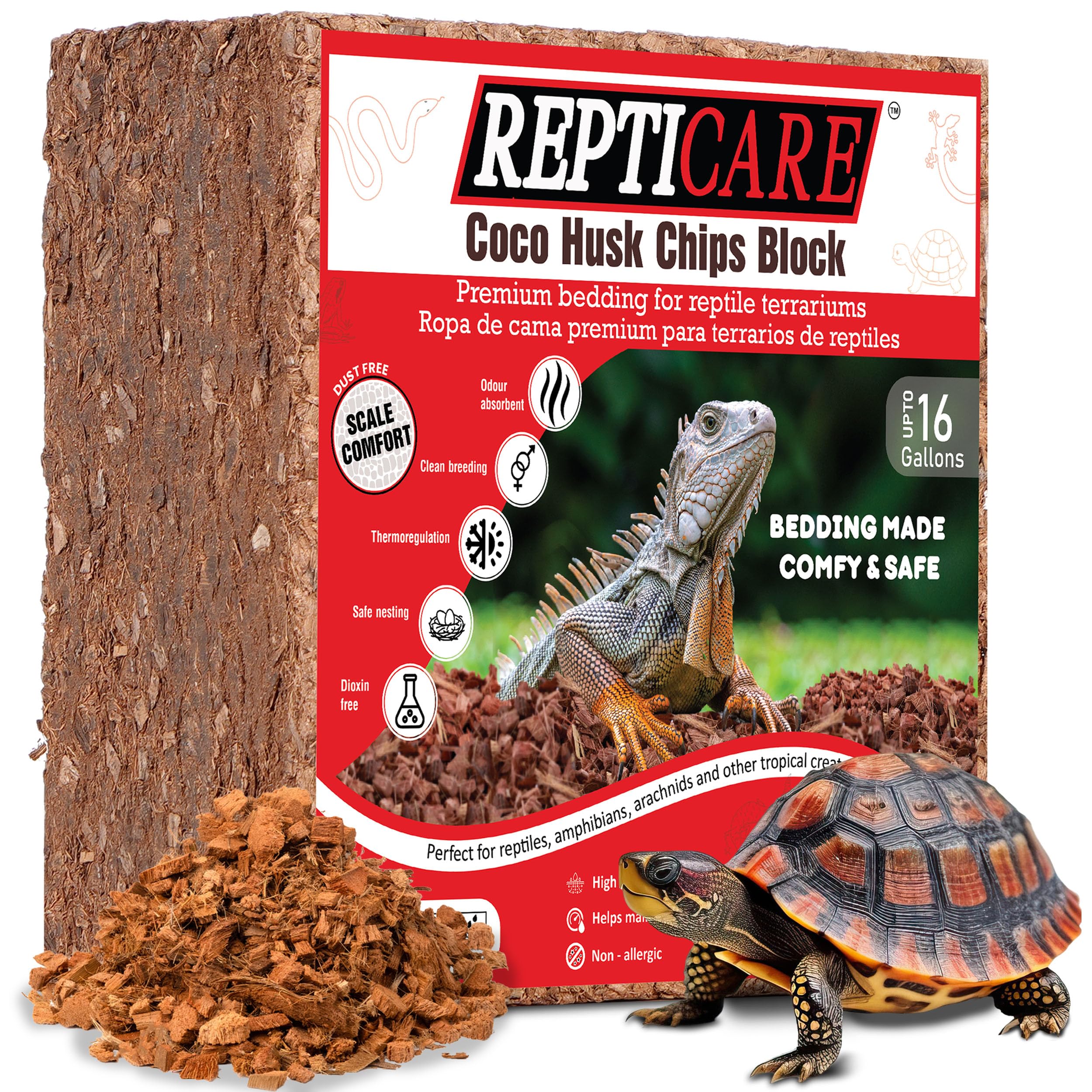
One compressed block that swells into a mountain of triple-washed coco husk.
Buying for a wall of enclosures or a tank you want to fill deep? This single 10-pound breeder block expands up to 65 quarts once you add water — far more bedding than any single loose bag on this list delivers. The husk is triple-washed and dust-free, and because it is compressed you are paying for dense husk rather than air-filled bag space.
The prep step is the catch worth seeing coming. You cannot pry the block apart with your hands — you add water and wait, and owners mention the surface still looking wet well past the stated soak time, which is normal for a block this size. Once it breaks down you get a soft, fibrous texture that encourages digging and burrowing, which suits a ball python that likes to push under the surface. It also works well in outdoor garden enclosures in summer.
A word of caution on setup hygiene: at least one reviewer noted receiving a batch with mold and stray plastic pieces, a choking concern. That is an outlier, not the norm, but it is the reason freezing or baking substrate before use is a habit worth keeping. Check the block when it arrives and you are set.
The bulk math: One block going to 65 quarts gives you more substrate per purchase than any loose 12-quart bag, which pays off across multiple tanks or deep bedding.
The prep tax: You trade quick-pour convenience for a soak-and-wait step, so plan the change a day ahead.
Smart buy for: the keeper with several enclosures or a deep-bedding tank who wants the most bedding per purchase.
Harder sell if: you want to pour and go, since this block needs water and patience before it is usable.
5. Legigo 4 Pack Coconut Fiber Substrate, Natural Coco Coir Reptile Bedding
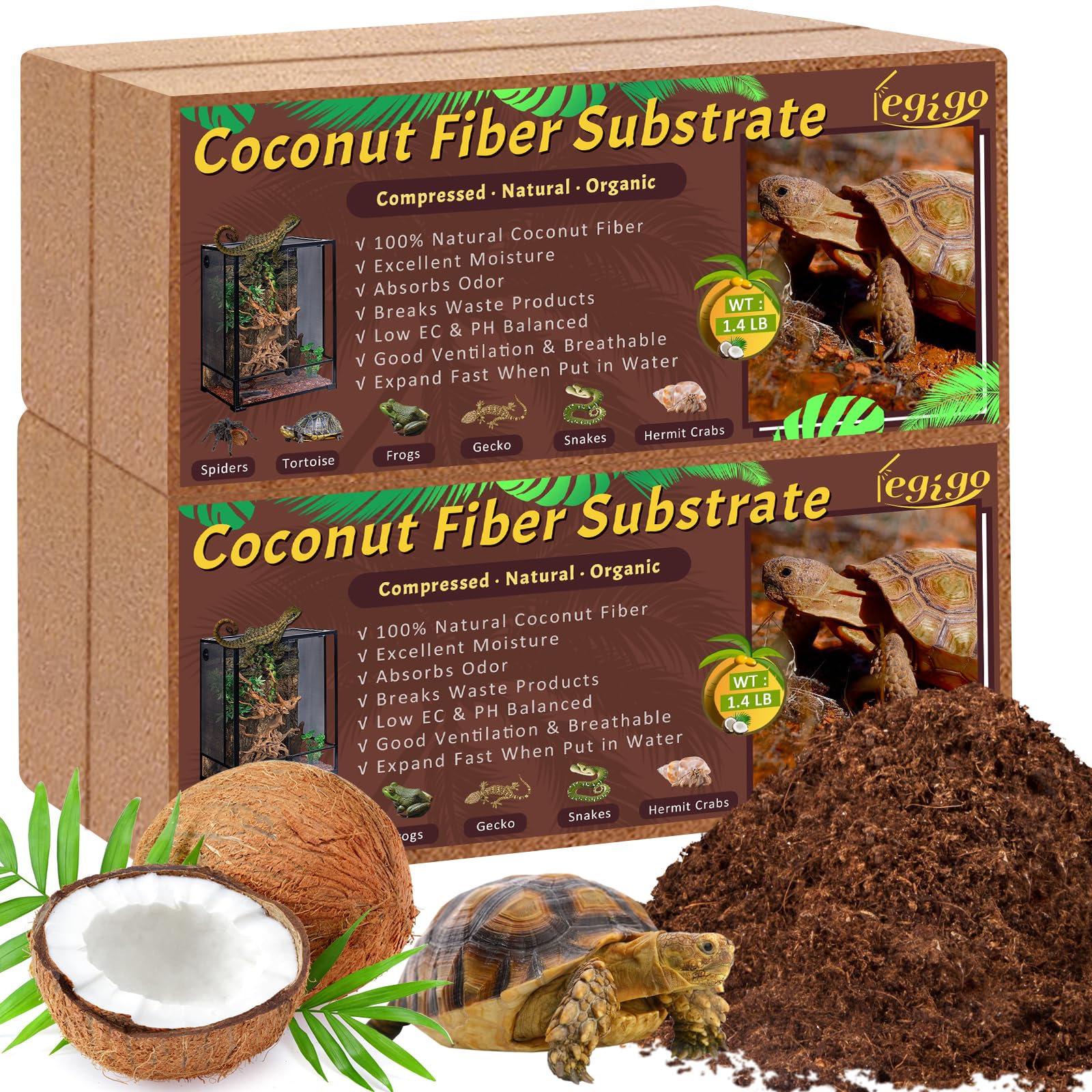
Four compact coir bricks you soak one at a time to match any tank size.
The nice part of a four-pack is control. Each brick is about 7.87 by 3.94 by 1.97 inches and roughly 1.4 pounds, so you can expand exactly what you need and keep the rest dry on the shelf. The coir fiber is natural and breathable, holds humidity without turning swampy, and soaks up waste while breaking down the smell. It is also a clean material — no dirt, no harmful chemicals — so it is safe to dispose of in the garden once you are done.
For a smaller enclosure, one or two bricks do the job and give your snake tunnels and burrows to explore. For a larger tank you simply soak more. The trade-off versus a single ready-to-pour bag is that you have to prep each brick in water before use, and the packaging does not include printed instructions, so a first-timer has to figure out the ratio by feel.
Watch the moisture balance here — the recurring note from owners is a smell that lingers if the coir stays too wet, so let it drain before you spread it and re-mist lightly rather than soaking deep.
What Works Here
- Four bricks let you expand only what each tank needs
- Natural coir holds humidity and decomposes waste and odor
- Compact bricks store easily on a shelf between uses
Where It Falters
- Every brick needs a soak before it is ready to use
- No printed instructions in the pack, so ratios are guesswork at first
- Kept too wet it can carry a lingering smell
A good fit for: keepers with a small tank or several small setups who want to expand only what they need.
Look past it if: you would rather pour a ready bag than soak bricks and measure moisture by eye.
6. Josh’s Frogs Super Cypress Reptile Mulch (10 Quarts)

Pure cypress that fights mold and holds humidity better than aspen ever will.
If you want a natural-looking tank that still keeps a ball python damp, this pure cypress mulch is a strong middle ground. It is made with no cedar or pine chips, which can be toxic to a pet, so you are not gambling with your snake’s safety on a cheap mixed bag. It maintains humidity better than aspen, which smooths out the swings that stress a tropical species, and it is mold resistant — a real benefit in an enclosure you keep wet.
The fibers are doubled milled and extra soft, so they will not damage skin, and they hold up well for burrowing and enrichment. Owners who keep snakes describe it as the pick that keeps moisture healthy where other substrates run too wet or too dry, and the 4.29-pound, 10-quart bag gives a decent layer in a mid-size enclosure.
The honest catch is price and piece size. You need more than one bag to cover a large tank floor, so it adds up, and some batches contain large mulch pieces that are risky if ingested — pick those out before feeding time. Neither issue is a deal-killer, but both are worth knowing going in.
Why it stands out: Pure cypress with no cedar or pine keeps humidity steady and resists mold, which is exactly what a wet tropical tank needs.
The honest fine print: Bag size runs small for big tanks and the larger mulch pieces should be removed before feeding.
Choose this when: you want a natural forest look with mold resistance and better humidity than aspen.
Consider a different pick if: you want one bag to cover a wide floor, because 10 quarts goes quickly in a large enclosure.
7. Zoo Med Eco Earth Compressed Coconut Fiber Substrate Reptiles 1 Brick – 3 Pack
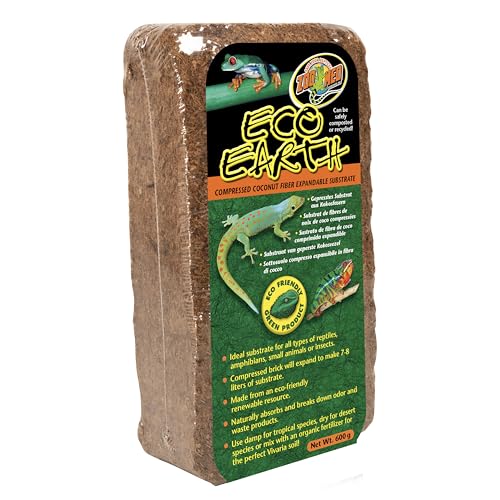
The widely trusted compressed brick that swells into fresh, earthy coco fiber.
Eco Earth has been the standard coco brick for a long time, and the 3-pack spreads that value across more than one tank. Each compressed brick expands to make 7-8 liters of substrate once you add water, and it is made from a renewable resource that absorbs and breaks down waste and odor naturally. Three bricks in one purchase covers multiple enclosures or gives you a spare for the next change.
The feel is the reason people return to it: earthy, fresh-smelling, and easy to set up once soaked. It holds moisture well for humidity and re-moistens simply by adding water and fluffing it back up, which is a low-effort way to keep a ball python’s tank damp. As a bonus it works for gecko tanks, hermit crabs, and even a mix with play sand when you want a substrate to roll around in.
There is a size trap worth flagging before you soak a whole brick. If you only need a small amount, cut the brick in half first — owners have expanded a full brick only to find they had far more bedding than the tank could use. One buyer mentioned it dries out over time, so plan a monthly refresh rather than expecting it to stay damp on its own.
Why It Earns A Spot
- Each brick expands to 7-8 liters, so a 3-pack covers several tanks
- Earthy, fresh smell and easy re-moistening for steady humidity
- Works across geckos, hermit crabs, and larger reptiles too
Watch These Points
- Full bricks expand into far more bedding than a small tank needs
- It dries out over time and needs a refresh roughly monthly
- Compressed bricks require a soak before use
Matches well with: keepers running several tanks who want a trusted coco brick in bulk and do not mind soaking it.
Think about size first if: you only have one small enclosure, since a full brick can over-expand and go to waste.
8. Zoo Med Forest Floor 8qt, Pack of 2

Cypress mulch that gives a tropical tank the forest floor look and steady damp.
Forest Floor is natural cypress mulch built for the tropical end of the hobby, which is exactly where a ball python lives. It retains moisture to feed humidity into the enclosure, and the two-bag pack gives you enough to layer a mid-size tank and still have a little spare. It suits snakes, amphibians, and tropical tortoise species, so if you keep more than one damp-loving animal this covers them together.
The draw is appearance and cleanup. The cypress gives the tank a natural woodland look rather than a plain chip layer, and it is easy to spot-clean and absorbs water well. Owners who keep tortoises and snakes say it holds moisture without turning into a swamp, and many keep it for years as a reliable standby they reorder without thinking about it.
Two honest notes. The bags run small relative to the price — this is an 8-quart bag at 7.5 pounds for the pair, and some keepers find a wider 27-quart bag a better per-quart deal. And there is the occasional outlier report of small bugs in the mulch, so freezing or baking the bedding before it goes in the tank is a sensible habit.
The case for it: Natural cypress that holds humidity and looks like a real forest floor, with a two-pack that covers a mid-size enclosure.
Keep in mind: The bag size runs small for the coverage, and pre-treating substrate before use is a wise step.
Suits you if: you want a natural woodland look and steady moisture for a damp tropical tank.
Not the pick when: you need large-volume coverage from one purchase, since these bags run modest for the floor area.
9. Josh’s Frogs BioBedding Tropical Bioactive Substrate (10 quarts)

The bioactive soil that skips full changes when a cleanup crew is working.
If you have moved past pouring bags of chip and want a living floor, this is the premium option. BioBedding is a tropical bioactive soil made to work with microfauna like springtails and isopods. With that cleanup crew working, the maker says you can go years without a full change. It also gives live plants a base to grow in, and plants look closer to a snake’s native habitat than plastic décor.
The soil holds moisture well and stays wet without rotting, then dries properly so it does not turn sour, and it contains charcoal for freshness and texture that resists packing down. Keepers running anything from a 20-gallon corner to a 55-gallon aquarium report it holds up across tank sizes, and a ball python can burrow into it while live plants take root around the snake.
Two caveats specific to this material. It can arrive with hitchhikers — small snails, worms, and millipedes have shown up in some tubs — which is normal for bioactive soil but surprising if you are not expecting it. And it is built more for amphibians than snakes if you are worried about introducing mites, so weigh that against your setup.
Premium Reasoning
- Bioactive soil plus a cleanup crew can go years between full changes
- Holds moisture without rotting and stays fresh with charcoal inside
- Grows live plants to mimic a ball python’s native habitat
- Holds up across tank sizes from 20-gallon corners to 55-gallon aquariums
Before You Buy
- Bioactive soil can arrive with hitchhikers like small snails or worms
- Better suited to amphibians than snakes if mites are a concern in your setup
- The no-change benefit only kicks in with a microfauna crew
Worth it for: the experienced keeper ready to run a planted, bioactive tank with springtails and isopods doing the cleaning.
Step back if: you want a simple pour-and-go bag or you are not ready to manage a living cleanup crew and its hitchhikers.
Understanding the Specs
Humidity Retention
This is the spec that decides how often you mist a ball python’s tank. Coco-based bedding holds water inside its fibers and releases it slowly into the air, so the enclosure stays damp between changes. Aspen works the other way and pulls moisture out of the air. For a tropical snake, a moisture-holding material like coco chip or cypress mulch means fewer spray sessions and fewer stuck sheds.
Chip Size and Burrowing
Small chips pack and spot-clean easily, and they let a snake push into the bedding and stay put. Larger chunks look natural but are harder to work around and can be awkward if your snake grabs one during a feed. Owners repeatedly note that chip size is the difference between a bedding they keep and one they switch away from, so handle a handful before committing your tank to it.
Loose Bags versus Compressed Blocks
Loose bedding is poured straight from the bag and used within minutes. Compressed blocks cost less per quart but need a water soak and a wait before they break apart, and a full block can expand into more bedding than a small tank can hold. The right choice depends on whether your priority is speed or getting the most substrate per purchase.
Volume and Weight
A 12-quart bag is not enough alone to fill a large enclosure to depth, so many keepers buy a second bag or mix in bark and moss. Weight tells you how much husk or chip is actually in the bag — a 24-quart bag that weighs 9.9 pounds holds far more material than a 12-quart loose pour. Match volume to your tank size, not just to the price tag.
FAQ
What bedding keeps the right humidity for a ball python?
Is aspen or coco chip better for a ball python?
How much bedding do I need to fill my ball python tank?
Do I need to freeze or bake substrate before using it?
Can I use coconut bedding straight from the bag?
Why does my substrate smell after a few days?
Is cypress mulch better than coco chip for a snake?
What is a bioactive substrate and do I need one?
How often should I change ball python bedding?
Can bedding be too big for a ball python to swallow?
Final Thoughts: The Verdict
For most keepers, the bedding for ball pythons winner is the BabiChip Coconut Chip Substrate because it pours ready, stays dust-free, and holds the tropical humidity a ball python needs without soaking into muck. If you want a burrow-friendly medium that doubles as a bioactive base, grab the RediChip Medium Coconut Chip. And for dry-tank keepers running several reptiles, the Zilla Aspen Bedding gives you a big bag of clean chips that hold warmth under a lamp.
How We Picked
We do not accept paid placement. Every pick is matched to a real buyer and a real use-case; we do not hands-on test units.
Sources & Methodology
Specifications: manufacturer listings and product documentation. Review insights: verified customer reviews, as of September 2026. Pricing: not shown on this page (it changes often); check the current price via the retailer link.
As an Amazon Associate, Gadgets Feed earns from qualifying purchases. This does not affect which products we feature.