
Our readers keep the lights on and my morning glass full of iced black tea. As an Amazon Associate, I earn from qualifying purchases.
Specs are compiled from manufacturer listings and verified buyer reviews and can change over time — please confirm the key details on the product page before buying.
Keeping a chicken coop floor clean often feels like a losing battle against ammonia smell, caked-on droppings, and clouds of dust every time you step inside. The right bedding absorbs moisture, traps odor, and turns a dreaded weekend scrub into a quick sift-and-go routine.. This guide breaks down the top options that actually hold up to daily chicken life.
I’m Min — the founder and writer behind Gadgets Feed. This guide is built by comparing the manufacturers’ published specifications and the patterns across verified customer reviews, so you get each pick’s real strengths and trade-offs instead of marketing spin.
Your chickens spend most of their day on the coop floor, so the right bedding for chicken coop floor keeps them dry, cuts down on dust, and saves you from constant cleanouts. You want a material that soaks up moisture well, stays low on dust, and lasts a good while before you need to swap it out.
Our Picks at a Glance

How To Choose The Best Bedding For Chicken Coop Floor
Your coop floor is where moisture, droppings, and ammonia gas all meet, so the material you choose dictates your cleaning schedule and your chickens’ comfort. Before you pick, think about three things: how the bedding handles moisture, how dusty it is, and how much effort you want to spend on daily maintenance.
Absorbency and Odor Management
Moisture is the primary enemy of a fresh coop.. When droppings break down, they release ammonia, which irritates both chicken lungs and yours. Highly absorbent materials pull moisture away from the surface, keeping the floor drier and cutting down on that sharp smell. Some options, like hemp, claim up to double the absorbency of pine shavings, which means you change the bedding less often.
Dust Levels and Respiratory Health
Every time chickens scratch and flap, they kick particles into the air. Low-dust bedding keeps the air cleaner for birds and for you when you’re collecting eggs or doing chores. Dust-free options are especially worth it if you work in the coop daily or have birds prone to respiratory issues.
Maintenance Style: Deep Litter vs. Quick Swaps
Decide how hands-on you want to be. A deep-litter method means layering fresh bedding on top of old and turning it occasionally, composting in place — this works best with absorbent loose materials. If you’d rather lift out a single unit and drop in a new one, pads or pre-formed nesting liners fit that faster routine.
Quick Comparison
| Model | Best For | Material | Weight | Absorbency | Amazon |
|---|---|---|---|---|---|
| Eaton Hemp Bedding★ Best Overall | Deep litter odor control | Hemp Hurd | 6.3 lbs | Up to 2x pine shavings | Amazon |
| Out-Grow Wheat StrawInsulation Pick | Insulation and versatility | Wheat Straw | 4 lbs | — | Amazon |
| Premium Chicken SandBest Value | Dust-free sifting coops | Coarse Sand | 50 lbs | Low moisture retention | Amazon |
| Sun Joe Coop Sand | Foot-friendly coarse floor | Coarse Sand | 50 lbs | Low moisture retention | Amazon |
| Standlee Chopped Straw | Large volume at value | Barley/Wheat Straw | 23.8 lbs | — | Amazon |
| Standlee Flock Fresh | Zeolite-enhanced odor control | Straw + Zeolite | ~19.8 lbs (8.98 kg) | Ion exchange absorption | Amazon |
| Trendiees Nesting Pads | Quick egg-box cleanup | Aspen Excelsior | 5.8 lbs (12 pack) | Moisture-wicking fibers | Amazon |
| Small Pet Select Hemp Hurd | Superior absorption per pound | Hemp Hurd | 18 lbs | Up to 400% of its weight | Amazon |
In‑Depth Reviews
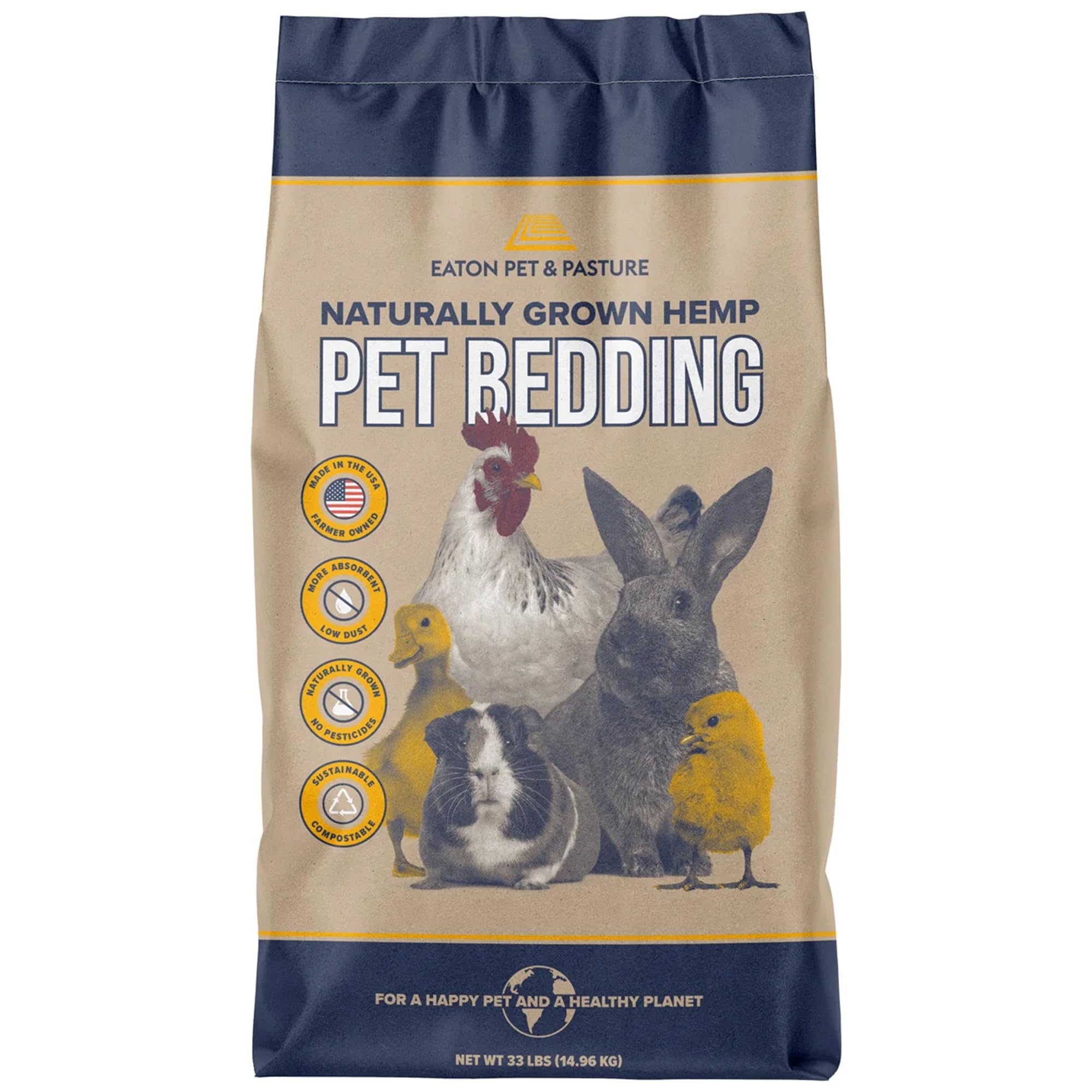
1. Eaton Pet and Pasture USA-Grown Hemp Bedding
Our pick — over 4.5★ from 800+ verified ratings; the strongest balance of quality and price.
The deep-litter champion that stays odorless for months, not weeks.
This hemp hurd (the soft inner core of the hemp stalk) is the pick for flock owners committed to the deep-litter method. Buyers report six months of odor-free deep-litter use with this hemp bedding. — proof of its absorbency, which the maker claims is up to twice that of pine shavings. That means moisture gets locked away instead of turning into ammonia smell.
The crowd favorite here — 4.7 stars across 800+ owners — keeps coming back to the lack of dust and the soft texture. Chickens happily forage and scratch through it, and the flake form stays easy to sift for daily tidying. It’s also packaged in a recyclable paper bag rather than plastic, a small plus if you’re conscious of waste.
There’s a trade-off worth naming: the 6.3-pound bag is compact, so it’s less cost-effective than pine shavings over a full-season comparison. If you’re running a large commercial-scale setup, the per-bag volume might frustrate you — but for a backyard flock, the odor control makes the premium feel earned.
What Wins Owners Over
- Six-month odorless deep-litter runs reported
- 2x the absorbency of pine shavings claims
- Low dust keeps air clean for you and birds
- Recyclable paper packaging
The Fair Caveat
- Small bag size limits economy at scale
- Not stocked at big farm chains, so shipping waits
Reach for this if: you want a low-dust, high-absorbency base for a deep-litter coop and value odor control over raw volume.
Look elsewhere if: you need to fill a massive barn floor cheaply — the small bag means frequent reorders.
2. Out-Grow 1 Cubic Foot All Natural Wheat Straw
A 100% natural loose fill that traps warmth when winter closes in.
This is wheat straw in its purest form — free of additives and chemicals, grown on-site from seed to harvest. Its real superpower is insulation: straw repels moisture rather than absorbing it, so it doesn’t freeze solid in cold months. That makes it a smart base layer for coops and outdoor shelters when temperatures drop.
What stands out in the feedback is sheer quantity — owners mention that a single one-cubic-foot box still leaves plenty of leftovers after filling a large dog box or a winter cat shelter. The straw is also clean and low-dust, with minimal weed seeds, so you’re not introducing a mess into the coop.
One honest note: because straw stays dry rather than soaking up moisture, it’s better for insulation and bedding depth than for aggressive ammonia control. Pair it with a more absorbent layer beneath if odor is your main struggle.
Best used for: winter coops where warmth matters more than moisture absorption.
Keep in mind: this excels at fluff and insulation, not at locking in ammonia.
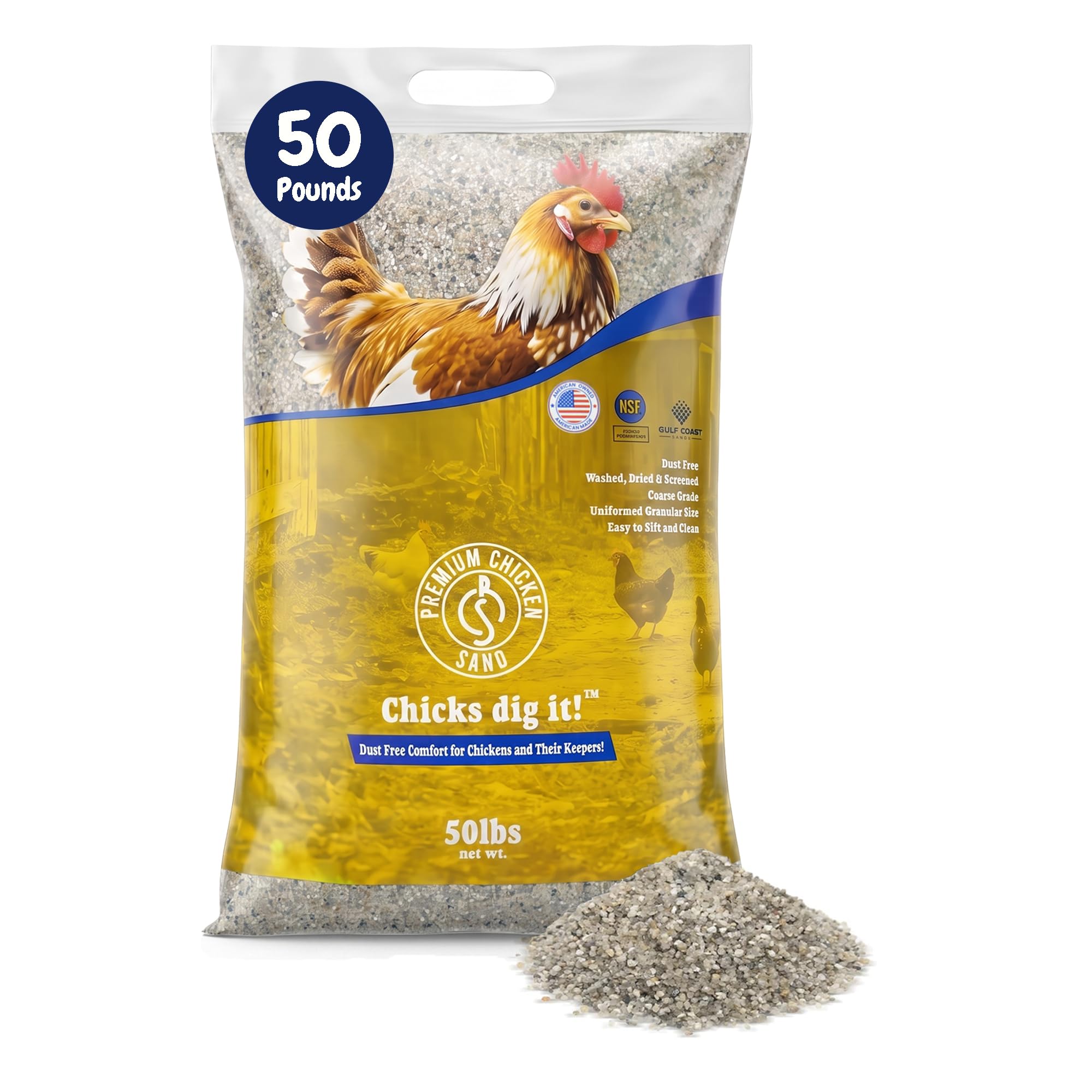
3. Premium Chicken Sand 50 lbs
The dust-free sifter’s dream that turns poop scooping into a litter-box chore.
This 50-pound bag of coarse, washed sand flips the cleaning script entirely. Instead of stripping out soiled bedding, you treat the coop floor like a giant litter box — sift out the droppings, hose down the sand, and let it dry fast. Owners with 20 chickens in a compact coop report zero respiratory irritation., and one sums it up as “no respirator needed” compared to washed construction sand.
Weight is the headline spec here — 50 pounds per bag, which is roughly 7.9x heavier than the 6.3-pound Eaton hemp bag. That weight translates to durability: sand lasts longer than traditional bedding, meaning fewer changes and fewer purchases over a season.
The honest caveat from owners is about shopping strategy, not the product itself. Several note the same quality sand is cheaper at farm supply stores, so it pays to check locally first. Functionally, the absorbency is about drainage and airflow rather than soaking up liquid like hemp does.
Why Owners Stick With It
- Zero dust means clean air for you and birds
- Quick sifting replaces full bedding changes
- Reusable and drains water well
Before You Buy
- Farm supply stores often beat the online price
- Weak on odor absorption on its own
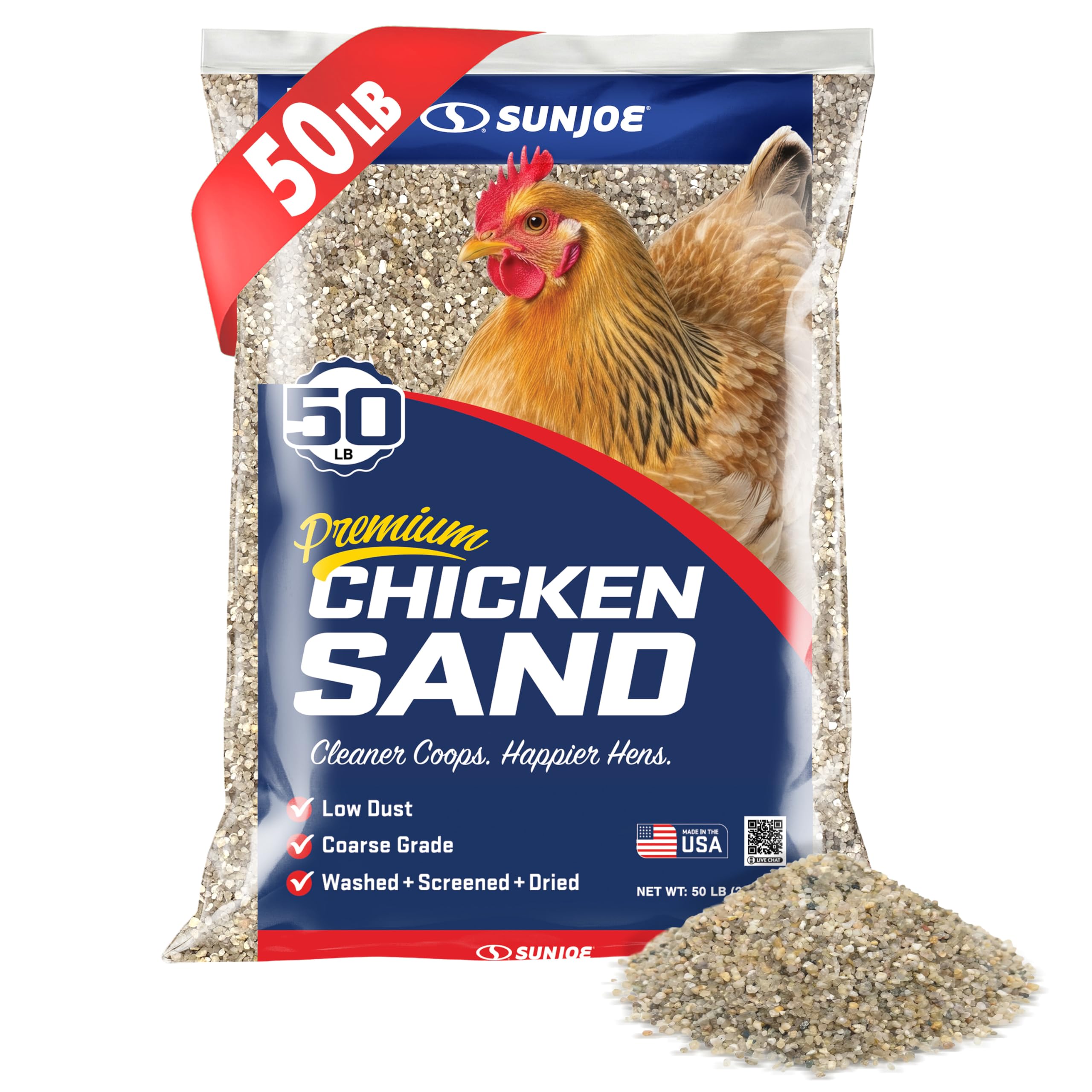
4. Sun Joe Premium Chicken Coop Sand
A graded coarse sand that’s notably easier on hens’ feet than standard grit.
Sun Joe’s 50-pound bag is washed, screened, and dried before it reaches you, so it’s ready to pour straight from the bag. The graded coarse grain is the defining feature — owners say it feels easier on birds’ feet than coarser sand, which matters for hens spending all day standing and scratching.
The practical win is the free-flowing, non-clumping grain. Droppings dry quickly on the surface, so a morning sift under the roosting bars keeps neighborhood-friendly coops smelling neutral. First-time chicken keepers in suburban settings particularly appreciate how fast the smell disappears after the daily rake.
Value is the recurring pushback — several owners describe it as pricey for what it is and suggest comparing against local bulk options. It also won’t serve as a dust-bath material; that’s fine for the floor, just don’t expect double duty there.
Choose it for: a soft-yet-solid coop floor where daily sifting replaces deep cleaning.
Know before you order: the premium online price stings if a local supplier carries the same grade.
5. Standlee Chopped Straw for Animal Bedding

One compressed bag that feels bottomless for filling shelters and coops.
This is the volume play. The 23.8-pound bag arrives compressed, and owners consistently describe it as a “bottomless bag” — one buyer used it to fill five or six cat shelters and still had plenty left. The straw is chopped into roughly 4-inch pieces, so you toss only the soiled bits rather than wrestling whole bales.
It’s heat-treated to kill seeds, which keeps unwanted sprouts out of your coop. The straw stays clean, dry, and soft, with a faint pleasant smell — a far cry from dusty hay bales that hold moisture. Rescue groups and multi-shelter setups love the sheer quantity per dollar.
The catch is that, like all straw, it doesn’t absorb moisture the way hemp does — it repels it. That’s ideal for staying warm and dry in winter, but for heavy ammonia buildup, you’ll want a more absorbent layer underneath.
The Appeal
- Compressed, heat-treated, seed-free straw
- Fills many shelters from one bag
- Soft and clean with minimal dust
The Limit
- Repels moisture instead of absorbing it
- Not designed for aggressive odor control
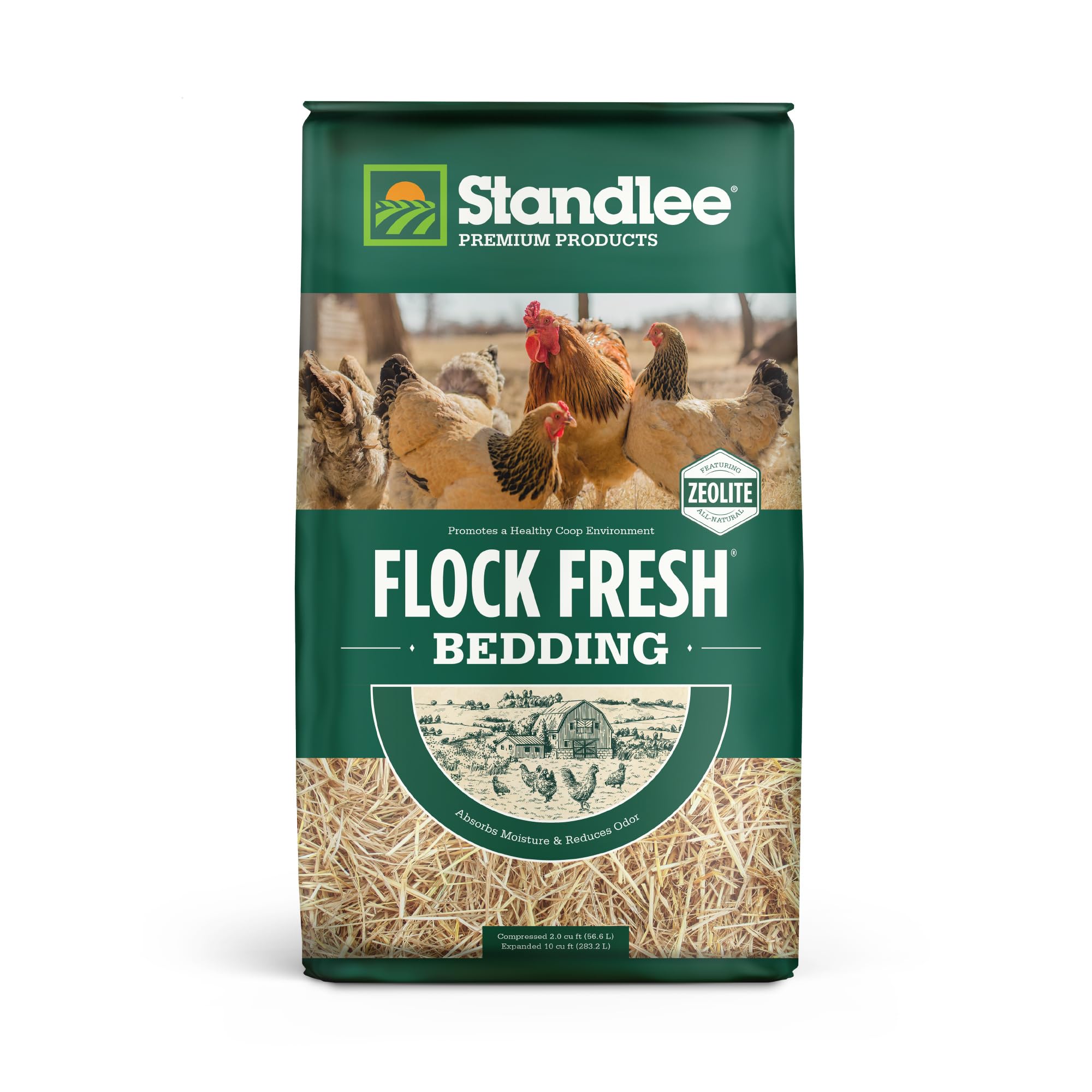
6. Standlee Flock Fresh Premium Poultry Bedding
Straw bedding upgraded with zeolite granules that actively neutralize ammonia.
What sets Flock Fresh apart from plain straw is the added zeolite — a natural mineral that traps harmful compounds and neutralizes odors through ion exchange. That’s a technical way of saying the bedding doesn’t just cover the smell; it chemically defuses the ammonia at the source. Owners in deep-litter systems report the coop stays fresh for long stretches.
The texture earns real affection from the flock — chickens scratch through it happily, fluff it into nests, and the dry, airy feel makes daily cleanup straightforward. Feedback consistently praises the quality and the amount you get for the price, calling it the only bedding some owners will use.
Two honest notes: the advertised 40-lb weight is a point of dispute, with several owners saying it arrives lighter than expected, and some describe it as extremely dusty when poured. If dust sensitivity is your top concern, weigh that against the odor chemistry here.
Pick this if: ammonia smell is your #1 problem and you want straw’s comfort with real odor chemistry.
Be ready for: possible dust when pouring and a bag that may feel lighter than its label.
7. Trendiees Chicken Nesting Pads (12 Pack)
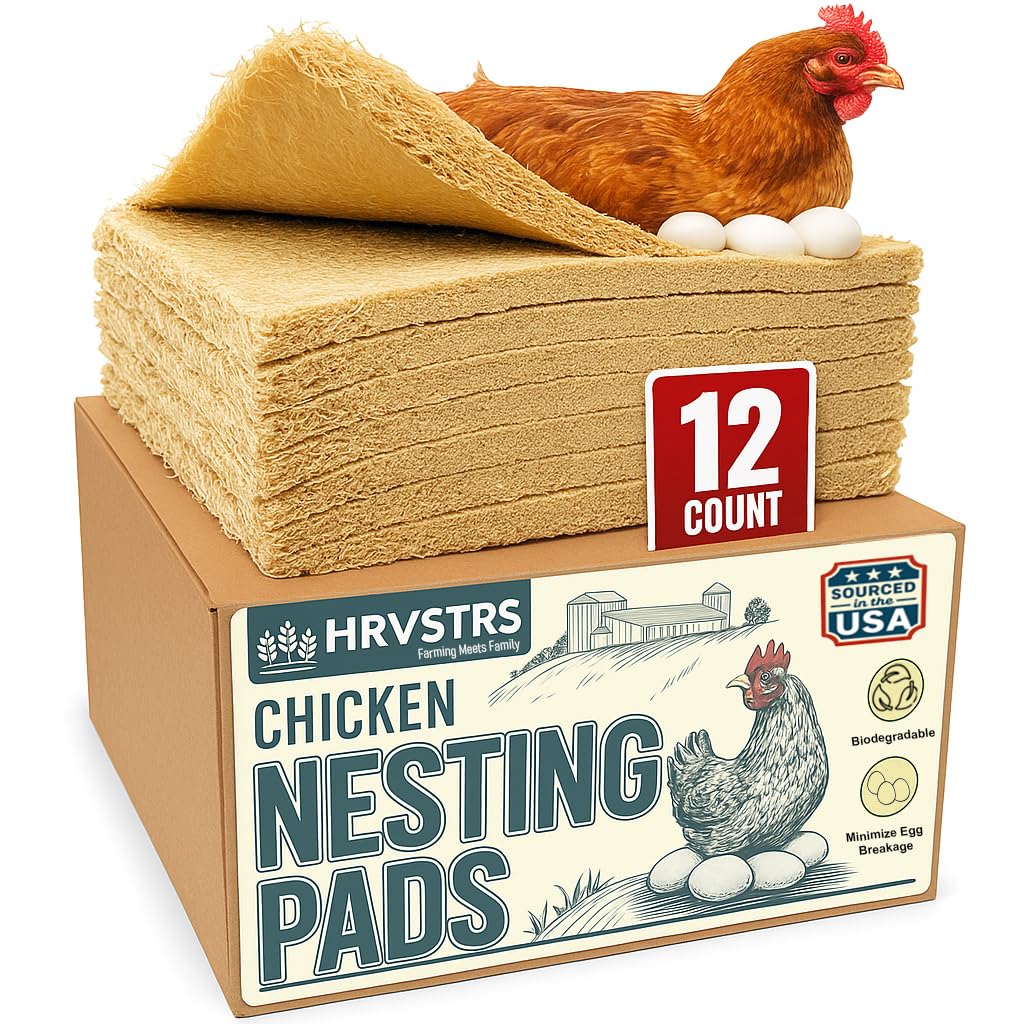
The 30-second nesting box reset that keeps eggs clean without scooping.
If your battle is specifically the nesting box, not the whole floor, these aspen excelsior pads are a different game. Each 13″ x 13″ pad has a paper backing that holds it together — so cleanup is literally lifting out the old pad and dropping in a fresh one. No loose straw, no dust clouds, no scrubbing manure off eggs.
The moisture-wicking aspen fibers let droppings fall through while keeping eggs clean and dry. The dense, springy cushion also prevents eggs from rolling and cracking on hard surfaces — a real money-saver for active hens. One owner with 18 nesting boxes calls this the most hygienic setup, with a single pad lasting up to six months..
The trade-off is durability under aggressive hens. Some customers note chickens tearing pads up within two days, while others get months of use — it depends on how destructive your flock is. The pads also run on the thinner side, so heavy chewers may blow through the 12-pack faster than expected.
This suits: keepers who’d rather lift a pad than rake a floor, especially with many nesting boxes.
Think twice if: your hens shred everything — you might go through the pack quickly.
8. Small Pet Select Hemp HURD Chicken Coop Bedding

Hemp hurd that soaks up 400% of its own weight, keeping wet Michigan winters dry.
This is the heavy hitter for moisture. The hemp hurd claims to absorb up to 400% of its weight in liquid — a number that no other material here approaches. Owners running coops through Michigan winters report superior moisture and odor control, with easier poop cleanup and less frequent full replacements than any other bedding they’ve tried.
The 18-pound bag is compacted but goes a long way, spreading easily across the floor and run. It’s soft, warm, and low-dust, which makes it friendly for birds with sensitive respiratory systems. It breaks down into compost nicely, closing the loop on waste.
The premium price stings—repeat reviewers point out it costs more than prior purchases, and that adds up.. It’s an entry-level-friendly option if you value performance per pound over raw volume.
Worth it for: damp climates or coops where ammonia builds up fast — the absorbency genuinely changes the routine.
Watch out: the price creeps up; owners say to compare prices before reordering.
Understanding the Specs
Absorbency
Absorbency is the single most important spec for a coop floor.. Materials like hemp hurd claim to soak up hundreds of times their own weight, which means the floor stays dry longer and ammonia smell builds slower. Lower-absorbency options like straw and sand rely on drainage and airflow instead of soaking, so they work best in climates or setups where moisture isn’t the main enemy.
Dust Content
Chickens spend hours scratching and dust-bathing, which sends particles into the air you breathe too. Low-dust bedding keeps both you and your flock comfortable, especially in enclosed coops with limited ventilation. If you or your birds have respiratory sensitivities, prioritize “low-dust” or “dust-free” claims over pure absorbency specs.
FAQ
How often should I change bedding for a chicken coop floor?
Is sand or hemp better for a chicken coop floor?
Can I use wheat straw for chicken coop bedding?
How much bedding do I need to cover a coop floor?
What is the deep litter method for chicken coops?
Why does my coop smell like ammonia even with fresh bedding?
Can I compost chicken coop bedding?
Is dusty bedding bad for chickens?
Final Thoughts: The Verdict
For the majority of shoppers, the bedding for chicken coop floor winner is the Eaton Hemp Bedding because it delivers the best balance of absorbency, low dust, and long-lasting odor control for deep-litter coops. If you want the fastest cleanup routine, grab the Premium Chicken Sand and sift droppings daily like a litter box. And for the absolute highest moisture absorption in damp climates, the Small Pet Select Hemp Hurd is the one to reach for — its 400% absorbency claim is the standout spec in this entire lineup.
How We Picked
We do not accept paid placement. Every pick is matched to a real buyer and a real use-case; we do not hands-on test units.
Sources & Methodology
Specifications: manufacturer listings and product documentation. Review insights: verified customer reviews, as of August 2026. Pricing: not shown on this page (it changes often); check the current price via the retailer link.
As an Amazon Associate, Gadgets Feed earns from qualifying purchases. This does not affect which products we feature.