
Outdoor cats face brutal elements — freezing rain, snow drifts, and biting wind. A proper shelter isn’t a luxury, it’s a lifeline. The wrong choice leaves moisture wicking away body heat, while a purpose-built structure traps warmth and keeps the interior bone-dry, turning the fight for survival into a safe overnight retreat.
I’m Min — the co-founder and writer behind Gadgets Feed. I spend hundreds of hours cross-referencing thermal retention values, waterproof ratings, assembly timeframes, and real-world user durability notes from feral and barn cat communities to separate marketing fluff from genuine winter protection. This guide distills that deep research into actionable picks.
After analyzing dozens of models, I’ve identified the specific shelters that consistently keep stray colonies warm and dry. This is the definitive guide to finding the best bedding for feral cats.
How To Choose The Best Bedding For Feral Cats
Selecting the right outdoor cat house goes beyond simple size matching. You must prioritize materials that repel moisture, interior structures that conserve heat, and designs that prevent wind-driven snow from entering. The wrong choice leaves cats exposed to hypothermia, while a well-selected shelter provides a dry, insulated microclimate even during harsh winter storms.
Insulation Type and Thermal Retention
The interior walls should contain a thermal barrier such as aluminium foil lining or honeycomb panels to reflect body heat back inside. Models with basic single-layer Oxford cloth lose warmth rapidly at night. Look for multi-layer construction that traps a dead-air space between the outer shell and the inner lining — this passive insulation is far more effective than thick cushions alone.
Elevation and Moisture Protection
A base raised at least 4 to 5 inches off the ground is critical. It prevents groundwater from seeping through the bottom, blocks frost from wicking moisture into the bed, and allows air circulation underneath to keep the floor dry. Shelters without legs should only be placed on dry porches or inside unheated barns where standing water is not a risk.
Door Design and Escape Routes
Feral cats fear entrapment. A single entrance leaves them vulnerable to predators like raccoons or dogs. Models with a secondary escape hatch let a cat bolt out the back if something blocks the front. Doors should also feature flexible flaps that block wind while allowing easy entry — rigid plastic flaps often freeze stiff and fail in cold weather.
Quick Comparison
On smaller screens, swipe sideways to see the full table.
| Model | Category | Best For | Key Spec | Amazon |
|---|---|---|---|---|
| Pawaboo Heated Cat House | Heated / Insulated | Winter colonies needing active warmth | 95°F-113°F heating pad + aluminium foil walls | Amazon |
| Rest-Eazzzy Outdoor Cat House | Semi-Rigid Tent | Quick assembly and portability | 2.6 lb weight; sandwich design walls | Amazon |
| TSEHOOHOO Stackable Plastic (M) | Insulated Plastic | Durable, weatherproof all-season use | 16.9″x16.1″x15″ interior; stackable design | Amazon |
| TailTastic Elevated Cat House | Elevated Tent | Multi-cat colonies on soil or snow | 24″x15.7″x13″ spacious interior | Amazon |
| DRATO Resin Igloo | Hard-shell Igloo | Permanent farm or garden placement | 5.53 kg heavy-duty resin construction | Amazon |
| TSEHOOHOO Stackable Plastic (L) | Insulated Plastic | Larger barn colonies needing stacking | 20.8″x16.1″x15.1″ interior; stackable | Amazon |
| Texsens Weatherproof Shelter | Multi-Feature Tent | Warm-weather + cold-weather flexibility | 25.19″ wide; includes cooling pad + mesh flap | Amazon |
In‑Depth Reviews
1. Pawaboo Heated Cat House

This shelter bundles an active heating pad that maintains a surface temperature range of 95°F to 113°F — crucial for feral cats that lack a den’s communal body heat. The pad covers the entire floor, distributing warmth evenly rather than creating a single hot spot. Multi-layer waterproof insulation and a raised roof prevent rain and snow pooling on top, while the 5-inch elevated base lifts bedding away from frozen ground moisture.
The interior aluminium foil walls reflect feline body heat back into the cavity, creating a thermal envelope that passive insulation alone cannot match. Two escape doors on opposite sides reduce the risk of entrapment, a frequent concern in predator-heavy barns or gardens. Reflective strips along the edges also help humans locate the shelter at night, preventing accidental kicks or mower hits.
Assembly is straightforward, though the lightweight frame can shift in high winds if not staked down with the included pegs. The door flaps are serviceable but some users replace them with heavier vinyl for superior draft blocking. For the price, the integrated heated floor and multi-layer wall system deliver warmth that unheated tents simply cannot touch during sub-freezing nights.
Why it’s great
- Integrated heating pad warms the entire floor surface evenly
- Aluminium foil walls provide reflective insulation far beyond basic cloth
- Dual escape doors and reflective visibility strips enhance safety
Good to know
- Lightweight frame may require extra staking in exposed windy locations
- Standard door flaps could benefit from upgraded heavy-duty replacements
2. DRATO Outdoor Resin Cat House
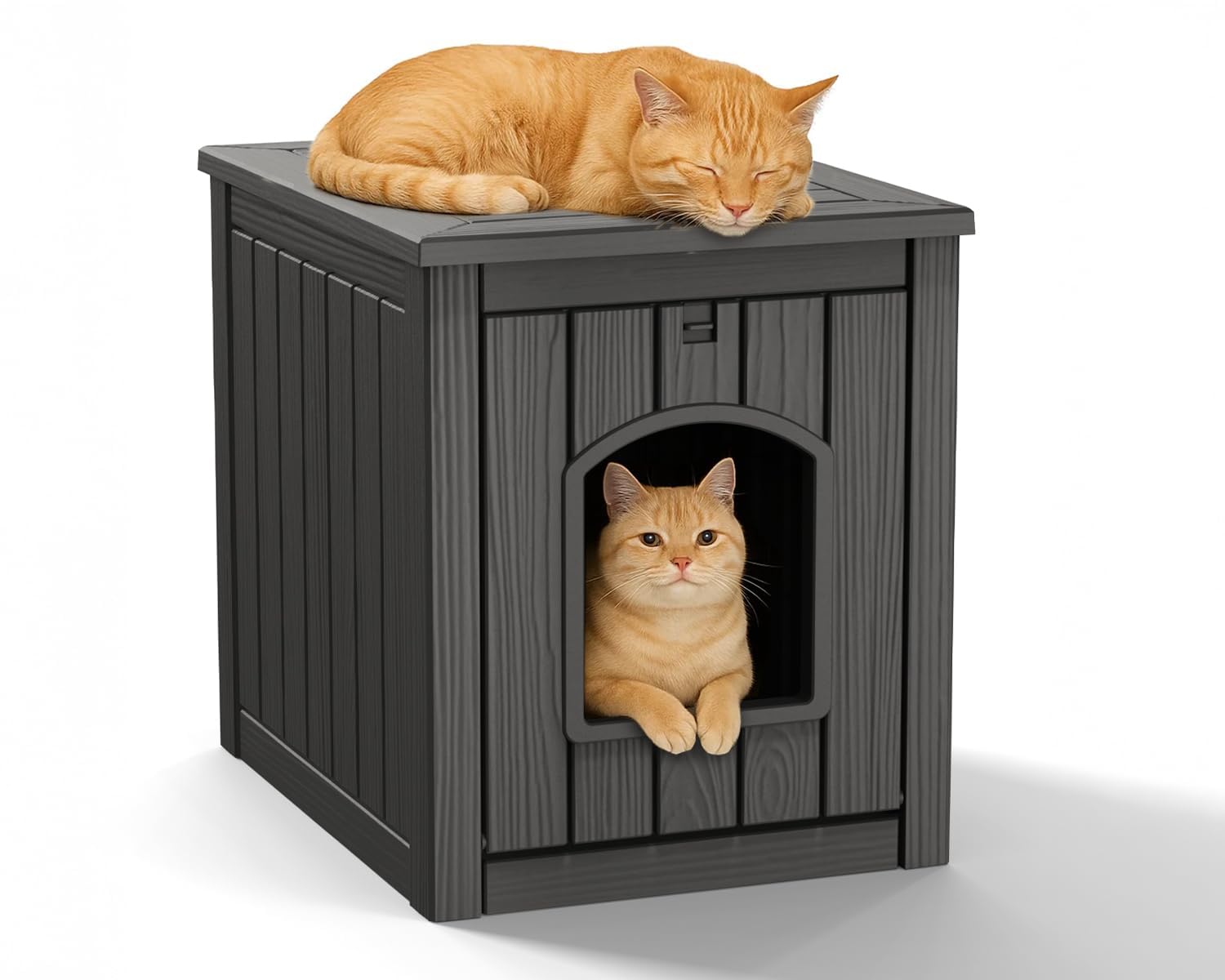
DRATO’s hard-shell igloo is in a different weight class — the 5.53 kg resin structure is heavy enough to stay put in a farmyard storm without staking. The raised front lip acts as a threshold barrier that keeps wind-driven rain from flowing straight into the opening, a design detail that soft-sided tents often miss. Snap-together assembly is completed in roughly five minutes, and the full front panel drops down for quick straw replacement or cleaning.
Customer reports confirm the unit remains 100% waterproof even after sustained heavy rain, and the smooth resin surface is far easier to sanitize than porous Oxford fabric. The spacious interior (18.46 x 23.62 x 21.42 inches) comfortably houses a large tomcat with room for deep straw bedding. Its neutral black design blends into gardens without the bright colors that can attract unwanted human attention.
The primary trade-off is summer heat — the same thick walls that trap winter warmth can become oven-like in direct July sun, so placement in permanent shade is mandatory. Additionally, feral cats accustomed to enclosed dens may initially mistrust the wide, open floor plan before stuffing it with straw. For permanent, maintenance-free outdoor deployment, this resin shelter is as close to a permanent cat house as the category gets.
Why it’s great
- Heavy 5.53 kg resin shell is weatherproof and won’t blow away
- Raised front lip prevents water entry and snowdrift intrusion
- Drop-down front panel makes bedding changes effortless
Good to know
- Thick walls may overheat in direct summer sun without shade
- Some wary cats take days to accept the open interior shape
3. TailTastic Elevated Cat House

TailTastic uses 900-denier Oxford fabric across all four sides, a heavier weave than typical tent-style shelters. The full separate elevated platform lifts the entire structure six inches off the ground, which drastically reduces moisture wicking from wet grass or melting snow. Six included ground stakes anchor the house in strong gusts, a feature notably absent on most budget tent shelters.
The interior measures 24 x 15.7 x 13 inches, giving two adult cats enough room to huddle together for shared warmth — a critical advantage for colony management. The zippered flap entrance provides a tighter seal than magnetic or Velcro closures. Assembly requires no tools and typically takes under five minutes, making it easy to deploy multiple units quickly before a cold snap.
Long-term durability is a split bag: the elevated base is excellent, but the lightweight fabric walls offer less insulation than rigid plastic or multi-layer tents. Some users report the roof slopes slightly, shedding water effectively, but the fabric alone is insufficient for extreme deep-winter temps without adding a separate heat source. It is a stellar three-season shelter and a viable winter base if paired with a heating pad.
Why it’s great
- 900D fabric is noticeably tougher than standard tent materials
- Elevated platform keeps the floor dry in rain and snow
- Zippered flap seals tighter than magnetic curtain closures
Good to know
- Fabric walls lack rigid insulation for severe winter climates
- Roof has no eve overhang to fully divert rain from the entrance
4. Texsens Weatherproof Cat Shelter

Texsens packs a surprising range of smart design features into its mid-range tent. The Velcro-based assembly collapses completely flat, enabling storage or transport without the bulk of rigid frames. Dual door curtains provide choice: a clear plastic flap seals out winter rain, while a mesh panel promotes airflow in summer — a rare seasonal adaptability in this price bracket. The included cooling pad underlines that flexibility, making this a true year-round shelter.
An observation window on the roof lets caretakers peek inside without disturbing the cats, which is helpful for checking on nursing mothers or injured ferals. The elevated plastic base uses six individual legs and can be staked down to resist high wind. Interior honeycomb panels paired with aluminium foil lining create meaningful thermal insulation without the weight of rigid plastic walls.
Assembly is genuinely tool-free, though the plastic leg screws require a screwdriver for a tighter fit. The polyester fabric, while weather-resistant, is not as abrasion-proof as the heavier Oxford cloth or resin shell alternatives. Some users report a strong plastic odor upon opening that requires airing out before deployment. For community cat colonies that need a shelter spanning all four seasons, the Texsens offers unmatched configuration options.
Why it’s great
- Clear plastic and mesh door curtains enable all-season use
- Velcro assembly collapses flat for easy storage and transport
- Roof observation window and cooling pad add caretaker convenience
Good to know
- Polyester fabric is less tear-resistant than 900D Oxford or resin
- Strong initial plastic odor requires airing out before use
5. Rest-Eazzzy Outdoor Cat House
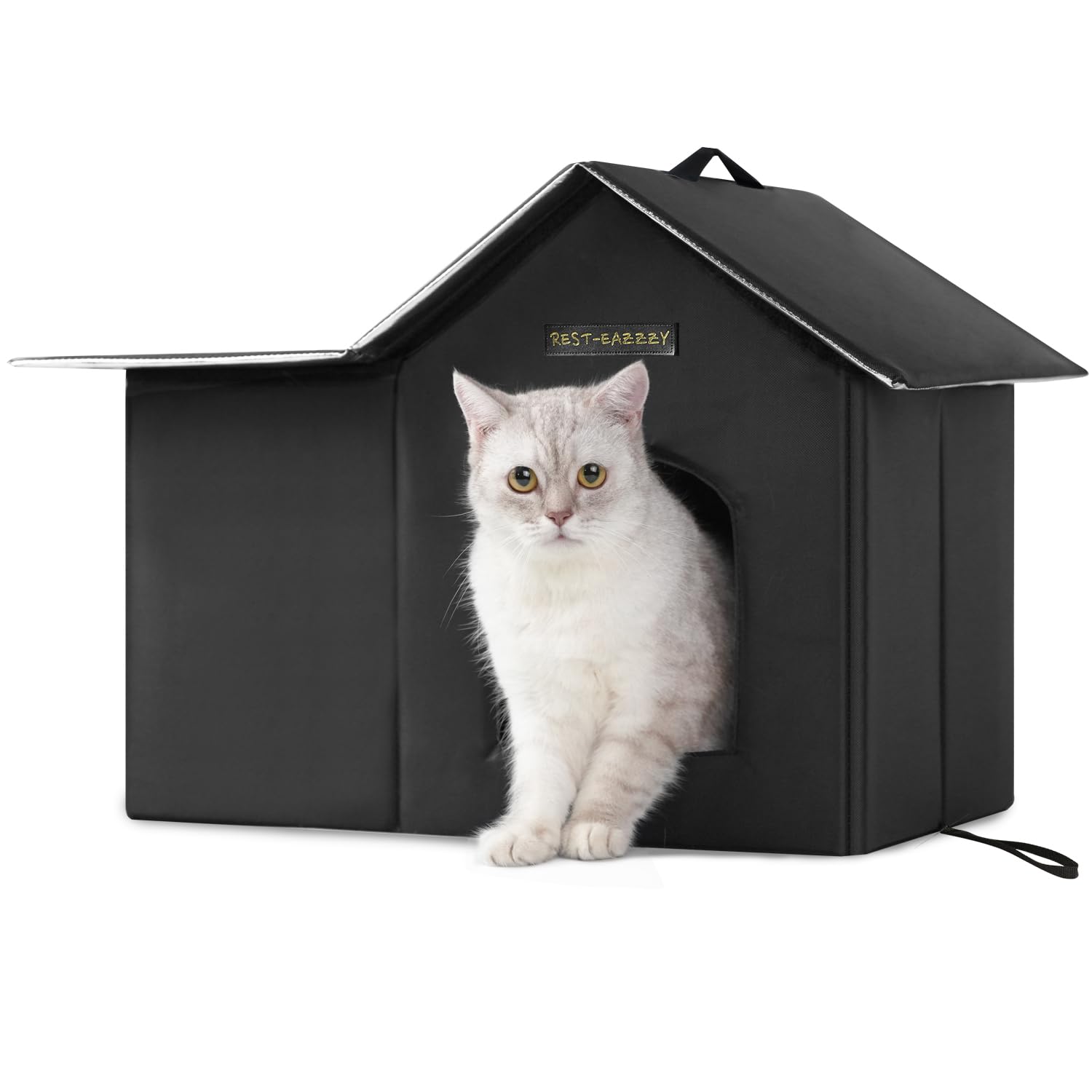
Rest-Eazzzy strips away complexity with a near-instant setup — the semi-rigid tent pops open and holds its shape through a sandwich panel design that marries insulation with structure. A portable carry ring on top makes this ideal for colony caretakers who rotate shelters between feeding stations as seasons change. The 3.37-pound weight also means it can be placed on high ledges or under decks without heavy structural support.
The walls use waterproof Oxford cloth with an internal dead-air layer for passive thermal retention. The included mat adds a mild comfort layer, but most users report replacing it with straw for real winter insulation. The three sizes (13x17x14 is the medium reviewed here) allow pairing to the specific feral population — smaller units retain heat better for single cats, while the larger sizes accommodate pairs.
Weather resistance is adequate for sheltered placements, but direct sun exposure degrades the Oxford fabric faster than thick plastic shelters. The tent also lacks an escape door, making it less predator-safe for backwoods deployments. However, as a lightweight, packable, and rapidly deployable option for quick cold snaps or emergency placement, the Rest-Eazzzy is among the easiest shelters to stage in volume.
Why it’s great
- Extremely fast assembly with a semi-rigid sandwich wall design
- Portable carry handle and 3.37-pound weight for frequent relocation
- Three size options allow precise scaling to cat population
Good to know
- Oxford fabric degrades faster under prolonged direct sun exposure
- No rear escape door reduces predator safety in exposed areas
6. TSEHOOHOO Stackable Plastic House (Medium & Large)

TSEHOOHOO stands out in the plastic shelter category by offering a double-layered thickened plastic shell that is genuinely stackable — two medium units or multiple large units can lock together vertically without wobbling. This is a game-changer for colony caretakers managing multiple cats in a barn or garage, since stacking concentrates heat retention and minimizes floor space consumption. The medium interior (16.9 x 16.1 x 15 inches) fits a single adult cat comfortably, while the large version (20.8 x 16.1 x 15.1 inches) handles two cats side by side.
Three sealed sides block wind effectively, though the single large front opening lacks a weather flap, allowing rain to blow in during angled storms. The included cushion is a thin comforter rather than a thick pad, so most experienced caretakers swap it out for straw or insulated pet mats. Assembly uses plastic screws that can be locked by hand or with a butter knife — averaging about 5 minutes per unit.
The biggest caveat is the open doorway: the plastic house provides excellent top and side weather protection but leaves the entrance level vulnerable to water splashing upward from wet ground. Placing it inside a three-sided windbreak or under an overhang solves this. For barn colonies where multiple cats need individualized sleeping quarters in a compact footprint, the stackable modularity is unmatched at this price tier.
Why it’s great
- Stackable design allows multiple units to be locked vertically in barns
- Double-layered thickened plastic provides genuine structural durability
- Quick 5-minute assembly without specialized tools required
Good to know
- Large front opening lacks a weather flap, allowing rain entry
- Included cushion is thin and should be replaced with straw for winter
7. TSEHOOHOO Stackable Plastic House (Large)
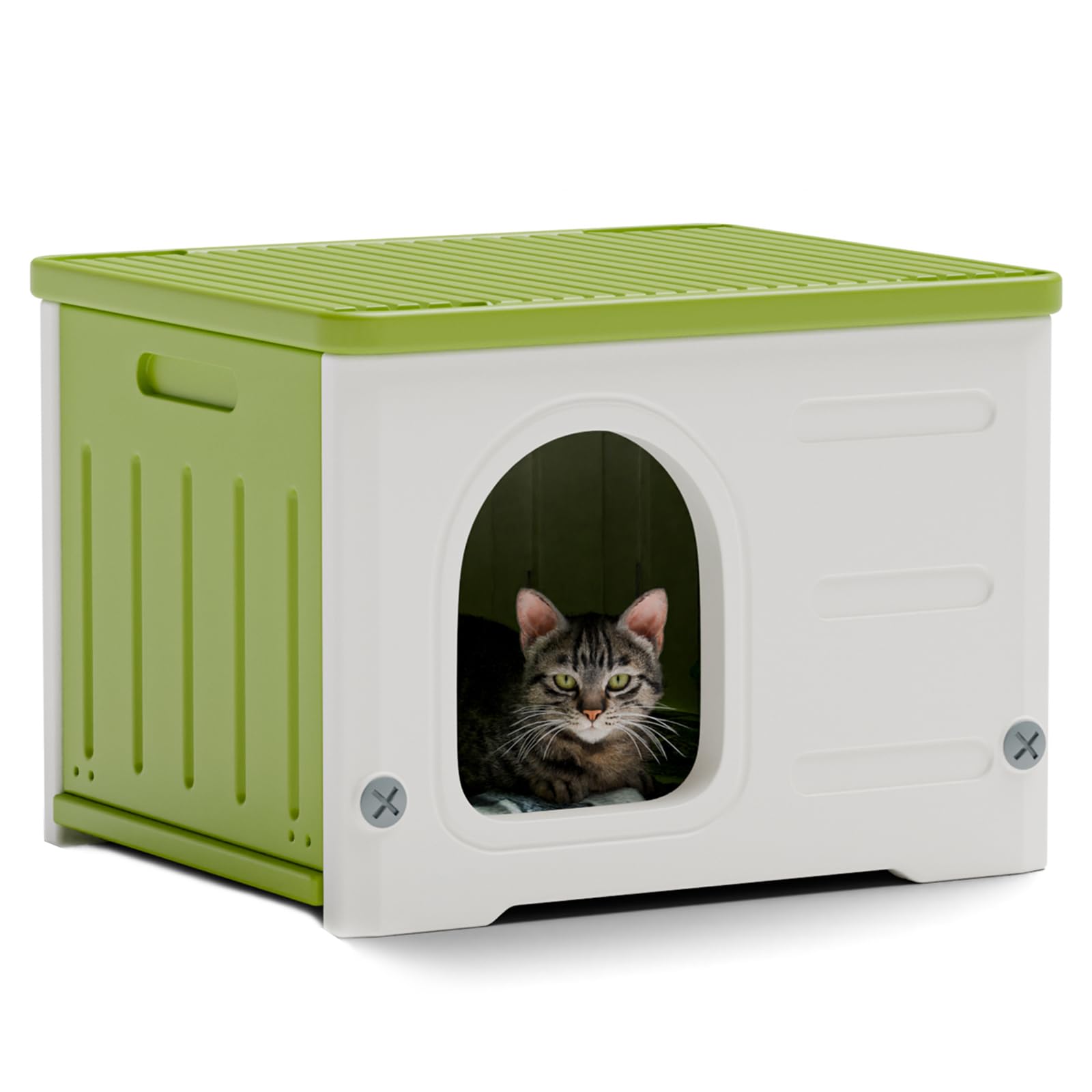
The large variant of the TSEHOOHOO plastic shelter expands the interior to 20.8 x 16.1 x 15.1 inches, giving two adult cats sufficient space to bed down without crowding. The same double-layered plastic shell and stackable feature carry over from the medium version, so colonies that mix sizes can interlock units into a multi-level apartment complex. The plastic construction is comparable to high-quality children’s outdoor toys (thick, UV-stabilized polypropylene) and resists cracking in freezing temperatures far better than wood or pressed board.
Assembly mechanics are identical — plastic screws and snap-together wall panels that align with moderate pressure. The large model also includes a scratch pad on the roof, which acts as an enticement for wary cat residents who may otherwise ignore a shelter the first week. The elevated stand lifts the base off concrete or soil, preventing direct thermal bridging between cold ground and bedding material.
Like the medium version, the wide door opening lacks a barrier against blowing rain, requiring overhead cover for full weatherproofing. The large size also makes the shelter noticeably lighter than it looks, meaning it can be knocked over in high winds if not stabilized. For caretakers needing to house a dozen feral cats across a barn or warehouse setup economically, the large TSEHOOHOO offers the most volume per dollar while retaining stackable flexibility.
Why it’s great
- Spacious 20.8-inch interior fits two adult cats comfortably
- Stackable with medium units for flexible colony housing configurations
- UV-stabilized plastic resists cracking in sub-zero winter temperatures
Good to know
- Wide entrance opening allows rain entry without overhead cover
- Lightweight build can tip in strong winds without added ballast
FAQ
What is the best bedding material inside a feral cat shelter?
Should I use a heating pad in my outdoor cat shelter?
How often should I clean a feral cat shelter?
Final Thoughts: The Verdict
For most users, the best bedding for feral cats winner is the Pawaboo Heated Cat House because it bundles a floor-heating pad with reflective aluminium foil walls at a price point that undercuts competing heated models. If you want a permanent, maintenance-free hard-shell shelter, grab the DRATO Resin Igloo. And for barns that need housing multiple feral cats in a compact footprint, nothing beats the stackable design of the TSEHOOHOO Stackable Plastic House.