
Selecting the right substrate for your rabbit’s habitat is about more than just comfort—the wrong material can lead to respiratory issues, sore hocks, and constant odor battles. Whether you use a litter box or line the entire enclosure, the bedding you choose directly impacts your bunny’s health, your cleaning routine, and the freshness of your home.
I’m Min — the co-founder and writer behind Gadgets Feed. I’ve spent countless hours analyzing every spec sheet and customer review in the small animal bedding category, cross-referencing dust levels, absorbency rates, and material safety to separate the genuinely effective products from the overhyped fillers.
This guide cuts through the noise and identifies the top performers that offer real odor control, minimal dust, and maximum coziness. Discover the very best bedding for rabbits that prioritizes their well-being and your convenience.
How To Choose The Best Bedding For Rabbits
Not every fluffy material is safe for rabbits. Their sensitive respiratory systems and delicate paw pads demand specific standards. The right bedding controls ammonia, stays dry on contact, and won’t release dust particles that cause sneezing or snuffles.
Material Matters: Paper vs. Wood vs. Hemp
Paper bedding offers the softest texture and highest dust control, making it ideal for rabbits with known allergies or respiratory sensitivities. Wood-based options like aspen shavings or pine pellets provide superior absorbency and odor lock, but must be kiln-dried to remove harmful aromatic oils. Hemp bedding delivers a natural, pest-repellent alternative that is highly absorbent and compostable.
Dust Levels and Respiratory Health
Look for bedding labeled “99% dust-free” or “low dust.” Dusty materials, particularly some wood shavings, can trigger upper respiratory infections and chronic sneezing in rabbits. A dust-free claim isn’t marketing fluff—it directly affects your pet’s long-term health. Always check customer feedback for specific mentions of dust or allergy flare-ups.
Absorbency and Odor Control
Rabbits produce concentrated urine with high ammonia levels. Bedding that fails to absorb moisture quickly will create a wet, smelly environment that attracts flies and harms paw health. Pelleted materials (wood or paper) generally absorb more liquid per square inch than loose flake substrates, making them a stronger choice for litter box areas.
Softness and Paw Safety
Coarse or splintery bedding can cause sore hocks—painful lesions on a rabbit’s heels. Soft, fibrous materials allow natural burrowing and nesting behaviors without risking injury. This is especially critical for larger breeds who put more pressure on their hind feet.
Quick Comparison
On smaller screens, swipe sideways to see the full table.
| Model | Category | Best For | Key Spec | Amazon |
|---|---|---|---|---|
| Small Pet Select Pine Pellet | Wood Pellet | Odor Control in Litter Box | 20 lb bag, 99% dust-free | Amazon |
| BUCATSTATE Paper Bedding | Paper | Dust-Free Allergies | 50L, 3x expansion | Amazon |
| Niteangel Aspen Shaving | Wood Shaving | Burrowing & Nesting | 65L White Paper Bedding | Amazon |
| Eaton Hemp Bedding | Hemp | Eco-Friendly Natural | 28L, 2x absorbency | Amazon |
| Kerbl Hemp Rodent Mat | Hemp Mat | Floor Liner Protection | 15.75″ x 9.84″ mat | Amazon |
| Standlee Chopped Straw | Straw | Outdoor & Deep Litter | 23.8 lb, 4″ pieces | Amazon |
| Small Pet Select Sampler Hay | Hay | Pickiest Eaters | 8 lb multi-hay box | Amazon |
In‑Depth Reviews
1. Small Pet Select Pine Pellet Bedding

This 20-pound bag of high-density pine pellets is the most effective option for litter box odor control. The pellets expand when wet to trap ammonia deep inside, preventing smells from escaping into the room. Triple-screened processing ensures the material is 99% dust-free, which is critical for rabbits prone to sneezing.
Owners of heavy-urinating Flemish Giants report that this bedding keeps the pen fresh for days longer than paper alternatives. The pellets do not stick to fur or paws, making spot-cleaning exceptionally fast. Each pellet functions like a tiny sponge, absorbing multiple times its weight in liquid without turning into sticky mush.
The packaging arrives compressed to reduce shipping waste, but the box requires careful handling to avoid spillage. A minor batch inconsistency was reported—an orange tint and detergent-like smell from one shipment, but subsequent orders returned to the expected natural pine scent. Overall, the value and performance are undeniable for focused litter box use.
Why it’s great
- Nearly dust-free and safe for sensitive respiratory systems
- Outstanding ammonia odor lock minimizes daily cage maintenance
- Made from sustainably sourced, kiln-dried domestic pine
Good to know
- Bag packaging can tear during shipping if not handled gently
- Occasional batch variation is possible based on customer reports
2. BUCATSTATE Hamster Bedding 50L
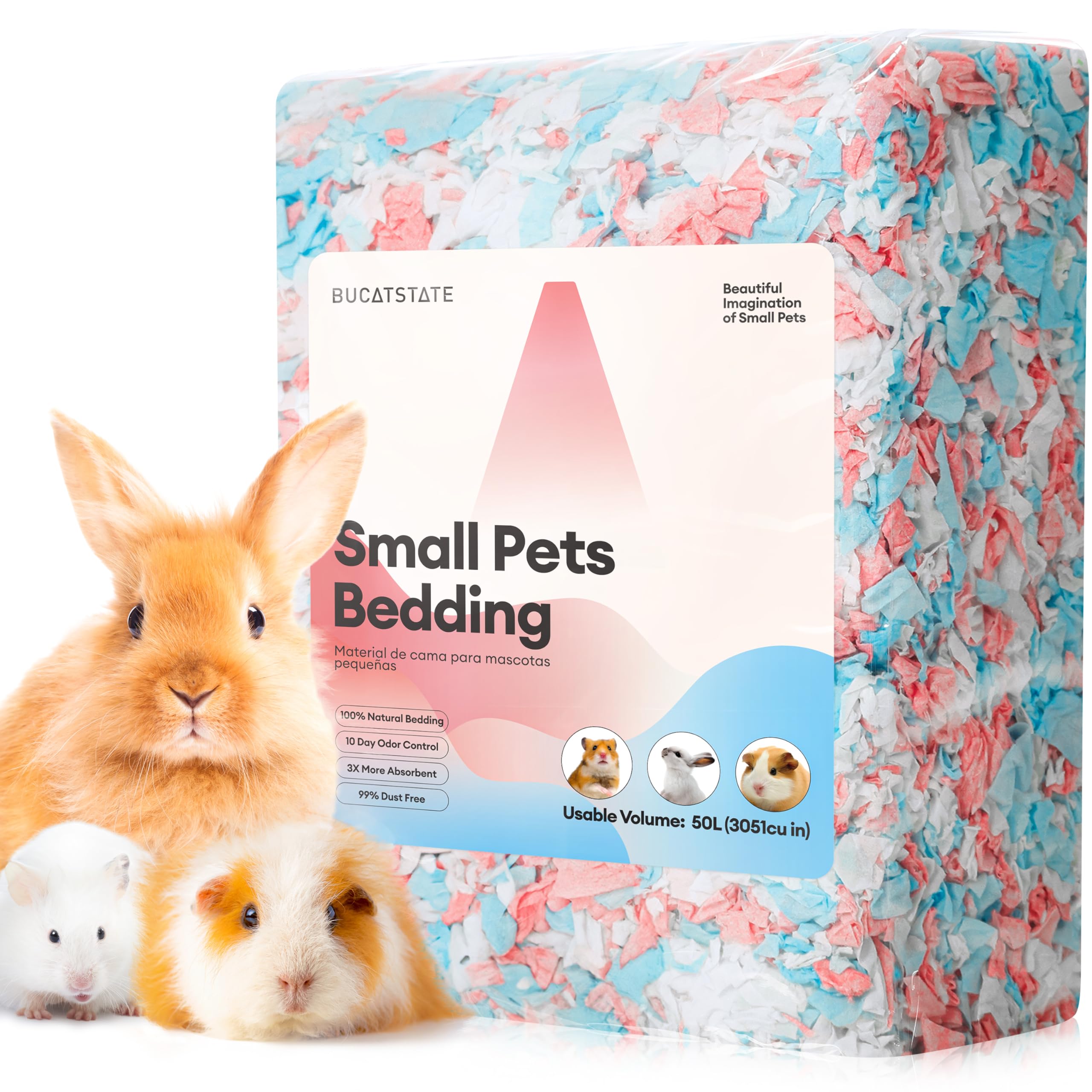
Don’t let the “hamster” label fool you—this 50-liter paper bedding is perfectly sized for a rabbit enclosure. The colorful confetti flakes fluff to roughly three times their compressed volume, spreading thin but covering wide areas. Customer testing confirms the dust claim is real, with no visible powder cloud during handling.
The soft paper texture is gentle on rabbit paws and supports burrowing behavior. Several senior rabbit owners noted their pets stopped sneezing after switching to this bedding from generic wood shavings. The odor control is reliable for a paper product, locking away moisture inside each flake rather than letting it pool at the cage bottom.
One trade-off is that paper bedding compresses under heavy rabbit weight more quickly than pellets, requiring deeper layering in high-traffic zones. The faint plastic smell from the sealed PE bag dissipates within a few hours of airing out. For an entry-level price, you get premium-level dust safety and a genuinely soft sleeping surface.
Why it’s great
- Exceptional dust control with verified 99.9% dust-free performance
- FSC-certified natural paper with no chemical additives
- Compressed bag expands significantly, reducing storage footprint
Good to know
- Paper flakes compress faster than wood pellets in active areas
- Initial plastic smell from vacuum-sealed bag needs brief airing out
3. Niteangel Aspen Shaving Hamster Bedding
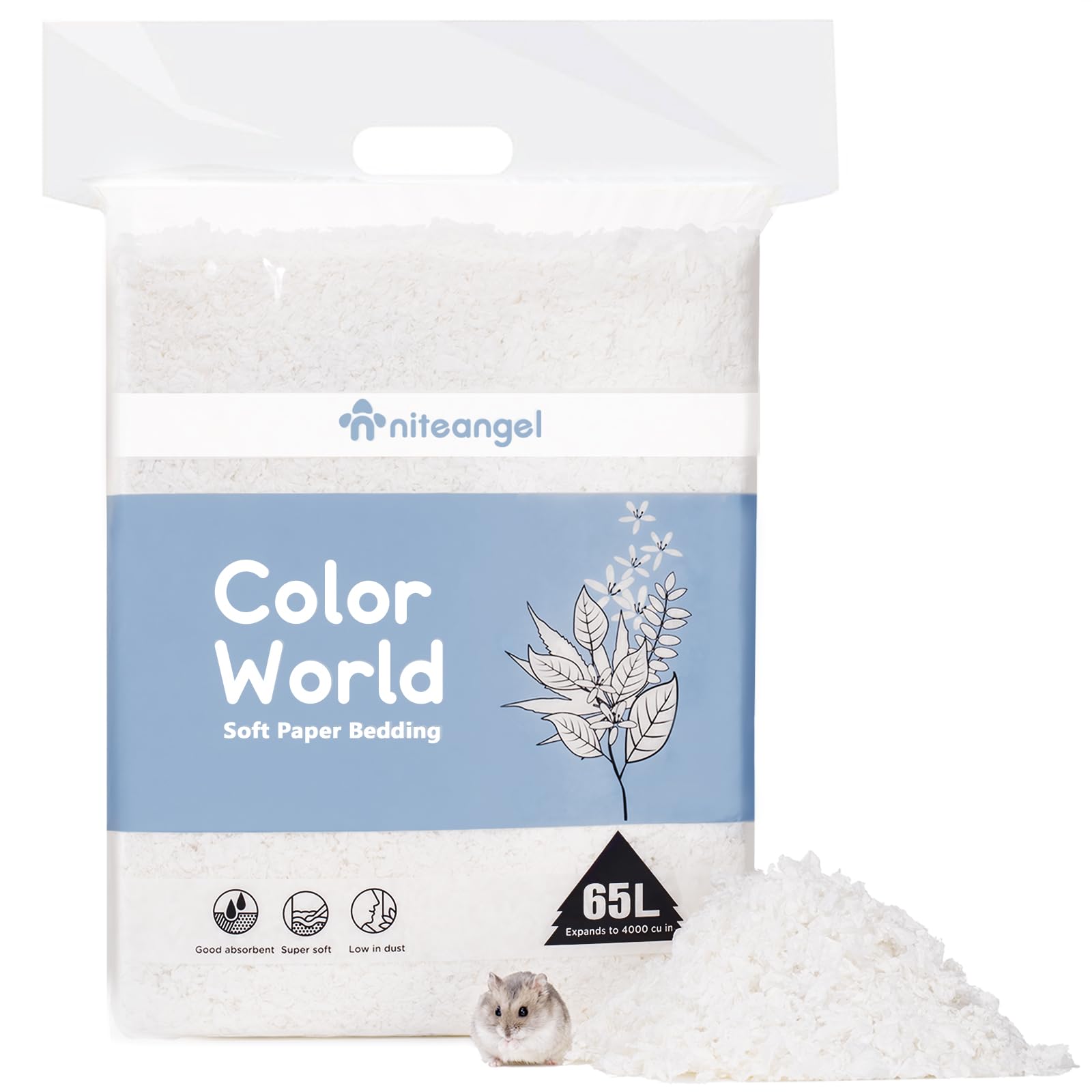
Niteangel’s paper bedding delivers a cloud-like softness that rabbits immediately dig into and rearrange. The fine texture allows for complex tunnel systems that hold their shape, satisfying a rabbit’s natural instinct to excavate. The 65-liter bag is surprisingly large and provides deep coverage for a standard-sized cage.
Odor control is on par with premium brands like Carefresh, with multiple owners reporting zero ammonia smell even after three days between cleanings. The bedding is noticeably fluffier than generic paper substrates, giving rabbits a springy surface that reduces pressure on hocks. No dust was detected during pouring or scooping in controlled home tests.
The main consideration is cost—this is a premium-priced product that works best as a full-cage substrate rather than a litter box filler. Some reviewers noted that bag dimensions vary slightly between production runs, though the weight remains consistent. For owners who prioritize softness and burrow stability above all else, this is the top contender.
Why it’s great
- Extremely soft, fluffy texture encourages natural digging and nesting
- Excellent moisture absorption with no dust release during use
- Large bag volume provides deep coverage for most rabbit habitats
Good to know
- Price per liter is higher than basic paper bedding options
- Best suited for full-cage bedding rather than targeted litter use
4. Eaton Pet and Pasture Hemp Bedding

Eaton’s hemp bedding is grown without pesticides or herbicides, offering a truly chemical-free environment for rabbits. The fibrous hemp flakes absorb roughly twice as much moisture as pine shavings, staying dry on the surface even in high-urine zones. Customers who use the deep litter method report the hemp stays odor-free for months with weekly stirring.
Hypoallergenic properties make this a standout for rabbits with chronic respiratory issues. The earthy scent is mild and natural, without the chemical notes found in some processed wood beddings. The 28-liter bag is lightweight but, as several buyers noted, the volume runs out faster than a standard bag of pine pellets for the same coverage area.
The “farmer owned” sourcing is a genuine differentiator—the company provides transparency about its growing practices. Some owners wish the bag size were larger for the price, as the cost-per-use is higher than traditional wood options. If your rabbit has skin allergies or you prioritize biodegradability, this hemp delivers exactly what it promises.
Why it’s great
- Certified pesticide-free hemp is ideal for sensitive rabbit skin
- Hypoallergenic and low-dust, reducing respiratory irritation risks
- Excellent moisture wicking keeps cage surface noticeably drier
Good to know
- Bag size is smaller than most wood-based competitors
- Price per use is higher compared to pine or aspen alternatives
5. Kerbl Hemp Rodent Mat

This hemp mat is a niche but highly useful product for specific rabbit housing scenarios. The 15.75 x 9.84-inch rectangular pad provides a solid, chew-resistant floor liner that protects cage bottoms from moisture damage. Because the hemp is fully edible and digestible, it poses zero risk if your rabbit nibbles on it—a concern with plastic cage liners.
The mat is naturally pest-repellent, making it a good base layer for outdoor hutches. Its breathable construction prevents condensation buildup underneath, which can cause mold in enclosed environments. The lightweight design means you can easily lift it out for a full rinse without disturbing the entire cage setup.
Durability is the main limitation—multiple users noted the mat degraded and soiled within a week of heavy use, making it more of a disposable liner than a long-term bedding solution. The small footprint limits it to litter pan or corner placement rather than full-floor coverage. For that purpose, it is a functional and eco-friendly accent piece.
Why it’s great
- 100% organic hemp is safe if chewed or ingested by rabbits
- Natural pest repellent properties suit outdoor and hutch use
- Lightweight and easy to remove for quick cleanups
Good to know
- Thin mat degrades quickly under heavy urine and paw traffic
- Size is more suited to litter pans than full-cage coverage
6. Standlee Hay Company Chopped Straw

For budget-conscious owners familiar with the deep litter method, this compressed straw bale offers massive volume at a low cost per pound. The 23.8-pound bag of chopped wheat or barley straw fills multiple cages or serves as winter insulation for outdoor hutches. Straw’s hollow structure traps warmth without retaining moisture, unlike hay, which can mold quickly when damp.
The 4-inch chop length makes it easy to scoop out soiled sections without wasting clean material. Rabbit owners appreciate that the straw is heat-treated to kill weed seeds, preventing unwanted sprouts in the enclosure. The resealable bag is a practical touch for storage between bedding changes.
Dust levels are low relative to alfalfa or generic straw, but not as low as paper or pellet bedding—some sneezing was reported in extremely sensitive rabbits. Recent batches have drawn complaints about reduced fill levels inside the bag. For large multi-cage setups or seasonal outdoor use, the sheer quantity and insulating value are hard to beat.
Why it’s great
- Extremely high volume provides weeks of bedding for multiple rabbits
- Heat-treated to kill seeds, preventing growth inside the cage
- Superior insulation properties for outdoor winter housing
Good to know
- Not as dust-free as paper or pellet alternatives
- Recent packaging may contain less product than earlier versions
7. Small Pet Select Sampler Box Hay

While hay is a dietary staple and not strictly a bedding material, this sampler box earns its spot because many rabbits sleep and nest directly in their hay. The box contains four types—2nd cutting timothy, 3rd cutting timothy, orchard, and oat hay—allowing you to identify which variety your rabbit prefers before committing to a full-size bag.
The freshness is immediately noticeable: the timothy is green and fragrant, not yellow or dusty like mass-market hay. The 8-pound box is packed meticulously, with the hay arranged like matchsticks inside a heavy-duty corrugated box that doubles as a storage dispenser. Owners of notoriously picky rabbits reported that this sampler was the first hay their pet actually devoured consistently.
The significant caveat is the cost—this is the most expensive hay option per pound on this list. For rabbits that eat through hay quickly, the price adds up fast. The box is best used as a discovery tool: find your bunny’s favorite cutting, then order that variety in bulk at a lower unit cost.
Why it’s great
- Exceptional freshness with bright green color and strong hay aroma
- Picky rabbit owners report first-time acceptance of multiple varieties
- Corrugated storage box keeps hay clean and organized
Good to know
- Price-per-pound is high compared to standard hay bales
- More of a dietary sampling tool than a bulk bedding solution
FAQ
Can I use pine shavings from the hardware store for my rabbit?
How often should I change rabbit bedding in a litter box setup?
Final Thoughts: The Verdict
For most users, the best bedding for rabbits winner is the Small Pet Select Pine Pellet Bedding because it delivers unmatched ammonia control in a nearly dust-free, sustainably sourced pellet that keeps litter boxes dry and odorless for days. If you want a cloud-soft, burrow-friendly material, grab the Niteangel Aspen Shaving Bedding. And for eco-conscious owners looking to minimize chemical exposure, nothing beats the Eaton Pet and Pasture Hemp Bedding.