
Our readers keep the lights on and my morning glass full of iced black tea. As an Amazon Associate, I earn from qualifying purchases.
Specs are compiled from manufacturer listings and verified buyer reviews and can change over time — please confirm the key details on the product page before buying.
You want to wake up ready for the trail, not stiff, cold, and cranky. The key choice is between a thick roll-up foam pad that feels like your mattress at home, or a classic waxed canvas shell that wraps around your existing sleep system. Here are the nine strongest options, judged by comfort, pack size, and the terrain they actually suit.
I’m Min — the founder and writer behind Gadgets Feed. This guide is built by comparing the manufacturers’ published specifications and the patterns across verified customer reviews, so you get each pick’s real strengths and trade-offs instead of marketing spin.
You will find the bedroll for camping that matches how you actually sleep, from 3-inch memory foam pads to a cavalry-style canvas classic.
Our Picks at a Glance

How To Choose The Best Bedroll For Camping
The biggest mistake buyers make is picking a bedroll before deciding how they will carry it. A 24-pound foam mattress is pure luxury in the back of an SUV, but it is dead weight on a hiking trail. Match the bedroll to your transport first, then to your sleeping style.
Foam thickness and density
Thickness is the single biggest comfort lever. Pads in the 3-inch to 4-inch range lift your hips and shoulders off the hard ground, which matters most for side sleepers. Density (measured in D, like 30D or 40D) controls how much support the foam gives; higher density foam holds your weight without bottoming out to the dirt.
The R-value question
R-value (a heat-retention rating) tells you how well the pad insulates you from cold ground. A pad with a high R-value of 9.5 is built for four-season use, keeping the cold from seeping up through the floor of your tent. Lower-rated pads are fine for summer trips where warmth is not the enemy.
Roll-up foam vs. waxed canvas shell
There are two very different bedroll philosophies. Roll-up foam pads are self-contained mattresses you sleep directly on. Waxed canvas bedrolls are protective shells you slide a sleeping bag or blankets into — they keep dew and frost off your bedding but do not add cushioning on their own. Choose the style that matches the gear you already own.
Quick Comparison
| Model | Best For | Thickness | Dimensions | Weight | Amazon |
|---|---|---|---|---|---|
| HomeMate Memory Foam Pad★ Best Overall | Cot and car camping comfort | 3 inches | 72″L x 24″W | 7.8 lbs | Amazon |
| Lxotvae Memory Foam PadSoftest Touch | Soft velvet sleep on a cot | 3 inches | 72″L x 24″W | 4 kg | Amazon |
| Wevelel Memory Sleeping PadWinter Warrior | Winter insulation and support | 3.1 inches | 77″L x 26.98″W | 6.59 lbs | Amazon |
| CYMULA Memory Foam Pad | Budget-friendly ground comfort | 3 inches | 72″L x 24″W | 6.4 lbs | Amazon |
| WP West Path Waxed Canvas Bedroll | Bushcraft and picnic versatility | 0.25 inches | 68″L x 48″W | — | Amazon |
| Hikenture Double Self-Inflating Pad | Two-person car camping | 4 inches | 80″L x 52″W | — | Amazon |
| Gaialoop Memory Foam Pad | Side sleepers wanting plush depth | 4 inches | 75″L x 54″W | 24 lbs | Amazon |
| TrailMax Cavalry Bedroll | Classic canvas winter protection | — | 84″L x 33″W | 5 lbs | Amazon |
| 1844 Helko Werk Cowboy Bedroll | Heritage-grade wet-weather camping | — | 80″L x 40″W | 7 lbs | Amazon |
In‑Depth Reviews
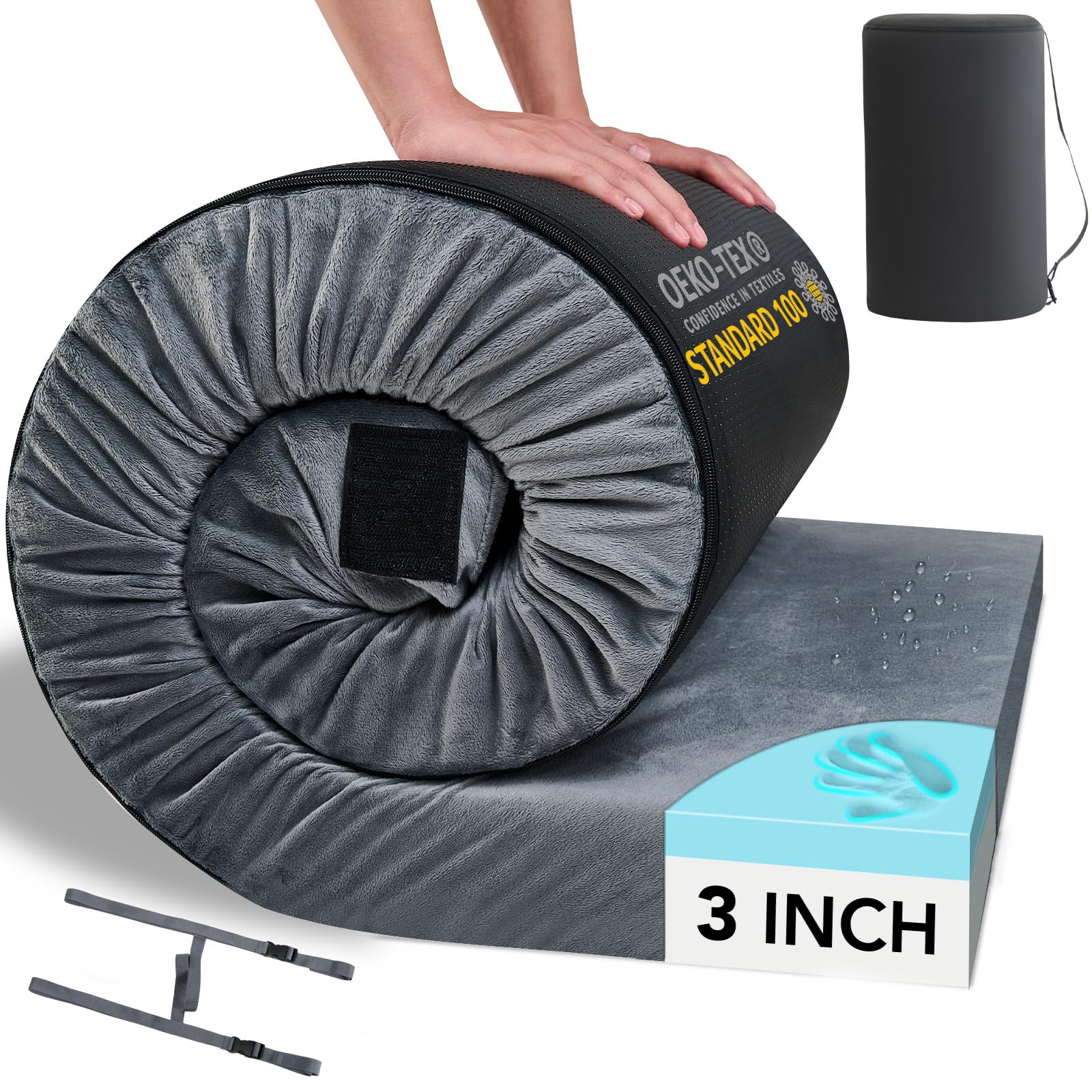
1. HomeMate Memory Foam Camping Mattress Pad
Our pick — 4.5★ from 700+ verified ratings; the strongest balance of quality and price.
A 3-inch memory foam pad that turns a hard cot or tent floor into a bed-like sleep.
The 3-inch memory foam and high-density support foam combo absorbs ground shock, preventing the aches a thin pad leaves behind. Over 120 owners praise its comfort, noting it prevents the hip and side pain that ruins a camping morning.
Portability is handled with adjustable straps and a complimentary storage bag, so rolling it up after a trip takes seconds. The cover zips off and is machine-washable, and the waterproof bottom means damp tent floors will not soak through. It comes in multiple sizes, from a 63″L x 26″W kid version to an 80″L x 38″W twin XL, so you can match it to your cot or bed.
The honest trade-off is bulk: rolled up, it is a sizable cylinder, and buyers report it takes real space in the car. Owners suggest using a vacuum seal bag and paddle board pump to shrink it down for transport — a clever workaround if space is tight. It weighs 7.8 pounds, light enough for car camping but not for a long hike.
What Sleepers Love
- 3-inch memory foam plus high-density support layer
- Removable, washable cover and waterproof bottom
- Velcro connectors join multiple pads for group camping
- Storage bag and straps make packing quick
The Space Squeeze
- Rolled size is bulky and eats cargo space
- Needs 72 hours to fully expand after unpacking
Reach for it if: you sleep on a cot or in a car and want your mattress at home to follow you outdoors.
Think twice if: you are hiking it in — at 7.8 pounds and a big roll, this is strictly vehicle camping gear.
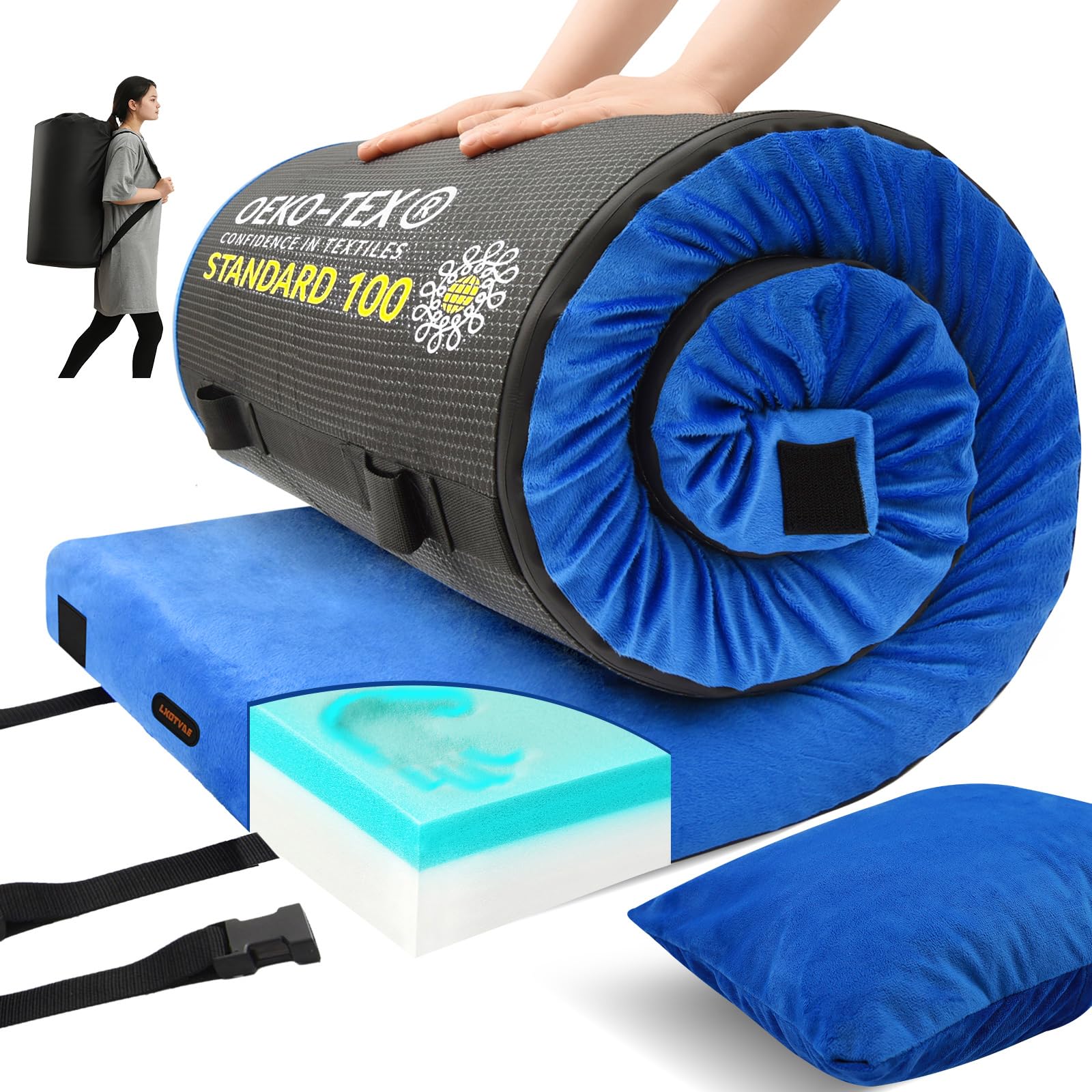
2. Lxotvae Memory Foam Camping Mattress Pad
The double-layer velvet pad that feels plush enough for a guest bedroom, not just a tent.
The defining build here is a two-layer design: gel memory foam on top that molds to your body, with 30D high-density foam underneath for support. On a cot, owners describe it as super comfortable — “nice and thick and soft” — and the velvet cover adds a luxury feel most camping pads skip entirely.
Protection is layered in rather than bolted on. A TPU waterproof membrane sits at both the top and bottom to guard the foam from rain, while a honeycomb-shaped bottom resists slipping on slick surfaces. The whole thing carries OEKO-TEX certification (an independent label for textiles tested for harmful substances), so the materials are verified safe for skin contact.
The catch is the same one every thick foam pad shares: it is bulky when rolled and too large for hiking. One owner swapped out their yoga mat and two self-inflating pads for this single mat, calling the space trade-off acceptable for the comfort gain. Plan on giving it up to 48 hours to expand back to its full 3-inch shape before your first night.
Why It Wins Fans
- Gel memory foam over 30D support foam
- TPU waterproof membrane top and bottom
- Detachable, washable velvet cover
- Honeycomb non-slip bottom stays put on cots
The Honest Limits
- Rolled size rivals a laundry basket
- Built-in pillow can feel lumpy to some
- Length runs under 70 inches for taller sleepers
Best for: cot campers and guest-room hosts who want a washable, skin-safe pad with a soft touch.
Not for: anyone over 6 feet or anyone carrying gear on foot — the roll is just too big.
3. Wevelel Memory Sleeping Pad
A self-inflating pad with a 9.5 R-value that keeps cold ground from stealing your warmth.
This is the pick for cold-weather campers, thanks to an R-value of 9.5 (a heat-retention rating measured by the ASTM industry test) that insulates you from the frozen earth better than most pads on the market. The 50D memory foam is denser than the 19D foam in typical camping pads, so it spreads your weight evenly and reduces pressure at your hips and shoulders. It supports up to 800 pounds, tested under that static load for 24 hours with no air leakage.
Setup is genuinely fast: open three valves, let it self-expand for 10 seconds, then step on the front air inlet for about 20 seconds and it is full. Owners say inflation takes well under 5 minutes and that it holds air throughout the night. The 50D stretch knit surface is quiet, breathable, and sweat-absorbing, so you do not get the crinkle noise or sticky feel of cheaper nylon pads.
At 77″L x 26.98″W x 3.1″Th inflated, it is wider and thicker than most single pads, and it rolls into a shoulder storage bag for transport. The trade-off is repacking: squeezing it back into the bag after deflating can be tricky, a familiar gripe with camping gear. It is also heavier than a pure air pad, making it a car-camping companion rather than a backpacking essential.
Cold-ground killer: the 9.5 R-value plus 3.1-inch thickness means winter tent floors no longer feel like ice sheets.
Quick setup, slow pack-up: 30 seconds to fill, but getting it back in the bag takes patience.
Choose it for: four-season car camping and road trips where warmth is the priority.
Skip it for: ultralight hiking — the built-in comfort costs you pack space and weight.
4. CYMULA Memory Foam Camping Mattress Pad
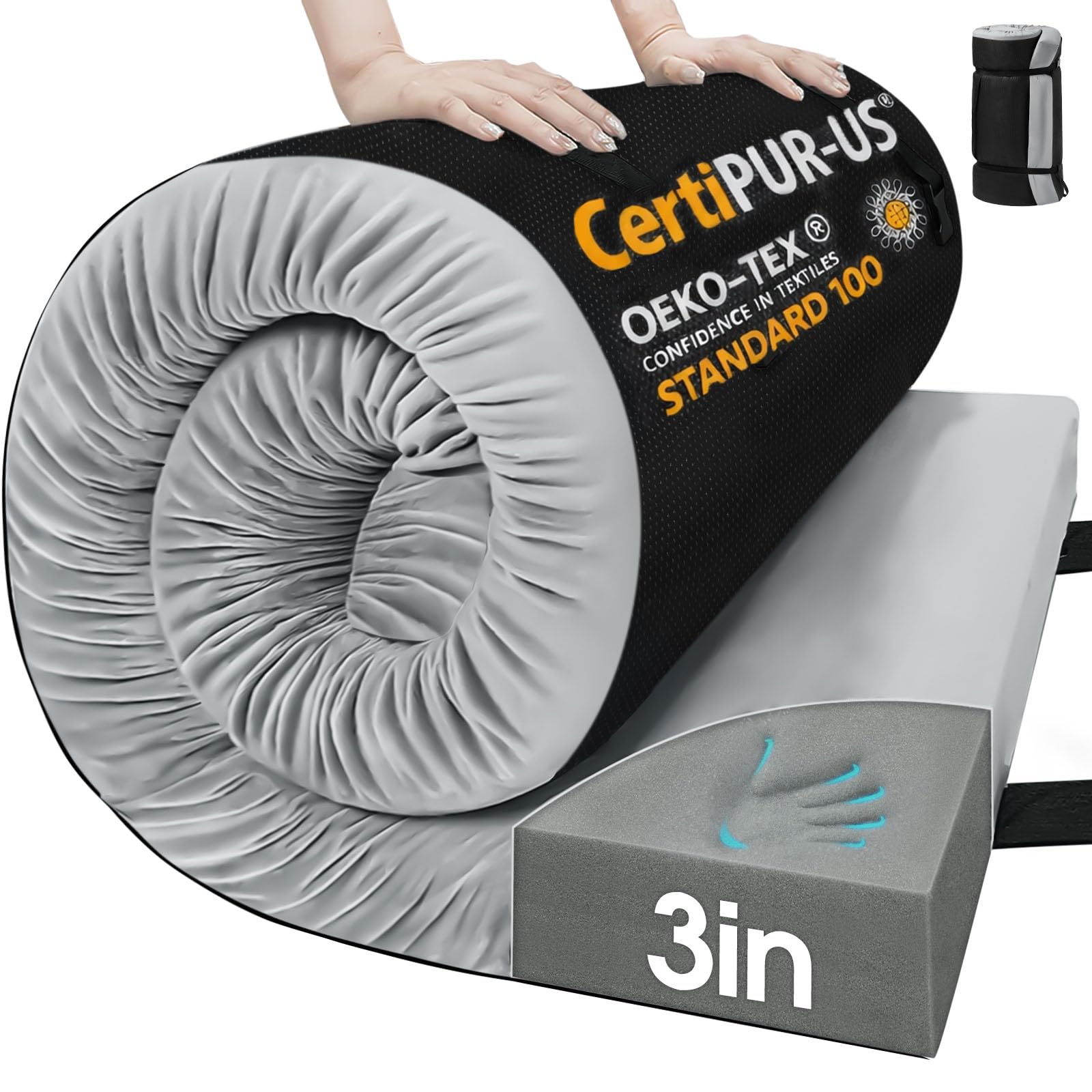
The value pick that pairs carbon fiber memory foam with a washable cover at a budget price.
More than 150 owners praise its comfort — the highest comfort count in this lineup. The carbon fiber high-elasticity memory foam relieves muscle pressure on hard floors, and the brand says it also absorbs sponge odor. It is a favorite for fall and winter camping, with owners calling it the best camping sleep they have had on a cot.
The cover zips off and is machine washable, which keeps the pad fresh after muddy trips. Rubberized dots on the bottom grip the cot so the pad does not slide around as you shift at night. It also includes straps that secure the mattress to camping beds, cribs, or sofas, plus a belt for rolling it up into a tidy storage bundle.
Two fair warnings from owners: a strong initial odor needs a couple of days of airing out, and the included straps can feel inconsistent — one arrived pre-attached and one loose. At 6.4 pounds and 3 inches thick, it is reasonably portable for a foam pad, though like all foam it rolls up bulky. For the money, it delivers a remarkably home-like sleep surface.
The smart-buy read: you are paying less for near-identical comfort to pricier foam pads, minus the premium fabric and straps.
First-use note: let it air out for 48 hours and upgrade the straps if they bother you.
Grab it if: you want a comfortable 3-inch pad without spending premium money.
Look elsewhere if: you need a pad ready for instant use straight from the start — the odor needs airing time.
5. WP West Path Waxed Canvas Camping Blanket & Bedroll

A do-everything waxed canvas blanket that doubles as a bedroll, ground cloth, and picnic mat.
This is the most versatile piece in the lineup because it is not really a mattress at all. The 68″L x 48″W build pairs a 100% cotton soft top with a 100% waxed canvas tarp backing that repels water and dew, so you stay dry on wet grass, snow, or bare ground. Lay it flat under a sleeping bag as a bushcraft ground cloth, use it on its own at a campfire, or fold it into a bedroll for the woods.
Quality is the aspect owners praise most, and the construction is genuinely heavy-duty — no synthetics, just all-natural cotton and wax oil. Owners mention it will last for years and that it works beautifully for everything from baby play mats to rafting trips. The olive color with blue and yellow trim gets consistent compliments for looking sharp in camp.
The honest catch is weight: owners describe it as hefty, and after a long day it feels heavy to carry. It is also not fully waterproof on its own — water rolls off the waxed backing, but a soak can dampen it. The fix is simple: reapply canvas wax with a hair dryer to restore water repellency after heavy use. At 0.25 inches thick, it smooths out rocks but does not cushion like a 3-inch foam pad.
Swiss-army canvas: bedroll, picnic blanket, beach mat, ground cloth, and tent floor protector in one.
Know before you buy: it protects you from damp ground but adds no foam cushioning — pair it with a sleeping pad.
Ideal for: bushcrafters and multi-use minimalists who want one natural-fiber piece for many outdoor jobs.
Not for: side sleepers who need real cushioning — this is a protective layer, not a mattress.
6. Hikenture Extra Thick Double Self Inflating Sleeping Pad

A spacious two-person self-inflating pad with a 9.5 R-value for four-season car camping.
This is the answer for couples who keep fighting over who gets the comfy side of a single pad. At 80″L x 52″W x 4″Th, it is dramatically wider and longer than standard camping mats, giving two sleepers room to stretch out. The 4-inch memory foam and air combo supports side, back, and stomach sleepers alike, and the polyester surface stays quiet when you roll over — no crinkle noise at 2 a.m.
Inflation is where this pad shines. The patented 2-way valve lets it self-inflate in a few minutes, then you add a few bags of air with the included pump sack to dial in your firmness. A flip of the valve stops air from sneaking back in during deflation, making pack-up noticeably easier. Customers note it holds air for two full nights, needing only a small top-up on the third.
Compared to the Wevelel above, this pad trades a little ease of solo setup for double the sleeping area and the same 9.5 R-value warmth. The trade-off is pack size: it folds small when fully deflated, but it is still bulky and heavy — owners admit it is too heavy for backpacking. For car camping, road trips, or a spare guest bed at home, it is a standout.
The Couple-Friendly Stuff
- 80″ x 52″ fits two adults comfortably
- 4-inch thick memory foam and air combo
- Patented 2-way valve for easy inflation and deflation
- 9.5 R-value suits all four seasons
The Bulk Factor
- Too heavy for backpacking
- Needs car space for transport
- Pump sack required for final firmness
Pick this for: couples and tall sleepers doing car, SUV, or RV camping who refuse to sacrifice mattress comfort.
Pass if: you camp solo or hike to your site — the size and weight are overkill for one person on foot.
7. Gaialoop Extra Thick 4 Inch Memory Foam Camping Mattress
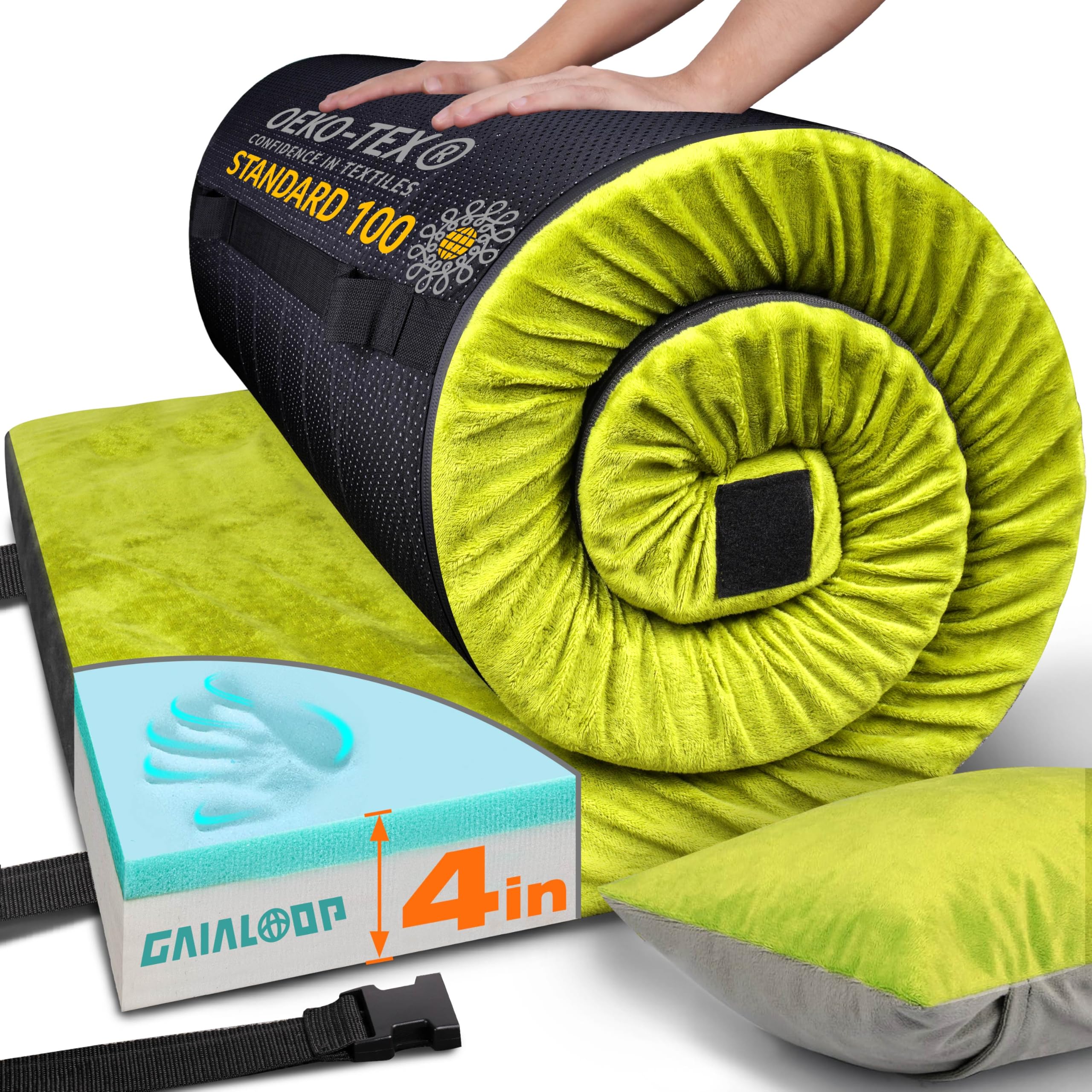
A 4-inch, 24-pound slab of memory foam that makes sleeping on rocks feel optional.
This is the thickest pure foam pad in the lineup, and the 4-inch profile is the whole story. The scientific combo of a 30D support foam base with a 40D memory foam top fully supports your body even when you side sleep or end up on uneven ground. The materials carry OEKO-TEX certification (an independent label verifying textiles are free of harmful substances) and are odor-free, which owners confirm.
The velvet-like plush cover is removable and washable, with a waterproof coating on the inside of both top and bottom covers protecting the foam from rain, dew, and wet ground. At 75″L x 54″W, it is a true full-size sleeping surface, and it comes with a sturdy carrying case and straps for rolling. Owners who used it for nearly a year report no sagging — durability that justifies the premium price.
The unavoidable reality is weight: at 24 pounds, this is a serious piece of equipment. The full-size version is genuinely hard to roll up alone — owners say it can take two people and a knee to compress it, and one had a zipper break on the stuff sack in the second use. This is a car-camping or home-guest mattress through and through, not a backpacking tool.
Why It’s Worth It
- 4-inch depth with 30D support and 40D memory foam
- Waterproof-coated, washable plush cover
- OEKO-TEX certified and odor-free
- Full 75″ x 54″ sleeping surface
Where It Struggles
- 24 pounds — the heaviest pick here
- Hard to roll up solo; stuff sack zipper can fail
- Huge storage footprint when rolled
Best for: side sleepers and anyone who wants true mattress plushness in a car, RV, or guest room.
Not for: solo campers or anyone packing on foot — the weight and bulk demand a vehicle.
8. TrailMax Canvas Cavalry-Style Cowboy Bedroll

The classic cavalry bedroll — a durable canvas shell that keeps dew and frost off your sleeping bag.
This is what a traditional bedroll actually is: a protective outer shell you slide your sleeping bag into, rather than a mattress. The shell is built from 12 oz cotton duck preshrunk canvas — notably lighter than the 16 oz canvas on the Helko below — with a 100% cotton flannel liner inside. The canvas repels dew and frost so you do not wake up wet and cold, yet it stays breathable enough that your body’s moisture can escape as you sleep. Your sleeping bag is not included.
At 33″W x 84″L with an 8-inch gusset (a fabric panel that adds depth) all the way around and a 36-inch head flap, it is oversized by design. Heavy-duty zippers run down each side, and the flannel lining includes a pocket to hold a sleeping pad. Owners use it with wool blankets, quilts, and even 0-degree bags, and it weighs about 5 pounds on its own. It rolls up with everything inside and straps down easily for motorcycle trips.
Know what you are buying: this is a cavalry bedroll for bushcraft and dispersed car camping, not a backpacking shelter. The full 84-inch length and canvas construction make a large roll when packed. Owners also note you need a rectangular sleeping pad — a mummy-shaped pad leaves cold gaps where the flannel pocket does not cover. Zippers are sturdy and work well even with thick bedding inside.
Heritage build: 12 oz preshrunk canvas and flannel that shrugs off frost and lets moisture escape.
The fine print: pair it with a rectangular pad and a warm bag — this shell protects, it does not cushion.
Reach for it if: you want a time-tested, breathable canvas shell for winter or cowboy-style camping.
Look elsewhere if: you want all-in-one cushioning — you will need to bring your own pad and bag.
9. 1844 Helko Werk Waxed Canvas Cowboy Bedroll

A hand-finished American-made bedroll in heavy 16 oz waxed canvas built to outlive you.
This is the investment-grade end of the spectrum. The 16 oz waxed cotton canvas is the heaviest material in this guide, treated with a beeswax finish that soaks into the fibers for serious water repellency. Owners describe it plainly: “you could put it on, stand under a waterfall and probably stay dry.” It is made in the USA, and the rain protection is the aspect buyers praise most.
The details are where the heritage shows. Handmade full-grain leather straps are removable, adjustable, and long enough to secure a heavy blanket or rolled bedding inside. Full-length heavy-duty zippers run down both sides for easy entry and exit, and they resist jamming. At 80″L x 40″W, it fits a person up to 6’2″ and rolls up to roughly half the size of other foldable bedrolls, making it easier to carry.
This bedroll is not for everyone, and the owners say so themselves — it is heavy, very stiff, and commands a premium price. One Alaskan skiff camper called it “worth every cent,” wishing they had found it 45 years earlier. The stiffness softens with use, and the canvas can be re-coated with wax or beeswax whenever it needs refreshing. It is a buy-it-for-life piece for serious outdoorsmen, not a casual weekend accessory.
The heirloom argument: 16 oz beeswaxed canvas, full-grain leather, and US craftsmanship that owners expect to outlast them.
The honest cost: heavy, stiff at first, and priced like the premium tool it is — think short hikes and vehicle camps.
Choose this for: wet-weather campers and collectors who want a rugged, repairable bedroll they can pass down.
Skip it for: backpacking and budget-first buyers — the weight and price target a specific, serious user.
Understanding the Specs
R-Value (Insulation Rating)
R-value measures how well a pad blocks heat loss to the cold ground. A higher number means better insulation — a pad with a 9.5 R-value is built for four-season use and keeps winter tent floors from feeling like ice. Lower values are fine for summer trips where ground warmth is less of a concern.
Foam Density (30D, 40D, 50D)
Foam density, shown as a number followed by the letter D, controls how much support the pad gives. Higher density foam, like 40D or 50D, supports your weight without flattening to the ground and spreads pressure evenly across your hips and shoulders. Lower density foam feels softer initially but can bottom out on hard surfaces.
FAQ
What is the difference between a bedroll and a sleeping bag?
Will a 3-inch foam bedroll be comfortable enough for side sleepers?
How long does a memory foam bedroll take to expand after unpacking?
Can I use a waxed canvas bedroll in the rain?
What does R-value 9.5 mean for winter camping?
Are these bedrolls suitable for backpacking?
How do I clean a memory foam camping mattress?
What size bedroll do I need for my height?
Do I still need a sleeping pad under a waxed canvas bedroll?
Is a self-inflating pad better than a plain foam pad?
Final Thoughts: The Verdict
For most buyers, the bedroll for camping winner is the HomeMate Memory Foam Pad because it delivers the best balance of 3-inch comfort, washable cover, and practical portability at a price that makes sense. If you want winter-grade insulation and a 9.5 R-value, grab the Wevelel. And for couples who refuse to compromise on space, the Hikenture Double is the one to reach for — its 80″ x 52″ surface outclasses every single pad here, though it demands car space in return.
How We Picked
We do not accept paid placement. Every pick is matched to a real buyer and a real use-case; we do not hands-on test units.
Sources & Methodology
Specifications: manufacturer listings and product documentation. Review insights: verified customer reviews, as of August 2026. Pricing: not shown on this page (it changes often); check the current price via the retailer link.
As an Amazon Associate, Gadgets Feed earns from qualifying purchases. This does not affect which products we feature.