
The ceiling fan isn’t doing it. The central AC makes the room feel like a cave. What you need is a dedicated source of airflow stationed exactly where you sleep—something that can oscillate or tilt to hit you just right, run all night without waking you, and sit quietly on a nightstand without dominating the surface. A well-chosen bedside fan is the difference between tossing and turning and actually getting restorative deep sleep.
I’m Min — the co-founder and writer behind Gadgets Feed. I’ve spent countless hours cross-referencing motor types, decibel ratings, oscillation patterns, and blade geometries to find which small fans actually deliver on their promises of quiet, powerful, and truly restful airflow.
After analyzing over 40 personal and table fans across seven brands, the best bedside fan for most sleepers balances whisper-quiet operation under 30 dB with enough oscillation and speed range to cool you without freezing your partner out.
How To Choose The Best Bedside Fan
Buying a fan for your nightstand isn’t the same as buying one for the living room. The constraints are tighter: you need whisper-quiet motors, compact footprints, and enough oscillation to cool you without blasting your sleeping partner. Here are the three specs that separate a great bedside fan from a disruptive one.
Noise Floor: The Decibel Reality Check
A fan rated at 30 dB on its lowest setting is roughly as loud as a library whisper. That’s acceptable for most sleepers. Anything above 40 dB on low speed will likely disturb light sleepers or those with open bedroom doors. Look for fans that advertise sub-30 dB operation on their lowest speed, and pay attention to whether sound comes from the motor (bad) or moving air (normal). DC motors are generally quieter than AC motors because they produce less electrical hum and mechanical vibration.
Oscillation and Tilt: Coverage Without Noise
Horizontal oscillation (left-to-right sweeping) is table stakes for a bedside fan—you want airflow that can reach your whole torso. But vertical tilt is equally important when the fan sits on a low nightstand and needs to point upward onto the bed. The best bedside fans offer at least 70 degrees of horizontal oscillation and 90 degrees of vertical tilt. Some premium models add dual-axis oscillation that moves both horizontally and vertically simultaneously, eliminating hot spots in a small room.
Speed Range and Motor Type
Three speeds used to be the standard, but the modern bedside fan market has shifted to 5, 8, or even 100 speed settings. More granular speed control means you can find the exact airflow level that cools you without creating a wind tunnel effect or blowing sheets around. DC brushless motors are the gold standard here—they run cooler, consume less power, and allow infinitely variable speed adjustment via electronic control rather than noisy mechanical resistors.
Quick Comparison
On smaller screens, swipe sideways to see the full table.
| Model | Category | Best For | Key Spec | Amazon |
|---|---|---|---|---|
| DREO Smart Fan | Premium Smart | Full smart home integration | 20 dB noise floor / 950 CFM | Amazon |
| IRIS WOOZOO (Remote) | Premium Quiet | Dual-axis oscillation coverage | 120° horizontal + 65° vertical | Amazon |
| Windmill Smart Fan | Premium Design | Ultra-sleek aesthetic + 18 dB | 18 dB whisper setting | Amazon |
| Honeywell QuietSet 5 | Mid-Range Trusted | Reliable brand with timer | 5 speeds / 1-8 hour timer | Amazon |
| IRIS WOOZOO Desk Fan | Mid-Range Oscillating | Great value oscillating fan | 65° oscillation / 29 dB low | Amazon |
| DR.PREPARE Oscillating | Budget Power | High CFM on a budget | 900 CFM / 6.5″ blades | Amazon |
| WSKEN Desk Fan | Budget Portable | Cordless battery operation | 3600 mAh / 100 speeds | Amazon |
In‑Depth Reviews
1. DREO Smart Fan for Bedroom
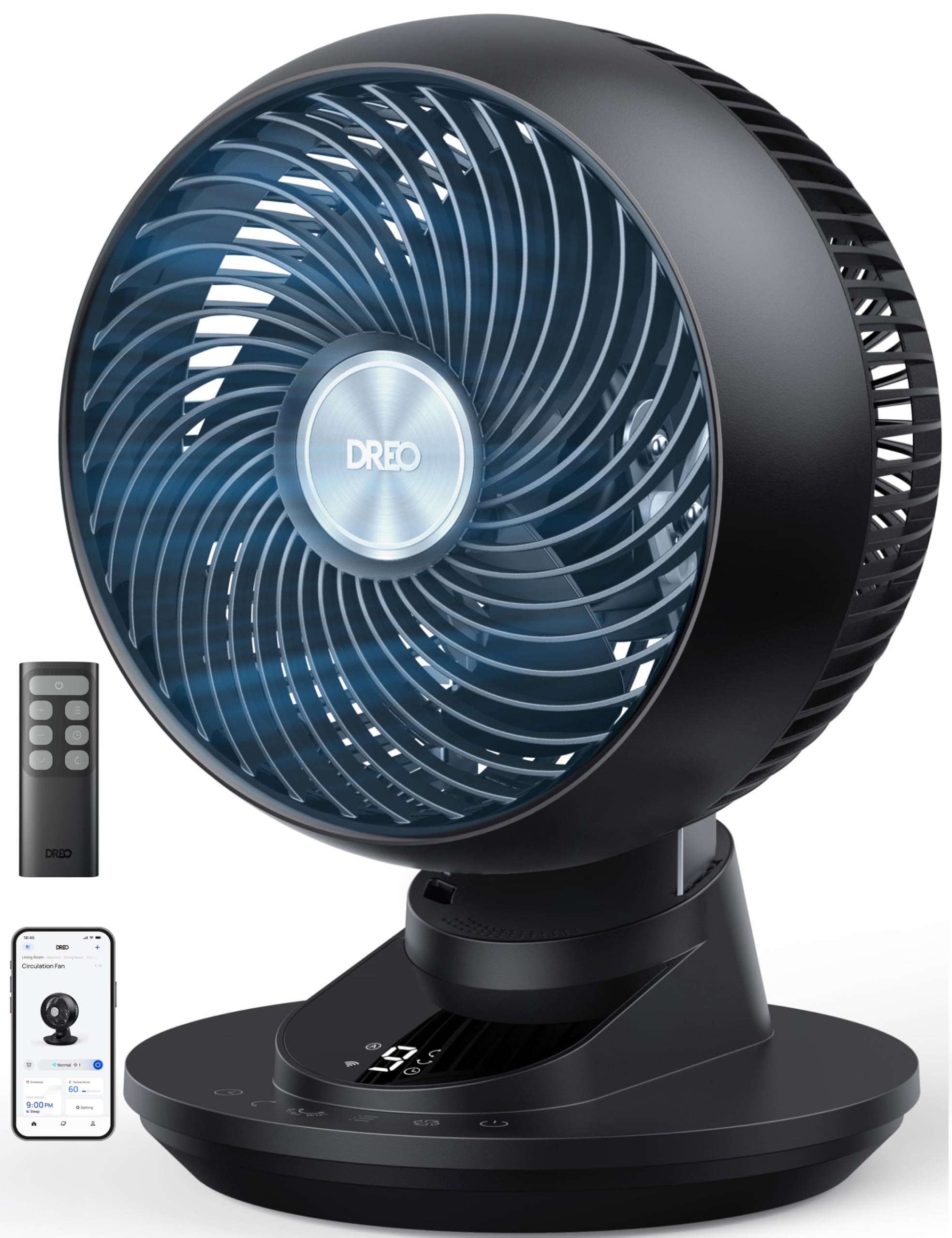
The DREO Smart Fan sits at the sweet intersection of power and silence. Its Next-Gen Brushless DC motor pushes up to 950 CFM across an 85-foot throw—enough to circulate air through a master bedroom in under a minute—while maintaining a noise floor of just 20 dB on the lowest setting. That’s below the threshold of a whisper and well within the range required for undisturbed sleep. The 9-speed control gives you granular airflow adjustment, so you can find the exact level that cools without creating a drafty wind tunnel.
What sets this fan apart from other premium options is its dual-axis oscillation: 90 degrees horizontally and 90 degrees vertically. You can point it straight up to push warm ceiling air down in winter, or let it sweep side-to-side across your bed all summer. The DREO app and Alexa/Google Home integration add scheduling, child lock, and a 12-hour timer. Speed 6 or lower is silent enough for side-sleepers; only the top three speeds produce audible wind noise, and even then it’s not grating.
Durability is also strong—multiple long-term reviews report no rattling or motor degradation after months of nightly use. The only trade-off is that it stays plugged in (no battery backup), and the 12.2-inch height requires a bit of nightstand real estate, but the airflow coverage more than compensates. For smart-home enthusiasts who want total control over their sleep environment, this is the one to beat.
Why it’s great
- 20 dB on lowest speed is genuinely silent for sleep
- Dual 90° oscillation eliminates cold and hot spots
- Full app, voice, and remote control with 12-hour timer
Good to know
- Must remain plugged in (no battery)
- 12.2-inch height needs a stable nightstand surface
2. IRIS USA WOOZOO Air Circulator with Remote

The IRIS WOOZOO with remote is the most versatile oscillating fan in this roundup. Its brushless DC motor drives 120 degrees of horizontal swing plus 65 degrees of vertical tilt, and you can activate both axes simultaneously—meaning the fan can sweep side-to-side while nodding up and down, creating a truly three-dimensional air pattern that reaches every corner of a medium bedroom. The 8-speed control range goes from a barely-there breeze at level 1 to a serious gust at level 8, and the motor itself is virtually silent; the only sound you hear is moving air, which many sleepers find soothing as white noise.
The included remote is a game-changer for bedside use. You can switch power, adjust speed, toggle oscillation modes, and set the timer (2, 4, or 8 hours) without lifting your head off the pillow. The fan’s globe-like aesthetic is more modern than most competitors, and the 11.4-inch height fits comfortably on a nightstand next to a lamp and phone charger. Several long-term reviewers report zero motor degradation or rattling after months of nightly use, which speaks to the build quality of the DC motor.
On its lowest speed setting, the WOOZOO is genuinely whisper-quiet—a category leader for light sleepers. The only concession is that it lacks app or voice control, so if you want to automate bedtime routines with Alexa or Google Home, this isn’t the fan for you. But for pure oscillation coverage and remote convenience, it’s the strongest value in the premium tier.
Why it’s great
- Dual-axis 120° horizontal + 65° vertical oscillation
- Remote control with 2/4/8 hour timer
- Extremely quiet motor—only wind noise at low settings
Good to know
- No app or smart home integration
- Higher price point than comparable non-remote models
3. Windmill Smart Fan

The Windmill Smart Fan achieves the lowest noise floor in this entire lineup: 18 dB on its Whisper setting. To put that in perspective, 18 dB is quieter than a human whisper (30 dB) and barely above the threshold of human hearing. For ultra-light sleepers or those who share a bed with someone sensitive to fan noise, this is the definitive choice. The fan’s 5-speed control ranges from Whisper to Boost, with the first two speeds being near-silent and the third being quiet enough for sleep. Even at higher speeds, the motor produces no hum or vibration—just smooth, clean airflow.
Physically, it’s one of the most compact and aesthetically refined options at just 10.7 inches tall and 2.5 pounds. The Marine blue color and minimalist silhouette look like a design object rather than an appliance. Smart features include app control, voice commands (Alexa/Google), and setting memory—the fan remembers your last speed and oscillation preference so you don’t have to readjust nightly. The weighted base keeps it stable even on a small nightstand, and the tilt mechanism allows precise angle adjustment without clicking or resistance.
One important caveat: the Windmill does not oscillate. This is a fixed-direction fan that you manually tilt. For some bedside users, that’s a dealbreaker—they want the sweeping airflow of an oscillating fan. But for those who position it directly at their torso or face and want the purest possible silence with smart control, the Windmill is unmatched. The 388 CFM airflow is modest compared to larger fans, but for personal space cooling from 3–6 feet away, it’s more than adequate.
Why it’s great
- 18 dB whisper setting—the quietest fan we tested
- Compact, lightweight (2.5 lbs), and aesthetically refined
- App, voice, and remote control with setting memory
Good to know
- No oscillation—fixed forward airflow only
- Lower CFM (388) than similarly priced competitors
4. Honeywell QuietSet 5 Oscillating Table Fan

Honeywell has been making reliable home fans for decades, and the QuietSet 5 shows why the brand remains a default recommendation for bedside cooling. It offers 5 speed settings with corresponding noise profiles: the first three speeds are genuinely quiet enough for sleep, while speeds 4 and 5 produce more audible wind noise but also significantly more airflow. The electronic touchpad control on the front is intuitive, and the button color changes to indicate which speed you’ve selected—a small detail that makes late-night adjustments easier.
The oscillation range covers roughly 90 degrees, which is sufficient for a single person in a twin or full bed. The 1, 2, 4, and 8-hour timer is one of the best in its class—you can set it to run for exactly the first few hours of sleep and then shut off automatically, saving energy and preventing overcooling. The compact footprint (roughly 11 inches tall and 6 inches wide) fits easily on a nightstand, and the integrated carrying handle makes it portable if you want to move it to a desk during the day.
Reviewers consistently praise its build quality and longevity. The grill is removable for cleaning (though it requires unscrewing three small screws). The fan does not have a remote, so you have to reach over to the base to change settings. And while the motor is quiet, it’s not as silent as a DC motor—there’s a slight electrical hum on higher speeds. But considering the price and the Honeywell reliability guarantee, this is the best value proposition for anyone who wants a no-fuss oscillating fan that works every night.
Why it’s great
- 5 speeds with 3 genuinely quiet settings for sleep
- 1/2/4/8 hour auto-off timer
- Compact build that fits most nightstands
Good to know
- No remote control—adjust at the base only
- Slight motor hum at higher speeds (not silent)
5. IRIS USA WOOZOO Desk Fan

The non-remote version of the IRIS WOOZOO offers nearly identical performance to its pricier sibling at a significantly lower cost. The spiral grid grille and deep-pitch blades are the same aerodynamic design, meaning you get the same 65-degree oscillation and whisper-quiet 29 dB operation on the lowest setting. Three speed settings are more limited than the 8-speed premium model, but for most bedside users, three speeds are enough: a gentle breeze, a moderate flow, and a powerful gust. The vertical tilt offers 6 click-stop positions, so you can aim airflow up or down precisely.
One of the standout features for bedside use is the built-in handle. At 3.5 pounds, it’s easy to carry from the nightstand to a desk during the day or pack for a dorm room move. The black matte finish looks clean and modern, and it won’t collect visible dust as quickly as a white fan. Multiple long-term reviewers report no rattling or motor degradation after a year of use—a testament to the build quality. The unit also works with a smart plug for basic voice on/off control, though speed changes still require the physical button.
The main compromise compared to the remote version is obvious: no remote means you have to get up or reach over to change speed or oscillation. Also, the horizontal oscillation is fixed at 65 degrees rather than the 120-degree sweep of the premium model. For a single-person bed positioned directly in front of the fan, 65 degrees is plenty. For a wider bed or if the fan sits to the side, the narrower sweep might miss you. For the price, though, this is a fantastic entry point into quiet bedside circulation.
Why it’s great
- 29 dB low setting is genuinely quiet for sleep
- Lightweight (3.5 lbs) with built-in carry handle
- Same aerodynamic blade design as premium version
Good to know
- No remote control—manual button operation only
- Only 3 speeds vs. 8 speeds on the premium model
6. DR.PREPARE Oscillating Air Circulator Fan

If raw airflow is your priority and your budget is tight, the DR.PREPARE oscillating fan delivers an impressive 900 CFM from a surprisingly compact 11.3-inch frame. The secret is the 6.5-inch airfoil blades, which are engineered to move more air per rotation than the standard 5.5-inch blades found on most bedroom fans. This translates to a circulation range up to 60 feet—overkill for a small bedroom, but fantastic if you need to cool the whole room rather than just your face.
The control layout is refreshingly simple: a single dial that you turn right for oscillation or left for static mode, plus a 3-speed button. No apps, no remotes, no complex menus. The 70-degree horizontal oscillation combined with 100-degree vertical tilt (90 up, 10 down) gives you flexible aiming options. The painted black finish is plain but functional, and the front cover pops off for easy rinsing. At 33 watts, it’s energy-efficient enough to run all night without a noticeable electricity spike.
The trade-offs for the low price are less refinement. The motor isn’t as quiet as DC-powered competitors—reviewers note a low hum on the middle and high settings, though the lowest speed is acceptable for sleep. The build feels slightly plasticky compared to the Honeywell or IRIS models. And the lack of a timer means you’ll need to use an external smart plug if you want auto shut-off. For hot sleepers on a strict budget who prioritize CFM over silence, this is the best bang for the buck.
Why it’s great
- 900 CFM at a very affordable price point
- 6.5-inch blades push air up to 60 feet
- Simple dial and button controls—no learning curve
Good to know
- Motor hum audible on middle and high settings
- No timer or remote control
7. WSKEN Desk Fan with Battery Operated

The WSKEN Desk Fan is the only cordless option in this roundup, and it’s an excellent choice for anyone who wants to move their bedside fan between rooms, take it camping, or simply avoid a dangling power cord on the nightstand. The built-in 3600 mAh battery provides up to 8 hours of runtime on the lowest speed—enough for a full night’s sleep. The LED digital display shows both speed (1-100) and battery percentage accurate to 1%, so there’s never any guessing whether it needs charging.
The 100-speed control is the widest range in this lineup. On speed 1-10, the fan is nearly silent (28 dB) and produces a very gentle breeze. As you ramp up through speeds 50-100, the 7 diagonal flow blades create a soft, wide airflow that moves air up to 12 feet without the harsh jet-like feel of a traditional fan. The invisible blade design is a safety bonus for households with kids or pets—no exposed blades to catch curious fingers. The 115-degree manual tilt and included wall-mount sticker add flexibility for positioning.
The main compromises are battery-related physics. On the highest speed, battery life drops to around 2-3 hours, so you’ll likely need to keep it plugged in at speed 80-100. The build is lighter (1.7 pounds) and feels a bit less substantial than corded models. The touch control can be a little finicky in the dark when you’re half-asleep. But for the sheer convenience of cordless operation, plus the unique 100-speed granularity, the WSKEN is a standout for travelers, dorm dwellers, and anyone who doesn’t want to be tethered to an outlet.
Why it’s great
- 3600 mAh battery runs 8 hours on low speed
- 100-speed control for precise airflow tuning
- Invisible blades and lightweight design for safety/portability
Good to know
- Battery life drops to 2-3 hours at high speed
- Touch controls can be hard to use in the dark
FAQ
Is a DC motor fan always quieter than an AC motor fan for bedside use?
How much vertical tilt do I actually need from a bedside fan?
Should I prioritize a remote control or app control for a bedside fan?
Can I use an external smart plug to add timer functionality to a manual fan?
Final Thoughts: The Verdict
For most users, the best bedside fan winner is the DREO Smart Fan because it combines the lowest noise floor in its class (20 dB) with powerful 950 CFM output and unmatched dual-axis oscillation. If you want the purest silence and a compact design that looks like a design object, grab the Windmill Smart Fan. And for remote-controlled oscillation coverage at a better price point, nothing beats the IRIS USA WOOZOO with Remote.