
A yellow jacket nest hidden under your deck or a swarm of hornets near your front door creates a genuine safety hazard in seconds. The right repellent spray needs to stop the threat instantly, reach from a safe distance, and handle the specific species terrorizing your space without leaving you exposed.
I’m Min — the co-founder and writer behind Gadgets Feed. I’ve spent hundreds of hours analyzing the active ingredients, spray distances, and application methods of every major bee and wasp killer on the market to separate the effective formulas from the ones that just irritate the nest.
This guide breaks down the real-world performance of seven different sprays and dusts, from instant-contact killers to plant-based deterrents, so you can walk outside with confidence using a best bee repellent spray that actually matches your specific situation.
How To Choose The Best Bee Repellent Spray
Not all bee sprays work the same way. Choosing the wrong one can mean the difference between a clean elimination and an angry swarm chasing you back inside. Focus on these three factors to narrow your choice.
Spray Distance and Stream Type
The most critical safety metric is how far the spray reaches. A stream that flies 20 to 27 feet lets you treat a nest from the ground or a doorway without getting within the insects’ defensive perimeter. Foaming streams work well on eaves and soffits because they cling to the nest and trap the insects, while straight-stream aerosols punch through gaps in siding or wall voids.
Active Ingredient and Mechanism
Synthetic pyrethroids like prallethrin and cypermethrin deliver near-instant knockdown on contact and are electrically non-conductive, making them suitable for nests near outdoor lighting and junction boxes. Plant-based peppermint oil formulas work differently—they repel and deter rather than deliver an immediate kill, and they’re safer for households with pets and children but require more frequent reapplication. Dust formulations using cyfluthrin provide a long-lasting residual barrier inside wall voids and nesting cavities but need a separate duster for application.
Nest Type and Location
Ground nests from yellow jackets call for a dust that can be puffed into the entrance hole, while exposed paper wasp nests under an overhang respond best to a long-range aerosol. For carpenter bees drilling into wood trim, a targeted spray with residual activity prevents re-infestation. Match the delivery method to the species and the nest’s accessibility, or you’ll waste product and risk stings.
Quick Comparison
On smaller screens, swipe sideways to see the full table.
| Model | Category | Best For | Key Spec | Amazon |
|---|---|---|---|---|
| Raid Wasp and Hornet Killer | Aerosol | Instant knockdown of exposed nests | 22 ft spray, non-conductive to 32,500V | Amazon |
| STEM Kills Wasps, Hornets and Yellow Jackets | Aerosol | Plant-based option around pets | 10 oz, botanical extracts, 15 ft reach | Amazon |
| Spectracide Wasp and Hornet Killer | Aerosol | Maximum reach for high nests | 27 ft spray, 3-pack value | Amazon |
| Waspika Peppermint Oil Spray | Plant-Based | Indoor barrier around kids and pets | 16 oz, non-staining, fresh mint scent | Amazon |
| Smart Grower Peppermint Oil Spray | Plant-Based | Repelling rodents and insects outdoors | 16 oz, extra-strength, ready-to-use | Amazon |
| Mighty Mint Peppermint Oil Spray | Plant-Based | Long-term deterrent around entry points | 16 oz, pet-friendly, concentrated oil | Amazon |
| Atticus Tirade 1% Cyfluthrin Dust | Dust | Ground nests and wall voids | 1.25 lb, 1% cyfluthrin, residual | Amazon |
In‑Depth Reviews
1. Raid Wasp and Hornet Killer Spray

This 13-ounce aerosol combines prallethrin and cypermethrin to deliver instant knockdown on contact. Users report wasps and hornets falling dead mid-flight, and the foaming stream clings to nests under eaves so the active ingredients soak through the entire structure. The spray reaches an effective 22 feet, giving you a comfortable safety buffer against defensive swarms.
The formula is electrically non-conducting up to 32,500 volts, which means you can safely treat nests near outdoor light fixtures, junction boxes, and security cameras without worrying about shorts or shocks. Multiple verified buyers mention that the foam dissolves the nest material over a couple of days, eliminating the need to knock down the empty structure manually.
Owners with severe allergies to stings report using this spray to handle nests inside car doors and under patio overhangs without ever getting stung. The can is compact at 13 ounces, but the concentrated foam expands significantly on contact, making it economical for multiple nest treatments during a single season.
Why it’s great
- Instant knockdown on contact with a 22-foot spray range
- Non-conductive foam safe around electrical fixtures
- Dissolves nest material over 24-48 hours
Good to know
- Chemical aerosol not ideal for indoor use near food prep areas
- Foam can leave a visible residue on painted surfaces
2. Spectracide Wasp and Hornet Killer Aerosol

Spectracide pushes the spray distance envelope to 27 feet, the longest reach among the aerosol options in this guide. That extra five feet over the Raid can makes a real difference when you’re targeting a high nest in a second-story soffit or treating a nest tucked under the eaves of a steep roof. The stream is aggressive and soaks the nest in a toxic foam that kills on contact.
The three-pack configuration ensures you have enough product to treat multiple nests across a large property or to keep a spare can in the garage, shed, and patio. Verified buyers consistently mention that spraying in the evening when wasps are less active maximizes the kill rate, and the foam holds its position on vertical surfaces rather than dripping off.
Several owners specifically note that this spray stopped yellow jackets that had already stung people on the front porch, and the long reach meant they never had to step within the insects’ threat zone. The can’s ergonomic trigger is easy to operate with one hand, which matters when you’re holding a flashlight or keeping a safe distance.
Why it’s great
- Industry-leading 27-foot spray distance for high or distant nests
- Three-pack delivers excellent coverage for large properties
- Foam adheres to vertical surfaces without dripping
Good to know
- Strong chemical odor that lingers for several minutes
- Foam can stain light-colored siding if not rinsed quickly
3. STEM Kills Wasps, Hornets and Yellow Jackets

STEM takes a different approach by using botanical extracts as its active ingredient, making it one of the few plant-based aerosol options that actually kills wasps, hornets, and yellow jackets on contact. The 10-ounce can is smaller than the chemical competitors, but users report that it drops paper wasps and hornets within seconds of contact. The spray reaches approximately 15 feet, which is shorter than Raid and Spectracide but still enough for most eaves and soffit nests.
Owners with pets particularly appreciate the lack of harsh chemical fumes and the mild botanical scent that dissipates quickly after application. Multiple reviews mention using this spray around dogs and cats without any visible reaction from the animals, and the formula leaves no lasting chemical smell around the house. The nozzle produces a directed stream that works well on individual wasps and small-to-medium nests.
The trade-off is the oil-based nature of the formula. Several buyers note that it leaves a greasy residue on surfaces like camera lenses, patio furniture, or painted trim. The can is also relatively small—expect it to handle roughly three medium nests before running out. For households that prioritize reducing synthetic chemical exposure, this is the most effective plant-based option in the lineup.
Why it’s great
- Plant-based formula with fast knockdown on contact
- Mild scent that is safe to use around pets
- Entomologist-tested and effective on multiple stinging insects
Good to know
- Oil-based residue can stain or leave a greasy film
- 10-ounce can is small; covers about three nests
4. Waspika Peppermint Oil Spray

Waspika positions itself as a non-staining plant-based alternative for indoor and outdoor use, and it delivers on that promise. The 16-ounce bottle uses natural peppermint oil as its active repellent, so it won’t leave oily streaks on baseboards, window frames, or patio furniture. The spray produces a fine mist that dries quickly and leaves a crisp peppermint scent that most users find pleasant rather than overpowering.
This is not a contact-kill spray—it works by deterring bees, wasps, spiders, and ants from entering treated areas. Verified buyers report a significant decrease in spider and wasp activity around doors, windows, and porch perimeters within days of regular application. The formula is explicitly safe around children and pets, with several owners mentioning they use it in kitchens and bedrooms without concern.
The ready-to-use trigger sprayer delivers consistent coverage, but you’ll need to reapply every few days or after heavy rain for outdoor barriers. Some users note that it is less effective on established nests where insects are already entrenched, making it better suited as a preventive perimeter treatment than a reactive nest-killer. For families seeking a residue-free barrier they can spray liberally indoors, this is the top choice.
Why it’s great
- Non-staining formula dries clear with no oily residue
- Safe for use around children and pets indoors
- Pleasant peppermint scent freshens treated areas
Good to know
- Repellent effect requires frequent reapplication
- Not designed for direct nest elimination
5. Smart Grower Peppermint Oil Spray
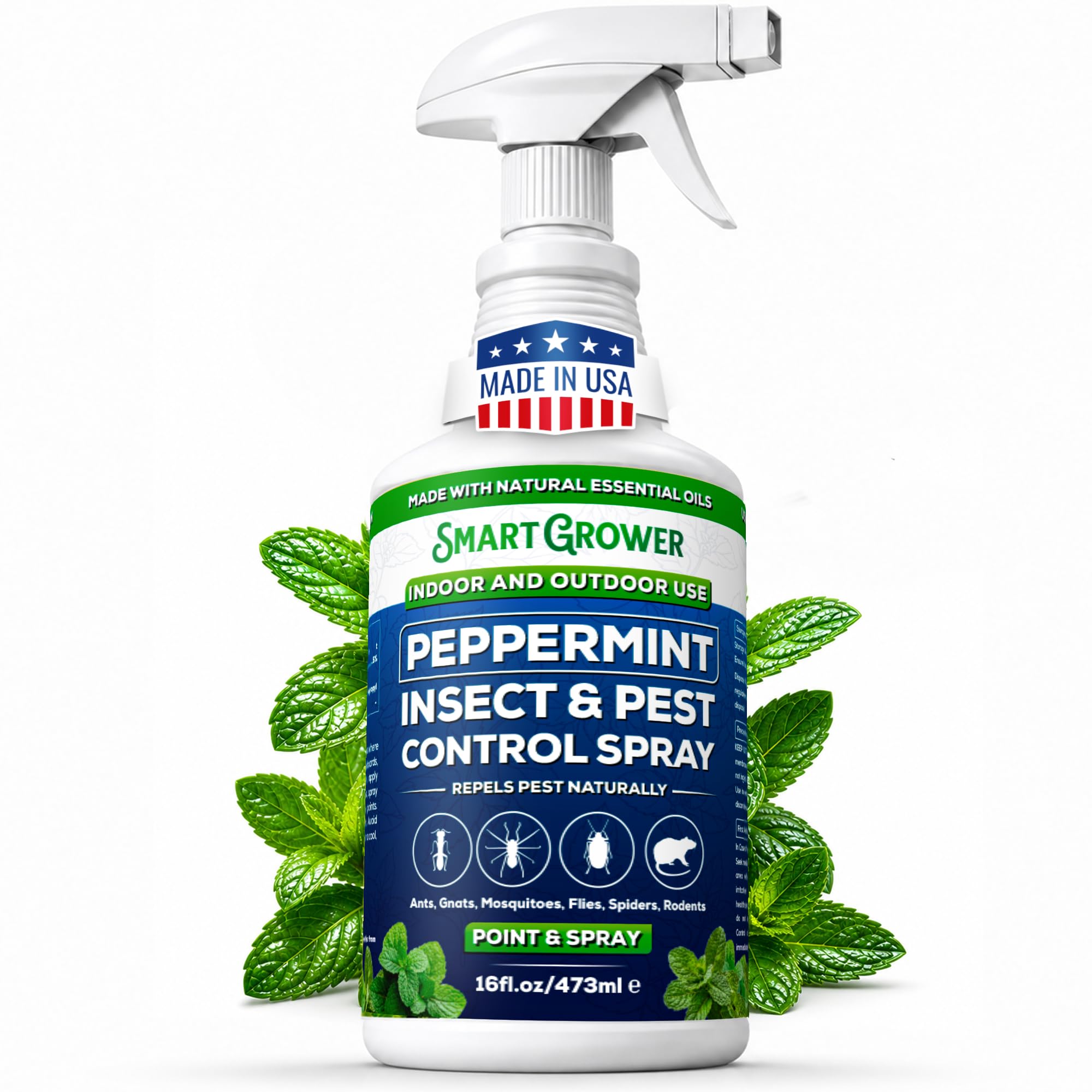
Smart Grower markets this 16-ounce spray as an extra-strength peppermint oil formula that repels not just insects but also rodents, and user reviews back up the dual-purpose claim. The concentrated essential oil blend creates a strong olfactory barrier that wasps, bees, mice, and rats avoid. The ready-to-use bottle requires no mixing, and the spray reaches a wider coverage area than typical trigger bottles thanks to a well-designed nozzle.
The scent is potent but natural—several owners mention using it in chicken coops, garages, and attics with noticeable results against multiple pest types. The oil-based formula does need to settle before application; some users found that spraying immediately after shaking caused the nozzle to drip warm oil initially. Once the technique is dialed in, the spray creates a long-lasting barrier that reduces insect and rodent activity over several days.
For bee and wasp specifically, this spray works best as a deterrent rather than a killer. Users report that regular application around entry points, window sills, and garden perimeters keeps carpenter bees and wasps from nesting. The peppermint oil does degrade faster in direct sunlight and rain, so outdoor effectiveness depends on consistent reapplication every few days during peak season.
Why it’s great
- Extra-strength formula also repels rodents effectively
- Versatile for indoor, outdoor, and even chicken coop use
- No synthetic pesticides or harsh chemical additives
Good to know
- Oily residue can drip if nozzle is not used correctly
- Requires frequent reapplication in sunny or rainy conditions
6. Mighty Mint Peppermint Oil Insect Repellent Spray

Mighty Mint has been a staple in the natural pest control space since 2018, and its concentrated peppermint oil formula remains one of the most widely reviewed deterrents on the market. The 16-ounce spray is pre-mixed and ready to use, delivering a potent mint blast that wasps, spiders, ants, and roaches actively avoid. Users consistently report that regular spraying around baseboards, entry points, and patio perimeters keeps stinging insects from establishing nests.
The formula is specifically designed to be safe around dogs and cats, though the manufacturer advises against use near birds or exotic pets. Multiple long-term buyers mention using Mighty Mint as their go-to preventative treatment for years, applying it weekly during spring and summer to keep wasps from building under eaves and around door frames. The fresh peppermint scent fades within 30 minutes, leaving no lingering chemical smell.
It is important to set expectations: this is a deterrent, not a nest eliminator. Several reviews note that while it works well as a preemptive barrier, it will not solve an active infestation of established wasps or hornets. For that scenario, you need a contact-kill aerosol first, then use Mighty Mint to prevent re-nesting. The spray nozzle produces a wide mist that covers large areas quickly, making it efficient for perimeter treatments.
Why it’s great
- Proven long-term deterrent with thousands of verified reviews
- Safe for use around dogs, cats, and children
- Wide mist covers large areas quickly for perimeter defense
Good to know
- Not effective for eliminating established wasp nests
- Requires weekly reapplication for consistent results
7. Atticus Tirade 1% Cyfluthrin Dust Insecticide
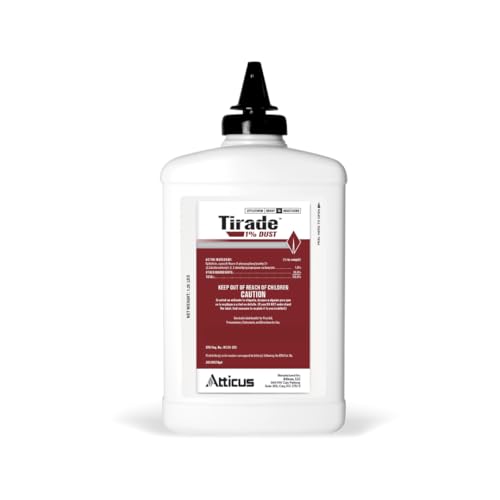
When aerosol sprays fail, it is usually because the nest is inside a wall void, under a deck, or deep inside a ground hole where liquid cannot penetrate. Atticus Tirade solves that problem with a 1% cyfluthrin dust that remains active for weeks inside protected cavities. The 1.25-pound bottle provides enough dust to treat dozens of nests, and the powder is low-odor and non-staining, making it suitable for use around the home’s exterior.
Users dealing with yellow jacket nests inside dead trees, carpenter bees in wooden trim, and ground hornets report that this dust eliminated the problem within 72 hours after aerosol sprays and traps had failed. The cyfluthrin active ingredient is the same one used in professional-grade pest control products, and the dust formulation means insects carry it back into the nest, spreading the insecticide throughout the colony.
You will need a separate bellows duster or hand puffer to apply this powder accurately into cracks, crevices, and ground holes—the bottle itself does not come with an applicator. It is also not available for sale in Alaska, California, Hawaii, Puerto Rico, or Vermont due to state registration restrictions. For persistent ground-nesting species that shrug off surface sprays, this dust is the most effective tool in the lineup.
Why it’s great
- Residual dust eliminates colonies over 72 hours
- Works in wall voids and ground nests where sprays cannot reach
- Professional-grade cyfluthrin active ingredient
Good to know
- Requires a separate duster for application
- Not available for sale in five US states
FAQ
Can I use a bee repellent spray on honey bees without killing them?
How long does the spray need to stay on the nest to kill it?
What is the safest time of day to spray a wasp nest?
Final Thoughts: The Verdict
For most users, the best bee repellent spray winner is the Raid Wasp and Hornet Killer because its 22-foot reach, non-conductive foam, and instant knockdown handle the vast majority of exposed nests safely and effectively. If you want a plant-based option that works around pets and kids, grab the STEM Kills Wasps, Hornets and Yellow Jackets. And for persistent ground-nesting yellow jackets and carpenter bees that laugh off surface sprays, nothing beats the Atticus Tirade 1% Cyfluthrin Dust applied directly into the nest cavity.