
Nothing ruins a backyard barbecue or a quiet evening on the porch faster than the buzz of an angry wasp or hornet. The real challenge isn’t just killing a single insect — it’s eliminating an entire nest before someone gets stung. You need a spray that reaches far, kills on contact, and ideally handles the nest itself so you don’t have to get anywhere near the danger zone.
I’m Min — the co-founder and writer behind Gadgets Feed. I’ve spent hundreds of hours cross-referencing active ingredients, spray distances, foam vs. liquid formulations, dielectric ratings for electrical safety, and real-world user reports to separate the sprays that truly deliver from those that just irritate the insects.
Whether you’re dealing with paper wasps under the eaves, ground-nesting yellowjackets, or carpenter bees boring into your deck, this guide breaks down the top contenders to help you find the most effective bee spray for your specific situation.
How To Choose The Best Bee Spray
Selecting the right spray comes down to matching the formula and delivery system to the specific pest and location. A paper wasp nest hanging from a high eave requires a very different weapon than a ground yellowjacket colony living in a hole in the lawn.
Spray Distance and Accuracy
This is your primary safety metric. A spray that reaches 20 to 27 feet lets you stand well outside the defensive radius of the nest. Look for a tight stream (not a mist) that cuts through wind. Foam-type sprays are excellent for ground nests because they expand and fill the cavity, but they typically have shorter effective distances than liquid stream sprays.
Active Ingredient and Knockdown Speed
Synthetic pyrethroids like cypermethrin and prallethrin offer instant knockdown on contact and often provide residual protection. Plant-based formulas, typically using botanical oils, can be effective but may require direct contact and can leave a greasy residue. For nests in wall voids or underground, a dust or expanding foam formulation that the insects carry deeper into the colony is more effective than a liquid that only treats the surface.
Quick Comparison
On smaller screens, swipe sideways to see the full table.
| Model | Category | Best For | Key Spec | Amazon |
|---|---|---|---|---|
| Spectracide Wasp & Hornet Killer 3-Pack | Premium | High-reach nests and multiple locations | Sprays up to 27 ft | Amazon |
| CRC Wasp and Hornet Killer Plus | Premium | Electrical equipment and utility areas | Dielectric strength 47,600V | Amazon |
| Bonide Spider & Ground Bee Killer Dust | Mid-Range | Ground bee and yellowjacket nests in soil | Dust formulation with snorkel tube | Amazon |
| STEM Plant-Based Wasp Killer | Mid-Range | Households with pets and children | Plant-based active ingredient | Amazon |
| Raid Wasp and Hornet Killer | Mid-Range | Everyday nest knockdown around the house | Foam formulation, 22 ft reach | Amazon |
| Spectracide Wasp & Hornet Twin Pack | Budget | General wasp and hornet control on a budget | 2 x 20 oz cans, foaming action | Amazon |
| Spectracide Carpenter Bee & Ground-Nesting Yellowjacket Foam | Premium | Ground-nesting yellowjackets and carpenter bee holes | Expanding foam with extension tube | Amazon |
In‑Depth Reviews
1. Spectracide Wasp and Hornet Killer Aerosol, 20-Ounce, 3-Pack

The Spectracide 3-pack offers the longest effective range in this roundup, spraying a powerful stream up to 27 feet. This distance gives you a massive safety buffer against angry nests on high eaves, under roof soffits, or in tall tree branches. The foam clings to the nest surface and suffocates insects on contact, and users consistently report it collapses nests within hours.
With three 20-ounce cans in one purchase, this is the most practical option for anyone with multiple outbuildings, a large property, or a recurring wasp problem. The unit cost per can is lower than most single-can competitors, making it a smart bulk buy. The foam is dielectric, meaning it won’t conduct electricity, which adds a layer of safety if you need to spray near outdoor electrical boxes or lighting fixtures.
Some users note that the foam can be a bit messy if you overspray onto siding or windows, where it leaves a residue that needs rinsing. Additionally, the stream can lose coherence in strong wind, so aim carefully. For deep underground nests, a dust or expanding foam may be more effective than this surface-foam formula.
Why it’s great
- Longest spray distance at 27 feet
- Excellent value with three full-size cans
- Kills on contact and collapses nests
Good to know
- Foam can leave residue on painted surfaces
- Not ideal for ground-nesting yellowjackets in deep tunnels
2. CRC 14010 Wasp and Hornet Killer Plus
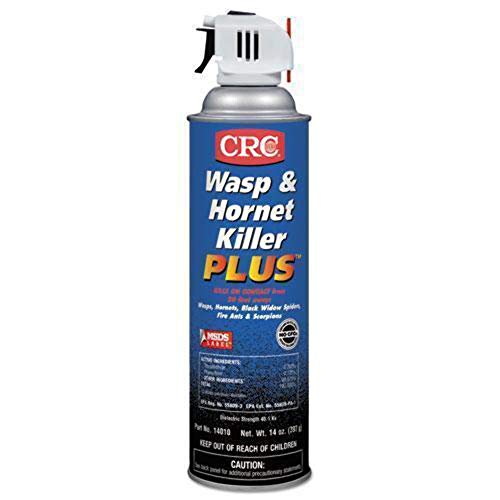
CRC isn’t a household name in pest control, but among utility workers, telecom technicians, and industrial maintenance crews, this is the go-to can. Its defining spec is a dielectric strength of 47,600 volts, meaning it’s safe to spray on electrical connectors and energized equipment without causing shorts or arcing — a critical feature if you’re spraying nests near meter boxes, junction boxes, or substations.
The ergonomic trigger is designed for gloved hands, and the extension tube locks under the trigger to prevent accidental discharge during transport. The stream is accurate up to 15 to 20 feet, and the formula is plastic-safe, so it won’t crack or degrade PVC insulation or polymer connectors. Users who have tried many brands consistently call this the best knockdown spray they’ve ever used, with wasps dropping instantly on contact.
The biggest downside is the nozzle design: several users report the spray nozzle detaches under pressure when using one hand. You’ll want to grip the can with both hands to keep the nozzle seated. Also, the 14-ounce can is smaller than many competitors, so for large or multiple nests, you may need several cans.
Why it’s great
- 47,600V dielectric rating for safe use near electricity
- Plastic-safe formula won’t damage polymer parts
- Instant knockdown with a tight, accurate stream
Good to know
- Nozzle can detach without a two-hand grip
- Smaller 14 oz can size limits coverage
3. Bonide 363 Spider and Ground Bee Killer, 2 Pack

Liquid sprays are largely ineffective against ground-nesting yellowjackets and ground bees because the liquid pools at the entrance and rarely reaches the colony deep underground. Bonide solves this with a dust formulation containing 0.25% permethrin. You puff the dust into the entrance hole using the included snorkel tube applicator, and the insects carry it deep into the nest on their bodies, killing the entire colony within 24 to 48 hours.
Users with severe ground bee infestations report that a single, moderate application eliminated 80% of nest holes, and a second treatment finished the job. The dust does not dissolve in rain as quickly as liquid sprays, giving it longer residual effectiveness in damp soil conditions. The 2-pack provides enough material for several large colonies or multiple smaller nests across a lawn or garden.
The main drawback is that this is not an instant-kill product for visible wasps flying around your patio. It’s a targeted nest treatment. Also, the dust is somewhat messy to apply — it can puff back into your face if you don’t approach the hole from downwind. Some users prefer a foam-based product for ground nests because foam expands into the cavity more aggressively.
Why it’s great
- Dust penetrates deep into underground nests
- Snorkel tube allows precise application into holes
- Long residual effectiveness even after rain
Good to know
- Not for instant knockdown of flying insects
- Dust can blow back into the applicator’s face
4. STEM Kills Wasps, Hornets and Yellow Jackets — Plant-Based

For households with pets, children, or anyone sensitive to strong chemical fumes, STEM offers a genuine plant-based alternative that actually works. The active ingredient is a botanical extract, and the spray has no added dyes, synthetic fragrances, or harsh chemical odors — just a light, pleasant scent from the natural oils. Users report that it drops wasps and hornets within minutes of contact and cleans out paper wasp nests effectively.
The spray reaches about 15 feet after removing the cap tab, and the stream is surprisingly accurate for a non-synthetic formula. Multiple reviews confirm it works on stink bugs and leaf-footed bugs as a residual deterrent, adding versatility beyond just stinging insects. The company, STEM, is a division of SC Johnson, so formulation quality is backed by a major consumer chemistry lab.
The main compromise is that the oil-based formula leaves a greasy residue on surfaces like composite decking, painted wood, or camera lenses if overspray occurs. Some users also report that the nozzle occasionally detaches from the can during use. The 10-ounce can is smaller than many competitors and covers roughly three medium nests before running out.
Why it’s great
- Plant-based active ingredient safe around people and pets
- No harsh chemical odors or synthetic fragrances
- Effective on wasps, hornets, and other outdoor pests
Good to know
- Oil-based formula can stain surfaces and leave residue
- Small can size limits coverage to 2-3 nests
5. Raid Wasp and Hornet Killer Spray

The Raid Wasp and Hornet Killer is the standard against which all other bee sprays are measured. It combines a 22-foot spray reach with a foam formula that kills on contact and then physically dissolves the nest structure over the following days. Users consistently report that wasps drop dead in seconds, and the nest collapses within 24 to 48 hours, leaving no structural residue for new colonies to rebuild on.
The foam is electrically non-conducting up to 32,500 volts, so it’s safe for use around outdoor lighting, electrical meters, and junction boxes. The active ingredients are 0.05% prallethrin and 0.10% cypermethrin — a potent pyrethroid cocktail that delivers instant knockdown even against large hornet colonies. For a severely allergic user who sprayed a nest inside a car door, every wasp fell dead on contact, and the nest was gone two days later, with zero stings.
The only real limitation is the 13-ounce can size, which is smaller than the Spectracide or CRC options. For a single nest or a few scattered spots around the house, the can is sufficient; for a large infestation with multiple established nests, you’ll go through a can per nest. The foam also requires careful aim in windy conditions, as the stream is less dense than a liquid jet.
Why it’s great
- Proven formula dissolves nests after knockdown
- Non-conducting up to 32,500 volts
- Reliable instant kill on contact
Good to know
- 13 oz can is smaller than premium alternatives
- Foam stream can drift in windy conditions
6. Spectracide Wasp & Hornet Killer Twin Pack
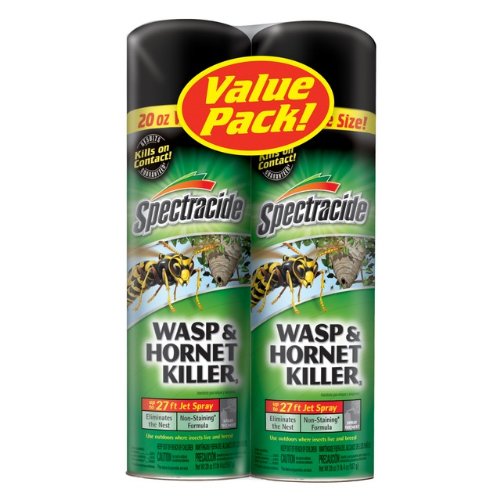
If you need to cover multiple areas on a tight budget, the Spectracide Twin Pack delivers 40 total ounces of foaming wasp and hornet killer at the lowest per-ounce cost in this guide. The foaming formula clings to nests and suffocates insects on contact, and the 20-ounce cans are large enough to handle two sizable nests per can without rationing.
Users report effective knockdown against paper wasps and hornets around birdhouses, eaves, and porch ceilings. One user successfully eliminated a large yellowjacket colony inside a birdhouse with a single application, noting that the foam reached into the cavity and killed the eggs as well as the adults. The spray is unscented and leaves minimal residue compared to oil-based alternatives.
The main trade-off is that the foam doesn’t penetrate deep into underground nests as effectively as the Bonide dust or the Spectracide foam specifically designed for ground-nesters. Some users found that yellowjackets in deep holes survived the initial treatment and required a second application. Additionally, the trigger mechanism on some cans has been reported to stick or leak after partial use.
Why it’s great
- Excellent value with two 20-ounce cans
- Foam clings to nests and kills on contact
- Unscented formula with minimal residue
Good to know
- Less effective on deep ground-nesting colonies
- Some users report trigger issues after partial use
7. Spectracide Carpenter Bee & Ground-Nesting Yellowjacket Killer Foam, 3-Pack

This foam is purpose-built for the two hardest pest scenarios: carpenter bees boring into wooden structures and yellowjackets establishing colonies in ground holes or wall voids. The foaming aerosol expands as it exits the can, filling the cavity and coating every surface the insects walk on. The extension tube lets you direct the foam deep into the hole, ensuring it reaches the queen at the bottom of the tunnel.
Users treating ground nests report that the foam reaches deep enough to disable yellowjackets at the entrance instantly, and the expanding action prevents any escape. For carpenter bees, the foam fills the 1/2-inch round holes and kills the adults inside, deterring new bees from reinfesting that tunnel for weeks. The 3-pack provides enough foam to treat multiple holes or several ground nests across a season.
The foam does not provide instant kill on contact as reliably as liquid pyrethroid sprays — some users note that bees retreat deeper into the hole and die over the next 24 hours rather than dropping immediately. Also, the foam can be messy if overspray lands on siding or decking, where it leaves a sticky residue that requires cleaning. Best applied at dusk when bees are less active and inside the nest.
Why it’s great
- Expanding foam reaches deep into tunnels and cavities
- Extension tube allows precise targeting of nest holes
- Excellent for carpenter bees and ground yellowjackets
Good to know
- Not an instant kill; takes up to 24 hours
- Foam residue can be messy on exterior surfaces
FAQ
Can I use a regular insect killer spray for wasp nests?
What is the best time of day to spray a wasp or hornet nest?
Does expanding foam work better than liquid spray for ground-nesting yellowjackets?
How long does bee spray residue last on surfaces?
Final Thoughts: The Verdict
For most users, the bee spray winner is the Raid Wasp and Hornet Killer because it combines a proven instant-kill formula with a dielectric-safe foam that collapses nests, all at a mid-range price that doesn’t require bulk purchasing. If you need maximum safe distance for high eaves, grab the Spectracide 3-pack with its 27-foot reach. And for underground yellowjacket colonies or carpenter bee holes, nothing beats the Spectracide Carpenter Bee & Ground-Nesting Foam — its expanding foam fills the entire tunnel system to eliminate the colony permanently.