
Watching carpenter bees gouge fresh tunnels into your cedar siding or deck overhang is a specific kind of homeowner dread—not because the bee itself is aggressive, but because the structural damage it leaves behind compounds silently season after season. Swarm traps and bee traps solve two different problems: one captures reproductive honeybee swarms to expand an apiary, while the other intercepts wood-boring carpenter bees before they turn your fascia into Swiss cheese. Choosing the wrong type for your goal guarantees frustration and an empty trap.
I’m Min — the co-founder and writer behind Gadgets Feed. I’ve spent hundreds of hours cross-referencing pheromone chemistry, trap geometry, and real-world capture data from beekeeping forums and verified buyer reports to separate high-converting traps from decorative failures that hang empty all season.
Whether you want to stop carpenter bee damage without toxic sprays or catch honeybee swarms to grow your apiary, this guide breaks down the seven most effective options available right now to help you find the best bee swarm trap for your specific property or apiary setup.
How To Choose The Best Bee Swarm Trap
A bee trap that hangs in the wrong location or uses the wrong attractant for your target species is simply outdoor decor. Your buying decision hinges on matching the trap’s attractant mechanism to the bee you actually want to control or collect.
Nasonov Pheromone vs. Visual Lure
Honeybee swarm traps rely on synthetic Nasonov pheromone—the same scent worker bees release to guide a queen to a new home. These lures come as sprays or impregnated pads. Carpenter bee traps, by contrast, often use no chemical lure at all; they mimic the visual profile of a pre-existing nest tunnel, sometimes enhanced with a dead bee that releases alarm pheromones. Buying a visual-style trap when you need a pheromone-based solution (or vice versa) is the single most common mistake beginners make.
Trap Volume and Frame Count
Honeybee swarms scout cavities with a specific internal volume—roughly 40 liters is the ideal range. A swarm trap that is too small will be ignored even if the lure is perfect. Professional-grade kits include deep frames with wax foundation so scout bees detect a suitable home during their inspection. Carpenter bee traps are much smaller, typically a wooden block with a single drilled tunnel that leads into a collection jar; volume here matters less than entry hole diameter and tunnel depth.
Quick Comparison
On smaller screens, swipe sideways to see the full table.
| Model | Category | Best For | Key Spec | Amazon |
|---|---|---|---|---|
| Swarm Commander Premium Swarm Lure | Pheromone Spray | Expanding honeybee apiaries | 2 oz, 200+ applications, 2-yr shelf life | Amazon |
| Swarm Science Swarm Lure | Pheromone Spray | Budget-friendly honeybee attraction | 2 oz, 100 trap treatments, 2-yr shelf life | Amazon |
| Best Bee Brothers Turbo Trap 2.0 (2-pack) | Carpenter Bee Trap | Chemical-free carpenter bee control | 4-chamber funnel, 15 ft. radius, no-touch release | Amazon |
| Amish-Made Rustic Cedar Trap (2-pack) | Cedar Carpenter Bee Trap | Decorative long-term carpenter bee elimination | Natural cedar, 10″ height, single entry tunnel | Amazon |
| RESCUE! TrapStik 6-Pack | Sticky Trap | Multi-pest reduction with visual lure | 6 count, bird guards, VisiLure pattern, non-toxic | Amazon |
| Amish-Made Rustic Cedar Trap (single) | Cedar Carpenter Bee Trap | Entry-level carpenter bee protection | Single cedar block, 0.69 kg, manual operation | Amazon |
| THE INTERCEPTOR PRO Complete Kit | Honeybee Swarm Trap Kit | Serious swarm capturing for beekeeping | 40 lbs capacity, 5 deep frames, beeswax coated | Amazon |
In‑Depth Reviews
1. Swarm Commander Premium Swarm Lure
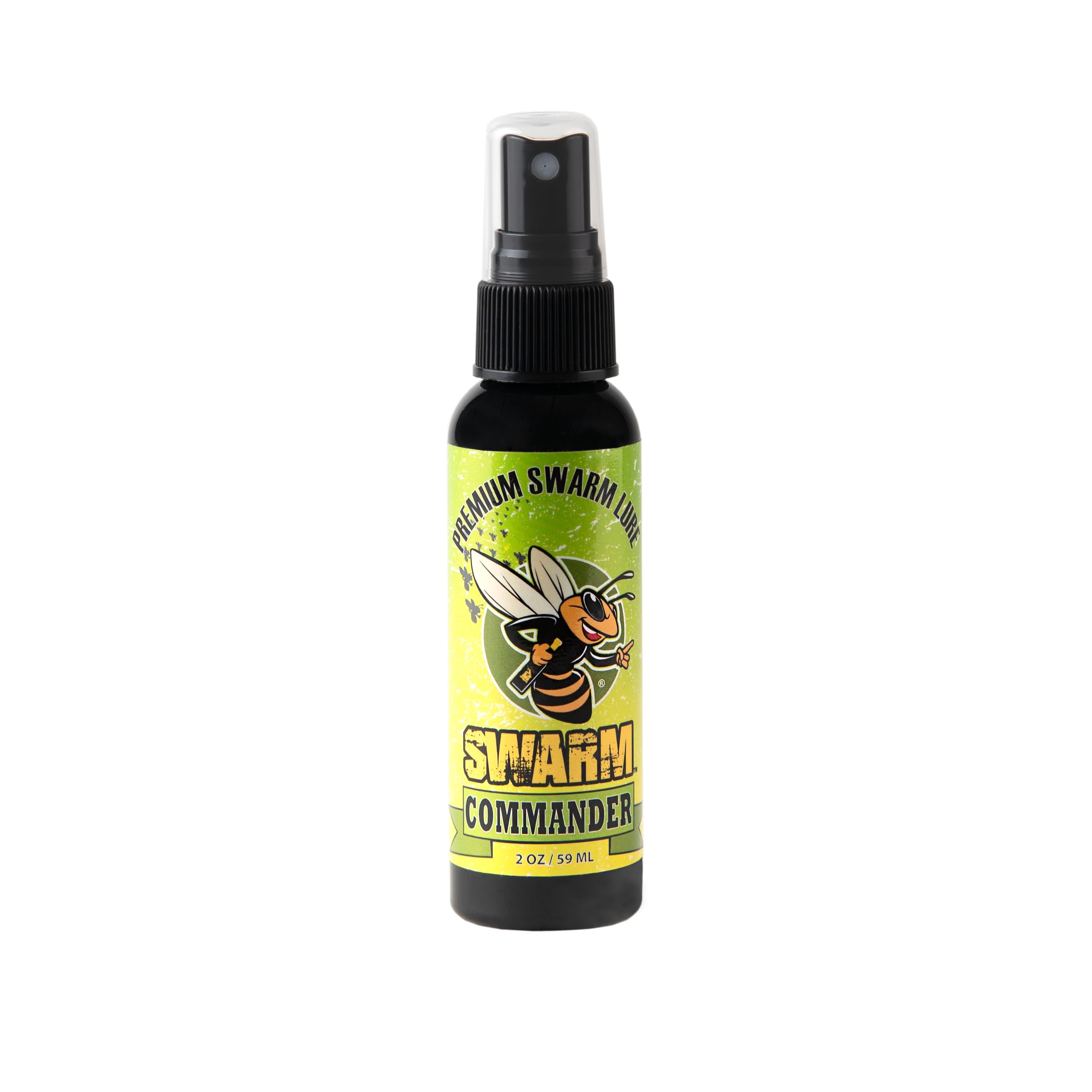
The Swarm Commander is the benchmark pheromone lure in the hobbyist and semi-professional beekeeping space. It uses gas chromatography and mass spectrometry to replicate the exact Nasonov pheromone blend honeybee swarms use to signal a viable nest location. The 2-ounce bottle with a high-mist sprayer delivers roughly 200 applications, making it cost-effective even for beekeepers running a dozen traps across multiple sites.
Buyers in tidewater Virginia and the UK both report catching 6–8 swarms per season when the lure is applied weekly to traps placed 10–15 feet high on south-facing tree edges. The formula has a minimum two-year shelf life, so you can buy a bottle and use it across multiple seasons without degradation. Several reviewers who tested lemongrass-based alternatives alongside this product confirmed the synthetic pheromone out-drew the natural oil by a clear margin.
The main constraint is that you must reapply every 7 to 14 days, especially after rain, to maintain the scent gradient that scout bees follow from a distance. A single spray per trap is sufficient—over-applying does not improve results and wastes product.
Why it’s great
- Scientifically verified Nasonov formula outperforms essential-oil alternatives in field tests
- High-mist sprayer allows precise, even coating on trap interior surfaces
- 200+ applications per bottle keeps per-trap cost low for multi-trap setups
Good to know
- Requires reapplication every 7–14 days to maintain attraction gradient
- Cannot attract swarms if traps are placed below 8 feet or in full shade
2. THE INTERCEPTOR PRO Complete Kit

The INTERCEPTOR PRO is the only kit on this list that arrives fully assembled with five deep frames, waxed foundation, a beeswax coating, a swarm lure, and mounting hardware including a tree strap and hooks. The design follows Dr. Thomas Seeley’s research on honeybee nest-site preferences—approximately 40 liters of internal volume with a small, south-facing entrance. The plastic body weighs a fraction of a wooden equivalent while remaining durable enough for multi-season outdoor exposure.
Owner Bob Frye includes a handwritten letter, a pen, and his personal cell phone number so buyers can call for placement advice. Multiple first-time swarm trappers reported catching their first swarm within days of following his recommendations on height and orientation. The kit also includes a ventilated plug that lets you seal the entrance after capture for a quiet, low-stress transport to your apiary.
The premium price reflects the completeness of the package—you do not need to buy frames, foundation, lure, or hanging gear separately. For anyone serious about swarm capture rather than just property protection, this kit removes every variable that causes beginners to fail.
Why it’s great
- Complete kit eliminates guesswork—frames, foundation, lure, and hardware included
- Lightweight plastic body with beeswax coating matches natural cavity scent profile
- Direct phone support from the manufacturer for placement troubleshooting
Good to know
- High upfront investment compared to a simple lure-and-bucket setup
- Plastic construction may not appeal to traditionalists who prefer wooden hives
3. Best Bee Brothers Turbo Trap 2.0 (2-pack)

The Turbo Trap 2.0 uses an internal four-chamber funnel system that carpenter bees enter but cannot navigate out of, without relying on pheromones or sticky surfaces. The plastic body includes a protective roof, a large clear viewport to check catch levels, and a spring-loaded door with a 9-foot pull string for touch-free emptying. Each trap covers roughly a 15-foot radius, and the dual pack gives you immediate coverage on two sides of a house or shed.
Several buyers who had failed with cheaper wooden traps reported that the Turbo Trap caught carpenter bees within days of installation, especially when placed directly over active nest holes. The trap does not attract honeybees or bumblebees, making it safe for pollinator-conscious homeowners. A user in North Carolina noted the trap was still catching bees two years later with no maintenance beyond a single application of bee paste early in the season.
The plastic build feels less premium than the Amish cedar options, but the functional advantages—visible catch monitoring, no-touch emptying, and targeted species selectivity—make this the most practical choice for most homeowners dealing with carpenter bee damage.
Why it’s great
- Clear window lets you monitor capture without disassembly or guesswork
- 9-foot pull string and spring door enable hands-free bee disposal from ground level
- Targets only carpenter bees, leaving honeybees and bumblebees untouched
Good to know
- Plastic construction may crack if left in direct winter sun for multiple years
- Requires close proximity to active nest holes for best results
4. Amish-Made Rustic Cedar Trap (2-pack)
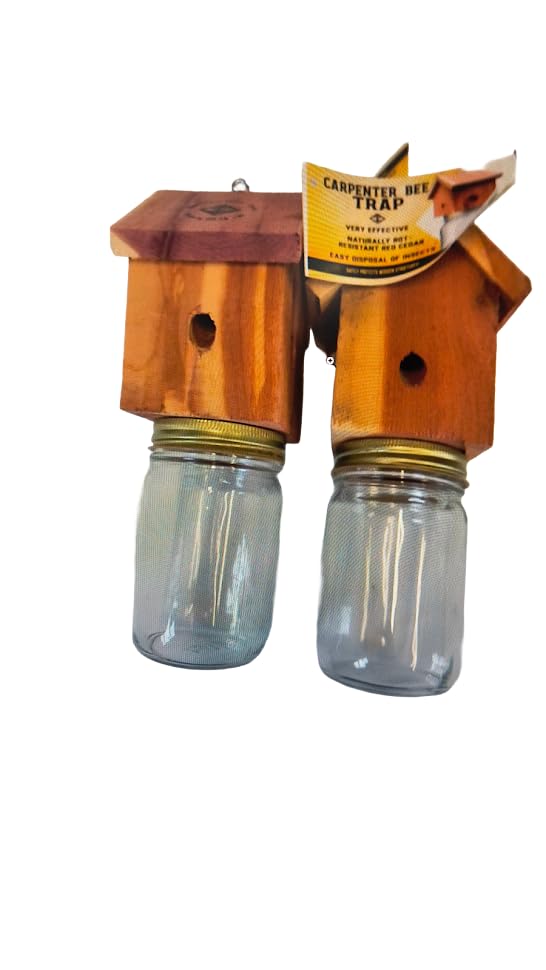
This two-pack of Amish-crafted cedar traps brings a natural wood aesthetic that blends into garden structures, log cabins, and cedar siding better than any plastic alternative. Each unit measures 10 inches tall with a 4.5-inch width, featuring a single drilled tunnel that empties into a collection jar. The cedar construction is chemical-free and safe around children and pets, and the design has a utility patent preventing honeybee attraction—a key distinction for homeowners who want carpenter bee control without collateral damage to pollinators.
Users consistently report catching 5–6 carpenter bees per week during peak spring activity, especially when a dead bee is left in the jar as a visual lure. The dual-pack is cost-effective for covering front and rear eaves simultaneously, and multiple buyers confirmed the traps caught bees within 24 hours of hanging. The cedar does weather to a silver-gray patina over time, but structural integrity remains intact across seasons.
The main downside is assembly: these traps require you to supply your own hanging string, and the jar attachment can be top-heavy, potentially causing the unit to fall if not secured firmly. Some units arrived with rough wood edges that required light sanding before use.
Why it’s great
- Natural cedar appearance complements outdoor wooden structures without plastic clutter
- Patent-protected design prevents accidental honeybee entrapment
- Two-pack provides broad coverage at a mid-range price point
Good to know
- No hanging hardware included—you must supply your own string or wire
- Some units have rough edges that may need light sanding before assembly
5. RESCUE! TrapStik 6-Pack

The RESCUE! TrapStik uses a multi-dimensional VisiLure pattern—colors and shapes that visually attract carpenter bees, wasps, mud daubers, and other stinging pests—without any chemical scent. Each of the six traps includes bird guards that prevent accidental capture of small birds and bats, addressing a common ethical concern with sticky-style traps. The 6-pack density allows you to ring the perimeter of a porch, deck, or shed for comprehensive coverage during peak emergence season.
Customer reports confirm extreme effectiveness: one user documented thousands of pests caught over a single summer. Another customer noted that baiting the trap with a dead carpenter bee resulted in 10 captures within the first hour. The non-toxic design is appealing for households with children or pets, as there is no poison in the adhesive. However, the non-selective adhesive surface also captures honeybees and beneficial pollinators, so placement near flowering plants or active hives should be avoided.
The disposable nature of the trap means you replace the entire unit once the adhesive surface fills, rather than emptying and reusing. For heavy infestations, the per-trap replacement cost adds up over a full season compared to reusable wooden traps.
Why it’s great
- Visual lure attracts multiple pest species without chemical attractants or sprays
- Bird guards reduce unintended wildlife capture compared to open sticky traps
- Six-pack density provides full perimeter coverage for moderate-sized properties
Good to know
- Adhesive surface captures honeybees and other non-target beneficial insects
- Disposable design creates ongoing replacement costs during heavy infestation periods
6. Amish-Made Rustic Cedar Trap (single)
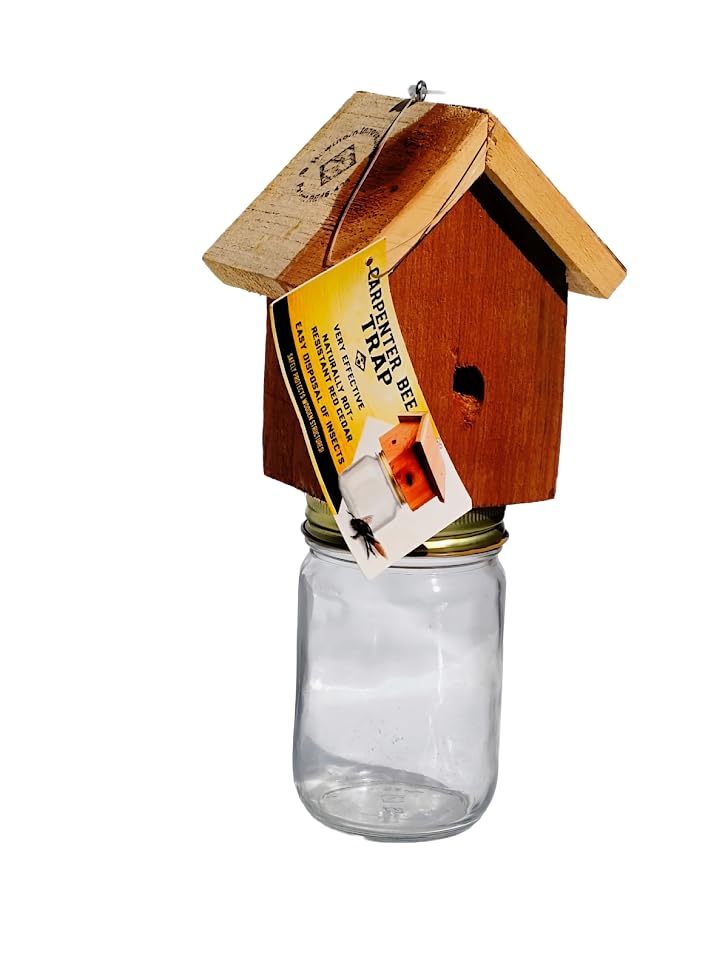
This single-unit Amish cedar trap is the most affordable entry point for homeowners who want to test whether carpenter bee trapping works on their property before investing in multi-packs. The same cedar construction, patent-protected honeybee-safe design, and single-tunnel geometry as the two-pack version are present here at roughly half the cost. The trap weighs 0.69 kilograms, making it light enough to hang from most eaves or tree branches with basic string.
Buyers reported catching 6 carpenter bees in the first three days, with a two-trap setup accumulating roughly 24 bees in a month with no new wood damage observed on the property. The primary differentiator from the two-pack is that you only get one unit, which limits coverage to a single high-activity zone. Several reviewers noted that leaving the first few dead bees in the jar dramatically accelerated subsequent catches—a free and effective baiting strategy that works with this cedar trap design.
The rustic construction means some units have slightly misaligned wood pieces or rough edges where the tunnel meets the jar. These cosmetic inconsistencies do not appear to affect trapping performance, but buyers seeking a refined finish should consider the two-pack version which seems to have tighter quality control.
Why it’s great
- Lowest-cost option to evaluate carpenter bee trap effectiveness on your property
- Same chemical-free cedar design and honeybee-safe patent as the premium multi-pack
- Lightweight at 0.69 kg for easy hanging on eaves, fences, or tree limbs
Good to know
- Single-unit coverage may be insufficient for properties with widespread carpenter bee activity
- Rustic construction can have cosmetic gaps or rough edges that require minor sanding
7. Swarm Science Swarm Lure
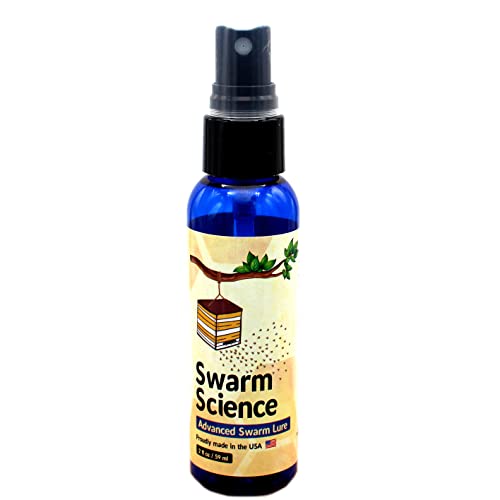
The Swarm Science lure offers a synthetic Nasonov pheromone formula at a budget-friendly price point, with each 2-ounce bottle covering roughly 100 trap treatments over a two-year shelf life. The spray nozzle delivers a direct stream rather than a mist, which some users prefer for spot-treating specific surfaces inside the trap cavity. Early-season applicators in low-population areas caught swarms that previous brand-name lures had failed to attract, suggesting the synthetic blend is competitive with premium alternatives.
The primary limitation reported across buyer feedback is inconsistency: while some users caught swarms within a week, others reported two consecutive seasons with zero captures. This variability appears to be influenced more by trap placement height and local bee population density than by the lure itself. Several reviewers who were dissatisfied initially acknowledged that their trap height—under 8 feet—was likely below the preferred scout-bee search zone.
For beekeepers on a budget who are willing to experiment with placement and reapplication frequency, this lure provides a low-cost path to testing whether swarm trapping is viable in their area. The lightweight 2-ounce plastic bottle is also convenient for carrying to remote trap sites in a vest pocket.
Why it’s great
- Competitive synthetic Nasonov formula at a budget-friendly per-bottle cost
- Two-year shelf life allows multi-season use without degradation
- Compact bottle design is portable for remote or multiple trap locations
Good to know
- Catch results vary significantly based on trap placement height and local bee density
- Stream nozzle is less precise for uniform interior coating than mist-style sprayers
FAQ
Can I use a carpenter bee trap to catch honeybee swarms?
How often should I reapply swarm lure to my honeybee trap?
What is the best height to hang a carpenter bee trap?
Do these traps attract honeybees and kill them?
Should I bait my carpenter bee trap with a dead bee?
Final Thoughts: The Verdict
For most users, the best bee swarm trap winner is the Swarm Commander Premium Swarm Lure because its synthetic Nasonov pheromone blend consistently out-attracts essential-oil alternatives across diverse climates and trap types. If you want a complete turnkey solution for honeybee swarm capture, grab the THE INTERCEPTOR PRO Complete Kit. And for chemical-free carpenter bee protection that blends into your home’s exterior, nothing beats the Best Bee Brothers Turbo Trap 2.0 for practical, touch-free operation.