
Setting up a planted tank should feel rewarding, not like a second job. The reality for most newcomers is that many aquatic plants sold in stores demand high light, injected CO₂, and a careful dosing schedule—conditions that feel overwhelming when you are just trying to keep a few fish happy. The right starter species flip that script entirely, thriving on standard aquarium lighting and forgiving the occasional missed water change.
I’m Min — the co-founder and writer behind Gadgets Feed. After spending many hours cross-referencing species hardiness, growth rates, and real-world buyer feedback, I’ve narrowed down which plants actually survive the learning curve without forcing you to buy extra gear.
This guide walks you through the most resilient options that look great from day one and stay alive through beginner mistakes, helping you find the absolute best beginner aquarium plants for your first planted tank setup.
How To Choose The Best Beginner Aquarium Plants
Not every green thing sold as an aquarium plant is appropriate for a first-time planted tank. The difference between a species that thrives and one that melts within a week comes down to light tolerance, nutrient demands, and how its root system works. Start by understanding the three main growth forms and you will avoid the most common beginner casualties.
Rhizome vs. Rooted vs. Stem Plants — Know the Difference
Rhizome plants like Anubias and Java Fern must never have their thick horizontal stem buried in substrate. You glue or tie them to wood or rock, and they pull nutrients from the water column directly. Rooted plants like Amazon Sword need a nutrient-rich substrate (sand alone won’t cut it) and a root tab to stay green. Stem plants like water wisteria grow fast and need regular trimming, which makes them more work than most beginners expect. For the lowest effort, prioritize rhizome-based species.
Light Requirements — Not All LEDs Are Equal
A stock hood light included with a starter aquarium kit typically outputs low light, measured around 15 to 25 micromoles of PAR at the substrate. Beginner-friendly plants should accept that range without stretching or losing lower leaves. If a product listing says “low light” in its care notes, it is a safer bet than species marketed as “medium” or “high light,” which will wither or grow leggy under a basic LED strip.
Pest-Free Assurance — Why Tissue Culture Matters
Many potted aquarium plants are grown outdoors or in open greenhouse ponds, which means they can carry snail eggs, hydra, or algae spores inside the pot. Tissue culture plants are grown in sterile lab conditions and arrive in a gel medium with zero hitchhikers. If you prefer to avoid unwanted snails later, look for “in-vitro” or “tissue culture” labeling. If you buy potted, plan to rinse thoroughly and quarantine for a week.
Quick Comparison
On smaller screens, swipe sideways to see the full table.
| Model | Category | Best For | Key Spec | Amazon |
|---|---|---|---|---|
| AquaLeaf 6-Species Bundle | Premium Bundle | Instant variety in larger tanks | 6 rooted plants, 6–8 inch height | Amazon |
| Swimming Creatures Java Moss | Premium Moss | Natural carpeting and shrimp habitat | 25 sq inch portion, low light | Amazon |
| AquaLeaf Amazon Sword 3-Pack | Rooted Mid-Range | Tall background structure | 3 plants, full sun tolerance | Amazon |
| Marcus Fish Tanks Java Fern 3-Pack | Rhizome Value | Fuss-free midground / background | 3 plants, 7–12 inch height | Amazon |
| Marcus Fish Tanks Java Fern + Anubias Bundle | Rhizome Starter | Two classic species in one order | 2 plants, 2–8 inch size range | Amazon |
| Ultum Nature Systems Bucephalandra Kedagang | Tissue Culture | Snail-free slow-growing foreground | Small cup, sterile in-vitro | Amazon |
| Marcus Fish Tanks Anubias Nana Petite | Budget Rhizome | Compact foreground on driftwood | 1 potted plant, 20–30 leaves | Amazon |
In‑Depth Reviews
1. AquaLeaf Aquatics Rooted Aquarium Plant Bundle (6 Species)

This is the closest thing to a complete starter garden in a single box. You receive six different rooted species—including Amazon Sword, Cryptocoryne, and others—each fully grown with an established root system that ranges from 6 to 8 inches tall. That size advantage means you get immediate visual impact rather than waiting months for tiny tissue culture plugs to fill in. The variety also lets you see which species naturally perform best under your specific lighting before buying larger quantities.
Buyers consistently note that the plants survive shipping well even when temperatures climb into the 90s, with only minimal browning on a few outer leaves. The roots arrive intact and the crowns are firm, which is the strongest predictor of successful transition into a new tank. The species selection works well for tanks 5 gallons and larger, and the mix of leaf shapes creates a natural depth effect when arranged from shortest to tallest across the aquarium.
The most frequently mentioned caveat is the snail situation. Despite being labeled as snail-free, multiple buyers report discovering small pest snails weeks after planting, which suggests the plants are grown in open ponds rather than sterile lab conditions. If you want absolute zero-hitchhiker assurance, you can combine this bundle with a bleach dip or quarantine period, but the sheer variety and healthy root mass still make it the strongest entry point for beginners who want a lush tank fast.
Why it’s great
- Six fully grown rooted species provide immediate dense coverage
- Survives warm shipping conditions with minimal leaf damage
- Perfect starting point for 5+ gallon freshwater tanks
Good to know
- Multiple reports of hitchhiker snails despite “snail-free” claim
- Some species are grown emersed and will shed leaves as they transition underwater
2. Ultum Nature Systems Bucephalandra Kedagang Japan (Tissue Culture)
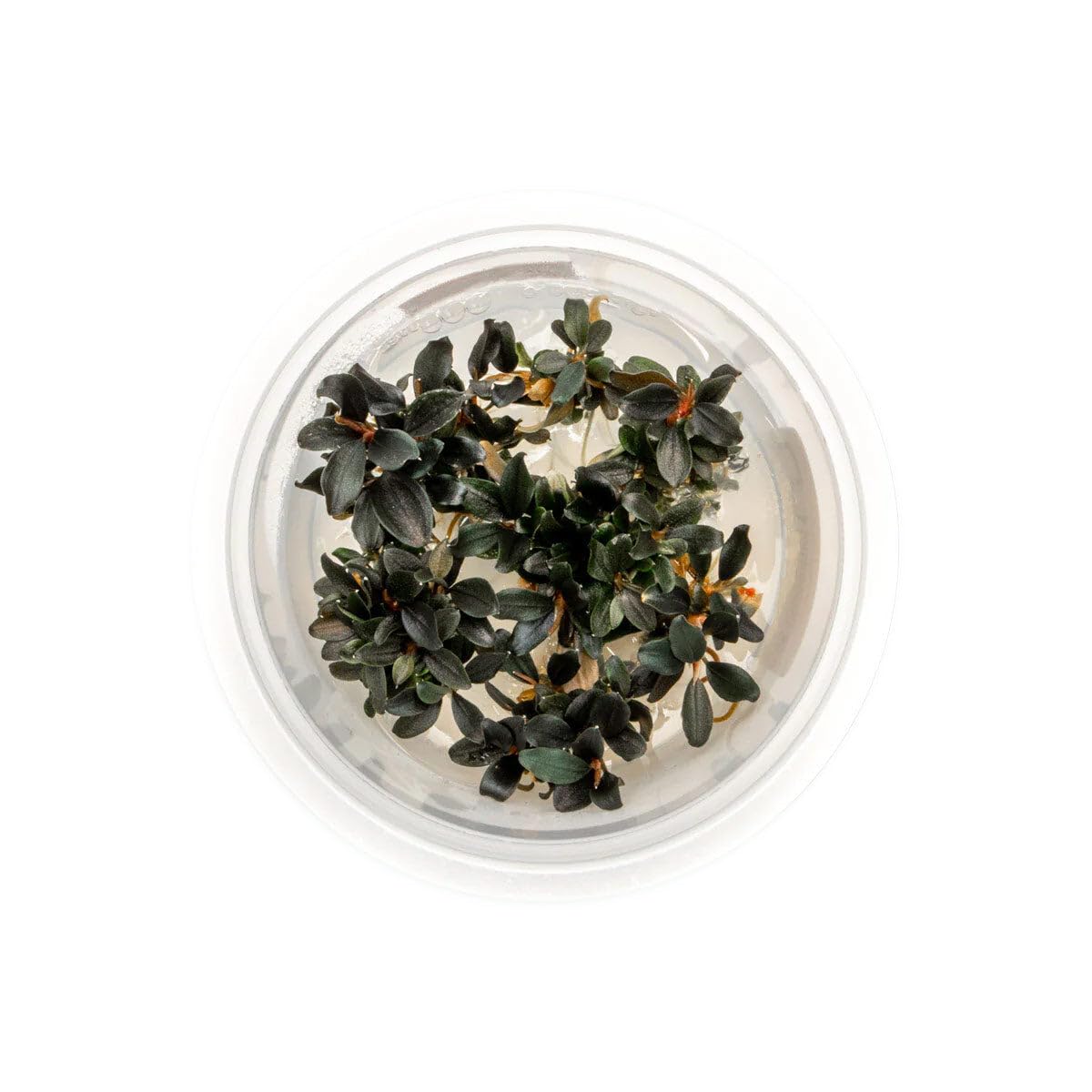
If your top priority is avoiding pest snails, algae spores, or hydra, this in-vitro cup is your safest bet. Bucephalandra Kedagang Japan is a slow-growing epiphyte with narrow leaves that show dark green edges and subtle red accents under low to medium light. Because it is grown in a sterile lab gel, there is zero chance of introducing unwanted organisms into your tank—a major peace-of-mind advantage that potted plants simply cannot offer.
The cup contains enough material to split into roughly 6 to 9 individual plantlets, giving you solid coverage for a small aquascape or enough to trade with a friend. Rinsing the gel off takes about a minute in a bowl of tank water, and the rhizomes are visible and intact, making attachment to driftwood or stone straightforward. Multiple buyers confirm that after a dry-start method or a couple of months in a low-tech tank, the plants establish firmly and grow uniformly without melting.
The trade-off is speed. This plant grows noticeably slower than Anubias or Java Fern, so if you want rapid filling, this is not the pick. It performs best as a foreground detail or accent on hardscape where its red tint can contrast against broader green leaves. The small cup size also means you are paying more per plantlet compared to potted options, but the sterile guarantee and clean roots justify the premium for pest-phobic beginners.
Why it’s great
- Zero pest risk—lab-grown tissue culture with no snails or algae
- Unique red-accented leaves add color under low light
- Easy to split into many plantlets for wider coverage
Good to know
- Very slow growth rate; not for filling a tank quickly
- Higher price per plant compared to standard potted Anubias
3. Swimming Creatures Java Moss (25 sq inch Portion)
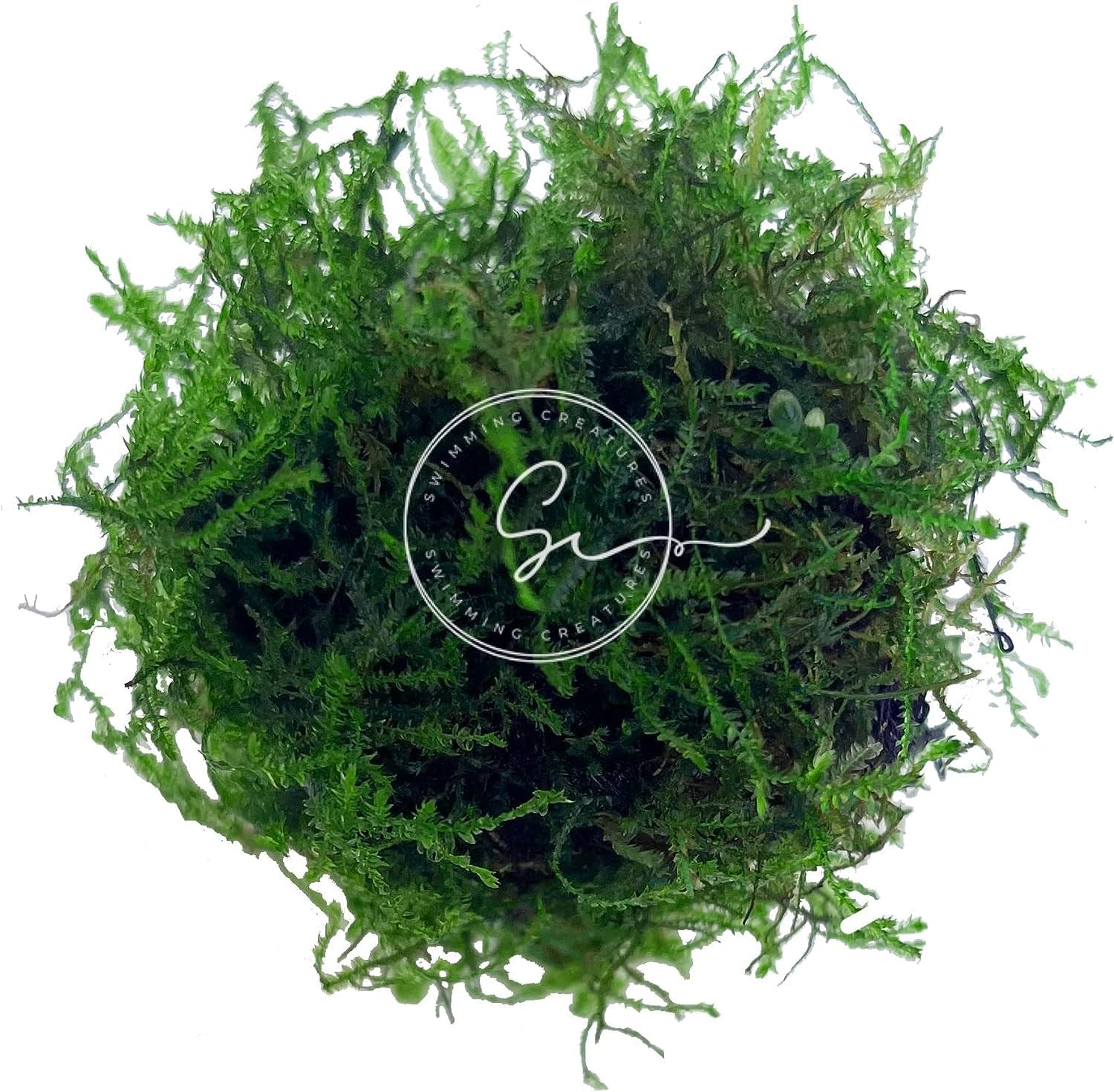
Java Moss is arguably the most forgiving plant in the freshwater hobby, and this portion delivers a generous 25-square-inch mat that is ready to spread across driftwood, mesh, or the substrate. The moss arrives in a sealed bag with enough moisture to survive a week in transit, and buyers consistently report that even portions that sat in packaging for days bounced back with bright green new growth within 24 hours of submersion.
Because it lacks true roots, Java Moss absorbs nutrients directly from the water column, meaning it needs no special substrate or root tabs. This makes it ideal for nano tanks, shrimp breeding setups, or any aquarium where you want a natural carpet without complicated planting techniques. You can simply lay it on the bottom, tie it to a rock with fishing line, or sandwich it between two pieces of mesh for a moss wall. The texture also provides excellent cover for fry and microfauna.
The primary downside is that the product arrives as loose clippings rather than a pre-attached mat, so it will take time—typically a few weeks—to anchor and begin growing in the direction you want. Some buyers note that the initial portion can look thin compared to expectations, but once established, it grows quickly enough to require regular trimming. This is a high-value option for anyone who wants a low-tech, fast-spreading carpeting plant without purchasing CO₂ gear.
Why it’s great
- Extremely forgiving—survives varied water parameters and shipping delays
- No substrate rooting needed; absorbs nutrients from water column
- Generous portion size for covering a medium driftwood branch or corner
Good to know
- Arrives as loose clippings rather than an attached mat
- Initial look can be sparse until it anchors and grows
4. Marcus Fish Tanks Java Fern 3-Pack

Java Fern (Microsorum pteropus) is the gold standard for beginner aquariums because it tolerates low light, soft or hard water, and even the occasional skip of fertilizer without showing distress. This three-pack from Marcus Fish Tanks delivers plants that typically measure 7 to 12 inches tall, making them an immediate background or midground filler in a standard 10-gallon tank. Each plant arrives with a visible rhizome and a handful of dark green, undamaged leaves.
Buyers consistently praise the packaging and health of these ferns. Multiple reviews note that the plants arrived moist, green, and free of yellowing or melt even after a week in transit. The root systems are clear and intact, which makes attaching them to wood or rock with super glue gel or thread a quick process. Once secured, the rhizome should sit above the substrate line—burying it is the single fastest way to kill a Java Fern.
The only real limitation is that three plants of the same species give you a uniform look rather than variety. If you want a more natural aquascape with different leaf shapes and heights, you would need to supplement with Anubias or a stem plant. But for a low-effort, high-success-rate background that looks full within a month, this pack delivers unbeatable reliability per dollar spent.
Why it’s great
- Tolerates a wide range of water parameters and low light
- Large mature plants with visible rhizomes for easy attachment
- Excellent packaging—arrives green and moist even during temperature swings
Good to know
- All three plants are the same species—no variety in leaf shape
- Rhizome must never be buried; attachment to hardscape is required
5. Marcus Fish Tanks Java Fern and Anubias Bundle
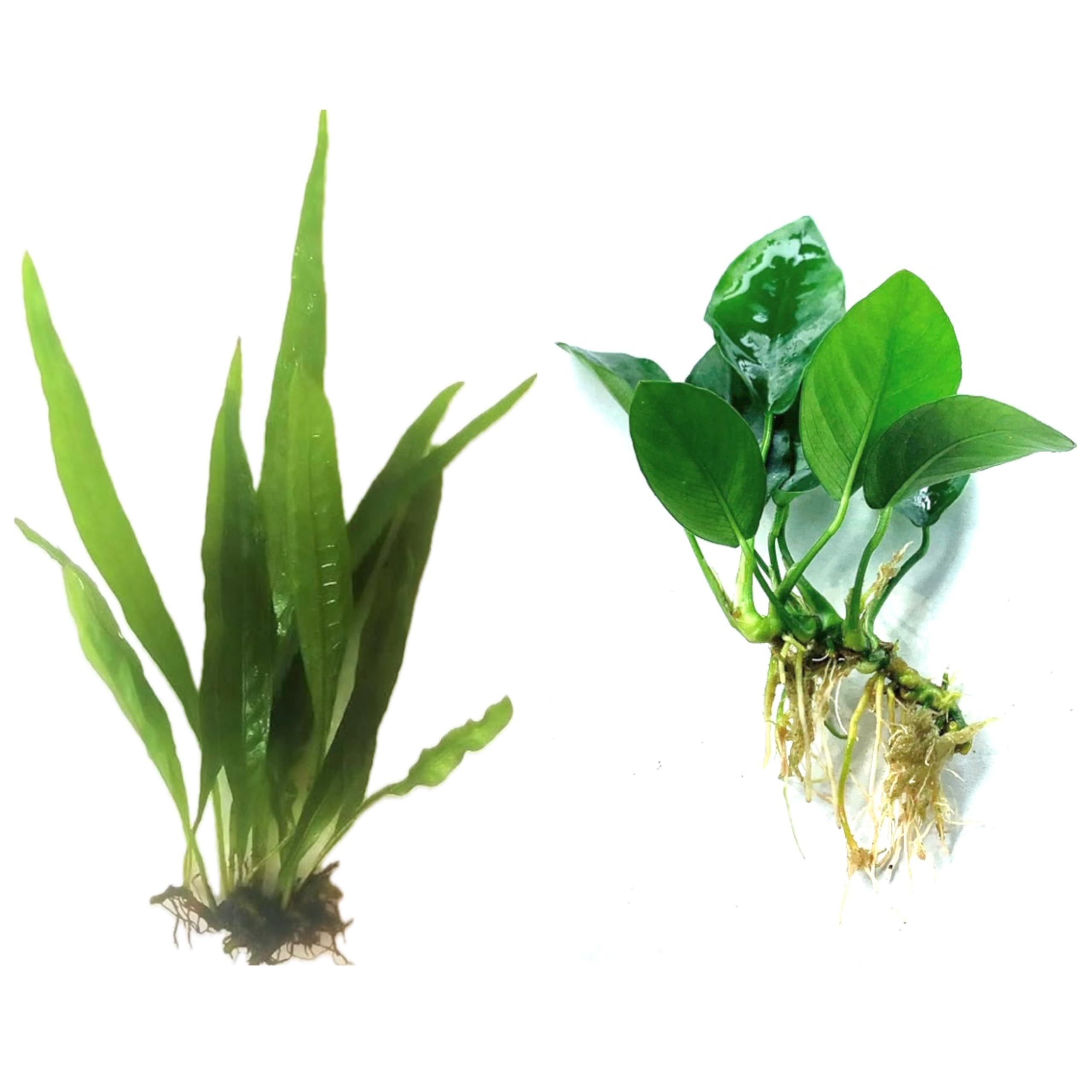
This bundle solves the “which two plants should I start with” question by pairing the two most beginner-proof species in the hobby: Anubias barteri and Java Fern. The Anubias arrives with 2 to 6 inch leaves, while the Java Fern measures 4 to 8 inches, giving you a natural height contrast that looks intentionally arranged rather than random. Both are epiphytes, so the attachment method is identical—glue or tie to hardscape—making setup extremely simple.
Customer reports highlight that the plants arrive in excellent condition with vibrant green coloration and strong root structures. Many buyers mention that even with extended shipping times, the leaves did not melt or turn yellow, and both species adapted to a new betta tank within days. The compact size of the Anubias barteri works well glued to a small piece of driftwood in the foreground, while the taller Java Fern fills the midground behind it.
The bundle includes just two plants, so you will need to order additional units if you are stocking a tank larger than 10 gallons. The packaging is consistent with other Marcus Fish Tanks products—moist paper wrap inside a sealed bag, with clear instructions to not bury the rhizome. For the absolute lowest-risk introduction to planted aquariums, this duo teaches you the epiphyte method with zero guesswork.
Why it’s great
- Pairs the two easiest aquarium plants in one purchase
- Natural height contrast creates a layered look immediately
- Excellent survival rate in transit with minimal leaf damage
Good to know
- Only two plants—insufficient for tanks larger than 10 gallons
- Cannot be planted directly in gravel; must attach to hardscape
6. AquaLeaf Aquatics Amazon Sword 3-Pack

Amazon Sword (Echinodorus grisebachii) is the classic background plant that gives a tank that “grown-in” jungle look, and this three-pack delivers fully rooted specimens with visible crown development. Each plant arrives bare-root wrapped in moist material, and the root mass is substantial enough to anchor immediately in a nutrient-rich substrate. The leaves are broad and tall, providing excellent cover for fish that prefer shaded areas and creating a dramatic vertical line in the back of the aquarium.
Buyer feedback is generally strong, with many noting that the swords arrived huge and healthy with only minor cosmetic damage from shipping. The plants are grown emersed, which means they may shed their initial leaves as they transition to submerged growth, but the crown and roots are robust enough to push out new underwater-adapted leaves within a couple of weeks. The 3-pack spacing is perfect for a standard 20-gallon long tank, planted about 4 to 6 inches apart across the back wall.
The main risk is that Amazon Sword is a heavy root feeder. Without root tabs or a nutrient-rich aquasoil, the older leaves will develop yellow spots and holes from potassium or iron deficiency. This makes it less forgiving than epiphyte plants if you are using plain gravel without fertilization. Beginners willing to add a root tab every few months will be rewarded with rapid growth, but those wanting a completely hands-off plant should stick with Anubias or Java Fern instead.
Why it’s great
- Fast-growing background plant that fills vertical space quickly
- Large healthy root systems with visible crowns on delivery
- Dramatic transformation from emersed to submerged growth is rewarding
Good to know
- Requires root tabs or nutrient-rich substrate to prevent leaf holes
- Initial emersed leaves may melt before new submerged leaves appear
7. Marcus Fish Tanks Anubias Nana Petite (Potted)

Anubias Nana Petite is the smallest variety of Anubias available, making it the ideal foreground accent for nano tanks or detail spots on driftwood. This potted specimen comes with 20 to 30 compact leaves that stay under two inches tall, creating a low, dense mat that does not overshadow smaller fish like chili rasboras or shrimp. The leaves are a rich, dark green with a thick cuticle that resists algae growth, a common problem with slower-growing plants under strong light.
Customer reviews consistently emphasize how healthy and vibrant the plants arrive, with strong roots packed in organic material that rinses off easily. The small pot keeps the rhizome protected during shipping, and many buyers report that the plants were in such good condition that they could immediately split the clump into two or three separate pieces for broader coverage. Because the petite variety stays tiny, you can place it on a small piece of wood in the very front of the tank without blocking the view of the hardscape.
The obvious constraint is quantity—you get a single 1-inch pot, which covers roughly a 2×2 inch area when fully spread. If you want a substantial foreground carpet with this species, you will need to buy multiple pots. The price per pot is low enough that buying three or four to fill a driftwood shelf is not expensive, but the listing image can sometimes make the plant look larger than it actually is. For the price of a fast-food meal, however, you get a bulletproof plant that stays healthy even through beginner mistakes like forgetting to dose fertilizer for weeks.
Why it’s great
- Stays compact—perfect for foreground detail in tanks as small as 5 gallons
- Thick leaves resist algae better than most slow-growing plants
- Arrives in excellent health with strong roots that split easily
Good to know
- Single pot covers a very small area—buy multiple for carpeting
- Very slow growth rate; does not fill empty space quickly
FAQ
Can beginner aquarium plants survive in a tank without CO₂ injection?
How do I attach Anubias or Java Fern to driftwood without damaging the plant?
Why are my Amazon Sword leaves developing small holes and turning yellow?
Final Thoughts: The Verdict
For most users, the beginner aquarium plants winner is the AquaLeaf Aquatics Rooted Plant Bundle because it gives you six different species with established root systems that fill a 20-gallon tank immediately, letting you see which plants thrive in your specific water before committing to more of any one type. If you want absolute pest-free assurance and a unique red-accented foreground, grab the Ultum Nature Systems Bucephalandra Kedagang. And for the most budget-friendly, bulletproof background plant that requires zero substrate care, nothing beats the Marcus Fish Tanks Java Fern 3-Pack.