
Our readers keep the lights on and my morning glass full of iced black tea. As an Amazon Associate, I earn from qualifying purchases.
Specs are compiled from manufacturer listings and verified buyer reviews and can change over time — please confirm the key details on the product page before buying.
The biggest fear with a first bonsai isn’t choosing the wrong pot — it’s watching the thing die on your windowsill despite your best efforts. The difference between a tree that thrives and one that drops all its leaves in the first week often depends on picking the right species and the right start. Below are four beginner-friendly bonsai options, each with the exact care needs to stay alive and look good, so you start with a tree that matches your home and habits.
I’m Min — the founder and writer behind Gadgets Feed. This guide is built by comparing the manufacturers’ published specifications and the patterns across verified customer reviews, so you get each pick’s real strengths and trade-offs instead of marketing spin.
Below you will find four hand-picked options that make up the best selection of a beginner bonsai tree, each chosen for its ability to survive real-world living room conditions without demanding a horticulture degree.
Our Picks at a Glance

How To Choose The Best Beginner Bonsai Tree
Picking your first bonsai is less about luck and more about matching your environment to the tree’s needs. The two biggest filters are light and temperature — some trees need a bright windowsill indoors, while others demand a full season of outdoor cold to survive. Here are the key factors to weigh before you click “buy.”
Indoor vs Outdoor: Pick the Right Spot First
The single most common mistake beginners make is keeping an outdoor bonsai tree inside. A juniper, for example, needs a winter dormancy period with temperatures below 50°F — that will not happen on a shelf in your living room. On the other hand, a Dwarf Jade (a succulent) or a Ming Aralia will thrive indoors with bright indirect light and room temperatures year-round. Know your climate and your home before you choose.
Watering Needs and Your Schedule
Some bonsai, like the Satsuki Azalea, want consistently moist soil and will show stress within hours if they dry out. Others, like the Dwarf Jade, store water in their thick leaves and forgive you if you forget a day. If you travel often or have a busy work week, a succulent-style bonsai is generally a safer start than a thirsty flowering variety.
Age and Size Expectations
A 3-year-old tree is naturally smaller and more delicate than a 6-year-old specimen. Beginners often expect a full, dense canopy immediately, but a younger tree (like the 3-year-old Green Mound Juniper at 4-6 inches) needs time to fill out. Older trees (like the 6-year-old Dwarf Juniper) give you a more established look from day one, but they also cost more. Your patience level is part of the equation.
Quick Comparison
| Model | Best For | Indoor / Outdoor | Age | Plant Height | Amazon |
|---|---|---|---|---|---|
| Live Dwarf Juniper (Generic)★ Best Overall | Gift-Ready Established Tree | Indoor/Outdoor | 6 Years | 9 Inches | Amazon |
| Brussel’s Dwarf JadeTop Performer | Forgiving Indoor Succulent | Indoor | 3 Years | 5-8 Inches | Amazon |
| Brussel’s Satsuki Azalea | Outdoor Flowering Display | Outdoor | 5 Years | 5-8 Inches | Amazon |
| California Tropicals Ming Aralia | Budget Indoor Tree | Indoor | — | 6 Inches | Amazon |
In‑Depth Reviews
1. Live Dwarf Juniper Bonsai Tree About 6 Years Old with Cute Ceramic Fisherman
Our pick — 4.5★ from 550+ verified ratings; the strongest balance of quality and price.
A 6-year-old juniper that arrives looking like it already lived in a gallery.
Getting a tree that already has six years of growth is the biggest shortcut to a bonsai that looks like a real piece of living art rather than a tiny houseplant. This one stands at about 9 inches tall (the tallest in our lineup), giving you a full, dense canopy and a thick trunk right from the start. It comes with a glazed ceramic pot and a small fisherman figurine, so the whole presentation feels like a gift-ready set — buyers report it arrived healthy and on time, and that it “makes a thoughtful, charming gift.”
It is hand-grown, not mass-produced in a greenhouse, meaning every tree has its own shape, and the pot color or shape may vary from what you see in the photo. It lives outdoors or on a bright sunny indoor windowsill, and the care instructions say to keep the soil moist at all times — do not let it dry out. One reviewer noted the tree “was slightly dry from shipping but perked up after watering,” so expect some travel stress and give it a good drink on day one.
The main thing to know before buying: this is a living tree, and the seller warns it may die during return shipping, so be certain you want it before ordering. It is also higher-maintenance than some alternatives — one experienced buyer rated it 4 out of 5, noting it is “high-maintenance” and “not recommended for beginners” without extra fertilizer and soil.
Established Look
- 6 years of growth gives a thick, full appearance from the start
- Arrives at 9 inches tall — 3 inches taller than the Brussel’s Green Mound Juniper
- Comes with ceramic pot and decorative figurine, gift-ready
Needs Attention
- Can be fussy — one buyer called it high-maintenance and needing specialized care
- Shipping risk: seller warns tree may not survive a return trip
- Pot color and shape vary from the listing photo
Reach for this if: you want the most instant bonsai look without waiting years for a young tree to mature, and you are ready to provide regular watering and a sunny spot.
Look elsewhere if: you want a low-fuss plant that forgives forgetfulness, because this one needs consistent moisture and is sensitive to neglect.
2. Brussel’s Bonsai – Live Dwarf Jade Bonsai Tree in a Ceramic Bonsai Pot
The succulent bonsai that keeps living long after you forget to water it.
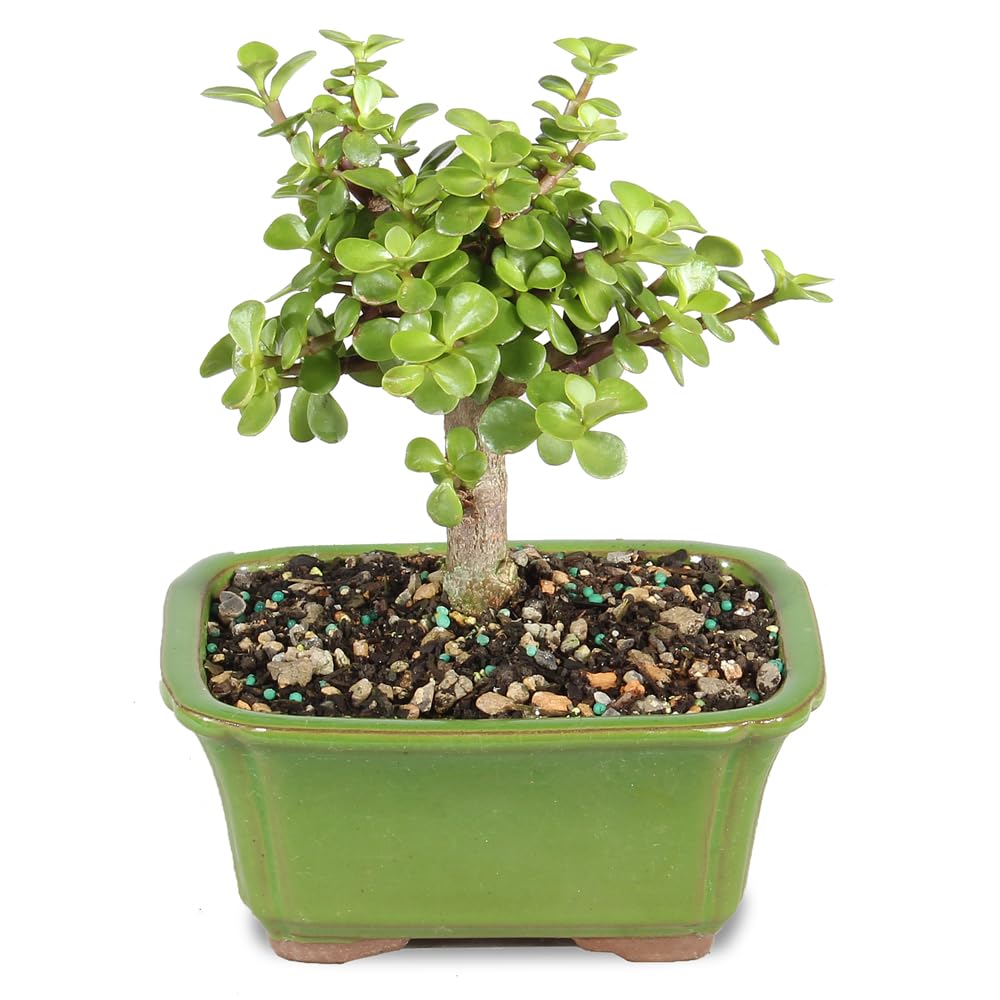
If you want a bonsai that actually survives indoor life — and your busy schedule — the Dwarf Jade is your best bet. It is a succulent (Portulacaria afra), which means it stores water in its thick, glossy leaves and only needs a drink when the soil feels dry. At 3 years old and 5 to 8 inches tall with a thick woody trunk, it already looks convincing as a miniature tree without the high-strung habits of a juniper. It is also one of the lightest trees in this roundup at 3 pounds, so moving it around or placing it on a shelf is easy.
Buyers consistently praise how well it arrives — one buyer mentioned it was “much bigger than I thought which is a plus,” and another said the navy blue pot it came in was a nice surprise. The Brussel’s Bonsai brand has shipped thousands of these, and the roots are well-established in the included ceramic container. Just give it bright light and moderate watering, and it pretty much keeps itself.
The one downside some owners hit: the soil mix it ships in can arrive too wet. One owner reported the peat-based soil was “shipped saturated, causing root hypoxia” and had to repot in a perlite-lava mix. If yours arrives soaked, let the soil dry out fully before watering again to avoid root stress.
Forgiving Nature
- Thick succulent leaves store water, so missed waterings rarely kill it
- Thrives indoors with bright light — no outdoor dormancy needed
- Light 3-pound weight makes it easy to place or move
Check Soil on Arrival
- Some trees ship in very saturated soil, requiring immediate repotting or drying
- Occasional leaf drop after shipping is normal but can worry new owners
- Does not flower — stays green year-round with no blooms
Best for: anyone who wants a real bonsai look without a strict watering schedule, especially offices and apartments with limited natural light.
Skip if: you want a flowering bonsai or prefer a tree that needs more hands-on trimming and shaping to stay small.
3. Brussel’s Bonsai – Live Satsuki Azalea Bonsai Tree with Bonsai Pot and Humidity Tray
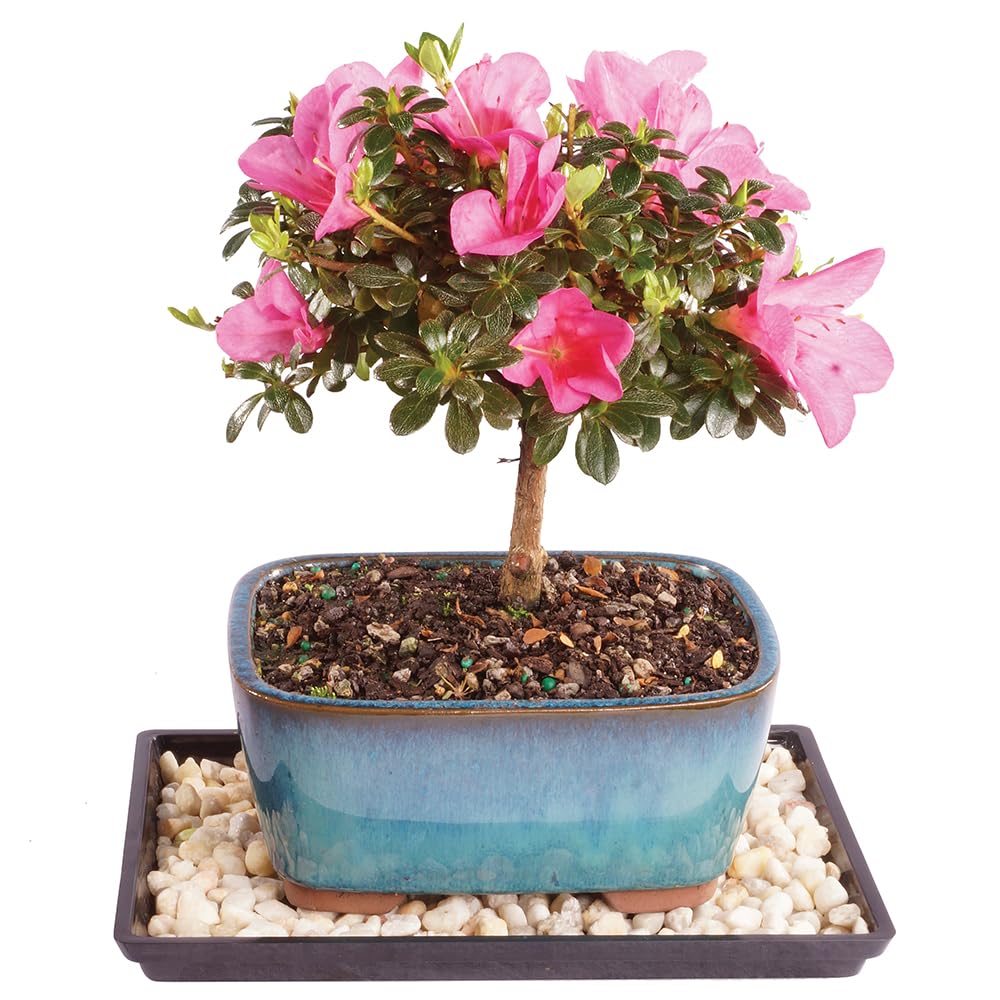
The flowering tree that turns spring into a pink spectacle on your patio.
Most bonsai stay green year-round, so the Satsuki Azalea stands out the moment it blooms. It produces vibrant flowers in spring (the “Satsuki” variety is famous for showy pink blossoms) and keeps compact growth the rest of the year. At 5 years old and 5 to 8 inches tall, it is older than the junipers above, which means a thicker trunk and a more mature look. It arrives in a bonsai pot with a humidity tray included, so you can set it on a patio table right away without buying anything extra. It also weighs 7 pounds — noticeably heavier than the 3-pound Dwarf Jade — giving it a solid, grounded feel.
One thing to be honest about: it is an outdoor tree, just like the Green Mound Juniper. It needs winter dormancy and does not do well indoors. And despite its beauty, some buyers have had bad luck with specific varieties. One reviewer who bought three bonsais from Brussel’s said the Chinese plum tree “looked healthy when it arrived, but immediately died, even though I followed the directions and environment.” They still recommended the brand, noting that the blueberry and Hawaiian umbrella trees were “awesome and healthy.”
It is also worth knowing that Brussel’s recommends shipping only when nighttime temps exceed 50°F between Mississippi and your destination. If you live in a cold winter region, you may want to hold off until spring for the healthiest arrival.
Seasonal Show
- Produces real spring flowers — rare in the bonsai world
- Comes with both a ceramic bonsai pot and a humidity tray
- 5-year-old tree gives a more mature trunk and branching structure
Fussy Flowering
- Needs consistently moist soil — dries out faster than junipers on a hot day
- Shipping limited to warmer months (night temps above 50°F)
- One customer observed a plum variety died immediately despite following care instructions
Go for this if: you want a flowering bonsai to decorate an outdoor sitting area and are willing to keep the soil moist through the summer.
Think twice if: you need a low-water plant or live in a very hot climate where keeping soil consistently damp is a chore.
4. California Tropicals Ming Aralia 6” Live Bonsai Tree
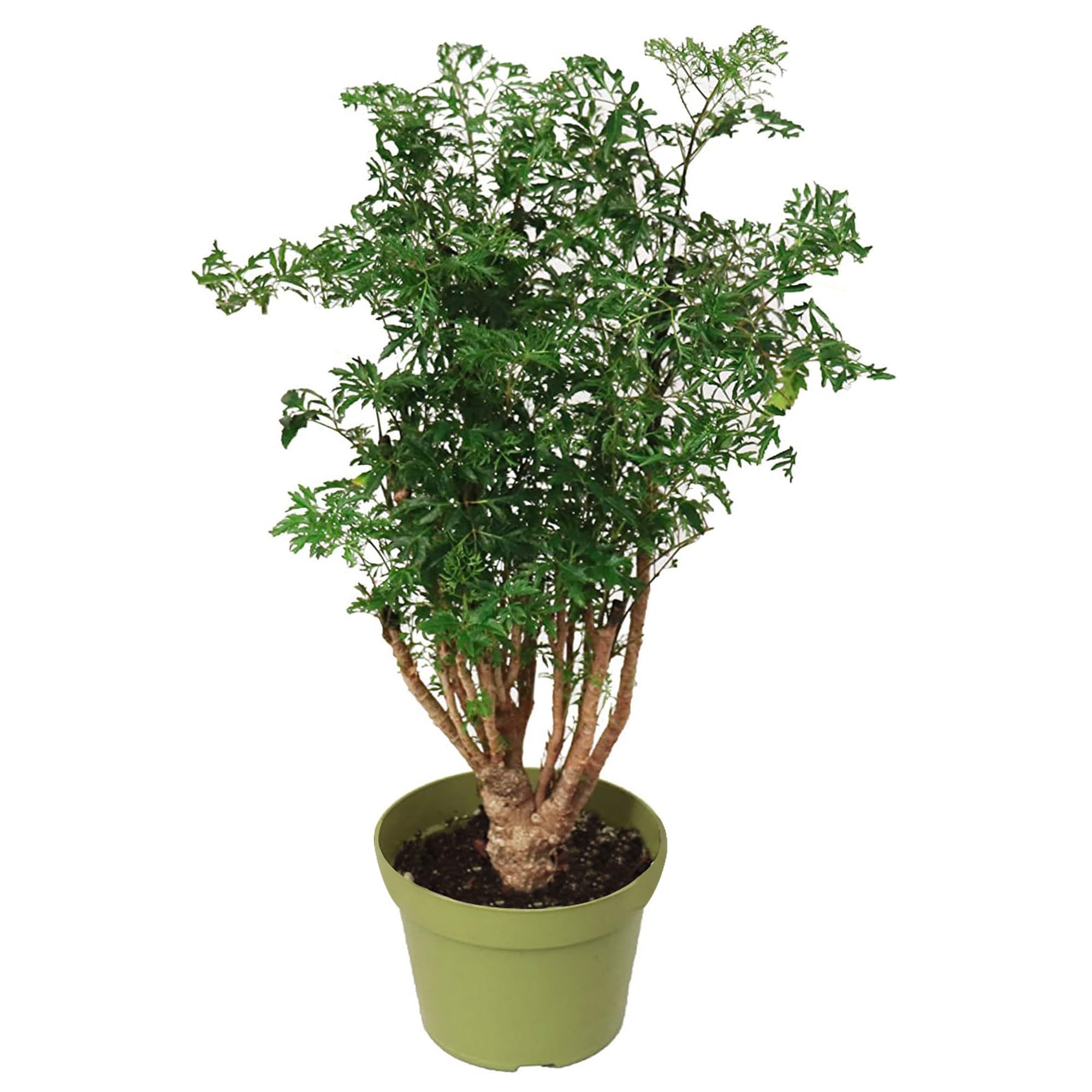
The no-fuss indoor tree that arrives bigger than you expect.
If you are testing the bonsai waters and do not want to spend much, the Ming Aralia from California Tropicals is a solid entry point. It is an evergreen houseplant with a unique lacy leaf structure that looks distinctly bonsai-like without being a traditional juniper or pine. It comes in a 6-inch pot, making it a true desktop size, and the brand says it needs “minimal watering and light” — it can handle full sun or partial shade. One buyer was pleasantly surprised, saying it was “closer to 12 inches than 6 inches” after arrival, giving you more height than the label suggests.
The packaging is consistently praised across reviews. Buyers describe it as “really cool and safe,” with one noting the tree was “not damaged” even though the box took some rough handling. Another reviewer with experience growing Ming Aralias (notoriously temperamental plants) said theirs “arrived in great shape and has flourished in the ~3 months I have had it.” That is an encouraging sign for a beginner, since the species can be finicky under the best conditions if shipped poorly.
The honest trade-off here is that Ming Aralia is slower-growing than a juniper and has a looser, more open shape — it will not look like a dense mountain tree. And while it is sold as a bonsai, it is really a houseplant trained to look like one, so you may not get the traditional thick trunk or branch structure a dedicated bonsai enthusiast would expect.
Easy Entry
- Requires minimal watering and light, suitable for low-effort care
- Often arrives bigger than listed — one buyer measured nearly double the height
- Clean, safe packaging that protects the plant during shipping
Not a True Bonsai
- Grows a looser, more open shape — lacks the dense canopy of a traditional bonsai
- Slower growth rate means you wait longer for a fuller look
- Ming Aralia species can be temperamental if overwatered or placed in drafty areas
Ideal for: a first-time plant owner or gift buyer on a smaller budget who wants a live indoor tree with minimal demands.
Pass on if: you want a classic bonsai silhouette with a thick trunk and dense branching, because this is more of a decorative houseplant in bonsai-style.
Understanding the Specs
Indoor vs Outdoor Classification
This is the single most important spec on any bonsai tag. An indoor bonsai (like a Dwarf Jade or Ming Aralia) stays inside year-round and needs bright indirect light at room temperature. An outdoor bonsai (like a Juniper or Satsuki Azalea) needs a dormant winter period with cold temperatures — typically 20°F to 50°F — and will die if kept in a warm living room all year. Check the “Indoor Outdoor Usage” field before you check out, and make sure your home or patio matches the tree’s needs.
Tree Age and Plant Height
The age of a bonsai tells you roughly how developed the trunk and root system are. A 3-year-old tree is still young and will need time to thicken, while a 5- or 6-year-old tree looks more like a mature miniature landscape from day one. The expected plant height gives you the physical size — a 9-inch tree needs a bigger window or shelf than a 4-inch compact variety. Always cross-reference age with height: a tall young tree may be stretched (leggy), while a short older tree usually means it has been well-pruned and trained.
FAQ
Can I keep a beginner bonsai tree indoors on my desk?
How often do I need to water a beginner bonsai tree?
What is the best beginner bonsai tree for someone who forgets to water?
Why did my bonsai tree die within the first week?
Should I repot my bonsai tree as soon as it arrives?
What is the difference between a juniper and a Dwarf Jade bonsai?
How much light does a beginner bonsai tree need?
Can I prune or shape my beginner bonsai tree right away?
Is a 3-year-old bonsai too young for a beginner?
Final Thoughts: The Verdict
For most people, the best beginner bonsai tree is the Brussel’s Dwarf Jade because it combines a convincing miniature-tree look with the easy-going care of a succulent — it survives missed waterings and lives indoors on any bright shelf. If you want the most established, gift-ready appearance with the tallest foliage, grab the 6-Year-Old Dwarf Juniper. And for a classic outdoor patio tree that handles beginner mistakes without dying, the Brussel’s Green Mound Juniper is the most forgiving choice.
How We Picked
We do not accept paid placement. Every pick is matched to a real buyer and a real use-case; we do not hands-on test units.
Sources & Methodology
Specifications: manufacturer listings and product documentation. Review insights: verified customer reviews, as of July 2026. Pricing: not shown on this page (it changes often); check the current price via the retailer link.
As an Amazon Associate, Gadgets Feed earns from qualifying purchases. This does not affect which products we feature.