
Starting a vlog channel is exciting, but nothing kills your confidence faster than shaky footage, blurry faces, and audio that sounds like it was recorded in a tunnel. The right camera handles all three without a steep learning curve, letting you focus on your content instead of fighting your gear.
I’m Min — the co-founder and writer behind Gadgets Feed. I’ve spent countless hours dissecting sensor sizes, stabilization systems, and autofocus algorithms to help new creators skip the expensive trial-and-error phase of finding their first vlogging setup.
Whether you are filming product reviews, daily vlogs, or travel content, choosing the right beginner camera for vlogging means balancing portability, stabilization, and video quality without breaking the bank or getting buried in menus.
How To Choose The Best Beginner Camera For Vlogging
The vlogging camera market is flooded with options, but for a beginner, three core pillars separate the winners from the frustrating also-rans: stabilization type, sensor size, and autofocus reliability. Each directly affects the footage your audience sees.
Stabilization: Gimbal vs. In-Body vs. Electronic
Mechanical 3-axis gimbal stabilization (built into pocket cameras like the DJI Osmo Pocket 3 or Xtra Muse) physically floats the lens, eliminating the jittery micro-shake that makes handheld footage look amateur. In-body stabilization (IBIS) in mirrorless cameras reduces shake but cannot match a gimbal for smooth walking shots. Pure electronic stabilization crops the frame and can introduce a jelly-wobble effect in motion. For vlogging where you move and talk simultaneously, a dedicated gimbal system or a camera with robust IBIS is non-negotiable.
Sensor Size: Why 1-Inch Is the Sweet Spot
The physical sensor size is the single biggest factor determining low-light performance and background blur. A 1-inch CMOS sensor collects significantly more light than the tiny 1/2.3-inch sensors found in cheap action cameras or budget camcorders. This translates to cleaner footage when you vlog indoors, during golden hour, or under cloudy skies. Larger APS-C sensors deliver even better depth-of-field control but require interchangeable lenses, adding bulk and cost. For a true point-and-shoot vlogger, a 1-inch sensor offers the best image quality per gram of weight.
Autofocus: Face and Eye Tracking
Having reliable subject tracking is the difference between a crisp talking-head shot and one that constantly hunts in and out of focus. Phase-detection autofocus with dedicated face and eye detection (found in Sony and Canon mirrorless cameras) locks onto your face and follows you around the frame, even when you turn your head or bring an object into view. Contrast-detection-only systems struggle when you move quickly or enter a shadow. Pocket gimbal cameras use active tracking (like DJI ActiveTrack 6.0) that keeps you centered while the camera physically pans to follow you — ideal for solo creators on tripods.
Quick Comparison
On smaller screens, swipe sideways to see the full table.
| Model | Category | Best For | Key Spec | Amazon |
|---|---|---|---|---|
| DJI Osmo Pocket 3 | Pocket Gimbal | Walk-and-talk vlogging | 1” CMOS, 4K/120fps, 3-Axis Gimbal | Amazon |
| Xtra Muse | Pocket Gimbal | Budget gimbal alternative | 1” CMOS, 4K/120fps, 3-Axis Gimbal | Amazon |
| Sony ZV-E10 | Interchangeable Lens | Lens versatility & photo/video hybrid | APS-C 24.2MP, 4K (6K oversampled) | Amazon |
| Canon EOS R100 | Mirrorless Kit | Dual Pixel AF beginners | APS-C 24.1MP, 4K/24fps, RF Mount | Amazon |
| Sony ZV-1F | Compact Point-&-Shoot | Ultra-wide selfie framing | 1” sensor, 20mm F2.0 lens | Amazon |
| Sony ZV-1F Kit | Kit Bundle | All-in-one starter package | 1” sensor, 20mm lens, accessories | Amazon |
| Canon PowerShot V10 | Ultra-Compact Stand | Pocket-size simplicity | 1” CMOS, fixed 19mm lens, stand | Amazon |
In‑Depth Reviews
1. DJI Osmo Pocket 3
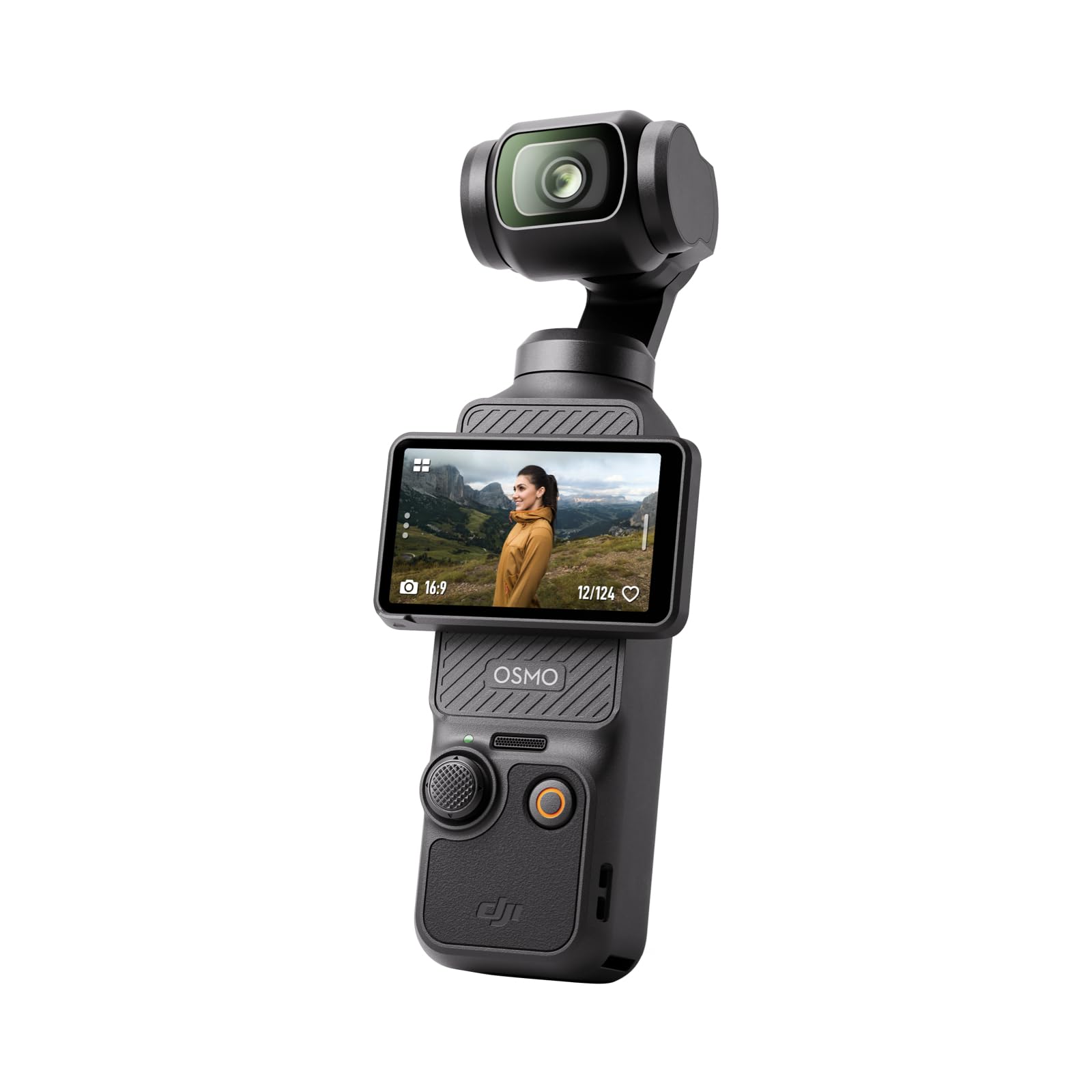
The DJI Osmo Pocket 3 sets the benchmark for beginner vloggers who want gimbal-smooth footage without a separate stabilizer. Its 1-inch CMOS sensor records 4K resolution at up to 120 frames per second, delivering both slow-motion capability and excellent low-light performance. The 2-inch rotatable touchscreen lets you switch between horizontal and vertical framing instantly — a huge time-saver for creators posting across YouTube and TikTok.
ActiveTrack 6.0 keeps you locked in the frame even while spinning or moving dynamically, and the 3-axis mechanical stabilization is effectively a phantom camera operator in your pocket. The 166-minute average battery life supports all-day content sessions, and fast USB-C charging cuts downtime significantly.
Audio quality is elevated by direct connectivity to two DJI Mic 2 or Mic Mini transmitters, eliminating the need for bulky wireless receivers. The user interface is intuitive, making the Pocket 3 a genuine point-and-shoot experience that grows with your skill level. Its protective cover and included handle with a 1/4-inch thread for tripod mounting round out a complete starter package.
Why it’s great
- Industry-leading 3-axis gimbal stability eliminates need for a separate stabilizer
- 1-inch sensor delivers sharp 4K/120fps footage with impressive low-light detail
- ActiveTrack 6.0 reliably keeps subject centered during movement
Good to know
- Fixed lens limits optical zoom; all zoom is digital
- Battery is not user-replaceable; external power bank needed for extended shoots
2. Xtra Muse Vlogging Camera

The Xtra Muse delivers a strikingly similar feature set to the DJI Osmo Pocket 3 at a more approachable price point, making it an excellent entry point for budget-conscious creators. At its core is a 1-inch CMOS sensor paired with a true 3-axis gimbal stabilizer that effectively cancels shake during running, dancing, or hiking segments. The 4K/120fps recording capability means you can pull smooth slow-motion clips from fast-paced action.
True 10-bit X-Log color grading unlocks a billion-color palette for post-production, giving new vloggers room to develop their grading skills without needing expensive gear. The Master Follow feature works with a tripod to keep you centered as you move, similar to the DJI’s ActiveTrack. The included bundle — carrying bag, wrist strap, and threaded handle — provides immediate value right out of the box.
Customer reviews highlight its user-friendly setup and the fact that it accepts DJI Pocket 3 accessories after a firmware update, adding flexibility. The battery lasts around 161 minutes, and the USB-C PD port supports external battery packs for longer shoots. It is a genuine contender for anyone wanting gimbal-smooth vlogging without the premium markup.
Why it’s great
- Provides DJI Pocket 3-level stabilization and 4K/120fps at a lower entry price
- 10-bit X-Log color profile enables advanced color grading for growing creators
- Comes with a full accessory bundle including bag, strap, and threaded handle
Good to know
- Brand is newer than DJI, so long-term firmware support is less proven
- Some users report needing a firmware update to enable full accessory compatibility
3. Sony Alpha ZV-E10
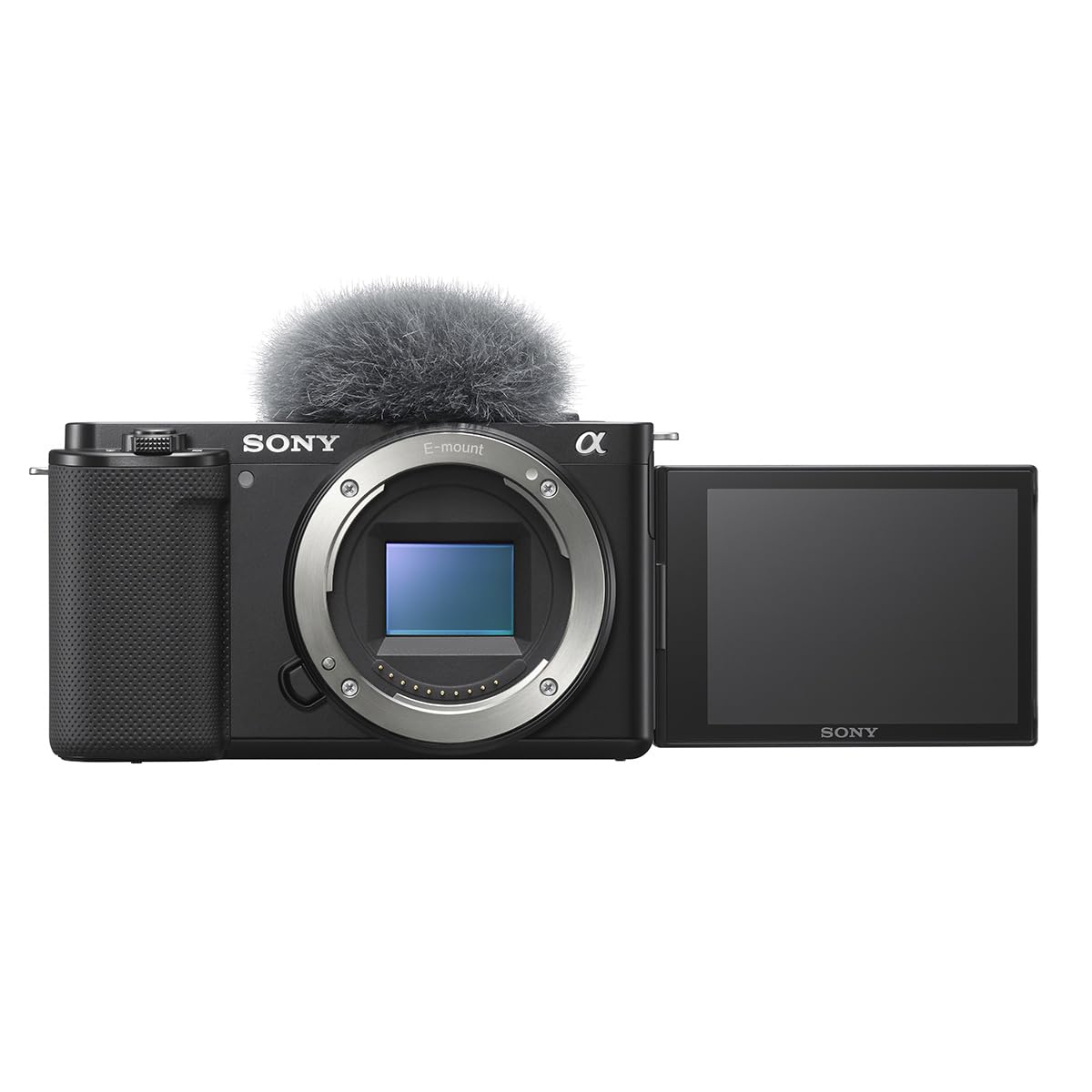
The Sony ZV-E10 is the bridge between pocket vlogging and serious mirrorless video. Its 24.2-megapixel APS-C sensor records 4K video oversampled from a 6K readout, producing noticeably sharper detail than 1-inch sensor cameras. The BIONZ X processor delivers the same fast, reliable autofocus and Real-time Eye AF found in Sony’s professional line, keeping your face perfectly sharp even when you turn or move quickly.
The interchangeable E-mount system lets you upgrade lenses as your style evolves — the 11mm f/1.8 for ultra-wide vlogs or the 15mm f/1.4 for low-light indoor shoots. Product Showcase mode smoothly transitions focus from your face to an object you hold up, ideal for review-style content. The Background Defocus button instantly blurs the background with a single press.
USB streaming directly to a computer without capture cards simplifies live streaming workflows. The flip-out screen and built-in directional mic with a windscreen handle basic audio well. The main trade-off is the severe rolling shutter in fast motion and a battery life of around 25 minutes when recording 4K, so carrying spare NP-FW50 batteries is essential for all-day shoots.
Why it’s great
- APS-C sensor with oversampled 4K delivers class-leading sharpness
- Real-time Eye AF and Product Showcase mode are vlogging-specific game-changers
- Interchangeable Sony E-mount lenses allow future upgrades
Good to know
- No in-body image stabilization; relies on electronic stabilization with crop
- Severe rolling shutter and short battery life require planning
4. Canon EOS R100 with RF-S18-45mm Kit

The Canon EOS R100 is the lightest camera in the EOS R series at 356 grams body-only, making it extremely portable for a camera with an APS-C sensor. Its 24.1-megapixel sensor paired with the DIGIC 8 processor supports 4K video at 24fps, Full HD at 60fps, and HD slow-motion at 120fps. The included RF-S18-45mm f/4.5-6.3 IS STM kit lens provides 4 stops of optical image stabilization and a versatile zoom range.
Canon’s Dual Pixel CMOS AF covers 143 zones with human face and eye detection, delivering smooth and reliable autofocus for vlogging walks and talking-head shots. Continuous shooting at 6.5 frames per second is useful for capturing stills during events. The camera supports Wi-Fi and Bluetooth for quick image transfer to a smartphone.
Beginner-friendly with a guided interface, the R100 is an affordable entry into the RF lens ecosystem. The main compromises for pure vlogging are the 4K crop factor and the absence of a fully articulating screen (it uses a fixed rear display). It is best suited for creators who want to learn photography alongside vlogging and plan to invest in better RF glass over time.
Why it’s great
- Smallest and lightest EOS R body with excellent APS-C image quality
- Dual Pixel CMOS AF with face/eye detection is forgiving for beginners
- Interchangeable RF mount opens up Canon’s lens lineup
Good to know
- Fixed rear screen limits selfie framing while recording
- 4K video is limited to 24fps and has a noticeable crop factor
5. Sony ZV-1F

The Sony ZV-1F is purpose-built for creators who primarily film themselves holding the camera at arm’s length. The fixed 20mm f/2.0 ultra-wide lens ensures that even with the camera close to your face, the background remains visible and the selfie framing is generous. The 1-inch sensor delivers pleasing background defocus at f/2.0, and the Intelligent Auto mode handles exposure and white balance automatically.
Sony’s Eye AF and face-tracking autofocus are excellent for a compact camera, reliably holding focus on moving subjects. The directional 3-capsule microphone with the included windscreen captures clear dialogue, while the Product Showcase Setting smoothly racks focus to items held up to the lens. Active Mode image stabilization helps reduce walking shake.
The side-articulating touchscreen makes selfie composition straightforward, and USB-C charging allows power top-ups in the field. The main drawbacks are the fixed 20mm lens with no zoom and a battery life of approximately 45 minutes in 4K recording, which makes carrying multiple spare batteries a necessity for longer shoots.
Why it’s great
- 20mm ultra-wide lens captures more background in selfie-mode vlogs
- Fast Eye AF and Product Showcase mode are vlogging-specific features
- Compact body with flip-out screen is pocketable
Good to know
- Fixed lens with no optical zoom; digital zoom reduces quality
- Battery life around 45 minutes in 4K requires spare batteries for day shoots
6. Sony ZV-1F Content Creator’s Ultimate Kit

This bundle takes the excellent ZV-1F camera platform and adds 21 pieces of essential gear, including a SanDisk Extreme Pro 128GB memory card, a condenser microphone, a U-grip handle, a tripod, a UV filter, and video editing software. For a beginner, this eliminates the need to research and buy accessories separately — everything needed for a first shoot arrives in one box.
The camera itself retains all the ZV-1F strengths: the 1-inch sensor, 20mm f/2.0 ultra-wide lens, Real-time Eye AF, and Background Defocus button. The included condenser microphone significantly improves audio quality over the built-in mic, while the tripod and U-grip handle provide stable selfie and tabletop shooting positions. Active Mode stabilization helps smooth walking shots.
This kit is ideal for new creators who want to start producing immediately without incremental spending. The fixed lens remains the primary limitation, and battery life still requires spare NP-BX1 batteries for full-day use. The value lies in the curation of accessories that directly address the most common beginner pain points — shaky footage and muddy audio.
Why it’s great
- Includes 21 accessories — memory card, microphone, tripod, and case — saving hours of research
- Same excellent ZV-1F camera with ultra-wide lens and fast autofocus
- Accessories address shaky footage and poor audio directly
Good to know
- Fixed lens with no zoom; digital zoom is available but reduces quality
- Battery life is short; spare batteries are recommended for all-day shoots
7. Canon PowerShot V10

The Canon PowerShot V10 is an ultra-compact vertical vlogging camera that prioritizes portability above all else. Its wedge-shaped body fits into a small pocket or bag, and the innovative built-in stand folds out from the back to prop the camera up on a desk or shelf without a separate tripod. The 15.2-megapixel 1-inch back-illuminated CMOS sensor delivers good low-light performance for a camera of its size.
The fixed 19mm wide-angle lens (35mm equivalent) is wide enough for selfie-style vlogs, and the retractable front-facing 2-inch screen lets you see your framing while recording. The three stereo microphones with a center noise-reduction mic capture clear audio, while recent firmware updates (version 1.2.0 or later) add three image stabilization modes including Enhanced IS for handheld walking shots.
The PowerShot V10 records 4K at up to 30fps and Full HD at 60fps, with 14 movie color filters for creative presets. The main sacrifices are the lack of optical zoom and a battery that can feel limiting on active shooting days. It is a dedicated vlogging tool for creators who value grab-and-go simplicity and dislike setting up tripods or gimbals.
Why it’s great
- Built-in folding stand eliminates the need for a tripod for desk or tabletop vlogs
- Extremely compact and lightweight for pocket carry
- Front-facing screen and 19mm wide-angle lens designed for selfie recording
Good to know
- No optical zoom; digital zoom alone is not available while recording
- Battery life can be short; external power via USB-C is useful for longer shoots
FAQ
Is a 1-inch sensor camera good enough for professional-looking vlogs?
How important is face/eye autofocus for a beginner vlogger?
What is the most common mistake beginners make when choosing a vlogging camera?
Does a beginner really need interchangeable lenses for vlogging?
Final Thoughts: The Verdict
For most users, the beginner camera for vlogging winner is the DJI Osmo Pocket 3 because its gimbal stabilization, 1-inch sensor, and ActiveTrack 6.0 combine to deliver silky-smooth 4K footage with zero learning curve. If you want an interchangeable lens system for creative growth, grab the Sony ZV-E10. And for ultra-portable simplicity with a built-in stand, nothing beats the Canon PowerShot V10.