
Learning to fly a drone that actually returns home by itself, hovers rock-steady even when you let go of the sticks, and beams a live video feed to your phone is the difference between a single expensive crash and years of aerial fun. GPS satellite locking is the feature that turns a skittish toy into a dependable flying camera platform. Without it, you are fighting the wind every second.
I’m Min — the co-founder and writer behind Gadgets Feed. My approach in this guide is to isolate the real-world flight characteristics that matter most when your thumbs are still learning the controls, based on hundreds of hours comparing technical specifications, reading verified owner reports, and analyzing return-rate patterns for entry-level camera drones.
Every model reviewed here keeps you under the 249-gram FAA registration threshold while delivering a stabilized camera and satellite-assisted navigation. This is the definitive analysis of the best beginner drone with camera and gps that money can buy right now.
How To Choose The Best Beginner Drone With Camera And GPS
Buying your first GPS drone is not about picking the one with the highest megapixel number on the box. The flight electronics, battery endurance, and real-world camera stabilization define whether your experience ends with a memory-card full of smooth footage or a frantic search for a lost quadcopter. Focus on the four pillars below and you will land the right model on your first try.
GPS Lock Reliability and Auto Return Home
A beginner drone without dependable GPS is a time bomb. When the radio link drops or the battery hits the low-voltage threshold, the drone must autonomously fly back to its takeoff point and land. Read verified reviews for mentions of “return to home failed” or “drone drifted in wind” — those red flags indicate a weak satellite receiver module. The best entry-level units lock onto 10+ satellites within 60 seconds and hold position even in breezy conditions.
Camera Stabilization: Gimbal vs. EIS vs. Nothing
Three-axis mechanical gimbals are the gold standard for silky video because they physically isolate the camera from the drone’s pitch and roll. Electronic Image Stabilization (EIS) crops and smooths the frame digitally — it works well in good light but can wobble in low-light or aggressive flight. Many budget GPS drones rely on a fixed camera with no stabilization at all, which produces footage that looks like a washing machine on spin cycle. For a beginner, a 2-axis or 3-axis gimbal or a reliable EIS implementation is worth paying extra for.
Battery Flight Time and Charge Cycles
Manufacturers advertise totals by adding up every battery in the box. A single battery that flies for 18 to 22 minutes is the real-world baseline for sub-250g GPS drones. Two batteries in the package are the minimum for a satisfying session; three batteries let you roam for over an hour. Also check whether the batteries are modular and swap without tools — hard-wired packs mean grounded downtime while the whole drone charges.
Brushless Motor Type and Wind Resistance
Brushed motors wear out after 50 to 100 flight hours and generate more noise. Brushless motors run cooler, last thousands of hours, and deliver the torque needed to fight level-4 to level-5 wind gusts. Every drone on this list uses brushless motors, but the actual flight stability still depends on the prop size and the ESC firmware tuning. A lightweight frame under 249 grams is inherently more vulnerable to wind, so a strong brushless power system is non-negotiable for outdoor flying.
Quick Comparison
On smaller screens, swipe sideways to see the full table.
| Model | Category | Best For | Key Spec | Amazon |
|---|---|---|---|---|
| Bwine F7MINI | Premium | Pro-level video on a beginner budget | 3-axis gimbal + 6km transmission | Amazon |
| Potensic ATOM LT | Premium | Long flight endurance and brand trust | 40 min per battery / 4km range | Amazon |
| karuisrc K600GPS | Mid-Range | Built-in controller screen without phone tether | 4.5″ FPV screen on controller | Amazon |
| CHUBORY G9 | Mid-Range | 90-minute total flight time with three packs | EIS 4K + 32GB SD card included | Amazon |
| SIMREX G29 | Mid-Range | Gesture control and intelligent flight modes | 5G WiFi FPV / 500m range | Amazon |
| Oddire HK11 | Mid-Range | Smart flight planning on a budget | 48 min total (2x 1800mAh) | Amazon |
| UranHub G30 | Mid-Range | SONY CMOS sensor for under | 12MP SONY sensor / GNSS | Amazon |
| REDRIE HK33 | Budget | 2-axis gimbal at an entry price | 2-axis gimbal / 40 min total | Amazon |
| WeFone WF30 | Budget | Lowest entry cost with GPS safety | Optical flow + under 249g | Amazon |
In‑Depth Reviews
1. Bwine F7MINI 4K Video 8K Photo Drone
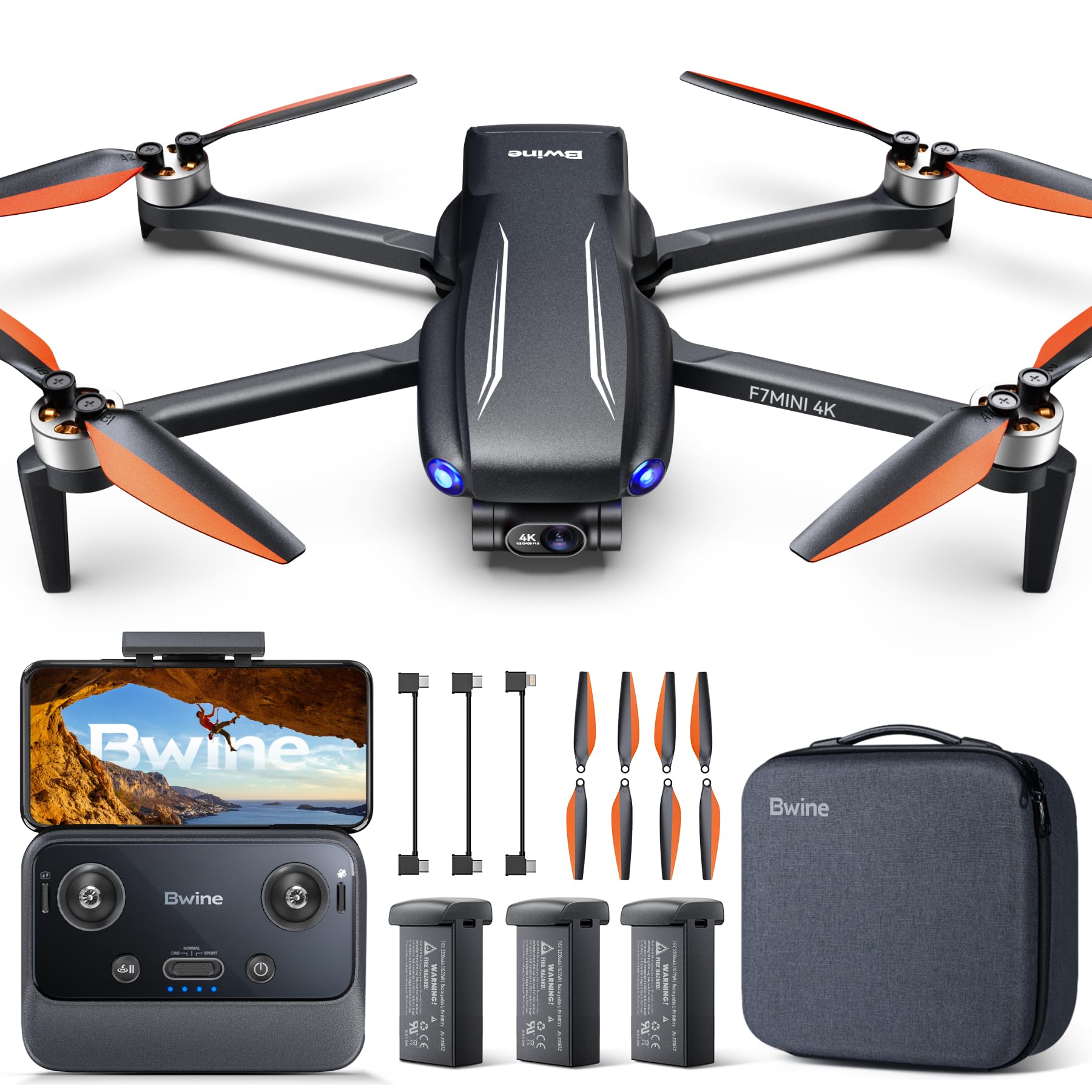
The Bwine F7MINI shatters the ceiling on what a sub-249g beginner drone can deliver. Its three-axis mechanical gimbal physically isolates the F1.8 aperture 48MP camera from vibration and wind-induced tilt — the resulting footage looks like it came from a machine three times the price. The 6-kilometer digital video transmission with zero-latency feedback means you can fly to the edge of visual range and still see a crisp live preview on the controller’s bright 5.5-inch screen.
Three 2200mAh batteries deliver a combined 96 minutes of flight time, and each pack supports PD 3.0 fast charging so you can top up between flights. The F7MINI locks onto GPS, GLONASS, Galileo, and BeiDou satellites simultaneously, giving it the fastest position lock in this class. Smart Return to Home is backed by a dynamic home point that updates if you move, plus a 120-decibel buzzer for locating the drone in tall grass or dense brush.
Verified owners consistently praise the built-in screen on the controller — no phone required — and report that the gimbal keeps video butter-smooth even in level-5 wind conditions. A 2-year warranty, 24/7 support, and lifetime firmware updates round out a package that simply outclasses everything else at this price tier.
Why it’s great
- True 3-axis mechanical gimbal eliminates shake completely
- 96 minutes total flight with three fast-charging batteries
- Built-in 5.5 inch touchscreen controller frees your phone
- 6km digital transmission is best-in-class for beginners
Good to know
- Controller-to-phone photo transfer can be slow via WiFi
- Requires a microSD card for onboard storage
- Premium price reflects the gimbal hardware investment
2. Potensic ATOM LT GPS Drone

Potensic has built a reputation for reliable entry-level drones, and the ATOM LT extends that legacy with a 3000mAh intelligent battery that delivers a genuine 40 minutes of flight per pack — a full 10 minutes more than most rivals. The two included batteries give you 80 minutes of total airtime, which is enough for a beginner to learn coordinated turns, practice hover control, and still have juice left for a creative follow-me shot.
The 2.5K EIS camera uses a Sony CMOS sensor and Potensic’s ShakeVanish 2.0 stabilization algorithm to smooth out high-frequency vibrations. It is not a gimbal, so aggressive yaw moves or hard braking introduce some rolling-shutter wobble, but in gentle cruising flight the footage is clean and color-accurate. The PixSync 2.0 transmission system maintains a solid HD feed up to 4 kilometers away — far beyond the typical 500-meter ceiling of budget drones.
Three flight modes (Video, Normal, Sport) let you scale up difficulty as your skills improve. The ATOM LT requires GPS lock to arm the motors, which prevents indoor takeoff mishaps but guarantees a stable foundation outdoors. Owner feedback highlights the responsive customer support and the broad hand-controller feel that fits larger hands comfortably.
Why it’s great
- Industry-leading 40-minute single-battery flight time
- Sony CMOS sensor delivers crisp 2.5K video
- 4km PixSync 2.0 transmission is very reliable
- SurgeFly 2.0 smooth control for level-5 wind resistance
Good to know
- EIS struggles in low light or aggressive maneuvers
- GPS satellite lock can be slow in wooded areas
- Beginner mode must be disabled for full speed
3. karuisrc K600GPS Drone
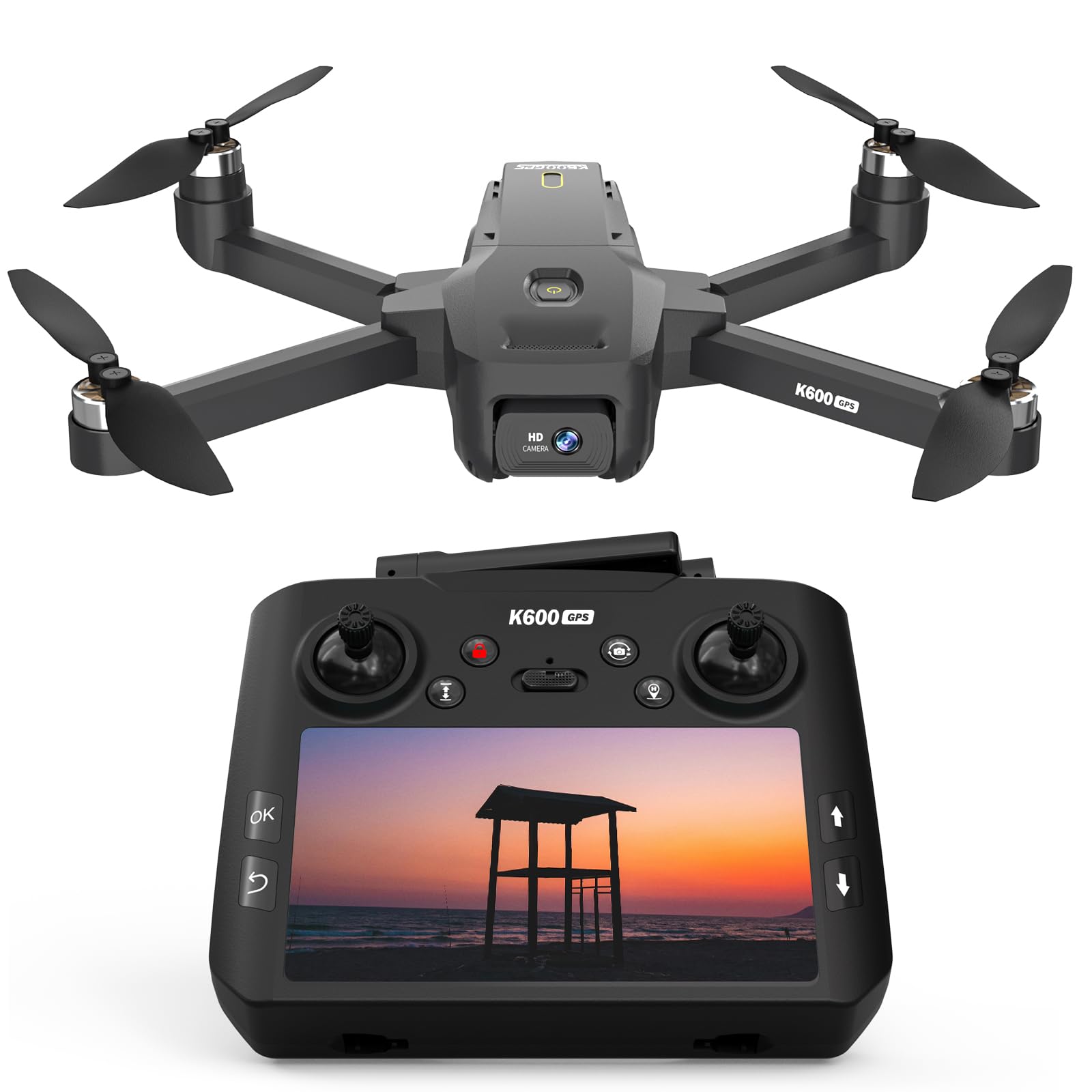
The K600GPS solves the biggest annoyance of budget drone flying: draining your phone battery. Its 4.5-inch HD screen is built into the controller, giving you a live FPV feed without plugging in a smartphone at all. The controller also supports app control for those who prefer a phone interface, but the built-in display works the moment you power on — no connection pairing, no cable fiddling.
Under the hood, the K600GPS uses a 1080p 90-degree adjustable camera with EIS. It is not 4K, but the 1080p footage is clean and the electronic stabilization reduces the jello effect common on non-gimbal drones. The 12,000 RPM brushless motors provide strong punch to keep the 195-gram frame steady in moderate wind, and the GPS return-to-home triggers reliably on signal loss or low battery.
Verified owners highlight the one-key takeoff and landing as genuinely foolproof — the drone climbs to 1.2 meters and hovers automatically, so total beginners are not fighting pitch and throttle simultaneously. The modular battery charges via USB-C, and the lightweight design (under 200g) makes it the most travel-friendly option in this guide. A 32GB TF card is recommended for storing video onboard.
Why it’s great
- Built-in 4.5″ FPV screen eliminates phone drain
- Lightest model reviewed at 195 grams
- One-key takeoff and altitude hold for true beginners
- Smooth 3D flip capability for advanced practice
Good to know
- Camera is 1080p, not true 4K
- EIS works but lacks gimbal-level smoothness
- No SD card included in the package
4. CHUBORY G9 Drone with EIS 4K Camera
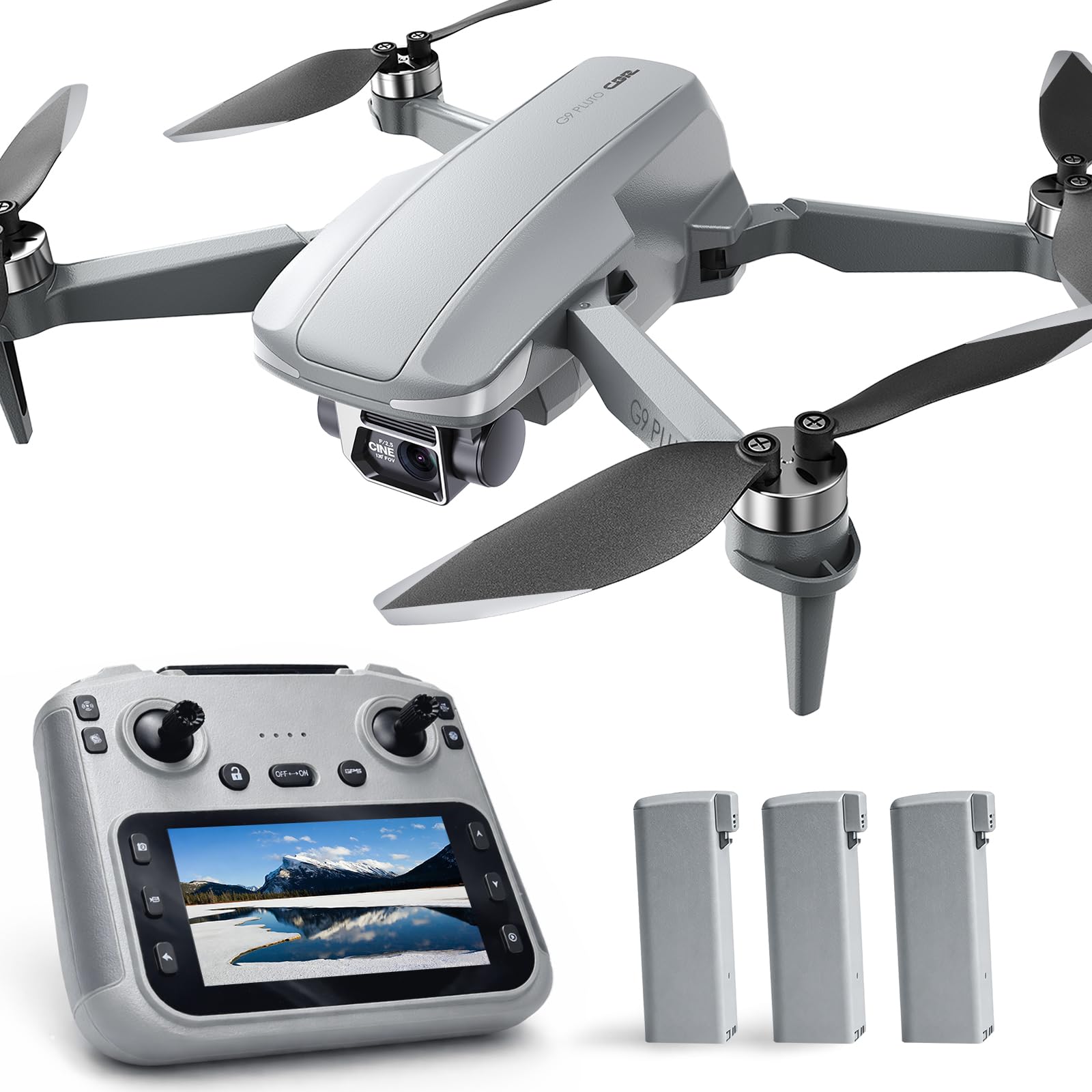
CHUBORY’s G9 packs a 4.5-inch HD controller screen and a pre-installed 32GB microSD card right in the box, so you can fly and record immediately without any accessories or extra purchases. The 4K EIS camera delivers shake-compensated video that is noticeably smoother than the raw-sensor footage from non-stabilized rivals, though the absence of a mechanical gimbal means fast sideways flight can introduce a slight wobble in the frame corners.
The three-battery system provides a combined 90 minutes of flight time — 30 minutes per 1800mAh pack — which is enough for a full afternoon of exploration. The GPS auto-return and Circle Fly modes are reliable, and the 3280-foot (1-kilometer) control range is realistic for open-field flying. Verified owners love that the large controller screen is bright enough to see in direct sunlight, eliminating the washed-out phone-display issue.
One genuine surprise in this class is the build quality: the 235-gram frame uses a lightweight composite that feels dense and sturdy in hand, and the foldable arm hinges click into place with no play. The CHUBORY G9 is an excellent middle-ground choice for a new pilot who wants a screen, long battery life, and enough camera quality for social media sharing.
Why it’s great
- 32GB SD card included, ready to record
- Three batteries provide 90 minutes total flight
- Bright 4.5″ controller screen works in sunlight
- 4K EIS footage is smooth for non-gimbal class
Good to know
- No mechanical gimbal — fast moves produce corner wobble
- Requires reading manual for pairing sequence
- Single battery chargers sequentially, not simultaneously
5. SIMREX G29 GPS Drone
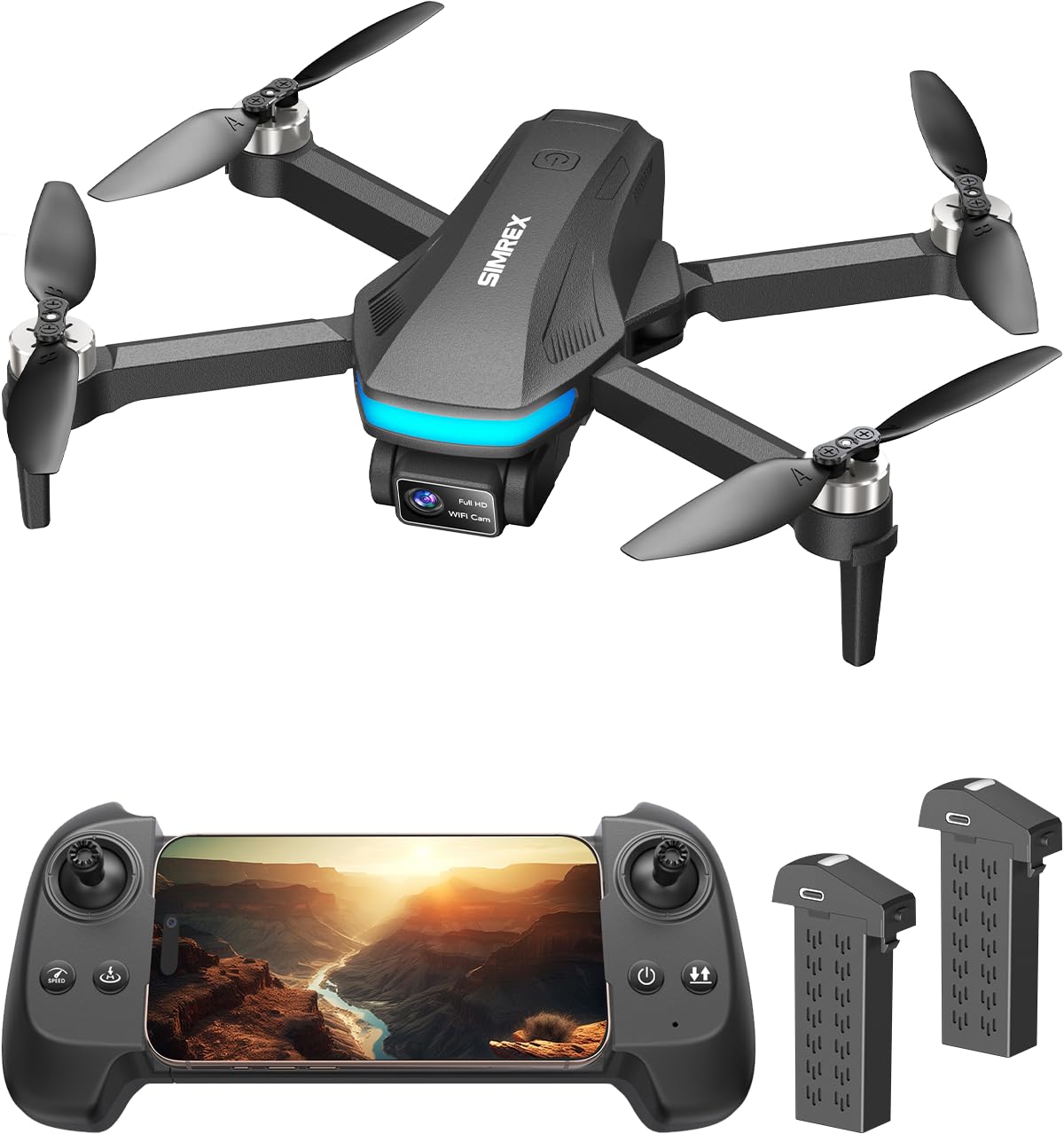
The SIMREX G29 delivers what most beginners actually want: a drone that follows you automatically, lets you take hands-free selfies with a wave, and does not require a degree in aviation to operate. Gesture Control triggers photo capture and video recording by raising your palm, which is genuinely useful for solo creators. The 4K adjustable camera tilts 90 degrees via the remote so you can frame shots without landing.
GPS Return to Home triggered on both low battery and signal loss, and verified owners report the drone executes the return consistently without wandering. The 5G WiFi FPV transmission maintains a live feed up to 500 meters, and the Optical Flow and Altitude Hold system keeps the G29 locked in place when you let go of the control sticks — a confidence builder for nervous first-time pilots.
The foldable arms reduce the drone to a compact form that fits in the included carrying case, and the 40-minute total flight time (two batteries) is adequate for a beginner session. Owners note that the hover precision is better than most drones at this level, thanks to the bottom-facing optical flow sensor that works even when GPS signals are weak. The G29 is a solid choice for a family or a teen who wants creative modes over raw camera resolution.
Why it’s great
- Gesture control for hands-free photo and video
- Optical flow positioning for stable indoor hover
- Follow Me and Waypoint modes are simple to activate
- Compact foldable design with hard carrying case
Good to know
- No mechanical gimbal — footage shakes in wind
- Maximum range is 500m, not 4km like premium models
- Best suited for calm-weather flying below 10mph
6. Oddire HK11 Drone

The Oddire HK11 proves that smart flight-planning features are no longer exclusive to expensive drones. The Waypoint Flight mode lets you draw a route on the app map and the HK11 flies it autonomously, adjusting altitude and gimbal angle along the path. The Fly Around (Orbit) mode circles a selected point of interest while keeping the 4K camera locked on the subject — a reliable way to get cinematic orbiting shots without manual stick-twiddling.
Two 7.7V 1800mAh batteries deliver a combined 48 minutes of flight time, and the higher voltage (7.7V vs. the typical 3.7V or 7.4V) provides more consistent power delivery as the battery drains. The brushless motors handle level-5 wind with authority, and the 249-gram weight keeps FAA registration off the table. Owners particularly appreciate that the app includes built-in filters and background music for editing video before sharing to social platforms.
The 5G WiFi transmission module in the HK11 pairs with a signal repeater in the controller to reach up to 500 meters, which is more than enough for park flying. One consistent owner note is to calibrate the compass every time you move to a new location — the compass calibration tone can be confusing at first, so reading the manual thoroughly saves frustration on the first flight.
Why it’s great
- Waypoint and Orbit modes automate cinematic shots
- 7.7V high-voltage batteries for stable power curve
- App includes filters and music for direct social sharing
- Excellent level-5 wind resistance for 249g class
Good to know
- Requires compass calibration at each new location
- No SD card included for onboard storage
- App is “XDRONE GO” — not the first result in stores
7. UranHub G30 Drone with 4K Camera
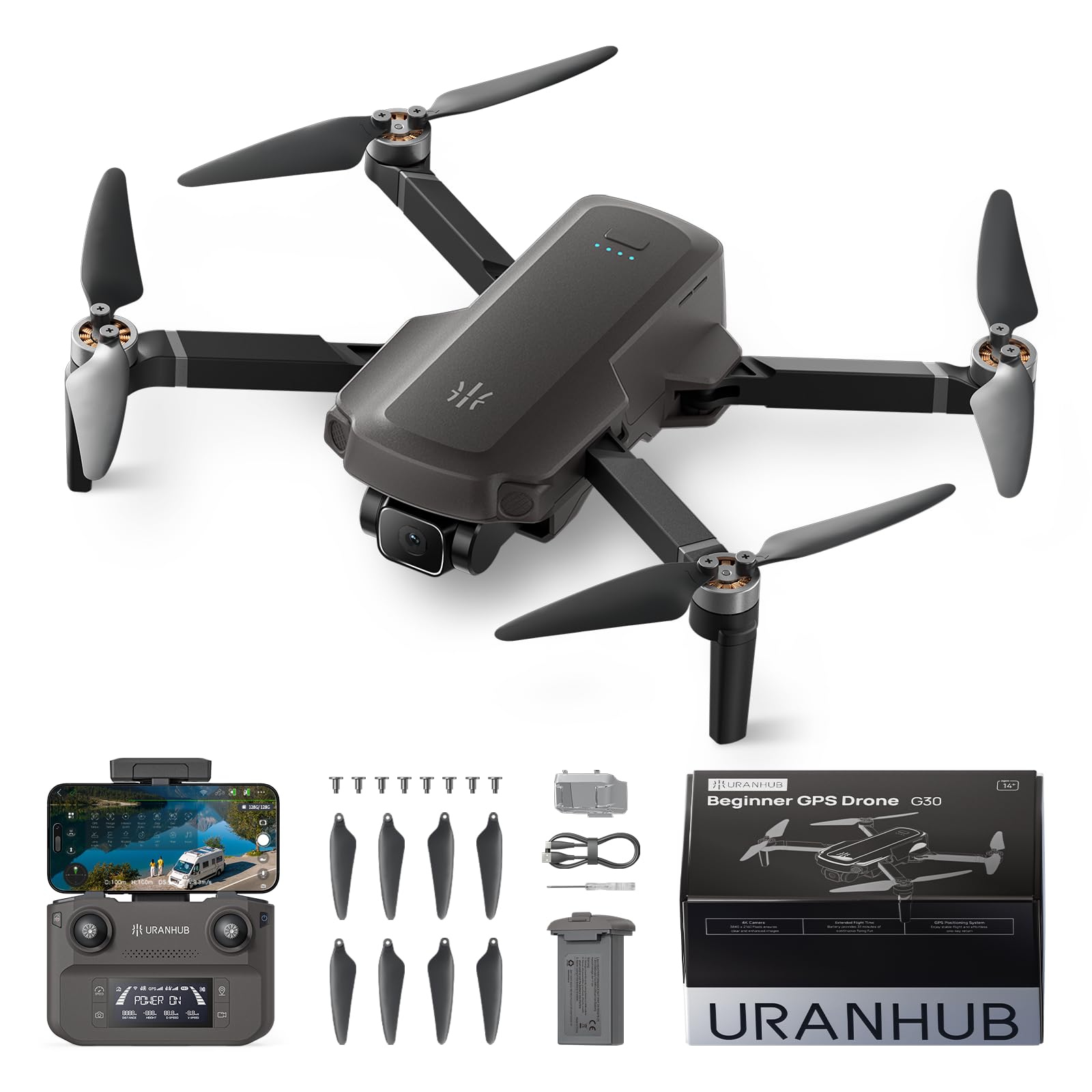
The UranHub G30 uses a 12-megapixel Sony CMOS image sensor — a component more commonly found in drones costing twice as much. The sensor’s superior dynamic range and low-light sensitivity mean that 4K footage from the G30 looks noticeably richer than the generic CMOS sensors used by most budget competitors. The 90-degree adjustable lens and 5G FPV transmission round out a camera system that genuinely punches above its weight class.
GNSS support (GPS plus additional satellite constellations) gives the G30 a fast satellite lock even in areas with partial tree cover. The Beginner Mode limits altitude and speed, while Optical Flow Positioning keeps the drone steady during the critical first few seconds after takeoff. The 2000mAh battery provides a 31-minute flight time, which is slightly above the class average for a single pack.
Owners warn that the G30 is extremely light and can drift if flown in winds above 8 mph, so open-space, low-wind flying is recommended for the first several sessions. The drone lacks prop guards and obstacle avoidance, so a large clear field is the safest learning environment. Despite these cautions, the Sony sensor quality and responsive customer support make the G30 a compelling pick for the brand-conscious beginner.
Why it’s great
- Sony 12MP CMOS sensor delivers superior image quality
- GNSS quad-constellation positioning for fast satellite lock
- Optical flow positioning for stable low-altitude hover
- 31-minute single battery flight time
Good to know
- No prop guards or obstacle avoidance
- Drifts noticeably in winds above 8 mph
- Small assembly screws make field repairs tricky
8. REDRIE HK33 Drone
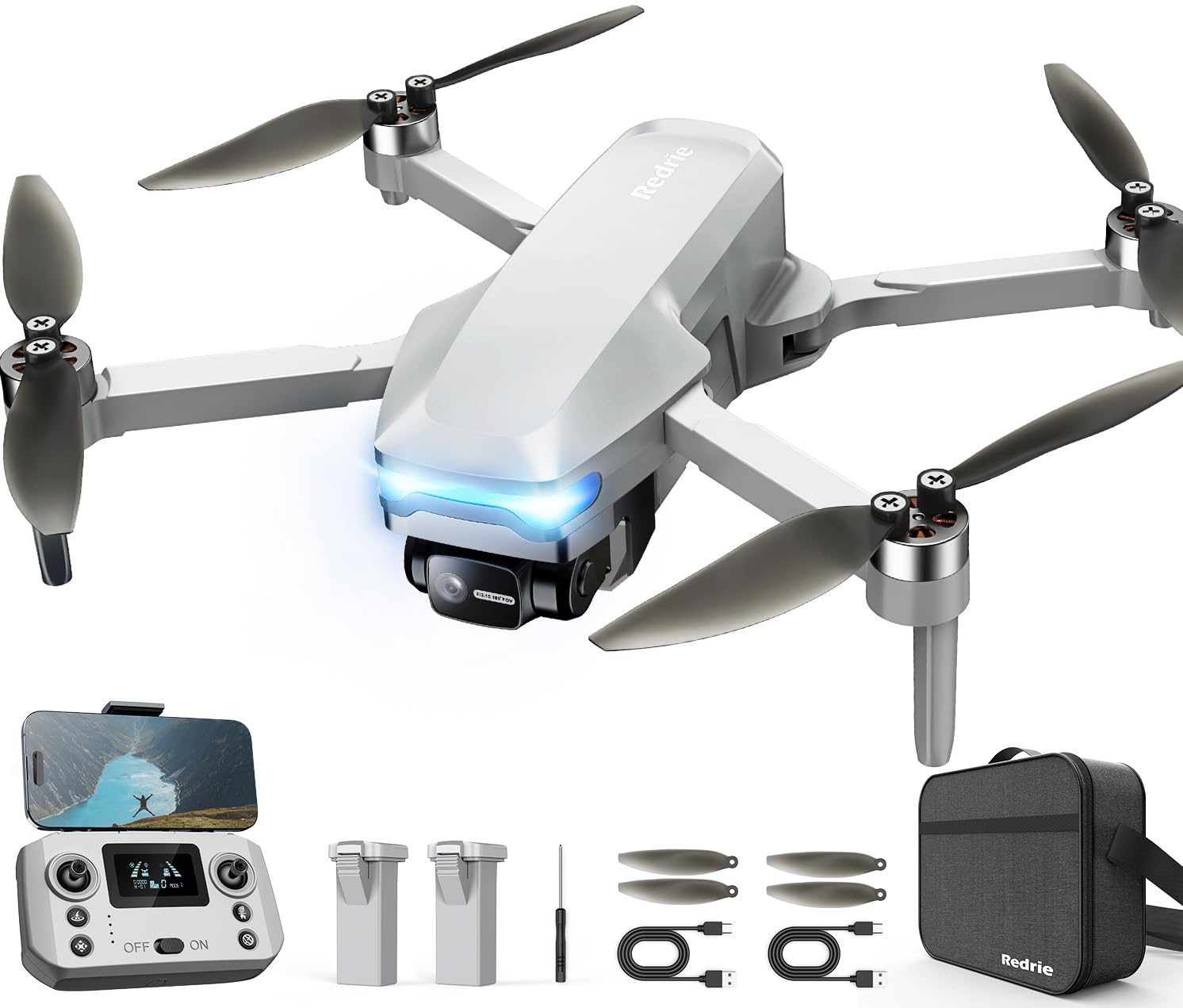
The REDRIE HK33 is the most affordable drone in this guide that includes a genuine 2-axis mechanical gimbal on the camera. That gimbal mechanically compensates for pitch and roll motion, which eliminates the wobbly, jelly-like effect that pure EIS drones produce during turns. The 4K UHD camera with the F2.15 aperture and 110-degree ultra-wide lens captures broad landscapes with good edge-to-edge sharpness, and the gimbal keeps horizon lines level during gentle banked turns.
The brushless motors are powerful enough to maintain stable flight in level-5 wind conditions, and the 5G WiFi transmission holds a reliable FPV connection up to 300 meters. The GPS return-to-home system triggers on low battery, signal loss, or a one-key command, and owners report the return path is straight and consistent. The two included 1800mAh batteries deliver a combined 40 to 45 minutes of flight time.
What stands out in owner reviews is the durability: multiple users reported crashing the HK33 into trees and concrete with only minor cosmetic damage. The included carrying case, spare propellers, and screwdriver set make field repairs straightforward. The main compromise is that the gimbal has a limited tilt range (90 degrees) compared to three-axis systems, so you cannot tilt straight down or point straight up without moving the whole drone.
Why it’s great
- 2-axis mechanical gimbal at an entry-level price
- High durability survives impacts that destroy other drones
- Level-5 wind resistance for stable outdoor flight
- Complete accessory kit with case, props, and tools
Good to know
- Gimbal is 2-axis, not 3 — no forward-backward tilt
- Video transmission range is 300m, not 500m
- Phone holder on controller can feel flimsy
9. WeFone WF30 GPS Drone

The WeFone WF30 is the most cost-effective gateway into GPS-assisted flight. Despite its low entry price, it includes a 4K adjustable camera (90-degree tilt via remote), optical flow positioning for steady hover, and a full suite of GPS safety features — low-battery return, signal-loss return, and one-key landing. The 117-degree wide-angle lens captures sweeping landscapes that look wider than most drones in this size class.
Two modular 1600mAh batteries provide a combined 40 minutes of flight time (about 20 minutes per pack), and the brushless motors keep noise levels low enough that you can fly in a suburban backyard without disturbing neighbors. The foldable design and included carrying case make the WF30 genuinely portable — it fits in a small backpack pocket. GPS Follow Me and Point of Interest modes are functional, though they rely on the phone GPS for tracking, so precision is not as tight as drones with onboard satellite receivers.
Owner feedback is generally positive, but a few reports mention that the WF30 can ascend uncontrollably during low-battery return if the GPS signal is weak. Learning to land manually before the auto-return threshold reaches 20% is a smart habit. The WF30 is best for the absolute beginner who wants to learn GPS flight fundamentals without risking a large investment.
Why it’s great
- Lowest entry price for GPS-enabled camera drone
- 117-degree wide-angle captures more scenery
- Optical flow positioning for steady beginner hovering
- Includes carrying case, spare props, and tools
Good to know
- Battery capacity is 1600 mAh — actual flight time near 15 min
- Auto-return can cause uncontrolled climb if GPS is weak
- Open WiFi connection is a minor security risk
FAQ
Do I need FAA registration for a beginner drone under 249 grams?
What does GPS auto-return do and can I trust it as a beginner?
Why do some drones have a “Follow Me” mode that works better than others?
Final Thoughts: The Verdict
For most users, the best beginner drone with camera and gps winner is the Bwine F7MINI because its three-axis gimbal, 6km transmission, and built-in screen deliver professional-grade footage without requiring a phone or a separate monitor. If you want the longest possible flight time per session, grab the Potensic ATOM LT with its 40-minute batteries and Sony sensor camera. And for the absolute best value — a 2-axis gimbal at an entry-level price — nothing beats the REDRIE HK33.