
Our readers keep the lights on and my morning glass full of iced black tea. As an Amazon Associate, I earn from qualifying purchases.
Specs are compiled from manufacturer listings and verified buyer reviews and can change over time — please confirm the key details on the product page before buying.
Every new pilot’s first fear is the same: watching a brand-new drone slice into a tree branch or a wall, then the sickening crunch of propellers shattering. Collision avoidance is the technology that turns that fear into a thing of the past, letting you focus on learning to fly smoothly instead of bracing for impact. This guide cuts through the marketing noise to find the drones that genuinely use obstacle sensors to keep your investment safe, breaking down the real specs that matter for a first-time buyer.
I’m Min — the founder and writer behind Gadgets Feed. This guide is built by comparing the manufacturers’ published specifications and the patterns across verified customer reviews, so you get each pick’s real strengths and trade-offs instead of marketing spin.
We’ve analyzed sensor types, battery life, and camera quality to find the safest and most capable beginner drone with collision avoidance for your budget and flying style.
Our Picks at a Glance

How To Choose The Best Beginner Drone With Collision Avoidance
Choosing your first “safe” drone means knowing exactly what protection you’re buying. “Avoidance” ranges from simple downward sensors that stop you drifting into a bush, to full 360-degree vision that guards every angle. You want the level that matches your flying style, not just the cheapest front sensor.
Sensor Coverage: How Many Eyes Does It Have?
The most critical spec is where the sensors are pointed. A drone with only forward-facing sensors will help you avoid flying head-first into a tree, but it will happily back into a wall. Look for “omnidirectional” or “360°” sensing if you want protection from every side. Be careful with budget models—some advertise 360° avoidance that only works indoors and relies on simple infrared, not precision cameras.
Flight Time: The Truth About Battery Math
Manufacturers often quote total flight time by adding up all the batteries in the box. A drone with three 30-minute batteries gets advertised as a “90-minute drone,” but you’ll still need to land and swap batteries every half hour. For a beginner, that’s actually fine, as it forces you to take breaks, but you should focus on the per-battery figure to set your expectations for each flying session.
Weight Class and Regulations
Drones under 249 grams (about half a pound) skip FAA Remote ID registration, so you avoid extra paperwork. That weight limit is a beginner balance: it keeps the legal side simple while still being heavy enough to handle light wind. Go heavier, and you take on more registration responsibility before you’ve even mastered the controls.
Quick Comparison
| Model | Best For | Obstacle Sensing | Max Flight Time | Camera | Amazon |
|---|---|---|---|---|---|
| DJI Neo 2★ Best Overall | All-around safety & ease | Omnidirectional | Up to 15 min / battery | 4K | Amazon |
| S119 GPS 4KBudget Champion | Budget-friendly learning | Obstacle Sensing | Up to 25 min / battery | 4K | Amazon |
| V918 GPS 8KFeature Packed | Feature-packed value | 360° (Indoor only) | ~30 min / battery | 8K | Amazon |
| V168MAX | Controls on the remote | 360° Laser | Up to 25 min / battery | 4K | Amazon |
| SKYROVER X1 | Premium features on a budget | 360° | Up to 32 min / battery | 4K/60fps | Amazon |
| DCX EZ Pro | Simplest first flight | 360° LiDAR | Up to 30 min | 4K UHD | Amazon |
| Contixo F33 | Long sessions & big remote | Front-side Laser | Up to 42 min | 4K UHD | Amazon |
| DJI Mini 5 Pro | Serious hobbyist growth | Omnidirectional | Up to 36 min | 4K/60fps | Amazon |
| Antigravity A1-360 | rich 360° experiences | Omnidirectional | Up to 39 min | 8K 360 | Amazon |
In‑Depth Reviews
1. DJI Neo 2 Fly More Combo
Our pick — over 4.5★ from 1,500+ verified ratings; the strongest balance of quality and price.
The featherweight that forgives rookie mistakes with eyes on every side.
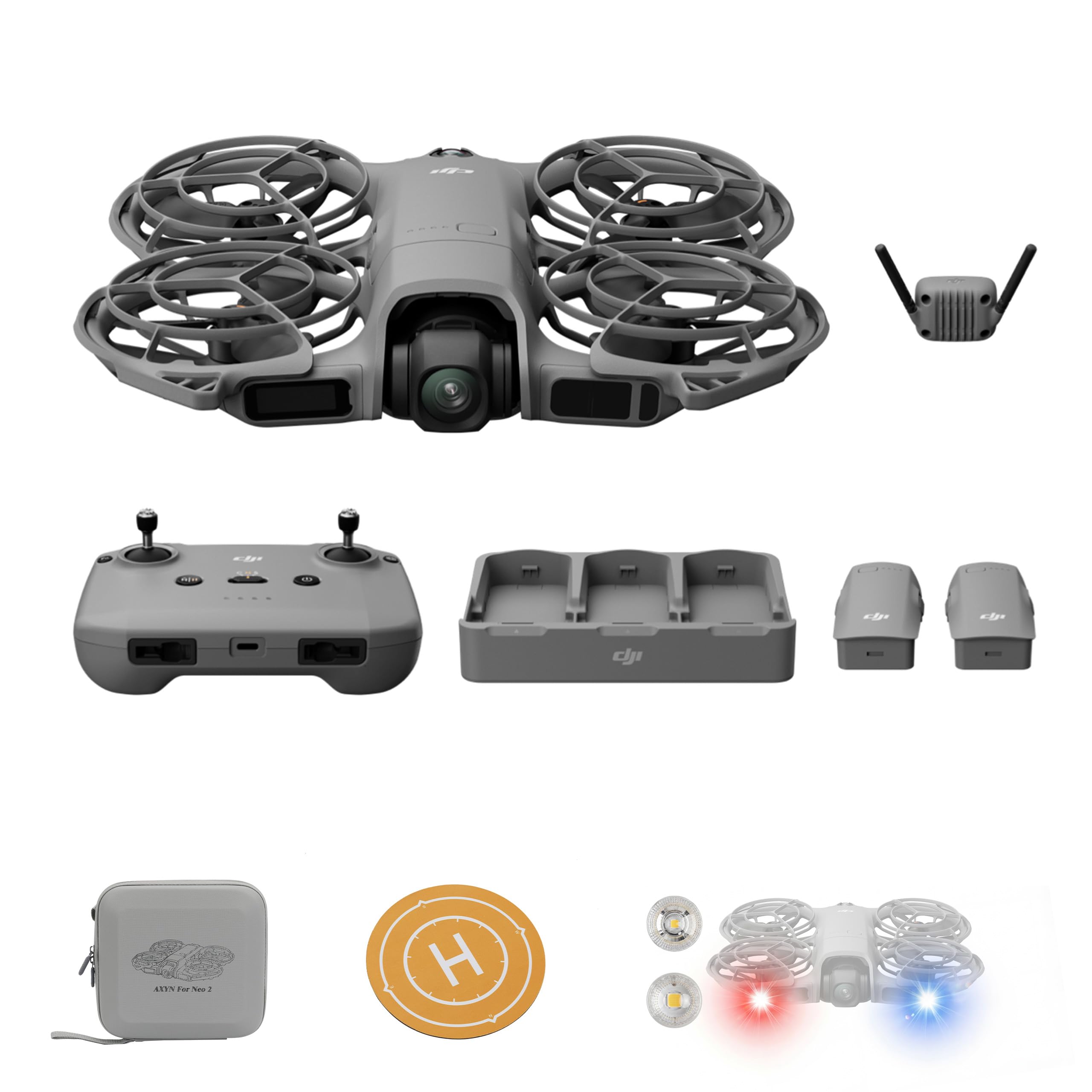
Here is the drone that makes “beginner” feel like a superpower. The Neo 2 weighs just 151g, making it one of the lightest full-featured drones you can buy, yet it packs omnidirectional obstacle sensing, meaning it watches for dangers in every direction, not just what’s ahead. Owners rate it 4.7 stars across 1,900+ reviews, citing overall quality and ease of use as top strengths.
Forget fumbling with a controller on your first day. You can launch it straight from your palm and use gesture controls to command it hands-free, a feature that makes the learning curve practically disappear. When you’re ready for more, ActiveTrack locks onto a subject (you, a bike, a runner) and follows it smoothly, while the 4K camera captures crisp, lifelike footage that looks far beyond its price class.
One owner reported the drone surviving 15 months in a tree and a 150 ft fall, still flying perfectly. The only real caveat is that in the same saga, disabling the perimeter warnings led to a crash, so the safety systems only work if you leave them on. The Fly More Combo includes three batteries, a strobe light, landing pad, and carrying case, so you have everything to keep flying longer.
The Neo 2 weighs 151g, versus the S119 at 237g, which makes it far more pleasant to carry on a hike and easier on the legal side. The Neo 2 measures 6.74″L x 5.8″W x 1.59″H, a footprint that folds down nicely for a jacket pocket.
Why New Pilots Love It
- Omnidirectional sensing catches dangers from every angle, not just the front
- Palm takeoff and gesture control remove the scary first launch
- Proven track record of surviving brutal crashes, per owner reports
Things to Keep in Mind
- Per-battery flight time is shorter than some rivals, so swap often
- Safety sensors only help if you don’t disable the warnings
Your best first drone: the DJI Neo 2 is the complete, forgiving package for anyone who wants top-tier safety and ease from day one.
Reach for this if: you’d rather practice flying than practice repairing; the sub-250g weight keeps you out of heavier registration tiers.
2. S119 GPS 4K Drone
The sturdy budget flyer that bounces back from bumps while you learn.
If you’re not ready to commit serious money to a hobby you might not love, the S119 is the sensible entry point. This beginner-ready drone comes with three 7.4V 3800mAh batteries, each delivering up to 25 minutes of flight, for up to 75 minutes of total airtime. That’s a lot of practice time for a machine in this price tier, and buyers consistently report it’s built to survive the crashes that come with learning.
The safety net here is practical rather than flashy. GPS powers one-key return, low-battery return, and lost-signal return, so even if you lose your bearings, the drone finds its own way home. It also has obstacle sensing to help you steer clear of trouble, plus altitude hold and headless mode, which means you don’t have to worry about which way the nose is pointing while you learn the sticks.
The 4K front camera with a 120° wide-angle lens and 0–90° adjustable angle gives you room to grow as a photographer, and the bottom camera with optical flow positioning keeps the hover stable for clearer shots. Buyers report it’s sturdy and survives crashes, though the instructions are vague enough that you’ll likely find more help online. The remote’s built-in 5G screen means you don’t even need a phone to see what the camera sees.
The trade-off is clear: it’s heavier than the DJI Neo 2 at 237g, so it’s a bit more noticeable in a bag, and its sensor suite isn’t as sophisticated. But for a budget drone that keeps you flying while you learn the ropes, it’s a hard value to beat.
Who it’s for: price-conscious beginners who want real GPS safety features, three batteries from the start, and a drone that takes a knock without cracking.
Pick this if: you want maximum practice time for minimum spend and don’t need the absolute lightest drone in the sky.
Look elsewhere if: you plan to fly in tight indoor spaces where a more advanced 360° sensor would be a better guardian.
3. V918 GPS Drone with 8K Camera
A controller with a built-in screen makes this the grab-and-go beginner pick.
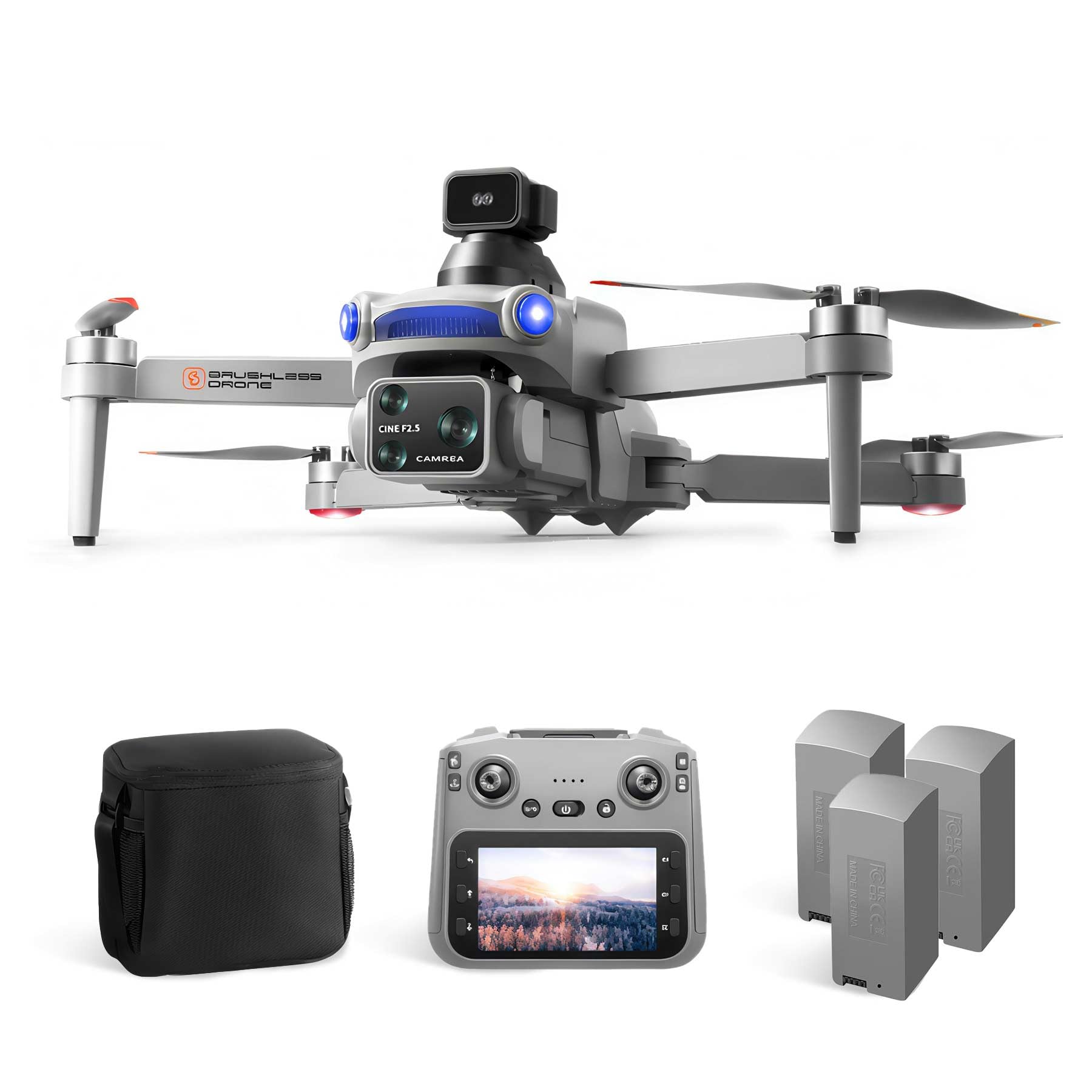
The V918 stands out because it puts a 5-inch HD display right in the remote, so there’s no messing with phone mounts or app connections before you fly. That simplicity is a huge win for a new pilot who just wants to get airborne. The drone itself features 360° obstacle avoidance, though it’s worth knowing this protection is designed for indoor use, where walls and furniture are the main threats.
Under the hood, you get an 8K camera capable of capturing footage with a 90° adjustable lens and 120° wide-angle view, which owners say is clear and smooth. It’s powered by two 7.4V 3000mAh intelligent batteries for up to 60 minutes of total flight time, roughly 30 minutes per battery, so you can take your time learning without feeling rushed.
The built-in GPS module brings auto return home: if the signal drops or the power runs low, it plans a route back to the launch point automatically, a huge relief for a first-time flyer. Weighing in at 226g, it also stays under the 249g limit, meaning no FAA or Remote ID registration is required for most casual flights. Owners rave about its stability and the confidence the obstacle avoidance and auto return give them.
Crucially, the obstacle avoidance here is honest about its limits—it’s automatic but considered basic compared to pricier systems, and this isn’t the drone for professional 8K reliability. But for fun, casual flying with a big screen in your hand, it delivers a lot of bang for the buck.
What Owners Praise Most
- Clear, smooth video quality that surprises for the price
- Convenient built-in controller screen means no phone setup
- Impressive stability with obstacle avoidance boosting new-pilot confidence
The Honest Trade-off
- 360° obstacle avoidance only works indoors, not over open fields
- A rare connection hiccup to the remote has been reported
Choose this for: indoor practice and casual outdoor flights where a self-contained screen remote simplifies everything.
skip it if: you plan to fly over trees and power lines outdoors, where you need sturdy obstacle avoidance that this drone doesn’t offer.
4. V168MAX Drones with Camera
Laser-guided safety and a remote that flies solo, no smartphone required.
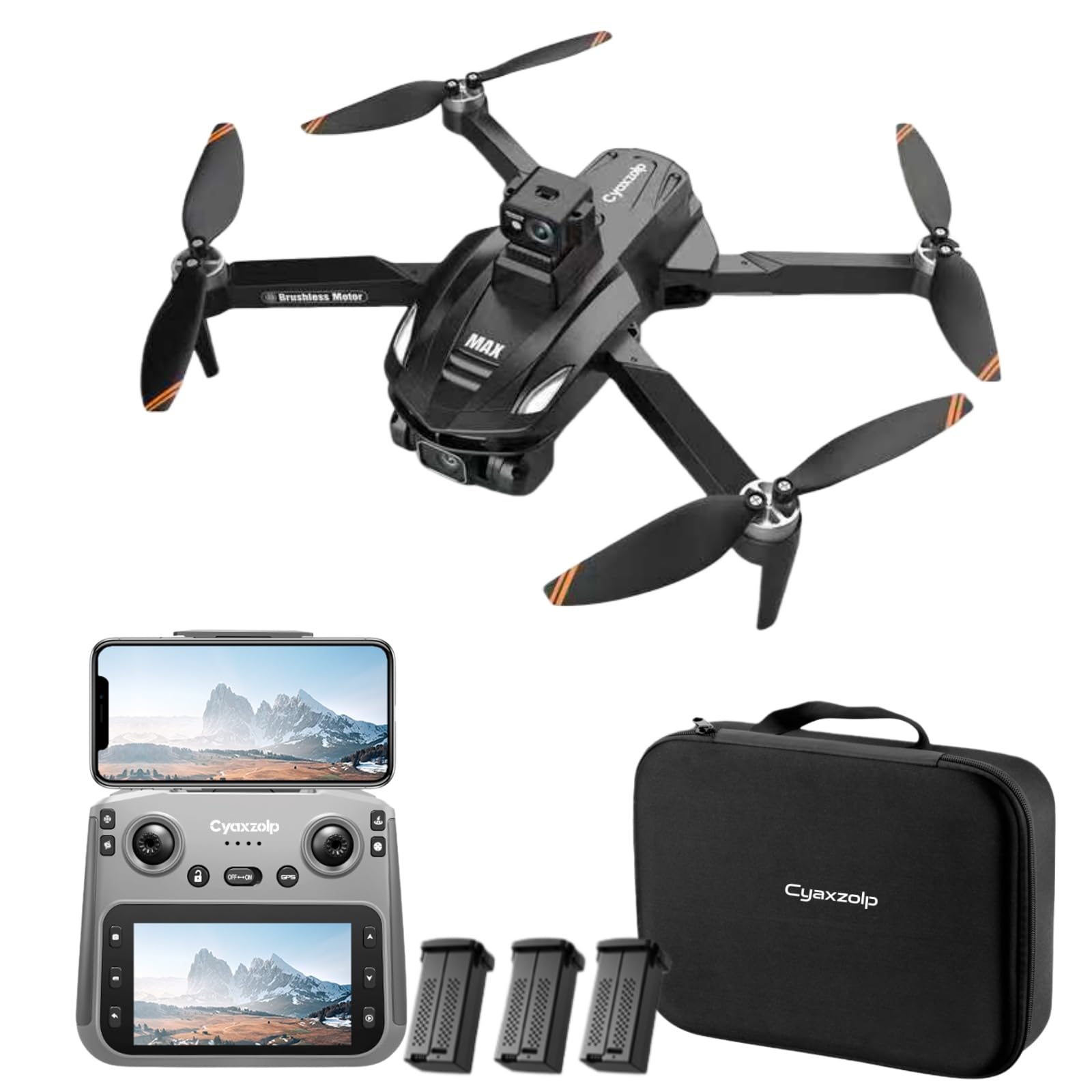
The V168MAX makes a compelling case for pilots who find phone pairing a fiddle. With a 4.5-inch screen built into the controller, you can fly, frame shots, and review footage without ever connecting a phone, which simplifies the whole experience for a novice. This upgraded version swaps the older 4-sided infrared system for enhanced laser sensors delivering 360° automatic obstacle avoidance.
You get three 7.4V 3000mAh batteries for up to 75 minutes of total flight time, and the remote itself is powered by a 3.7V 5000mAh battery that supports 50 minutes of continuous operation. Owners who calibrated properly report great image quality and an easy operation, with one noting crisp, stable footage even in wind. The foldable design weighs under 250g, so it folds down small and is FAA-exempt, meaning no registration is required for recreational flights.
It’s important to note the experience is split. Some owners praise its durability and value, while a few report setup challenges and occasional charging issues with the included batteries or controller. There’s a learning curve to the calibration, and the manual is tiny, so a YouTube tutorial becomes your best friend here.
Compared to the V918 above, this one focuses more on its laser avoidance system for indoor safety while offering that same convenient screen-based remote. It’s a solid choice if you want the simplicity of a standalone controller.
Owner verdict: a rewarding budget flyer once you get past the initial calibration, with laser avoidance adding a real layer of crash protection.
Best for: flyers who want zero phone dependency and a 360° laser safety net for indoor practice.
Think twice if: you want a flawless out-of-box experience or you’re wary of occasional charging quirks.
5. SKYROVER X1 Drone with Camera

A DJI-style experience with a wallet-friendly price tag and serious range.
The SKYROVER X1 is the drone that gives you 90% of the premium experience for a fraction of the cost. It captures smooth 4K/60fps HDR video and detailed 48MP photos using a 1/1.32″ CMOS sensor with an f/1.7 aperture, which translates to clearer, more vibrant footage even in tricky light. Owners describe the build as flawless from the start, with an app that feels nearly identical to a top-tier DJI Mini 4 Pro.
SkyBridge transmission reaches up to 9.32 miles with a stable, responsive 1080p/60fps live view. The 360° obstacle sensing plus Smart Return to Home supports safer flights over parks, trails, and open fields, giving you less stress while exploring new places. AI Auto Track, Smart Spotlight, and vertical shooting make it easy to create social-ready content without fiddling with settings.
Battery life is a standout, with up to 32 minutes per battery and 96 minutes of total flight time across the three included batteries. At 249g, it’s right at the weight limit that keeps travel easy and registration simple. Owners mention it survived a 30mph wall impact, a tree crash, and snow before the arm snapped after a 70ft fall.
The few complaints revolve around small accessories—a controller gimbal that jiggled after two weeks, prop screws that are hard to remove, and obstacle avoidance that missed a tiny branch. And the manual is thin, so you’ll do some self-learning. But for the price, it beats the DJI Neo 2 on raw range and camera versatility, making it a serious contender for the value crown.
Why It’s a Standout
- 48MP photos and 4K/60fps HDR video rival drones costing double
- 9.32-mile transmission range allows flights far beyond typical beginner drones
- 96-minute total flight time with the three-battery combo
The Trade-offs
- Obstacle avoidance can miss very small, thin objects like branches
- Some owners note the manual lacks depth, requiring self-teaching
Reach for this if: you want premium camera specs and long-range flying without the premium brand premium.
Look elsewhere if: you need flawless obstacle avoidance in heavily wooded areas or expect an in-depth printed manual.
6. DCX EZ Pro Drone
AI-assisted flight that makes your very first takeoff feel like a pro’s.
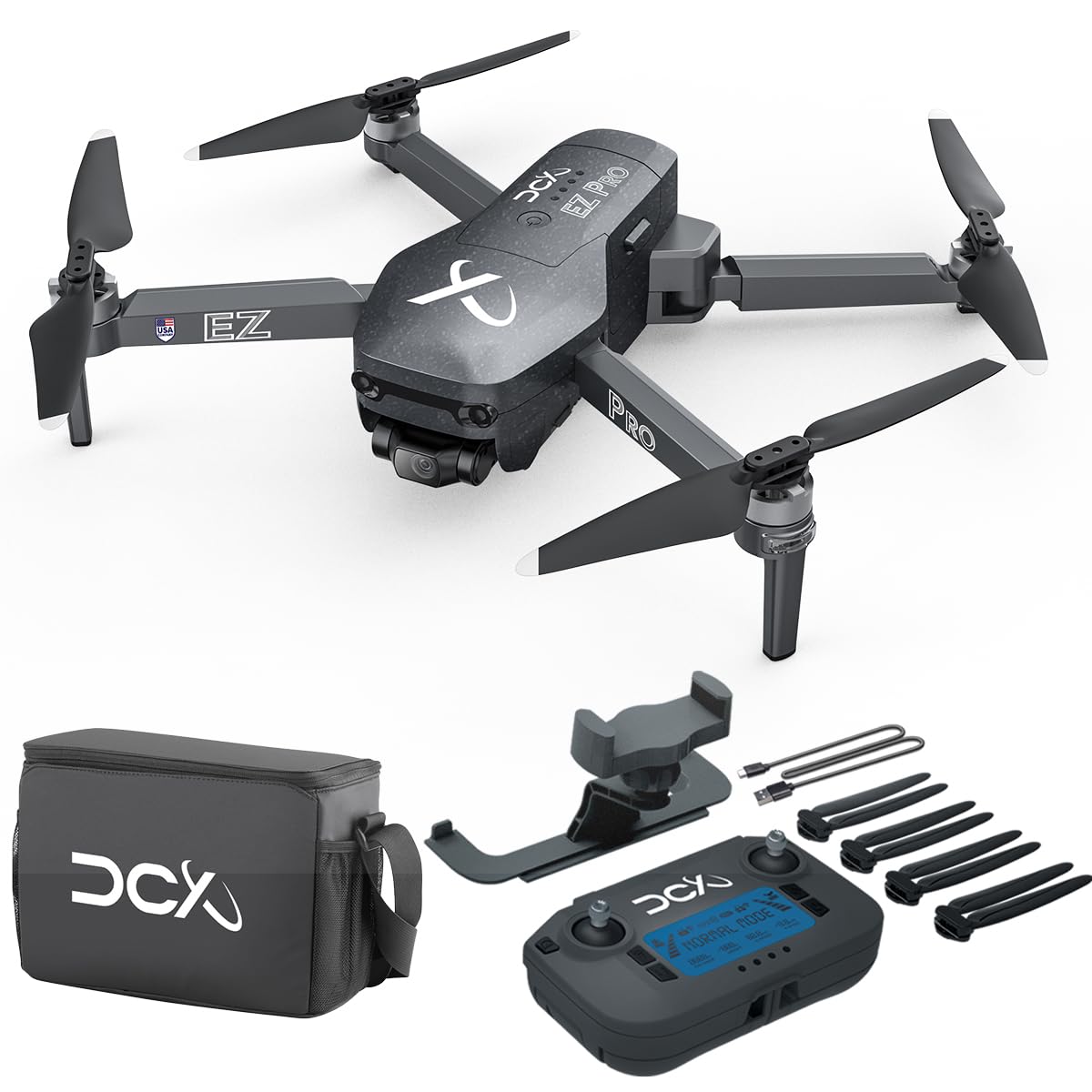
If manual control scares you, the DCX EZ Pro uses AI-assisted flight and auto-stabilization to deliver smooth results even with zero piloting experience. Its 3-axis gimbal (a pivoting mount that steadies the camera) plus electronic stabilization (EIS, software that reduces shake) keeps 4K UHD footage clear, even in wind or fast flight.
Four built-in LiDAR sensors provide true omnidirectional obstacle detection and prevention. Add in GPS-powered auto Return to Home, and the drone brings itself back safely if the signal drops or the battery runs low—a feature customers note works perfectly every time. It reaches speeds up to 30 mph, with a 2-mile flight range and up to 30 minutes per battery charge.
First-time flyers report getting airborne in under 5 minutes, praising the tutorial video and one-button takeoff/landing. The Follow Me, Waypoints, Spiral, and Dronie modes mean you tap a button and let the drone do the piloting while you focus on the scenery. Owners praise its clear, stable camera even in heavy wind, and the quick battery swap keeps sessions going.
The main hurdle is the initial app setup, which some novices found difficult with no directions included, requiring a phone app and calibration before the first flight. It’s a hurdle, not a wall, and younger flyers typically figure it out quickly. With FAA Remote ID built in, it’s ready for regulatory compliance.
Hands-off flying: the LiDAR sensors and AI modes make this the most forgiving drone for absolute beginners who want cinematic results immediately.
Choose this if: you value hands-free intelligent flight modes and want a drone that virtually flies itself.
Be patient with: the initial app and calibration setup, which has a steeper learning curve than the flying itself.
7. Contixo F33 Professional Drone
A marathon flyer with a massive screen for extended, relaxed sessions.
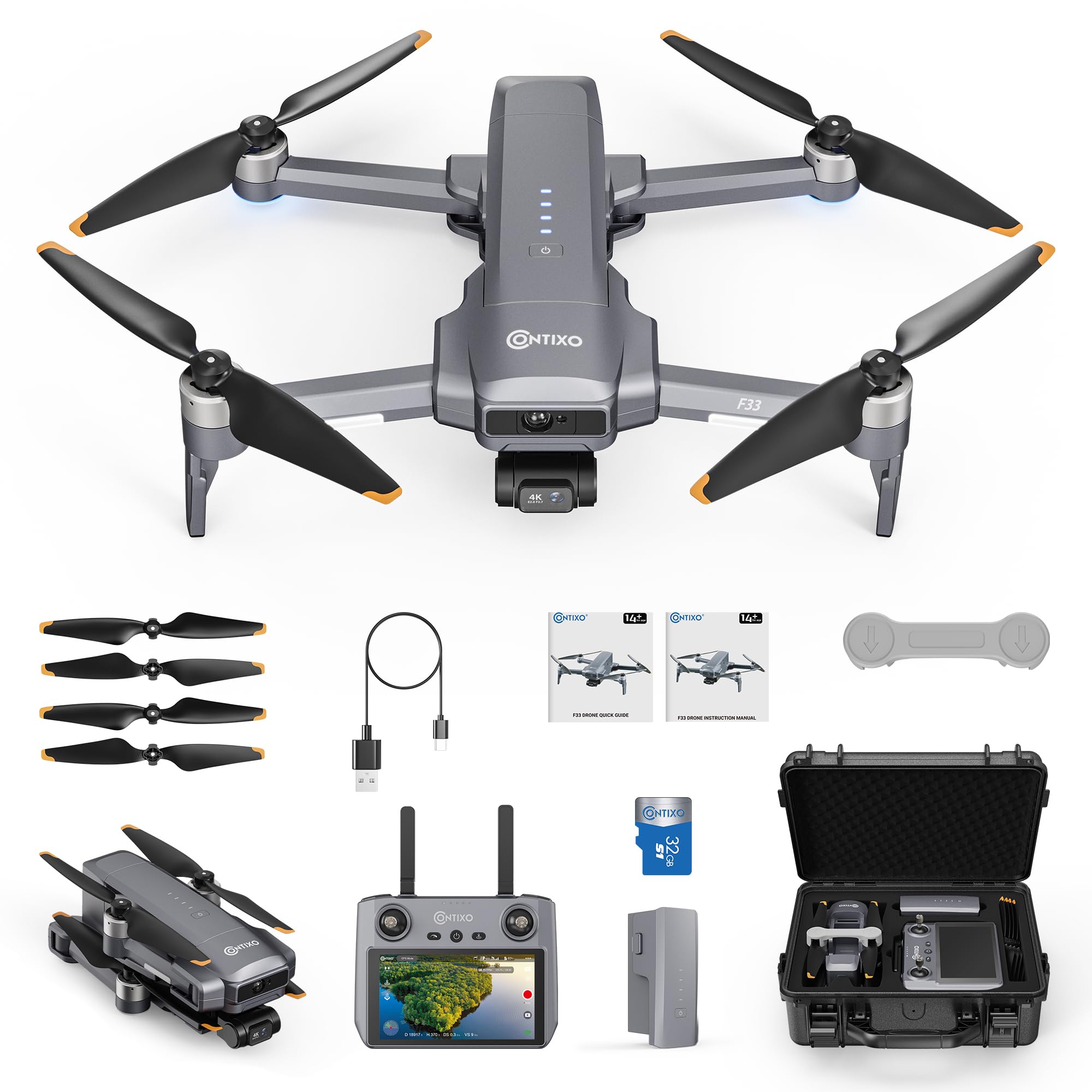
The Contixo F33 solves the problem of battery anxiety by offering an extended 42-minute flight per battery, giving you ample time for aerial photography and exploration without constantly watching the clock. That’s well above the 30-minute average on this list, making it ideal for a long, unhurried flight session. The 4K UHD camera captures 3840×2160 photos and video through a 100° wide lens with an 80° adjustable angle.
Stability comes from a 2-axis gimbal with electronic stabilization (EIS), ensuring shake-free footage, while the brushless motor delivers efficient power and quiet performance. The included 5.5-inch touchscreen HD remote provides a large, clear live view, and a 32GB SD card means you can start storing footage immediately. It’s a complete package straight from the start.
Safety is handled by front-side laser obstacle avoidance, which is a more focused approach than omnidirectional systems, guarding the most common collision direction during forward flight. GPS navigation and Optical Flow provide accurate positioning for stable hovering, even in complex environments like tight outdoor spaces. Advanced flight modes include Follow Me, Orbit Mode, One-key Spiral, and GPS Return Home to simplify complex maneuvers for beginners.
Owner feedback is split. Many first-time pilots say it’s easy to operate from the start and matches the ad, but a few hit snags: one found it unstable in the air and called it overpriced, another had a remote that wouldn’t hold a charge. You’re paying for long flight time and the big screen, but the laser avoidance covers only a focused area, not every angle.
The Big Wins
- 42-minute flight time per battery is class-leading for this list
- Large 5.5″ touchscreen remote gives a clear live view
- Complete kit includes a 32GB SD card for immediate storage
What to Watch
- Front-side obstacle avoidance only, not full 360° coverage
- Mixed feedback on long-term stability and controller battery
Best for: pilots who prioritize long, uninterrupted flight sessions and a big, readable remote screen.
Consider carefully if: you need full omnidirectional safety or worry about the occasional quality-control quirk at this price.
8. DJI Mini 5 Pro Fly More Combo
A 1-inch sensor and 360° safety that grows with you from first flight to pro.
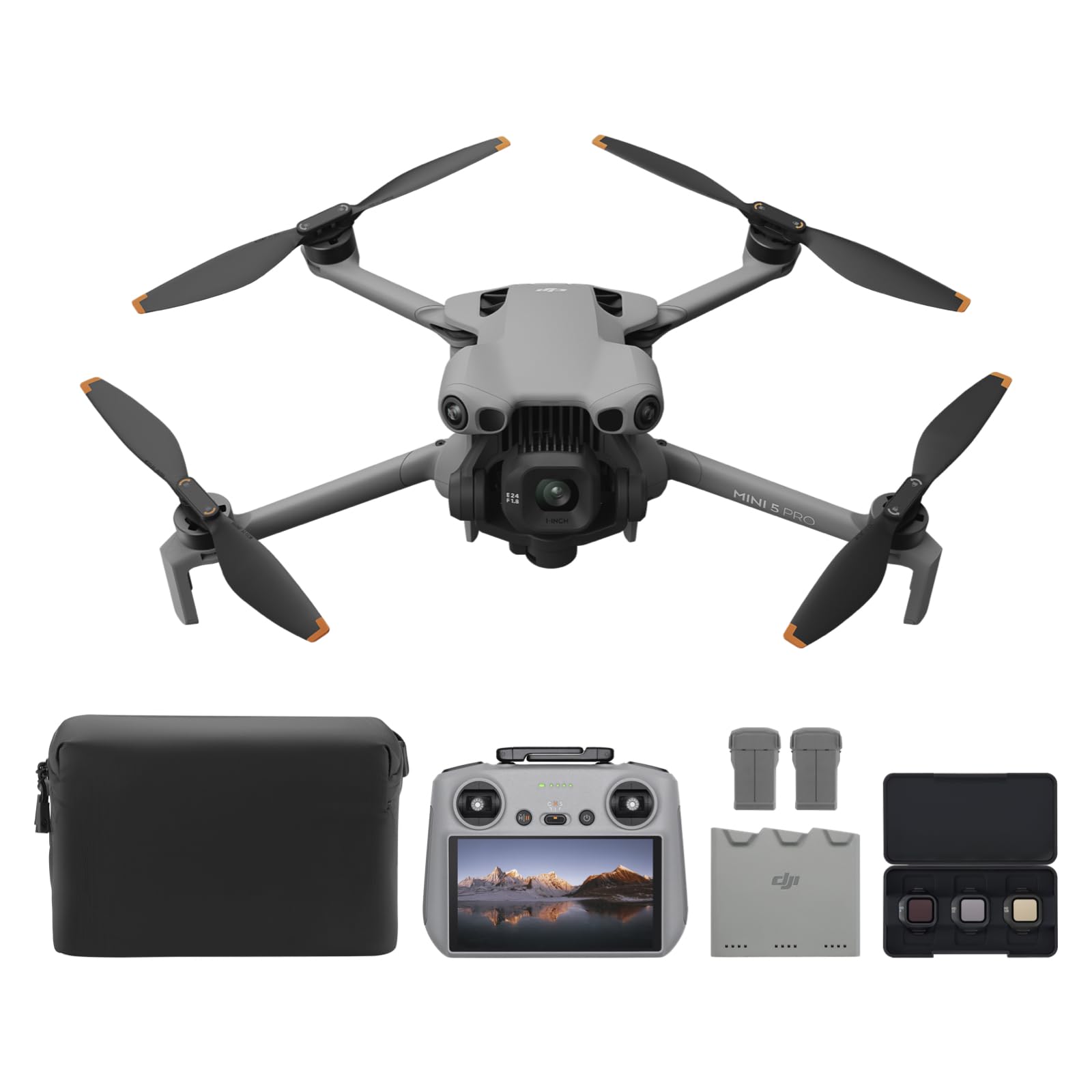
If you’re serious about drone photography and want a machine you won’t outgrow in a few months, the DJI Mini 5 Pro is the investment-grade choice. Its 1-inch CMOS sensor captures 4K/60fps HDR video with sharp detail and vibrant colors, a significant step up in quality over the smaller sensors on most beginner drones. It also delivers 50MP still photos, giving you massive files for cropping and printing.
The safety suite is comprehensive, featuring omnidirectional obstacle sensing that guards against collisions from all sides. The upgraded ActiveTrack 360° offers customizable tracking modes and enhanced stability to keep subjects in focus with faster response, making it superb for filming cycling or running. The gimbal offers 225° of roll rotation and true vertical filming, so you can shoot creative angles and social-ready vertical content without cropping.
Battery life reaches up to 36 minutes with the Intelligent Flight Battery, and a fast-charging hub powers all three included batteries in about 115 minutes. The Fly More Combo includes the DJI RC 2, three batteries, spare propellers, ND filters, and a charging hub, so it’s ready for serious sessions from the start. It weighs in at 249g, keeping it in the travel-friendly class.
Owners call it easy to fly, with stable performance in high winds and beautiful media straight from the start. Collision avoidance is specifically praised as essential. The main hurdles are regulatory: you’ll need to pass the FAA TRUST test and register the drone before flying, and the combo is a significant investment. It’s also note one owner had a gimbal fail on day one, though they reordered and considered it worth it.
Why It Justifies the Price
- 1-inch CMOS sensor with 50MP stills outshines everything else here
- True omnidirectional sensing with ActiveTrack 360° for total protection
- 36-minute flight time per battery with fast charging hub
What You Take On
- Costs considerably more than every other pick on this list
- FAA registration and TRUST test are required before flying
- An occasional gimbal defect has been reported, as with any complex gear
Reach for this if: you want a drone that starts beginner-friendly but has the sensor and software headroom to serve you for years.
Reserve this for: buyers who are confident they’ll stick with the hobby, not casual flyers on a first try.
9. Antigravity A1-360 Drone
The world’s first 360 camera drone that wraps you in goggles and flies on a point.
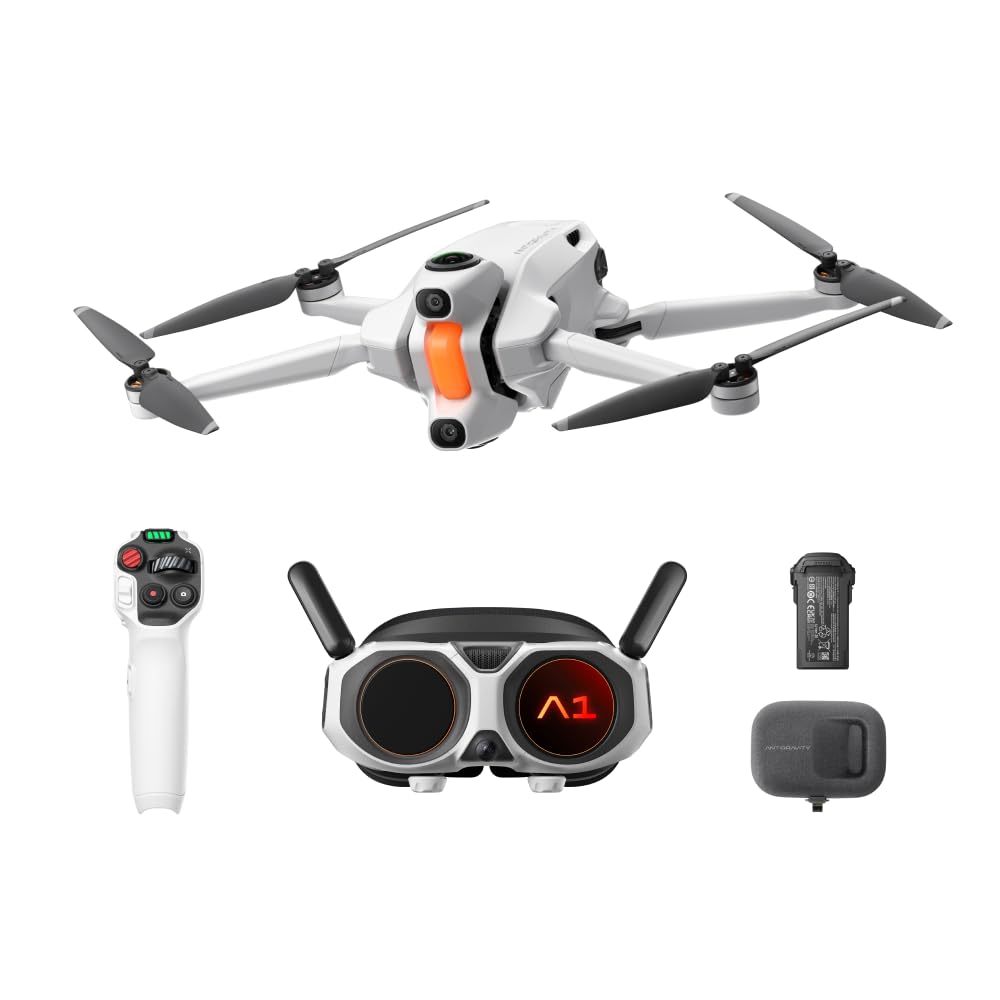
The Antigravity A1-360 isn’t just a drone; it’s an entirely different way to experience flight. As the world’s first 360 drone, it captures everything around it in crisp 8K resolution, so you never miss a shot because the camera wasn’t pointing the right way. The Vision Goggles offer a massive 90° field of view, , using dual 1-inch Micro-OLEDs and Pancake optics for uncompromised immersion.
Beginner control is genuinely reinvented here with FreeMotion Mode’s simple point-to-fly navigation, which owners say makes it surprisingly stable and easy to learn. For pro pilots, there’s an FPV Mode with familiar wrist-based directional control. The lightest configuration, using the Standard Battery, keeps you under 249g for fewer registration hurdles, while swapping in the High-Capacity Battery gives you 39 minutes of uninterrupted flight.
Sky Path and Virtual Cockpit modes turn flights into video-game quests, making it genuinely fun. Sky Path and Virtual Cockpit modes turn flights into video-game quests, letting you ride on a fire-breathing dragon or fly through a spaceship. Sky Genie performs pro maneuvers with a tap, and Deep Track keeps subjects on center stage. Auto Editing 2.0 uses the app to automatically reframe your 360° footage into ready-to-share films with music syncing, so you don’t need editing skills.
Reviewers point out footage is extremely detailed without editing, and the rich goggles make you feel like you’re flying. The omnidirectional obstacle avoidance combines 360-degree sensing with front and downward binocular vision (two cameras for depth) to detect obstacles from every angle.
The class-leading Experience
- 8K 360 video captures every angle in one take, no reframing mid-flight
- rich goggles with 90° FOV and built-in diopter adjustment
- Point-to-fly motion control is incredibly intuitive for new pilots
Consider This
- Highest price on this list, reflecting the cutting-edge tech
- 10km range is less than the SKYROVER’s 9.32-mile transmission
Reach for this if: you want the most fun, rich, and shareable flying experience from day one, with goggles that put you in the cockpit.
Pass on this if: you’re on a budget or prefer a traditional camera drone for maximum reach.
Understanding the Specs
Obstacle Avoidance Types
Not all “avoidance” is equal. Basic drones use downward-facing cameras or infrared for positioning, which only prevents drifting into the ground. More advanced systems use forward cameras or LiDAR (a laser-based sensor) to detect obstacles in the path of flight. The gold standard is omnidirectional sensing, which uses multiple cameras or sensors to watch every direction simultaneously, protecting you from collisions with trees, walls, and other objects regardless of which way you’re flying.
Flight Time & Battery Math
When you see a drone advertised with “75 minutes of flight,” always check if that’s per-battery or total. Many beginner drones include two or three batteries, and the big number is the sum of all of them. The realistic per-battery time—usually 20 to 40 minutes—is what you’ll actually experience between landings. For a beginner, shorter flights are fine, but they mean more swapping and charging between sessions, so factor in the charging time for the batteries you’ll use.
FAQ
Is collision avoidance worth the extra cost on a beginner drone?
What does “360° obstacle avoidance” actually mean?
Will a drone under 249g still need FAA registration?
How long does a beginner drone battery last in real use?
What is the difference between GPS and optical flow for positioning?
Is the 4K camera on a budget drone as good as one on a premium drone?
What is GPS Auto Return to Home and why is it important?
Can I fly a beginner drone indoors?
Final Thoughts: The Verdict
For most new pilots, the beginner drone with collision avoidance winner is the DJI Neo 2 because it pairs the most forgiving omnidirectional sensors with a featherweight 151g design and legendary durability. If you want longer flight time for less money, the S119 comes with three batteries and GPS auto-return. For the definitive rich experience, the Antigravity A1-360 offers 8K 360 video and point-to-fly goggles that make every flight an adventure.
How We Picked
We do not accept paid placement. Every pick is matched to a real buyer and a real use-case; we do not hands-on test units.
Sources & Methodology
Specifications: manufacturer listings and product documentation. Review insights: verified customer reviews, as of August 2026. Pricing: not shown on this page (it changes often); check the current price via the retailer link.
As an Amazon Associate, Gadgets Feed earns from qualifying purchases. This does not affect which products we feature.