
You want the feeling of piloting a race quad through a bridge gap, but most kits aimed at newcomers swap the actual FPV experience for a camera that streams over Wi-Fi to a phone screen. That delay kills the connection. A true Beginner FPV Drone Kit should get you behind goggles with real-time analog or low-latency digital video — not a glorified selfie stick that drifts in the wind.
I’m Min — the co-founder and writer behind Gadgets Feed. I spend my time dissecting flight controller specs, transmitter protocols, prop sizing, and battery voltage curves to separate the toys from the machines that teach you to fly.
This guide focuses on complete bundles that give you the right transmitter, camera, and drone body together, so you start from the first pack with genuine FPV reflexes. It is the final resource you need to land the best beginner fpv drone kit.
How To Choose The Best Beginner FPV Drone Kit
Picking the right bundle is less about mega-pixels and more about the two-second rule: if the video lag between the camera and your eyes exceeds 100 milliseconds, you train muscle memory that doesn’t translate to fast flying. Look for kits that either use an analog video transmitter (VTX) paired with goggles or a dedicated low-latency digital protocol — not a phone-clip FPV that relies on congested Wi-Fi bands.
Brushless Motors Are Non-Negotiable
Brushed motors wear out after a handful of battery cycles and lack the torque to punch out of a dive. Every kit worth your time in the FPV world uses brushless motors — quieter, more efficient, and able to handle the quick throttle blips that define freestyle flying. The BETAFPV Cetus Pro and the Emax Tinyhawk both run brushless 0802 or 1103 class motors that survive dozens of hard crashes without degrading power.
Flight Modes and Turtle Mode
A beginner FPV drone kit should include an altitude hold or angle mode to hover without stick input, then let you switch to acro or manual mode to learn flips and rolls. Turtle mode — which flips the quad right-side up from an inverted landing — is a sanity saver for indoor practice. Without it, you walk to the crash pad a dozen times per session.
Goggles vs. Phone Screen
A phone screen attached to a toy-grade remote adds at least 150–200 ms of latency and washes out in sunlight. Proper FPV goggles — even entry-level box goggles like the VR02 — lock you into the video feed with minimal delay and cut ambient light. That immersion is the entire point of FPV, not an accessory to buy later.
Quick Comparison
On smaller screens, swipe sideways to see the full table.
| Model | Category | Best For | Key Spec | Amazon |
|---|---|---|---|---|
| Potensic ATOM LT | Premium Camera Drone | Entry-level aerial photography | 80 min total flight (2× 3000mAh) | Amazon |
| BETAFPV Cetus Pro | True FPV Kit | Learning acro / manual mode | Turtle mode + altitude hold | Amazon |
| EMAX Tinyhawk RTF | Racing Whoop | Indoor FPV racing practice | 35 mph top speed | Amazon |
| NAFYRE VoltX7 Ultra | 3-Axis Gimbal Drone | Smooth video without jitter | 3-axis mechanical gimbal | Amazon |
| SIMREX G29 | GPS Camera Drone | Beginner with GPS safety features | 2296 ft control range | Amazon |
| Oddire HK11 | GPS Camera Drone | Follow-me and waypoint missions | 48 min total flight (2× 1800mAh) | Amazon |
| KINGULL K24 | Remote-Screen Drone | No-phone FPV viewing | 4.5‑inch LCD on controller | Amazon |
| CHUBORY 84 Min | Budget Camera Drone | Maximum flight time on a budget | 84 min total flight (3 batteries) | Amazon |
| PLEGBLE PL715 | Budget GPS Drone | Safe first GPS-equipped drone | Under 249g, 46 min total flight | Amazon |
In‑Depth Reviews
1. Potensic ATOM LT GPS Drone

The Potensic ATOM LT pairs a Sony CMOS sensor with EIS 2.0 shake reduction to deliver smooth 2.5K footage at 30 fps — a huge leap over the interpolated 4K found on many budget drones. Its PixSync 2.0 transmission keeps a solid HD feed at up to 4 km, and the quad supports GPS, GLONASS, Galileo and BeiDou for quick satellite lock and reliable auto return.
The flight stack includes three modes tailored for progression: a beginner speed cap that limits altitude and distance, a standard mode for cruising, and a sport mode that pushes the craft to roughly 35 mph. Two 3000 mAh intelligent batteries yield 40 minutes each, and the fold-away arms bring the stowed size down to pocket-friendly dimensions.
This kit leans more toward camera flying than acro FPV, but the low-latency remote and responsive PixSync link make it a strong entry point for pilots who want crisp video and GPS safety. Upgrading to a true FPV goggle setup later is possible because the controller uses a standard phone mount.
Why it’s great
- Sony‑based EIS camera produces genuinely stable footage, not interpolated fake 4K
- Quad‑constellation GPS locks quickly and auto‑return works consistently
- 80‑minute total battery life with two intelligent packs
Good to know
- No TF sensor for low‑light altitude holding — avoid flying indoors or in deep shade
- Requires GPS satellite lock before arming, so not ready for indoor flight
2. BETAFPV Cetus Pro FPV Kit

The Cetus Pro is the rare kit that gives you a genuine FPV experience right out of the box — no Wi-Fi, no phone app, no screen latency. It includes the LiteRadio 2 SE transmitter and VR02 box goggles, both using the Frsky D8 protocol for sub-40 ms video latency. The brushless 0802 motors run on 1S BT2.0 batteries and deliver enough punch for indoor flips and outdoor sport flying.
Three flight modes define its progression path: Normal (angle mode with altitude hold), Sport (horizon mode with full manual roll), and Manual (acro where no self-leveling exists). Turtle mode flips the drone back over if you land inverted, which saves endless walking. The barometer and laser sensor keep the hover stable in N mode, even near walls.
Battery life is the main compromise — two included 450 mAh packs give only about 4–5 minutes each. Most owners buy a six‑bay 1S charger and four extra batteries to extend sessions past 20 minutes. The goggles are basic box-style but lock in the low-latency feed that makes FPV addictive.
Why it’s great
- True analog FPV with goggles included, no Wi‑Fi or phone required
- Altitude hold and turtle mode drastically reduce crashes and frustration
- Three flight modes (N / S / M) allow progression from stable hover to full acro
Good to know
- Flight time per battery is only 4–5 minutes; you need at least four extra packs for a decent session
- Goggles do not have an external antenna port, limiting range upgrades
3. EMAX Tinyhawk RTF

The Tinyhawk RTF is the most famous beginner FPV kit in the hobby — it has been the default recommendation for years because it works out of the box with zero configuration. The bundle includes the Tinyhawk BNF quad, a multi‑protocol controller, and a pair of box goggles that display the 25 mW analog feed with about 40 ms lag. The quad itself uses 1103 brushless motors and a 2S 450 mAh battery, hitting roughly 35 mph in a straight line.
Three flight modes (angle, horizon, and acro) let you start in stabilized angle mode and graduate to full manual. The prop guards are molded into the ducted frame, so wall impacts rarely break anything — users report hundreds of crashes without replacing arms. The range is about 200 feet through a building, making it a top pick for indoor racing lines around furniture.
The main downside is the short battery run time of around 4 minutes, and the included charger is slow. The goggles are bulky and the camera angle sits high, meaning the Tinyhawk needs to be moving fast to keep the horizon level in the frame. Still, for learning acro reflexes cheaply, nothing else in this price range offers the same durability.
Why it’s great
- Extremely durable ducted frame survives hundreds of indoor crashes
- True 25 mW analog VTX with goggles, no Wi‑Fi lag
- Three flight modes for structured progression to acro
Good to know
- Camera angle is too high — you need to fly fast to keep a level view
- Battery life is ~4 minutes; buy extra packs immediately
4. NAFYRE VoltX7 Ultra
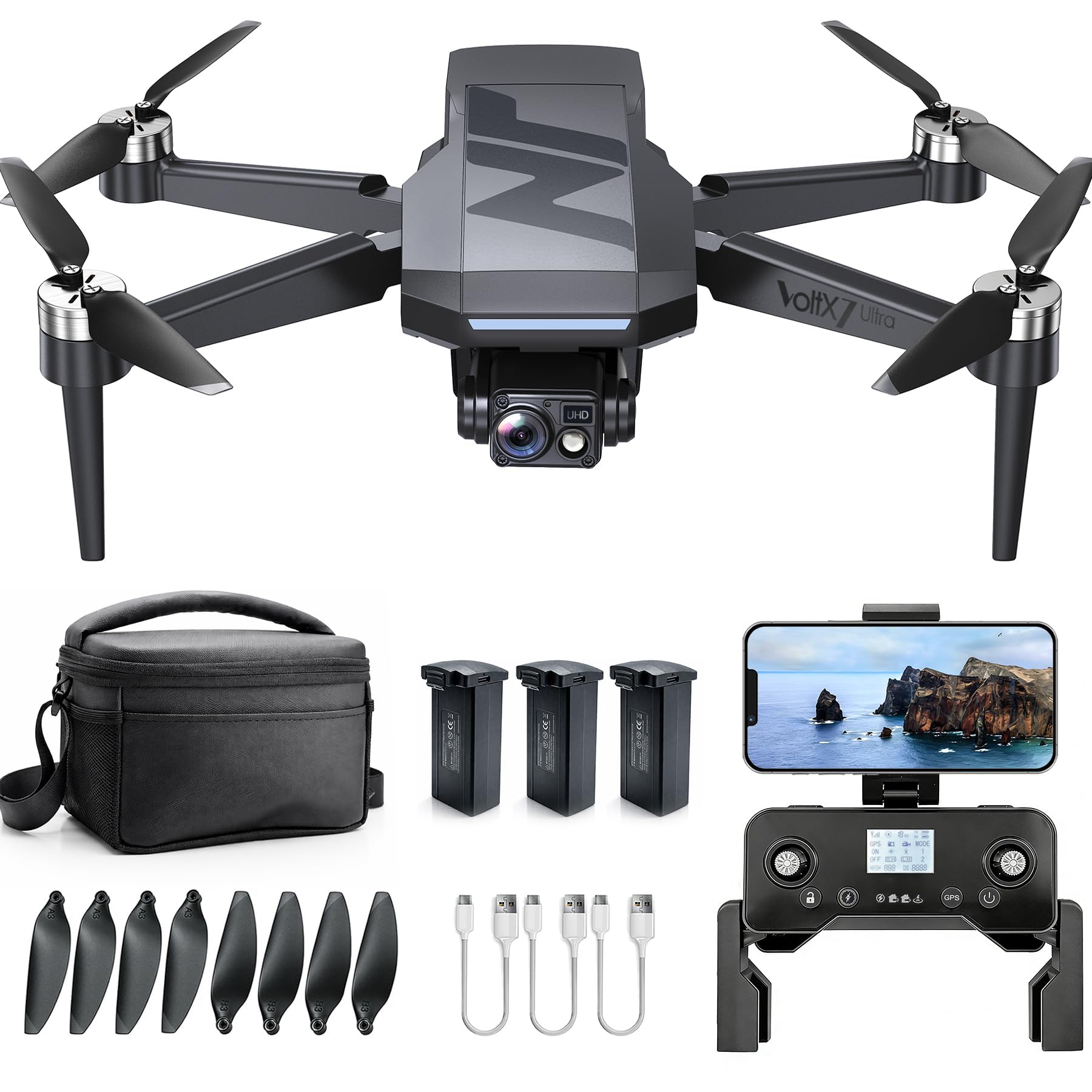
The VoltX7 Ultra stands apart from every other kit here because it includes a true 3‑axis mechanical gimbal instead of relying on electronic image stabilization. That gimbal keeps the horizon perfectly level even during fast yaw turns, and it allows you to tilt the camera up to 90 degrees with the remote or app. The 4K UHD sensor captures 4096×3072 stills and 2048×1080 video at reasonable bitrates.
Three 1800 mAh batteries deliver 90 minutes of total flight — long enough for a full afternoon session. The GPS module integrates optical flow positioning, which helps the drone lock position indoors without satellite coverage. Video transmission runs on 5 GHz Wi-Fi, but the gimbal’s physical stabilization makes the footage look like it came from a far more expensive platform.
This kit is not for learning acro or racing — there is no manual flight mode, and the controller uses a phone holder rather than goggles. It works best for beginners who want smooth, watchable aerials without the jarring jello that plagues budget camera drones. The gimbal itself adds weight, but the motors handle it gracefully in light winds.
Why it’s great
- True 3‑axis gimbal eliminates micro‑jitter, no cut‑rate EIS artifacts
- 90‑minute total flight time with three included packs
- Optical flow positioning aids stable hover indoors without GPS
Good to know
- Phone‑based FPV adds noticeable latency — not for immersive racing
- No manual/acro mode; locked to angle/assisted flight
5. SIMREX G29

The SIMREX G29 enters the conversation as a camera drone with genuine GPS safety features usually reserved for premium models. The 4K camera tilts 90 degrees electrically via the controller or app, allowing you to frame shots straight down without moving the craft. The optical flow sensor and altitude hold freeze the quad in place while you compose, and the GPS return‑to‑home triggers automatically on signal loss or low battery.
Flight modes include Follow Me, Waypoint, and Circle Fly, which turn the G29 into a hands‑off aerial camera platform. The brushless motors are quiet and efficient, running the included battery pack for a combined 40 minutes across two packs. The remote controller has a phone clamp with a built‑in holder so the 5 GHz FPV feed is visible even in direct sunlight.
This kit uses Wi‑Fi-based FPV rather than analog or digital transmission, so there is latency that disqualifies it from acro practice. But for beginners who want GPS safeguards and the ability to film themselves hiking or biking without a second pilot, the G29 provides the most autonomous features in the mid‑range bracket.
Why it’s great
- GPS auto‑return, Follow Me, and Waypoint flight modes work reliably
- 90° electrically adjustable camera captures unique straight‑down angles
- Under 249 g — no FAA registration required
Good to know
- Wi‑Fi FPV has noticeable latency — not suitable for fast acro flying
- Camera quality is decent but true 4K is interpolated; fine for social clips
6. Oddire HK11

The Oddire HK11 stocks strong GPS features — auto return, route planning, orbit fly, and follow‑me — plus a 4K camera with a 110‑degree wide‑angle lens that tilts 90 degrees from the remote or app. Two 1800 mAh 7.7 V batteries yield 48 minutes of total flight, and the 5 GHz Wi‑Fi transmission stretches to 1640 feet. The included carrying case holds the entire kit securely.
The brushless motors handle Level 5 wind resistance, so the HK11 stays steady in breezy park conditions where lighter drones get pushed around. The camera records 2048×1088 video, which looks detailed on a phone screen but lacks fine texture on larger monitors. The app “X DRONE GO” includes built‑in filters and music tracks for quick social sharing.
Like the SIMREX G29, this is a GPS camera drone, not an FPV race quad. The latency from the Wi‑Fi link prevents immersive flying, but the combination of intelligent GPS modes, strong wind resistance, and long battery life make it a solid choice for beginners who want to film landscape shots without worrying about losing the aircraft.
Why it’s great
- GPS features (follow‑me, orbit, waypoint) are intuitive and work as advertised
- Brushless motors provide strong Level 5 wind resistance
- 48‑minute total flight time with two 1800 mAh packs
Good to know
- Wi‑Fi FPV has latency — not for acro flight
- Requires compass calibration every power‑on; app can be finicky
7. KINGULL K24
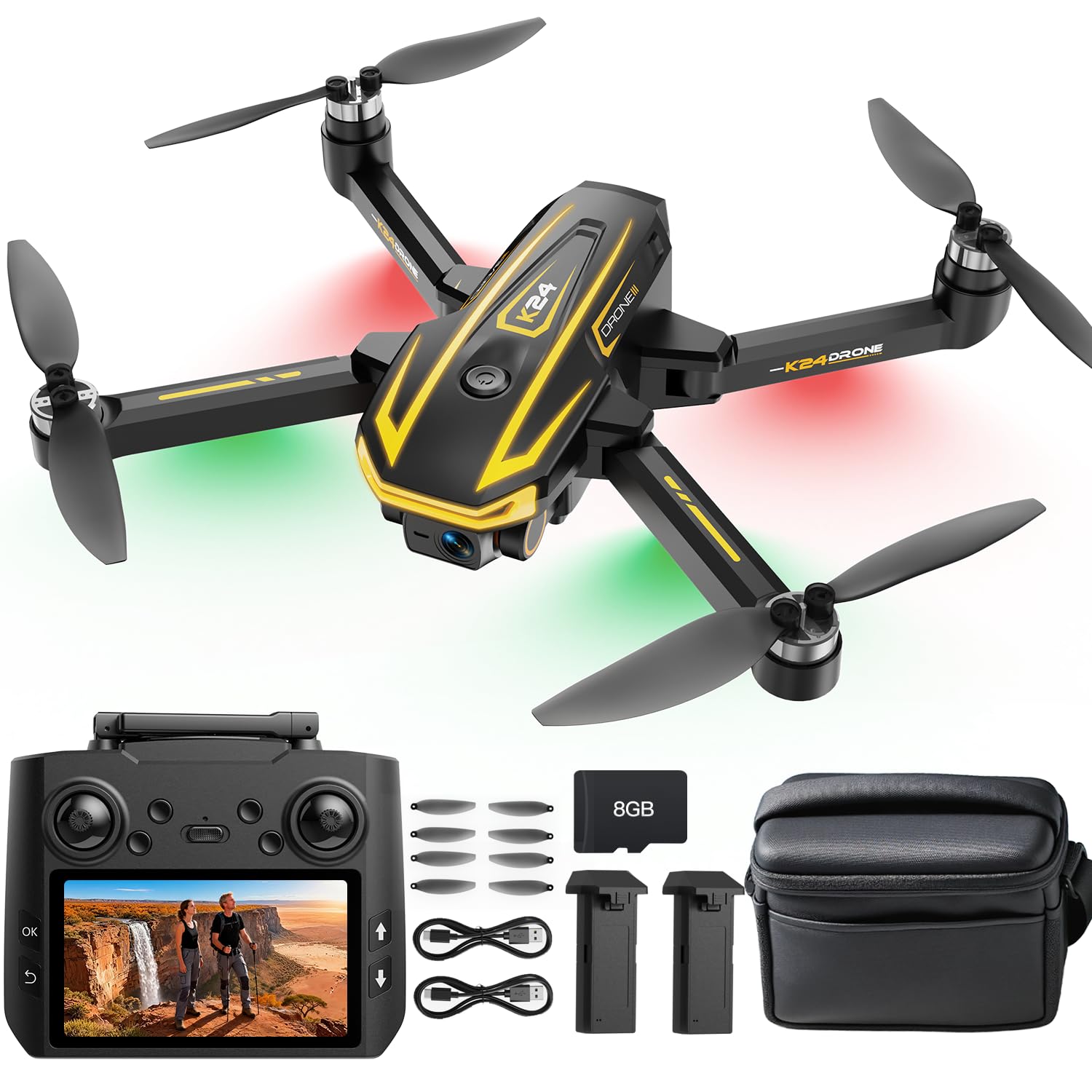
The KINGULL K24 eliminates the need for a phone entirely by integrating a 4.5‑inch HD LCD screen directly into the remote controller. The FPV feed streams over Wi‑Fi to that screen, giving you a larger and brighter view than a phone in direct sunlight. The kit includes a micro SD card, so you can record 4K footage right to the card without any external device.
Two 1800 mAh batteries each provide 32 minutes of flight time — 64 minutes total. Optical flow positioning and altitude hold stabilize the drone indoors and in light wind, while one‑key takeoff and landing simplify every session. The controller itself is rechargeable via USB‑C, removing the need for disposable AA batteries.
The trade‑off is the lack of GPS. No return‑to‑home, no follow‑me, no waypoint flight. The K24 relies entirely on optical flow and barometric altitude, which works well in calm conditions but will drift if the ground texture changes or wind picks up. Buyers who prioritize GPS safety should look elsewhere; those who want a self‑contained, screen‑based FPV experience at a reasonable price will enjoy the K24.
Why it’s great
- Built‑in controller screen means no phone required for live FPV view
- Two batteries give 64 minutes total flight, USB‑C rechargeable
- Optical flow positioning provides stable indoor hover
Good to know
- No GPS, no auto return — the drone can drift away in wind
- Camera quality is decent but not true 4K; fine for recreational use
8. CHUBORY 84‑Minute Drone
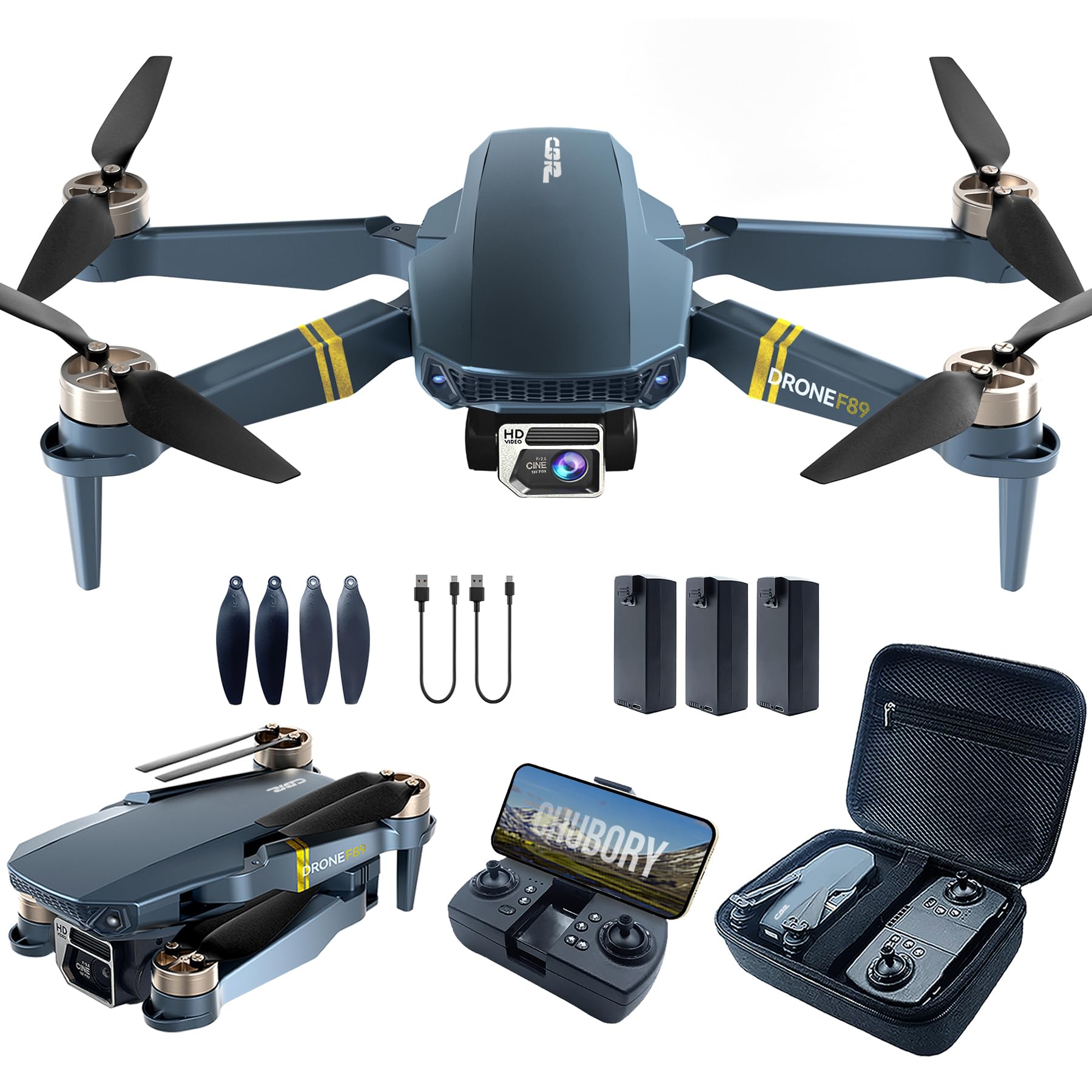
The CHUBORY kit prioritizes raw flight time over premium components. Three included batteries give a combined 84 minutes of airborne time — by far the longest in the budget tier. The brushless motors keep noise down and power consistent, while the control range stretches to 2650 feet, enough for wide landscape surveys. The 4K camera includes a switchable bottom optical flow sensor for stable low‑altitude hover.
Intelligent flight modes like Follow Me, Trajectory Flight, and gesture selfie are accessible through the app. The weight sits under 249 g, so no FAA registration is needed, and the foldable frame packs into a zippered carrying case. The remote controller does not have a built‑in screen; you must use a phone clamp for the 5 GHz FPV feed.
The camera’s true resolution is 3.7 MP, upscaled to 4K — the footage looks crisp on a phone screen but softens on larger displays. There is no gimbal or EIS, so windy conditions produce micro‑jello. For the price, however, the combination of extreme flight time, brushless motors, and long range make the CHUBORY an affordable entry into aerial video.
Why it’s great
- Unmatched 84‑minute flight time with three included batteries
- Brushless motors deliver smooth and quiet operation
- 2650 ft control range exceeds most competitors in the same price bracket
Good to know
- 4K is upscaled from 3.7 MP; fine for phone viewing, not for large screens
- No gimbal or EIS — footage will jitter in moderate wind
9. PLEGBLE PL715
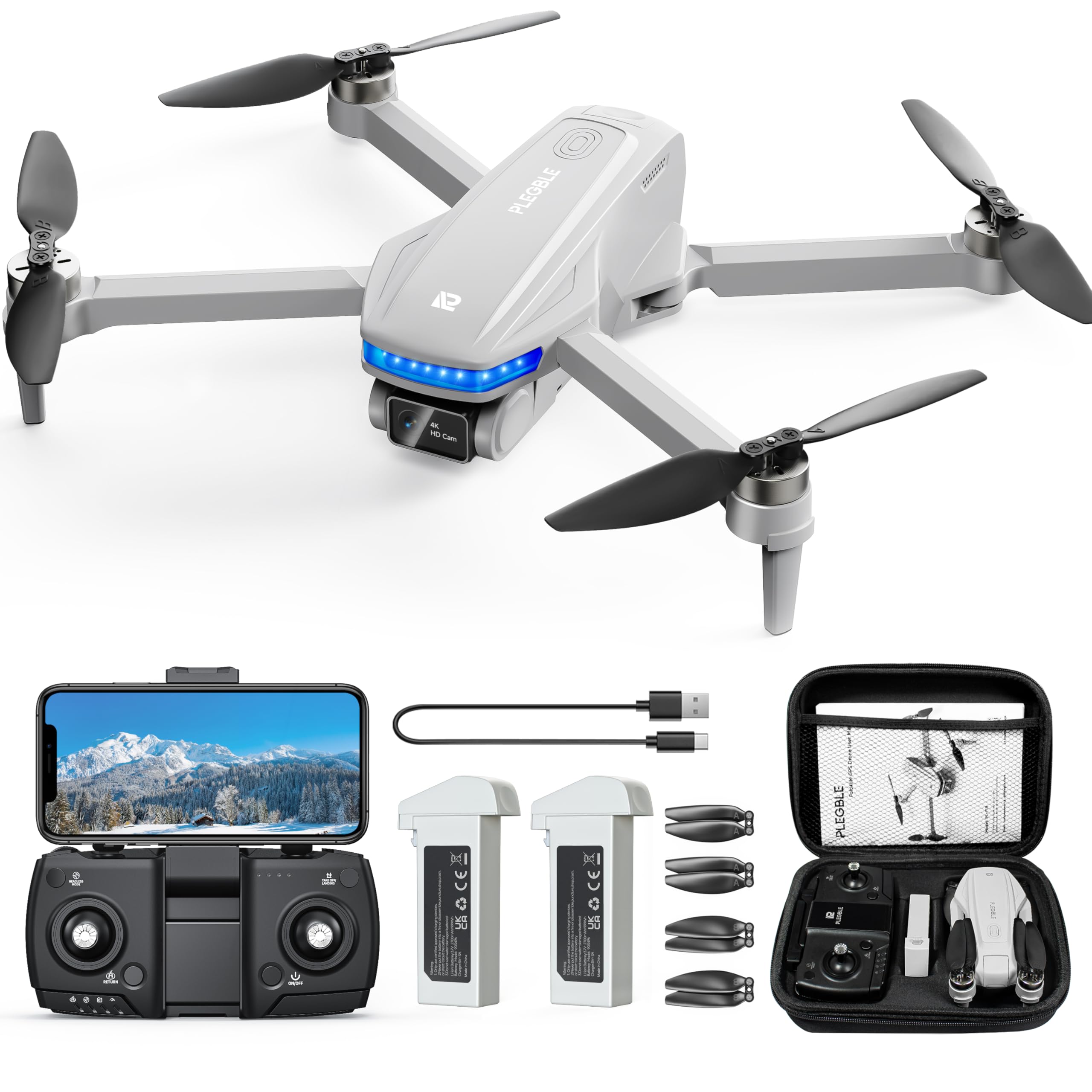
The PLEGBLE PL715 is the lightest GPS‑equipped drone in this roundup at under 200 g while still including a 4K camera with a 120‑degree wide‑angle lens and 5 GHz FPV. The GPS module supports auto return on signal loss or low battery, plus Follow Me, Waypoint, and Circle Fly modes. Two 2700 mAh batteries provide 46 minutes of total flight — 23 minutes each — which is impressive for the sub‑ price territory.
The brushless motors operate quietly and handle light wind with the help of the altitude hold sensor. The remote includes a beginner mode that limits flight radius to 30 meters, which is a genuine safety net for first‑time pilots. The foldable design and included carrying case make the PL715 a travel‑friendly package that fits in a daypack.
The 4K camera is interpolated from a lower‑resolution sensor, so fine detail is lost if you crop or view on a 4K monitor. The Wi‑Fi FPV feed adds latency that prevents acro flying, and the drone lacks a gimbal, so footage shows micro‑vibrations in strong wind. But for a first drone with GPS insurance and a low weight that skips FAA red tape, the PL715 delivers solid value that beats toy‑grade alternatives.
Why it’s great
- GPS auto return and beginner mode provide high crash safety for new pilots
- 46‑minute total flight time with 2700 mAh batteries
- Under 250 g, no FAA registration needed
Good to know
- 4K resolution is interpolated; quality is acceptable for social sharing only
- Wi‑Fi FPV latency prevents true first‑person immersion
FAQ
Can I use a beginner FPV drone kit without any prior flying experience?
Yes, as long as the kit includes a beginner flight mode (angle or altitude hold) that self‑levels the drone when you let go of the sticks. The BETAFPV Cetus Pro and Emax Tinyhawk both offer a beginner‑friendly angle mode. Avoid starting in full acro or manual mode — you will crash within seconds.
How long does it take to learn to fly FPV with these kits?
Most pilots can hover and fly a simple figure‑eight pattern within 2–3 hours in a simulator (such as Velocidrone or Liftoff) flown on the same radio they use with their quad. Real‑world acro progression depends on crash tolerance — plan on 10–15 battery packs before comfortable flips and rolls. A kit with turtle mode cuts downtime significantly.
Do I need a license or registration to fly these drones?
If the drone weighs under 250 g (0.55 lb) and you fly it purely for recreation, the FAA does not require registration or Remote ID. All nine kits in this guide are under 249 g and thus exempt from registration. Flying at a local AMA field or public park may still require adherence to local drone ordinances — always check your municipality’s rules.
Can I upgrade the camera or VTX on these kits later?
The True FPV kits — Emax Tinyhawk and BETAFPV Cetus Pro — have replaceable components. Their camera and VTX are mounted on standard Whoop mounts, so swapping to a higher‑resolution camera like the Caddx Ant or a 400 mW VTX is straightforward. Budget camera drones like the PLEGBLE and CHUBORY have soldered or glued modules that are not user‑upgradable.
Which kit works best for indoor flying?
The Emax Tinyhawk is the most proven indoor FPV trainer because its ducted frame endures wall hits without breaking, and its 2S power is strong enough to punch out of a hover but not so powerful it damages drywall. The BETAFPV Cetus Pro also works indoors in Normal mode due to its altitude hold and low-speed control range.
Final Thoughts: The Verdict
For most users, the best beginner fpv drone kit winner is the BETAFPV Cetus Pro because it bundles actual analog goggles, a multi‑mode transmitter, and a brushless quad with turtle mode and altitude hold — giving you a real FPV learning path right out of the box. If you want maximum flight time and GPS safety for landscape filming, grab the Potensic ATOM LT. And for pure indoor racing durability, nothing beats the Emax Tinyhawk.