
That crop-sensor camera you have been pushing to its limits? It’s time to step up. Moving to a full-frame sensor means trading that tight, noisy high-ISO look for clean shadows, shallower depth of field, and the kind of dynamic range that lets you pull details out of a backlit sky without breaking a sweat.
I’m Min — the co-founder and writer behind Gadgets Feed. I have spent hundreds of hours cross-referencing sensor specs, autofocus systems, lens ecosystem costs, and real-world reviews to separate the true beginner-friendly full-frame cameras from the ones that will punish you with bad menus and slow performance.
Whether you are upgrading from APS-C, switching from a smartphone, or finally making the jump you have been researching for months, this guide will walk you through every solid option for a best beginner full frame camera that won’t overwhelm you or your budget.
How To Choose The Best Beginner Full Frame Camera
Jumping into full-frame is a major step, but not every body is a good teacher. A beginner-friendly full-frame camera needs a forgiving autofocus system, an intuitive menu layout, and reasonable weight so you actually bring it with you. Here is what you need to weigh before clicking that buy button.
Autofocus: The Confidence Factor
A frustrating autofocus will kill your enthusiasm faster than any other spec. Look for phase-detection AF with eye-tracking for humans and animals — this is table stakes on most mirrorless cameras today. Contrast-detection-only systems (like the original Canon EOS RP) will hunt in low light, so prioritize models with dedicated phase-detect points (the Canon R6 Mark II has 1,053) or hybrid systems (the Sony a7 III uses 693 phase-detection points). For beginners, skipping cameras with fewer than 40 AF points and no subject-tracking will save you a lot of missed shots.
Body Size, Weight, and Grip
Full-frame sensors are physically larger, but modern mirrorless bodies can still be remarkably compact. The Sigma fp weighs only 422 grams — the lightest full-frame option on this list — but its tiny grip can feel awkward with larger lenses. In contrast, the Canon EOS R6 Mark II and Nikon Z 6II offer deeper ergonomic grips that let you hold heavy telephoto zooms comfortably for hours. If you plan to carry your camera daily, prioritize a body under 700 grams with a comfortable handgrip; don’t sacrifice ergonomics for a few millimeters of thinness.
Lens Ecosystem and Upgrade Path
Your first full-frame camera is really a gateway to a lens system. Canon’s RF mount has a stellar native lineup but few budget third-party options; Sony’s E-mount is the most open, with affordable lenses from Sigma, Tamron, and Samyang. Nikon’s Z mount is excellent but native lenses are pricey — however, the FTZ adapter lets you use hundreds of older F-mount lenses. Panasonic’s L-mount, shared with Sigma and Leica, is growing fast. A beginner should pick a mount where they can afford a solid f/1.8 prime within six months, not just the kit zoom.
Quick Comparison
On smaller screens, swipe sideways to see the full table.
| Model | Category | Best For | Key Spec | Amazon |
|---|---|---|---|---|
| Canon EOS R6 Mark II | Mirrorless | Hybrid versatility | 24.2MP / 40fps | Amazon |
| Sony a7 III | Mirrorless | All-around value | 24.2MP / 693 AF points | Amazon |
| Nikon Z 6II | Mirrorless | Video-stills balance | 24.5MP / 14fps | Amazon |
| Panasonic LUMIX S5II | Mirrorless | Video-first beginners | 24.2MP / Phase Hybrid AF | Amazon |
| Canon EOS RP (Body) | Mirrorless | Lightweight entry | 26.2MP / 4fps | Amazon |
| Canon EOS RP Kit | Mirrorless | Zoom-included travel | 26.2MP / 24-105mm lens | Amazon |
| Nikon D610 | DSLR | Budget DSLR shooters | 24.3MP / 6fps | Amazon |
| Sony a7 II | Mirrorless | IBIS on a budget | 24.3MP / 5-axis IBIS | Amazon |
| Canon EOS 5D Mark II | DSLR | Classic full-frame experience | 21.1MP / 3.9fps | Amazon |
| Sigma fp | Mirrorless | Ultra-compact body | 24.6MP / 422g | Amazon |
| Canon EOS 5D Mark IV | DSLR | High-resolution studio | 30.4MP / 7fps | Amazon |
| Panasonic LUMIX S9 | Mirrorless | Social-media content | 24.2MP / 18-40mm lens | Amazon |
| Canon EOS R5 | Mirrorless | Maximum resolution and 8K | 45MP / 8K RAW | Amazon |
In‑Depth Reviews
1. Canon EOS R6 Mark II

The Canon EOS R6 Mark II is the benchmark for a beginner who wants a single camera that can do it all without demanding technical expertise. Its 24.2-megapixel full-frame sensor paired with the DIGIC X processor delivers clean files up to ISO 6400 with minimal noise, and the 8-stop In-Body Image Stabilization (IBIS) lets you shoot handheld at shutter speeds that would have been unthinkable on older DSLRs. The Dual Pixel CMOS AF II with 1,053 phase-detection points covers almost 100% of the frame, and it tracks human eyes, animal eyes, vehicles, and even trains with a reliability that removes the guesswork from focusing.
The camera’s 40-fps electronic shutter (12 fps mechanical) sounds like overkill for a beginner, but it effectively future-proofs you for action photography — whether you’re capturing a dog running or a toddler’s first steps, you will get the frame. Video shooters get 6K oversampled 4K60p with C-Log 3, and the vari-angle 3.0-inch touchscreen makes vlogging and low-angle compositions effortless. The body is weather-sealed, the battery lasts around 450 shots per charge, and the dual UHS-II SD card slots give you redundancy without the cost of CFexpress cards.
The only real compromise is resolution — 24.2 megapixels is plenty for large prints and social media, but if you are a pixel-peeper who crops aggressively into wildlife shots, the Canon EOS R5’s 45 MP may still tempt you. The RF lens ecosystem is excellent but currently has no budget-friendly third-party primes, so native lenses cost more upfront. That said, for a beginner who values autofocus confidence, low-light performance, and a clear upgrade path, the R6 Mark II is the most complete entry point into full-frame mirrorless.
Why it’s great
- Best-in-class Dual Pixel CMOS AF II with 1,053 AF points
- 8-stop IBIS for sharp handheld shots in low light
- 40fps electronic shutter with zero blackout
Good to know
- No third-party RF lenses means higher native lens costs
- 24.2MP may feel limited for heavy cropping
2. Sony a7 III

The Sony a7 III is the camera that changed the full-frame market forever, and it remains a phenomenal entry point for beginners. Its 24.2-megapixel back-illuminated (BSI) CMOS sensor captures 15 stops of dynamic range, which means you can underexpose a landscape by several stops and still recover shadow detail without ugly noise. The 693 phase-detection and 425 contrast-detection AF points cover 93% of the image area, and Real-time Eye AF for humans and animals works so reliably that many pros still use the a7 III as a second body today.
The kit lens — the FE 28-70mm f/3.5-5.6 OSS — is decent but unremarkable; the real magic happens when you swap it for a Sigma 35mm f/1.4 or Tamron 28-75mm f/2.8. The battery life is exceptional at 710 shots per charge (CIPA), the in-body stabilization gives you about 5 stops of shake reduction, and the 4K video (Super 35mm crop) is still usable for most content creators. The menu system, however, is notoriously dense — Sony’s menus are less intuitive than Canon or Nikon, so expect a learning curve for changing buried settings like focus area registration or custom white balance.
Where the a7 III shows its age is in the viewfinder (2.36 million dots, 0.5x magnification) and the single UHS-II SD card slot (the second is UHS-I only). The USB port is Micro-USB rather than USB-C, and the rear screen is fixed — you cannot flip it forward for selfies or vlogging. Despite these concessions, the combination of image quality, AF reliability, and the massive third-party lens ecosystem makes the a7 III the smartest value-for-money full-frame camera for a beginner who wants to grow into a system.
Why it’s great
- 15-stop dynamic range for forgiving exposure
- Excellent 710-shot battery life
- Massive third-party lens ecosystem (Sigma, Tamron, Samyang)
Good to know
- Menus are dense and unintuitive for new users
- Rear screen is fixed — no flip-out for vlogging
3. Nikon Z 6II

The Nikon Z 6II does something rare — it gives a beginner a premium video-stills hybrid experience without the intimidating price of the Z8 or Z9. Its 24.5-megapixel back-illuminated sensor delivers excellent low-light performance, with native ISO up to 51,200 that remains impressively clean for high-contrast scenes. The 273 phase-detection AF points cover 90% of the frame horizontally and vertically, and the Eye-Detection AF for humans and animals is fast enough for most portrait and event work, though it occasionally loses tracking on fast erratically moving subjects like birds.
The Z 6II is the rare mirrorless camera that includes dual card slots — one CFexpress/XQD and one UHS-II SD — giving you immediate backup security for important shoots. The body is weather-sealed and the grip is deep enough to hold heavy F-mount lenses via the FTZ adapter (sold separately). For video, you get 4K UHD at 60p from a full-pixel readout, 14-stop dynamic range in N-Log, and USB-C power delivery for extended recording sessions. The 3.69-million-dot EVF is bright and sharp, and the tilting 3.2-inch touchscreen works well for waist-level shots.
The main drawback is the lens ecosystem — native Z-mount lenses are optically stellar but expensive, and the FTZ adapter (roughly extra) adds length and weight when adapting older F-mount glass. Additionally, the autofocus tracking can drop subjects in complex foliage or backlit conditions, which is frustrating for new users who expect flawless lock-on. Still, if you value build quality, dual card slots, and a hybrid video pipeline, the Z 6II is a serious tool that will serve you for years.
Why it’s great
- Dual card slots (CFexpress + SD) for pro-level backup
- Excellent weather sealing and comfortable grip
- 4K 60p full-pixel readout with N-Log
Good to know
- Native Z lenses are expensive; FTZ adapter costs extra
- AF tracking can lose subjects in complex backgrounds
4. Panasonic LUMIX S5II
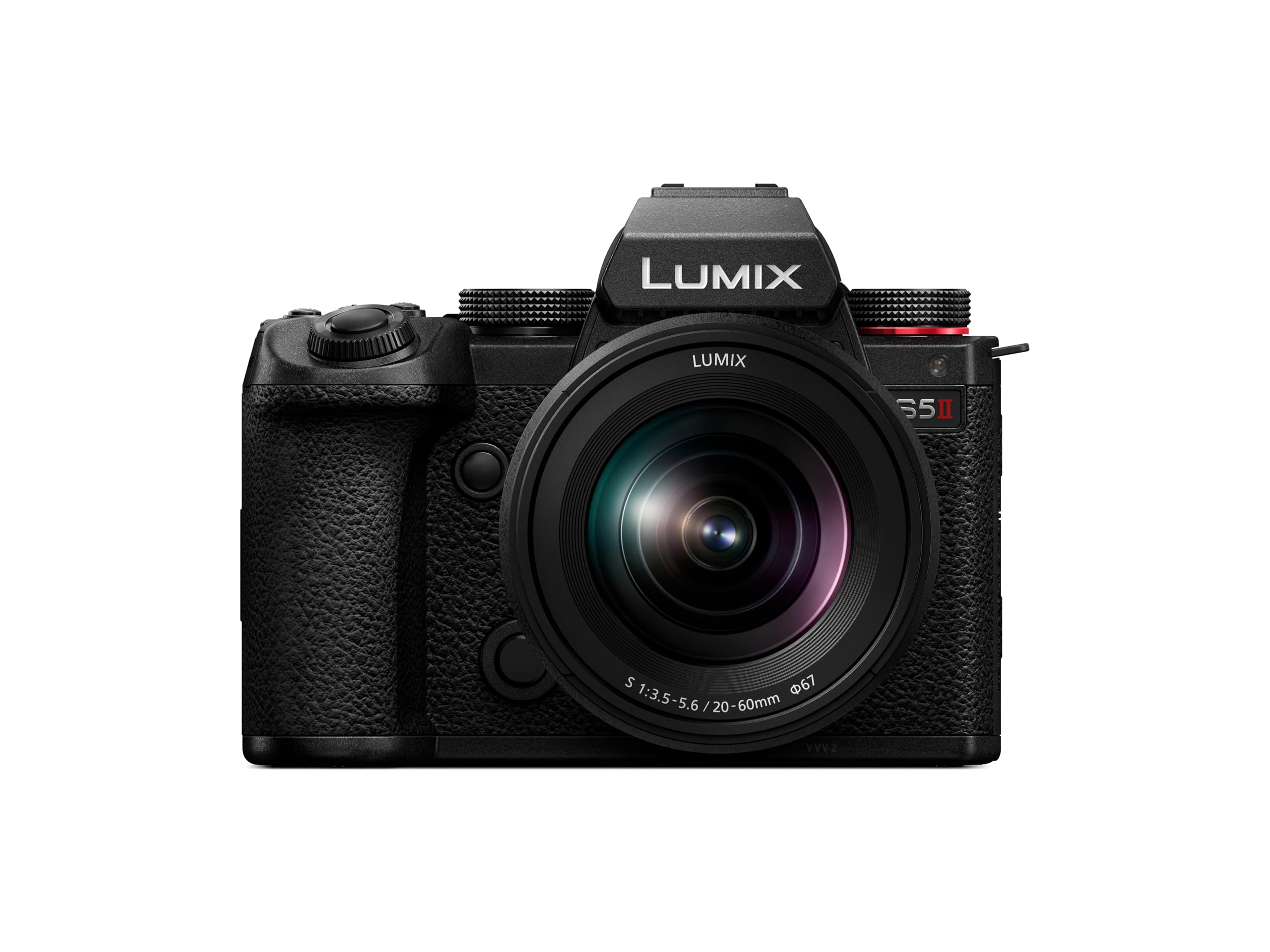
The Panasonic LUMIX S5II is the best beginner full-frame camera for anyone who plans to shoot more video than photos. It finally brings Phase Hybrid Autofocus to Panasonic’s full-frame line, solving the notorious contrast-detect pulsing that plagued earlier S-series cameras. The 24.2-megapixel CMOS sensor delivers clean 4:2:2 10-bit internal recording in all modes, and the built-in cooling fan means unlimited recording — no 30-minute limit, no overheating shutdowns even in 4K60p.
The Active I.S. technology is genuinely gimbal-like: you can walk and shoot handheld footage that looks stabilized, even at the wide end of the included 20-60mm kit lens. The V-Log/V-Gamut capture offers 14+ stops of dynamic range, and the REAL TIME LUT feature lets you apply color grades in-camera, which is a huge timesaver for social-media content creators. The body is compact (about 740 grams with battery) but still has a deep grip, dual SD UHS-II card slots, and a fully articulating 3.0-inch touchscreen.
Where the S5II falls short for beginners is battery life — you will get around 370 shots per charge, so a spare battery (or the optional battery grip) is mandatory for a full day out. The high-ISO performance becomes noisy past ISO 12,800, trailing behind Sony’s BSI sensors. The L-mount ecosystem is growing (Sigma, Leica, and Blackmagic) but still offers fewer budget lens options than Sony E-mount. For a video-focused beginner who wants phase-detect AF, unlimited 10-bit recording, and fantastic stabilization in one package, the S5II is unmatched at this tier.
Why it’s great
- Unlimited 4:2:2 10-bit video with no overheating
- Active I.S. for smooth handheld walking footage
- Phase Hybrid AF finally solves Panasonic focus hunting
Good to know
- Battery life is mediocre (~370 shots)
- L-mount lens ecosystem is smaller than Sony or Canon
5. Canon EOS RP (Body Only)

The Canon EOS RP is the lightest, smallest full-frame mirrorless camera you can buy at this price point, weighing just 485 grams with battery and card. Its 26.2-megapixel CMOS sensor with the DIGIC 8 processor is not the newest tech, but it still produces beautiful color science and excellent JPEGs straight out of camera — the kind of look that makes beginners feel like they have already upgraded. The Dual Pixel CMOS AF is contrast-based but works well in good light, and the 3.0-inch vari-angle touchscreen makes it easy to shoot from creative angles.
The RF mount gives you a direct upgrade path to Canon’s modern lenses and adapts EF/EF-S glass via the optional adapter, so you are not locked into an obsolete system. The camera is simple to navigate — Canon’s menu system is widely considered the most beginner-friendly — and the electronic viewfinder, while only 2.36 million dots, is bright enough for composition. The EOS RP also doubles as a high-quality webcam via Canon’s EOS Utility software, which is a nice bonus for video calls and livestreaming.
The compromises are non-trivial: the continuous shooting speed is a sluggish 4 fps (5 fps with AF lock), making it unsuitable for sports or fast action. The battery life is poor at roughly 250 shots per charge, so you will need at least two spare batteries for a day trip. And with only a single UHS-II SD card slot and no IBIS, the RP feels like a gateway camera — it gets you into full-frame, but you will want to upgrade within a year or two. For a budget-conscious beginner who prioritizes portability and ease of use, the RP is still a solid starting point.
Why it’s great
- Lightest full-frame body on the list (485g)
- Simple, beginner-friendly Canon menu system
- Beautiful color science and JPEG output
Good to know
- No IBIS and only 4fps continuous shooting
- Battery life is poor (~250 shots)
6. Canon EOS RP Kit (with 24-105mm)

The Canon EOS RP kit bundles the same 485-gram body with the RF 24-105mm f/4-7.1 IS STM lens, giving you a versatile travel zoom range from wide-angle to short telephoto in a package that weighs under 900 grams total. The lens features optical image stabilization rated up to 5 stops, which partially compensates for the body’s lack of IBIS — you can get sharp handheld shots at 1/15th of a second on the wide end. The 0.66-foot minimum focusing distance in autofocus lets you get surprisingly close to subjects for semi-macro detail shots.
For a beginner, this kit eliminates the decision paralysis of choosing a first lens. The 24-105mm range covers landscapes (24mm), street photography (35-50mm), and casual portraits (85-105mm) without swapping glass. The video performance is decent for 1080p with good face-detecting autofocus, though 4K has a 1.7x crop and a 30-minute recording limit, which limits its use for serious videography. The vari-angle touchscreen is excellent for vlogging, and the RF mount ensures you can upgrade to higher-end lenses later.
The kit lens itself is the weak point: the f/4-7.1 variable aperture means you are trading maximum light for compactness. At 105mm the aperture drops to f/7.1, which makes low-light indoor shots challenging without raising ISO. The lens also lacks a physical AF/MF switch, forcing you to dig into the menu to toggle between modes. Despite these compromises, the EOS RP kit is the simplest all-in-one solution for a beginner who just wants to start shooting full-frame immediately without researching separate lenses.
Why it’s great
- Complete kit — no need to buy a separate lens
- 24-105mm zoom range covers most everyday scenarios
- Lens stabilization helps compensate for no IBIS
Good to know
- Kit lens aperture is slow (f/7.1 at 105mm)
- 4K video uses heavy 1.7x crop
7. Nikon D610

The Nikon D610 is the budget king for beginners who prefer the optical viewfinder and ergonomic heft of a traditional DSLR. With a 24.3-megapixel FX-format CMOS sensor and an ISO range up to 25,600, it delivers image quality that still competes with many modern mirrorless cameras — especially in low light, where the larger pixels gather more light than crop sensors. The 39-point AF system (9 cross-type) is not cutting-edge, but it is reliable for portraits, landscapes, and slower action, and the 6 frames-per-second burst is decent for its era.
The D610’s strongest advantage is the immense Nikon F-mount lens ecosystem. You can buy a 50mm f/1.8D for roughly and get beautifully sharp full-frame portraits, and the used market for D-series and G-series lenses is massive and affordable. The body has a built-in flash, dual SD card slots (both UHS-I), and a 921,000-dot 3.2-inch LCD. User reviews consistently praise the logical menu layout and the U1/U2 custom mode dial that saves your favorite settings — a massive help for beginners learning manual mode.
The obvious trade-offs are size and weight (760 grams for the body alone, plus lens weight), and the lack of modern mirrorless features like IBIS, eye-detect AF, or any video above 1080p. The optical viewfinder gives you a direct, lag-free view of the scene, but you lose the real-time exposure preview that EVFs offer. The D610 is also older tech — it launched in 2013 — so expect slower data transfer speeds and no USB-C or wireless tethering. If you enjoy the tactile experience of a DSLR and want to learn manual photography on a budget, the D610 is a fantastic starting point.
Why it’s great
- Huge, affordable used F-mount lens ecosystem
- Optical viewfinder with zero lag
- Excellent low-light performance for its age
Good to know
- Large and heavy compared to mirrorless alternatives
- No IBIS, no 4K video, no eye-detect AF
8. Sony a7 II

The Sony a7 II was the world’s first full-frame camera with 5-axis in-body image stabilization, and it remains the cheapest way to get IBIS on a full-frame sensor today. The 24.3-megapixel sensor is not back-illuminated, but it still produces solid images with good dynamic range, and the SteadyShot stabilization allows you to shoot handheld at shutter speeds 1/4 second with a wide-angle lens — a game-changer for low-light street photography. The hybrid AF (117 phase-detect points) is noticeably faster than the original a7, though it struggles in very dim conditions compared to the a7 III.
The a7 II shares the same E-mount as all Sony full-frame cameras, meaning you get full access to the richest third-party lens ecosystem in the business. You can adapt vintage glass, buy modern Sigma f/1.4 primes, or splurge on Sony GM lenses — all work with the IBIS. The body weighs 599 grams with battery and has a decent grip (improved over the original a7), plus an articulating LCD that tilts up and down. For beginners on a strict budget who want IBIS, the a7 II offers capabilities you simply cannot get from any other camera in its price range.
The downsides are significant: no 4K video (only 1080p at 60fps), a small 2.36-million-dot EVF, and mediocre battery life (about 350 shots per charge). The button layout is confusing — the ISO control seems placed in multiple locations, and the menu system is the densest version of Sony’s notoriously opaque interface. The build quality, while all-metal, has thin door hinges and flimsy port covers. The a7 II is best approached as a learning tool — buy it used for cheap, master full-frame photography with IBIS, and plan to upgrade to a newer Sony body once you outgrow its limitations.
Why it’s great
- Cheapest full-frame body with 5-axis IBIS
- Full access to Sony’s vast E-mount lens collection
- Solid image quality with good dynamic range
Good to know
- No 4K video at all
- Confusing button layout and dense menus
9. Canon EOS 5D Mark II

The Canon EOS 5D Mark II is the camera that changed photography when it launched in 2008, becoming the first DSLR to shoot Full HD 1080p video with a full-frame sensor. Its 21.1-megapixel CMOS sensor and DIGIC 4 processor still produce beautiful images with Canon’s renowned color science — images that feel more film-like than the clinically sharp files from modern sensors. The ISO range of 100-6400, expandable to 12800 (H1) and 25600 (H2), delivers usable clean shots up to ISO 3200, which was groundbreaking at the time.
For a beginner on an ultra-low budget, the used market for the 5D Mark II is remarkably forgiving — you can find bodies under in good condition. The EF lens mount is the most widely produced system in history, so affordable lenses are everywhere: an EF 50mm f/1.8 STM costs around and will give you sharp, beautiful full-frame portraits. The body is solid and weather-sealed, and the 3.0-inch 920,000-dot LCD is good enough for live view shooting. The shutter is rated for 150,000 cycles, so even a used unit has plenty of life left.
The limitations are severe by modern standards: the 5D Mark II has only 9 AF points, all cross-type, and the autofocus is slow and inaccurate by today’s mirrorless standards. Continuous shooting is a pedestrian 3.9 fps, making it useless for sports or fast action. The video out-of-box is mediocre, requiring the Magic Lantern hack to unlock features. And it is heavy — 810 grams for the body alone — with no built-in Wi-Fi, Bluetooth, or any wireless transfer. The 5D Mark II is for the beginner who wants to learn photography on a true classic, not for someone who expects modern convenience.
Why it’s great
- Incredible used value under
- Classic Canon color science and 21.1MP full-frame sensor
- Extremely affordable EF lens ecosystem
Good to know
- Only 9 AF points — slow and limited autofocus
- No Wi-Fi, no modern connectivity
10. Sigma fp
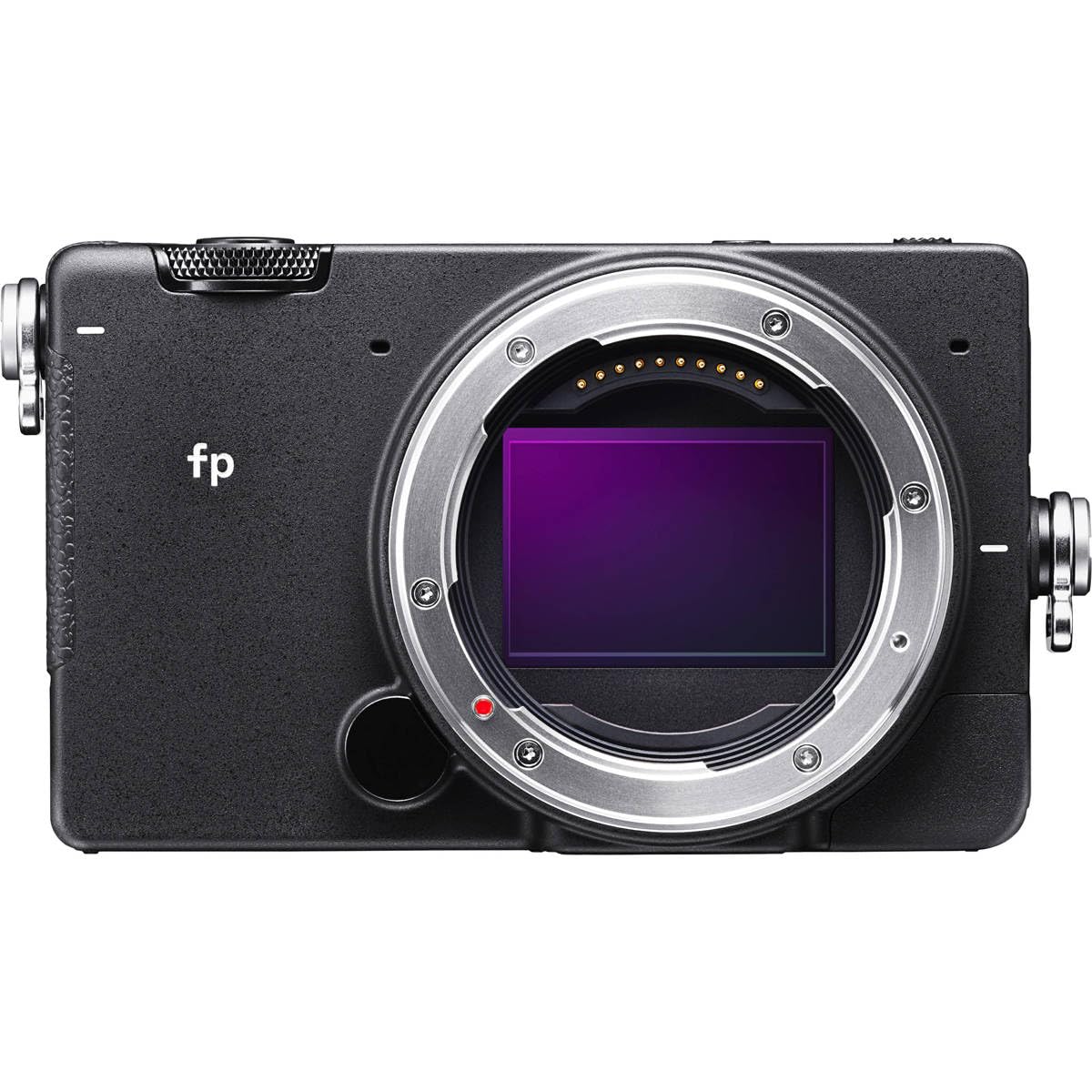
The Sigma fp is the world’s smallest and lightest full-frame mirrorless camera at just 422 grams — smaller than many crop-sensor bodies. Its 24.6-megapixel BSI CMOS sensor and 49 phase-detection AF points deliver sharp images and 4K UHD video at up to 30fps. The body is made from a single piece of machined aluminum with a dust- and splash-proof design, giving it a rugged, Leica-like feel that rewards deliberate handling. It can record 12-bit CinemaDNG RAW video externally, and the electronic shutter is silent and fast at 18 fps.
The L-mount gives you access to Sigma’s own excellent DG DN Art lenses, plus Panasonic and Leica glass. The modular design lets you add an external EVF (the Sigma EVF-11) or a grip, which means you can build the exact configuration you need. For stills photographers who carry their camera everywhere, the Sigma fp is the most packable full-frame option available — it fits in a coat pocket with a pancake lens. The camera also features built-in electronic image stabilization for video, and the Auto HDR mode helps beginners nail high-contrast scenes.
The Sigma fp is not a beginner camera in the traditional sense — it has no built-in viewfinder, no onboard flash, and the autofocus is slow and hunts in low light. The 49 AF points are sparse compared to modern Sony or Canon bodies, and the shooting experience is best described as “meditative” rather than fast. The included battery is also small (BP-51, rated for about 280 shots), and the lack of a mechanical shutter means you cannot use flash sync speeds above 1/30 second. This camera is for the beginner who wants to slow down and think about every shot, not someone chasing action.
Why it’s great
- World’s smallest and lightest full-frame body (422g)
- Rugged all-aluminum build with weather sealing
- Modular system with optional EVF and grip
Good to know
- No built-in EVF — must buy accessory
- Slow autofocus and only 49 AF points
11. Canon EOS 5D Mark IV
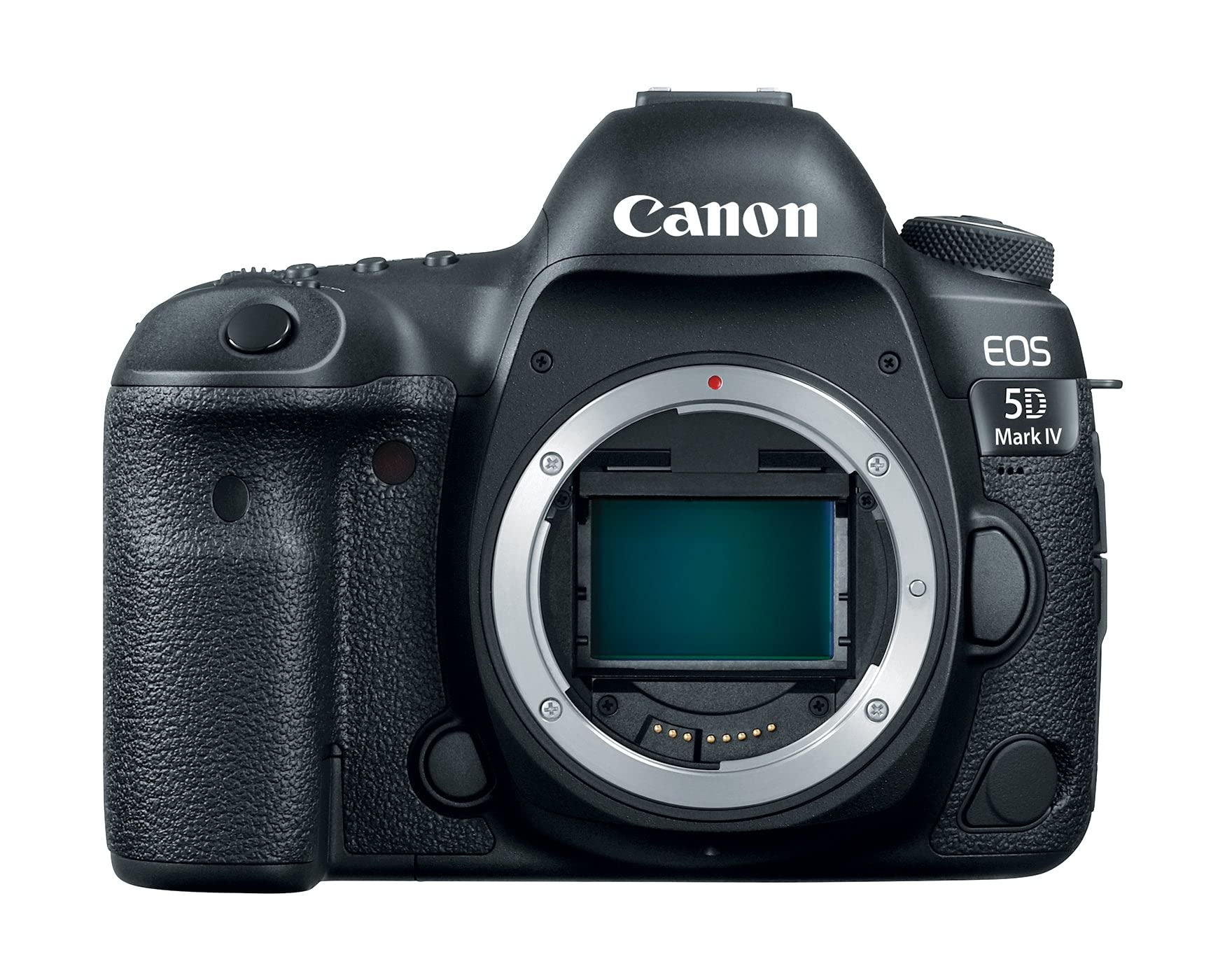
The Canon EOS 5D Mark IV is the last great full-frame DSLR from Canon before the mirrorless shift, and it remains a powerful tool for beginners who want high-resolution imagery. Its 30.4-megapixel CMOS sensor delivers stunning detail with 14-bit RAW files that have noticeably improved dynamic range over the 5D Mark III — you can pull shadows back by several stops without ugly banding. The DIGIC 6+ processor drives 7 fps continuous shooting and expands ISO to 102,400, with usable results up to ISO 6400 for most practical shooting.
The 61-point AF system (41 cross-type) with Dual Pixel CMOS AF in live view provides fast, smooth focusing in both stills and video. The 4K video (Motion JPEG at 30/24p) is present but practical — files are massive and the crop factor is 1.7x, so it is better suited for stationary studio work than run-and-gun filming. The camera includes built-in Wi-Fi, GPS for geotagging, and a full touchscreen interface that makes menu navigation and focus point selection intuitive. The optical viewfinder is large and bright, and the weather-sealed magnesium-alloy body is built to endure years of heavy use.
The 5D Mark IV is heavy (890 grams body-only) and expensive for a beginner, and the EF lens system, while vast, is at the end of its development cycle — Canon has shifted focus to RF. The 4K video crop and Motion JPEG codec are outdated, and there is no IBIS, so you are relying on lens stabilization and steady hands. For a beginner who values resolution, build quality, and optical viewfinder clarity, the 5D Mark IV is a premium workhorse that will never feel limiting for studio work, portraits, or landscapes.
Why it’s great
- 30.4MP sensor with excellent dynamic range
- Professional-grade weather-sealed magnesium body
- Large, bright optical viewfinder with 61-point AF
Good to know
- 4K video uses Motion JPEG with 1.7x crop
- Very heavy (890g body) and EF system is end-of-life
12. Panasonic LUMIX S9

The Panasonic LUMIX S9 is built from the ground up for social-media-first beginners who want to shoot, edit, and share immediately. Its 24.2-megapixel full-frame sensor delivers professional-grade results, and the compact body (about the size of a large smartphone) paired with the ultra-compact 18-40mm F4.5-6.3 lens gives you a true wide-angle full-frame kit that fits in a small bag. The Open Gate recording lets you capture 3:2 video and then crop to 16:9, 1:1, or 4:3 for any platform, while the LUMIX Lab app transfers files to your phone over ultra-fast Wi-Fi instantly.
The S9 features depth-from-defocus autofocus with 255 points, which is reliable for still subjects and moderate motion, though not as snappy as phase-detect competition. The body comes in attractive finishes and includes a bright front-facing screen — less ideal for vlogging than a fully articulating screen but workable for quick self-recording.
The S9 makes major sacrifices for its size: there is no hotshoe (cold shoe only), no built-in EVF, and no headphone jack, which limits its use for serious video monitoring or studio flash triggering. The kit lens is slow (f/4.5-6.3) and the lack of a proper grip makes the camera feel precarious with larger L-mount lenses. Additionally, the settings menu is overwhelming for beginners who just want to shoot — there are too many options buried in nested menus. The S9 is best suited for a beginner who values portability and social-media integration above all else and is willing to work around the missing pro features.
Why it’s great
- Ultra-compact full-frame body with 18-40mm kit
- Fast Wi-Fi transfer and LUMIX Lab app integration
- Open Gate recording for multi-platform social content
Good to know
- No EVF, no hotshoe, no headphone jack
- Kit lens is slow (f/4.5-6.3) and grip is small
13. Canon EOS R5

The Canon EOS R5 is the most powerful full-frame camera on this list, and if your budget can stretch to it, it is also the most future-proof beginner camera you can buy. Its 45-megapixel stack-backside illuminated CMOS sensor captures obscene detail — you can crop a portrait to just the face area and still have enough resolution for a billboard. The DIGIC X processor pushes it to 12 fps mechanical and 20 fps electronic, and the Dual Pixel CMOS AF II with 1,053 points covers 100% of the frame, with Eye Control AF that lets you select the focus point by just looking at it through the EVF.
The video capabilities are unmatched in this group: 8K RAW internal recording, 4K up to 120fps in all formats, and oversampled 4K HQ from the full 8K sensor width. The 5-axis IBIS provides up to 8 stops of stabilization, making handheld long exposures feasible even with adapted EF lenses. The build quality is all magnesium alloy with deep weather sealing, the 5.76-million-dot OLED EVF is the sharpest in its class, and the vari-angle touchscreen is highly responsive. For a beginner who can afford it, the R5 is the only camera on this list that you may never feel the need to upgrade from.
The downsides are predictable: the price is the highest here, and the 8K recording generates enormous files (CFexpress Type B cards required) that can overwhelm even fast computers. The battery life is also a step down from Canon’s DSLRs — expect about 320 shots per charge in heavy use. The early overheating concerns when recording 8K have been largely addressed via firmware updates, but extended 8K recording in hot environments can still trigger limits. The R5 is not for a beginner who just wants to take nice vacation photos — it is for the beginner who is serious about going pro and wants the absolute best resolution, video, and autofocus available today.
Why it’s great
- 45MP sensor with stunning resolution and cropping ability
- 8K RAW internal and 4K120p video
- Eye Control AF and 8-stop IBIS
Good to know
- Expensive and requires expensive CFexpress cards
- Battery life is lower than DSLR counterparts
FAQ
Do I need a full-frame camera as a beginner or is APS-C enough?
Should I buy a new mirrorless camera or a used DSLR for my first full-frame?
How important is in-body image stabilization (IBIS) for a beginner?
Will my existing APS-C lenses work on a full-frame camera?
Final Thoughts: The Verdict
For most users, the best beginner full frame camera winner is the Canon EOS R6 Mark II because it combines world-class autofocus, 8-stop IBIS, and 40fps burst speed in a body that is easy to learn and hard to outgrow. If you want the best hybrid video-stills performance with an open lens ecosystem, grab the Panasonic LUMIX S5II. And for the budget-conscious beginner who values portability and simplicity, nothing beats the Canon EOS RP.