
The moment you roll off the pavement onto a dirt road, the entire world opens up. But finding that first drop-bar gravel bike that won’t leave you stranded, broke, or wishing for a road bike is a minefield of confusing specs, heavy steel frames, and questionable component groups.
I’m Min — the co-founder and writer behind Gadgets Feed. I’ve spent hundreds of hours studying market trends and dissecting frame geometry, drivetrain ratios, and wheel-set specifications to help beginners avoid costly missteps in this niche..
This guide narrows the field to nine models that balance affordability with real-world durability, so you can confidently find the best beginner gravel bikes for your first unpaved adventure.
How To Choose The Best Beginner Gravel Bikes
Choosing your first gravel bike comes down to understanding where you’ll ride—hardpack dirt, loose gravel, or fire roads—and matching that terrain with the right frame material, tire clearance, and drivetrain range. A bike with low gearing and a compliant frame will make your first forays off-pavement far more enjoyable than a stiff race-oriented machine.
Frame Material: Aluminum vs. Carbon
Entry-level gravel bikes almost always use aluminum frames because they offer a good strength-to-weight ratio at a low cost. A step up, carbon fiber frames (like the T800 material used by SAVADECK) absorb road chatter better and weigh significantly less, but they push the price toward the premium tier. For beginners, a well-designed aluminum frame with a carbon fork strikes the best balance between comfort and affordability.
Drivetrain & Gearing
A gravel bike needs a wide gear range to handle steep climbs on loose surfaces. Models with a compact 2x setup (like Shimano Claris or Tiagra) provide enough low-end grunt for most beginners, while 1x drivetrains simplify shifting but often require a larger cassette for climbing. Pay attention to the number of speeds—24-speed Claris groups are common in the mid-range tier and offer adequate climbing gears for unpaved ascents.
Braking Systems
Mechanical disc brakes are standard on budget-friendly and mid-range gravel bikes. They provide reliable stopping power in wet or dusty conditions, though hydraulic disc brakes (found on the premium SAVADECK models) deliver superior modulation and require less hand strength. For a beginner, mechanical discs paired with 160mm rotors are more than sufficient for mixed terrain riding.
Quick Comparison
On smaller screens, swipe sideways to see the full table.
| Model | Category | Best For | Key Spec | Amazon |
|---|---|---|---|---|
| SAVADECK Gray | Premium | Lightweight performance | T800 Carbon Frame / 10.4 kg | Amazon |
| SAVADECK Black | Premium | Lightweight performance | T800 Carbon Frame / 10.4 kg | Amazon |
| SAVADECK Road | Premium | Pavement performance | Shimano 105 / 8.8 kg | Amazon |
| Tommaso Illimitate | Mid-Range | Commuting & gravel | Shimano Tiagra / Carbon fork | Amazon |
| Tommaso Sterrata | Mid-Range | Tour-ready gearing | Shimano Claris / Triple ring | Amazon |
| Tommaso Sentiero | Mid-Range | Casual gravel rides | Shimano Claris / 24 speeds | Amazon |
| Schwinn Sporterra RX | Mid-Range | Basic mixed terrain | 700x38c tires / 14 speeds | Amazon |
| Mongoose Elroy | Budget | Adventure touring value | Aluminum frame / 2×7 gears | Amazon |
| Aipas M1 Pro | Electric | Motor-assisted gravel | 1800W motor / 48V battery | Amazon |
In‑Depth Reviews
1. SAVADECK Carbon Gravel Bike (Gray)

The SAVADECK Gray gravel bike brings a genuine T800 carbon fiber frame and fork to the table at a weight of just 10.4 kg, which is nearly 4–5 pounds lighter than most aluminum competitors in the same category. The fully internal cable routing keeps the profile clean and reduces drag, while the tapered head tube adds torsional rigidity for confident steering on loose descents.
Shimano’s U6000 11-speed groupset delivers crisp, reliable shifting across the 11-42t cassette, offering a low climbing gear that beginners will appreciate on steep fire roads. The 700x40c all-terrain tires provide noticeable traction improvements over standard road rubber, and the hydraulic disc brakes offer consistent modulation even after long, wet rides through mud or loose gravel.
Reviewers consistently report that the bike arrived 90% pre-assembled with brakes and gears indexed perfectly out of the box—a rarity in this price tier. The geometry leans toward a comfortable upright position rather than an aggressive race posture, making it ideal for long days in the saddle without wrist or back strain.
Why it’s great
- Sub-11 kg carbon frame drastically reduces fatigue
- Hydraulic disc brakes provide superior stopping control
- 11-speed drivetrain with wide 11-42t cassette for steep climbs
Good to know
- Not designed for rough mountain bike trails
- Requires basic assembly of front wheel and handlebars
2. SAVADECK Carbon Gravel Bike (Black)
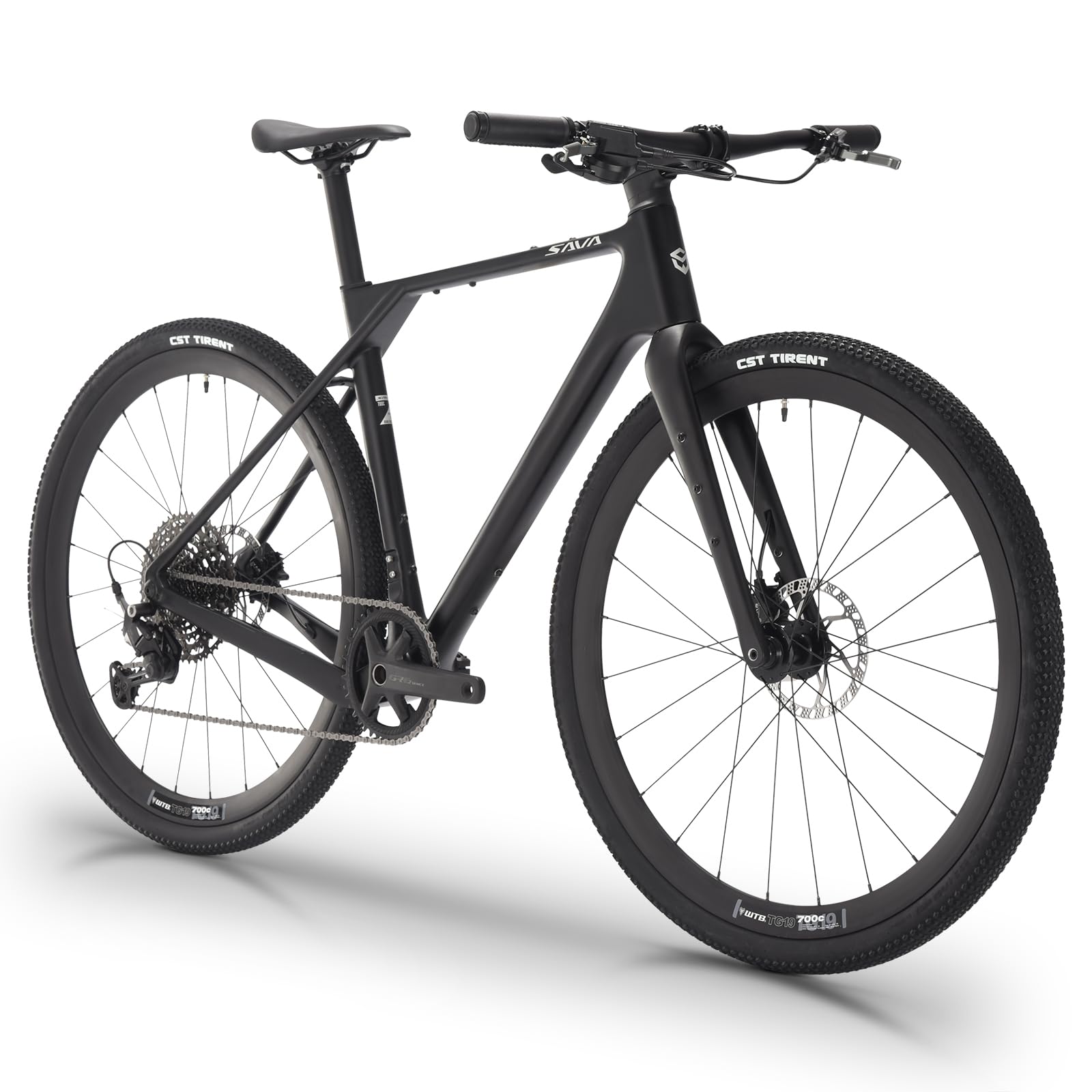
Mechanically identical to its Gray sibling, the SAVADECK Black version offers the same T800 carbon construction, Shimano U6000 11-speed drivetrain, and hydraulic disc brakes but in a stealthy all-black finish. The frame shares the same geometry—a relaxed head tube angle that suits beginners transitioning from hybrid to drop-bar riding.
One key advantage of this model is the 45-spoke wheel set, which adds durability for riders who plan to carry panniers or hit rougher sections. The 700x40c tires offer 45% more tread surface than standard gravel tires, providing grip on loose corners where narrower rubber would slide out.
Customer feedback highlights the nearly perfect out-of-box setup experience, with multiple riders noting zero adjustments needed beyond the seat post length. The internal cable routing not only looks professional but also protects the cables from mud and debris, reducing long-term maintenance frequency.
Why it’s great
- Robust 45-spoke wheels handle loaded touring
- Hydraulic disc brakes outperform mechanical systems significantly
- Discreet black finish suits riders who prefer minimal branding
Good to know
- Not suited for advanced mountain bike trails
- Assembly still requires attaching pedals and front wheel
3. SAVADECK Carbon Road Bike

While this SAVADECK is technically a road bike, it earns a spot here because its full carbon layup, Shimano 105 R7120 12-speed groupset, and hydraulic disc brakes make it a formidable gravel bike conversion candidate for beginners who already own a set of wider tires. At 8.8 kg, it is remarkably light for the price bracket, offering acceleration that is difficult to match at the premium tier.
The R7120 drivetrain provides a 2×12 speed range with a 52/36T crankset and an 11-34T cassette, giving enough climbing gear for moderate gravel grades when fitted with 32c or 35c tires. The hydraulic disc brakes are the same R7170 calipers found on higher-end endurance bikes, delivering the kind of modulation that makes descending gravel descents feel planted and safe.
Owners report that the carbon wheelset rolls smoothly on pavement but note that the included 25c Continental tires are too narrow for serious gravel. Factor in a tire upgrade to 700x32c or 35c tubeless tires, and this bike transforms into a lightweight gravel ripper that pulls double duty on group road rides.
Why it’s great
- Sub-9 kg weight makes climbing effortless
- Shimano 105 12-speed is race-ready and reliable
- Full carbon wheelset is rare at this tier
Good to know
- Stock 25c tires are road-only; budget for gravel rubber
- Sizing runs large—carefully check geometry chart before ordering
4. Tommaso Illimitate Sport

The Tommaso Illimitate steps into the mid-range tier with a Shimano Tiagra 20-speed groupset paired to an aluminum frame and a carbon fork. The carbon fork is the standout feature here, absorbing high-frequency vibrations from gravel chatter far better than aluminum, which makes it a significant upgrade for anyone planning longer mixed-surface rides.
At roughly 27 pounds, this bike is heavier than the premium carbon options, but the Tiagra drivetrain offers smooth, reliable shifting that is a noticeable step above Claris mechanicals. The 50/34T compact crankset combined with an 11-32T cassette provides a low gear ratio of 1.06, sufficient for most beginner gravel climbs without spinning out on the flats.
Feedback from owners who have logged over 1,200 miles note that while the frame holds up well, the spokes can loosen after repeated bumpy rides, and the stock tires benefit from an upgrade to something with more tread. The mechanical disc brakes are adequate for commuting and dirt paths but will require more hand effort than hydraulics on steep descents.
Why it’s great
- Carbon fork significantly reduces road buzz
- Tiagra drivetrain offers excellent reliability for the mid-range
- Compact 50/34 crankset helps on climbs
Good to know
- Spoke tension may loosen after rough rides
- Stock tires are better suited for paved roads
5. Tommaso Sterrata Sport

The Tommaso Sterrata stands apart from most beginner gravel bikes by featuring a triple chainring crankset (50/39/30T) paired with a 7-speed cassette. This 24-speed setup provides a 30T inner ring that drops the low gear ratio to an exceptionally low 1.0, which is a lifesaver when climbing steep gravel inclines or hauling panniers on a tour.
Built on an aluminum frame with a carbon fork, the Sterrata keeps weight manageable while adding compliance. The full Shimano Claris groupset—including the shifters, derailleurs, and cassette—means the entire drivetrain works harmoniously, avoiding the mismatched component feel of some budget builds. The 40c tires are wide enough to handle gravel and dirt comfortably.
Riders report that the large frame fits riders up to 6’3” well and that the triple front ring is essential for loaded touring in hilly terrain. However, the mechanical disc brakes and the lack of a threaded bottom bracket standard may complicate future upgrades. Professional assembly is strongly recommended to ensure the derailleurs are indexed correctly.
Why it’s great
- Triple chainring provides superb low-end climbing power
- Full Shimano Claris groupset ensures component compatibility
- Carbon fork adds comfort on rough surfaces
Good to know
- Assembly can be challenging for new mechanics
- Brake performance is only 50% effective per some user reports
6. Tommaso Sentiero Sport

The Tommaso Sentiero Sport targets entry-level riders with a Shimano Claris 24-speed drivetrain that offers a solid balance between simplicity and range. The 50/34T crankset paired with an 11-32T cassette provides a low gear of 1.06, which is perfectly serviceable for rolling gravel paths and fire roads.
The aluminum frame is finished with a rigid fork, keeping the bike light and responsive on pavement while transmitting more vibration to the handlebars on rough gravel than a carbon fork would. The geometry is relatively relaxed, with a taller head tube that reduces the amount of lean required, making it beginner-friendly for riders transitioning from flat-bar hybrids.
Customer feedback highlights the ease of assembly—most report it takes under an hour—and the smooth performance on trails. A recurring complaint is the saddle, which becomes uncomfortable after about 60 minutes of riding, but that is a common and inexpensive upgrade. Some units have arrived with minor issues like warped rotors or stripped pedal threads, so inspecting the bike thoroughly upon delivery is wise.
Why it’s great
- 24-speed Claris drivetrain is easy to learn for new riders
- Relaxed geometry reduces back and wrist strain
- Fast assembly with minimal tools required
Good to know
- Stock saddle is uncomfortable for rides over one hour
- Quality control can be inconsistent on delivered units
7. Schwinn Sporterra RX

The Schwinn Sporterra RX is a budget-friendly entry that uses a lightweight aluminum frame with a rigid fork and a 14-speed drivetrain. While 14 speeds may seem limited compared to the 24-speed Claris options, the Schwinn alloy double crank provides adequate gearing for mixed terrain when kept on milder gradients.
The mechanical disc brakes are cable-actuated and require a strong pull to achieve full stopping power—a trait common to budget disc brakes—but they do offer consistent performance across wet and dry conditions. The 700x38c multi-terrain tires provide enough grip for hardpack dirt and light gravel, though they struggle in loose sand.
After 520 miles, one long-term owner noted that the frame remains sturdy and easy to maintain, though the saddle, bottom bracket bearings, and pedals needed replacement by the second year. The bike is recommended for riders between 5’6” and 6’0”, and the quick-release seat post makes it easy to fine-tune the fit without tools.
Why it’s great
- Durable aluminum frame lasts for years
- Quick-release seat post simplifies fit adjustments
- Disc brakes work well in wet conditions
Good to know
- 14-speeds limit climbing range on steep gravel
- Stock saddle is uncomfortable after 40 minutes of riding
8. Mongoose Elroy Adventure Bike

The Mongoose Elroy is an outlier on this list—it uses a 2×7 drivetrain with Shimano Tourney derailleurs and Microshift shift/brake combos, putting it firmly in the budget-friendly entry tier. Yet its frame design includes an integrated frame bag, internal cable routing, multiple water bottle mounts, and a front rack with a built-in bottle opener, making it the best value for riders who plan to tour right away.
With mounting bosses everywhere and clearance for tires up to 45c, the Elroy is essentially a steel-forked adventure touring bike at a price that undercuts almost everything else. The 40mm tires are basic, but the frame itself rides smoothly and accepts upgrades well. Riders report that after tuning the brakes and indexing the derailleurs, the bike performs comparably to models costing twice as much.
The most common complaints center around the mechanical disc brakes, which some owners describe as dangerously weak, and inconsistent front rack welding quality. Given the variance, inspecting the bike thoroughly on delivery is essential, and many owners recommend upgrading the brakes and tires within the first few months if you plan to ride hilly terrain.
Why it’s great
- Incredible frame features: bag, rack, bottle bosses
- Accepts tire upgrades up to 45c for off-road versatility
- Sub- price leaves budget for component upgrades
Good to know
- Disc brakes may require immediate replacement
- Front rack welding quality is inconsistent
9. Aipas M1 Pro Electric Bike
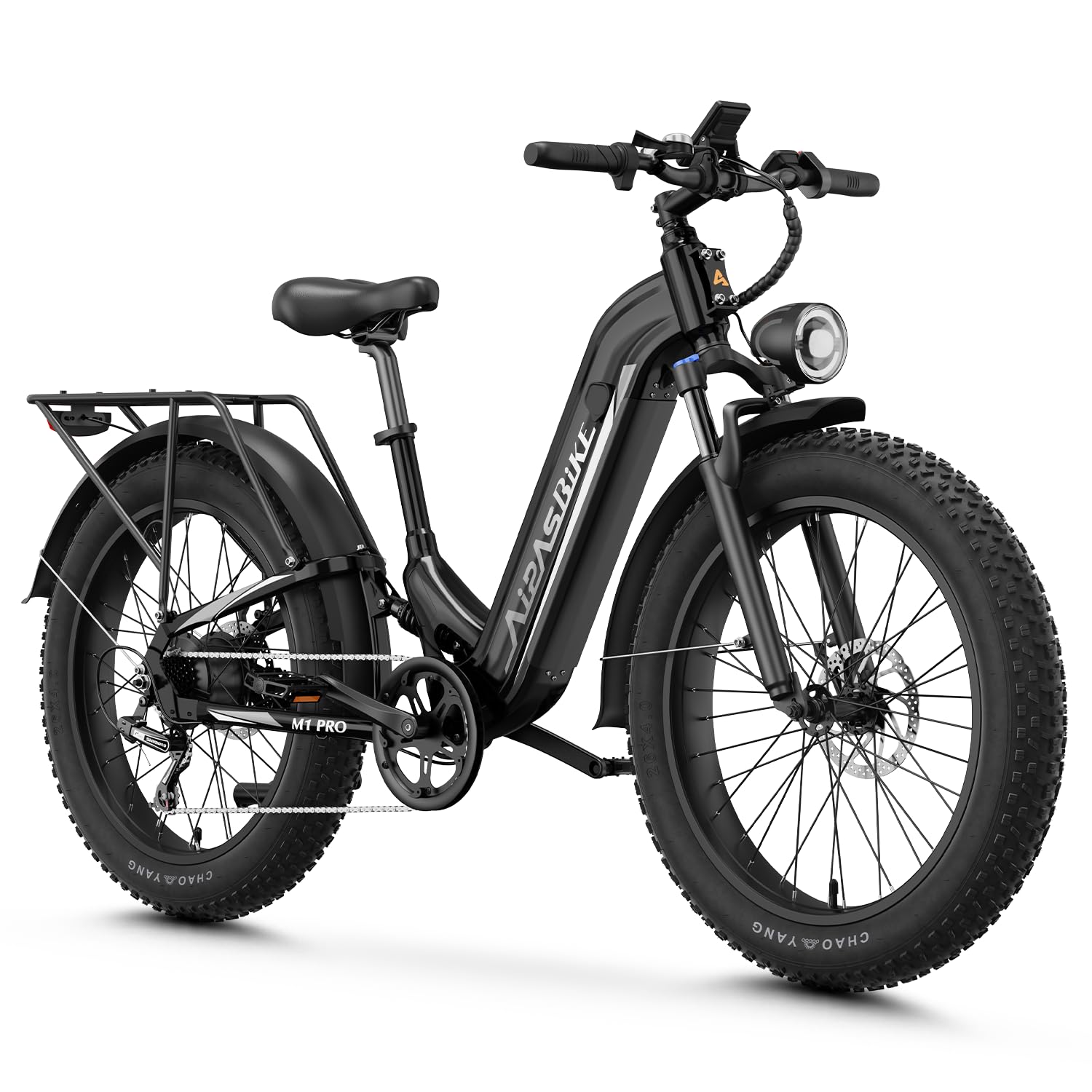
The Aipas M1 Pro is an electric fat-tire bike that expands the definition of beginner gravel options. Powered by an 1800W peak motor with 110Nm of torque, it can reach 36 mph and climb slopes up to 23°, making it an appealing choice for riders who need motor assistance on long gravel roads or steep hills. The 48V 17.5Ah battery delivers a range of 25–85 miles depending on assist level.
Unlike traditional drop-bar gravel bikes, the M1 Pro uses a step-through frame, 26×4.0 fat tires, and full suspension (lockable front fork and rear shock absorber) for stability on loose surfaces. The 180mm mechanical disc brakes provide strong stopping power for its substantial weight, and the 7-speed derailleur gives you some mechanical gear range to fall back on when the battery runs low.
Owners appreciate the joy of riding without the strain of pedaling up hills, with several seniors reporting it eliminated their struggle with steep terrain. The bike is heavy and requires careful handling off-road, but for a beginner who wants to explore gravel paths without the fitness requirement of a pure manual bike, the M1 Pro is a unique and capable option that fits this list as a departure from standard gravel geometry.
Why it’s great
- Electric assist makes steep gravel climbs effortless
- Fat tires provide excellent grip on loose terrain
- Long 25-85 mile range for extended adventures
Good to know
- Considerably heavier than standard gravel bikes
- Step-through frame may not suit taller riders ideally
FAQ
Is a gravel bike better than a mountain bike for beginner off-road riding?
What tire width should a beginner look for on a gravel bike?
Final Thoughts: The Verdict
For most users, the best beginner gravel bikes winner is the SAVADECK Gray Carbon Gravel Bike because its T800 carbon frame, hydraulic disc brakes, and wide 11-42t cassette provide a premium ride quality at a price that doesn’t punish beginners. If you want the widest climbing range for loaded touring, grab the Tommaso Sterrata. And for the best value in a frame built for adventure right out of the box, nothing beats the Mongoose Elroy.