
Our readers keep the lights on and my morning glass full of iced black tea. As an Amazon Associate, I earn from qualifying purchases.
Specs are compiled from manufacturer listings and verified buyer reviews and can change over time — please confirm the key details on the product page before buying.
Buying your first hardtail should open the door to adventure, not a crash course in frustration. A poorly chosen budget hardtail can break, skip gears, or fit poorly, turning a fun hobby into a frustrating chore. This guide cuts through the noise to find a hardtail that rolls confidently on dirt and pavement.
I’m Min — the founder and writer behind Gadgets Feed. This guide is built by comparing the manufacturers’ published specifications and the patterns across verified customer reviews, so you get each pick’s real strengths and trade-offs instead of marketing spin.
We matched for 27.5- or 29-inch wheels, so not every option is the exact same size, but they all serve the same purpose for a new rider. Here is how to find the best beginner hardtail mountain bike that you will actually enjoy riding.
Our Picks at a Glance


How To Choose The Best Beginner Hardtail Mountain Bike
Picking a first mountain bike is about matching the bike to your size, your local trails, and your tolerance for tinkering. A hardtail has suspension only in the front fork, which keeps the bike lighter and easier to pedal than a full-suspension model.
Wheel Size and Fit Are Everything
The biggest mistake new riders make is ignoring frame geometry that matches their height. A 29-inch wheel rolls over obstacles easier and maintains speed, but it can feel bulky for shorter riders. A 27.5-inch wheel is more nimble and easier to maneuver. Check the suggested rider height range for the frame, not just the wheel size, to ensure a comfortable reach to the handlebars.
Brakes: The Stopping Power Difference
You want brakes you can trust when the trail gets steep. Mechanical disc brakes use a cable to squeeze a caliper on a rotor, offering reliable stopping in wet and muddy conditions. Linear pull brakes (sometimes called V-brakes) are simpler and cheaper but can struggle in slippery terrain. For a beginner, disc brakes are a solid upgrade because they perform consistently regardless of the weather.
Drivetrain and Shifting Simplicity
More gears don’t always mean better for a beginner. A 21-speed system gives you a wide range for climbing steep hills and cruising on flats. The shifter type matters for ease of use: trigger shifters let you click through gears with your thumbs, while twist shifters require you to rotate the grip. Trigger shifters are usually easier for new riders to master quickly without looking down.
Frame Material and Weight
Aluminum frames dominate this category because they resist rust and stay lighter than steel. A lighter aluminum frame is easier to accelerate, lift over logs, and control when you’re tired. While steel can be more durable on the extreme end, for a beginner the agility of a lightweight aluminum frame makes the learning curve much more pleasant.
Quick Comparison
| Model | Best For | Frame Material | Speeds | Brake Style | Amazon |
|---|---|---|---|---|---|
| AVASTA Earth★ Best Overall | Budget trail tamer | Aluminum | 21-Speed | Disc | Amazon |
| Huffy 26″/27.5″Tall Rider Pick | Taller riders on a budget | Aluminum | 21-Speed | Linear Pull | Amazon |
| Mongoose Flatrock | Compact fits and tweens | Aluminum | 7-Speed | V Brake | Amazon |
| EUROBIKE 29″/27.5″ | Shimano shifting on a dime | Aluminum | 21-Speed | Disc | Amazon |
| ROYCE UNION RMT | Daily commuters and paths | Aluminum | 21-Speed | Linear Pull | Amazon |
| Schwinn High Timber | Neighborhood versatility | Aluminum | 21-Speed | Disc | Amazon |
| Eastern Bikes Alpaka | Serious entry-level performance | Aluminum | 9-Speed | Hydraulic Disc | Amazon |
In‑Depth Reviews
1. AVASTA Earth 26 27.5 Inch Mountain Bike
Our pick — over 4★ from 100+ verified ratings; the strongest balance of quality and price.
The budget pick that punches above its weight with a fork you can actually lock out.
You get a bike that feels solid without breaking your budget: the aluminum frame and rims keep it light and agile, and the switchable suspension fork (a front fork you can lock to stop bouncing) lets you ride smoothly on pavement, then open up for trail bumps. The 21-speed derailleur system (a gear mechanism that moves the chain between cogs) works with disc brakes, so you shift precisely and stop reliably in wet or dry conditions.
Assembly is a genuine highlight, arriving 75% pre-built with an installation video so you are not staring at a box of confusing parts. Buyers report the bike makes for a quick and easy round trip on daily commutes, and the ride quality on trails gets consistent praise. The included bell, kickstand, and reflectors mean fewer trips to the shop for basics.
Value for money is the second-most praised aspect, but the honest caveat is durability. Most riders are thrilled, yet the occasional report of a snapping chain or a seat that hurts after 30 minutes means this is best for lighter, casual trail use rather than aggressive punishment.
Riders Are Loving
- Switchable suspension fork adapts to terrain
- Lightweight aluminum frame and rims
- 75% pre-assembled with video support
Balance the Trade-Offs
- Seat comfort is a common complaint
- Chain durability is occasionally questioned
Reach for it when: you want a capable, affordable first hardtail for mixed commuting and easy trails without overspending.
Look elsewhere if: you plan to ride aggressively every day and want a drivetrain that never needs attention.
2. Huffy 26″/27.5″ Mountain Bike
A high-volume crowd favorite built on a 17-inch aluminum frame for taller beginners.
Buyers praise the smooth ride, reliable shifting and braking, and knobby all-terrain tires that grip rocky trails and gravel paths. The 21-speed drivetrain with twist grip shifters (you rotate the grip to change gears) offers versatility for climbing hills or cruising flats, and the alloy linear pull brakes deliver dependable stopping power on descents.
If you’re 60″ or taller, this is a rare budget bike that doesn’t feel cramped, unlike many smaller frames. Assembly usually takes under an hour, but buyers consistently report the seat is very hard and the grips are thin—most plan to replace both for a few dollars to ride comfortably.
The biggest honesty check: quality is the most-mentioned aspect but it is genuinely mixed. While many find it fantastic for the price, durability concerns surface around pedals and crankshafts, and a few report front brake adjustments needed from the start. It is a solid entry point, not a maintenance-free machine.
Why It Works
- 17-inch lightweight aluminum frame fits taller riders
- Smooth ride on pavement and easy trails
- Fast assembly typically under an hour
Keep In Mind
- Seat and grips feel cheap, plan to upgrade
- Durability of pedals and crank is inconsistent
The verdict: the go-to budget hardtail for taller beginners who prioritize a smooth, comfortable ride over hardcore off-road abuse.
Who it misses: riders who want a truely maintenance-free drivetrain right from the start.
3. Mongoose Flatrock

The approachable 26-inch hardtail that suits shorter riders and younger teens.
Appearance wins people over immediately — buyers call it a very pretty bike that rides well, and the aluminum frame keeps it lightweight and durable for exploring off the bike path. The 7-speed twist shifters are simple to grasp for a first-timer, and the knobby mountain tires dig into loose ground while the suspension fork absorbs bumps for a smooth, controlled ride.
The 26-inch wheels are perfect for riders from 5’4″ to 6’2″, and it fits a youth audience well, making it a flexible family option. It is noticeably heavier than some rivals — the item weight sits at 19.16 kg — so this is a bike for building skills, not for racing. The catch is that durability and gear adjustment draw the most negative feedback, with concerns about parts breaking under hard use.
This is best treated as a beater or commuter bike where occasional tuning is expected. As owners mention, regular maintenance like greasing the chain and checking the brakes will keep it rolling, but it is not built to shrug off heavy trail abuse without attention.
Who it serves: shorter beginners and teens who want a simple, good-looking bike for neighborhood rides and easy trails.
The honest trade: expect to budget time for gear adjustments and maintenance to keep it reliable.
4. EUROBIKE 29″ / 27.5″ Mountain Bike

The Shimano-equipped dark horse that shifts smoothly and stops on a dime.
Buyers consistently praise the build quality for the price: the lightweight aluminum alloy frame pairs with a suspension fork that absorbs bumps, and the front and rear mechanical disc brakes (cable-actuated, not hydraulic) stop crisply on muddy trails. The 21-speed Shimano drivetrain is the highlight—trigger shifters and a rear Shimano derailleur give you smooth, easy gear changes right from the start.
This 29-inch wheel model is a strong choice for taller riders who want a real mountain bike that also handles daily commutes and campus rides. The rack and kickstand mounts make it easy to add accessories, and the 85% pre-assembly means you only need to attach the front fork, wheel, seat, and pedals. A 6’1″ rider at 213 lbs called the 29-inch frame perfect and said it was fun to ride with gear shifting that worked great immediately.
The magnesium alloy wheels add to the good looks, though a rare complaint notes the description can be optimistic about sizing. Rear gears skipping after a month is an occasional report, but the overall sentiment is overwhelmingly positive for a bike that shifts this well at this level.
The edge: the Shimano 3×7 shifter setup gives you the smoothest, most reliable gear changes in this price band.
Watch for: occasional rear gear noise after extended use, and confirm wheel size expectations before buying.
5. ROYCE UNION RMT 27.5″ Mountain Bike
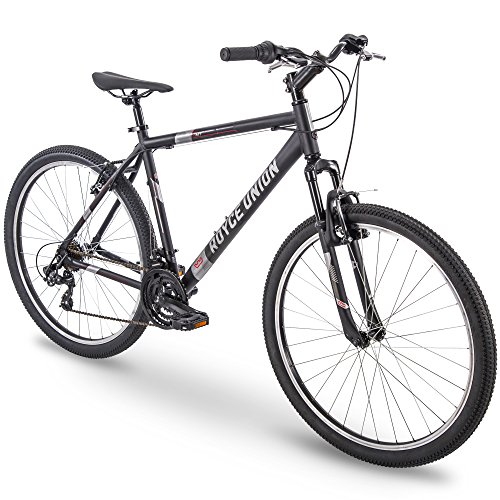
The daily driver that proves a hardtail can be just as happy on pavement as on gravel.
Buyers rave about the smooth ride, with owners commuting daily with almost no problems. The hardtail frame is molded from durable, no-rust aluminum that is lighter than steel, making it easier to accelerate and handle. The 27.5-inch wheels maintain rolling momentum, and the all-terrain tread provides less rolling resistance than typical mountain bike tires, so it performs equally well on gravel paths and paved streets.
You shift smoothly through all 21 speeds with a simple grip twist, and the Zoom suspension fork (a front shock that softens bumps) keeps the ride stable on rough ground. The limited 10-year warranty on the frame is a rarity at this price, signaling the maker’s confidence. The machined alloy wheel rims give the linear pull brakes (rim brakes, not discs) better pad contact, so you stop on demand.
The assembly experience is mixed — some find it easy while others call the instructions terrible — and stability concerns surface with reports of bent rims. The recurring fix is to replace the narrow, barely padded seat immediately, which most owners do happily once they feel how smooth the ride is otherwise.
The Strong Points
- Smooth, reliable ride for daily commuting
- 10-year frame warranty backs the build
- Low rolling resistance tires for mixed surfaces
The Soft Spots
- Seat is uncomfortable, budget for a swap
- Bent rims and stability issues appear in some reviews
Perfect for: the rider who splits time between paved commutes and light trail exploring and wants a frame backed by a long warranty.
Think twice if: you are not comfortable doing minor adjustments and expect a perfect ride with zero setup right from the start.
6. Schwinn High Timber Mountain Bike

The trusted brand name that balances neighborhood cruising with trail capability.
The lightweight 16.5-inch aluminum mountain frame is perfect for rides around your neighborhood or trails, with 26-inch wheels that fit riders 5’4″ to 6’2″ tall. The alloy crank delivers smooth gear changes with minimal maintenance, and the twist shifters with a rear derailleur make gear changes quick and easy. Lightweight alloy wheels paired with wide knobby mountain tires offer stability and balance on all terrains and in all weather conditions.
A big rider at 6’2″ and 230 lbs called it a great lightweight bike that exceeded expectations for quality, assembling it without directions and finding no missing parts. The quick-release seat post (a lever that lets you adjust seat height without tools) is a thoughtful touch for families sharing one bike. It arrives 80% assembled, and the disc brakes offer dependable stopping power.
The quality is the most-discussed aspect and it is genuinely mixed — while some find it good for the price, others report pedals breaking off after minimal use and freewheel issues. It is a capable all-rounder for casual riders, but it is not built for heavy off-road demands, and the front derailleur may need a few adjustments to keep the set screws from backing out.
The appeal: a recognizable brand with a versatile frame size range that suits a wide variety of riders and casual uses.
The catch: budget-level components mean occasional tuning and the risk of pedal or drivetrain issues under harder use.
7. Eastern Bikes Alpaka 29″ Mountain Bike

The serious step-up with hydraulic brakes and a head tube ready for future upgrades.
This is the pick for the beginner who already knows they will get hooked and wants a bike that grows with them. The ultra-light hydroformed 6061 aluminum frame is the foundation, paired with an Eastern suspension fork offering 130mm of travel (the distance the fork compresses to absorb bumps). The dual hydraulic disc brakes deliver the strongest, most consistent stopping power in this lineup, using fluid instead of cables for a firmer lever feel.
Owners who ride daily for 20+ miles report no drivetrain or wheel issues, and the sealed bearing front and rear hubs (bearings protected from dirt and water) keep the wheels spinning smoothly. The 44mm head tube accepts a tapered conversion, making a future fork upgrade easy — a rare path for a beginner bike. The 29″ x 2.2 tires offer excellent traction, and the 9-speed trigger shifter setup is praised for being quiet and precise.
The trade-off: this is a real mountain bike with a learning curve—the assembly instructions are generic and confusing, so you’ll need patience to sort out which steps apply. Reliability is generally excellent, but a rare defective unit with a leaking rear brake or loosened cranks shows even premium builds can have flaws. The 5-year frame warranty and 12-month parts coverage offer some confidence.
Pro-Level Features
- Hydraulic disc brakes offer superior stopping power
- 130mm travel fork soaks up rugged terrain
- Sealed bearings and upgradeable head tube
Know Before You Buy
- Assembly instructions are confusing and generic
- Premium price for a beginner bike
The standout: the only pick here with hydraulic brakes and a frame designed for future upgrades — ideal for the rider who plans to progress fast.
Who should pause: absolute beginners who want the simplest possible setup and are not ready to invest in a higher-tier machine.
Understanding the Specs
Wheel Size and Rider Height
Wheel size dictates how the bike rolls and feels under you. A 29-inch wheel rolls over obstacles with more momentum, suiting taller riders who want speed and stability. A 27.5-inch wheel is more agile and easier to maneuver, which helps shorter or lighter riders feel in control. Always cross-check the frame size and suggested rider height, not just the wheel, to ensure the bike fits your body.
Brake Types Explained
Brakes come in a few flavors that change how you stop. Mechanical disc brakes use a cable to squeeze a caliper against a rotor, offering reliable stopping in wet and muddy conditions. Linear pull brakes (V-brakes) are simpler, cheaper, and squeeze the rim, but they can lose grip when rims are wet or muddy. Hydraulic disc brakes use sealed fluid for the strongest, most consistent stopping power, though they cost more and are heavier.
FAQ
What size hardtail mountain bike should a beginner get?
Is a 7-speed or 21-speed bike better for a beginner?
What is the difference between twist shifters and trigger shifters?
Are disc brakes worth the extra cost on a beginner bike?
How much assembly is required for these bikes?
What is a suspension fork and how much travel do I need?
How long will a budget hardtail mountain bike last?
What is the difference between a hardtail and a full-suspension mountain bike?
Final Thoughts: The Verdict
The real crowd favorite in the beginner hardtail mountain bike category is the AVASTA Earth, because it delivers the quality and value that win over the most riders. If you want the smoothest Shimano shifting, grab the EUROBIKE. And for the rider planning to grow fast with hydraulic brakes, the Eastern Bikes Alpaka is the one to reach for.
How We Picked
We do not accept paid placement. Every pick is matched to a real buyer and a real use-case; we do not hands-on test units.
Sources & Methodology
Specifications: manufacturer listings and product documentation. Review insights: verified customer reviews, as of September 2026. Pricing: not shown on this page (it changes often); check the current price via the retailer link.
As an Amazon Associate, Gadgets Feed earns from qualifying purchases. This does not affect which products we feature.