
Our readers keep the lights on and my morning glass full of iced black tea. As an Amazon Associate, I earn from qualifying purchases.
Specs are compiled from manufacturer listings and verified buyer reviews and can change over time — please confirm the key details on the product page before buying.
Picking your first lacrosse stick is about avoiding frustration, not chasing pro specs. A pocket that won’t hold the ball or a shaft that bends on day one can kill the fun before a kid ever learns to cradle. You want a stick that’s play-ready, forgiving, and built to survive backyard abuse — and you want to know if it’s legal for league play before you buy.
I’m Min — the founder and writer behind Gadgets Feed. This guide is built by comparing the manufacturers’ published specifications and the patterns across verified customer reviews, so you get each pick’s real strengths and trade-offs instead of marketing spin.
Every stick here is sized for young hands and matched to a specific age, skill, and playing style. Find the beginner lacrosse stick that fits your player’s needs and gets them on the field with confidence.
Our Picks at a Glance


How To Choose The Best Beginner Lacrosse Stick
You don’t need a custom-strung pro stick to teach a child the game. You need a complete stick that arrives assembled, holds a ball during a cradle, and doesn’t weigh so much that a small player drags the head on the ground. Start with these three decisions and you’ll cut through the noise fast.
Match the Length to the Player, Not the Age
Stick length is the first thing to get right. A 24.5″ or 26″ shaft suits younger, shorter beginners, while a 28″ or 32″ version fits taller kids and pre-teens. A stick that’s too long is hard to control; one that’s too short forces a player to bend low and develops bad habits. Measure your player next to the stick lengths in the specs and buy for height, not grade level.
Decide Between a Pocket and a Wide Face
Boys’ lacrosse sticks use a deep mesh pocket that holds the ball, which makes cradling easier to master. Girls’ sticks have a flat, shallow pocket with a wider face shape that catches the ball but requires more control to keep it in. A wide face is actually a smart tool for any beginner — it makes catching more forgiving while they work on hand-eye coordination.
Read the Fine Print on League Play
Not every stick marked “beginner” is legal for an organized game. Some are explicitly designed for recreational use or non-contact training only, while others are cleared for youth league play like 10U. If you know your child is joining a team, check for that league-legal language before buying — otherwise you’ll be shopping for a second stick the week after tryouts.
Quick Comparison
| Model | Best For | Shaft Length | Head Style | Build | Amazon |
|---|---|---|---|---|---|
| Franklin Sports Ambush★ Best Overall | All-around backyard play | 26″ | Deep Pocket Mesh | Aluminum | Amazon |
| Champro LRX7 YouthBudget Champion | Young kids learning at home | 24.5″ | Wide Head | Aluminum | Amazon |
| Signature Jr. Boy’s 28″Pro-Strung Pick | First-year league players | 28″ | Pro-Strung Pocket | Aerospace 7001 Aluminum | Amazon |
| Signature Starter Stick 28″ | Toddlers and 4-7 year olds | 28″ | Pro-Strung Pocket | Hardwearing Plastic | Amazon |
| CAKLOR Attack/Midfield | Middle school beginners | 41″ | Forgiving Mesh Pocket | 6000 Series Alloy | Amazon |
| True Temper Raven Girl’s 32″ | Control and catching practice | 32″ | Wide Face | Alloy | Amazon |
| STX Exult Rise Girl’s | Aspiring midfielders | — | Lock Pocket Jr. | 6000 Alloy Handle | Amazon |
| StringKing Complete 2 Jr. | 10U youth league play | — | Type 3 Mesh Pocket | Aluminum | Amazon |
| STX Fortress 300 Girl’s | Defenders needing durability | — | Crux Mesh 2.0 | Aluminum & Plastic | Amazon |
In-Depth Reviews
1. Franklin Sports Ambush Youth Lacrosse Stick
Our pick — over 4.5★ from 250+ verified ratings; the strongest balance of quality and price.
A 26″ aluminum stick with a semi-soft 10 Diamond pocket that’s built to survive backyard play.
This Franklin is the crowd favorite for a simple reason: it’s built to absorb punishment. The lightweight aluminum construction keeps a young player agile during a game of catch, and the 26″ shaft length suits attackers and midfielders who want quick, precise movements. The package weight is a light 0.39 kg, so it won’t tire out small arms before the fun starts.
The real selling point is the 10 Diamond semi-soft mesh pocket, which breaks in fast and gives a deeper pocket for better ball control while cradling. Buyers report that kids play hard on this stick and it holds up — “Great stick for the price! My son plays hard and it is holding out.” It ships fully assembled and ready for play, cutting out that dreaded factory-tuning step.
What wins people over is the balance of quality and value — the build feels sturdy for the price, and parents love that it’s suitable for beginners while still forgiving on accuracy as a learning tool. An occasional note pops up about wanting a tougher mesh, but for casual play and first-year practice this stick delivers far more than its cost suggests.
What players gain
- Aluminum shaft keeps the stick light for quick cradling and passing drills
- Semi-soft 10 Diamond mesh makes the pocket play-ready almost immediately
- Complete stick ships assembled — no tuning or stringing needed
Who should keep looking
- Shaft is built for casual play, not competitive game slashing
- Not marked league-legal for organized youth teams
Reach for this if: you want one stick for driveway games, beach fun, and learning to catch — it’s the value pick that holds up to real abuse.
Think twice if: your child is already on a team and needs a league-approved stick for this season.
2. Champro LRX7 Youth Lacrosse Stick
A short, forgiving stick sized for the youngest new players.
At just 24.5″, this is the shortest stick in the lineup — 14% shorter than the Signature Starter’s 28″ shaft — making it ideal for a small child who is just learning to keep the head off the ground. The aluminum shaft has a thinner profile and glossy black finish with white graphics, sized specifically for youth hands. It’s a complete stick right from the start.
The molded nylon head uses a soft mesh that preps young players for the next level of play, giving a more responsive catch and release than many complete sticks at this level. Owners mention the quality feels very good for the money and it’s sturdy enough for an 8-year-old playing for fun at home. Grandparents and parents alike call it a reasonable buy for introducing the sport.
The one recurring gripe is the pocket depth — one buyer found it “very shallow and makes cradling impossible,” so this is a stick for very young beginners who are mastering catching, not yet working on advanced ball retention. It’s a solid first stick for backyard practice, though players ready for a real pocket should size up.
Best suited for: a first-time player under 8 who needs a light, short stick to learn basic catching without a big financial commitment.
The honest trade-off: the shallow pocket limits cradling, so it’s a training tool more than a game-ready stick.
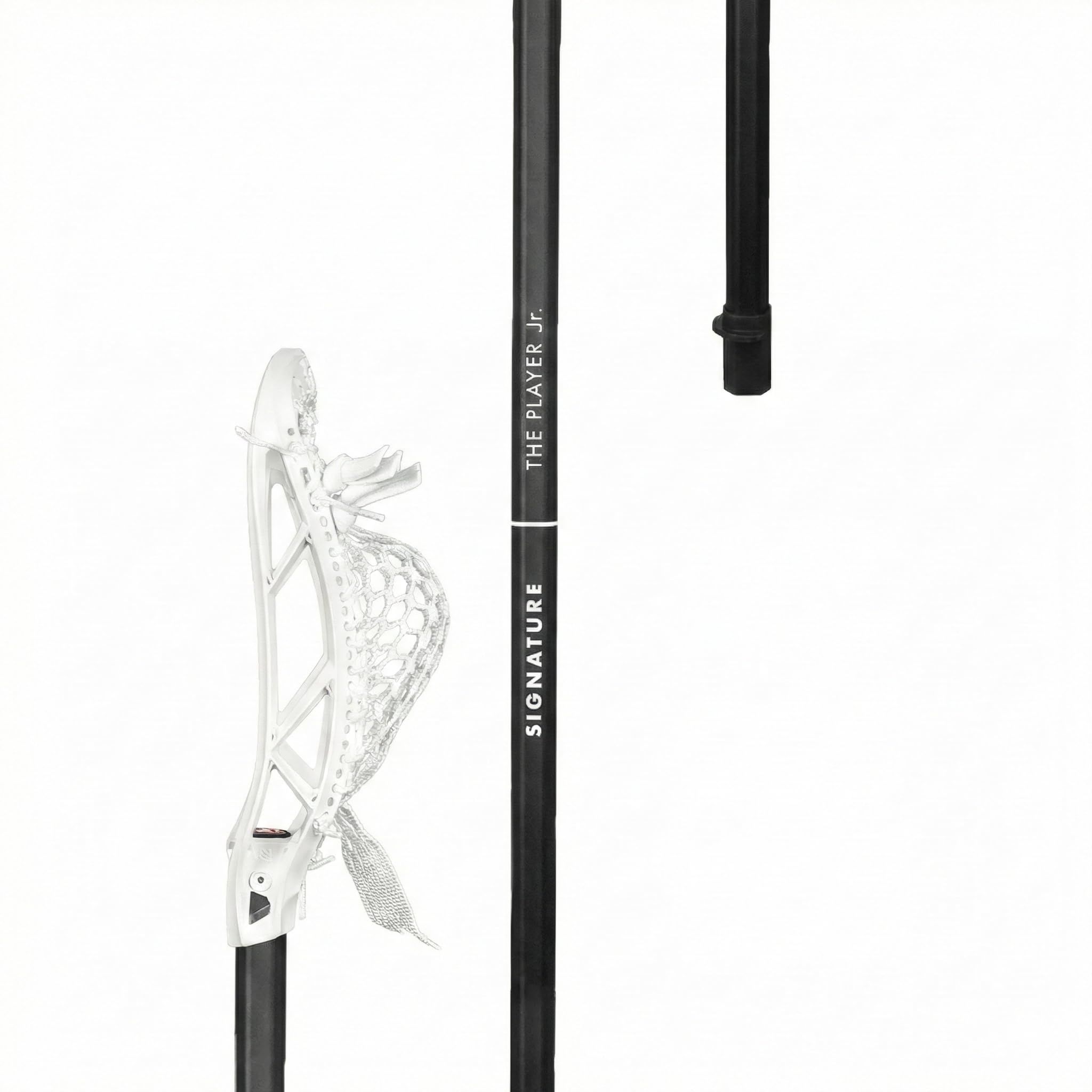
3. Signature Junior Boy’s Lacrosse Stick – 28″
A 28″ 7001 aluminum stick with a pro-strung pocket, ready for first-year league play.
Coaches and parents of young league players gravitate to this one because the head is strung well straight from the factory. The pro-strung pocket means your player focuses on learning skills instead of adjusting sidewall strings, and the head throws great on day one. It’s built on an Aerospace 7001 Series Aluminum Shaft — a lightweight material that keeps the stick nimble in small hands.
The package weight is 1.13 kg, which is the heaviest in this lineup and a 3.8x gap versus the plastic Signature Starter Stick — a fact note for very young or slight players who tire easily. That heft comes from sturdier build quality, and the manufacturer backs it with an exclusive Lifetime Warranty. Customers note it’s “perfect for his lacrosse league” for an 8-year-old on the smaller side.
The main downside is durability under hard contact: one buyer found the “shaft bent after 3rd practice” during competitive play. This stick is explicitly designed for recreational use or non-contact training only, so it’s a great choice for learning and light league play, but not for aggressive checking.
Grab this for: a first-year player in a youth league who needs a reliable, pro-strung pocket without the hassle of manual tuning.
Look elsewhere if: your player is in a physical, checking-heavy league where shaft durability is the top priority.
4. Signature Starter Stick – 28″

A 28″ plastic shaft at 0.3 kg, ideal for toddlers and 4-7 year olds to swing freely.
This is the lightest option here at a 0.3 kg package weight — a 3.8x gap versus the Signature Junior’s 1.13 kg — and that’s exactly its purpose. The hardwearing plastic shaft is built for kids and developing players, letting a small child cradle and throw without dragging the head. The full-size head and skinny shaft fit small hands well, making it ideal for the 4-7 age range.
The pro-strung pocket is a standout feature at this level, giving great ball control and feel so new players can focus on technique rather than equipment. Parents of 8-10 year olds report it’s “perfect for 8 to 10 year old players” and a great first stick that a grandson can “grow into” by swapping the shaft later. The 28″ shaft gives room to grow, which is part of why it fits that wider age band.
The catch is the plastic shaft’s stiffness — a coach notes it “deflects” when throwing hard and warns it “may snap under game slashing,” so this is strictly a non-contact training stick. It’s a champion for learning at home or with a youth team, but not built for competitive checking.
Choose this for: toddlers and early elementary players who need a light, easy-to-swing stick to build confidence and fundamentals.
The real limit: the plastic shaft isn’t meant for game contact — keep it for practice and backyard fun.
5. CAKLOR Complete Attack/Midfield Stick 41″

A 41″ 6000 alloy stick that meets NCAA and NFHS rules for middle school league play.
Unlike most sticks in this roundup, this CAKLOR is built with a 41″ shaft and meets NCAA and NFHS Rules, so it’s ready for organized play. That makes it a standout choice for a middle school beginner joining a team — parents report it’s “the right size for a middle school beginner and works great on the offense side.” The head uses a softer molded material for a forgiving response on imperfect catches.
The new material 6000 series alloy handle is light and durable, keeping arm fatigue low over a long practice. It ships professionally strung with premium mesh, though reviewers point out the pocket needs a little breaking in — “the pocket had to be worn in, but I imagine they all do.” At 15.8 ounces, it’s a solid step up for a player who’s outgrown junior sticks.
What makes this a smart buy is the combination of a game-legal build and an entry-level price that beats most league-ready sticks. The trade-off is the pocket’s initial stiffness, which demands a few backyard sessions before it feels dialed in. One buyer even found it perfect for tossing lacrosse balls for a dog, so it’s versatile beyond the field.
Pick this if: your player is entering middle school and needs a game-legal stick that won’t require an immediate upgrade.
Know before buying: budget a little time to break in the pocket — it’s stiff, but it settles in with use.
6. True Temper Raven Girl’s Complete 32″

A 32″ alloy stick with a wide face head for easier catching and ground ball pickup.
The RAVEN head was designed for beginner and intermediate players who want a wider face shape for easier catches. For a brand-new player, that bigger catching window is a confidence booster — it forgives a mistimed catch and channels the ball toward the center of the pocket. The scoop is shaped to lift ground balls cleanly, which helps young players master the low scooping motion.
This 32″ stick uses True Temper’s exclusive women’s mesh, which naturally centers the ball and provides a deep pocket for hold. The alloy handle comes with a soft touch finish for better grip, and the ambidextrous design works for lefties and righties alike. A dad even bought one for his son to learn better control, noting the flat pocket forces more disciplined cradling than a boys’ deep pocket.
It’s note the 32″ length and the control-focused design make this a deliberate teaching tool, not just a toy. A first-game report says the stick performed just fine with no flaws in quality, so it’s game-ready despite its beginner focus. The grip texture is a nice touch that keeps hands from sliding during sweaty practices.
Best for: a girl (or any young player) whose main struggle is catching — the wide face makes the first few months far less frustrating.
Keep in mind: the flat girls’ pocket demands more cradle control, so it’s a training stick that rewards practice.
7. STX Exult Rise Girl’s Lacrosse Stick

A 7/8″ 6000 alloy stick with a Lock Pocket Jr. for midfield control and passing.
STX designed this complete stick for aspiring female midfielders, adding a moderate offset that gives extra control for maintaining possession and executing precise passes. That offset (a slight bend in the head) helps a developing player carry the ball while running, which is the core skill of midfield play. The 7/8″ profile 6000 alloy handle delivers a comfortable, responsive grip for agile maneuvers.
The Lock Pocket Jr. is the standout feature — it keeps a consistent pocket shape with minimal maintenance, so a young player isn’t constantly messing with the mesh. A 9-year-old who upgraded to this stick “loves her new upgraded stick,” and the overall feedback is that it’s light, high-quality, and worth recommending. The purple color scheme is a bonus for kids who want their gear to look good on the field.
This sits a step above pure beginner sticks in both price and intent, but it still suits a developing player who’s committed to improving. Since it’s a complete stick, everything is matched and tuned from the factory. It’s not the right call for a tiny first-timer, but it’s a smart investment for a girl who’s past the very basics.
Reach for this if: your daughter has basic catching down and now needs better control and passing precision for midfield play.
Consider another if: you need the absolute cheapest option to test interest — this is a step-up stick, not a trial stick.
8. StringKing Complete 2 Junior Boy’s 10U
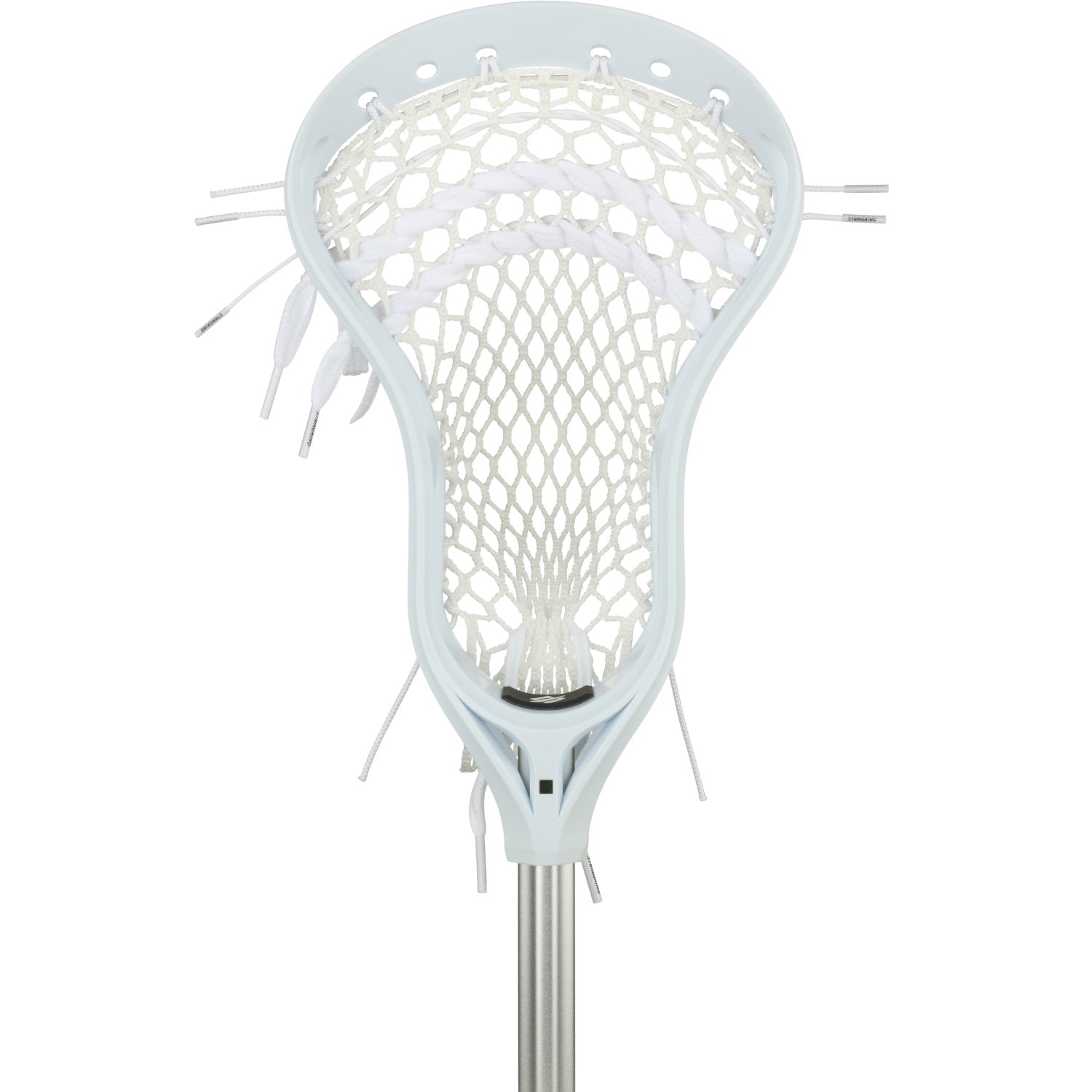
A Type 3 mesh stick with a thinner shaft, legal for 10U youth league play.
StringKing designed the Complete 2 Jr. from top to bottom for younger players learning fundamentals, and it’s the rare stick that’s legal for youth league play up to 10U. That’s a huge advantage — it works for the backyard and for actual games. It comes perfectly strung with Type 3 mesh, so the pocket performs consistently without constant adjustment, letting a kid focus on the game.
The thinner diameter shaft makes it easier for younger players to grip and control, which is exactly what a developing player needs to master scooping and cradling. Buyers call it “hands down the best youth stick on the market” and note that no other stick compares for youth players because the head and pocket make scooping and cradling easier. One uncle confirmed a nephew loved it as a gift.
The packaging weight is just 0.25 kg, making it one of the lightest complete sticks in this group despite being league-legal. StringKing backs it with a Durability Guaranteed promise — if it breaks within the warranty period, they replace it free. The only consideration is that it’s built for 10U play specifically, so older or bigger kids will outgrow it quickly.
The standout strengths
- Legal for 10U youth league play — rare for a beginner stick
- Type 3 mesh pocket is perfectly strung for consistent performance
- Durability Guaranteed free replacement warranty
The honest limits
- Light frame suits 10U players but may not handle older, bigger athletes
- Premium price for a stick your player may outgrow in a season or two
Invest in this if: your son is in a 10U league and you want one stick that covers both practice and game day with zero tuning.
skip it if: you’re just testing interest — a cheaper practice stick makes more sense until commitment is clear.
9. STX Fortress 300 Girls Complete Stick

A durable stick with Crux Mesh 2.0 and a non-slip shaft for defenders under pressure.
The Fortress 300 lives up to its name — it’s the stick made with added strength for the aspiring defender. The face shape offers a wide catching area that tapers into a tight pinch, which helps a defensive player control the ball after a check. For a middle school beginner playing defense, this wide catching window makes intercepting passes more forgiving.
The new Crux Mesh 2.0 pocket provides maximum control, and the raised ball stop adds retention so the ball stays put during aggressive play. A 13-year-old about 5’2″ found it “fits her perfectly” and called it “super sturdy and durable,” also praising the grip: “your hands won’t slide which is a huge plus.” That non-slip shaft is a real asset in a position where stick checks are constant.
This stick bridges the gap between beginner and competitive play — it’s marketed as a great beginner stick but has enough durability for high school. A JV goalie moving to defense found it “perfect for a high school player,” confirming it can grow with your athlete. It’s a premium choice, but for a defender who will absorb contact, the sturdier build is worth the jump.
Best for: a defender (or goalie-turned-field player) who needs a durable, non-slip stick that can handle checking.
Worth noting: it’s the priciest of the girls’ sticks here, justified by tougher build and better ball retention.
Understanding the Specs
Pocket Mesh and Depth
The pocket is where the ball sits, and its mesh type changes everything for a beginner. Semi-soft mesh (like the Franklin’s 10 Diamond) breaks in quickly for a deeper pocket that holds the ball better — ideal for learning to cradle. Soft mesh (like the Champro’s) is forgiving on catches but can sit shallow. A deep pocket makes ball retention easier, which is the first skill a new player has to master.
Shaft Material and Weight
The shaft is the long handle, and its material determines weight and durability. Aluminum and 6000/7001 series alloy are light and sturdy for active play, while plastic is featherweight but flexes under hard throws. Package weight tells you the real story: a 0.3 kg plastic stick swings easily for a toddler, while a 1.13 kg aluminum stick is heavier but more durable for real practice. Match the weight to your player’s strength and age.
FAQ
What is the right length for my beginner lacrosse player?
Are all beginner sticks legal for league play?
What is the difference between a boys’ and girls’ lacrosse stick?
How long does it take to break in a new lacrosse pocket?
What is a pro-strung pocket and why does it matter?
How much should I spend on a first lacrosse stick?
What is a wide face head good for?
What does the “10U” label mean on a youth stick?
Final Thoughts: The Verdict
For most families, the beginner lacrosse stick winner is the Franklin Sports Ambush because it balances light aluminum build, a break-in-free semi-soft pocket, and real durability for casual play at a value that doesn’t punish a first try. If you want a league-legal option that skips the backyard-to-game upgrade, grab the StringKing Complete 2 Jr.. And for a girl learning defense who needs a sturdy, non-slip stick, the STX Fortress 300 is the one to reach for. No matter which you pick, match the length to your player’s height and you’ll have them cradling in no time.
How We Picked
We do not accept paid placement. Every pick is matched to a real buyer and a real use-case; we do not hands-on test units.
Sources & Methodology
Specifications: manufacturer listings and product documentation. Review insights: verified customer reviews, as of August 2026. Pricing: not shown on this page (it changes often); check the current price via the retailer link.
As an Amazon Associate, Gadgets Feed earns from qualifying purchases. This does not affect which products we feature.