
Our readers keep the lights on and my morning glass full of iced black tea. As an Amazon Associate, I earn from qualifying purchases.
Specs are compiled from manufacturer listings and verified buyer reviews and can change over time — please confirm the key details on the product page before buying.
The biggest worry for a new kayaker isn’t speed or looks — it’s flipping over in flat water when you lean to grab your water bottle. A stable, forgiving 10-foot hull that tracks straight without constant paddle correction is what separates a fun first day on the lake from a frustrating one spent fighting the boat. This guide focuses entirely on beginner-friendly recreational kayaks roughly 10 feet long, each chosen because it solves that stability problem first and asks you to learn skills later.
I’m Min — the founder and writer behind Gadgets Feed. This guide is built by comparing the manufacturers’ published specifications and the patterns across verified customer reviews, so you get each pick’s real strengths and trade-offs instead of marketing spin.
These picks balance weight, tracking, and comfort for new paddlers loading a kayak onto a small car or fitting one inside a Honda Civic. Find the best beginner recreational kayak that matches your real-world carrying and paddling needs.
Quick Picks
- Wilderness Systems Aspire 105 — Top Performer
- Perception Joyride 10 — Best Family Pick
- Pelican Argo 100XR — Best Value
- Pelican Argo 100X — Lightest Pick
- Emotion Spitfire Sit-On-Top Kayak — Best Sit-On-Top
How To Choose The Best Beginner Recreational Kayak
Before you pick a color, three decisions define whether your first season on the water is a joy or a chore: hull shape for stability, weight for car-topping, and seat quality for your lower back. Here is what matters most for a new paddler in a 10-foot boat.
Hull Shape: Stability vs. Speed
A twin-arched multi-chine hull (a hull with multiple angled panels that create a flat-ish contact patch on the water) is the most stable design for beginners. It resists tipping when you lean sideways and tracks straighter than a fully flat bottom. The trade-off is that it paddles slower than a V-shaped hull, but for calm lakes and slow rivers you will not notice the speed difference — you will notice the confidence of not tipping.
Weight and Portability
A 10-foot recreational kayak typically weighs 36 to 51 pounds. If you lift it onto a car roof alone, stay under 45 pounds — that is about the weight of a large bag of dog food. Models in the 36-pound range, like the Pelican Argo 100X, let a smaller person load and unload without help. Heavier boats in the 48-51 pound range offer more features (adjustable skeg, premium seats) but often require a second person or a wheeled cart for transport.
Seat Comfort and Adjustability
The stock seat is the single most common upgrade beginners make after purchase. A seat with an adjustable backrest and padding beneath the thighs — like the Ergoform system or the Phase 3 Air Pro — prevents the “numb-butt” feeling after 90 minutes on the water. Fixed foam pads or thin webbing seats wear out faster and are harder to replace. If you are over 200 pounds, prioritize a seat with a wide cushion pocket and a higher weight capacity than the boat’s rating.
Sit-In vs. Sit-On-Top
Sit-in kayaks keep your lower body dry and offer better tracking because your center of gravity sits lower inside the hull. Sit-on-top kayaks drain water through scupper holes (small openings in the deck that let water fall through) so you never sit in a puddle, but your legs get wet from splashes. Beginners who paddle in warm weather often prefer sit-on-top for the easy entry and exit — no fear of getting stuck. Cold-water paddlers or those who want a drier ride lean toward sit-in models. Both types are equally stable at 10 feet when the hull design is good.
Quick Comparison
On smaller screens, swipe sideways to see the full table.
| Model | Best For | Weight (lbs) | Dimensions L x W x H (in) | Hull Material | Amazon |
|---|---|---|---|---|---|
| Wilderness Systems Aspire 105 | Tracking & comfort upgrade | 51 | 120 x 29 x 15.5 | Polyethylene (PE) | Amazon |
| Perception Joyride | Family-friendly sit-inside | 42 | 120 x 29.5 x 15 | Polyethylene (PE) | Amazon |
| Pelican Argo 100XR | Premium features on a budget | 43 | 120 x 29 x 12.75 | HDPE | Amazon |
| Pelican Argo 100X | Ultralight value pick | 36 | 120 x 28 x 14 | Polyethylene (PE) / Ram-X | Amazon |
| Emotion Spitfire Sit-On-Top | Sit-on-top stability | 45 | 108 x 31 x 14 | HDPE | Amazon |
In‑Depth Reviews
1. Wilderness Systems Aspire 105
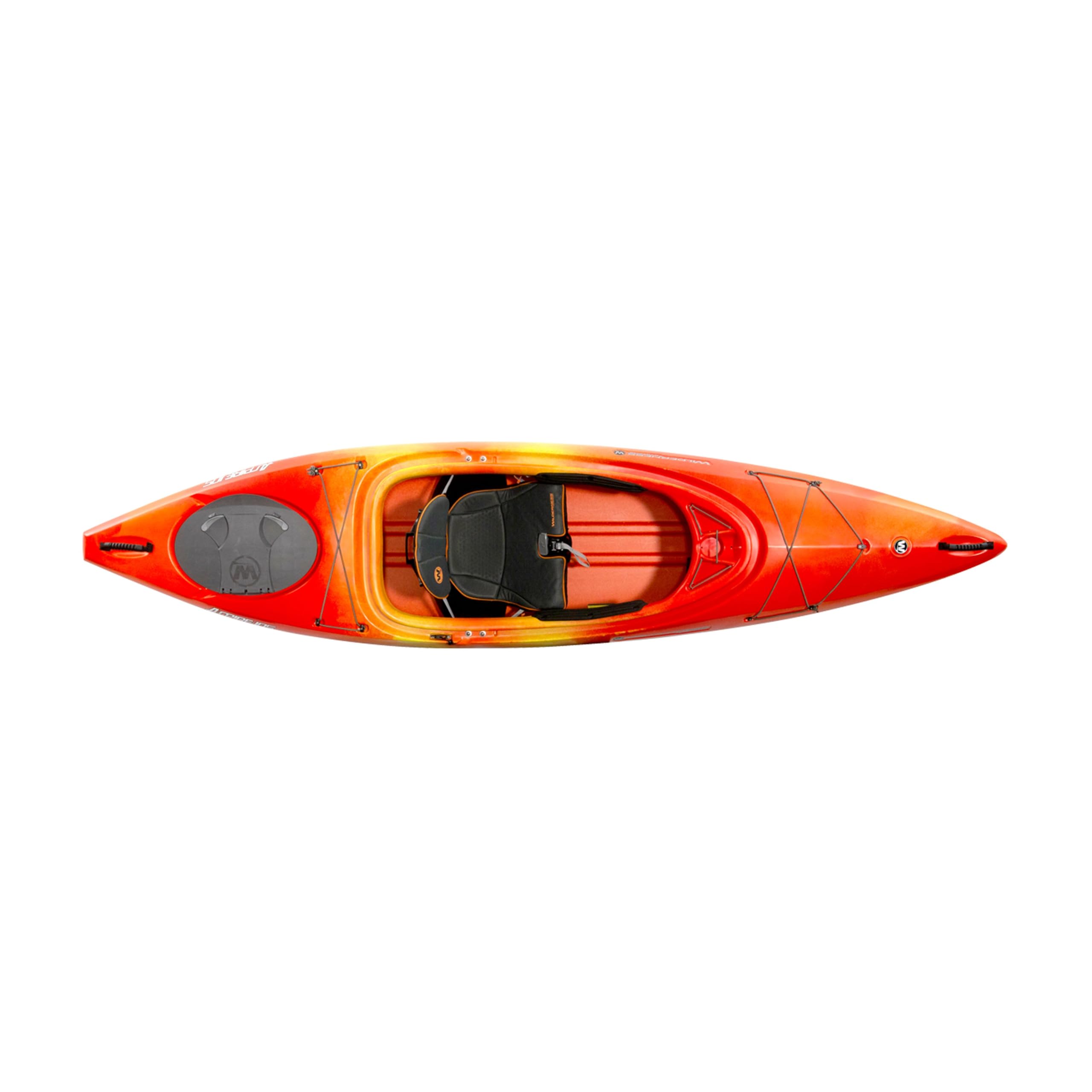
A sit-inside 10′ 6″ kayak with a rudder-like skeg that kills the zig-zag beginners hate.
You steer with a cockpit-mounted lever that drops a skeg (a small fin under the hull) into the water, which keeps the boat tracking straight through wind and current — no more over-correcting with every paddle stroke. The hull holds 400 lbs and the boat weighs 48 lbs, making it noticeably heavier than the Pelican options but far more capable in choppy conditions. Buyers report the Mango color dramatically improves visibility around motorboats, a real safety bonus for new paddlers on busy lakes.
The Phase 3 Air Pro seat uses mesh fabric over ergonomic 3D foam, which owners mention feels “more comfortable than a recliner” and keeps your back from sweating during long afternoon trips. At 120 inches long and 29 inches wide, the cockpit is roomy enough for medium-to-larger paddlers, and the padded footrests adjust with a locking lever. One experienced reviewer called it their favorite all-around kayak after dozens of outings, and noted it was stable enough to stand up in — a rare claim for a 10.5-foot boat.
What Earns the Price Tag
- Adjustable skeg keeps you on course without effort when the wind picks up
- Phase 3 Air Pro seat is the most ventilated and supportive in this lineup
- 400 lbs max capacity — best in class if you carry gear or a larger paddler
- Thigh and knee padding for comfortable control in rougher water
Where It Weighs You Down
- At 51 pounds (Amazon-listed item weight), it is the heaviest pick here — plan on a cart or a helper for roof loading
- Higher price point may be overkill if you only paddle calm ponds once a month
Best for paddlers who want to skip the upgrade cycle: if you plan to paddle regularly on rivers, lakes with wind, or any water where current pulls you off course, the adjustable skeg and premium seat make this a one-kayak quiver that grows with your skill.
Better value choices exist for occasional use: at 51 lbs it demands more lifting effort than the 36-lb Pelican Argo 100X, so casual recreational users who car-top alone should look at lighter alternatives.
2. Perception Joyride 10

A 42-pound sit-inside with a built-in phone camera cutout that parents actually use to film kids.
The selfie slot — a molded recess in the deck where you prop your phone — is not a gimmick for social media; it is a genuinely useful spot to keep your phone dry and visible for photos, navigation, or quick calls without digging in a dry bag. The hull measures 120 inches long by 29.5 inches wide, the widest beam of any sit-inside here, which translates to exceptional initial stability — you feel planted even when twisting to grab gear behind the seat. The cockpit is large enough for adults and kids to share, according to buyers, making this a rare one-kayak-fits-family option.
A bulkhead (a sealed wall inside the hull) creates a flotation chamber and a dry storage compartment, so your lunch and phone stay dry even if you take on water. Buyers confirm the seat is very comfortable and adjustable, with padded knee rests that make 2-hour trips pleasant. The most common complaint is the missing drain plug — as one reviewer noted, “no drain plug makes water removal difficult after capsize,” so if you plan to practice self-rescue or paddle in waves, bring a sponge. For casual lake paddling with the family, this is a minor annoyance, not a dealbreaker.
Why Families Like It
- Wide 29.5″ beam feels very stable — beginners do not panic when shifting weight
- Bulkhead keeps gear dry and adds buoyancy (floats even if swamped)
- Light enough at 42 lbs for most adults to lift onto a car rack
- Adjustable footrests and padded knee braces fit a range of heights
The Practical Catch
- No drain plug means you must sponge or tilt the kayak to empty water after a capsize
- Shallow drink holders and only one set of bungee straps limit deck storage
Reach for this if you share a kayak between adults and kids: the wide cockpit and comfortable seat let a 6-footer and an 8-year-old both paddle without feeling cramped, and the 120-inch length fits inside a minivan with seats folded.
Skip it for serious solo paddling: without a skeg it drifts more than the Aspire 105 in crosswinds, and the missing drain plug becomes a hassle if you regularly practice re-entry from the water.
3. Pelican Argo 100XR
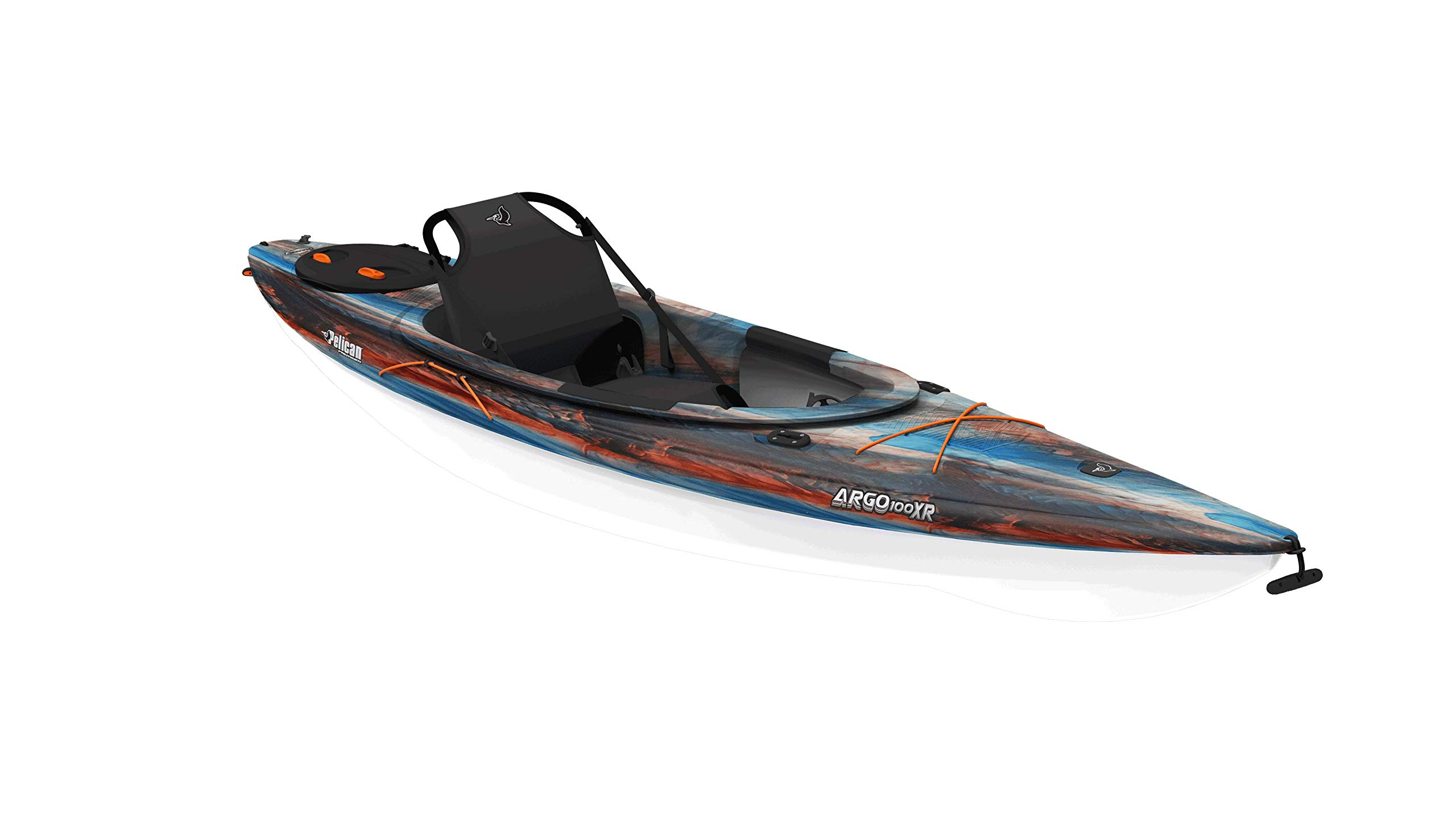
A 43-pound sit-in that packs a removable beach chair seat and a lockable hatch for the price of a mid-range boat.
The Ergocoast seating system pulls out completely and works as a beach chair — a feature only the Pelican Argo 100XR offers in this group, saving you from packing a separate camp seat. It comes with a front quick-lock hatch with a storage bag, a rear storage platform with bungee cords, two 1-inch rigging tracks for mounting accessories, a bottle cage and a secondary bottle holder, plus knee pads. At 120 inches long and 29 inches wide with a flatter hull and added floating blocks on each side, it is designed to feel secure and resist tipping.
Customers note that the first two kayaks they received arrived damaged at the stern, and that Amazon replaced them and refunded a price drop — so inspect carefully upon delivery and keep the packaging until you confirm no cracks. Once on the water, owners say it is stable and comfortable, with the seat being a highlight for casual paddling. At 43 pounds it is on the lighter end of the premium picks, though one 5’5″ woman reported she could lift it onto a car rack with a curb assist. The twin-arched multi-chine hull provides good primary stability, but the short 10-foot length and flat-ish profile mean it is slower and tracks less precisely than a longer touring kayak — exactly as expected for a recreational boat.
What Makes It a Value Leader
- Removable seat that doubles as a beach chair — genuinely useful for shore lunch breaks
- Includes more accessories from the start (hatch bag, bottle holders, rigging tracks) than any other pick
- Low 12.75-inch profile sits low to the water for easy entry and exit
- 43 lbs is manageable for a single person to lift with technique
Where It Falls Short
- Shipping damage is a known risk — reviewers point out cracked sterns that require returns or replacement
- Poor tracking in wind compared to the Aspire 105 with its adjustable skeg
Best for budget-conscious paddlers who want premium features: the removable seat, included dry bag, and accessory tracks give you a fully outfitted kayak without buying aftermarket parts, making it the strongest value in the mid-range.
Not ideal if you paddle in windy conditions: the short, flat hull drifts more than the Aspire 105 or even the standard Argo 100X, so you will spend more energy correcting course on breezy lakes.
4. Pelican Argo 100X
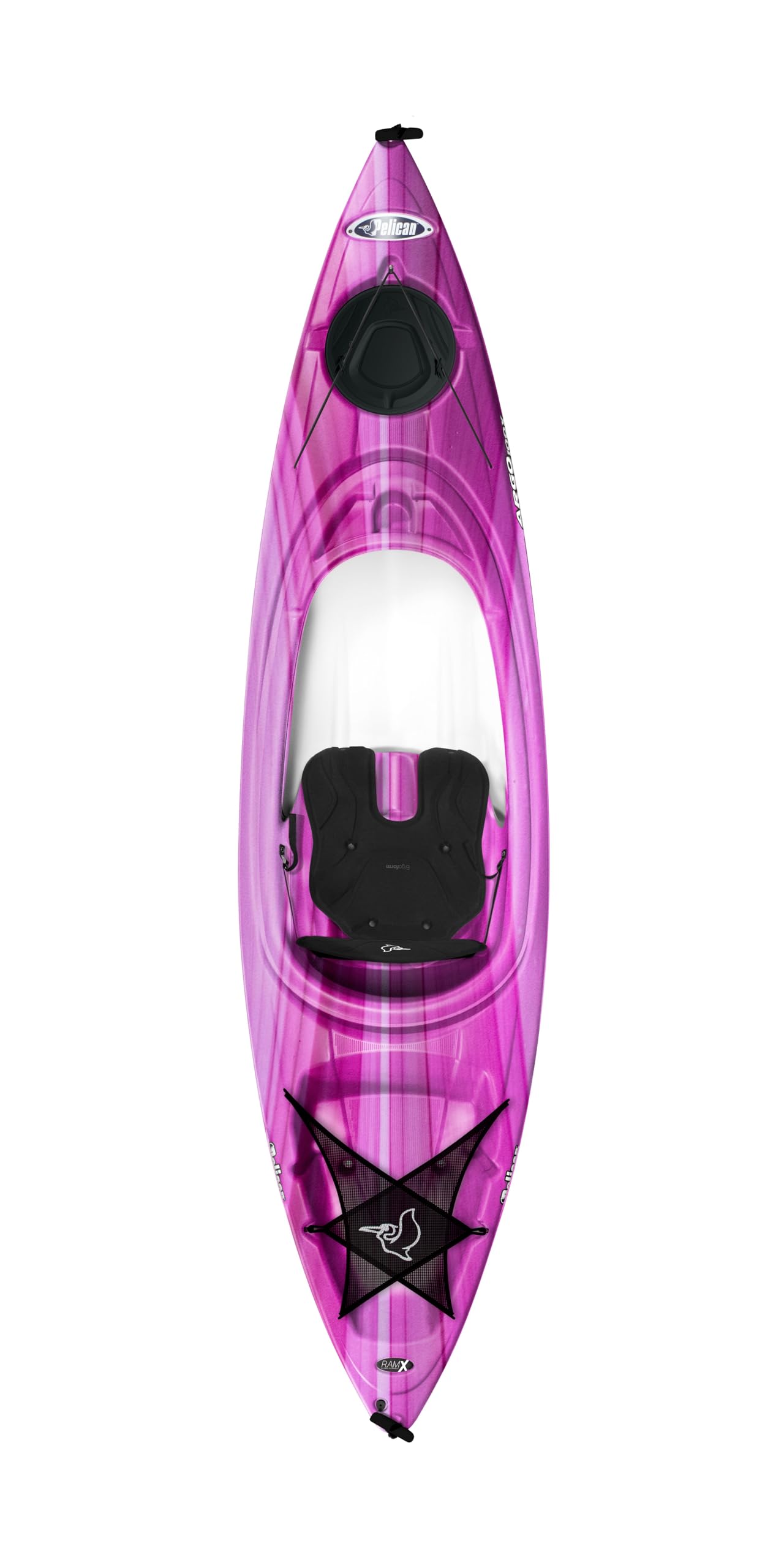
A 36-pound sit-in that a smaller adult can shoulder-carry from the car to the launch without help.
The secret is the patented Ram-X material — a blow-molded polyethylene that Pelican says is both stronger and lighter than standard rotomolded plastic. At 36 pounds, it is 25% lighter than the Emotion Spitfire (45 lbs) and a full 15 pounds lighter than the Wilderness Systems Aspire (51 lbs), making it the clear winner for anyone who loads their own gear. The twin-arched multi-chine hull uses the same stability-enhancing design as the pricier Argo 100XR, so you still get the confident, tip-resistant feel without the extra features and cost.
Shoppers say it survived a collision with a paddleboard without tipping — a good sign for nervous beginners. The Ergoform seating system has an adjustable backrest and a spacious seat cushion, though one reviewer coming from a Wilderness Pungo 120 noted the seat is not as plush, which is a predictable trade-off for the price and weight. The cockpit is roomy at 120 inches long and 28 inches wide, and the molded footrests accommodate different leg lengths. Reviews consistently call it excellent value for an everyday kayak, with smooth tracking and ample day-trip storage behind the seat. The hatch cover is basic, but functional for dry storage.
Why Solo Paddlers Love It
- At 36 lbs, it is the lightest kayak in this list — easy for one person to lift and load
- Ram-X material resists dents better than standard PE at this weight class
- Twin-arched multi-chine hull tracks well for its size — reviewers confirm it goes straight without constant correction
- Spacious cockpit and footrests fit paddlers from 5’4″ to 6’2″ comfortably
The Trade-Offs
- Hatch cover is mediocre and may leak in rough water — bag gear separately
- Seat is less padded than the Ergoform system on the more expensive Argo 100XR
Perfect for apartment dwellers, small-car owners, or anyone who loads alone: the 36-pound weight makes it possible to carry this kayak from a cartop rack to the water without rethinking your life choices, and the stable hull keeps beginners confident.
Not the best if you want a removable beach-chair seat or integrated dry storage: the basic hatch cover and fixed seat work fine for day trips, but long-term touring paddlers should step up to the Argo 100XR or Aspire 105.
5. Emotion Spitfire Sit-On-Top Kayak
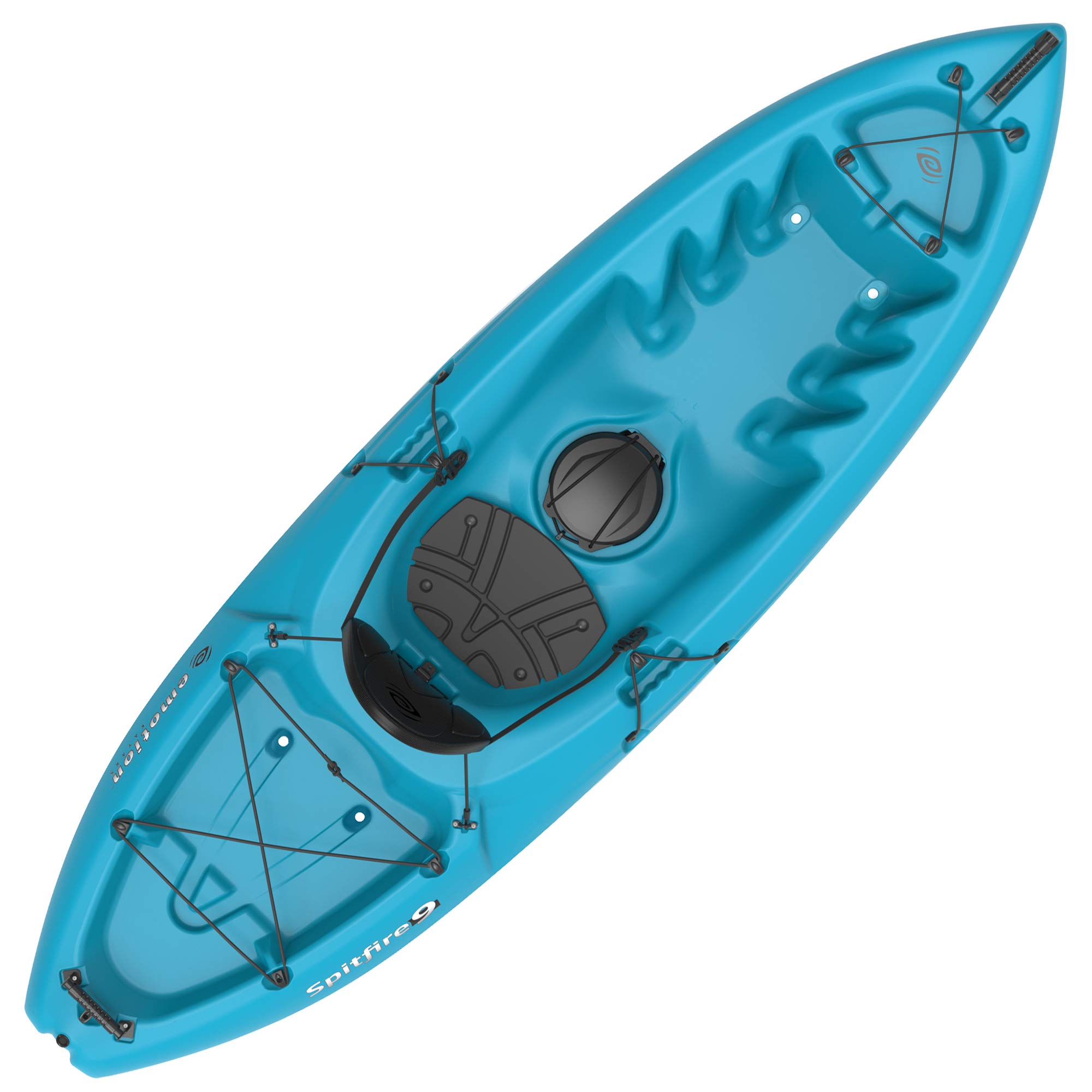
A 45-pound sit-on-top with scupper holes that drain wave splash instantly — no bailing needed.
Self-bailing scupper holes are small openings molded into the deck that let any water that splashes in simply fall out through the bottom, so you never sit in a puddle. This makes the Spitfire the most convenient pick for warm-weather paddlers who launch from beaches, float in waves, or hop in and out of the boat frequently. At 108 inches long and 31 inches wide (the widest beam in this lineup), it has a very stable platform — one owner confirmed it handles “choppy water well” and another said it fit inside a Honda Civic with only a 1.5-foot overhang. The hull is made of UV-protected high-density polyethylene (HDPE) and weighs 45 lbs, which is 9 lbs heavier than the Pelican Argo 100X but still manageable for one person.
There is a trade-off for larger paddlers. The seat is a basic padded CRS system (Comfort Ride System) that one buyer rated 1 out of 5, saying “the seat constantly broke” and the tracking was “horrible” for heavier users. Smaller paddlers (around 5’4″) report it is lightweight, easy to solo load, and maneuverable once you get used to the slight torque per stroke. A rear tankwell with cargo net lacing and a storage hatch add usable space, and the molded-in paddle keepers and side carry handles help during transport. The tracking takes practice — expect to put in 5 to 8 inches of correction per stroke if you are used to a sit-inside hull.
Why It Works for Warm-Water Paddling
- Self-bailing scupper holes mean you never have to sponge water out — it drains automatically
- 31-inch wide beam provides excellent initial stability for new paddlers
- Fits inside a Honda Civic or mini-van, making it a practical choice for car-campers
- Two tankwells and a hatch offer generous storage for a sit-on-top
The Real Concerns
- Seat durability is a consistent complaint — larger paddlers above 250 lbs have reported breakage
- Tracking is poor compared to sit-inside models; you will correct course with every stroke until you learn the hull’s rhythm
Ideal for warm-weather paddlers who want easy exit and entry: the sit-on-top design and self-bailing scupper holes make this the lowest-maintenance kayak here — no drain plugs to manage, no sitting in a wet cockpit.
Less suited for larger paddlers or cold-water trips: the seat durability issues for heavier users and the poor tracking in wind make it a weaker choice than the sit-inside options in this list for year-round or serious flatwater paddling.
Understanding the Specs
Hull Design: Twin-Arched Multi-Chine vs. Flat Bottom
The single most important spec for a beginner after weight is hull shape. A twin-arched multi-chine hull (a hull with several angled panels rather than a smooth curve) creates more surface area contacting the water, which gives you resistance to tipping (primary stability) and helps the kayak glide straight without constant paddle steering. A flat-bottom hull offers great initial stability — you feel very steady when sitting still — but it can become “tippy” (secondary stability) once you lean even slightly to reach for gear or brace against a wave. For beginners, look for “twin-arched multi-chine” or “stable chine” in the description; those hulls forgive the natural wobble of a new paddler.
Seating Systems: Ergoform vs. Phase 3 Air Pro vs. Basic Padded Seat
The seat is your second-most-important contact point after the paddle. Basic padded seats (like the Emotion Spitfire’s CRS) are a foam slab on a plastic frame — they work for short trips but lose padding over time, and buyers report breakage with heavier paddlers. The Ergoform system in the Pelican Argo 100X and 100XR has an adjustable backrest that reclines and a wide cushion pocket, which reduces pressure points for most body types. The Phase 3 Air Pro in the Wilderness Systems Aspire 105 uses a mesh fabric over ergonomic 3D foam — this allows air to circulate behind your back, keeping you cooler on hot days, and the foam contours to your lower back shape. If you plan 2+ hour paddles, the Phase 3 Air Pro is worth the weight penalty because it prevents the “numb butt” that drives casual paddlers off the water early.
FAQ
Can I fit a 10-foot kayak inside my Honda Civic or small SUV?
What is the difference between a sit-in and a sit-on-top kayak for beginners?
How much should a beginner recreational kayak weigh for solo car-topping?
What does a “skeg” do, and do I need one for a beginner kayak?
How important is the weight capacity for a recreational kayak?
Do I need a drain plug in a sit-inside kayak?
Can two adults share a 10-foot sit-inside kayak?
What is the best way to transport a 10-foot kayak without a truck?
How do I know if a kayak seat will be comfortable for long paddles?
Should I buy a new kayak or a used one as my first boat?
Final Thoughts: The Verdict
For most beginners, the best beginner recreational kayak overall is the Wilderness Systems Aspire 105 because its adjustable skeg eliminates the zig-zag frustration that makes new paddlers give up early, and the Phase 3 Air Pro seat prevents back pain. If you want the lightest boat that still tracks well and fits a budget, grab the Pelican Argo 100X. And for warm-weather paddlers who value easy entry and self-draining convenience, the standout is the Emotion Spitfire Sit-On-Top as a stable, low-maintenance first kayak that fits inside a small car.
How We Picked
We do not accept paid placement, and we did not hands-on test every unit. Instead, we match each pick to a real buyer and use-case by comparing the manufacturers’ published specifications against the patterns in verified customer reviews — so you get each pick’s real strengths and trade-offs instead of marketing copy.
Sources & Methodology
Specifications: manufacturer listings and product documentation. Review insights: verified customer reviews, as of July 2026. Pricing: not shown on this page (it changes often); check the current price via the retailer link.
As an Amazon Associate, Gadgets Feed earns from qualifying purchases. This does not affect which products we feature.
Product prices and availability are accurate as of the date/time indicated and are subject to change. Any price and availability information displayed on Amazon at the time of purchase will apply to the purchase of this product. As an Amazon Associate I earn from qualifying purchases.
CERTAIN CONTENT THAT APPEARS ON THIS SITE COMES FROM AMAZON. THIS CONTENT IS PROVIDED "AS IS" AND IS SUBJECT TO CHANGE OR REMOVAL AT ANY TIME.
Amazon and the Amazon logo are trademarks of Amazon.com, Inc. or its affiliates.