
Our readers keep the lights on and my morning glass full of iced black tea. As an Amazon Associate, I earn from qualifying purchases.
Specs are compiled from manufacturer listings and verified buyer reviews and can change over time — please confirm the key details on the product page before buying.
Buying your first road bike is a mental battle between the memory of a heavy, clunky department-store ride and the fantasy of a sleek machine that makes you faster the moment you swing a leg over. The truth is, the right beginner road bike sits somewhere in the middle — light enough to feel alive, but with forgiving geometry and a drivetrain that won’t punish mistakes. This guide breaks down six real contenders, focusing on what actually matters on day one: the weight you’ll heft up stairs, the gears you’ll learn to trust, and the fit that keeps you riding instead of adjusting.
I’m Min — the founder and writer behind Gadgets Feed. This guide is built by comparing the manufacturers’ published specifications and the patterns across verified customer reviews, so you get each pick’s real strengths and trade-offs instead of marketing spin.
The right first bike balances a forgiving fit with a drivetrain you can learn on, and this roundup of the beginner road bike options sorts out which aluminum and carbon builds actually justify their price tag.
Our Picks at a Glance

How To Choose The Best Beginner Road Bike
Forget the pro peloton imagery for a second. A beginner road bike needs to do three jobs: make you feel stable, not wear you out on a 10-mile loop, and handle basic maintenance without a shop visit. That means focusing on the frame, the gears, and the brakes before you worry about anything else.
Frame Material Sets the Whole Tone
Your frame choice decides how heavy the bike feels and how comfortable the ride is. Carbon fiber (like the TORAY T800 used on the SAVADECK) is the lightest and smoothest, but it costs more. Aluminum is the classic beginner balance — stiff enough to feel efficient, light enough to enjoy, and durable if you drop it in the garage. Steel is the budget classic, very sturdy but noticeably heavy, which you’ll feel on any incline.
Gears Are About Range, Not Just the Number
A “21-speed” bike with a triple chainring up front gives you a wide spread for steep hills and fast flats, but it adds complexity. A “14-speed” setup might be simpler to learn on. What matters is whether the shifting is smooth (brands like Shimano and microSHIFT are your friends here) and whether you can find a gear that lets you spin easily uphill without grinding your knees.
Brakes: Disc vs. Caliper
Disc brakes offer strong, confident stopping power, especially in wet conditions, and are becoming the standard. Caliper brakes (the traditional rim-clamp style) are lighter and simpler but can feel less powerful in the rain. For a first bike, either works; just know that discs generally give you more margin for error when you’re still learning to brake late into a corner.
Quick Comparison
| Model | Best For | Frame Material | Speed | Brake Style | Amazon |
|---|---|---|---|---|---|
| SAVADECK Carbon Disc★ Best Overall | Lightweight performance | TORAY T800 Carbon | 18-Speed | Disc | Amazon |
| HILAND 700C AllianceBest Value | Value & quality | Aluminum | 14-Speed | Caliper | Amazon |
| EUROBIKE TSM XC550 | Budget commutes | Carbon Steel | 21-Speed | Disc | Amazon |
| Schwinn Volare 1300 | Beginner fitness rides | Aluminum | 14-Speed | Caliper | Amazon |
| Schwinn Phocus 1.6 | Aero positioning | Aluminum | 16-Speed | Caliper | Amazon |
| Tommaso Imola | Reliable daily upgrades | Aluminum | 24-Speed | Rim | Amazon |
In-Depth Reviews
1. SAVADECK Carbon Disc Road Bike
Our pick — 4.5★ from 70+ verified ratings; the strongest balance of quality and price.
The featherweight carbon rig that makes your first group ride feel easy.
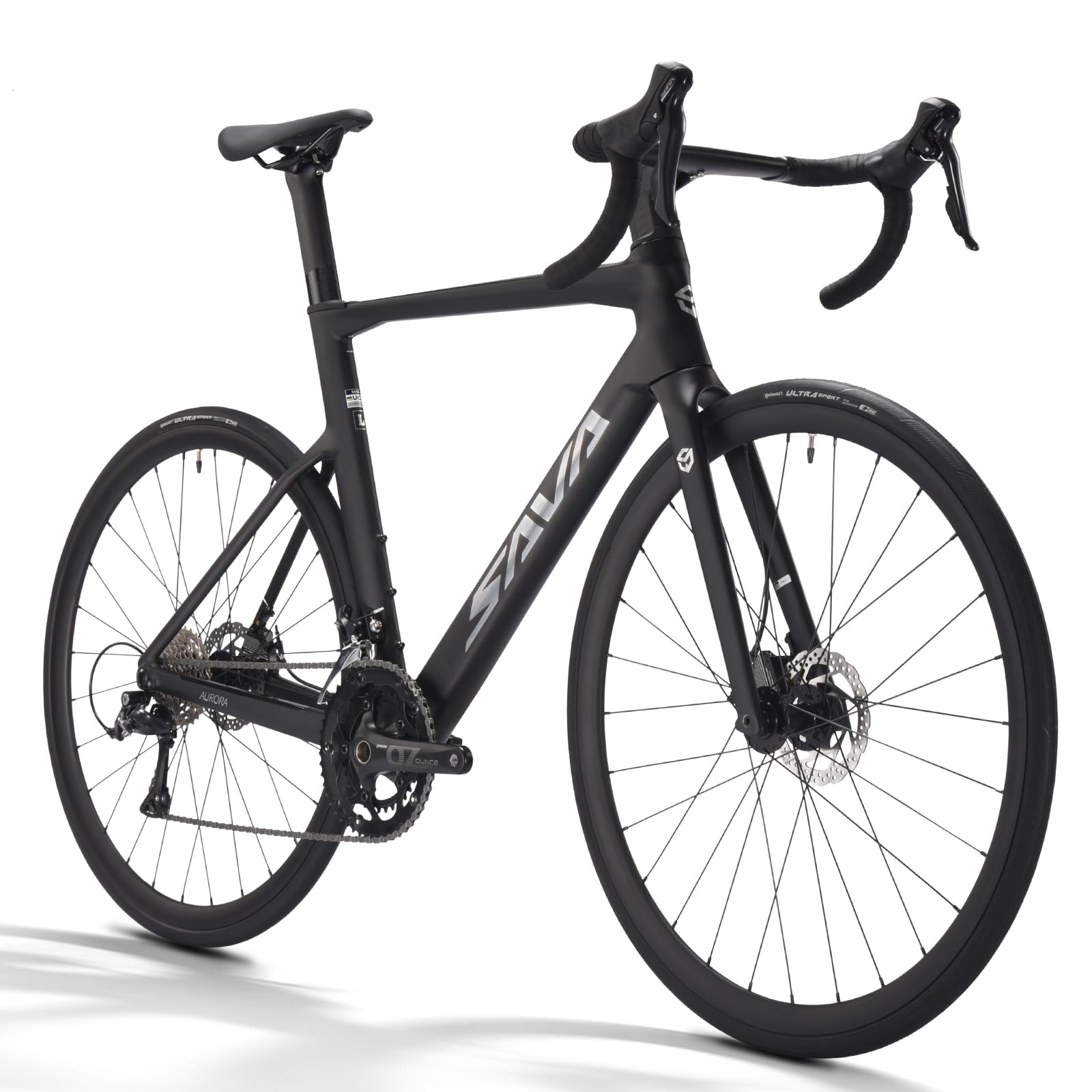
The TORAY T800 carbon build drops the weight to 9.6kg, a figure that redefines entry-level expectations. The frame, fork, rims, and seat post are all built from Japanese TORAY T800 carbon fiber, which brings the whole build down to 9.6kg (21.1lb). That’s a weight you feel instantly — you can lift it with two fingers and you’ll crest hills without the bike fighting you. The full Shimano SORA R3000 drivetrain gives you 18-speeds of smooth, reliable shifting through the front and rear derailleurs, which is exactly the sort of dependable groupset that forgives a new rider’s clumsy gear changes.
The fully internal cable routing (all the cables run inside the frame) doesn’t just look tidy; it reduces wind resistance and gives the bike a cleaner, more aero profile. Disc brakes on both wheels deliver balanced stopping power, so you can brake with confidence in wet conditions. The included 700x25C Continental tires and free pedals mean you’re ready to ride from the start, and the near-complete pre-assembly means you’re looking at a quick setup rather than an afternoon with a wrench. Buyers report they were “riding around in less than 20 minutes” after opening the box.
Its Shimano SORA R3000 groupset and disc brakes set a benchmark for beginner-friendly performance. Owners consistently praise the ride quality and speed, noting it feels far more expensive than its price. If you’re serious about cycling and want to skip the “upgrade in a year” cycle, this is the investment that grows with you.
What Owners Rave About
- Carbon build keeps it ultra-light at 9.6kg, so carrying it up stairs is a breeze
- Shimano SORA shifting is smooth and dependable for new riders
- Fully internal cables create clean aero lines and a beautiful look
The Trade-Offs
- It’s a premium investment compared to entry-level aluminum bikes
- Set-up can be tricky for total beginners who skip the included tool kit instructions
Reach for this if: you want a bike that feels like a serious step up from day one, with carbon weight savings and dependable Shimano parts.
Look elsewhere if: your budget is tight or you’re not sure road cycling is your long-term hobby — it’s worth pairing with a real commitment.
2. HILAND 700C Road Bike
An aluminum-framed workhorse that proves you don’t need carbon to fall in love with the sport.
If the SAVADECK is the dream, this is the smart, budget-savvy reality check. The HILAND Alliance pairs a lightweight aluminum frame with a 14-speed drivetrain, giving you a bike that’s stiff enough to transfer your power to the road without the wallet-ache of carbon. The dual caliper brakes are lighter and more aerodynamic than discs, providing stable stopping force you can trust on city streets. The 700C wheels reduce rolling resistance, so you can go farther with less effort, and the larger diameter helps roll over potholes and bumps more easily.
You get a proper fit for a range of body types, which is rare at this price point. It comes in three sizes — S (49cm) for riders 5’3″–5’6″, M (53cm) for 5’6″–6′, and L (57cm) for 6’–6’4″ — so you can match your height. It arrives 85% pre-assembled with free tools included, and the adjustable seat and quick-release options make fine-tuning simple. Owners highlight the smooth ride and easy pedaling, even uphill, which is the real test of a beginner bike.
The most mentioned aspect by far is the build quality, with hundreds of riders vouching for its solid feel. Assembly is the recurring caveat — a few owners had to correct factory setup issues like a reversed fork or brake alignment, but those who invested the time ended up with a bike they loved for years. It’s a genuinely great entry point that respects your budget.
Great value, easy ride: the aluminum frame keeps weight down while the 14-speeds give you a wide-enough range for hills and flats. It arrives partly assembled and benefits from a careful once-over before your first ride.
Best for: budget-conscious beginners who want a quality aluminum frame and three sizes to choose from for a proper fit.
skip it if: you expect factory-perfect assembly — budget time to check the fork and brakes before your first big ride.
3. EUROBIKE TSM XC550

A 21-speed steel commuter that looks the part without emptying your wallet.
The EUROBIKE TSM XC550 is built around a high-quality carbon steel frame, which is a different philosophy than the aluminum bikes on this list. Steel is durable and offers a more forgiving, comfortable ride that absorbs road vibration, making it a solid pick for daily commuters. It rolls on 700C wheels with double aluminum rims and 700x28C tires that reduce resistance whether you’re on gravel, city road, or other terrain. The 21-speed Shimano drivetrain with front and rear disc brakes gives you a huge gear range for tackling hills and the confident stopping power of discs.
This bike is recommended for riders between 5’6″ and 6’2″, with a maximum weight capacity of 300 lbs, making it a roomier, more accommodating option for larger riders. The free one-year warranty offers a safety net that’s reassuring for a first purchase. The trigger shifters are easy to understand, and assembly is straightforward — owners note it was easy to put together and rides very well. One buyer put about 75 miles on it with no issues and called it a great ride for the price.
The standout praise is value for money — riders consistently mention it looks far more expensive than it is, and the 21-speeds give you the full road-bike experience at a budget price. The trade-off is weight: steel is heavier than aluminum, which you’ll notice on longer climbs, and the gear shifting, while serviceable, isn’t as refined as a more expensive groupset. It’s an honest, no-frills entry into road cycling that prioritizes durability and looks.
Why It Wins
- Durable carbon steel frame gives a comfortable, vibration-absorbing ride
- 21-speed Shimano shifters offer a wide gear range
- Max weight capacity up to 300 lbs suits bigger riders
The Catch
- Steel frame is noticeably heavier than aluminum rivals
- Gears can need adjustment after the first few rides
Who it suits: commuters and budget-first buyers who want a sturdy, great-looking bike that handles mixed terrain.
Who it doesn’t: riders chasing speed on steep climbs, where the heavier steel frame will be felt.
4. Schwinn Volare 1300

The classic American entry point that balances a nimble aluminum frame with a forgiving price.
The Schwinn brand carries over 130 years of cycling history, and the Volare 1300 puts that heritage into a user-friendly package. Designed for riders from 5’8″ to 6’2″, this aluminum-framed bike offers a durable, nimble ride with a rigid alloy fork and ergonomic aluminum drop handlebars that deliver responsive agility and an aerodynamic riding position. The 14-speed A050 shifters with rear derailleur provide quick, precise gear changes, and the Schwinn sport tires give you a good mix of comfort and speed. The high-profile alloy wheels add lightweight strength and a clean aesthetic, shod with 700c x 28c road tires for a swift, smooth ride.
Where this bike wins for beginners is simplicity and trust. Assembly is easy — owners say “rides really smooth, and was easy to put together” — and the quality of the transmission system is well-regarded for the price point. The heavier riders among the reviews appreciated the sturdy frame, though many noted the factory seat is on the firm side for long distances, a common upgrade for any entry-level road bike. It’s a classic hybrid-style road bike that fits the “get fit on paved roads” mission perfectly.
The value story is strong: riders call it a great buy for the money, with a well-made drivetrain and a dependable Shimano Tourney rear derailleur. The caveats are predictable for the price — some owners swapped the saddle for a cushioned seat, and a few noted the brake levers feel budget. But as a first road bike to learn on and eventually upgrade, the Volare 1300 delivers exactly what it promises.
A smooth, simple start: the aluminum frame keeps weight down, the 14-speed rear derailleur is easy to learn, and the easy assembly gets you riding quickly. It’s the no-drama entry into road fitness.
Grab it if: you want a trusted brand, a proper road-bike feel, and a pick that won’t overwhelm you with technical demands.
Think twice if: long-distance comfort is a priority — plan a seat upgrade or padded shorts from the start.
5. Schwinn Phocus 1.6

A sleek, aero-positioned Schwinn that turns heads but asks for patience in the gears.
The Phocus 1.6 is Schwinn’s more aggressive take on the road bike, built for riders from 5’6″ to 6’0″ who want high-efficiency performance. The lightweight aluminum frame carries a rigid alloy fork and ergonomic aluminum drop handlebars that put you into an aerodynamic riding position, which is exactly what you want for pushing your mileage. It’s paired with high-profile alloy wheels and 700c x 28c road tires, giving you that swift, smooth rolling experience. The 16-speed microSHIFT drivetrain with integrated shifter and brake-lever combos keeps your hands in place for quick control, and front and rear caliper brakes deliver reliable stopping power.
At 25.7 lbs, it’s a touch heavier than the pure racers, but the bike’s appearance is its strongest suit — owners consistently describe it as “great looking” and “stunning” in person. The integrated shifters in the brake levers are a highlight, mentioned by owners as excellent and needing no tuning right from the start. It’s the kind of bike that looks like it belongs in the fast lane of your local group ride, and its lightweight feel inspires confidence when you’re leaning into corners.
The honest trade-off is the gear quality, which draws the most mixed feedback. One owner spent two weeks finding a single gear combination that didn’t grind, and another had a unit arrive missing a pedal and handlebar bolts. That’s a reminder to do a full assembly check before your first ride. But for riders who value a sharp, aero look and a stable platform, the Phocus 1.6 earns its place for its design and its smooth, confidence-inspiring ride.
What Stands Out
- Aerodynamic riding position and drop-bar setup for high-speed performance
- Great-looking design that owners praise consistently
- Integrated shifters in brake levers for easy, hand-in-place control
What Needs Patience
- Gear shifting can be finicky and may need professional tuning
- Heavier than the SAVADECK at 25.7 lbs
- Some units arrive missing small hardware
Choose this for: the rider who prioritizes looks and a fast, aggressive position and doesn’t mind a trip to the shop to dial in the gears.
Pass if: you want out-of-the-box reliability — this one rewards a patient set-up session.
6. Tommaso Imola

The 24-speed aluminum all-rounder that grows with you from first century ride to club pace.
If the SAVADECK is the splurge and the HILAND is the bargain, the Tommaso Imola is the considered middle path that many riders call the most rational choice. It’s built around a lightweight aluminum frame and a Shimano Claris 3×8 drivetrain that yields 24 total speeds, giving you a huge range for learning — you’ll find a gear for nearly any gradient without feeling lost in a complicated setup. The rim brakes are simple and easy to maintain, and the 700x25c tires are the standard road-bike width for a balance of speed and grip. The bike is primarily meant for road cycling, fitness, and commuting, and its design is reassuringly conventional for a first real road bike.
This bike’s reputation is its strength. It consistently earns high marks for build quality, with owners noting it arrives mostly assembled and rides smoothly enough to complete 10- to 30-mile rides with no issues. The integrated shifters are a perennial highlight, and many riders upgraded to this from older or cheaper bikes and immediately noticed the smoother, lighter feel. The aluminum frame keeps weight down, and the steel fork provides a stable, predictable ride that builds confidence in new riders.
The community consensus is clear: this is a quality entry-level model that’s well worth its price. The recurring caveats are the saddle (described as hard) and the absence of a kickstand, plus a learning curve on adjusting the front derailleur. But owners who spent time dialing it in report it as a professional-grade build that holds up season after season — some report thousands of miles without touching the stock mechanics. The Shimano Claris drivetrain and 24-speed range make it a long-term keeper for new riders.
Quality that lasts: the Shimano Claris drivetrain is a proven entry-level groupset, and the 24-speed range means you won’t outgrow the gears quickly. The brand’s customer service also earns frequent praise.
Reach for it if: you want a dependable, conventional road bike that you can ride for years without feeling the urge to upgrade immediately.
Look elsewhere if: you want disc brakes or a lighter carbon frame — this prioritizes reliability and value over the newest tech.
Understanding the Specs
Frame Material and Weight
Frame material dictates weight and ride comfort, with carbon being lightest, aluminum the balanced middle, and steel the heaviest. Carbon fiber (like TORAY T800) is the premium choice, offering the lightest weight and the smoothest vibration absorption, but it costs more. Aluminum is the beginner’s balance — it’s stiff for efficient power transfer, lighter than steel, and durable enough for everyday use. Steel is the budget classic: very comfortable and tough, but noticeably heavier, which you’ll feel on climbs. The weight difference between a 9.6kg carbon bike and a 25.7 lbs aluminum one is something you’ll feel every time you lift it or accelerate.
Drivetrain Speeds and Shifting
The “speed” number (14, 18, 21, or 24) tells you how many gear combinations the bike has. More speeds mean a wider range to find the perfect resistance for any hill or flat, but they also add complexity. For a beginner, a reliable brand groupset (Shimano like the SORA R3000 or Claris, or microSHIFT) matters more than the raw number — smooth, forgiving shifts are worth more than a confusing extra gear. Integrated shifters built into the brake levers (found on the Tommaso and Phocus) keep your hands in place and are a huge quality-of-life upgrade over older frame-mounted shifters. Trigger shifters on flat bars are simpler to understand but not standard road geometry.
FAQ
What size road bike do I need if I’m a beginner?
Is a carbon fiber frame worth it for a first road bike?
What’s the difference between disc brakes and caliper brakes?
How hard is it to assemble a road bike bought online?
How many speeds do I really need as a beginner?
What is the recommended rider height and weight limit for these bikes?
Should I buy a road bike with drop bars or flat bars as a beginner?
What tools and extras do I need to buy separately?
Which is better for hills, a lighter bike or more gears?
Is the Shimano SORA groupset on the SAVADECK good enough for a beginner?
Final Thoughts: The Verdict
Across the board, the beginner road bike winner is the SAVADECK Carbon Disc because its featherlight 9.6kg carbon frame and smooth Shimano SORA shifting take the work out of your first rides, letting you enjoy speed instead of fighting weight. If you want a proven, budget-friendly aluminum frame with a huge gear range, grab the Tommaso Imola. And for easy, reliable commuting on a sturdy steel frame that suits larger riders, the EUROBIKE is the one to reach for.
How We Picked
We do not accept paid placement. Every pick is matched to a real buyer and a real use-case; we do not hands-on test units.
Sources & Methodology
Specifications: manufacturer listings and product documentation. Review insights: verified customer reviews, as of August 2026. Pricing: not shown on this page (it changes often); check the current price via the retailer link.
As an Amazon Associate, Gadgets Feed earns from qualifying purchases. This does not affect which products we feature.